Double MESSAGES – Senders / Receivers (Part 2)

Screen Shot 2015-09-21 at 12.03.59 PMI CAN MAKE YOU DO
what ever I want!               

PREVIOUS: DMs, Part 1

SITE: Double Bind Theory: Still crazy-making after all these years”


SENDERS (Ss)
are adults with some type of ‘power status’ in a relationship, the one-up position, assumed or legitimate, FROM:
• Parent to child
• Boss to worker
• Male to female
• Teacher to student
• Mother-in-Law to son’s wife
• Cop to perp, Politician to The People….
• Dominant to subordinate lover / spouse / friend

While most Ss are not conscious of what they’re doing, there are some who deliberately use this tactic to capture others : savvy business people, clever criminals, some religions, & those trained in high-powered sales, advertising, the military, media & government.
Confronting these Ss is either impossible or dangerous, so it’s best to avoid them when we can.
False Self✦ Double Messages (DM) are a favorite way abusers control their victims (Receivers – Rs). Yet Senders rarely know they’re being ruled by their  false self. Nor would they admit that they’re desperately lonely, even when not physically alone, yet terrified of genuine intimacy, & prone to creating drama wherever they are

• The much-used defense against their anxiety & vulnerability is to have as much power & control as possible, a life-long struggle for dominance – which can only provide a false sense of security. Typical of NPDs  (narcs)

• The S’s armor is the absolute conviction that all their actions are ‘for the good of others’ – so they’re never in the wrong! To maintain this self-created illusion they rely on blaming & shaming others.
This deflects any responsibility for their emotions or actions, making it clear that everyone else is ‘bad’ – except them, of course. Their private logic says that -naturally- anyone who opposes them is ‘against what is good’, & thus ‘deserves whatever they get’, justifying the S’s cruelty.

RECEIVERS (Rs)
DM ReceiverIn this destructive Game (see Part 3) the Receiver is anyone who gets caught. — Senders can only get away with the psychological/ emotional mess they try to create if someone is vulnerable to this type of communication.

Being the Dominant One in every situation is definitely in the S’s mind, although the intended ‘target’ does not usually agree, which includes those who may not be able to overtly stand up to the S, such as workers who need to keep their job.

IMP: In any social interaction, whoever reacts LESS has more power, explained in detail in “The Givers & the Takers”.
Reacting is an expression of investment or compliance – which humans only do with people & things we value. Rs are by definition reactors, so are automatically in the one-down position, always wanting to ‘please’, even if the other person is a complete stranger.

This is obvious with co-dependent ACoAs who have been conditioned to be afraid of displeasing anyone, consciously or not.
One can understand giving in to a loved one, but what kind of investment would an ACoA have in a stranger?
Well, the WIC is terrified of abandonment & needs everyone to accept & approve of it, no matter who it is, or whatever the personal cost. Although not everyone we deal with will take advantage, this fear automatically makes us fair game for manipulators.

So no matter how smart, educated, creative & thoughtful Rs are, by reacting they fall into the S’s frame by slanting the communication toward the stronger personality, who is automatically in control (Framing in DBs, Part 2)

EXP: At a pick-up place a guy wants to get lucky, so he approaches a pretty girl: “You know what? I have an instinct about you – a part of you is very sweet & innocent, and a part is a real pain-in-the-ass trouble maker. I bet I’m going to bring out the devil in you!”  It seems that he knows her. She not only shyly agrees to both versions, but is flattered & titillated, which = being seduced.

Because the girl reacts (positively) to the frame he has set up, the guy now has the power, therefore the higher value, therefore he ‘wins’.  Boy 1 – Double-Binded Girl 0!

♥ About ACoAs: DMs, Part 7a & b

NEXT: DMs, #3

Double MESSAGES – Basics (Part 1)

confusionYOU’RE DRIVING ME CRAZY!
Make up your mind – which do you want??

PREVIOUS: Rebuilding Trust (Part 2)

SITEs:  Types of ambiguity

The Double Bind: Intimate Tie Between Behavior & Communication”


Let’s start by looking at the basic way we process information.

CHART 1 is the Input-outgo loop everyone has. Our heredity, plus the type of beliefs, experiences, rules & personal preferences in each component part of us – determines how we understand & process incoming experiences, which then indicates our responses.

 CHART 2 is the Normal communication process with others. Here each person is doing what is shown in Chart #1.


«
DOUBLE MESSAGES
, on the other hand, are not-normal (unhealthy /sadistic) ways to transmit ideas, which always end badly for the one trying to decode the message being sent.   (‘How it works’ in Part 3).

Double Messages (DM) are used by a controlling Sender (S) <—> to enslave a vulnerable Receiver (R), who is then caught in a Double Bind (DB). Enslaved?? Yes, whether deliberate or not!

BTW
: a DM are not just repeating something twice!!, nor….getting differing opinions or answers from the same source…. nor trying to figure out what someone wants or means when they don’t know themself

EXP of Double Message
A: Damaged parent to child “(Of course) I love you”.
Implied: “See how much I do for you, aren’t I a good mother/ father? I need you, so don’t ever leave me, or be mad, or expect me to…. right? (child has to agree)”  – AND

B:
Same Parent “(I’m trying to hide that) I don’t love you for who you are”.  (child has to ignore)
Implied : being continually judgmental & dissatisfied with child = “Don’t bother me, I’m always annoyed by you & your needs, you never do anything right / what I want / the way I want, you’re such a pain, get away from me!”)
opposite laws
C. ALSO – implied on the meta-level:
“If you point out or object to part B I’ll deny it, say you’re crazy or ungrateful & expect you to carry on as if you didn’t notice the contradiction.
Keep trying to please me even though I’ll never be satisfied, because you’ll sink (die) without me!”   OUCH!!

✤ Many ACoAs grew up in an atmosphere of this Double Message – & others – created by our family (DMs Part 2 – Form 3), which left us with a deep sense of futility & powerlessness about most things, especially of ever getting our needs met.
Now we live in a world of D.Binds, finding others who also do that to us. But even worse – we do it to ourself (most common one in DMs Part 5).

🦠 Double Messages create Double Binds (DBs), a ruthless way of forging invisible bondage links based on fear of abandonment, which can only be completely effective when used against the immature or the already wounded.
DBs ultimately cause paralysis by the Sender trapping the Receiver between the natural human wish to get away from bad things – like punishment, AND go towards good things – like approval (aversion vs desire).

key to DMs• As shown in DMs Part 4 – Style 3, a threat delivered with a smile is still a threat, causing even more confusion. When confronted with a threat, we want to run away, but – if it’s combined with a smile, even a mock-smile, we can’t be sure we’re really in ‘danger’ so may not know what to do.  Deer in the headlights?

• The KEY to figuring out DMs is that the same subject matter is being presented from opposite sides, AS IF both are true, at the same time! which is impossible !
EXP: I love you when you sing (show off)  / I hate you when you show off (sing)
NOTE: The main difference between DMs (coming from Sender) and DBs (received by Victim) is = who holds all the power in this kind of relationship, which is always the Sender.
Otherwise the descriptions & procedures are the same – it’s only a matter of perspective. Also – it’s not correct to say “A DB is a mixed message that….”.
⚡️ Instead, a DB is the result of a mixed message that puts someone in a no-win situation.

NEXT: Double Binds (Part 2)

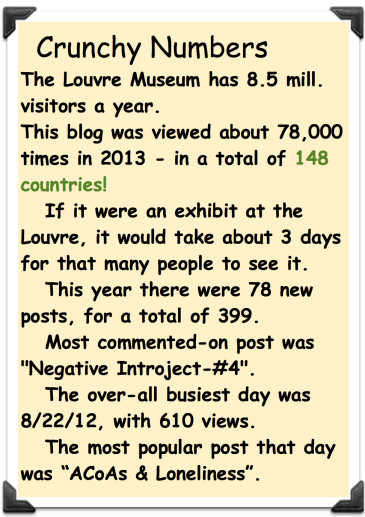
2013 ACoA Blog STATS – WordPress Review

Screen Shot 2014-01-13 at 4.28.52 AM

HAPPY NEW YEAR from

Donna  M Torbico


Thank you for making 2013 another successful blogging year.     


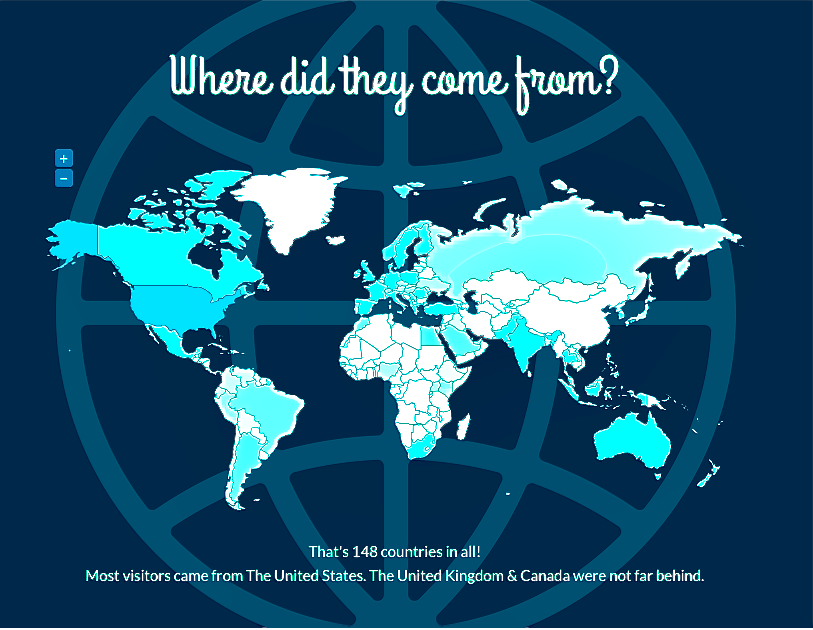
world stats


20 MOST READ TOPICS of 2013  / VIEWS
1.  Lost Child Role                                         5,789
2.  Scapegoat Role                                         3,432
3.  Hero Role                                                   2,425
4.  Boundaries  list (#1)                                1,712
5.  Mascot Role                                               1,423
6.  Placater Role                                             1,355
7.  Toxic Family RULES                                   731
8.  Boundaries List (#2)                                   668
9. Character Traits & Con                               628
10. Lack of Trust #1)                                        476
11. Why are you stuck?                                   376
12. Safe & Unsafe People                                362
13. Setting + Boundaries (#1)                         316
14. Roles & Co-dependence                            301
15. Toxic Family ROLES                                   263
16. Separation & Indiv. (#1)                           259
17. ACoAs & Self-esteem – NOT                    247
18. Passive-aggressive ACoAs                        246
19. How ACoAs Abandon others                   243
20. Satir’s Blamer Role                                    238

KEEP READING & KEEP GROWING!

ACoAs: REBUILDING Trust (Part 2)

rebulding trustTRUST STARTS WITH ME –
but I have a right to reciprocation

PREVIOUS: Rebuilding Trust (Part 1)

8 POSTs:  HOW  ACoAs ABANDON OTHERS


1. BETRAYED – by OTHERS

2. BEING the Trust VIOLATOR
These suggestions apply mainly to being in a ‘committed’ love unit, but can also be used re. family members & close friends.
If
both people want to stay connected AND you’re willing to face your misconduct —
broken-hearta. in GENEAL (re. friends, work…. ) – if the problem is that you were neglectful, manipulated, said cruel things, didn’t keep promises, stole, lied, threatened, hit ….. THEN identify the behavior & stop doing it immediately (read posts listed above)
• be sincere – your victim is scrutinizing your motives & intentions

b. in an INTIMATE relationship – if you were unfaithful or cut off all connection to the “other” person
• take responsibility for your actions – don’t blame anyone else or make excuses
promise keeper• offer an honest apology & a thorough account of what really happened – and if possible the why of your actions

• do not expect instant forgiveness & reinstatement, especially if you’ve been disloyal, untruthful & undependable before
• take immediate action to restore the rift between you & the other person, including listening to & validating their emotional pain & outrage, which you caused

• know you’re likely to be on probation, but if the relationship is important to you & them, commit to behaving in an upstanding way & then work at keeping your promise
• restate or change your shared goals & interests that you can both build on
• be able to sustain good behavior over the long haul
• be willing to get professional help (individual & couples), go to AA, Al-Anon, pray for healing of underlying damage……

😻 BUILDING Trust in an Intimate relationship
✤  Be Authentic – uncover & live in your True Self which includes the Natural Child ego state, which houses all talents, attitudes, tastes, genetic tendencies, learning styles, personality type…. as well as basic weaknesses

Keep your Word – Realistically, do what you say you’re going to do, SO don’t promise anything you can’t / don’t want to do
Be Transparent – nothing hidden (text messages, websites, finances … & no stockpiling unexpressed emotions

Don’t Lie – neither blatant lies, nor letting the other person believe something that’s not true
Confess Promptly (see 3 posts re. AA’s 10th Step).
No one can be perfect. Instead of letting problems fester, quickly & appropriately admit omissions, lies & mistakes (0000)

😰 BOTH : To HEAL
🔺 Know the Details –  Violators give their side of the event, to provide you with a broader perspective : What, when, where? What may have contributed to this situation? Are there mitigating circumstances?

🔺 Release Anger – Betrayed person (you) needs to acknowledge anger, & use healthy ways of getting it out. The offender too needs to express resentment & anger harbored from before

🔺 Commitment – Both parties need to define what’s required to stay committed, IF they want to keep the relationship
🔺 Rebuild Trust & the Relationship  – see below  (MORE….)

QUALITIES of any GOOD Relationship – BEING:
Approachable – willing to listen & when necessary, be able to handle things you may find hard to hear
Appreciative – don’t take each other for granted & be realistic. Say ‘thank you’ when deserved & give compliments when appropriate & sincere  (showing Love)
couples loveCaring & Kind – Don’t stop saying “I love you”. Find ways to be thoughtful, considering the other person’s tastes & preferences. (5 Love Languages)
When angry, state your E. in a way that will do the least emotional damage.  You’re more likely to be heard, &  prevents a buildup of resentments in the other

Fun to be around – a sense of humor is always welcome. Plan enjoyable things to do together that are relaxing & entertaining. Have your own interests as well, so you have something new to contribute
Helpful – approach problems together. Combine the best skills & natural talents of each to solve life’s difficulties, creating a greater sense of unity & strength

Positive – think confidently about yourself (not arrogant), & treat the other from the same point of view. Start from the assumption that you both have the possibility of growth & happiness, without overlooking limitations & flaws

communicate Respectful – appreciate & value your differences, as well as enjoying your similarities. Don’t try to change the other, but be clear about what you need, & would like to see improved in the relationship
Trustworthy – see post. Be consistent!
Understanding – encourage open communication of needs, opinions & emotions

NEXT: Double Messages – Basics #2

ACoAs: REBUILDING Trust (Part 1)

backstabbedIT’S HARD TO LET GO
when I’ve been disrespected

PREVIOUS: Being Trustworthy

QUOTE:To be trusted is a greater compliment than being loved.” ˜˜George MacDonald, Scottish novelist


1. BETRAYED – by OTHERS

Because ACoAs have been let down again & again by our family, as adults we continue the pattern of feeling unsupported :

1. BY assuming we have an understanding with a friend, lover, boss…. that they will treat us with respect & reliability – without actually talking to them about our needs & hopes, nor getting an agreement from them!

• We expect people to be able to read our mind – the way a small child legitimately needs their parents to be able to do – showing that we’re still functioning emotionally from the WIC

• So when someone does not come thru for us the way we expect (unsaid by either party) we feel betrayed.
BUT what has actually been betrayed are our own hopes, illusions, fantasy & assumptions about the other person!  In these cases others have not betrayed us, since they did not make the commitment we imagined, whether emotional, physical, financial or verbal

2. BY keeping people in our life who DO continually disappoint, while longing to be with someone we can truly depend on.  To change who we choose we need to continually work on S & I

• When we catch someone actually messing up, they can react several ways: apologize insincerely, make excuses, withdraw or attack us.

These tactics are meant to deflect responsibility from themself, while underneath they may be:
• puzzled as to what they did wrong, because they’re shut down (Es) & in deep denial (Ts) about their character defects, so they can’t change what they don’t understand
• indifferent, insensitive, narcissistic – don’t care about you
• may feel self-hate, shame, guilt, fear, anger, but can’t own them, so they need defenses (character defects) as protection

stay or goThere are MANY WAYS to be betrayed, and not just by a cheating spouse or lover.  It can be by paid professionals, family members, friends, colleagues, bosses or clergy
•  If you’ve been hurt on many occasions by someone you believed in, you have to decide if you can continue, or need to end the association.
Choosing between the 2 is rarely easy or fast, but in most cases leaving is ultimately the best for your PMES health – if possible. At the very least you can put some distance by using healthy boundaries.

• If you want to continue the relationship (or not), you need to & have a right to ask for a ‘talk’ to clear the air, but they may not be able or willing.
You can’t force someone to admit to flaws in the way they treat you, nor change the way they act, no matter how hard you try!

🧩 STAYING with a VIOLATOR
As the Violated person, you need to :
• identify & deal with your painful emotions of betrayal (shock, anger, hurt, disappointment, fear…) – instead of excusing the other by minimizing their bad behavior, the practical consequences & emotional distress (a CD)

• ask for total transparency – no more lying or double-dealing. They need to be forthcoming without always being prodded
• going forward — believe the person’s actions not their words

• adjust your expectations to what’s actually possible in this situation. Evaluate unrealistic hopes or demands you have of the other person
• be respectful, positive & kind (not punishing or vengeful), but stay awake

• look at yourself too, for any way you may have contributed to the problem.  You did not cause their behavior but may have helped create a climate which made it inevitable or too easy for them to act out – including things you did NOT do or say

• decide if you can forgive. This does not mean white-washing or overlooking bad behavior. Work to understand the reasons behind their behavior & have some compassion for their weaknesses – knowing the choices made are from their WIC.
But the actions are unacceptable, so letting go of hurt may take time

NEXT: Rebuilding Trust (Part 2)

Being TRUSTWORTHY

being reliableTRUST ALWAYS STARTS WITH ME –
by honoring my awareness & knowledge

PREVIOUS: Healthy Trusting (Part 2)

QUOTES: “One who does not act in accordance to the deep voice of his inner conscience can not be honest, truthful, trustworthy, loyal & faithful to anyone.”  ~ Anuj Somany, Indian Poet & Civil Engineer

“A relationship without Trust is like a car with our fuel – it can not move ahead.”∼ Invaji

“Never be afraid to trust an unknown future to a known God.” ~ Corrie Ten Boom

TRUSTWORTHINESS
DEF:
Being consistent in what you say & do – the same at work, at home & everywhere else. You don’t pretend to be someone else – you are accountable, reliable, responsible & resourceful. ”  Consistency reinforces trust.

We first need to be reliable toward our Inner Children. Then we’ll express that quality toward others, which gives ACoAs the sense of empowerment we say we want. With an inner assurance & positive outer experiences, it reduces anxiety in ourself & with the people we deal with.
🔑 Trustworthiness is based on a combination of our natural Personality, shared Values, Skills, Integrity & Good-will, which applies to all types of relationships.

BEING Trustworthy requires that WE:
• have mostly stopped obeying the Bad Parent voice & all it’s Toxic Beliefs
• are not driven by Self-Hate
• no longer have to lie in order to hide ourself (see the ACoA Laundry List )
• become much less afraid of abandonment, so can take reasonable risks
WE:
• have burned off enough rage so we don’t have to take it out on others, no matter how subtly
• don’t need to compel anyone to stay with us, to insist others see us, to prove ourself….
• are able to hear our own ‘still small voice’ & act on it (intuition)
• know what our rights, skills & talents are, & are not afraid to use them

POSITIVE EXPRESSIONS
Psychological – BE:
• first & foremost honest with yourself, based on self-esteem
• able to resist temptations to hurt others for your benefit
fair in all your interactions – treat others as you want to be treated
• respectful of others’ point of view, even when you deeply disagree
UNIT in chargeBE:
concerned for others as individuals who have their own path in life (not ours). It gives insight into why people do things or are the way they are
empathetic with others’ difficulties whenever possible, without taking care of or fixing them
sympathetic with others’ humanity – allow for faults & mistakes
• able to communicate accurately, openly & transparently (not manipulative, needy, passive-aggressive, controlling, sullen or using CDs)

Practical – BE:
dependable, keep your word, follow thru – within reason. Don’t over-commit, try to impress or promise things you can’t deliver or have no control over
competent and efficient  – not perfect
consistent and predictable – not controlling or rigid
BE:
• able to keep other people’s secrets & personal information to yourselfgood communiaction
• faithful & loyal to those who’ve earned your trust
defend or protect others whenever possible
BE:
• able to listen carefully, with an open mind, without losing yourself
• willing to talk about what you personally know or have experienced, rather than spouting facts, exaggerating or being boastful
AND:
defend or protect others whenever possible
ask others about what they know & how they feel – do not be arrogant, superior, narcissistic
share control, when appropriate, encouraging co-operation & allowing yourself to be supported

BENEFITS of being Trustworthy
happy kidRe. US
• We feel good about ourself, have self-respect & can hold our head high in any situation
HINT: A happy Inner Child makes for a happy Adult!
• It represents good character (requires doing the ‘right’ thing even when it’s costly or risky), which allows us to build a good reputation
• We find & enjoy abundance in any area of life, & connect with others in our search for satisfying existences

Re. OTHERSfrindly biz wmn
• Being authentic makes us stand out & become known for integrity
• It makes people want to be around us
• Others like dealing with us professionally, are pleased to see us socially & generally feel comfortable around us
• It makes it easier to get others to cooperate on projects & events
• It contributes to making our community & the world a better place

NEXT: ACoAs Rebuilding Trust – #1

HOW to TRUST

how to trust IF I PAY ATTENTION
I’ll know who to trust!

PREVIOUS: Healthy Trusting #4


LIE DETECTING

• To safely trust requires a relatively healthy Inner Self we can depend on to correctly evaluate our environment & identify how people, places or things make us feel emotionally & physically (in our gut).
> Safety does not come from being naive, a patsy or being unrealistic, which are part of Over-T.

• Some of us are naturally better at reading body language & have a higher social IQ, while others have to work at it, but it can be developed.
When we first meet people we can’t know if they’re going to be honest, dishonest or some mix.  As we get to know them, we’ll be able to tell if they’re reliable, by noticing things like verbal inconsistencies & physical cues of lying or evasion

Interesting: Nancy Carter & J. Mark Weber (2010) surveyed a group of MBA students in Toronto & found that 85% believed that cynical people (low-trusting) are better at detecting liars. Scientists then filmed people in fake job interviews, half of whom were told to include some lies. These videos were then shown to the original students.

catch a liarTo everyone’s surprise it was the high-trusting (of others) participants (not acoa-type over-trusters) who had the best lie-detecting scores.
They were the most sensitive to deceit, noticing physical giveaways like fidgeting & changes in voice tone & pitch.
The cynics scored the worst, more often ‘hiring’ the participants who had lied – which shows that using skepticism as a defense can be a handicap!

This suggests:
• even though low-trusters will usually assume others are lying to them (maybe a projection of their own tendency) –  they’re actually not very good at  spotting the dishonest ones
• because high-trusters are better at catching lies, they’re less fearful of being duped, making it easier for them to be comfortable in the world & taking social risks.
Also, people who are generally predisposed to being trusting are seen by others as trustworthy .

PRACTICAL TRUST in BIZ comes from assessing someone’s :
a. Ability – base expectations of competence on some proof that a candidate has the knowledge & skill to meet your needs or requirements
EXP: Check their credential & references, give a trial period & then re-evaluate. ONLY ask them what they have to offer when you have reliable sources & you’re sure they’ve had first-hand experience Contrats

b. Integrity – how well the hired person sticks to principles that are acceptable to you AND that you’ve mutually agreed on, including:
• honoring standards of legality, fairness, excellence…..
• meaning what they say
• a history of follow-thru
This may still require a written contact, to cover unforeseen future changes or difficulties. This may include a Marriage contact – expecting your spouse to keep their promise of fidelity
In BIZ:  > the company you work for providing all stated commitments
> the contractor doing the remodeling job – well, & for the price quoted

c. Respect / Caring – in personal relationships, trust develops over time, so you find out that the person:
• cares enough about your welfare to either be of help, or at least not get in your way
• has your best interest at heart & their motives are ‘clean’
• will do anything they can (appropriately) to be there for you, thru’ thick or thin, while still taking care of themself  (MORE….)

You can Trust SAFE people if you ALREADY HAVE the:
• Ability to find & let safe people into your life,  building relationships based on mutual respect, caring & concern, so both can grow & mature independently
• Emotional health to appropriately rely on safe others, so they have opportunities to treat you in a fair, open & honest way
• ‘Trust’-glue of good relationships, that allows your True Self to flourish
• Inner assurance of acceptance from the person who you can share secrets with. That things are fine between you – so come what may – nothing can disrupt the bond you have with each other

BEING ABLE TO : safe people
• Choose the right people to be supportive & reinforcing, even when you’re ‘weak’ / needy
• Let safe-others know your emotions & reactions, with the confidence they’ll respect you & not take advantage
TO :
• Assume safe-others won’t intentionally hurt or abuse you if you make a mistake
• Open up to safe-others about your background, problems, concerns & limitations, assured they won’t cut you off because of them
• Share your innermost Truth with a few others, with the belief – from experience – that they won’t spread it around.

NEXT: Being Trustworthy

HEALTHY TRUSTING (Part 4)

PREVIOUS: Healthy Trust #3

SITEs: “5 Facets of trust

 “Cultivation & Manifestation of Trust”  


ATTITUDES that DEVELOP the ability to TRUST

• Diminished fear: many of us will have to ‘act as if’ until we feel safer. Intense fears from the past can linger, & ‘new’ ones depend on negative self-talk & staying with unrecovered people. “If it’s hysterical, it’s  historical”. The less FoA & S-H we have the less our day-to-day fear.  In any case, even with our anxiety, we don’t have to restrict all our interactions & activities

A healing environment: good therapists, healers, teachers, recovery & spiritual groups.  As we grow we can change how we interact with significant others, which will lessen blame, accusations & acrimony on all sides

More openness: Others can’t connect with us if we keep hiding our True Self.  With Recovery we can risk being appropriately open with the right people, who have proven themselves to be kind & supportive, so that they can get to know & appreciate us

Self-acceptance: to do this we have to know who we are – good points & weaknesses.  There’s NO room for self-abuse, only realistic assessment of ALL our qualities, abilities & knowledge.  Improved self-esteem makes it safer to get close to people without getting abused, or worrying about being  abandoned

Self-disclosure of our woundedness:  Al–anon suggests that “You’re only as sick as your secrets”, so we need to air out our pain & distorted thinking – but ONLY in safe places & with healthier people

Reduced Competitiveness : ACoAs don’t always want exactly what others have, but are envious (between 2 people) & jealous (between 3 or more) because those people are getting their needs met but we’re not allowed to! We feel thoroughly powerless, becoming enraged & obsessed. Instead – the more we provide our needs, there’ll be less desire for competition or accusations of unfairness, reducing barriers between ourself & others

ReverseRemembering the balance of life : the “Boomerang Effect’’ shows that if we are dishonest, mistrusting, narrow-minded… we assume everyone else is too, & are more likely to meet up with the same type.
BUT if we practice being sincere, respectful, kind, open-minded (but not foolish), most people will respond by showing us their best side too. This is not the same as being a victim or people-pleaser, which some people can’t resist taking advantage of

Hope in the overall good will of mankind : without it we become isolated, bitter, cynical & emotionally stuck.
With it,  we can learn to recognize & pull out the ‘weeds & parasites’ in our life, knowing that not everyone is narcissistic or dangerous.

NOTE : Trust as a Virtue – in some cultures (rural, religious, fraternities, armed forces, police, gangs, tight-knit criminals….) cooperation & friendly social relations are based on mutual trust & trustworthiness – a great virtue. They’re considered a prerequisite for integrity & social interaction (“I’m no snitch, I’ve got you back, blood is thicker than water….. ”) (Morton Deutsch, 1973)

HEALTHY PEOPLE WANT TO: 
• be honest with themself & others in important matterscommunication
• tell their truth, or if they don’t feel safe doing so, be clear as to why
• opt for compromise when someone differs with them on important matters
• consistently keep their promises
• be respectfully direct & assertive, rather than aggressive or submissive

NEXT: HOW to Trust

HEALTHY TRUSTING (Part 3)

 THE MORE I TRUST MY JUDGMENT
the better my discernment

PREVIOUS: Healthy Trust (#2)


♟️ Trust CHARACTERISTICS (using T.E.A.)
All 3 must be present, to some degree, for optimum trust to exist – whether in personal or business relationships

competence1. Competence / Results / Ability

Mental: The conscious ability to evaluate & discriminate among various “people, places & things” in order to identify which ones are to be trusted, to what extent, & in what arenas. Quote : We need to “Read reality truthfully in order to respond responsibly.”

Practical: To demonstrate the ability to get results – combine practical knowledge ➕ adapt to circumstances – which allows a person or group to deliver on promises

2. Character / Integrity / Valuesintegrity-
Mental: When a person or group is clear about their beliefs, attitudes, feelings & perceptions, without accepting what other people project on to them. They know that self-understanding & development are important, tracking how they express their values in every-day life

Practical:
The internal agreement between a person’s values & actions make them reliable & therefore trustworthy. When things don’t go well they acknowledge & figure out what happened, taking responsibility for their part – without S-H, & work positively to improve future outcomes

3. Compassion / Concern / Benevolencedoctor
• Being aware of one’s connection to & inter-dependence with others, which inspires agreement & caring actions
• Genuinely valuing & respecting others. The emotional investment in people allows them to reciprocate, not out of obligation, but from appreciation & gratitude

• The extent to which a person has the best interests of another in mind, which is not ego-driven or primarily profit-oriented
• Includes a high level of empathy, which shows up as genuine caring for & help toward a person or group

HEALTHY TRUST (H.T.)
H.T. is knowing who & what can be relied on – or not. Legitimate trust comes in large part from experience, so it’s imperative for ACoAs to not jump too easily or quickly into new situation or with new people
H.T. allows us & others to be human – with weaknesses & strengths, while having a generally favorable outlook on life

H.T
. assumes things usually work out, but can also deal with frustration, delay & loss without falling apart –  not automatically reacting from FoA
H.T. allows us to ‘trust the process’ of life, participating in an activity (like Recovery or learning a skill) without knowing the outcome, since we can’t predict the future, no matter how much we wish we could

H.T
. takes time to develop. ‘Instant trust’ is a symptom of symbiosis &/or being in fantasy
H.T. means being awake in every situation, & evaluating what’s really going on, by having access to our gut feelings (the YEAH or ICK factors). It’s when we’re emotionally clear enough to tell when someone / thing is suitable or unsuitable specifically for us, OR when they are objectively harmful, neutral or beneficial

NOTE: This is opposite to that ACoA addictive ‘high’ we get from being with someone whose damage fits ours hand-in-glove, someone enough like our abusive family that we’re sure we found our soul mate! 
Yuck!
This lala trance-state comes from the WIC, heading to disappointment & danger, because the high hides our FoA, lack of Boundaries, & ultimately our Longing for an idealized mommy

TRUSTWORTHY People WILL :
• accept us for who we are – rather than what they wish we were,  AND not for what we sound like, how we look, what we do or have
• affirm & encourage us in troubled times  (vs. ignore or criticize)
• appreciate our personal talents as well as accept our limitations

• balance the good they see in us against our mistakes & flaws
• confront us directly when they need to, in a loving, sympathetic way (not shaming or  insensitive)
• listen to us with compassion, when we need to vent (not trying to fix / solve our problems)

• respect our choice of friends, activities, & spirituality (neither object nor automatically agree with)
• respect our needs, opinions, habits, and beliefs – equally with their own – even if they conflict
• respect our limits & boundaries, including times when we need privacy or solitude  (not taken as a rejection)
• understand & empathize with us, within their capacity.

NEXT: Healthy Trust (Part 4)

HEALTHY TRUSTING (Part 2)

TRUST

TRUSTING MY JUDGEMENT  
needs a realistic basis!

PREVIOUS: Healthy Trust (#2)

SITE: re. Trust issues, brief Questionnaire


♟️ High Trust
relationship are built on : Authenticity, Consistency, Empathy, Integrity & Transparency.   (SITECultivating Trust…..“)

♟️ DIMENSIONS :
Main components of Trust
🔑 Assumed = It’s time dependent, built one action at a time. The more consistent your behavior, the more likely others are going to assume you’ll act the same way again.
🔑 Associative =
Others will trust you based on the stories they’re heard / read about you, so you have the least influence or control over this aspect
OR – how you gauge your trust-level is based on preconceived stereotypes you may have (gender, race, wealth….)
OR – how similar or different someone is to you (comfort level familiarity)
🔑 Vulnerable = the fastest path to building trust with someone else is when both people… express vulnerability – the act of exposing oneself to possible harm, rejection, or scrutiny – in an effort to connect beyond a surface level relationship.

♟️ ASPECTS
🔆 Delayed Reciprocity – to create trust use the Golden Rule: ‘Do unto others as you would have them do unto you’. If I do something for you now, I trust (hope, expect) that it will be repaid / returned, in some unspecified way at some unspecified time in the future.

🔆 Exposevulnerabled Vulnerability – in a trust arrangement you may be leaving yourself open to being taken advantage of.  The threat of pay-back from someone or feeling guilty about asking may curb the temptation to exposed your ‘soft side’. We’re looking for fairness. So I feel that “for things to work between us successfully, I need to be able to trust that you won’t make me (or yourself) suffer”.

🔆 Predictability – it’s normal for people to make forecasts, trying to figure out what others will do or what will happen, for ourself personally & in the world in general. We want to spot & prepare for threats, as well as make plans to achieve longer-term goals.  The point of greatest unpredictability is at 50%, so a reliable enemy is ‘safer’ than an unpredictable friend – at least we know where we stand with them.

🔆 Value Exchange – Most transactions in life are based on reciprocity, which works because we each Screen Shot 2015-09-20 at 9.27.35 PMvalue things differently. You need food & have a skill, I have money & need a job done…..  Trust in value-exchange occurs when you don’t know very much (or at all) about them, their intention or what they’re actually going to provide. AND you don’t know exactly if what you’re getting is what you asked for & expected.

HEALTHY – You are trustworthy if YOU :
♦︎ keep other people’s confidential information, secrets & vulnerabilities private (exception = when it’s dangerous to others or illegal)
♦︎ regularly follow through on your commitments & show up when / where you say you will be
♦︎ own your mistakes, offer genuine apologies, & then make amends
♦︎ set clear limits & respect those of others
♦︎ when appropriate, show empathy & provide support without harsh judgment

RECOVERY
re.UNDER-Trusting” post – Consider these positive internal responses in relation those who
are mean to us: Develop the ability & skill to stand up to them when appropriate & not a danger, or stay away from them altogether

ignore us: Teach the WIC that no one can make us invisible! Some can see us & some cannot – it’s not a reflection on us (pun intended)!  When we cover o a True Self we are visible to ourself & to those who have ‘eyes’, knowing that we can’t make “blind people see colors!” Everyone else is only a potential connection, but not a necessary one

• do have good boundaries: It’s not their job to rescue or parent us. The distress that gets triggered by their responses to us is from our old wounds, not their behavior. This pain needs to be owned & dealt with in Program, therapy & our spiritual practice.
🙂 And we can learn from these healthier people to develop our own limits & self-care.  The ideal goal is to surround ourself with people who are genuinely trustworthy that will create a safe present & an even better future.

NEXT: Healthy Trust #3