
 PREVIOUS : Courage & Anger
SITE : “12 Ways to Be More Courageous ” WikiHow
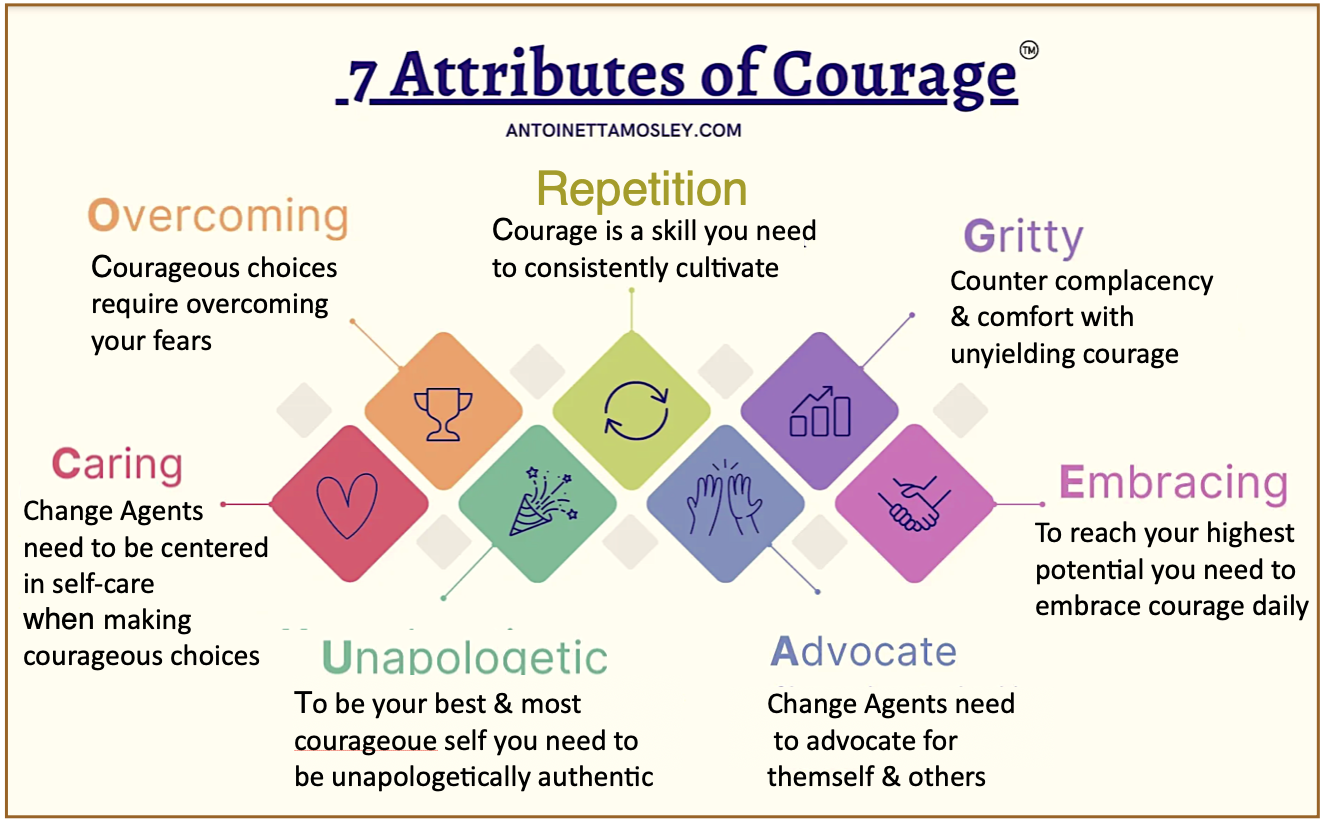
COURAGE (“strength of heart” from the Latin) is an essential quality in The R Factor tool box, because the situations we deal on a daily basis may not be so tough. But some of the events that happen at home, at play or at work require an R that’s nothing but pure courage. It takes courage to manage E + R = O (Event + Response = Outcome), because the R is most important when the E is hardest. The more challenging the E, the greater the demand on our R Factor.
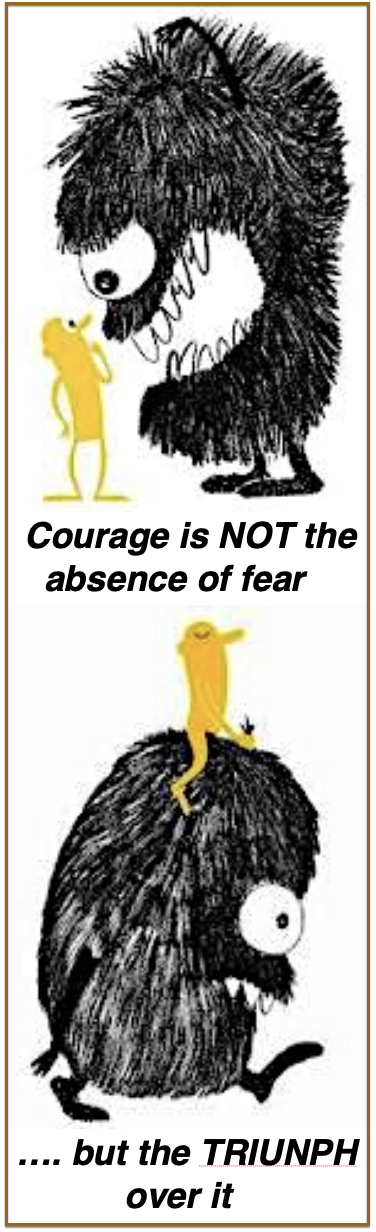 Courage is about making our R stronger than the E, which starts with knowing who we are. That kind of inner strength comes from being dedicated to the core beliefs & values we choose to live by. Courage is available when our commitment to those guiding principles is stronger than any circumstance we may face or impulse may feel.
Implementing critical “R Factor” disciplines gives us the power to reject Blame, Complaining, & Defensiveness (BCD), & so take complete ownership of our “20 Square Feet”. The system’s core guidelines improve decision-making, behavior & performance :
R1. Press Pause – Slowing down to override emotional impulses takes courage.
R2. Get Your Mind Right – Choosing the right mindset over convenient default behaviors requires strength & discipline.
R3. Step Up – Acting intentionally in the moment of trouble, or making unpopular decisions demands moral courage.
R4. Adjust & Adapt – Stepping out of our comfort zone to make proactive changes requires resilience.
R5. Make a Difference – Intentionally create positive experiences for others, understanding that your attitude & behavior impacts everyone & everything around you.
R6: Build Skill – Be deliberate & consistent about using daily action-habits to support personal growth & long-term goals.
💗 💗 💗
CORE Strategies to Develop Courage
🔆 Practice Self-Compassion : Be kind to yourself when you disappoint yourself (fail?) or feel scared. Building courage takes time & perseverance
🔆 Identify Core Strengths: Recognize what you’re good at – even great – to boost self-confidence before taking a leap
🔆 Focus on Values: When fear says to stop, ask why the goal matters to you. Acting for a cause, a loved one, or your own core values can provides the emotional push needed
🔆 Act in Small Ways (Start Small): Build your courage-muscle by doing minor things that cause you some anxiety- for whole – where the stakes aren’t that high. Say ‘no’ to a new dress you don’t need or having a second drink with friends…..
🔆 Focus on Your “Why“: Anchor your actions to a cause or person you care about. It’s often easier to be brave for others or a deeply held principle
🔆 Face Fears Directly: Identify & face what you’re afraid of – by PMES categories. List your strongest negative beliefs (Toxic Rules) that cause anxiety – to make them less overwhelming & less real 
🔆 Overcome Negativity Bias : The human brain is wired to prioritize threats. Courage can be hard work because it’s neurologically exhausting to override these protective mechanisms to let us take necessary risks
🔆 Embrace & Reframe Failure : Accept the reality that things may not go the way you’d wish, or long for. Shift your mindset to see missteps or disappointments as constructive learning experiences
🔆 Build Self-Confidence: Develop competence in whatever skills best suit your native talents & interests. It will help you trust that you can handle uncomfortable situations. Looking back at past challenges you’ve survived well builds a foundation for future success
🔆 Speak Your Truth: Practice saying what you think politely yet firmly on small matters. Then bigger ones will get easier. “Say what you mean but don’t say it mean.”
 🔆 Confront the Unknown : The discomfort of uncertainty often paralyzes action. However, courage requires stepping into unpredictable situations where outcomes cannot be controlled.
🔆 Visualize Success: Imagine a successful outcome of a challenging situation to reduce anxiety. Then picture several different ways it could turn out – either neutrally or in your favor. Always look for options!
🔆 Manage Social Stakes : True courage can involve emotional risks, such as setting personal boundaries, being vulnerable, or speaking the truth against the majority
🔆 Seek Support: Surround yourself with caring & knowledgeable people who believe in you & are not envious or controlling, as well as accountability-partners who encourage taking legitimate risks.
NEXT : VALUES Parents should Teach their Children, #1

