
 PREVIOUS : Safety for Couples, #1
SITE : 🔻 HARMFUL ways to Communicate
🔺 “Safe WORDS for couples”
👩❤️👨 Accountability & Follow Through
☼ No relationship can be perfect, but safe couples aren’t ashamed to say “I’m sorry.….” No excuses. No “but you…” Just quiet admission, without defensiveness or justifications.
It’s not blame but about making repairs when you mess up. A sincere apology builds trust. NOTE : Valid accountability comes from the Adult ego state, and without self-hate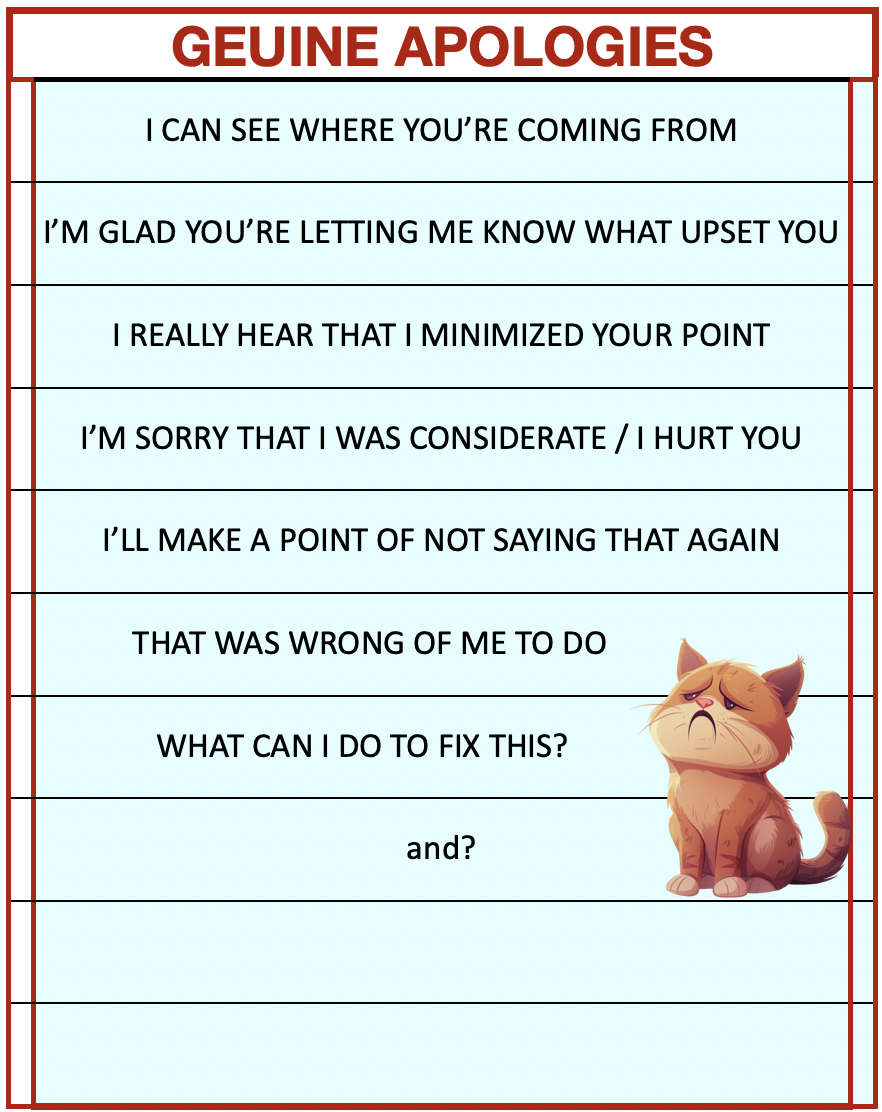 ! (↘️Add more)
☼ Follow through : To be legitimate, an apology must be followed by changes in attitude & practical actions. And keeping the other person in the loop helps to hold yourself accountable.
Also, when you commit to something & then actually do it, you prove your dependability & loyalty to the relationship. Taking small steps lets your partner see you’re making a consistent effort.
👩❤️👨 Giving the benefit of the doubt
Heathy people are curious about what’s fueling their partner’s actions / non-actions – without paranoia or judgement. They don’t jump to conclusions about the other’s motives, goals, or preferences.
Most people’s motivations are subconscious, often connected to the baggage they bring from their past. Safe couples can disagree, but they also provide a safe energy of willingness to understand, without assuming the other of having bad intentions,
👩❤️👨 Your nonverbal communication
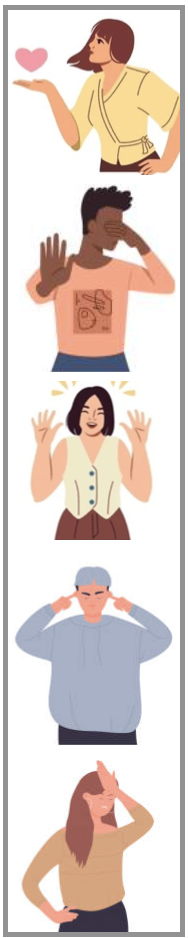 Emotional safety includes body language, since we’re responsible for the words we say and the way we say them.
Vocal tone, eye shape, posture, & other micro expressions are constantly being noticed & interpreted, whether you realize it or not. Notice the nonverbal communication your body is ‘speaking’ before approaching your partner – especially when upset.
NEG : Can show indifference, exhaustion, frustration ….. with cold eyes, tightly pressed lips, a frown, harsh sound to the words. making you unsafe
POS : OR can show calm, curiosity, lust ….. with soft muscles, a tilted head, a seductive grin, warm eyes – telegraphing that you are safe to connect with.
👩❤️👨 Transparency
Honesty helps eliminate the potential for suspicion that partners are hiding something from each other. While you don’t need to share every nuance of your life, (see ‘Boundaries“), general openness about your thoughts, emotions & activities are needed for trust & safety.
👩❤️👨 Vulnerability
They are safe to share their tenderest inner world, the deepest secrets & insecurities. And they can talk about what they need, not just what’s missing.
Each partner responds with empathy, accepting the other’s emotions with kindness, even when they don’t fully understand or actually empathize. It helps if you try putting yourself in the other’s shoes.
Safety includes validate the other’s opinions & actual experience, even if you don’t agree or have the same experience. This is Mirroring, reflecting back your partner’s words – to be sure you heard correctly. It’s a way to be supportive without trying to change or fix them or the situation – “That must be so hard,” or “I get why that would upset you”…..
👩❤️👨 Gratitude
 When you are the one who has be open, let the other person know you appreciate that they gave you a safe space to share. Thank them for listening without inserting their opinions or feelings, including specific compliments like “I’m grateful you make it easy to tell you what’s going on with me right now”. This safety also provides the time & space for emotional process & growth.
AND you don’t have to wait for something to happen to give a compliment or express gratitude. Little acts of love are minor, everyday things that go a long way to remind your partner how much you care. What strengthens this is knowing & applying the “Love Language” that each of you need to feel safe & loved. Love thrives when it’s named. Say ‘thank you’, celebrate small wins & remind each other what you admire about them in everyday life.
👩❤️👨 Therapy
Going regularly to “Couples counseling” can help build emotional safety by identifying how the couple fights, rather than only focusing on ‘fixing’ specific issues. A skilled & compatible therapist will guide them to create a new way of handling conflicts, so they can successfully deal with life’s challenges as they come. The goal is to work together rather than being at odds.
NEXT : SAFETY Growth














 HEAL & GROW for ACoAs