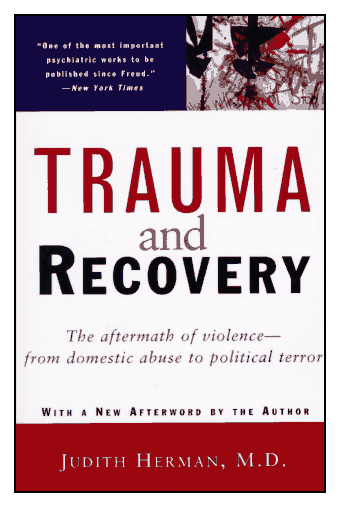
BOOK: “Trauma & Recovery”

Trauma book


PREVIOUS: “33 Things I’ve Learned” #3


AUTHOR
Judith Lewis Herman
is Associate Clinical Professor of Psychiatry at Harvard Medical School and Training Director of the Victims of Violence Program at The Cambridge Hospital.


See: REVIEW

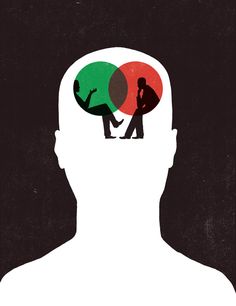
In “Trauma and Recovery” Judith Herman describes in detail the healing process for people struggling with a combination of problems related to overt abuse, being unwanted, & other devastating experiences in their past. The book gives a three-stage model of recovery from these events, including childhood sexual abuse.

Trauma results include:
Substance addictions
Behavioral addictions (porn, anonymous sex, gambling,…)
Self-harming behaviors (cutting, burning, hair pulling…)
Dissociation (spacing out, blanking out, losing time…)

The following statement refers to how self-hate is formed – by introjecting
the Bad Parent – & why it’s so hard to give up
:

quote re abused child S-H

REVIEW posts:
ACoAs & Self-Hate  //  Negative Introject 
// Abuse of children //
  Toxic Family RULES //
Ego states –  Summary  // Ego states – PARENT  #4

BE KIND to YOURSELF

Ann Wilson Schaef PREVIOUS: Obituary of Evil Mother


AUTHOR :
Dr. Ann Wilson Schaef
is a well-known psychologist, international speaker & writer of 13 books.

She developed her own approach to healing the whole person, which comes out of the ancient teachings of her ancestors – Cherokee Indian –  called “Living in Process“.
It is a comprehensive program of recovery —
➼ FROM addictions – both ingestive  (alcohol, food, drugs….) and process  (work, gambling, sex, relationships…. )
➼ INTO wholeness of body, mind & spirit.

SEE her Book List

perfect=abuse

ACoAs – ARROGANCE (Part 1)

I CAN ONLY STAND MYSELF  – if I pretend to be superior!

PREVIOUS: Humiliation (#3)

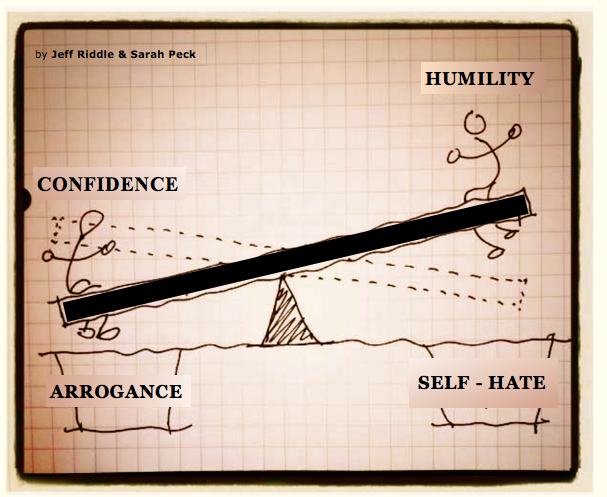
SITE: The Difference Between Confidence & Arrogance is Empathy
Teaching Humility in an Age of Arrogance

QUOTEs:“Much to learn, you still have” ~ YODA to Count Dooku, StarWars II
• “Do you wish people to think well of you? Don’t speak well of yourself” ~ Pascal

DEF: ARROGANCE (ARR) = inflating, exalting, over-valuing oneself. It’s “Bigging yourself up”, whether publicly or just inside your own mind, & often involves criticizing & knocking others down at the same time. (Ennea-Type #3)
“The act or habit of making unjustified declarations in an overbearing manner…. exorbitant claims of rank, dignity, estimation, or power”

♦️It is a major characteristic of all styles of narcissism – overt or covert, falling on a continuum from mild to severe. The extreme  expression of arrogance is Narcissistic Personality Disorder.  2 main types:
• Vulnerable – those who use arrogance to compensate for their insecurity
• Grandiose – who truly believe themselves to be perfect, without weakness or limitations.

It’s one of 7 features of “dark” personality traits, based on 7 basic fears, which are the False Self’s primary means of self-preservation.
• Arrogance = FEAR of vulnerability
• Greed = f. of lack / not having enough
• Impatience = f. of missed or lost opportunity
• Martyrdom = f. of worthlessness
• 
Self-Destruction
 = f.  of loss of control
• Self-Deprecation = f. of inadequacy
 Stubbornness = f. of change or of new situations (MORE…)

CHARACTERISTICS of ARR people (A G. Cerdan)
☂︎ Constantly talking about themselves & their achievements
☂︎ Charming – at first. Behind it is contempt, lack of empathy, resentment & selfishness
☂︎ Intolerant of anyone who doesn’t like or approve of them
☂︎ Never asking for forgiveness
☂︎ Over-compensate for insecurity – being loud, stubborn, showing off in dress & makeup….
☂︎ Tremendous need to be praised
☂︎ Trouble forming & keeping relationships
☂︎ Won’t admit mistakes, can’t handle criticism

ARR. is the result of Negative childhood experiences, causing:
a. deep (hidden) terror & insecurity (fear of abandonment)
b. the WIC’s dysfunctional strategy to ‘protect’ the Self
c. misconceptions about the nature of Self, life & others
d. a False Persona to hide a, b & c in adulthood

• We all have the potential to be arrogant in some area  of our life. But – for people terrified to admit or show common human limitations, it can become a dominant pattern.  This character defect represents the need to be seen as flawless, because exposing any weakness makes them feel unbearably vulnerable (like negative EnneaType 1, but not exclusively). See (Ennea-Flaws in All)

Hidden belief: “Who I really am will never be good enough for anyone to accept. So no one must ever see the real me.”
ACoAs are very familiar with this obsession with perfection, because our family punished or made fun of normal childhood needs & behavior, which they treated as unforgivable flaws!

Opposite poles 
– – Vanity (unhealthy False Self): 
an irrational / obsessive belief in our superior attractiveness or abilities as reflected in the eyes of others – which is falling for our own lies (egotism / narcissism).
It comes from the Latin vanities: empty, foolish, futile, untruthful

+ + Pride (healthy Confidence): recognizing, appreciating AND enjoying all our good qualities, rather than exaggerating or need yo make them up to mask or deny normal human limits & imperfection.
It’s a positive expression of the True Self, being realistic about our innate value & accomplishments  (“Worst & Best Personality Traits” – lists)

WHY do ARR people Succeed?
⚡️They use anger to intimidate
⚡️Being ‘difficult’ makes others give in to them more easily
⚡️Being dominant / domineering allows them to steal the show
⚡️Believing they’re superior helps them go for what they want
⚡️In disagreements, they attack the person rather than the issue

Arrogant leaders can do well in business, but rarely create lasting relationships – because they doesn’t inspire loyalty & trust. They’re often surrounded by users who are all too happy to take advantage of the egotist’s ruthless & obsessive need to ‘make good’, but will jump ship at the first sign of trouble

ARR is built on a variety of sandy / swampy foundations, such as:
– family lineage, ‘connections’, money, possessions
– achievements based on natural talents + hard work
– illusions / self-deception about non-existent personal qualities
– being stuck in past glory & accomplishments
HOWEVER none of these provide genuine self-esteem, which only has one source: Unconditional love!

NEXT: Arrogance #2

Anger & CO-DEPENDENCE (Part 2)

co-dep angerTHERE’S NO WAY
for me to win!

PREVIOUS: Anger & Co-D (#1)


1. Re. OUR Anger (cont.)
a. MISSING Emotions (cont.)
i. Numb
ii. Disconnected
And then there are the times we FEEL something – that punch in the gut or the stab in the heart, BUT don’t know where it came from.
Our body’s legitimate reaction to abuse is disconnected from our mental center (cortex) because of years of involuntary denial. So —
√ we blame ourself for the pain, thinking we’re making it up, over-reacting / too sensitive, it’s hormonal….
AND
√ if we do make a vague association between our discomfort & a particular person, we justify & excuse it by thinking “they didn’t mean anything by it, it’s just the way they are, she/he DOES love me….”
cat collarIt’s as if we’re wearing one of those animal medical collars: we can see over the top of the stabbers face, but can’t see the knife in their hand as they shove it in!
However, if we take the collar off, & ask the Inner Child how it feels around that unhealthy parent/ friend /boss/ lover….. & if the Child is willing to respond – we find out exactly what’s going on!

So when denial starts wearing off, we’re shocked – first by the pain, & then realizing that all this time our thinking has been way off!
That’s liberating but also very scary, seeing that we’ve built much of
our world on mental sand.
We have to revamp our whole concept of reality, which can leave us with a lot of anger, realizing how great the abuse really was.

For a long time we may hate our parents, the rage coming in waves. We still want them to be what they can’t & never could be.
Eventually we can accept that we no longer need them to take care of us – we are our own parent NOW, so we can learn to deal with them realistically – whatever that means for each of us.
BOOK: “Coping w/ Codependency” ~ Kay Marie Porterfield

b. INAPPROPRIATE anger/rage
Self-Hate: As co-dependents (Co-Ds) we are brutally critical of our own imperfections, even when they are absolutely normal for being human – whether making a mistake, not knowing something or making an error in judgment.

We also rage at ourselves any time we don’t get a need met or feel hurt – taking on the responsibility for other people’s limitations or unhealthy behavior.
At the same time – we sabotage opportunities for getting those very needs met – to stay loyal to our early training. (“People should treat me better, but….“)

🔹Repressed
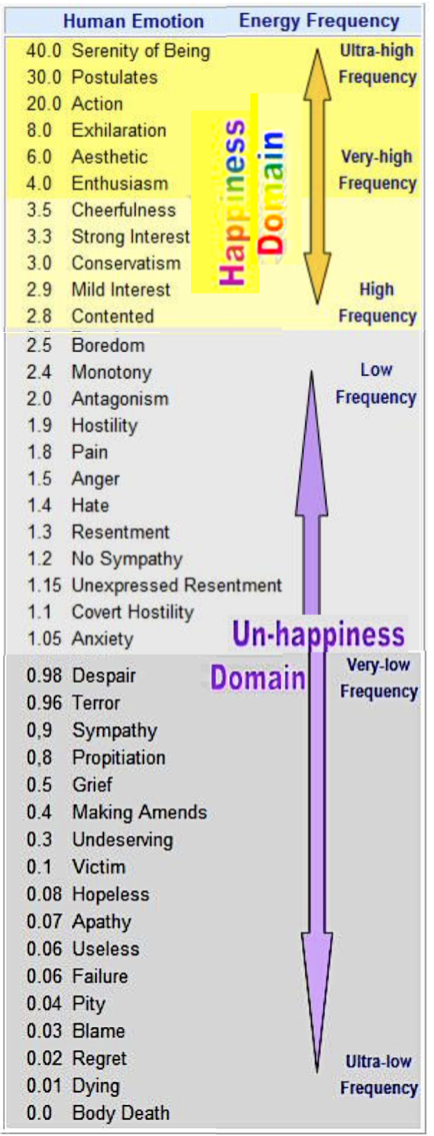
In Claudia Black’s book “Deceived”, she places Co-Dep anger on a continuum: Avoidance <– Sideways anger — Anger –> Rage
At the far left it’s sometimes described as feeling dazed & defeated, often part of low-grade chronic depression. For many people (more often women), avoidance is a learned response to stress over time, starting in childhood, along with long-term painful / abusive adult relationships.

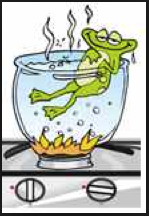
🔹Boiled frog syndrome
If placed into a pot of boiling water, a frog will immediately jump to safety rather than burn to death. However, if the frog is placed in a pot filled with room-temperature water, which is then very slowly brought to a boil, it will happily do the backstroke until it’s cooked from the inside out.

boiled frog syndromeCo-Dep anger can be like that as well. In a volatile situation we may fight back or just leave. But if we let our emotions accumulate in the POT, we end up stewing in our own juices until it feels like we’re choking.
Then the anger (& all the pain underneath) bursts outward in harmful ways, or inward with silence, uncontrollable crying, anxiety, constant fidgeting, physical illness…..

🔹Sudden flashes
On the other hand, unexpected burst of anger at others can be a sure sign of co-dependency at its tipping point – in reaction TO:
• always considering what someone else needs AND they rarely / never reciprocate
• being constantly disappointed, but still depending on narcissists to come thru for us – against all evidence
• hearing a correction or suggestion as criticism, triggering S-H
AND / OR
• not being able to get thru to someone, no matter how often we try
• someone not reading our mind – about what we need or want (so we don’t have to ask)
• trying to force someone to be or do something they either don’t want to do, or simply are not able
• trying very hard to please someone who will never be pleased, but we keep trying
• wanting someone to take care of us, but they won’t (& shouldn’t)

NEXT: Anger & Co-D – #3

What ACoAs Know & Don’t Know

SO MUCH TO KNOW –
I’ll never get it!

PREVIOUS: Ennea-Triads – 9s, 1s (3b)

SITE: Self-esteem – the problem behind the problem


ACoAs are some of the smartest, most intuitive people around.  We had to be – to survive our childhood!  But we:
a. don’t acknowledge it (taught to not trust our judgment)
b. are ashamed of it (taught to not think so highly of ourselves)
c. are missing basic, ‘normal’ info about ourselves & the world

1. LACK of INFO
a. About Alcoholism in the family, denial – that they were drunk, that their drinking effected us, &
that our damage (& theirs) was not our fault or responsibility
Deny THAT WE :alcoholism
• were abused & neglected (on one or more of the 4 levels: physical, mental, emotional, spiritual)
• were molested, sexually or physically abused
• we carry deep pain, from all that trauma
• we don’t have to suffer any more
• we have a right to be here
• we can trust our intuition ….

b. About Healthy Living
• what Process actually is & how to use it
• what clear, sane Thinking ‘sounds’ like
• that in many situations we have Options & what they may be
• what we want to be / do, when we ‘grow up’. Some of us do know, but are not allowed to go for it & too scared to fail no crisis
• how to live without constant crisis, abuse, anxiety
• that we don’t have to manipulate to get our needs met
• that we can take care of ourself, if we grow a Healthy Adult
• how to be kind to our Inner Child – by growing a Loving Parent!
• what mental health is  (see posts on ‘Recovery’)
c. General
• how the rest of world actually functions
• what reality is – mental, emotional, physical
• what to SAY when someone says hurtful or outrageous things
• what healthy people are like  (ACoAs think they don’t get angry, overwhelmed, make mistakes, lose relationships…)
• why other people do what they do (get away with things, are entitled, can function well…)

2.  What is NORMAL – which has 2 meanings:
i. the opposite of crazy.  Our S-H says we’re crazy & everyone else is normal.  Yes, we do have distorted thinking, which can be corrected – but that doesn’t make us nuts.
⚀ It’s normal to: have emotions, to succeed via process, to mourn losses, to not get along with every one – all the time –  to always have some damage….

ii. what is average – for humans, & in your society
It’s about the behaviors & attitudes common to the majority. But in this meaning, normal is not always healthy! It’s what the norm was where you grew up, in your religion, in your neighborhood & school…
SO – normal could have been – drinking to excess, physical danger, verbal abuse, insensitivity, lack of education… OR being up tight, having to succeed, always looking good, doing the ‘right thing’…
⚀ This normal can be to: laugh when someone gets hurt or makes a fool of themself, to not help strangers in trouble, to stare at an accident on the street…

no happy reunion3. What’s NOT possible, or is unlikely
• for our parent to love us unconditionally
• to be free of all pain & suffering
• to have relationships that never end
• to be liked & wanted by everyone, all the time
• benefit from becoming a star, be famous, be adored, worshiped

4. What CAN be worked towards & accomplished
Screen Shot 2015-07-11 at 11.53.34 AM• diminished S-H & gain self-esteem
• be heard/ listened to/ get healthy attention
• have healthy friends & mates
• improved health & appearance
• an enjoyable career, creative outlets
• to belong & be accepted
• respected, treated well
• feel comfortable, safe, secure
• have fun, relax, enjoy life   – etc.

5. What ACoAs DO Know, BUT….
• what really happened to us as kids (abuse, neglect, coercion, torture) – BUT don’t want to admit or deal with
• some of the things we want in life – BUT are not allowed to have
• what we’ve learned & accomplished since we left home – BUT can’t admit or own it & use it for ourself
• ALL the things we figured out on our own, as kids & as adult – BUT don’t value or validate them because of:
— S-H – we dcaused anything bad that happened to us (then and now)chinese S-E
— shame – not allowed to have our need met, or our value our accomplishments
— lack of healthy mirroring – our real self wasn’t validated by our family, so we negate our natural abilities

💝 SELF-ESTEEM comes from validation & unconditional regard / love.
Validation means admitting what we know & learning what we don’t. Regard is being kind, patient & respectful toward ourself. It’s never too late to have a happy life!

NEXT: Ennea Development Levels – OUTLINED (#1)

Being CONFIDENT (Part 2)

confidence balance  I BALANCE the EXTREMES BETWEEN
healthy & unhealthy,
too much & too little….

PREVIOUS: Being Confident (#1)

QUOTE: “When you are content to simply be yourself, & don’t compete or compare, everyone will respect you.
Kindness in Thinking creates Profoundness.
Kindness in Words creates Confidence.
Kindness in Giving creates Love.”  Lao Tzu

REMINDER: Do NOT let yourself get overwhelmed by this list. It’s meant to be a guide, qualities to work towards. Looking at the cup half full – or more – notice & then acknowledge when you have expressed a little of any one of these in your daily life, give yourself a pat on the back, & remind your Inner Child of your progress!

CONFIDENT People (cont)
take responsibility for their thought, emotions & actions (TEA) . This includes all their positive parts, as well as the less ideal ones. They don’t need to blame others when things don’t work out, but also don’t take on blame for things that have nothing to do with them

can be alone with their own thoughts. They know that mental GIGO means thinking, reading & listening to positive, healthy, enjoyable things, which can improve their knowledge & lift the spirit.
Their inner dialogue is not harsh from S-H, nor bullied by the PP, nor fear of abandonment & lack of self-awareness.
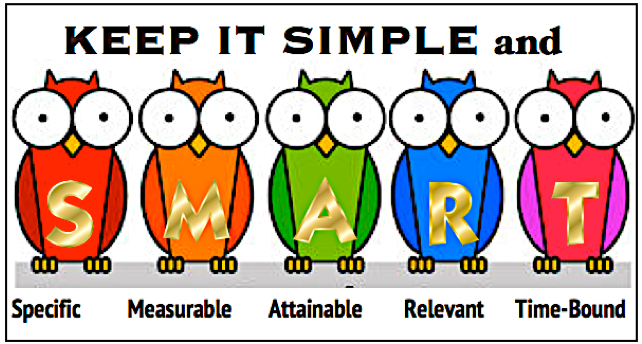
So they don’t have to fill every minute with conversation, technology (TV, e-mail, cellphones, texting, web surfing, playing games….) & other drugs & time-wasters, in order to numb out S.M.A.R.T.

‘keep it simple’. Whenever possible they find the simplest, sanest way to do things, no matter where they are or who they’re dealing with.
They’re not attached to ‘drama’,  never have to re-invent the wheel, & don’t hang out in convoluted, torturous thinking, or awful-izing. Knowing who they are & what they want, they can think clearly, so don’t easily get sidetracked or manipulated

THEY:
trust their instincts.  They pay careful attention to their environment, pick up on non-verbal cues, listen to the feeling in their gut & the still small voice in their head. They do not ignore these cues, even though they can’t be explained logically. Instincts are an important tool in their bag of life skills, guiding them on their path, helping to make the best choices

getting help accept help whenever they need it. They’re not ashamed of not knowing everything, or of not being able to do everything themself, so are not afraid to ask for & receive emotional support & practical help.
Confident people are secure enough to admit having limitations, & don’t see that as a sign of weakness.
They know that when searching for help they pay someone a huge compliment – it shows genuine respect for that person’s expertise & judgment, or wouldn’t have asked them. They’re eager to learn from others

• take care of themself. They don’t wait for others to do for them what they can do for themself.  They’re willing to learn easier & better ways to do things, & find procedures to make their life less complicated or stressful

are optimistic. They have a realistic view of their future, knowing from experience that bad situations usually work out, & that many stressors can be overcome with sensible plans. They have the ability to see the light at the end of the tunnel, & plan their journey toward it.
Optimism allows confident people to believe they’ll be OK, no matter how bad the current situation may seem. They never give up, but know it’s good to regularly take a break

In reality, everyone experiences an occasional knock to their self-worth. In those cases, confident people take time out to question their motives & review their choices, but don’t get paralyzed. Their mind is focused on solutions, so they take actions as soon as possible, or keep working towards a better outcome in the future. One antidote to doubt is an increase in productive activity. (CHART – confidence vs doubt)
«


«
NEXT
: Confident People (Part 3)

ACoAs UNDER-Trusting (Part 1)

one eye openALWAYS KEEP ONE EYE OPEN –
you never know where danger lurks!

PREVIOUS: OVER-Trusting (#2)

POST : ‘What is Shame

See “Acronyms” for abbrev.

🏴 MISTRUST = Suspicion  — the lack of trust rests in us, by not following our intuition, observation, experience…. This shows up as feeling a general sense of unease about someone or something, but without proof (yet) WHEN :
• you have no immediate reason to think someone will do the wrong thing, but you don’t have a reason to trust them either
• OR: a person or situation really does seem questionable, because your intuition is picking up a hint from their words, action or manner
• OR: there’s actually no reason to be suspicious, but your mistrust is not deserved (paranoia)

🏴‍☠️ DISTRUST = Certainty — the lack of trust rests in ‘them’, WHEN :
• you have good reason to not trust someone based on your many experiences with them, not just once
• you’re given reliable information about someone or something which lets you know they’re not safe / trustworthy

🔶 UNDER-Trusting (UT) as Adults 
The way we think & react emotionally to how others behave – not even necessarily toward us – has a direct impact on our lack of trust (our Ts – CDs and Es – FoA).paranoid  This is usually based on all our disappointing & painful relationships with unsafe adults in the past, mainly those with our parents.

Those experiences can easily lead to a subtle, underlying paranoia that colors everything. Going forward, what’s necessary for mental health & peace of mind is to see & understand who people are individually, not lumping them together as all bad or unsafe.

REALITY : We incorrectly ‘mistrust’ some people WHO —
•  are simply not interested in us. It’s nothing personal – we’re just not a good fit, or they’re caught up in their own world
•  really are insensitive, mean or otherwise unavailable, which hurts
•  are just taking care of themselves instead of focusing on us – at the moment – This may feel like they’re turning their back, because we’re expecting them to be the good Inner Parent for us – as comfort & companionship

Without a Healthy Adult ego-state the WIC in us can’t tell the difference between these 3 groups – so when disappointed, we regress into that old ‘slough of despair” (Pilgrim’s Progress), where “all is cloudy, hopeless & no one is ‘good’!”

🔶 WHY ACoAs DON’T TRUST
cling /rejecteda. Abandonment (too many PMES losses)
Because we were raised by untrustworthy people, as adults we’re still longing to be taken care of by someone else. So WE —
— continue to cling to people, places & situations (PPT) which do not have to the inherent capacity to provide even our most basic human needs, much less compensate for all we missed out on in childhood. The combined of old & new deprivation adds up, which can be deadly for us & to those around us.
Accumulation over the years : the less we’re treated with respect —> the more abandoned we feel —-> the more wounded we get —-> the more demanding the WIC becomes —> getting angrier & angrier.

When our core abandonment button is pushed we may resort to using familiar character defects: freaked out
• withdraw, sulk, withhold          • be paranoid & accusatory
• get controlling & micromanage     • be clingy & desperate

AND when our anxiety reaches the level of hysteria, we can’t stop ourself from making a painful situation worse, setting others up to fight with or withdraw from us, increasing our sense of loss & mistrust.
Then we say “See, I knew it all along – no one is there for me!” even though in some cases we contributed to it by our behavior & choices

b. Self-Hate – As a result of original abandonment, WE:
wrongElliInternally: • don’t know who we are, fundamentally
• can’t identify most our needs (even the basic, normal human ones) much less have the right to get them met
• are convinced we don’t deserve to be treated well, so don’t notice or reject anyone who is actually capable of being kind
• don’t trust our own knowledge, experience & observations

Externally: • we stay too long with unhealthy people
• don’t trust that anyone will ever be able or willing to help us
THEN we say “I hate everyone, no one likes me, I don’t belong anywhere”….

NEXT: Under-Trusting (Part 2)

ACoAs: OVER-Trusting (Part 3)

promise the moon WHAT’S WRONG WITH PRETENDING
everything’s just fine?

PREVIOUS: Over-trusting (#2)

See ACRONYM page for abbrev.

POST: “People should treat me better, BUT I won’t let them

🔷 We trust TOO EASILY when we…. 
(Part 2)

🔷 WHY DO WE OVER-TRUST?  (cont)
a. FoA (fear of abandonment)
b. Self-hate

c. Co-dependence — a form of “Delayed Stress Syndrome” or PTSD
• we use people as substitute parents instead of being our own, so we can’t afford to notice flaws or limitations in them, no matter how glaring
• we don’t have the right to object to other people’s b.s., so naturally we would never think of calling them on it (see Toxic Rules)

copdep• we depend on the opinions & values of others too much, convinced they know things we don’t, so EVEN when we have knowledge or intuition about a person or situation – we ignore it, especially if someone else disagrees
• we don’t want to, god-forbid, hurt anyone’s feeling by ‘suspecting’ them of being less than trustworthy – as they blatantly or subtly do us in!

EXP: Social conformity: As unhealed adults, if we’re forced to be part of a group where trust is expected / demanded – by a parent, teacher, boss, gang leader — no matter how irrational, unfair, evil, illegal — we will go along with their agenda, otherwise we’ll be severely punished, labeled coward &/or ostracized (may be true if we chose & stayed in the wrong one)
OR:
Despair: Being in a hopeless situation we can’t get out of (like a child in an alcoholic home) – then trusting whoever’s in charge is the lesser of 2 evils, as a way to survive

d. Illusions
Growing up – constant disappointment in our family makes us long for everyone else  we can depend on, so to make up for it, we put people on a pedestal :
• IF our parent was mentally ill, we idealize anyone who sounds ‘normal’ & functional – even tho’ they may be selfish or controllingidealize sickness
• IF our parent was violent, we idealize anyone who seems calm, even tho’ they may be emotionally numb & unavailable

• IF our parent was verbally cruel, we idealize people who are ‘nice’, even tho’ they may be a people-pleaser & therefore not totally genuine
• IF our parent was absent, we idealize people who ‘want us’, even tho’ they may just be using us to take care of them …..

e. Confusion
• Our family didn’t model appropriate behavior, seeing everything in B & W – drama, extremes, deprivation…. so now we evaluate the world using the same lens.  We have trouble distinguishing nuances of good vs bad behavior & don’t consider proportions. Instead of looking for relationships made of 70 – 80% positives with only 20 – 30% negatives (which is reasonable), we settle for the crumbs of only 10 – 30% positives – if that – & ignore a huge pile of crap!

sweep it away• When someone hurts & disappoints us, especially if we love & / or admire them, we tend to push away whatever we feel & think about their behavior – sweeping it under the carpet & saying nothing. Instead, we hold in our anger & get depressed.

They may or may not be in the wrong, & we may or may not be overreacting – even when they are off-center. The positive thing to do is first to process any rage & CDs we may have,  & only then talk to the person about the situation – if possible – but only from our Healthy Adult ego state.  If done correctly, we’ll feel much relief, whether they hear us or not!

• And sometimes we have friends, family members, co-workers & acquaintances who are basically OK, are on our side, or at least neutral – BUT who we secretly accuse of being unsafe because :
◇ they’re not 100% perfect in their interactions with us – OR
◇ their positive regard for us is too much to take in, so we dismiss it, or
◇ they do admire us, at a distance, but are not actually friends, so we don’t trust they can see & appreciate us …..since they’re not ‘taking care’ of us

REMINDER:  As long as we’re being run by the Wounded Inner Child, we find it very hard to separate people who are permanently unsafe from those who are only unsafe some of the time, from those who are genuinely trustworthy.

NEXT: ACoAs – UNDER Trusting (Part 1)

Negative INTROJECT (Part 4)

 
IF I LISTEN CAREFULLY
I’ll be able to catch the NI’s lies

PREVIOUS: Negative Introject (# 3)


💠PRISONERS of the Negative Introject  (Part 3)

💠INVENTORY
A starting point to free ourselves of our self-destructive attachment to the Negative Introject (PigP) is to clearly hear what’s being whispered in our inner ear. We may never completely rid ourselves of it, but can go a long way toward setting it aside

• Take each phrase below that applies – write down how it feels emotionally (Es), & what negative patterns you’ve developed in response to it (As). Then for each one, find a loving & logical counter you can tell your Inner Child.

The PigP (IT) voice, reflecting our actual family:
✒︎ “I’m JUST TRYING to HELP YOU”
• but everything it says is actually cruel, discouraging, fear-based & inaccurate or distortedinner talk

✒︎“I want to be proud of you, isn’t that normal?”
⚠️ unfortunately it’s ONLY about how we reflect on it, not what’s truly good for us

✒︎ “You can do anything you want”
⚠️ but only as long as it approves
✒︎ ”You’re such a Good Boy / Good Girl”
⚠️ as long as you act the way it wants

✒︎ “I just want to stop you from making a big mistake”
– It’s projecting:
⚠️ its own fear of taking any risk, much less positive ones
⚠️ mistakes it has made, without owning them or explaining to us
⚠️ its inability or unwillingness to see our personality & skills

Can it imagine us as a separate being who may know what we want? maybe very different from them?
OR PigP repeats:
About youinner-critic

• You’re a looser so don’t bother, you never do anything right anyway
• you’re ugly, stupid, selfish… no one will ever want / love you
• no matter what you do, you’ll never get anywhere ….
💟 NONE of these are true about us!

About the world : “Sure, you can leave home (us) but just remember —
• the world is a dog-eat-dog place, don’t trust anyone
• no one will help you, you’re on your owndog-eat-dog
• everyone’s out to get you, so always watch your back….”

This may be what our parents went through. In some ways it can be true about the outside world, but for us, it was definitely true about our home life!

The Negative Introject is ONLY interested in itself, NOT us, no matter what it’s saying.  We need to get this on a cellular level – even if it claims to “only wants our best”.
It’s really talking about its own survival, focused only on its own loneliness, fear of abandonment & self-hate, NOT ours. It’s their dis-owned projections that’s now our PigP.

Role reversal : to the degree that the PigP represent one or both damaged parents, who were also run by their WIC’s pain, it wants us to take care of it. The originals were narcissists (or sadists) – emotional children who wanted to be rescued, to vent their rage & frustrations, using us to dump that on. Only their needs counted!

For many of our caretakers, the only “power” they had in the world came from controlling weaker beings (us) who wouldn’t defy them or leave – sometimes employees or friends, often a spouse, always the kids.
This is crucial to understand, because the WIC is still trying to get their attention & love, which is not possible!

YES, our extejudgmentalrnal parents may say / have said they love us, but even if they felt an attachment, it is / was in a selfish way – as an extension of themselves, not for who we are inherently.
We can tell this by:
• the fact that we never felt safe, seen or loved by them, AND BY
• noticing all the ways they disapprove(d) of us – not just some behaviors & choices as teaching tools, (normal for loving parents), BUT of our Natural Self – our very essence!

AND NOW – if we spend any time with the original source of the Introject PigP we absorbed —> afterward we feel depressed, confused, rageful, incompetent, self-hating, guilty, even suicidal.

NEXT: Positive Introject – Healing

Family INVENTORIES – Purpose (Part 1)

LOOKING AT HOW IT ALL STARTED is not always easy!

PREVIOUS: Healthy Individuation (#2)

See ACRONYM page for abbrev.

QUOTE re. the need for S & I
“It is not possible to live too long amid infantile surroundings, or in the bosom of the family = without endangering one’s psychic health. Life calls us forth to independence, & anyone who does not heed this call because of childish laziness or timidity is threatened with neurosis.” Carl Jung
🎯
DEF: INVENTORY – To evaluate & make an itemized report of abilities, assets, or resources. To take stock of one’s life and accomplishments.

1. IN 12-Step TERMS
a. Doing our 4th Step – to write out as many of our qualities as we can – both positive (gifts) & negative (defects), as well as a list of all actions throughout life (to identify our Being and our Doing)

b. Taking someone else’s inventorya big no-no, & for good reason, when understood correctly, but used as an unhealthy defense mechanism. This can mean judging someone in our thoughts, or recounting someone’s faults to all who will listen, or using a sharp tongue to tell someone off who we’re angry at.

NOT doing this is a valid rule for everyone in general , & specifically for addicts & co-dependents, because:
• ACA copy our parents’ habit of always finding fault with everyone & everything else, instead of owning our own thoughts & emotions, likes & dislikes….
• of the compulsion to blame others for all our woes, instead of taking responsibility for what ever part we had in any situation (but not in the form of S-H)
AND TO Stop:
•  our character defect of using any upset as an excuse to gossip
•  our fearful avoidance of dealing clearly & honestly with anyone we’re currently having a problem with (instead of using the Adult ego state)
• the fear-driven habit of avoiding very hard decisions, making small or major changes, standing up for ourselves, leaving toxic people …..

2. LEGITIMATE EXCEPTIONS to this rule :
a. Re. Safe People: To identify the healthy characteristics we find in positive role models, which we can then look for in everyone we associate with, so we can ‘Go where it’s warm’ – toward people who are reasonable (T), kind (E) & functional (A)
ignoringb. Re. Unsafe People: to break thru our denial.
Unhealed ACAs deal with abusers – either :
• by having thick blinders on, denying their character defects & emotional damage, while only seeing our own flaws – even where they don’t exist. OR
• by being terribly judgmental & critical of everyone – including ourself (S-H), while not trusting anyone with genuinely good qualities, & who treat us well.
BOTH types tend to shy away from healthy people!

That way we can get angry at anyone who doesn’t automatically / magically provide our needs & wants, just the ways our parents didn’t.  But we stay with the ‘unavailables’ so we don’t have to notice the many ways they continue to abandon us,  & don’t have to face doing something about it (leave?).
That way we can stay loyal to the original dysfunction, continuing to long for but never receive the love & acceptance we believe we’re not allowed.

✳️ As we know, people tell us something about themselves all the time – their pluses & minuses – which we miss all together & could see if we paid attention, knew what to look for, & be willing to respond appropriately
OR we do notice but ignore or excuse. Then it bites us in the butt later!

Sadly, as kids ACAs were brainwashed to deny much or all of our painful experiences, as well as our intuition & perceptions, so it is especially necessary to do this type of inventory for all of us who :
• are genuinely ignorant of, or in deep denial about, the harmful effects that addicts & other damaging people we spend time with (family, lovers, bosses, friends…) have / have had on us

• are surrounded by unhealthy communities (family, religious, social, work….) where everyone is continually bombarding us with a distorted reality about us, themselves & the ‘right way’ to do things

• are by nature so idealistic that we only want to see the good in others, as a defense against the dangers of life, to our great detriment
• know there’s something wrong with certain people & situations in our life, but are not allowed to believe our intuition & knowledge.

NEXT:  Family Inventory – Purpose, #2