ACoA CONCLUSIONS re. Painful Events (Part 1a)

Screen Shot 2015-06-20 at 6.14.39 PM
I’M SUCH A FAILURE!
I can’t get anything right

PREVIOUSNoticing Painful Events  (Part 2)

REVIEW posts : “What just happened

REMINDER: See ACRONYM page for abbrev.


1. EVENTS – the Stimulus

2. CONCLUSIONS (our THINKING)
Here is another use of T.E.A. (Thought, Emotions & Actions ). The middle circle (in pink) is about how we mentally (Ts) assess or try to explain any event that’s upsetting.
🙄 A common reaction is to ‘be in our head“, endlessly obsessing, without ever understanding the situation (T) or resolving it appropriately (A).
REMEMBER – “crazy” is mental (what we think / believe), not emotional

Most ACoAs grow up convinced we’re crazy!  We say we feel crazy, or that we’re going crazy, or we afraid of being crazy.
Well, most ACoAs are NOT, but we came to believe it because – while our emotions & observations told us that a lot was seriously wrong with family, school, church….
the grown-ups kept telling us our opinions were way off base, & anyway we were the problemCause & Effect

Reminder: ‘Painful events’ may be situations that :
a. are accidental, because people are just busy or preoccupied
b. we run into in the course of everyday living (rudeness, ignorance, delays…)
c. are genuinely insulting, shaming or otherwise abusive

We can instantly react (As), out of our conscious control  = yelling, sulking, blaming….. or just spend all our time worrying.
If we pay attention, those reactions will give us an idea of what we’re actually thinking.
HINT – that the painful event is :
💦ONLY /all about ME, & we’re the Victim (V), creating FEAR , OR
🔩ONLY /all about the OTHER person, as Perpetrator (P), creating our ANGER

💦 IT’S ALL ME – It’s my fault, I’m bad, dumb, weak, lazy….
• Whenever ACoAs experience a painful event or loss we try to make sense of it. The WIC always thinks they’re the source or cause – that we should have been able to prevent it.
The Adult in us may know this is not true. Others are also not in control of every outcome, but they are responsible for their beliefs, decisions & actions (not us), whether they acknowledge it or not

EXP:  It’s sad to think of JFK Jr. – his very bad decision to fly with a broken leg, without a co-pilot or auto-pilot, in predicted bad weather – ended in disaster. Accident? Yes, but his unwise choices contributed.

• ALL ACoAs start out from this premise (Self-Hate) & then layer it over with a variety of defenses. When something doesn’t work out, or someone hurts us / ignores us / leaves us…. we try to analyze what we did wrong & how we can fix it. We obsess for days, sometimes years about a painful situation, always from self-blame.

➼ Unhealed ACoAs have a wide streak of narcissism – mainly in the form of: EVERYTHING IS ABOUT ME!  but you may be saying “What, it’s not??”
It’s our default position, & continues as long as the WIC is in charge of our life.

EXP:  Extrovert Maria is in a night-school computer class with 6 other adults, 5 men & one other woman. Maria glances at her several times, hoping to connect, but the woman blatantly ignores her. Maria’s not just disappointed, she’s hurt. There’s a pain in her gut: “Nobody likes me!”

EXP:  Felicia was in great distress. She’d invited her family to visit her at college, so they drove down to see her. On their way another car plowed into them, causing a huge accident & her brother was killed. That was enough of a heart breaker – but her CD added to it. She kept saying: ”If only I hadn’t asked them to visit, he’d still be alive!” – tortured by thinking she has that kind of power

REALITY: There are times when we have made a wrong choice, but self-abuse does not help us learn from the error or improve our options in the future. S-H is a lie & therefore SELF-DEFEATING. It’s based on a false sense of power, but it’s still false.

Once the UNIT kicks in, that perspective greatly diminishes. There’s a big difference between believing we’re responsible for everything (grandiosity) vs being appropriately responsible for our T.E.A.s

NEXT: CONCLUSIONS  (Part 1b)

NOTICING Painful EVENTS

Screen Shot 2015-06-20 at 5.24.34 PM 

IT’S EVERYWHERE!
life is full of pain

PREVIOUS: What just happened – 30 Qs


1. EVENT – the Stimulus (Green Oval)
Growing up with emotional & physical stress, we became hyper-alert to our environment, developing big antennae to catch even a whiff of dangerdoor slam

Early sources:  Being kept awake late, even on school nights, waiting anxiously to hear what state dad was in coming home – how did the car sound, how hard was the front door slammed, how heavy were the footsteps, which room was he going into…?

Was there going to be a fight – yelling, hitting – or worse, a ‘visit’ to your bed…?  trying to sleep with one foot on the floor, hating mornings, knowing you’d be a mess at school the next day, as usual being constantly worried…..

This endless pressure has left many of us with only 2 options:
⚠️ Vagueness: the ACoAs who seem to be so out-to-lunch that you wouldn’t think they are actually over-attentive. It’s why they need to be flaky, because internally they’re under overwhelming tension, but it’s split off from their own awareness –  (dissociation)
♨️ Hyper-vigilance: other ACoAs are noticeably anxious, worried, controlling, touchy, always looking around, easily taking offense (sitting with their back to any available wall!) – waiting to be attacked by others
🌀 Some of the paranoia comes from having a BadParent camera over one shoulder, constantly judging everything we say, do, think & feel

We’re still so focused on the possibility of being abused &/or abandoned – again – that we either isolate too much, are belligerent & difficult, or super people-pleaCause & Effectsers.
So every Event that upsets, hurts, disappoints & scares us becomes a cause for emotional drama

Approaches to EVENTS (present day)
CO-DEPENDENCE: disturbing situations are a challenge for the Rescuer to throw all their energy into fixing – the other person or event
COUNTER-PHOBIA: at the other extreme, we look for the most dangerous, drama-filled events to get involved with, while ignoring / denying / swallowing the pain it causes us

ISOLATION / Victim: having been hurt by so many people & events, we starve ourselves of potential benefits in the world, instead of ‘dealing & healing’

PARANOIA:
 the assumption is that the ‘universe’ (everyone & everything) is deliberately targeting us, to cause our suffering. We ignore all the good things in our life, OR explain them away as an accident, a fake / scam or “they’re just being polite”
6a011570338375970c01a511bdd4fb970c-pi
SCAPEGOAT
/ Victim:  we feel blamed for everything that goes wrong, which we agree with. It causes great anxiety & constant anger, but we don’t try to correct it

EXP of ‘Events’ = YOU are :
• going for an interview & do your best, but you’re not called back
• having lunch with a group of casual friends & new acquaintances.  Everyone seems easily engaged in conversation with their neighbors, & almost no-one has talked to you the whole time

• a new members of a long-standing group, out for coffee with them after a meeting. On the way, they all pair up, talking to each other, but no one walks with you – you’re all alone at the back of the ‘line’
• trying to cross a busy street & just then a cab turns the corner, almost hitting you
•  walking down the hall at work, & yet again Georgia  / Sam…. doesn’t acknowledge you

➼ Any of these may create a painful reaction in us. Our observation of the occurrence is accurate – it really did happen.  However – they triggered familiar cognitive distortions (CDs), which make the events more disturbing. That’s where we go off the rails.

‘EVENTS’ can be:
a. Neutral / mild : everyday situations that are not really bad, like – someone in the subway bumping into you, not getting that text you’re waiting for, a delivery being late….
b. Mild / bothersome: occasional annoyances that may or may not be aimed at you, like a rude salesman, your boss angry at you, getting a ticket, your child having trouble with a neighbor……
c. Severe: really painful encounters, like – a parent ignoring you or being cruel, a big fight with a BFF or spouse, your child getting arrested because of drugs….

• Each category will test our ‘mental health quotient’ – how realistic or distorted our thinking is, which will then govern how we act.

NEXT: Noticing painful events (Part 2)

WHAT JUST HAPPENED? – 30 Qs (Part 4)

wondering 

I’M DETERMINED –
I’m gonna figure it out!!

PREVIOUS: What just Happened (Part 3)

Please read / review Parts 1-3 before answering these questions


Suggestions
a. Read all the Qs first & if you feel overwhelmed, leave it overnight. Don’t wait much longer or you’ll lose info.  No S-H allowed!!
b. Write down as much or as little as you can – it can never be ‘perfect’. You can skip any that are not relevant or you don’t know about
c. Go back to it later, more than once if need be, to fill in any blanks
d. Make sure you only take responsibility for your side of the street & no more. Both of you contributed something, even indirectly.
➼ DATE & save all entries.
INVENTORY
Re. YOU
1. What actually happened – list as many facts as you can remember (I did/said… they did/said…) Ask anyone else who may have been there what they remember
2. If relevant, list what was going on with you or what was happening just before the encounter –  what state of mind were you in during the previous few days?

3. If there was any anticipation, what were you feeling & thinking before the event? Was there something you wanted? Were looking forward to? Needed from the person or situation?
expectations
4. What did you expect would happen on this occasion?
a. Consciously – looking forward to? Afraid of?
b. Semi-consciously – what did you secretly assume or expect?
➼ We can often tell this by intense disappointment!

5. If it was an unexpected & unprovoked encounter (by you), what state were you in at the time? (Vulnerable, needy, generally angry, sad, overwhelmed, in physical pain…)
6. How were you feeling emotionally (E) during the interchange?  List as many Es as you can
OR Ask: If I had been feeling something, what might it have been?

7. What were you thinking (T) during the interchange, that you didn’t say? What do you think / conclude, now, that you’ve had time to reflect?
8. What did your WIC ‘hear’ them saying (an implied judgement, accusations, insult….) which also often came from our family?
It may have been hurtful, OR it’s your interpretation of their comments

9. Are you surprised/ shocked by the event? Is it something you could have predicted or anticipated, based on previous experience?
10. Why do you think they triggered you so much?

Re. THEM
1. What’s your connection to this person, if any?
2. If you do know them, what has your relationship been like, over all? How do you think about them?
3. Did they act in a familiar way? How, exactly?Screen Shot 2016-06-19 at 5.57.35 AM
4. What did you observe about this other person during the interchange?

5. If you didn’t know them, what information did they give you about themselves – direct or by implication? (people always do!)
6. What did your intuition tell you about their attitude, their state of mind, their abilities, their ego state…no matter how brief? Is it familiar?
REMEMBER:  When you know a song well, you only have to hear a few bars hummed to identify it!

7. What did their behavior, emotions & words tell you about who they are (this is about FACTS, not a hatchet job) – Angry, needy, controlling, manipulative…/
8. Who do they remind you of (usually a family member)?
9. What were they actually telling you? This is not a guess. Most people say things with some kind of subtext, altho’ not always unkind
10. What does your gut and head tell you about dealing with them in the future?

CONCLUSIONS
1. Looking back, what did I observe about myself in that situation, old or new?
2. What have I realized, that I’d rather not have admitted –
a. about myself
b. about the other person

3. What actions would I like to take, as a result of this interchange?
a. ignore the whole thing
b. let it simmer some more, need time to calm down before saying anythingScreen Shot 2016-06-19 at 5.57.10 AM
c. need more time to process it myself. May want to run it by a few trusted people.
d. jump right in & let them know what I think! What are the consequences likely to be?

4. Did I learn anything useful, that I can apply to this or other relationships, in the future?
5. What do I need to work on? Improve? Modify or change?
6. What can I take with we for any future conversations?
7. What do I need to practice saying, over & over, to be better prepared for similar situations?

8. Am I proud of anything, in this situation? Did I act or talk better – more self esteem-able, more from the Healthy Adult? Was I more appropriately restrained?
9. Was there anything I enjoyed about the situation, was amused by, found intriguing, surprised by?
10. What does my IC need to hear from my Loving Inner Parent, when thinking (T) about this event?

(© Donna M Torbico, 2011)

No matter what you uncover, do not let the IC go into S-H, nor let the PP beat you up!  This is valuable info for YOUR growth!

NEXT:  Noticing Painful events – #1

WHAT JUST HAPPENED? – Intro (Part 3)

PREVIOUS: “What just happened” (#2)

POST: Types of “THOUGHTS” (re. T.E.A.)


PURPOSE of the INVENTORY cont. (in Part 4)
1. Ourselves  // 2. What

3. WHO you’re dealing with – what do we know about this person, or this type?
The more we know about damaged people in general, the better prepared we are to deal with them – BUT coming from our Healthy Adult.
✶ People tell us about themselves ALL the time! We just have to pay Screen Shot 2016-06-19 at 5.30.14 AMattention!

• Point # 2 is about us (previous post), while #3 is about the other person – whether we’ve seen them before, actually know them, or not at all.
• Are they very rageful, passive-aggressive, sadistic, narcissistic, manipulative, people-pleasing, needy, controlling, withholding….? Read, learn, know – about each. We likely grew up with people just like this one!

THEY CAN BE:
a. person we don’t know very well, or at all –  a one time event
b. family member, with similar recurring painful episodes. We keep going back for more abuse because we still don’t have enough self-esteem & good boundaries

c. spouse or mate, with whom we have periodic flareups. It’s someone we want to keep them in our life?, or should we really leave but aren’t ready to
d. long-time friend who’s like our damaged family in many ways, likely not in any kind of recovery, OR has not done their FoO work. They’ve been there for us in some ways over the years, but the relationship is co-dependent, where we’re either the people-pleaser / rescuer or their victim

** This is not to ignore the fact that we may indeed love some of these people, & will continue a relationship with them. What type & to what degree will depend on how well we’re able to protect & defend ourselves around them.
Don’t be fooled by the Positive Psychology crowd who try to convince us that everyone “did the best they could, which is rarely true!

Screen Shot 2016-06-19 at 5.42.06 AMCORRECTION
• That message makes it too easy for us to white-wash bad behavior. The reason this saying ↗️ is so insidious for ACoAs is that it reinforces our denial AND it teaches us not to hold others accountable. The combination feeds our S-H. Just because someone doesn’t ‘mean’ to hurt us doesn’t exonerate them from being responsible for their actions & words.

• At the same time, we need to help the WIC get it that very little said & done AT us is about US (about our personality, our identity). We don’t cause how others react to us, even when we’re ‘at fault’ in some way (saying or doing something insensitive).
We know this because a different person will have a totally different reaction to the same behavior from us. The more we understand & believe that, the easier it’ll be to stand up against the thoughtless, the insensitives or the aggressors.

4. HOW we can be more empowered
a. (T) MENTAL – Practice, over & over ahead of time, words / phrases you can use when under stress. New pathways in the brain need to be formed, so we won’t automatically repeat old reactions & behaviors

b. (E) EMOTIONAL – In general, stay awake for our emotional reactions to every situation we find ourselves in – pleasant, neutral or unpleasant. This does NOT mean being on guard, self-conscious, or Screen Shot 2016-06-19 at 5.27.58 AMbeing rigid with ourselves.
Just be gently aware of what’s going on inside, whenever possible. Always come from a loving, patient place!

c. (A) ACTIONS – Learn appropriate responses we can use in the future, prepare in advance for some situations, practice with safe people (friends, healers…), do Inner Child writing, repeatedly visualize new behaviors…. to de-sensitize the triggers we carry from old trauma

NEXT: 30 Qs

WHAT JUST HAPPENED? – Intro (Part 2)

caught in their mess


I KEEP GETTING CAUGHT UP
in these messes with people!

PREVIOUS: “What just happened” (#1)


See ACRONYM page for abbrev.


PURPOSE of the INVENTORY (in Part 4)Screen Shot 2016-06-19 at 5.32.57 AM
We can use the Qs to strengthen our HEALTHY ADULT to be more in charge in the future, whatever the circumstances.
We can LEARN about:
1. OURSELVES – strengths, weaknesses, style, beliefs, needs, wishes…
a. conscious parts we ignore, don’t accept or deal with, parts we’re working on, need to pay more attention to, are OK with…
b. aspects that are hidden in the shadows which ‘force’ us to act out old fears & beliefs AND prevent us from shining our inner light

2. WHAT to expect – so we’re not shocked & reactive, every time.
ACoAs have a built-in ‘forgetter’ after experiencing a run-in with painful people & situations which mirror of our childhood trauma
a. In the present we bury the knowledge we could have gained from this encounter, & are then “taken by Screen Shot 2016-06-19 at 5.27.10 AMsurprise” for the umpteenth time when dealing with the same situation – again! as if it had never happened before

b. Even when encountering an unpleasant stranger, the interchange with them is often similar to others of that type, but we’re still surprised, not able to assert ourselves, shocked into muteness… OR over-react from the WIC’s old rage.

INTERCHANGES that hurt — 
a. but are not even remotely about us
EXP: Mona is an acupuncturist & is at a banquet honoring a prominent friend of hers. She starts talking to a man at her table & eventually they exchange business cards. He’s relatively friendly at first, but looking at her card, he becomes quite hostile, bad-mouthing her profession. She’s shocked & hurt.

Excusing herself, Mona moves to a distant table. After mulling it over for a while she goes back & asks him “What just happened?”. Slightly calmer, he tells about a very bad experience the only time he ever went to get acupuncture – when he almost became paralyzed from a cramp in his back & could hardly breathe. He didn’t apologize, but Mona was satisfied.

b. occur when we accidentally step on someone toes
EXP: Sandi gives Joe a CD of Edith Piaf for his B/day, knowing how much he loves her Screen Shot 2016-06-19 at 5.53.00 AMmusic. He’s thrilled & puts it on speaker. Sandi ‘hates’ Piaf (which he doesn’t know) & asks him to play it later. He wants to know why & she admits Piaf doesn’t suit her.

He feels hurt – as if it’s as an attack on his taste (taking things personally & being ‘over-sensitive’). Then he gets angry & attacks her for being insensitive & having no taste in music!
Sandi explains that Piaf’s voice & music are too painful to listen to, which has nothing to do with him or his taste! This only moderately mollifies him.

c. are actually meant as a positive, but are said ‘wrong’Screen Shot 2016-06-19 at 5.42.57 AM
EXP: While visiting a friend, Pat mentioned that she goes to her dentist on Sundays, since he didn’t work on the Sabbath. Her friend said “Only you could have found a dentist to see on Sundays!”  Pat was hurt & angry, but didn’t say anything for a week. It reminded her of being teased at home & in school.

After going thru the 30 Qs (Part 4), she called her friend. “Bobby, remember what you said last week about my dentist?”
-pause- “No”.
“You said…. & what I heard was that you were making fun of me, like – I’m so weird…”
-pause- “No, what I was saying was that I admired you for your cleverness…”
-pause-  “OH!. Well, thanks. But it would have been clearer if you’d said that!”

NEXT: “What Just Happened?” #3

WHAT JUST HAPPENED – Intro (Part 1)

confused monkey


I THINK I GOT BLINDSIDED – but I don’t know how or why!

PREVIOUS: ACoAs & Listening (#3)


See
ACRONYM page for abbrev.


In the AFTERMATH of a difficult / painful / scary experience (A)
Whenever ACoAs have a run-in with another person, our most common T.E.A. reactions afterward are:
(T) MENTAL – confused about what happened, how we got in that situation, what we should have said or done, wish we’d said – about what they actually ‘did’ to us….
(E) EMOTIONAL – ‘freaked’ out, but maybe not clear just what we’re actually feeling, not sure if we should be upset or what’s really bothering us, not wanting to be so aggravated or anxious, not feeling like oneself….

✶ If we’re upset AND don’t understand what happened, we automatically slide into:
(E) feeling guilty for our reaction (maybe breaking a Toxic Rule)
(T) blaming ourselves, thinking we’re weak & stupid for not handling it better…  (S-H, to mask abandonment pain, but not conscious of)
(A) ACTIONS – ‘dealing’ with it by hiding from the other person, ranting to everyone about the event, being overly solicitous (people-pleasing), stop functioning at all…. OR call / text the other person & blow them up, which usually adds to our S-H, guilt & shame.

Start CLARIFYING
• Talk oven the painful event with a healthy trusted person.
• We can also do a lot of work on our own, & feel good about that. It will help to eventually be more ‘present’ in the moment, to feel less like a victim, less scared, vulnerable…
• To that end, it’s useful to identify which ego state we were in when things ‘went wrong’.
• We can also ask ourselves what we observed or already know about the other person (but ignored).

SO:  ‘who’ – inside each participant – was in charge at the time of the incident?
PAC interationsour Wounded Inner Child was in the foreground, or their WIC was
our Pig Parent (Negative Introject) was acting up, or theirs was

🔹 It’s usually some combination:
– our IC reacting to their PP
– our IC provoking their IC
– their IC bringing out our PP
– their PP stomping on us – leaving our IC mute… (follow the arrows ➡️)

NOTE: It’s a good bet that neither person’s Healthy Adult was available & functioning, or it would have turned out differently. (See EGO STATES posts)

HEALTHY PEOPLE (HP) evaluate themselves & monitor their interactions, and when confronted with an objection or complaint, a question about their behavior &/or hurt feelings – they :
• catch it when their side of the street is not as ‘clean’ as it could be. They’re more likely to acknowledge it & make a correction or give an apology
• are able to hear the other person out, evaluate their own part in it & make whatever adjustments are possible, especially if the other person misunderstood or misread an interchange
• won’t accept blame when it’s not warrantedinventory

In PART 4 there are a series of 30 Qs to ask yourself, to encourage clarity. This set of posts is mainly about our Thoughts (Ts) & Emotions (Es). For suggestions re. Actions (As), review post: “What to DO when confused” & “Noticing Painful Events.”

The inventory can offer a way to break thru both our ignorance of what we’re thinking & feeling (Ts & Es), as well as putting a dent in our blindness about others, especially non-recovering people we’ve been dealing with for a long time.
Since everyone tells us about themselves all the time, it is up to us to pay attention to what we experience & admit “I KNOW WHAT I KNOW” (but I can’t know everything, & I don’t have to know everything to be OK)

NEXT: “What just happened” (#2)

NEGATIVE BENEFITS of Old Patterns (Part 4)

PREVIOUS: Neg Benefits #3

SITE: 13 self-destructive pattern to give up


NOTE:
Negative Benefits (NG) feed on Toxic family RULES & unhealthy ROLES.

While the focus of this topic is mainly on how our patterns hurt us  – generating painful emotions (Es) & causing many practical problems (As) – we can also notice that acting on our Toxic Beliefs (Ts) will show up when we interact (As) with others, hurting them as well. Continuing to protect the Negative Benefits of our defenses impacts every part of our life.

REVIEW – Negative Benefits are:
defenses used in an attempt to get wished-for outcomes which:
• we never got as kids, SO still want, need, demand – no matter what!
• we’re not allowed to have free & clear, so can’t get met in healthy ways

Some wished-for but disallowed, needs & wants:
• to be loved for who we are – unconditionally, to get lots of attention
• to be respected, to be desired, to have positive companionship (not be alone)
• to be comforted when in pain, to feel safe, to relax
• to express intelligence & creativity
• to be heard, to be praised for talents & accomplishments….

GOAL of N.B. – Sneakily trying to get around our self-hate & the PP in whatever creatively twisted way we can concoct, RATHER than doing the long, hard work of cleaning out the damage (REMEMBER : we’re damaged, not defective).  Unfortunately, by avoiding the ‘work’ we just dig the abandonment hole deeper.

• What results then is that we fall into or choose lifestyles which actually PREVENT us from gathering positive benefits (Being Loved), no matter how much we may want them.
In place of the real thing, we keep finding complicated, abusive ways to OBEY the bad Rules – on our own & by continuing to interact with our unhealthy family, &/or with other unavailable & abusive people as family substitutes – who we hate but are afraid to leave

GIVING UP NEGATIVE BENEFITS
Preconditions
• a mental willingness & psychological capacity to re-experience childhood emotional pain – remembering that “If it’s hysterical, it’s historical”
• get into the right kind of therapy, Recovery programs & other support systems, books / podcast / blogs…. – to understand what actually happened back then (be validated)
• COURAGE, & great patience to chip away at damage, slowly over time

Requirements
• Find out what Your defensive strategies are. They’re so enmeshed with our every waking moment it’s hard to see them. “Does a fish know it’s wet?”
• Learn healthy, alternative ways of getting Your needs met, & then practice them a little at a time

• “Stick to the plan” when the going gets tough. No one grows in a straight line. There are always detours, regressions & delays. We may:
— hit a plateau when it doesn’t seem like anything is changing. This can just be a needed rest – even if it takes months
— change strategies, tryIng different forms of therapy, spirituality, supportive groups ….
— stop working on yourself completely for a time (hopefully not years), to deal with starting a family, career changes, illness & death….. OR simply from running away

We can:courage:
• develop the “UNIT” (Healthy Adult/Parent”) to form a loving relationship with the Inner Child / Children (wounded & healthy), creating trust & safety

• gradually give up our self-hate (thoughts & actions). Since our most rigid defenses are basically forms of S-H, many of them will diminish as we come to value ourselves, because they won’t be needed to hold down old hidden information & pain.
We can:
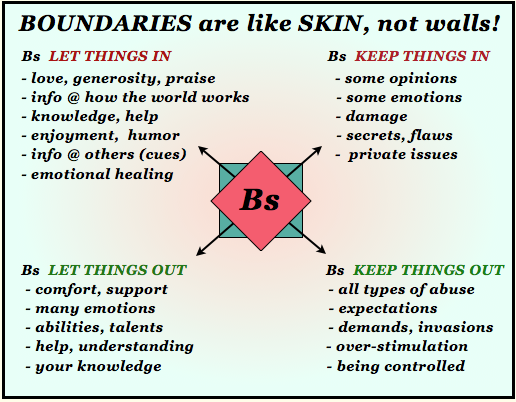
• grow appropriate boundaries to keep from getting enmeshed with others or from being stepped on / run over / invaded…..
• have some kind of spiritual practice, to calm & sustain us
=== AND remember that all of this takes a lifetime to unravel.

❤️ Be Patient & Loving toward yourself in the PROCESS.  We know it’s hard to give up our old ways! None of them go away completely, but the Positive Benefits of growth begin to outweigh the damage, so we feel better & live better!

NEXT: “What just happened” Part 1

NEGATIVE BENEFITS of Old Patterns (Part 3)

attitude 

YOU EXPECT ME TO DO WHAT?
I’d rather do it my way!

PREVIOUS:   Negative Benefits (Part 2)

SEE posts:Denial & Acting out
The UNIT: Healthy Adult, Loving Parent”

PMES = Physical, Mental, Emotional, Spiritual

DENIAL & RESISTANCE
Why do we keep blanking on what we’ve learned in Recovery?  Because even ACoAs who are sincere about self-growth – have a powerful built-in forgetter, pounded in place by our family. We can hear the same thing over & over, & still….

So, when clients are asked* some basics of ACoAs damage & recovery, such as:
a. “What is self-hate & why did we develop it?”
b.  “What do we need to have in place in order to have good boundaries?”
c. “How does this problem of anxiety relate to your childhood?”
d. “Why do you need to stay vague about your finances?” …..
…. they often give a blank stares & shrug, even after years of Program & therapy!

• ACoAs are not stupid people.  In spite of ADD, depression, hormone imbalances or other issues – we remember lots of other things – like how to do our jobs, how to surf the web, how to buy a house or car, how to expend lots of futile energy giving great advice to friends, lovers, family – that we don’t use for ourselves ….. but NOT what we’ve learned about our own damage OR about mental health!  adults-acting-childish
(adults acting like school kids  —>)

So if we want to keep growing, it’s very important to keep looking for the unhealthy payoffs (same as NB) behind our self-defeating patterns.

ANSWERs to the above Qs :

a. If we did understand what S-H is truly about, it would be harder & harder to maintain. THEN we’d have to deal with the intense pain & rage of the many ways we were neglected, abused & abandonment by our family.

NB:
Keep all that swept under the rug – locked away in a dark room of our unconscious.  The WIC thinks that if you ignore something scary, it doesn’t exist.  Too bad it doesn’t work that way!

b. To have good boundaries we need to:
1) know what our needs are
2) give ourselves permission the actually have those need
3) actively go about meeting those needs, a day at a time.
It would mean disobeying fundamental Toxic Rules, taking care of ourselves, not staying a victim (which we were originally) & stop waiting to be rescued

NB: Not have to be in charge of our own life – not ‘grow up’ emotionally, & face angry or fearful reactions from our family & ‘friends’ if we were to get better (we think it prevents getting abandoned – but that has already happened by those people!)S-H

c. Identifying how each problematic situation / relationship / emotion / pattern – in our life mirrors our childhood (S-H) would mean having to face what our parents were really like, what they did to us, what they didn’t provide…. which IS reflected in how we treat ourselves now.  We’d have to break many illusions & feel the deep hurt & longing of our eawrly years

NB: Not have to do an extensive written family inventory, to look at these realities on a deeper level – even when we think we’ve dealt with our issues or that we already know all about what happened.

d. To stop being vague about anything (our finances, time, our emotions, our knowledge…) means identifying the Toxic Messages we’re still obeying, feeling the old terror & having to take full responsibility for our actions in the present. S & I = becoming your own person, the one you were born to be, minus your damage!

NB: Not having to fully acknowledge knowing how bad it was growing up, not dealing with our accumulated old pain, not having to separate from the dysfunctional system we grew up in — which the WIC thinks means abandoning them, & us being alone forever!

NEXT: Neg benefits #4

NEGATIVE BENEFITS of Old Patterns (Part 2)

annoyanceHOW CAN A BENEFIT BE NEGATIVE?
I think you’re just messing with me!

PREVIOUS: Negative Benefits (Part 1)


Examples of
How NEGATIVE BENEFITs (N.B.) keep us from healing
a. NOT have to GROW UP, be responsible
PATTERN: Many ACoAs stay isolated, severely under-earning, unloved, unproductive, living in dirty, immaturecluttered environments, joy-less, suicidal…
OR focus all their attention on taking care of others, so they can look ok, the good guy/gal – but are also depressed, full of shame, self-hate & hidden anger

N.B. … STAY SICK rather than develop S & I, which is letting go of the symbiotic attachment to their cruel upbringing & becoming their True Self

b. NOT have to face OLD PAIN (life & death)
PATTERN: A woman was forced to take care of her filthy, violent, mentally ill mother from age 10, when her father abandoned them. At age 45 she finally put her mother in a home & promptly developed Scleroderma as a guilt/ stress reaction. Eventually she became bed-ridden, with excruciating migraines, barely able to make logical sense – although she had been an intelligent & talented artist.
She spent her last 25 yrs isolated, depressed, with almost no practical self-care, filled with shame about every aspect of her life.
Occasionally she was in contact with her father who had remarried another cruel woman. When he died at age 96 – the daughter went into a rapid decline & died alone, in less than a year…

N.B.rather than emotionally re-experience & process the horrors of being an only child of a passive, depressed father & violent, psychotic mother (left the infant with souring baby bottles & soiled diapers…..)
Therapy helped diminish her self-hate, but she was never able to go deep enough to heal the rage, sorrow & loneliness held in her body

c. NOT have to feel LONELINESS Screen Shot 2015-08-13 at 8.11.37 AM
PATTERN: Many ACoAs over-work, care-take, self-medicate with sex / social media / addictions, hanging on to bad relationships no matter how harmful….. One woman stayed with her very abusive husband for 35 yrs, until he died. Instead of creating a life for herself (at 62) – she too died – 8 months later!

N.B.rather than face the emotional & practical stresses of being alone, having to feel the emptiness of loss and old abandonment, & having to care for herself, deal with finances……

d. NOT have to TAKE CARE of oneself
PATTERN: A competent, creative woman in her 50‘s developed chronic pain from an auto-immune illness.  on strike
Q. put to her: “Are you willing to give this pain up?”  Inner Child answered ‘NO’ – because = being disabled was ‘getting taken care of, legitimately’.  She was tired of doing it all on her own – carrying the burden of the Hero Role. Her Kid wasn’t allowed to be nurtured, but this way she could get practical help, be felt sorry for, lauded for soldiering on….

N.B.rather than having to continue taking care of herself, which she’d been doing her whole life as an only child of a cruel narcissistic mother & distant, depressed father

e. NOT have to DISOBEY toxic FAMILY RULES
PATTERN 1: A beautiful, bright young woman in the big city was put under an unbearable family demand to continue rescuing her “poor, suffering mother & sisters” (who had always treated her cruelly) – by regularly sending them all her earnings.  Feeling obligated but very resentful, she made sure to only work at menial jobs she hated (under-earning) & live on as little as possible – so she could ‘honestly’ say she didn’t have any $$ to send!

N.B. … rather than say “I’m sorry, but I can’t take care of you any more, I have to live my own life!”, then face her guilt & their scorn (abandonment) – which had already happened, of course! don't disobey

PATTERN 2:  In his culture, a Native American man was taught that to be an active artist, one must drink.  No alcohol – no creativity! No argument! He always wanted to write plays & get them published, but got deep into alcoholism. Before it could kill him, he got sober.  5 yrs later he still hadn’t ‘picked up a pen’. He was stuck, & miserable.

N.B.rather than go against (separate from) a national culture, not just his family – but the whole tribe!  Talk about abandonment!

NEXT: Negative Benefits (Part 3)

NEGATIVE BENEFITS of Old Patterns (Part 1)

neg.benefitsYOU CAN’T MAKE ME GIVE THIS UP !
I’d rather be miserable than face that pain!

PREVIOUS: “They did the best they could”

SITE: 10 Worst Habits for Mental  Health

See ACRONYM page for abbrev.

INTRO
Negative Benefits (NB) is a new concept for many people. A web search found nothing about this important idea.  When clients are asked what they get out of continuing a harmful behavior or thought pattern, they usually say “I don’t get anything out of it – it’s just what I know, a habit”.  They’re indignant that they’re even asked.  They only hear the word ‘benefit’ & can’t imagine that anything self-destructive can have a reward!

• Familiarity & habit are not the only reasons destructive patterns persist. The deeper truth is that we DO get something from hanging on to those old ways of acting & thinking – they’re a form of protection (defense mechanisms) against facing childhood issues that feel too terrifying to deal with.

So yes, they provide us with Negative Benefits. In reality the ‘protection’ they seem to offer comes at a high price – in grief, in more abandonment, shame, self-hate, loneliness, ill-health, bad relationships, depression, lost opportunities…. yet we protect them with our life, literally, until we do enodefensesugh FoO work to not need them – as much.
SO – to understand what Negative Benefits (NB) are, we have to start with:

DEFENSES
These are unconscious human psychological strategies our mind develops to protect us from having to deal with painful traumatic realities we can’t handle.
They’re also used to maintain our self-image – a mental picture of ourself we can live with, in the face of inner conflicts – between what we think we are & what we wish we were.

• Everyone needs defenses to manage. However, when we experience long-term stress as children our defenses become rigid armor & walls, which are hard to penetrate & hard to dissolve. They’re expressed in the form of Character Defects – self-defeating behavior patterns which can be seen as forms of Self-hate, SUCH AS:
😱 abusive behavior, being controlling, closed-minded, co-dependent, dishonest, isolating, negative thinking / pessimism, narcissism, perfectionism, prejudice, resentment, rationalizing, selfishness, self-justification…..(Immature)

These T.E.A. patterns sustain our denial by protecting against old pain:
— (E)motional: our abandonment terror, deadly loneliness, murderous rage, profound hopelessness, terrible longing for the impossible….
— (TMental: a deep-level KNOWING that they weren’t there for us, &/or tortured & neglected us, which was potentially lethal & which the WIC still believes can destroy it.
So, no matter how self-destructive or lala a defensive pattern is – we will do almost anything to hold on to it – even in Recovery – because:

a. the WIC is in charge of our inner life, until we develop the UNIT, the Healthy & Loving Inner Parent with must replace the PP’s bad voice ( Introject)

b. AND, the kid is beyond-convinced that our long-time defenses are not as life-threateningly dangerous (bad for us) as what’s underneath, hidden in our unconscious

• REVIEW: dysfunctional patterns ‘protect’ us from facing what we consider unbearable knowledge (T) & terrifying emotions (E) from the past, as well as having to deal realistically with functioning (A) in the present. They represent Freud’s ‘Repetition Compulsion’, which is so evident in the lives of most ACoAs. Yes, the pain accumulated from childhood is bad, but not dealing with it cripples or kills us in so many PtraumaMES ways

➼ In simplest terms, the main reasons we hang on to the old ways with both fists, as if it were a life-preserver is:
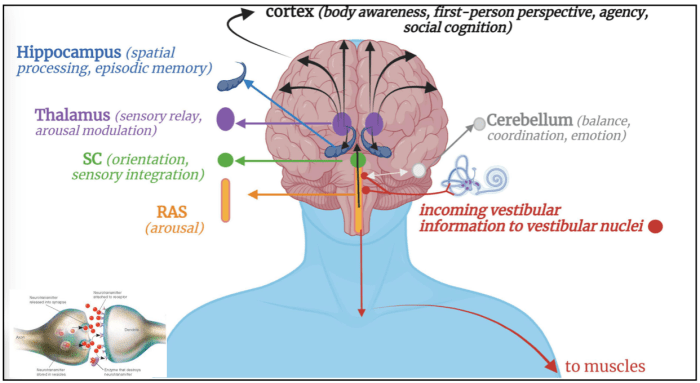
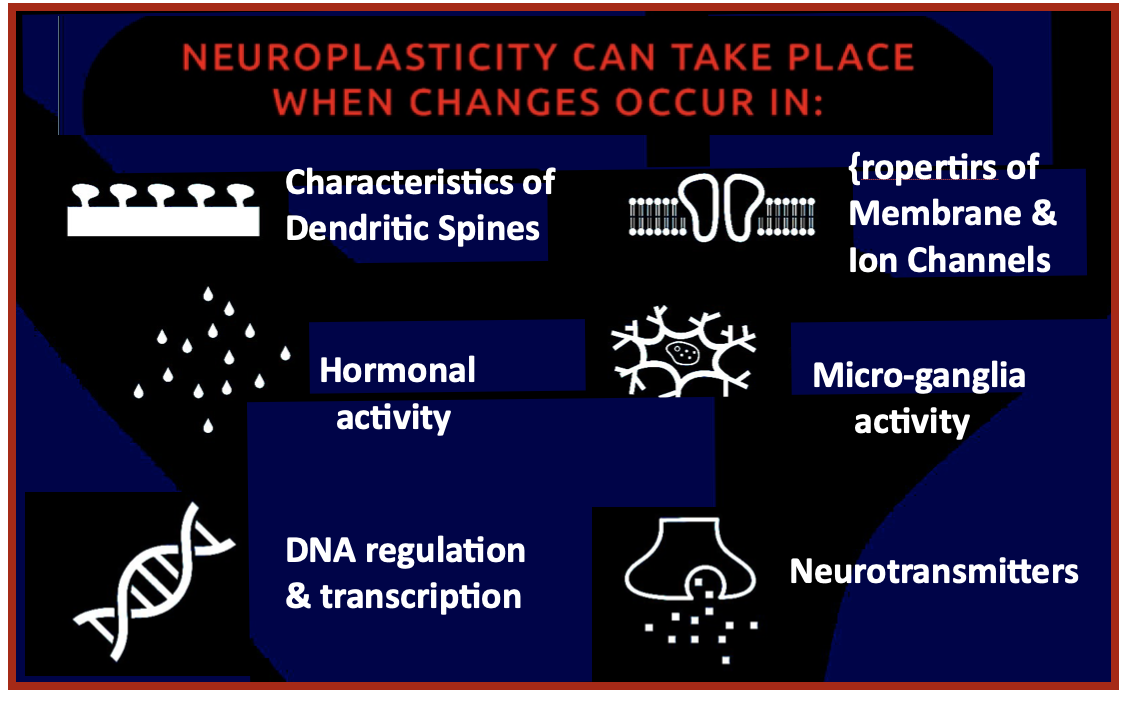
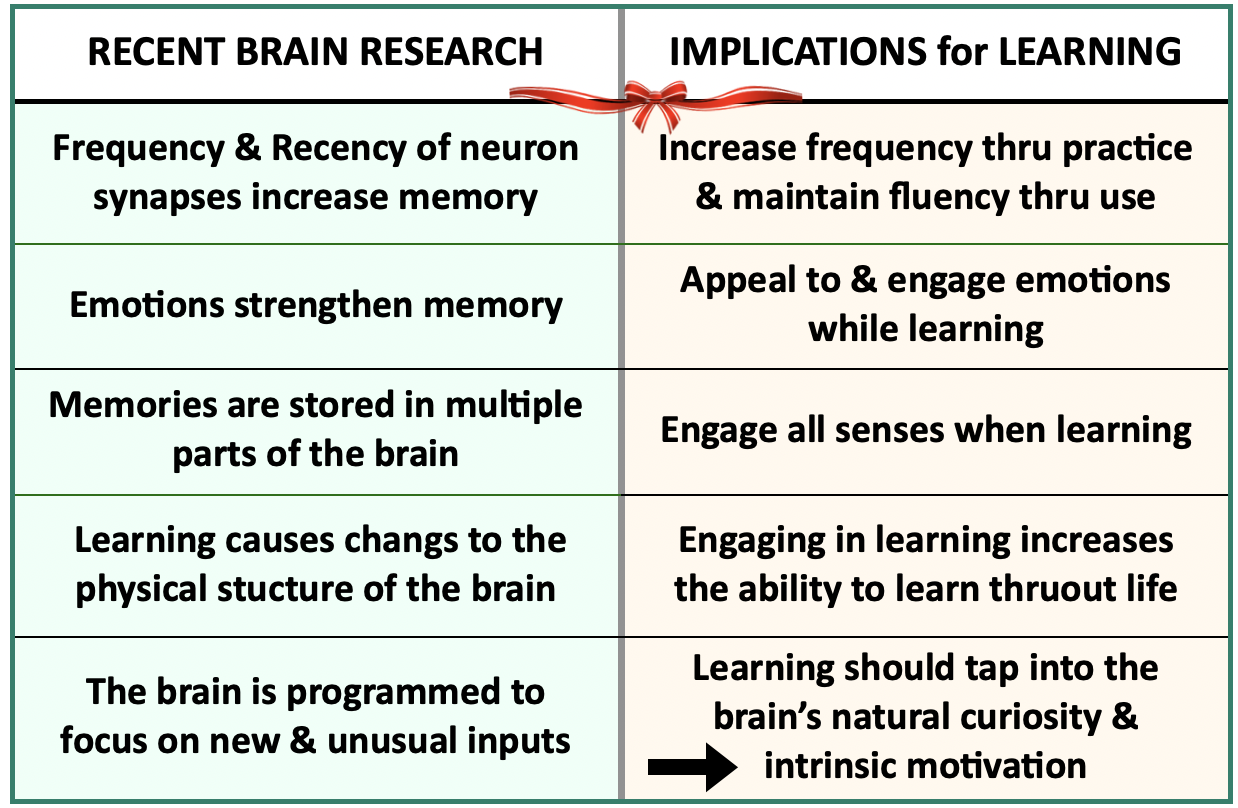
1. because our brain has been programmed from birth, & those grooves (neural pathways) are very deep. It takes LOTS of knowledge, repetition, perseverance & patience to make new, stable grooves
2. since our WIC believes it needs the psychological negative benefits to survive – it will take a lot of time & effort to develop the new UNIT that can take over the reins from the WIC & PP.

NEXT: Negative Benefits EXAMPLES (Part 2)