
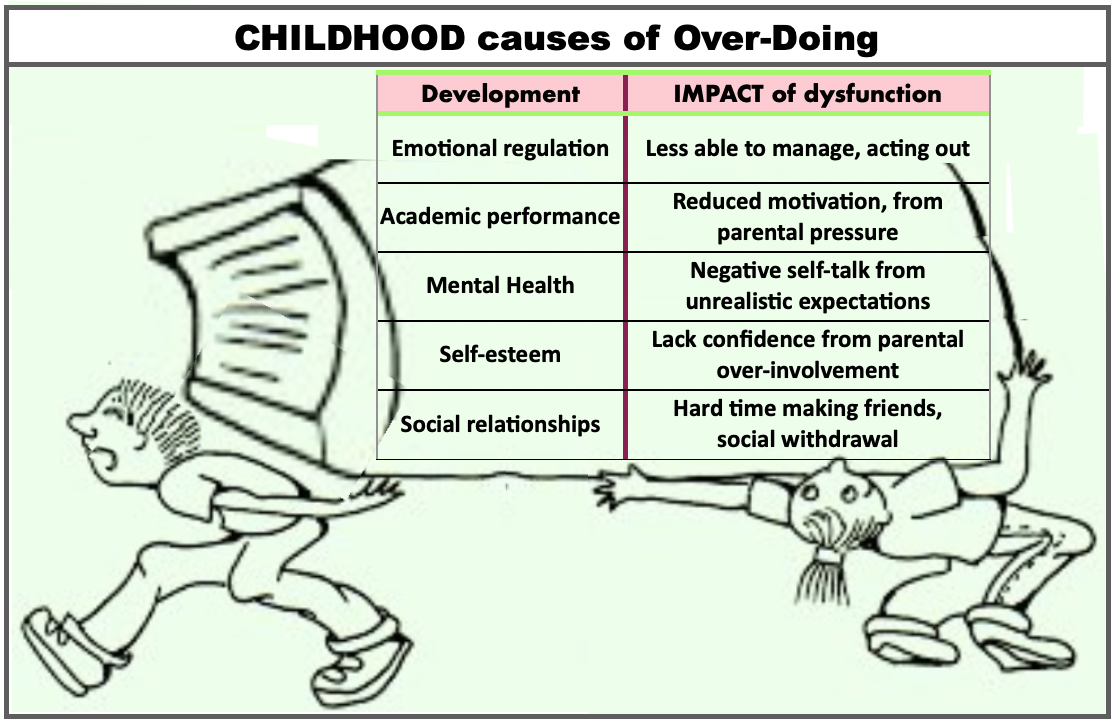
 PREVIOUS :
POST : Toxic Family RULES // HERO family ROLE
DEF: Over-doing (o-functioning) is when someone takes on emotional &/or practical responsibilities in life areas which are way beyond what is appropriate or expected for a particular role (parent) or developmental level (child), especially to the point of causing negative physical or psychological consequences into adulthood.
Over-doing can act like a dog whistle to under-doers, narcissistic, & other exploitative types. It’s a power-play. Damaging parents just assume children are to be used to their own advantage, They benefit from the child’s built-in deference & attachment to them. These Kids are prematurely pressed into taking on adult responsibilities to meet the emotional needs & lacks of their parents & siblings.
So, many become domestic slaves, doing everything the adults can’t or don’t want to. The Over-giving child feels impelled by desperation & panic, not just expressing themself or being empathic ….
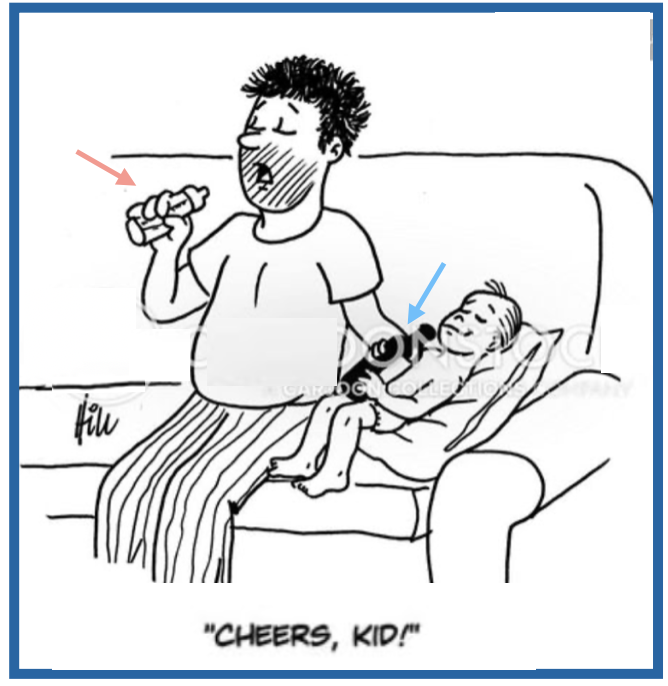 IRONY : Emotionally immature parents rely too heavily on their children yet also resent them. They’re ‘fed’ by the power dynamic BUT feel the child’s needs as a source of irritation & inconvenience . The child is experienced as a competitor for resources & attention, rather than as an innocent being legitimately entitled to their love & support. (Role reversal ↗️ )
💥 This puts them in no-win double bind: the child must suppress their humanity to preserve attachment needed for survival.
EARLY LIFE ‘ACEs’ : Adverse Childhood Experiences
❤️ In healthy families, parents carry the emotional & practical responsibility for the household. Kids get to be kids — free to play, make mistakes, & be cared for.
🩶 BUT : Over-functioning (O=F ) in children comes with an underlying agenda, & is a learned behavior . It’s about adult-child imbalances, inappropriate expectations & excessive demands.
🖤 Years of early trauma** can lead children to become Over-doers as a way to manage the anxiety of not feeling accepted & loved. They try anything & everything to stay connected to a parent, no matter how abusive, hoping to get their approval – even permission to exist! The terror is that if they don’t take care of the adult(s) – they’ll be thrown away as useless. I
It’s one of many forms of abandonment. To a small child this feels like life & death – & may be.
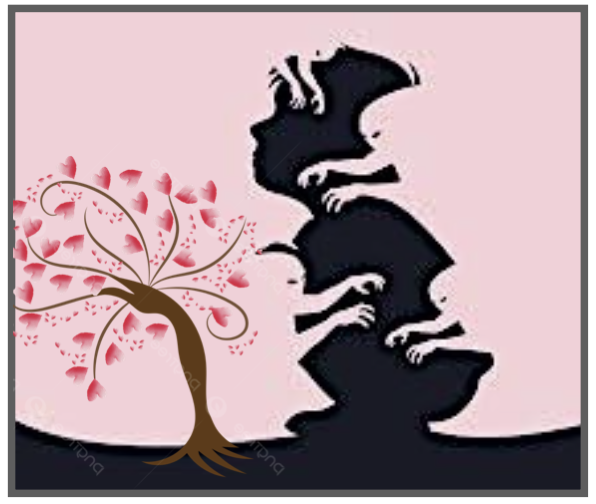 ** NOTE – Trauma is experienced in every PMES area, some more severe & long lasting than others
√ Abuse – all the painful things done to you or to someone near you
√ Neglect – all the good, helpful, wonderful things you did not get
In dysfunctional families, parent-child roles often get blurred or even reversed. When forced into the caretake role (even as young as 3yrs old !) they’re said to be a parentified child,
This is common where the adults don’t provide many of the basic needs every child has, because of parents’ mental illness, substance abuse, severe narcissism …..
EXP : if your parent is passed out drunk, can’t get out of bed from depression or grief , is away a lot, divorced or dead…. the child will have to perform all the household & family duties – by themself – or they won’t get done.
👫 Being ‘parentified’ forms powerful & lasting – toxic – messages, not true but distortions, based on real lived experiences. EXP :
☔︎ If I don’t give more, I’ll be invisible
☔︎ I’m only a good person if I take away someone’s worry & pain
☔︎ My worth comes from actions that keeping things going
☔︎ If I don’t control & manage this, the family will fall apart
☔︎ It’s my job to meet other people’s needs instead of my own
☔︎ They need so much….. I don’t need a lot & I can do without
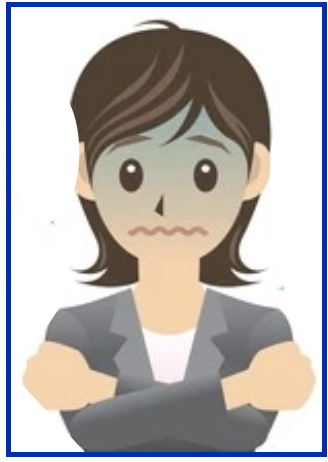 ☢️ And, these beliefs are held in body-memory from those times when NOT Over-doing was actually dangerous. EXP :
♝ Being accused of being manipulative or demanding for having developmentally-appropriate emotional needs (fr0m birth – on)
♝ Harsh or cruel dismissal when bringing attention to oneself
♝ Shamed, mocked, or humiliated when upset or asking for help
SO – You became the over-doer. YOU :
🌪️ learned to read the emotional weather in the room so you could prevent a blow-up
🌪️ handled household tasks, (shopping, calling the repairman. even dealing with money problems)
🌪️ stepped in to calm down fighting or volatile parents
🌪️ took care of younger siblings while parents were distracted or absent….
NEXT : Childhood effects on Over-Doing (#2)

