
«
PREVIOUS: Alcoholism – STAGES (#2a)
STAGES (cont.)
1. Denial // 2. Dependence
3. PROGRESSION – Physical / Emotional deterioration
• An obsession with drinking. During the dependence stage, the alcoholic still planned their day around the drink. Now they simply take it with them wherever they go
• Alcohol is needed to function. The morning drink is a daily ritual, drinking is throughout the day, & keeping a steady supply available, like a flask in the purse or bottle in the desk drawer
• Loss of other interests. Social activity continues a decrease because of erratic behavior. as drinking isolates them from friends & family. Hobbies & intellectual interests once enjoyed are long gone, & drinking is the only companion, the thing that keeps them going
• Depression, anxiety, insomnia. Alcohol is a depressant, so the physical effects will worsen in an already emotionally unhappy person. They can’t get to sleep without a drink, 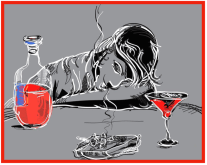 & often end up paranoid – become overly fearful but can’t explain why
• Family relations continue to deteriorate. If it wasn’t noticed before, slowly the addict become increasingly irritable, arguing with the spouse, attacking their children, alternating between being sullen & snappish. Stop attending family functions, preferring to drink, or showing up drunk – sloppy, obnoxious, sexually inappropriate or belligerent
• Friendships change or end. There’s a decrease in social activity because of erratic behavior, a sudden change in friends, trouble talking to strangers….. old friends will be run off when they confront addict with their drinking
• Financial, legal problems. Racking up debts, domestic abuse, calls to cops, harassment or stalking of spouse or lover – possibly resulting in a Restraining Order, divorce & child custody fights, court appearances for DUIs, & sometimes vehicular homicide……
• Serious health problems. Personal hygiene begins to slide, & eating properly is a thing of the past. The addict will get sick much more often (respiratory infections, malnutrition…..), & the doctor will warn about damage to liver & pancreas
 4. CULMINATION
• Loss of control is obvious. The addict no longer takes care of themself, (no medical care, poor hygiene, careless appearance….), & normal responsibilities have long been neglected. Without a co-dependent rescuer, they’re behind on bills, can’t borrow any more money from family & friends, & have built up credit card debt to support their drinking. May even become homeless
• Family & friends are gone. The addict may have been to rehab – several times, but still found it impossible to quit, having become a slave to the bottle
• Physical symptoms are excruciating. Without medical attention, this stage of alcoholism is incredibly dangerous. Unable to hold food down, the tremors begin mere hours after any ‘last’ drink, & hallucinations or seizures might have even set in
• Full-blown addiction cause heavy withdrawal symptoms & an increased risk of developing life-threatening conditions. Symptoms can be so painful that the person needs to drink simply to alleviate them. Life expectancy in this stage can be as short as six months.
RECOVERY requirements:
✴︎ A sincere desire for help
✴︎ AA, Ongoing group, individual & family therapy
✴︎ Physical detox & medical treatment
✴︎ Assessing clinical treatment needs for co-occurring disorders : anxiety / ADHD / bipolar / college mental health / cross addictions / depression / food / PTSD / obsessive-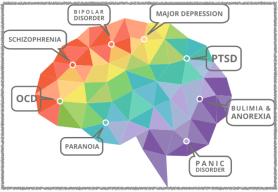 compulsive / personality disorders / schizophrenia / self-medication……
✴︎ Establishing new ideas, attitudes & life goals
✴︎ Rest, structured daily routine, proper nutrition & sleep habit
✴︎ New circle of stable, sober friends / sponsors & mentors
✴︎ Increase in self-care, confidence, self-esteem
✴︎ ODAT – HALT: ongoing work toward lasting sobriety. MAY eventually need to do deep FoO work to improve quality life.
RELAPSE
A hallmark of any chronic condition is the potential for relapse. The sufferer & doctors work together to identify the best treatments to manage the condition.
Addiction is no different. Relapse rates (40-60 %) are similar to asthma (50-70%) & adult-onset diabetes (30-50 %), reported by the National Institute on Drug Abuse.
The initial treatment may not be quite right, or the person tries to quit without help. Over time, control is lost & the person drinks again.
And an in-patient program of less than 90 days has limited effectiveness.
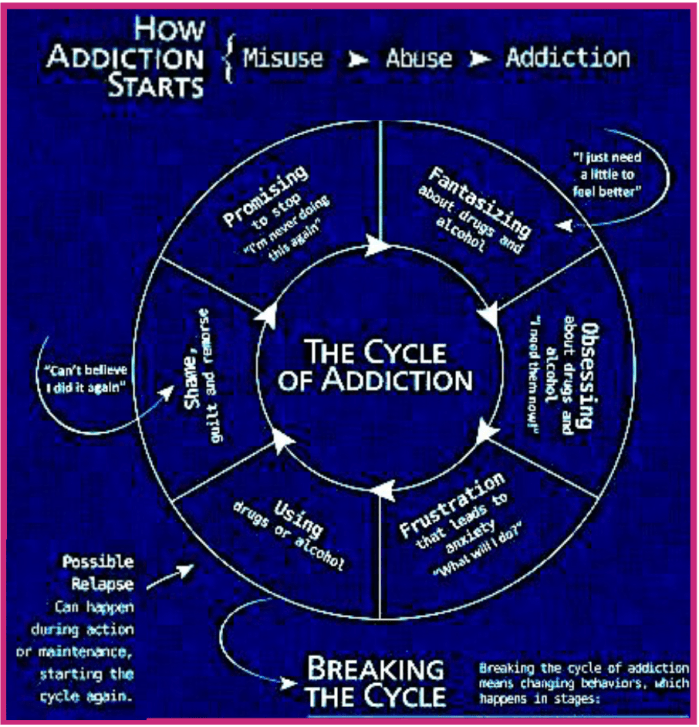
However, this is not an indication of failure. It’s possible to interrupt the cycle of Use —> Abstinence —> Relapse, by a determination to have a better life, & by getting the right treatments.
NEXT: Alcoholic TRAITS #3a

