
 PREVIOUS : GRIEF – & Children
POST : “Resilience & Humor”
📌 Developing Resilience : Spiritual, #2
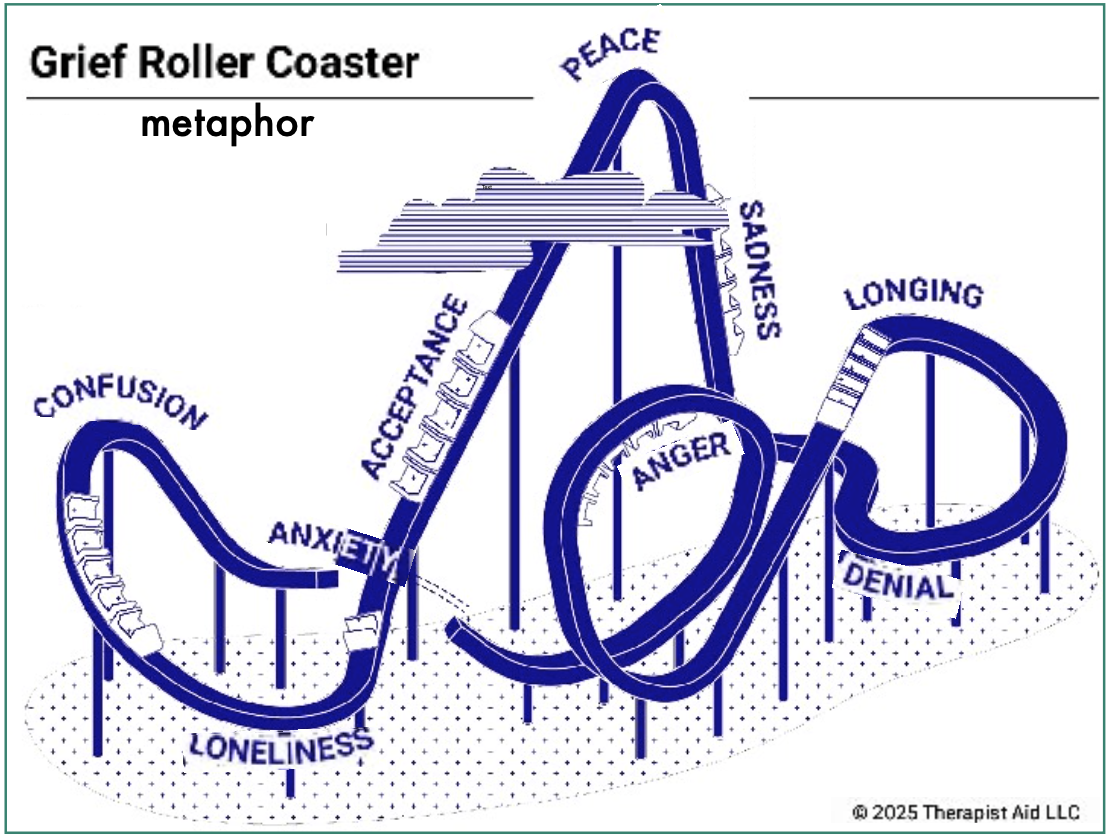
↗️ ARTWORK : Grief is a journey through emotions that can change from day to day, even moment to moment. These twists & turns feel unsettling, like being on a roller coaster. Grief upends our life & makes us feel disoriented & directionless. Common are frequent setbacks & feeling lost.
But like being on a roller coaster, grief is manageable if we stop trying to control the experience, & surrender to the ride ⤵️ . With time, the right help & connecting to Higher Power, we eventually get to a better place.
1. For yourSELF – to start healing from a loss
√ Attend group therapy : A trained therapist as guide & your peers – who are all going through something similar – will understand as no one else can. An excellent option if you want more friend-like experiences or are nervous about one-to-one with a counselor.
√ Be patient & kind to yourself : Because grief is not linear, and there’s no timeline for how long the process takes, life events can trigger layers of distress, so accept with compassion how hard grief-healing-tasks are.
√ Get fresh air daily : Being outside in the sun (when possible), taking a 30-minute walk & moving around at home (instead of doom-scrolling) – resets sensory experiences that can help with circadian rhythms, that will clear & calm the mind.
√ Journaling : Put your thoughts on paper, as long as they’re honest, unsanitized & without self judgment. You don’t have to share them, or only with someone you fully trust.
√ Practice a hobby : Do things just for fun & not to get a specific end-product. The goal is to be therapeutic without DO-ing something practical. Playing, that gives you moments of happiness, strengthens resilience.
√ Practice self-care : Being prepared for whatever comes your way needs space to develop. Self-care shift the focus off all the other essentials in life – so you can just be you.
√ Visit with the deceased : Even if you don’t have access to a physical location where the deceased lived or where you spent time together, you can picture it & talk to them in your mind. It’s not crazy & can feel very grounding.
√ See a therapist: In place of -or- along side of ‘group’, find an experienced grief-specialist who fits your needs & personality so you don’t have to ‘reinvent the wheel’. Doing grief therapy as soon as possible could save you a lot of heartache in the long run.
💚 DAILY Actions
⭐︎ Prayer & reading a modern version of The Psalms are very healing & soothing (some for sleep or as Dramatized Audio)
⭐︎ Mindfulness can train you to focus on the present moment instead of reliving the past or dissociating about future threats
⭐︎ Crying is a healthy release , releasing feel-good hormones such as oxytocin & endorphins.
« «
«
2. For OTHERS – to support a bereaved person
🔅Ask how you can help : Check in & remember not to feel pressured to ‘fix’ anything. Listening & being kind is enough.
🔅Attend the memorial service with the bereaved’s permission : Be a presence & a contact – for sharing & reminiscing at the event.
🔅Do more of what works: Maybe take them out to lunch, or for long walks, or other positive distractions, to help their mood.
🔅Plan a grief ritual : Making meaning during grieving is a great way to be supportive. Help create an intentional Ritual to be repeated once a year for several years, in remembrance.
 🔅Listen to their stories, even if you’ve heard them before or don’t want to hear them at all : Repetition with someone who also knew the deceased is a common way to be comforted, describing the same situation from several points of view each time.
🔅Normalize odd behaviors : The mourner may believe they’re hearing from the deceased, or may start wearing their clothes. Ask what the meaning is for each behavior, to help the survivor connect with themself & with you.
🔅Offer help for tasks : Grievers can have a hard time completing daily activities. So offering practical help is a life saver, making their days a little easier.
🔅Refer to counseling : Also, remember that doing too many ‘avoidance activities’ for them could lengthen their journey. Suggest counseling, because you can only do so much, & admitting your limits can keep you from getting burnt out.
NEXT : Grief – Giving Good or Bad advice

