
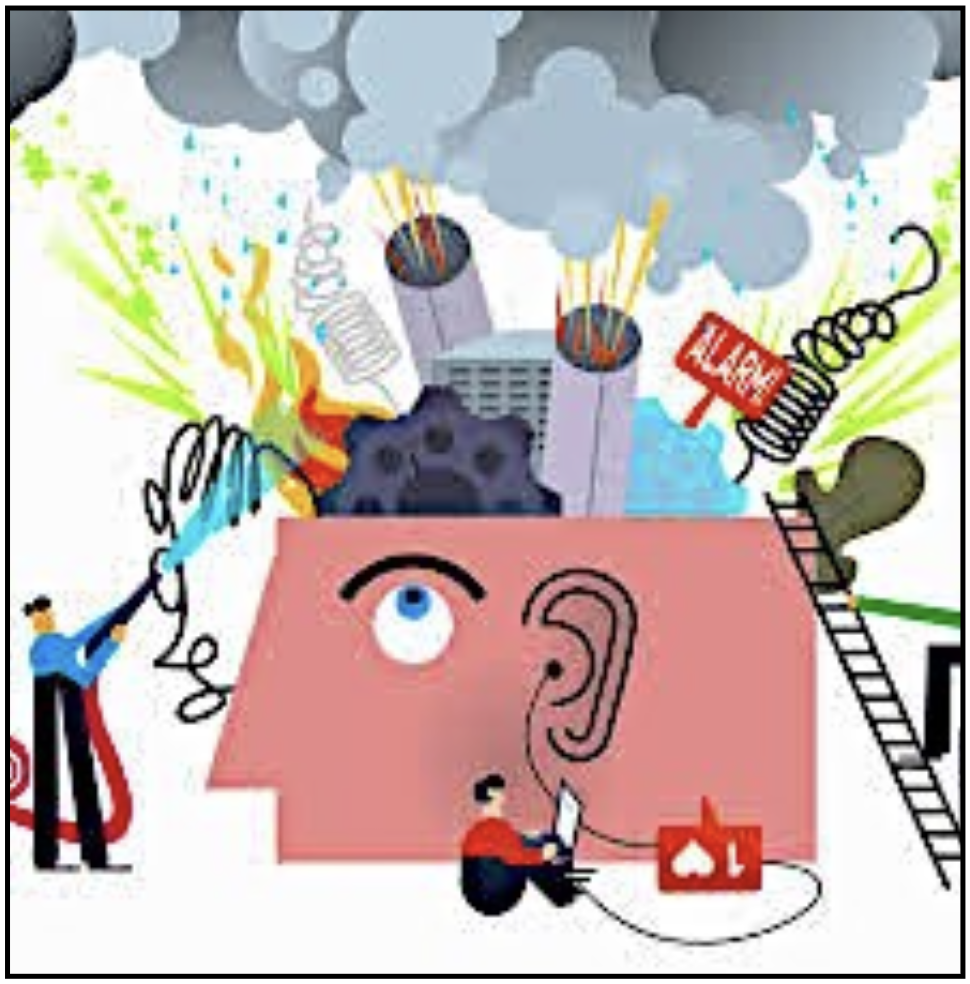
 PREVIOUS : Catastrophizing – a CD (#1)
SITE: “What doctors want patients to know about stopping catastrophic thoughts’
☁︎ Catastrophizing (cont.)
Some CAUSES
♦︎ Being predisposed to anxiety & depression
—— BIS-BAS dysregulation : the behavioral inhibition & approach systems used to regulate impulses & anxiety may not be functioning correctly, which suggests why some people catastrophize
♦︎ Differences in brain chemistry or changes in processes
EXP : Interoceptive sensitivity – automatically noticing small changes in the body (digestion , heart rate….), which can lead to catastrophize them
♦︎ Learned as a coping mechanism from family &/or others
♦︎ Single trauma that severely affects their sense of safety
♦︎ Long-term traumatic experiences . EXP : A pre-disposed person whose parent died from cancer may be more likely to assume that any medical ailment is also cancer & always leads to death. 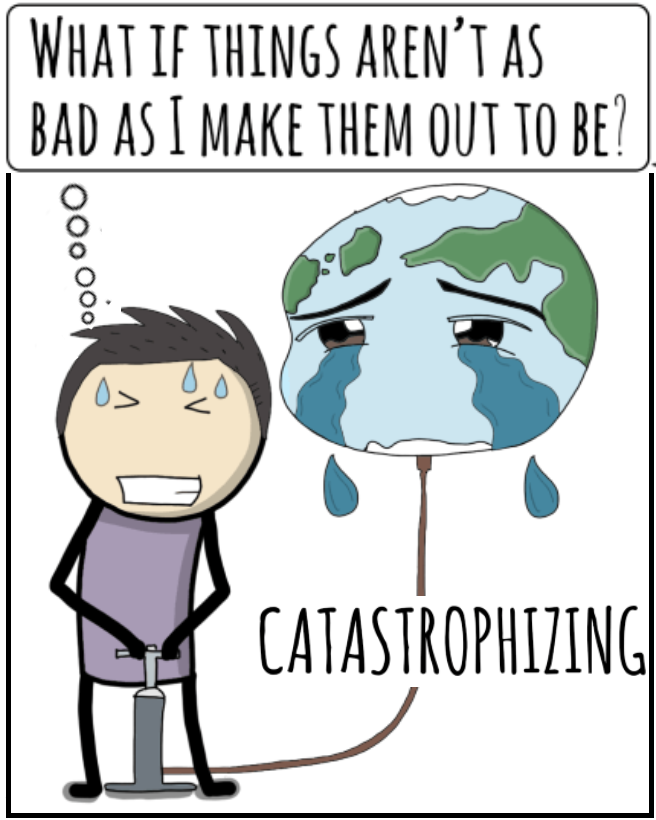
To STOP catastrophizing
🌱 challenge your thoughts & fears
🌱 create problem-solving strategies for what-if scenarios
🌱 focus on solutions to the problems you’re faced with
🌱 journal regularly to recognize distorted thought patterns . Revisit the entries later, possibly with someone you trust
🌱practice mindfulness to stay in the present
🌱 schedule a ‘worry session’ for a few minutes to notice & admit your fears – with compassion
🌱 talk with a safe friend or family member about worries
🌱 work on accepting uncertainty – you can not control everything
☆ Acknowledge that unpleasant things happen – Life is full of good & bad days. One bad day does not mean all days will be bad forever. Make space & time to be gentle with yourself, especially when stressed. Break overwhelming chores into achievable tasks — & build in extra breathing time.
☆ Find positive affirmations : You have to believe you can overcome this habit of assuming the worst. Pick a phrase that suits you. Rinse & Repeat daily. (“I’m ok if the whole thing is 90% ok”)
 ☆ Ground yourself – Catastrophizing is all about the future, so the goal is to bring yourself back to the present. Notice when you start spiraling, & stop by deep inhales through the nose & exhales through the mouth. Or go outside & feel the ground with bare feet or hug a tree, pet your fur-baby or do simple stretches and focus on the sensations they each provide….
☆ Know when to stop the repetitive, catastrophic thoughts. Say aloud or in your head, “Stop! / I don’t agree! / Enough!” which can dry up the stream of fear, halting the spiraling
☆ Play out the worst-case scenario, & ask yourself what will really happen if that’s were the case. What else can you do?Most of the time, reality is not either 0% or 100%
⭐︎ Practice excellent self-care. Catastrophizing is likely to take over when very tired or stressed. Getting enough rest & using stress-relieving techniques can help you balance
⭐︎ Recognize irrational thoughts. Catastrophizing usually follows a definite pattern. You may start with “I’m in pain today.” That gets expanded with anxiety : “The pain is only going to get worse,” or “This pain means I’ll never get better.”
Staying awake to recognize such thoughts can give you the mental room to start making little changes – which will add up over time
⭐︎ Talk to the catastrophizing brain. Tell it “Thank you for sharing, but no thank you. I know you’re trying to be helpful, but these scary thoughts are not what I needed right now.”
Think about why you’re having negative thoughts. Getting to the bottom line can let you figure out ways to defuse them.
⭐︎ Think of another outcome. Remember that thoughts are not facts. Instead of assuming a negative end, picture as many positive or less negative options as you can. Get someone kind-&-smart to suggest alternatives if you need to
⭐︎ Try the “chances are”method….. & then fill in the blank. EXP: Instead of “I’m sure I’m going to be late & everyone will judge me” —–> say “Chances are they’re going to be too busy to even notice” OR “Chances are I’ll make it”
 THERAPY options
√ Acceptance & commitment therapy ( ACT )
√ Cognitive behavioral therapy (CBT)
√ Dialectical behavioral therapy (DBT)
√ Exposure response prevention therapy (ERP )
√ Mindfulness-based stress reduction (MBSR)
√ Psychodynamic therapy
NEXT : OverReacting – a CD, #1

