
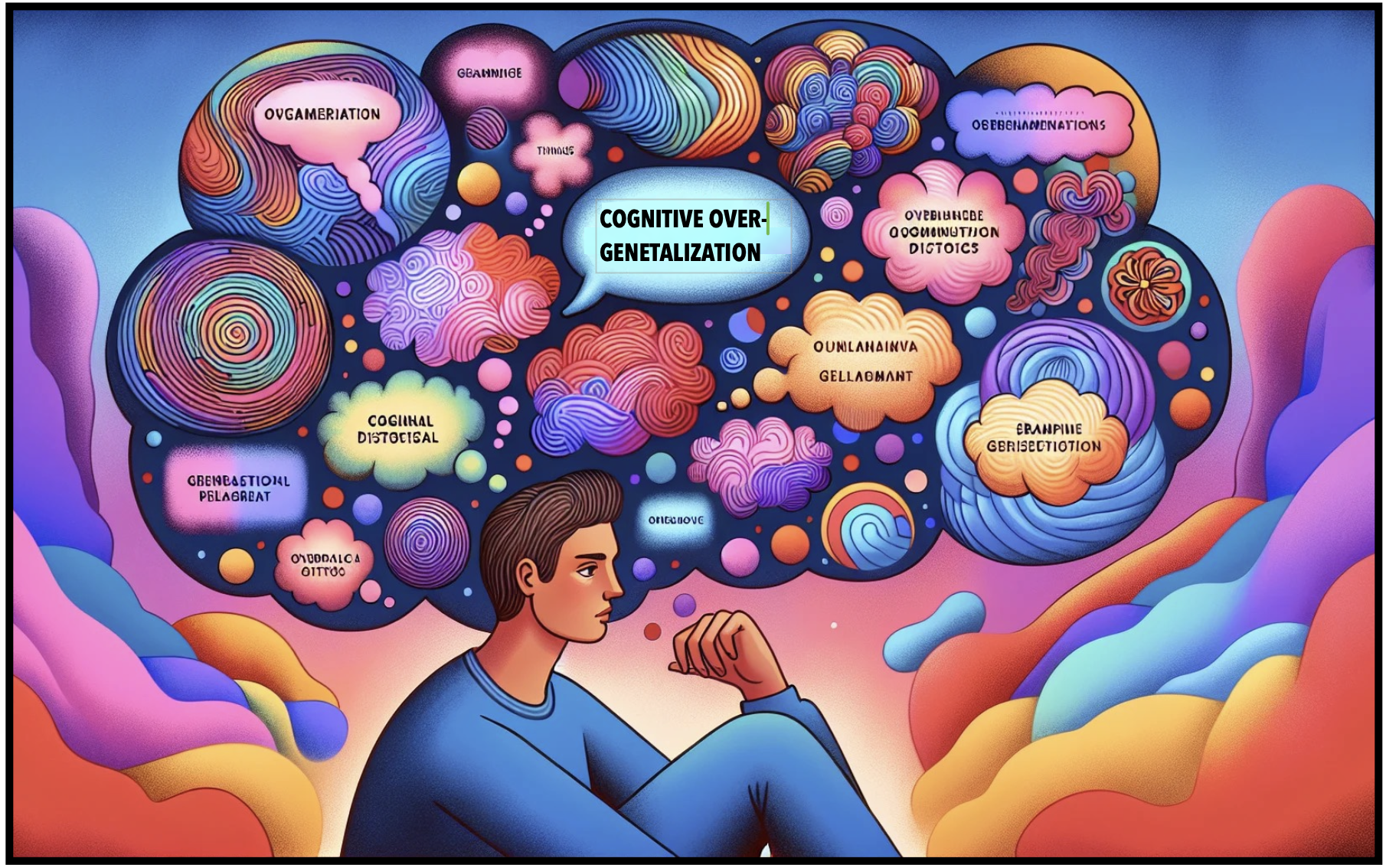
 PREVIOUS : Over Generalization – a CD (#1)
POSTS: Review “Cognitive Distortions“
Some unhealthy REASONs for using O-G:
a. Mental laziness – it’s easier not to bother questioning one’s assumptions
b. Emotional resistance – not having to look at oneself to see why something went wrong (instead of using the info to learn from, but not for blame)
c. The fear-based ‘need’ to predict people’s behavior – assuming that if we put them into neat simplistic boxes, we’ll know how they will act, every time (our desire for control)
EXP: Dysfunctional cruel parents using this CD will accuse their small child of being evil, willful, difficult – just because it disobeyed the parent once or made a mess, assuming the child is & will always be disobedient & difficult. From then on he/she is treated as the bad seed, no matter how well she /he behaves from then on.
 d. To persuade, sell, manipulate – especially if backed by real or made-up ‘evidence’
• In cults – re. not being allowed to leave the group – cult members are warned that bad things will happen to anyone who turns their back on the community.
So when a member does manage to leave – & makes a normal, human ‘mistakes’ in their new life (get angry, forgets something, is late…) – they’re terrified that the cult’s prediction of dire consequences will indeed come true
Negative EFFECTS of O-G
We’ll miss out on…
• … the complexity, variety & subtlety of the life around us
• … the benefits of all the facets of a specific person or situation we’re ignoring or dismissing
•….. the benefits of a positive product or service from having a bad experience with one company or doctor, even if a better version would be available
• ….. developing self-esteem & confidence, if painful experiences at school or work lead to a rigid assumption that one is permanently incompetent or worthless
 we’ll miss out on…
• … a wide variety of relationships by :
— assuming rejection or judgment from everyone
— finding it easy to judge, from of a false sense of righteous indignation
— shameless slandering someone about how bad they are, feeling the condemnation is justified, which makes it hard to have compassion or forgiveness.
CORRECTIONS
★ Avoid using absolute terms — such as “always”, “never”, “everyone” or “no one” . Instead, use more moderate language such as “sometimes”, “often” or “most”.
★ Assess Cost-Benefit
Do the costs outweigh the benefits? If they do, consider developing more effective ways of reacting to the situation by working through the next few steps : Collect your own evidence by identifying the facts. Ask if your emotions are clouding your thinking . Consider what conclusion you’d some to if it was someone else in the same situation.
★ Be aware of your thoughts & assumptions
Try to notice when you’re making sweeping statements or about a group of people or situation. To have a more balanced & informed view of the situation or topic, ask yourself if your conclusions are based on facts or on limited experiences.
Look for a wide range of relevant evidence before drawing a conclusion. Do research, collect detailed data & realistic opinions of trusted others. to support your assumptions.
★ Be open to change
Be willing to adjust your opinions or beliefs when new information or evidence becomes available. This can help you to avoid rigid thinking and further reduce the likelihood of overgeneralization.
 ★ Try Behavioral Experiments
This involve testing the validity of over-generalized beliefs through real-life experiences. EXP: if you believe you’re socially inept, challenge this belief by gradually participating in social situations (with support) & observing the outcomes.
★ Use SOCRATIC Questioning
the a technique used in cognitive-behavioral therapy to challenge distorted thoughts. You can ask yourself : “Are there any examples that contradict this belief?
“Am I considering all possible outcomes, or only focusing on the worst-case scenario?
♥︎ Get professional help when possible. Acknowledging this thinking error is a start. By challenging sweeping conclusions & then reframing our thoughts, we empower ourself to break free from the shackles of self-doubt & pessimism.
NEXT : ________ CD

