POSITIVE Responses to Painful Events (Part 1)

flowers 1


THIS ISN’T RIGHT!
I don’t like the way I’m being treated

PREVIOUS: Negative Reactions (#3)

REVIEW:  Negative version of chart

POST : Emotional  Maturity


1. EVENTS
Circle
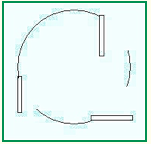
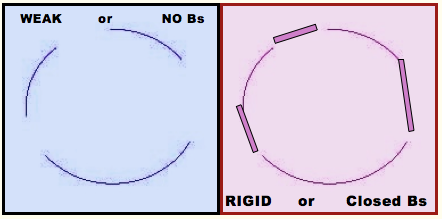
This new chart is the correction for the previous one, showing how to deal with stressors in a more appropriate & productive way. The first circle includes the same set of observations as in “Noticing Painful Events”

a. ACoA DIS-EASE
Lack of Acceptance: Even though ACoAs tend to accurately observe our environment, we often refuse to acknowledge what we see & hear, because:
i. we’ve been taught to repress what we know, developing a built-in forgetter / rose-colored-glasses / horse blinders, to keep us from looking around to see the truth or noticing other options. It’s a definite way to be loyal to the family toxic rules & stay the ‘good kid’ .


ii.
we don’t want to deal with the consequences of being awake – otherwise we’d have to make some hard decisions like speaking up for ourselves, having it out with someone, being less involved, or leaving. This prevents us from feeling old or new abandonment pain

EXP: You’ve know your BFF for a long time & have been thru a lot together. You’re in 12-step Recovery, learning to face your issues & own your CDs, she isn’t.  You’ve both had lots of lousy relationships, but now she’s married a young, gold-digging philanderer & she’s hurting – but doesn’t want to face being alone again.
You’re very upset for her & really angry at her denial – why can’t she admit she made a big mistake & dump him? She has blinders on, but so do you in some ways. She has never been willing to look at herself, her choices, her damage…. why do you think she’d start now?

b. RECOVERY
Awareness:
Accurately identifying & acknowledging what we experience is an important part of Recovery, & eventually leads to a better life, because it:
• honors our truth by respecting our cognitive abilities (info from our brains & intuition)
• allows us to make self-caring decisions, choosing what’s best for us
• encourages us to leave bad situations which would add to the original abandonment, causing more mental & emotional stress
Keep repeating: I KNOW WHAT I KNOW – but I can’t know everything!

For our observations to be reliable / valid, we need to (IMPERFECTLY) have:Screen Shot 2016-06-22 at 9.30.18 PM
❥ a lot less self-hate
❥ a clear distance from the bad voice (PP)
❥ decent boundaries, so less co-dependence
❥ a loving relationship with the Inner Child
❥ a connection to some kind of spirituality

EVENTs needed to be dealt with can be about:
a. any painful internal thought or emotion, not immediately triggered by a present event, but likely from our damaged past
b. a more immediate upset – having a fight, someone being mean, losing something valuable, a disappointed expectation….

c. a distressing situation of our own – death of a parent, a big break-up, losing a job, being in an accident, a fire…..
d. our reaction to a painful external info – like 911, pictures of people suffering anywhere, news of a death… not directly related to us

HEALTH means:
🌱 being able to quickly catch that we really are effected by something
🌱 acknowledging it withoutOR in spite of feeling shame, guilt, self-hate & anxiety, so we don’t have to deny or repress it
🌱 asking for support from appropriate people when we need help understanding & coping with a painful event
🌱 learning mental & emotional tools, & remembering to use them to take care of ourselves when distressed

EXP: Sam’s younger brother was in a terrible accident, has been in the ICU for some weeks Screen Shot 2016-06-22 at 9.30.26 PM& doesn’t have long to live (Event). Sam & all his family are devastated (Es), both by the upcoming loss, & because it reminds them of their own mortality

Some are in various states of denial (Ts) about how serious the brother’s damage is, but Sam is valiantly grappling with his shock & fear (Es). He shares his pain in Recovery & makes shifts in some of his long-help beliefs (Ts). Through the pain he’s using this Event as an opportunity for growth (As).  YOGA man: Grudging Acceptance 🥺

NEXT: Positive Responses – Emotions

Negative ReACTions to Painful Events (Anger)

daggers 

THAT SO-&-SO!
one way or another, I’m gonna get ‘im

PREVIOUS: ACTIONS – Fearful


3. ACTIONS (cont)
a. Fearful reactions

b. ANGRY reactions to painful events
💥 Attack / Revenge (sue, fight, yell…)
This is the most obvious & direct. The need  to be violent – verbally, physically or legally – is used by some ACoAs as a way of venting old pain on the world – anyone except facing the original perpetrators, if possible.
OR we may have tried every other avenue to resolve a problem, but to no avail. Then the only recourse left is to go after our tormentor directly, never considering “letting go”.

⚒ The dysfunctional ‘acting out’ of our rage is WIC’s response to decades of abuse & abandonment.  We’re not crazy, only traumatized
⚒ Continuing to be angry in the present is still wanting the impossible – to be loved & accepted by people who can not & will never be able to provide them!

Remember: When we still over-react to a particular event – it does not mean all our recovery is invalidated. Nip any S-H in the bud! “Progress, NOT Perfection”

💥 Gossip Maliciously almost any group of people in regular, long-term contact is prone to gossiping. Mostly it’s a common but unhealthy way to pass the time & connect with peers.
However, when ACoAs are in a rage at someone (X), we want to do harm, to make them look bad, in the same way we feel harmed. Then we :
• act like a victim, martyr, the ‘white hat’
• tell secrets we know about (X)
• make up false info to damage (X)‘s rep
• seduce others away from (X) – by shifting people’s allegiance to ourself

💥Make Fun Of making jokes at someone’s expense ….  While gossip & teasing is indirect, this is a more obvious way to show anger at (Y). Sometimes we believe our meanness has been earned by (Y), at other times it’s just displacing our rage at someone else like a boss, parent or mate

EXPs: Jimmy is a popular techie at a big company, who likes to ‘stir the pot’, & gets away with a lot of bad behavior using charm & gossip.  He’s taken a special dislike to an older woman, who undeservedly reminds him of his alcoholic, controlling mother. He has a key chain ornament of a cow that mo-o-os when squeezed.  For months, every time he passes the woman, he squeezes the cow & smiles impishly.  To please him, all of his coworkers are also amused.  When reprimanded, he finally stops.

💥Sulk – ‘staring daggers’ , ‘if looks could kill’ ….↖️
While this too is about not talking (being mute), it is by no means passive.  Others can feel the rage emanating from us & generally stay Screen Shot 2016-06-19 at 7.58.25 AMaway!
In this case, not saying anything may be that:
• it’s not appropriate right then (in public, at work…)
• we’re so unprepared for a nasty comment or shocked by a scary event, that we can’t find the words at that moment
• we’re afraid of our own intensity – that we’ll do some long-term damage, either physical or emotional, if we let fly
OR • we’re afraid of being punished if we speak up, & we could be

EXP: Zina worked for an active alcoholic who constantly pushed her buttons.  She didn’t know how to stand up for herself, felt she owed him for helping her out at the beginning, & didn’t want to lose her job. So she just fumed!
One day she overheard her boss telling someone: “That Zina has the loudest silences”! She was shocked because she hadn’t realized her (unexpressed) anger was radiating such intensity. It also made her see she needed to change jobs, which she eventually was able to do

💥Tease – always an indirect form of anger & is always abusive. It’s a way to ‘get back at’ someone by using a personal trait against them – their name, size, religion ethnicity, way of talking….. such as ‘hazing’ a new student or employee. It’s a form of adult scapegoating, & leaves permanent emotional scars if continually repeated.
But since teasing is couched in humor, it’s generally considered ‘good fun’, harmless & socially acceptable, therefore allowed & encouraged by others.
But teasing is toxic!

NEXT: ‘Responding Positively to Events’

Negative ReACTions to Painful Events (Fear)

hiding 

I’M GONNA HIDE –
no, I’m gonna fix ‘em, or I could convince them…

PREVIOUS: Negative ReACTions to Events – intro

See post : “Fear is the Absence of Love”


3. ACTIONS (cont)
a. FEARFUL reactions
to painful events
No matter what our reaction-style is, most of our fear is housed in the WIC ego state, accumulated in childhood & not yet cleaned out. So when an ‘Event’ touches that deep well of pain, we regress to our younger self

💧 Be Mute – probably the most common for ACoAs.  When we’re too scared, the thinking part of the brain (frontal cortex) shuts down, temporarily.  When the perceived danger is passed, the ‘computer’ lights up again. That’s why we only think of what to say AFTER the event – when it may be too late to respond.

— When possible, it’s perfectly ok to go back to someone later to ask what they meant, or to stand up for ourselves – but we rarely do.  Instead, we just obsess about what we ‘should’ have said & hate ourselves for being ‘weak’.withdraw

💧Isolate – this is more than just withdrawing from a particular person or place. It’s about hiding out like a wounded creature does, to lick its wounds. We’ve been abused for so long – first at home & then by others family, mates, bosses…. that damaged ACoAs aren’t as self-repairing as many animals.
Bad combination: weak boundaries, a lot of S-H, CDs & depression – make us stay in our cave & never want to come out.  If we dare to, & then someone steps on our toes – again – we scuttle back in to hide for another decade or so!

💧Justify / Over-explain – 2nd favorite reaction to being attacked OR caught in a mistake – which no one wants to hear!
The Event triggers so much S-H & anxiety, that the WIC has to convince the other person THAT:
— we’re not so bad, they got it all wrong, we couldn’t help it, what we really meant was….
So we go on & on, making a fool of ourselves! This is NOT the same as our Adult part being assertive by correcting a misunderstanding or stopping an abuse.

💧PeopScreen Shot 2016-06-19 at 7.55.22 AMle-Please – many ACoAs are profoundly co-dependent – depending on others to give us an identity.  So:
— if someone is distant, self-centered or angry at us – we think it’s proof that we’re bad!
We’ll do anything to win them over.
AND
— if they seem to like us, we’ll do anything to keep them from changing their mind (even though we don’t believe anyone can really like us)

EXP:  Jose had a habit of being verbally abusive whenever he felt hurt. Skyia finally broke up with him after he threatened to beat her up for going to school in another state & leaving him behind.
Then he kept calling & texting, alternately begging her to come back or blaming her for making him so depressed that he landed in the hospital! She hated the disgusting names he called her, but felt so guilty for doing what she needed to, that she sent him $1,000!

Screen Shot 2016-06-19 at 7.50.00 AMReminder: Many ACoAs have some form of anxiety disorder (intense undifferentiated fear), as a result of natural sensitivity PLUS being survivors of incest, physical abuse, emotional torture & neglect….
making it hard to cope under pressure or be around people who are impatient &/or demanding.
SO – we need to be extra gentle with ourselves, yet never give up!

💧Withdraw – we’re so hurt by a person or situation that all we can do is pull away – permanently – instead of speaking up for ourselves. The stressor may have been caused by a boss, a teacher, a friend….
—> This response would be appropriate if the choice was made by the Adult part of us, as a self-caring decision to stay away from bad places/ people.
But for many ACoAs, the WIC is in charge, only focused on distancing to not get re-wounded, by putting up a thick wall, while still carrying resentment & anxiety because the conflict never gets cleared up.

NEXT: Negative ReACTions (Anger)

Negative ReACTions to Painful Events (Intro)

confused man  

IT TOO HARD TO BE IN THE WORLD –
Should I hide or attack?

PREVIOUS: EMOTIONS re. Events #2

REVIEW previous posts


3. ACTIONS re. painful Events (blue oval)
It’s inevitable that we’ll take some type of ‘action’ in response to a stressful EVENT.  What kind will depend on our native personality & the specific CONCLUSIONS we draw about it.

• ACoAs are not readily aware of our thoughts (beliefs) or emotion. So, when triggered, we just re-act. It can happen so fast that it seems we have no control of our behavior, which may be verbal &/or physical, driven either by terror or rage.

• It’s normal for humans to be angry when hurt, frustrated or scared. Anger is simply the psychic energy needed to prepare for action, & is a fitting response to harmful situations.
Anger & Fear are on opposite sides of Plutchik’s  Emotion Wheel. To heal, fearful ACoAs need to connect with their anger, &  those steeped in rage need to get in touch with the fear & sadness underneath.  The key is Balance.
🥶
FEAR-driven Actions / non-actions
COVERT: ACoAs trained to not be angry are afraid to feel it now –  crippled by that suppression! Without healthy anger we’re depressed, feel stuck, AND can’t stop others from mistreating us

🌪 Fear EXP : Unhealed use of the 3 Circles 
EVENT (condition): Unrecovered ACoA Shakeera is dating a complicated young man – sometimes thoughtful, smart & sensitive, other times self-pitying & whiny. When he’s depressed & needy he threatens suicide, can’t look for work & lives off of Shakeera’s income.
Her Emotions: panic, compassion, pity, love, disgust, rage

 + CONCLUSIONS (thoughts) – When he’s in a good space, Shakeera thinks he’s the best, ever!  When he’s very down, her co-dependence kicks in :
“I have to fix this mess / I know how to help him – I’ll tell him all the ways he can get his life together / He just has to be ok, I can’t stand this / I feel humiliated being with such a looser”….

= ACTIONS: Shakeera alternately bullies him to ‘get it together’, gives him endless advice, tells him what he did wrong OR listens for hours to his self-hate & joins him in a depressed stupor
• He doesn’t change & she gets more frustrated. None of her actions help either of them!  Her FoA (FEAR of abandonment) keeps her trying to cure him – so she doesn’t have to leave!
😡
ANGER-driven Actions
Our behavior can tell us which ego state is in charge at the moment & how healed or unhealed a particular button is.  How we act out our rage may be —
— the same way our parents reacted to stress, or
— how we were allowed to behave as kids, or
— how we’d have liked to react, back then, but knew it was too Screen Shot 2016-06-19 at 7.40.57 AMdangerous to do so

OVERT: some ACoAs react with hostility too readily, when the WIC feels abandoned. We get nasty & more controlling, or unfairly cut someone off. This can hurts us just as much as the other person, since rage pushes others away & we’re already feeling unwanted & unloved!

▶ BUT, don’t let the self-help gurus tell you not to FEEL angry!  ACoAs have a lot of it pent-up from childhood abuse (plus bad adult experiences) which needs to be gotten out of our system – appropriately. What’s important to our Recovery is how we ACT.

💥 Anger EXP : Unhealed use of the 3 Circles 
EVENT: Sal hates being bothered by people in public places. One night he gets on an almost empty bus, on his way home from work. A smelly bag-lady gets on at the next stop, looks around & sits down right next to Sal!
His Emotions: revulsion, anger, frustration, superiority

+ CONCLUSIONS (thoughts) – “Why does this always have to happen to me?! There are 20 other seats she could have picked! Why ME?? Why do I attract the crazies? Me, only me!” (CDs: ‘Personalization, Egocentric & Can’t Stand It’)

= ACTIONS: Sal starts yelling at the woman & gets off the bus at the next stop. He keeps talking about the incident, repeating it over & over the next day to everyone he can corner
• He’s taken this personally, feeling like a victim, trying to get validation & sympathy. The woman could have either been lonely &/or wanted to bum some change.  It was never about him!

NEXT: Negative  reACTions (Fear)

ACoA EMOTIONS re. Painful Events (Part 2)


PREVIOUS : EMOTIONS re. Painful Events (Part 1)

SITEs:” Uncover Hidden Emotions

✦ ” A Quick Way to Surface Unconscious Emotions” (Gestalt)


EMOTIONS
This is a list of some of the possible Es that fuel our reactions to Events, but because they’re shielded by denial we may not have experienced them directly
Denial: Hiding painful truths from ourselves (but not always from others) that we can’t bear to know, so we shut them away in our unconscious & completely forget

Most common
Abandonment – not getting our needs met, day-in-&-day-out as kids, added up, becoming a huge festering sore.  The essence of A. pain is terror. Now when we feel A. the WIC thinks it’s back home, alone, unprotectedCause & Effect & we’re going to die!

Guilt – for ACoAs, the emotion generated by breaking any family rule. Even though someone hurt us, we end up thinking we’re the one who’s done something wrong
Outrage – our kid’s reaction to injustice & unfairness about things we have no control over – but are determined to, anyway!

Rage – the accumulated fury from childhood from having been powerless, frustrated & vulnerable in an unsafe environment.  When our A. wound gets triggered the fear can overwhelm us, & the rage it releases makes us say cruel things to ourselves & others

Self-Hate – the defense mechanism protecting us from feeling the full weight of our original A. ACoAs consistently blame ourselves for any pain, anxiety or discomfort we feel!
Shame – the feeling generated by any NEED (all childhood needs are legitimate, but not all wants) which was originally abused or neglected in childhoodtrust the gut

Physical – If we’re still experiencing distress from internal (our CDs) or external events (other people), but aren’t sure what the Es are, here’s one way to find out ⇓
😳 Our body will tell us, if we listen. The GUT KNOWs!
 Our whole being (nerves, muscles, organs, chakras, meridians….) registers emotional pain & stores it until it gets expressed

We can push it down, explain it away, accuse others of making us feel bad… but eventually it catches up to us, & WE are the only ones that pay – with physical aches & pains, anxiety attacks, depression, the need for addictions, difficulties at work & with personal relationships….

• Have you noticed the ‘ICK Factor’? That’s when someone you’re around – can be once, but usually ongoing – consistently does or says something that doesn’t sit well with you. Then, each time you’ll feel a tiny jolt in your gut (an ‘ick’).  Even if you like many things about the person, it can be a specific way they respond to you, some characteristic or belief of theirs…. that upsets your kid!
For some possible ways, see posts on “How ACoAs Abandon Others“, (Parts 1-4)

• You may not be able to verbalize right away what’s wrong about a given situation, but the body knows.  If the “icks” keep happening, then you need to check in with yourself:
✓ is this ICK one of my WIC’s over-reactions? Could be! OR
✓ is my gut letting me know that something about this person really makes them incompatible?Screen Shot 2016-06-19 at 7.36.02 AM

• It’s often someone you’ve been bothered by from the very beginning, but have been ignoring the signals your emotions are giving.  But it’s not always the people you’d expect. Someone you argue with or who is sometimes annoying may not give you a ‘ping’,  while another who seems great ‘on paper’ has a characteristic that sets the internal bell off in your head. Always pay attention!

• Although some people are too damaged to ever be safe, it doesn’t necessarily mean that everyone who gives you the ‘icks’ is bad – just wrong for you. Stay awake & maybe use the Qs in the postWhat just Happened?”.
When you’ve figured out what’s bothering you, you may or may not want to talk with the person about it, depending on their receptivity & your level of comfort. Then you can decide if you want to keep your distance, or leave.

NEXT : ACTIONS – Negative, Part 1

ACoA EMOTIONS re. Painful Events (Part 1)

  notice feelingsI DON’T WANNA FEEL!
besides, I’m not supposed to

PREVIOUS: CONCLUSIONS re. painful Events (2c)


Q: So – what’s being ignored in this CHART’s equation ⬇️ ? (E + C = A):  ANS: our EMOTIONS! 


Each EVENT (green oval) that upsets us generates several emotions. We can
• be very upset (anxiety or rage) without ‘hearing’ the thoughts behind it (pink circle), OR
• only have ‘squirl-in-a-cage’ mentality (pink) without connecting it to emotions underneath (blank), and
• often not even connect our reaction to an Event (green) that set off the obsession!

Even though something or someone has hurt us, we minimize or deny it. We may not be clear what emotions come up because of a stressful Event, but we certainly don’t want to focus on them. Think T.Cause & EffectE.A. Without doing FoO & emotion-release work, we act out** those Es by:
🌀 constantly complaining, dissociating, districting ourselves, endless worry, (T), forgetting an important appointment (A), getting sick, verbally attacking someone / anyone (T), or just being paralyzed

** ACTing OUT : compulsive behavior (A) (action or non-action) which expresses emotions not consciously experienced at the time

ACoAs were taught from infancy to negate or suppress our Es, especially any that weren’t acceptable in our original home.
⚒ for some – anger/ rage was the norm
⚒ for others – only being emotionally UP was allowed! And,
⚒ for many – having no emotions was the absolute rule – “DON’T FEEL”

So, what Emotions should we be aware of, when something affects us?
If the WIC is the one reacting to an Event, we’re likely to feel the same ones we had as kids – only more intensely, because of accumulation. That’s ok – it gives us important info about our past

What’s important is allowing ourselves to have the feeling, understand what button is being triggered, comfort the WIC, AND practice healthier ways to behave that will benefit us

Re. NEGATIVE THINKING (Parts 1a-b and 2 a-c)
ACoAs are not usually in touch with what’s hiding behind the screen of negative self-talk (pink circle). These underlying emotions (Es) fit into the space between ‘Event’ & ‘Conclusion’ on the chart.

They remain invisible to the person in the grip of a regression – which is when we’re automatically thrown back into our traumatic past, as if we’re still a powerless child in a scary family

Being regressed in the present means the Event touched a hot button of damage that’s still raw.  So when anything or anyone bumps up against a particular wound formed back then, we react with intense anxiety or rage, such as when we’re being:
• ignored, not responded to right away, waiting too long
• accused wrongly – of anything
• stood up, or being let down (we take people too literally!)
• controlled (told what to do)….

EXP: If you’re walking around with a physical sore that’s very painful but not visible, and someone accidentally pushes hard against you in rush hour, aggravating the ache, how do you react?
ACoAs will typically – go into a rage at the person and the whole world, OR apologize to them, OR feel sorry for ourselves, sulk & wonder why this is happening to me!

• The same kind of intensity to certain Events are emotional over-reactions (“If it’s hysterical, it’s historical”). We really hate to be told this, because it sounds like our experience & pain is being negated – just like at home!  This is NOT what is meant.
❥ We can tell the difference by checking our level of awareness when an unwounded part of us is bumped into – we barely notice, or we don’t mind, or just don’t care

• Yes, unpleasant encounters do cause us pain, but it’s often out of proportion to the situation. Any intense reaction to normal, imperfect human situations (not pleasant BUT not really awful) comes from our Wounded Inner Child —
who is not actually living in ‘present time’, has unhealed emotional wounds, is still taking things personally, feels unloved & unprotected – at least about that particular issue.

NEXT: ‘ReACTing Negatively to Events’

ACoA CONCLUSIONS re. Painful Events (Part 2c)


PREVIOUS: CONCLUSIONS (# 2b)

POST: “Use THINK instead of Feel

REMINDER: See ACRONYM page for abbrev.


2. CONCLUSIONS – OUR THINKING (cont)
🔩 IT’S ALL THEM – Perpetrators (cont)

Another negative approach (Ts)
c. COUNTER-PHOBIA (cont. from 2b)
DEF:
taking pleasure in pursuing risky or dangerous activities that other people would normally find anxiety provoking. It’s a manic defense of the False Self, used to master anxiety – a compulsive way to have a sense of power & control.
Some CDs are ‘Minimizing, Always being Right,  Egocentric bias’….

This group actively looks for the kinds of people, places & things no healthy person would touch, experiencing them as a challenge – everything from:
• tumultuous & unsafe relationships with crazies & abusers, to
• running across the street just as the traffic is staring to move, to
• manic careers (show biz agent, inner-city cop, broker/ trader…), to
• life-threatening sports, addiction to promiscuity, illegal substances….

IRONY: On the one hand – this form of defense keeps us from having to slow down & feel the intense panic, loneliness & vulnerability of our childhood.
On the outside it looks like we’re nothing like ‘them’, doing our own thing, living far away & with people the very antithesis of our background. We’ve rebelled & think we’re safely away from the family!

On the other hand – it’s just another way wounded ACoAs use the dangerous aspects of the world to reinforce the connection to our dangerous family.  We’re just as hooked to our past as the Victims – because as counter-phobics we’re emotionally & mentally dishonest with ourselves

While we’re busy running, running, running, we keep attaching ourselves to environments that are degrading & debilitating, & to people who are disrespectful, taking advantage while laughing at us – just like at home.
We’ve done the very opposite of our original goal – instead of winning, we’ve added more pain. In a convoluted way we’re still doing everything to not let go of our parents, even if it kills us – WHICH IT MAY. Then wonder why we’re still so angry!

Some counter-phobics eventually some big changes, because:

• something in our life changes dramatically (illness, accident or death)
• a parent or spouse dumps us & we’re on our own, finally facing the void inside
• we hit a personal bottom & go into Recovery, thawing some of the numbness

When we finally start to let go of all those ‘balls in the air’ that kept us distracted, we’re in for a hard time, at Screen Shot 2016-06-19 at 7.11.05 AMfirst.  As the denial gets stripped away, we can feel:
• extremely depressed & bored, longing for the old excitement
• be full of anxiety, to the point of panic attacks, & for a few even a hospitalization

ENNEAGRAM EXP : The #6 personality comes in 2 styles, Fearful or Counter-phobic. In the latter, there’s an ambivalence that shows up as a defiance against whatever they find threatening, while unaware of the fear that motivates their actions. Ignoring authority, they can be aggressive & anti-authoritarian. But it also allows them to be good in a crisis.
EXP: Susan Sarandon’s role in Safe Passage. (More…. )

NOTE: For the most part, counter-phobics are strong-willed people who have a backlog of accomplishments, skill & guts. Before Recovery these were often put to the ‘wrong’ use:
• not for our own benefit, (care-taking, promoting others’ careers)
• for doing some kind of harm to self or others
• in work or career not compatible with our soul’s purpose

IN RECOVERY those positive qualities can be used to:Screen Shot 2016-06-19 at 7.10.25 AM
🌟 face our deepest damage, slowly & safely feeling the pain covered over by rage & hyper-activity
🌟 rebuild / redirect our work life, based on accumulated knowledge & experiences
🌟 choose friends & mates already able to ‘give’, not just take, so we don’t have to be drained by rescuing the victims of the world

With healing & support we can stop denying our ‘soft underbelly’, while appreciating our strengths. Our determination & persistence allow us to create a balance between DOing & BEing.

NEXT: ACTIONS #1a

ACoA CONCLUSIONS re. Painful Events (Part 2b)

defended 

NOTHING SCARES ME! 
as long as I’m defended

PREVIOUS: Conclusions (#2a)


2. CONCLUSIONS – OUR THINKING (cont)
🔩 IT’S ALL THEM a. PERPETRATORS
b. PARANOIA
◀️ One negative approach (Ts) combines Fear & Anger.
MANY ACoAs have at least some tendency to be paranoid. Just as we have a PP camera over our shoulder always judging ourselves, we also constantly scan the whole world for danger (mostly unconscious), assuming everyone’s a potential monster – ie. everyone will definitely abandon / harm us sooner or later!

We apply this ‘rule’ even to situations that are neutral or not about us. True paranoids (PPD) see danger everywhere, where there’s none at all, whereas most ACoAs with a touch of it can still correctly identify reality – it’s just that our CONCLUSIONS are likely to be off – but not always

• Paranoia, even in relatively mild form, comes from legitimately being traumatized (in danger) much of the time growing up. That’s not being crazy or just our ‘perception’, because unfortunately most of the danger really did come from our own family!  It has left us constantly terrified, but it’s hard to admit how deeply vulnerable we still feel

• If our family was unsafe, how much more so are strangers?  With such a background & our symbiotic attachment to our parents, we project that original danger onto the whole world, regardless of present reality.

The awful irony is that while we believe we’re trying to sidestep all the hidden landmines we assume are in our world, paranoia mainly draws us to those people, places & things (PPT) —
— which actually are harmful
— those we experience as harmful, or
— those we projedrunk angerct danger onto, that are safe or neutral.
This compulsion reproduces & adds to the original fear & abandonment we so desperately want to avoid!

• ALSO – we automatically reject genuinely neutral or beneficial people & opportunities! Yes – deliberately, because we’re not only repeating what’s familiar, we’re also looking to validate the ‘rightness’ of our family, so we don’t have to face the pain of who they really were, & still are.

Twisted thinking about anything POSITIVE says :
• don’t even register them: “What compliment? I didn’t notice” …
• it can’t possibly last, so why bother believing it
• it’ll be taken away, anyway, & then I’ll feel even worse than before
• it was just a fluke, an accident, a coincidence
• people don’t really mean the nice thing they say – they’re just being polite
• they’re only saying that because they wants something

Distorted THINKING cancels out the very things around us that would nurture & heal us, if we were to let them in!   Some CDs that paranoia uses : ‘Awful-izing, Jumping to Conclusions, Maximizing, Mind Reading, Unrealistic Comparisons

Another negative approach (Ts) ignores Fear
c. COUNTER-PHOBIA (“against fear”):  At the other extreme, sScreen Shot 2015-07-20 at 1.44.53 AMome ACoAs have hidden our childhood terror behind a defensive wall of brains & bravado. It’s become so dense that we don’t know there’s a WIC hiding back it, who’s still afraid for its life.
This group of ACoAs were subjected to the same chaos, cruelty & neglect in childhood as Paranoids & Victims, but our native personality found a different way to survive.  Even though we don’t stop to think about what we’re doing – that would be too painful – underneath are all the same core issues

✶ Counter-phobia is driven by so much terror & rage which never found an outlet that we became insured to danger. We thumb our noses at everything in the world that might ‘get us’.  We couldn’t protect ourselves as kids but now we’re determined to slay & triumph, not just passively accept

• We pushed the anxiety so far down that we’ve become the complete opposite. NOW nothing scares us!  We joyfully chase all that’s unpredictable & treacherous, calling it exciting.  We’ve become addicted to the adrenalin.  When something does bother a counter-phobic – we stuff it, laugh it off, stay very busy – & find new ways to keep the drama going. ACoA Laundry List : “We’re addicted to excitement” .

NEXT: COUNTER-PHOBIA cont. (Part 2c)

ACoA CONCLUSIONS re. Painful Events (Part 2a)


THEY JUST WANT TO HURT ME
– & I hate everyone!

PREVIOUS: OUR THINKING (#1b)

5 POSTS: Emotional abuse

See ACRONYM page for abbrev.


2. CONCLUSIONS – OUR
 THINKING (cont)
💦 It’s ALL ME (victim)

🔩 IT’S ALL THEM – Perpetrators
THEY are crazy, mean, unfair, stupid, stupid, stupid!

NOTE : Parts 1 a-b & 2 a-c are about what ACoAs THINK, when having a painful run-in with someone. Depending on the type of Ts (thoughts / beliefs / assumptions / judgements), how we behave tells us which specific but disowned emotions are triggered – anger, paranoia, fear or counter-phobia (between green & pink)

🔻 Being a “Perpetrator” is not always about committing a crime, domestic abuse or sexual assault. It can show up as being a “negative downer, passive-aggressive , withholding ….”, & often comes in the form of “blaming-the victim”, as many of othinling re eventsur parents did – which is emotionally assaultive

When telling our parents about being mistreated in the neighborhood, at school, a boyfriend, a boss…. we heard : “So, what did you do?” Their cruelty enraged us, but set the model for becoming a blamer as well

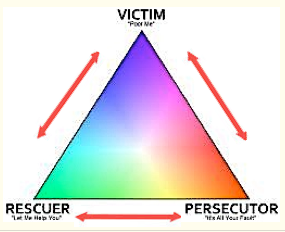
The Co-dependent Triangle – Victim. Perpetrator. Rescuer,
(stay away, or push away or connect by placating)

Every ACoA can switch between them at a moment’s notice – depending on the person or situation, but some live in one role more than the others

🔩 IT’S ALL THEM  crazy, mean, unfair, stupid, stupid, stupid!
⚙️Our Core emotion is ANGER

i. PERPETRATORS
In the ‘CONCLUSIONS’ category, the opposite reactions to Victim is expressed by the overtly rageful ACoAs. These attack anything & anyone we think have hurt us, whether real or not, because we can’t bear to take any responsibility for our T.E.A.s!

We passionately believe all our troubles are always other people’s fault – no matter how minor or unimportant the situation – & not just occasionally, as everyone sometimes feels, but as a life-pattern
EXP:
Carl is having a bad week. His computer isn’t working right & he can’t figure it out.  He gets an unexpected bill in the mail, & there’s no hot water.  He makes it to an interview for a gig but the club owner never shows, & to top it off, someone cuts him off on the way home.

He’s in a rage! He storms around, yelling at anyone who gets in his way. He’s so upset that he drives too fast & almost gets in an accident! “That @%!! incompetent  ÂØˆÒÏ! I can’t believe the stupidity! They shouldn’t be allowed to live”…!

•Yes, S— happens – often out of our control, although not every day! But Ragers can’t bear to ever feel powerless, so we use the defense of Blaming all our pain on others. It does not mean we should be blaming ourselves.

This approach to life is just as narcissistic as the Victims’ – “Everything is about me” – just from opposite poles. Both types are convinced we’re the butt of a cosmic joke, the universe is the cause of our suffering, dedicated to preventing us from being happy or getting our most fundamental needs met – to be loved & feel safe.

Negative THINKING
While the overtly fearful ACoAs believe they have caused every tragedy, the obviously angry ones feel victimized & totally blameless. They step on other people’s feelings & barely notice. They complain, complain, complain – not an a whiney way, but with criticism, cynicism, judgement, & sarcasm.

Their general attitude is:
• Nothing is my fault or responsibility
• Nothing matters but MY needs, opinions & feelings
• Everything & everyone is doing / not doing – something – TO me.
• Everyone (but me) is weak & stupid!
• Every delay, disappointment, flaw, mistake… from others, is disrespectful & a personal affront

EXPs: • You’re always — . You never —-
• Everyone’s so ignorant – I can’t have a decent conversation
• This place is too small. I just can’t stand it
• Look at that ugly dress. How can she show her face?
• What a lousy movie & waste of my time
• This food is awful – send it back! & the waiters are so lazy
• Look at that stupid driver. Get off the road!
• That’s HOW much? That’s outrageous
• Going there was a waste of my money ….

NEXT: CONCLUSIONS – Paranoia (2b)

ACoA CONCLUSIONS re. Painful Events (Part 1b)

 PREVIOUS CONCLUSIONS re. Painful Events (#1a)

SITE: How to have a Positive Relationship with a Narcissistic Parent (Deepak)

2. CONCLUSIONS – OUR THINKING (cont)
💦 IT’S ALL ME (cont): It’s my fault, I’m bad, dumb, weak, lazy….
☁︎ Our Core emotion is FEAR

i. As OVERT Victims – Some of us see everything thru the ‘hopelessness’ lens. Not just the world being against us, but the whole universe.  When disappointed, many ACoAs will say “I guess the universe (or God) doesn’t want me to have that!”
NO, it’s not that.Cause & Effect
Instead, maybe we:
• are’t ready yet to receive it (unconsciously blocking OR we need to do / become something else – first)
• are impatient – some things need repetition or just take longer
• asked for the impossible (expecting a narcissist to ‘see’ us)
• have to keep trying & not give up so fast
Maybe we:
• had a legitimate goal but our timing was off. Try later
• stay with totally inappropriate people (bad, or just not for us)
• used a self-defeating approach, or didn’t have enough info
• went to the wrong place or person for our need

EXPs:
📌 Jordi is learning the bass guitar & decides to try out for a band, but is not asked to join. He thinks it means he’ll never be able to be a musician & stops practicing
📌 April is an artist with talent but not much training & low self-esteem. She needs an income so she takes a job in a real estate company, but hardly ever makes a sale.  Eventually she leaves, convinced she’s a failure & will never do anything well

✳️ Behind the helpless victim stance is the WIC’s demand to be taken care of (‘Unrealistic Expectations’), so we keep waiting. It’s easier to think we’re worthless & unworthy than to do the hard work of becoming our own Loving Parent/ Healthy Adult (UNIT)

REALITY: just because we’re in pain doesn’t mean we caused it!  We may have contributed to the outcome, but not necessarily.
• Sometimes people just step on our emotional toes, & don’t even know it!
• Many times there are life-stresses & unforeseen events we have no control over
• Sometimes bad things happen to good people, which has nothing to do with us, so it’s arrogant & immature (the WIC) to think we did

ii. As COVERT Victims
Functional ACoAs would never think of ourselves as victims (heaven forbid!) – the caretakers/ rescuers, rage-aholics/ bullies, over-achievers… but whenever something goes wrong for us, we end up in our own version of a mental hole.

We’re secretly suspicious that somehow we’re responsible for the painful situation – after all – didn’t we do everything right? our way? What did we miss?
Even accomplished professional ACoAs say they’re afraid someone will eventually find out they’re ‘a fraud’!

• We really don’t have permission to get our needs met, since one Toxic Rule is “You have to struggle but never get there.” Yet we do try anyway (Heroes are such hard workers!), always falling short of our deepest desires

EXP:  ACoA Hero-types put much effort into being ‘superior’, both to make the family look good, & to cover our deep-seated feelings of powerlessness & vulnerability. As kids we were expected to be perfect! Anything less is our failure

Some definitely want a long-term relationship, others a cherished career, others to be rich…. & most ACoAs desperately want our family to love & treat us well. When we’re disappointed in any of these, we find it hard to not be mentally confused & emotionally devastated

✒️ One way to check if we’re still functioning as (secret) victims, no matter how hidden, is to make a list of all the:
▪︎ unkind names or phrases our family called us, and any that we now apply to ourselves – lazy, over-sensitive, selfish….. (CD: “Mislabeling”)
▪︎ perfectionistic ‘shoulds’ we use in hopes of making ourselves take actions we’re resisting – “I should have known / done that…”. (CD: “Shoulds”).

❣️ When we change our negative thinking AND do emotional release work, that sensitivity & powerlessness diminishes (but doesn’t totally disappear), & then our suffering lessens.

NEXT: CONCLUSIONS (Part 2a)