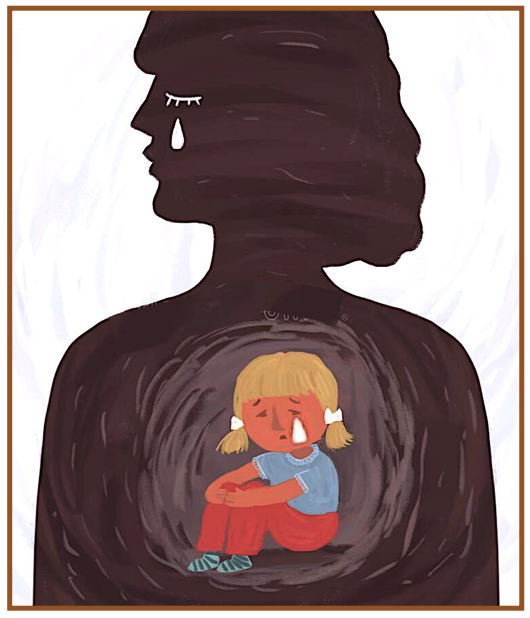
CDs & the Unconscious (Part 1)

cds & thoughts


LIKE THE BIRTH OF NEW STARS
I can give birth to new thinking

PREVIOUS: CDs & the Unconscious (#1)

AA saying: “Alcoholics dig themselves into a rut, & then decorate it!”

1. THINKING  (2. Emotions in Part 4)
a.
 The UNCONSCIOUS mind is ‘just’ the result of patterning, conditioning & habit – therefore it’s basic – very B & W, not thinking, intelligent or creative, totally literal with no sense of humor! From our birth it absorbs info & experience without insight or good judgment.  So our early years provide the basis for all future learning, as the mind filters out inconsistencies.

NOTE: ‘Unconscious’ is the part of mind holding information we’ve gathered – which isn’t available just by wanting to access it, & can only be retrieved by special techniques or triggering events.

Subconscious’ is the level where unconscious memories drive our emotional reactions & behavior, without realizing it, like:
— seeing food suddenly making us hungry
— a deep-seated but untreated childhood trauma distorting our ability to make safe, rational decisions…..

• In the Cognitive Therapy model, distorted information-processing results in anxiety symptoms, such as catastrophizing, the excessive focus on negative outcomes leading to false alarms, hyper-vigilance, loss of objectivity, no tolerance for uncertainty, & ‘lack of habituation’ (not desensitized to a stressor -air travel- even with repeated exposure).

• This is familiar to ACoAs, who grew up in emotionally tense & physically dangerous environments, at home & outside, & now react with “fight, flight, freeze or appeasing“. Originally —
Fight would have been with siblings, neighborhood kids, school peers, hurting animals or possessions, & sometimes self-harm
Flight was more common. As long as we were too young to leave home we escaped into books, friends, school work, sports & of course fantasy. And for some – attempted suicide.
Freeze was & still can be when our mind blanks out from fear, & we can’t think at all, called dissociation
Fawn / Appease was & is people-pleasing, agreeing with anyone who scared us, being over-solicitous, over-giving….. anything to ‘placate the monster’

MODIFYING the Unconscious
self Qs• While there are people & situations we DO need to get away from – it’s always good to check our point of view first. This is not a blame or a judgement. There’s a big difference between what the WIC ‘feels’ or that the PP is telling us about ourselves & others – vs – how the Healthy Adult / Loving Parent sees things.

• So in terms of CDs, if we assume our pain is ONLY caused by something outside of ourselves, we waste a lot of energy trying to change the wrong things – another person, a job, a location…. rather than our frame of reference & inner beliefs. This endless wild-goose-chase leaves us feeling frustrated, out of control & hopeless. It reinforces our Victim role, keeping us convinced we can’t take care of ourselves

• A major purpose of some therapy styles is to bring up from the unconscious as much accumulated pain & distorted thinking as possible, so we can actively process emotions (Es) & correct False beliefs (Ts), which then gradually changes our behavior! (As) When we consistently, deliberately think in new ways, we add a 10-fold power to our conscious mind

FYI: Counseling, Coaching & some Therapies focus on current actions & thinking, NOT on the past & childhood programming – when most of our ACoA damage was formed!

psychiatryPsychiatry & Psychoanalysis is deliberately structured so there’s almost NO feedback from the therapist. This has proven harmful for many ACoAs, because:
i. it’s a repeat of – no one responding to us as kids – leaving us yet again terribly alone with someone who’s supposed to be helpful!
ii. it doesn’t interfere with or correct our S-H & other distorted thinking, which we desperately need

iii. it ignores positive mirroring, also desperately needed – a healthy voice feeding back to us what we’re denying AND all of our wonderful native characteristics & accomplishments
iv. it doesn’t provide good role-model to emulate – caring, sensitivity & kindness, good boundaries, sane thinking….

✶ The most useful one-to-one therapy for most ACoAs is ‘family of origin’ work (FoO), based on a good understanding of family systems & addiction. It works best when it includes lots of well-boundaried interaction – and humor!

NEXT: CDs & The Unconscious (Part 3) Making changes

Cognitive Distortions – SUMMARY


PREVIOUS: CDs Intro (Part 3)

SITE: Cognitive Distortions & PTSD    (Robot + Dinosaur) 
⬅️ Heidi Hanson – artist, writer, PTSD survivor says the Mental Software Program in the psychological “Robot Suit” – usually in total control – is everything in us that hinges on irrational beliefs about Self, other or the world. It’s made up of voices that behave like a robot, programmed to repeat each line over & over….. It’ll never let go because that’s what it was told to do. Then our emotional responses are also automatic.

See ACRONYM page for abbrev.

4. SHORT VERSION of CDs
1. ALL or NOTHING THINKING (Splitting)
Always see things in black/white, either/or categories

2. COGNITIVE LABELING
EXP: mentally label your daughter’s boyfriend a “loser”, & completely ignore / dismiss later evidence that he’s NOT

3. OVER-GENERALIZATION
Take isolated cases & use them to explain everything. EXP: see a single negative as a never-ending pattern of defeat

4. DELUSION
Holding a fixed false belief, in spite of overwhelming evidence to the contrary. EXP: believe you’re obese when you only weigh 100 pounds

5. DISQUALIFYING the POSITIVE
Continually de-emphasize or put down good / pleasant experiences, rejecting the positive ones by insisting they don’t count

6. EMOTIONAL REASONING
Make decisions or arguments based on false ‘intuition’ or some emotional feeling, rather than on objective evidence or realistic evaluation

7. ENTITLEMENT
Convinced the same rules for others should not apply to you. EXP: believe you shouldn’t need to do an internship even if that’s the normal path to employment in your industry

8. JUMPING to CONCLUSIONS
Make a negative interpretation of an event, even though there are no facts that convincingly support your conclusion
a. Mind Reading – Arbitrarily assume someone’s reacting to / talking or thinking about you negatively, without checking it out with them
b. Fortune Telling – Anticipate that things will turn out badly, & are convinced that what you ‘perceive/ feel’ is absolutely right

9. LABELING & MISLABELING
a. Labeling – Explain events or people’s behavior using an absolute & unchangeable negative word, instead of seeing a situation objectively
b. Mislabeling – describing something in dramatic, overblown language that’s emotionally loaded AND untrue

10. MAGNIFY or MINIMIZE
Distort the importance of qualities / aspects of a situation or your memory -by making it more OR less than the experience really was, so that it no longer corresponds to reality.
• Depressives – tend to over-estimate the value & under-play the faults of others
• Catastrophizing – think a situation is unbearable when it’s actually just uncomfortable, or
– exaggerate the situation, then obsess about the worst possible outcome of the event, however unlikely

11. MIND READING
Assume you know (guess) what someone else is thinking – usually about you, when it not likely they’re thinking that at all

12. MENTAL FILTERING
Focus on specific negative or upsetting parts of an event, while ignoring other actually available positive ones

13. OVER-GENERALIZATION
Use an isolated cases to explain everything in the same or similar category. EXP: see a single negative outcome as a never-ending, inevitable pattern of defeat

14. PERSONALIZATION
Seeing oneself as the cause of some negative external event  that one has or had no control over (someone’s death, illness….) & therefore absolutely cannot be responsible for

15. ‘SHOULD’ STATEMENTS
Trying to motiold/new painvate oneself with words like ‘should, shouldn’t, must, ought, need to, have to’, as if having to whip oneself into action would work
a. When using this on oneself, the underlying emotion is usually guilt
b. When using it on others, it will often be anger, frustration & resentment, possibly oppositionalism

16. UNRELENTING STANDARDS
The belief that implementing high standards is imperative to avoid catastrophes. EXP: making any mistake will lead your boss to think you’re totally useless

GROWTH
✧ The deeper layer under our CDs is the accumulated emotional abandonment pain from childhood – intense disappointment & frustration, loneliness, rage, sadness, shame, terror….
These are stored in our muscles, cells, organs, meridians… & need to be processed out through a variety of techniques, includes rage-work, primal therapy, brain-repatternig…

Present day painful emotions are also generated & maintained by obeying CDs.  But all of Recovery is geared to making the needed correction.

NEXT: CDs – INFO & the Brain (#1)

Cognitive Distortions – Intro (Part 3)

vcxcognitive distortions


NOW I’M COMPLETELY CONFUSED –
B & W thinking makes me feel safe!

PREVIOUS: CDs Intro (#2)

ARTICLE: “The NOCEBO Effect

4. Categories of INCORRECT THINKING 
There are more than 10 major kinds of Cognitive Distortions, over 40 kinds of Bias & almost 200 Fallacies. Part 4 gives a brief look at some. They’re all incorrect ‘logical’ arguments used to manipulate & control.

ACoAs are very susceptible to being conned by the WIC & PP’s use of CDs, but many people are also affected by anyone who uses twisted thinking to influence (advertisers, politicos, manipulative relationships…). This contributes to not feeling safe in the world, BUT we can protect ourselves by learning to recognize twisted thinking for what it is!

a. Cognitive DISTORTIONS (CDs): Exaggerated & irrational beliefs that contribute to & perpetuate certain psychological disorders. They can be divided into 3 groups of Negatives – re :
Views about the self (‘Mind-reading’), Views about the world, generally(‘Catastrophizing’) & Views about the future (‘Fortune Telling’).

b. Logical FALLACIES: Any part of an argument that’s flawed, making either a line of reasoning or the whole topic untrue. ALSO, when a seemingly plausible argument includes a mistaken idea (even if there are some valid parts) OR when we draw an incorrect conclusion from correct info.

ad-hoc fallacyEXP: A ‘post hoc’ fallacy insists on a direct cause and effect between 2 events, simply because one event preceded another:
i. I went to the jewelry store to look at rings
ii. While I was there, a masked man with a gun came in & robbed the store
iii. Since I was there before he came in, I must have something to do with the robbery!

Here the fallacy is the result of ignoring other relevant information around the 2 events, such as THAT:
— my being there was an unlucky coincidence
— the robber & I don’t know each other
— he’s robbed other stores I’ve never been in….

c. BIAS
• The human tendency to make systematic logic errors based on preconceived ideas, rather than evidence. They’re ‘one-sided’, favoring some outcomes over others, which interferes with the ability to be impartial & objective.  EXP of Gender Bias: ‘All boys are better at math than all girls’

• Biases can come from information-processing shortcuts, including errors in judgment, memory, or the cause of something – which drastically skew the reliability of personal accounts (experiences) or legal evidence (concrete proof). RESULT : Thinking Biases can harm our ability to make proper decisions, solve problems correctly, & limit the capacity to learn new information or ideas.

d. NOCEBO
We’ve know the term Placebo, used to identify both pleasant & harmful effects of the power of suggestion (voodoo dolls that cause pain or ‘fake’ medicines that reduce/eliminate pain).
In the 1990’s the term NOCEBO (Latin for “I will harm”) came into use in medicine. It’s anything that in itself is benign or neutral (the color of a pill or a type of plant), but which can cause symptoms of illness by the suggestion or belief that it IS harmful.  This belief can come from inside or outside of ourselves.

nocebo• ‘Nocebo’ was originally used to label the harmful, unpleasant, or undesirable reactions some test subjects actually exhibited when given an inert dummy drug.
The very real physical reactions were not created chemically, but entirely due to the subjects’ pessimistic outlook & expectations.

A psychiatrist at Boston’s Brigham & Women’s Hospital, found in a recent review of the nocebo literature that – patient expectations of possible harmful side-effects of a drug – played a significant role in the outcome of their care (Arthur Barsky, et al. 2002)
• In another study, more than 2/3 of 34 volunteering college students developed headaches when told that’s what could happen from a (non-existent) electrical current passing through their heads.

All Cognitive Distortions are mental nocebos!  Since CDs are incorrect assumptions or belief that negatively influence how we feel & act, those irrational conclusions causing untold emotional or physical injury to ourselves & others.
(From ‘Skeptic’s Diary’)

NEXT: CDs Overview

Cognitive Distortions – Intro (Part 2)
universe 2MY THINKING?
It’s just fine, thank you very much!

PREVIOUS: CDs – Intro (Part 1)

SITE : Cognitive Distortions QUIZ

QUOTE: “The most dangerous of all falsehoods is a slightly distorted truth.” – Georg Christoph Lichtenberg

3. NOTE to ACoAs
LOGICAL Argument
DEF : It consists of one or more premises (assertions, hypotheses) & one conclusion that’s offered in support of the claims being made – each being either a T or F declarative statement. If any one of these components is in error, the whole argument becomes invalid (LOGIC….)

👁‍🗨 Knowing what our CDs are & then correcting them, a day-at-a-time, is very important – even tho it’s not as ‘sexy’ as some topics – because keeping these ideas in mind will help counter our:
✓ frustration at the slowness of change in Recovery
✓ discomfort & awkwardness in trying out new thinking or activities
✓ self-hate for the way we’ve been functioning most of our life
✓ confusion & misunderstanding about the causes of our pain, now

REMINDER
CDs are part of our Wounded Inner Child (WIC) ego state, in agreement with the Bad Parent voice (PP).
When negative or harmful beliefs – hidden from ourselves in the unconscious – contradict the good things we consciously want, no matter how sincerely, which one wins?
Of course, the bad ones, because they’ve been with us the longest & they connect us to our family. (INFO & the Brain)

“The human body & mind are highly receptive to the messages & feelings put out by the thinker (YOU). How we feel about ourselves impacts how we function. When you think, “I’m ugly / I’m stupid / I’m no good / I’m fat….,” your body & mind assumes it’s true. Consciously & subconsciously, these beliefs impact & impair delicate functions of physical & mental processes — including the immune system – restricting the flow of creativity, holistic thought, self-expression & joy.” Modified from ErinJanus.com.
To heal, we have to identify & own the CDs. Then slowly, gently replace them.

CDs are profound MISUNDERSTANDINGS about:
a. Other people’s motivations (He didn’t call me again because I’m boring)
b. The meaning or importance of one particular event (I didn’t get that job so I’ll never be able to do what I love)
c. The likelihood that a similar circumstance will happen again (No one talked to me at that event so there’s no point in ever going there again)
d. The outcome or consequences of a particular situation  (Since I can’t learn a foreign language, I’m ever going to be able to travel, even though I’d love to)

WHY are CDs so ‘appealing’?
It’s not enough to say they’re a familiar & very longstanding mental habit. This is true physically (see previous post re. the brain), but the other piece is emotional  / psychological – providing Negative Benefits which keep them in play

• Some CDs reinforce our WIC’s grandiose sense of responsibility for everything that happens to us & around us
• Others provide a misguided sense of stability. Since our childhood was unpredictable & dishonest & chaotic, the rigid absoluteness of CDs makes it seem like we have something concrete to rely on for ‘guidance’

• Some keep us enslaved to our self-hate & harmful people or situations
• Others keep us so confused by their incomplete info & incorrect conclusions that we can stay in a mental fog (dissociated) without having to figure out what we truly believe or need

And ALL of them maintain a ‘black-hat / deep state’ connection to our dysfunctional past. Consistently obeying CD rules of any kind means we don’t have to think for ourselves, & so never have to S & I, or become responsible for our own freedom!

More AUTHORS
Aaron Beck first proposed the theory behind C.D.s (1967) and David Burns (1980) was responsible for popularizing it with common names and examples.
Freeman & DeWolf (1992) and Freeman & Oster (1999) added: “Externalization of self-worth; Comparison; Perfectionism”.
Gilson & Freeman (1999) identified eight other C.D.s: the Fallacies of Attachment; Being right; of Change; of Control; of Fairness; of Ignoring;  of Heaven’s Reward & of Worrying.

NEXT: CDs – Examples

Cognitive Distortions – Intro (Part 1)

WHAT ARE YOU TALKING ABOUT?
That doesn’t make sense!

PREVIOUS: Why are you Stuck?

ARTICLE: “Thoughts Change Brain Chemistry

See ACRONYM page for abbrev

1. DEF: Cognitive Distortions (CDs ) are forms of  false logic, called stinkin’ thinkin’ in AA, which are the technical ideas behind the ACoA Laundry List  – therefore represent self-defeating ways of Thinking.   (List of CD in Part 4)

They are ways our mind convinces us of things that are not actually true but sound rational if not looked at carefully. They’re used to reinforce negative beliefs & painful emotions, which only serve to keep us feeling bad about ourselves, & create constant problems in relationships.

A CD is: “Any type of inaccurate way of dealing with information, which predictably results in identifiable errors in thinking”. This includes:
– Deficient Processing, causing an unwanted consequence because we didn’t think about it at all, or didn’t think it all the way thru to its inevitable outcome – ignoring prior knowledge
– Deficient Thinking, which causes something to go wrong because of a faulty filter (CDs) applied to available information about a situation

NOTES
• Anyone can use cognitive distortions. However – active addicts, people with low self-esteem &/or anyone living in traumatic, stressful, ‘trapos/neg newspped’  environment – will use these skewed ways of thinking more often than those who have easier lives.
The day-to-day situations of some, like war survivors, gang members, battered wives, the underprivileged, many addicts & millions of suffering children…. are so wretched & fear-filled, that without cognitive distortions, they wouldn’t be able to manage or function

• One study showed that depressed & non-depressed people were equally able to learn negative information, but depressed people found it much harder to learn / take in / remember positive information. Everyone seems to easily remember negative events, but depressives focus on them.
(Journal of Behavior Therapy & Experimental Psychiatry, 3/09)

• Kendall (1992) suggested that more accurate perceptions of the world do not always lead to better mental health or behavioral adjustment. CDs that are positively skewed can be very useful in certain environments, although a ‘too positive’ view of things may just be narcissism (or being dissociated / or in denial)!

thinking brain2. OUR BRAIN – A little Chemistry as it relates to our THINKING
a. Our brains has hundreds of different types of chemicals, arranged in a highly complex design.
Stimuli (what we hear, see, think, do, feel…) trigger 30 + known neuro-transmitters.  Some are relatively stable structural molecules that create the anatomy (hardware) of the brain.  Others are non-structural, making the physiology (software). It takes both types of chemicals to make our brain work.

• This chemistry influences hormone secretion from various sites throughout the brain, such as the hypothalamus & pituitary, and these hormones then carry messages to distant organs in the body (Post: ‘Anger & the Brain, Part 1‘)

b. THOUGHTS cause actual microscopic changed in this elaborate system. Each of the billions of brain cells make connections with others when stimuli or thoughts trigger chemical discharges (the neuro-transmitters). Electrical impulses, via ions, send that information throughout the central nervous system.

c. The biochemicals released whenever we think are pumped into the bloodstream, creating changes in the whole body. Every thought is embedded at some level in the molecules of our brain.
One group of chemicals is triggered by a negative state of mind (like adrenalin & cortisol, changes in norepinephrine levels, & a serotonin deficiency), while others (like serotonin & dopamine) are generated by positive thoughts. (from “Open2Transformation”)

d. All beliefs we mentally nurture (repeat / obsess about) actually influence brain chemistry. In general, the more we think something, the more connections are formed about it.  But harmful ones, such as project the disastrous outcome of an event, block the flow of energy to the whole body.

– ACoAs who constantly think scary, self-hating, what-if thoughts have formed deep grooves, with different neural links, making those the path of least resistance (easiest).
– In contrast, repeating pleasant, realistic, hopeful ideas will get stronger by forming their own grooves, which provide the impetus to become practical life-affirming habits (actions).

NEXT: CDs – Intro (Part 2)

POSITIVE Responses to Painful Events (Part 6)

I GET IT –
this has little or nothing to do with ME

PREVIOUS: Positive responses #5

SITE: 6 Steps to Help you Handle Conflict


4. APPROPRIATE ACTIONS Circle (cont)
🔸BETTER ways to respond
(cont from Parts 4 & 5) :
a. Say nothing / b. Review /
c. Speak Up / d. Walk away / e. Rebut / f. Iron out

g. Arbitration
Screen Shot 2016-06-22 at 9.54.22 PM.pngSometimes the only way to resolve a dispute is to get help from a 3rd party.  This may be couples counseling, a minister, a lawyer, a respected colleague or friend. Don’t feel ashamed or afraid to ask for help!

h. Legal Action – the Final “Solution”
When we’ve tried every other method of communication & the other party either doesn’t respond, or continues to be abusive, this option may be the only recourse to getting a situation corrected.  It may be money that’s owed, rights being violated, or someone putting us in physical danger.  We have a right to protect ourselves – even if it’s from a family member!

NOTE: If we’re having a conflict with an unrecovered person or group (especially if they’re narcissists &/or active addicts), no matter how ‘clean’ our own motives & actions are, it’s likely they will be angry at us IF we stand up for ourselves.

If you believe you’ve done all you can, in a respectful way, DO NOT let your own co-dependence tell you that you’ve done something wrong, just because the other person is unhappy that you’re sticking to your truth!

Recovery RE-CAP – The goal of dealing with a stressor is to:
1. Acknowledge our painful emotions
2. Identify which of our buttons got pushed
3. Pay attention to any Cognitive Distortions
4. Find an appropriate way to vent our fear and anger
5. Take the appropriate actions to take care of ourselves without being vengeful
6. Look for possible realistic solution where both parties win
7. Move on if that’s the only option.
🧎🏽‍♂️   💔   🧎🏽‍♂️
ACoA DILEMMA
When ACoAs are told by someone that our relationship, employment or partnership is over (any type), we’ll be flooded with emotional & physical pain, because of the agony of feeling abandoned. Even if some part of us is relieved, it’s very hard to accept that the other person / company / group doesn’t want us – just like or family!

Typically – we’ll want to hang on & maybe try to convince them to change their mind – beg, bully, cry, demand, whine, kiss-butt, make unrealistic promises — but ultimately the other person says:  ‘I’m outa here’,  ‘you’re fired’,  ‘don’t come back’ ….

▶ When ACoAs are told that we have to ‘let go’ of someone who does not care about us, or does NOT want to be with us,
the response of our WIC is often : “NO! Why should ONLY they get what they want (leaving)?
What about what I want (to hang on)? If I let go, they win!”
REALITY  
YOU don’t** win anything IF the other person:
• stays UNwillingly from weakness, inertia, their own FoA …. or
• lets you stay (marriage, job, apartment….) from pity, guilt, co-dependent kindness, religion….

**RESULT – Someone allowing themselves to be manipulated or coerced by us does not indicate their acceptance, nor magically generates genuine love for us. Our kid does know that – on some deep level. Ignoring this truth keeps us feeling unsafe & having to endlessly ‘sing for our supper’ – without ever getting nourished!

OUR DAMAGE
OF COURSE, in many cases we simply don’t have a choice. They’re gone.
But if you’re still hanging on & on – knowing you’re not wanted (OUCH!) – it’s because you won’t admit the other person:Screen Shot 2016-06-22 at 9.55.05 PM
• is not actually capable of loving you & never did (your fantasy) and/or
• has used you up & doesn’t need you anyone !(their narcissism)
Bottom line: if you were to accept the ending, your S-H tells you that no one else will ever want you & then you’ll be alone forever. Sound familiar?

RECOVERY
When we develop Mental & Emotional health we learn that:
• we have the right to be loved & accepted for who we really are, without ‘prostituting’ ourselves (‘love buying’)
• we can only get that from people who are already capable of healthy connections & who are genuinely compatible with us

NEXT: Cognitive Distortions

POSITIVE Responses to Painful Events (Part 5)

floral 5NOW I HAVE MANY MORE CHOICES
than when I was a child

PREVIOUS: Positive Responses (#4)

SITE: 10 Tips for Handling Work Conflict

3 POSTS: ACoAs Dealing with CRITICISM

See ACRONYM page for abbrev.

Review “Events+Emotions+PositiveThinking” parts of chart

4. APPROPRIATE ACTIONS Circle (cont)
🔸BETTER ways to respond 
(cont. from Part 4) =
 a. Saying nothing

b. Review
If the “problem” Event was the result of one or both people not listening carefully to what each was saying, & then jumping to a conclusion —> what’s needed is for us to check if what we heard was what was they meant. T.E.A. will include:
🚦paraphrasing each side, then asking for validation (Yes) or clarification (No). Acknowledge what each person felt (Es) about the dispute, & see if there’s a legitimate, respectful conclusion / agreement – or not  (T or A)

c. Speak Up
For this to be effective it has to come from the Healthy Adult ego state.  When we’re able to do that, it breaks the spell of tit-for-tat between the WIC-PP interactions of any 2 people, or one person in an unsympathetic group

EXP
: Joe & Bev are in a good long-term relationship. In the early days when they were ironing out some kinks, Joe occasionally expressed frustration with himself: “I’m no good for nothing!”
One time, annoyed with Bev, he said “You’re no good for nothing”.
She didn’t comment, knowing he was projecting his self-hate. More importantly – she could feel in every cell of her body that the remark did not apply to her.  So Bev calmly replied: “You know, that’s not a nice thing to say to anyone, Joe”.  And he never said it again!

d. Walk Away
walk away There are times when physically leaving is the best option.  It may only happen once in a whole relationship – but it is a way of saying to the other person:
• I won’t put up with this, but I won’t fight with you
• I can’t stop you from being a jerk, but I don’t have to listen
• it’s better if I leave than say something I’ll regret
• you’re obviously not being an adult right now (either coming from PP or WIC) & I’m not going to interact with you until you are
• if you continue talking to / treating me this way, we’re done!

speak upe. Rebut / Disagree
It’s legitimate to correct a person’s misconception or outright lie about us
— IF we can do it from a calm place – because we’re secure in our self-evaluation &
— IF the other person / group is receptive.
This is not arrogance or anxiety, it’s simply making a statement of fact.
We don’t have to actually convince someone we’re right. What’s important is that our WIC will know we stood up for the truth

f. Iron it Out
If a job or a relationship is important enough to us, we can try working it out with the ‘adversary’. For it to have any value, each party has to be able to acknowledge their side of the problem, without blame.
✶ It does not guarantee a ‘happy ending’, only self-respect
EXP:
Maxine & Denise have been friends for a while but not BFFs.  One day they’re talking about their taste in clothes. Maxine knows Denise was once a fashion designer & is pushing for an opinion on her newest purchase. Denise makes the mistake of giving an honest evaluation, which hurts Maxine’s feelings, who then gets a little nasty.

• They go home upset but decide the following week to talk about it. When they get together again, they’re both able to own what they reacted to – what was behind Maxine’s question, why Denise was so blunt & what buttons got activated in each.
They leave the dinner knowing they’ve cleaned up the small mess between them & feel good about that. However, they also realize they both have unhealed wounds that happen to overlap. So to prevent hurting each other again & again, they don’t continue their friendship.

NEXT: Positive Responses (#6)

POSITIVE Responses to Painful Events (Part 4)

Sfloral 4 LET’S SEE –

what’s the best way to handle this?

PREVIOUS: Positive Reactions – Thinking (#3)

REVIEW Parts 1-3 — Events, Emotions, Realistic Thinking

See ACRONYM page for abbrev.


4. APPROPRIATE ACTIONS Circle
First: Let’s THINK, take a minute to breath, grab hold of our kid – if he or she is getting overwhelmed.  Being healthy does not mean we won’t periodically react in old ways, which will depend on how deep certain wounds are – like the depth of our childhood abandonment pain.
It does mean we can develop better alternative responses to difficult situations that get stronger than the pull of our damage

Second: Check in to see what emotions are being stirred.  Our actions will be based on how well we understand ourself in that moment
Third: Check mental files for a ‘pre-recorded’ words or phrase we’ve practiced for stress occasions. We can draw from the list of “Effective Responses – they really work
• Talking or being silent are both a kind of action – active or passive.  What matters is which Ego State they’re coming from

EXP: Gina was sitting in a 12-Step meeting, listening to the thin, angry blond woman in all black leather go on & on for 5 minutes about how she HATED EVERYBODY! Gina’s immediate thought (from her WIC) was to go over & sooth the woman, be a friend, commiserate….
but this time Gina’s inner Good Parent took over & said to the kid: “NO WAY! Didn’t you just hear her?? She said everybody – that includes you. You’re not exempt just because you care, & you’re not going to change her to make yourself feel safe from her anger!”

🔸 BETTERsilence WAYS to RESPOND
a. Say Nothing – there are times when the only thing that makes any sense is to be quiet. We can give someone a quizzical or angry look, or just a smile. A genuine laugh may be called for when something ridiculous or outrageous has been said, & no other response is possible! BUT NOT from anger or derision. Rather – with humor, perhaps a sense of irony, even identification. Who hasn’t said something stupid or insensitive?

Some reasons to not do or say anything:
• it’s not a safe time or place
• it’s not worth the effort
• others are around & you’d do yourself some harm
• you know the person or situation can’t be corrected or improved OR
• it’s someone you know, & they’re having a bad-hair-day
you need time to process what just happened

➼ LETTING GO of being heard, of being right, of getting what you want, of fairness… is sometimes the ONLY possibility, & takes a level of emotional maturity to handle

EXP: Sandra’s sponsee asked if she’s be at Friday nite’s meeting & she said yes.  That day she developed a cold & decided to stay in bed.  Sat. morning the sponsee called very angry: ”Why didn’t you show up last nite? You said you’d be there & I brought you flowers for your B/day! You’re so unreliable, I can’t believe you stood me up….”

Sandra told her she was sick, but the woman didn’t care. A week later, when they saw each other, the sponsee started up again, berating her.  Sandra just stood there & listened. She decided that, knowing this person, nothing she could say would make a difference.  So after a few minutes she said: “OK, bye” & left.  That was the end of their association.

✶ Sandra was aware that by not making the effort to convince her sponsee of her innocence, the other woman believed Sandra was agreeing with her & admitting being at fault!
It was something Sandra had to ‘swallow’ & help her WIC live with. But she’d learned from painful experience that trying to justify herself to someone with a closed mind only made a fool of herself!
It’s especially painful for us to be accused wrongly – at any time – but in this case she’d never be believed anyway, so why try doing the impossible? (“Serenity Prayer – backwards“)

NEXT: Positive Responses – Part 5 (more actions)

POSITIVE Responses to Painful Events (Part 3)

floral 2 

PREVIOUS: Positive Responses – Emotions

REVIEW: Events + Emotions


3. REALISTIC THINKING Circle
ACoAs need to feel safe before we can feel loved!
Is your breathing shallow? Our terror is so deep & long-standing that we can barely breathe, but don’t realize it. “Clarity (knowledge) is Power” say the coaching gurus. Mental health includes being able to think accurately, without lots of complication. It’s one of the ‘secrets’ to feeling safer & more empowered, which eliminates drama

To accomplish that, we need to know (Ts) what:
• specific Toxic Rules we’re still obeying
• cruel, scary & untrue things we say to ourselves (S-H & PP)
• Cognitive Distortions (CDs) they represent, and –
• the corrections for those CDs

RECOVERY – It’s important to keep our side of the street clean in dealing with the world.
Minimizing S-H & shame makes it easier to take responsibility for our T.E.A.s (thoughts, emotions & actions), & to remember that most of what happens to us or around us is NOT about us!

Healthy ways to THINK about an upsetting event
a.  NO mind-reading
Re. people we know well, we can probably figure out what made them say or do something hurtful or irresponsible
Re. everyone else – we simply have no way of knowing. AND – even if we do know why, we won’t get validated, since most people don’t know what motivates them
Regardless, it’s not respectful to get inside other people’s heads, just like we shouldn’t let anyone live rent free in ours! 😾
✓ “I know how I FEEL, but can’t presume to know why others say / do something”

b. Self-Check
Using the questionnaire from What Just Happened , we can identify any part we may have played – without guilt, shame or S-H.  If our side is legitimately clean, we’ll feel relief
✓ “I’m willing to double-check myself – did I contribute in some way to this incident?  If yes, I’m willing to work on it. If not, I can ‘let go’”

c. Ask, Ask, Ask!ASK
We were taught to never ask others about themselves nor ask for information or help.  This may have been appropriate when we were kids, who can be bothersome to some adults, & often say embarrassing things.
But mainly it was because dysfunctional families don’t know how to communicate properly & didn’t teach us boundaries.  Asking eliminates mind-reading.
✓ “I have a right to ask what they meant by what was said, or why they did xyz.”

d. Corrections
Us – with self-esteem we’re not afraid to own our own baggage, not ashamed of having needs. We know we can’t be perfect, so don’t expect it of ourselves.
✓ “If I contributed to a problem, I’m willing to talk it out & make any amends, or correct any misunderstanding”

Them – Recovery teaches us not to tolerate or excuse bad behavior from anyone! WE set boundaries & make it clear how we want to be treated.  Self-respect allows us to walk with dignity, which others will sense right away. We’re not better than others, just equal as human beings
✓ “If someone crossed my boundaries, said something mean or did something disrespectful / inappropriate… I can stand up for myself by letting them know it’s unacceptable, & how I want to be treated in the future”

e. Acceptance is ‘acknowledging what is’ – no more, no less.
Healthy Thinking eliminates drama, endless obsessions & convoluted plans. We accept that there are people & situations we have little or no control over, especially like trying to get needs met from anyone who is emotionally unhealed
✓ “If I know the person well enough to know that no amount of explanation or discussion about their behavior will ever get thru to them, I won’t even try!”Screen Shot 2016-06-22 at 9.44.18 PM

f. Letting Go
Trying to convince someone with a closed mind of our point of view is humiliating – we just make fools of ourselves. 12-Step Programs say: “Let go with love”.
If we can’t do it that way, then let go with – anger, indifference, frustration – but let go!
This means NOT continuing to want, expect & demand the impossible of others
✓ “If I’ve done all I can or want to – to deal with a situation – then I’m willing to stop thinking about it.  It’s done.”

NEXT: Positive Responses (#4) – Actions

POSITIVE Responses to Painful Events (Part 2)

flowers 2 


PREVIOUS: Positive Responses – re events

REVIEW: Part 1: Events + Large Chart

POSTS : EMOTIONS – To Motivate


2. EMOTIONS Square

Healthy ACoAs are not afraid to feel, own & deal with our emotions. Es are a vital part of our self-protection & self-correcting mechanism, built in to our brain (the limbic system).  It doesn’t matter which ego state the emotions come from – they’re all part of us. As we learn to identify ‘who’s’ saying & feeling what (Ts & Es) – we can respond to internal cues more accurately

a. From the WIC (adapted child)
• These emotions will be left-over from our difficult childhood – abandonment terror, hopelessness, profound existential loneliness, rage, self-hate, even feeling suicidal – all based on actual experiences, PLUS internalizing those of our parents

b. From the Negative Introject
It includes all the dysfunction from their background, & their feelings towards us, including:
desperation, disgust, fear of abandonment, indifference, impatience, neediness  ……  emotions we absorbed & continue to carry – until they’re cleaned out.  We have to face our pain, but the thoughts & feelings of our parents MUST be given back to them! via repeated visualizations & statements

EXPs:
• “Dad, I love you but I can’t save you from mom’s cruelty. I tried to ease your pain, even taking on your covert suicidal feelings, but never could fix you. You chose her & stayed with her – it’s your marriage. You’re not my mate, so I give you back to her!”

• “Mom, I’ve been carrying your fear, helplessness & unfelt rage all these years, thinking it would help lift your burden. I’m sad that you’ve been suffering, but I know now it was an impossible task & not mine to deal with anyway. I’ve rolled up all your pain in a big black ball & now give it back to you. I have enough of my own to Screen Shot 2016-06-22 at 9.34.34 PM.pngheal!”

c. From the Healthy Child  
• Our Natural Self, whether Introvert or Extrovert, is a combination of – amusement, amazement, anger, curiosity,  excitement, disappointment, love, joy, shyness, trust … and  envy, fear, greed, need, naiveté, selfishness, stubbornness ….  (PAC characteristics)

d. From the Loving Parent
• This is the missing ego state in all wounded ACoAs & so is the most important to develop, replacing the PP (pig parent / bad voice) : love, consistency, patience, persistence, sense of humor, tolerance, faith….. needed for positive self-care

NOTE : the Healthy Adult is basically emotion-free – primarily our computer mode, practical, rational & objective
ACCEPTANCE

i. I didn’t Cause it
Other people’s reactions to us speaks about who they are.
😻 Getting this truth into our cells is a core imperative !!! a requirement for peace of mind!  ONLY our co-dependence & narcissism says otherwise
ii. I can’t Control it
Being controlling is driven by anxiety – the fear of loss (abandonment) & the grandiose belief that we have power in powerless situations. (Serenity Prayer –  backwards). We can’t make others do or be what we want, only continue working on ourself
iii. I can’t Cure it
While some spiritual practices teach that we have all power, over everything – ultimately there are things in this lifetime we cannot cure, whether in ourselves or in others.  Focusing on the impossible is a waste of time & takes energy away from the many wonderful things we can accomplish!

Screen Shot 2016-06-22 at 9.35.19 PMOTHER PEOPLE — Their reactions to our behavior can have something to do with us, directly OR indirectly IF:
a. about Them:
• we accidentally bump against a long-standing emotional ‘hot button’ in them (we ONLY create buttons in our own physical children)
• we inadvertently remind them of someone in their own damaged past
• we don’t go along with their narcissistic needs or expectations

b. about Us:
• when our unhealed rage &/or neediness pushes others away
• we keep asking unavailable people to be there for us when they can’t
• we consistently expect too much of others, including healthy ones
• we say or do something hurtful, disloyal, selfish…. from our damageScreen Shot 2016-06-22 at 9.38.02 PM

🔸 The things WE ARE responsible for can be worked on in Recovery, especially things we do / say that hurt others.
To heal we have to own it all, objectively, without self-hate, & be willing to make changes.
Reasons that others may legitimately be uncomfortable with us (our repressed rage, neediness, unavailability…) will lessen as we develop our ‘UNIT’ & progressively interact with others in new ways.

NEXT: Positive Responses (Thinking)