4 PARENTING Styles & RESULTS (Part 1)

4 styles


I LOVE OVERVIEWS!They provide perspective

SITES: 10 Parenting Styles  // Other STYLES (slides 16-17)
How the Tigers, Dolphins & Jellyfish Parents Differ
• TIGER MOM – Cultural differences (+ cartoon by Keith Knight)
• HUMOR: Not A Tiger Or Helicopter Mom? (Google images)
Parenting Quiz (Slides 7-8)

QUOTE: “Fathers, do not embitter your children, or they will become discouraged” (New Testament – Colossians 3:21)

DEF: Parenting styles are the methods that parents use to take care of their children. Categories: Authoritative, Autocratic, Permissive & Neglectful (1 healthy, 3 unhealthy), with –
✦ Degrees of:
– Nurturing Affection : warm <—-> cold
– Demand & Control : more <—-> less
✦ Dimensions that are essential: Communication styles / Disciplinary strategies / Expectations of maturity & control / Warmth & nurturance (Diana Baumring – 1967)

• Our basic identity is modified & shaped by our experiences with our parents – forming the structure of our adult personality. What we learned back then is deeply implanted in our most primitive, powerful emotions as young children, when we were totally vulnerable to being molded.diagram of parenting styles

🚼 Each of us is unique – different from everyone else, both as individuals & in relation to our family structure (gender, birth order, looks, interests….).
🚻 And each parent has their own pre-set core Self & personality style.
Even though adults have most of the power & control, family relationships are indeed reciprocal – parents have an effect on their children, & children have an effect on parents. The mix & match of 🚼 & 🚻 is complex & often at odds.

Finding actual cause-&-effect links between specific parental actions & children’s resulting ‘personality’ is not simple or easy. Some children raised in dramatically different environments can later grow up to have remarkably similar personalities.

Conversely, some who share a home & raised in the same environment can grow up to have astonishingly different personalities –  due to the same or different Myers-Briggs, Enneagram, Astrology….
However, researchers have found correlations between these 4 categories & how children turn out

Realistically, the Parental Style used is the one that each child experiences, not the one the adults ‘think’ they’re expressing, or wish they could be using. But most parents always default to a favorite negative style, while only a few aspire to / work at living more in the healthy one (Authoritative).
The length & intensity of interactions with their children are based on their own emotional states, motivations, engagement, levels of stress, feeling fresh or tired…. at any given moment.
Actually, most parents switch between all 4.

The next 2 composite charts outline the 4 types (#1 & 2) MY parenting -1

NEXT: Parenting styles (Part 2)

ACoAs – HUMILITY (Part 2)

Screen Shot 2016-05-26 at 8.16.17 PM

 THE MORE SELF-ESTEEM
the more humility!

PREVIOUS:  HUMILITY (#1)

SITES: ‘’HUMILITY – the most beautiful word in the English Language’’

Intellectual Humility (extensive)

BOOK: So, I’m not Perfect! – A Psychology of Humility ~ Robert J. Fury (not religious)

QUOTEs :  “We are what we repeatedly do. Excellence, then, is not an act, but a habit” ~ Aristotle
• “Confidence without Humility is arrogance. Humility without confidence is self-deprecation” Anon.

1. HUMILITY MARKERS re. ONESELF
YOU:
• know your inner worth, not dependent on out-performing others, nor having to always be ’the first, the best, the most…. ’
• don’t have to frantically chase some intangible or unrealistic degree of importance, success, fame or power
• do have a clear perspective of present-day reality, respecting your place in whatever context you’re in
YOU:
• have an honest, accurate assessment of your actual talents, your limits & areas that need improving
• can admit mistakes, & ask for forgiveness when in error
• can handle frustrating situations with a genuine sense of inner ‘serenity’, since your respond, rather than react, to life’s challenges.
ARE
• able to control your temper
Screen Shot 2016-05-26 at 7.46.19 PM
• able to value but not spoil yourself (give in to every whim of the WIC)
• courteous, respectful, not pretentious, not boastful nor gloating about accomplishments
ARE
• good for the sake of being good, admitting you’re as human as everyone else
• happy to work behind the scenes when required or appropriate, knowing your work is as important as any done in the spotlight
• not attracted to superficial or unhealthy behavior
ARE
• OK with being an ordinary / average person (even if ‘special’, gifted, ‘important’), not needing to be part of some in-crowd to feel acceptable
• teachable – assuming there’s always more to learn about & from all PPT
• willing to give up your right to be right. Do not demand your rights

2. MARKERS re. OTHERS
ARE

• able & willing to forgive others, letting go of grudges & bitterness
• comfortable with others’ success. H prevents embarrassing yourself in competitive situations
• compassionate & look for the best in others (realistically). Give others the benefit of the doubt
• motivated to help people, aware that others have needs too
YOU
 • ask Qs & love dialogue (not assume you know everything), & use conversation to explore new worlds
• ALSO put energy & effort into listening
• don’t gossip, especially about faults you see in others
• don’t pre-judge others’ behavior, knowing that everyone has their own reasons for doing things which you may find annoying, even if you don’t know or never find out what those are
YOU
• know you need others, so allow yourself to be open & vulnerable rather than closed & ‘distant’
• respect those in authority, & pray for them to have wisdom
• speak simply, not trying to manipulate or trip others up
• show honest interest in others by asking about their lives & accomplishments
• treat each person as someone of value, regardless of their position in society, profession, age or economic status

a. Social Activism: One form of H regards reform, such as in thhelp otherse 2013 workshop by Melanie Marie Tervalon’s  “Cultural Humility: Working in Partnership with Families & Communities”.
Included topics were: Reversing health disparities in the US / Using tools of cultural competence & cultural humility at work

b. In Business: Humility is studied as a multi-dimensional trait, which includes awareness, self-understanding, openness & perspective ability. People with these qualities are valued because they tend to be more generous, selfless & altruistic

• Jim Collins, in “Built To Last: Successful Habits of Visionary Companies” (1994), says humility is a key ingredient at the highest level of executive ability. “Humility + Will = Level 5 leaders, who are a study in duality – modest and willful, shy and fearless, patient yet express fierce resolve.” (MORE….)

humble leadersc. Confident leaders succeed, but not at the expense of others. They have a broader sphere of influence, attract better talent, inspire more confidence, loyalty & respect. Truly H people are quietly self-assured, giving them more determination & commitment

Humble LEADERs come from a position of strength, & are more persuasive – WITH the:
• courage to set aside personal gain to benefit others
• character to respond charitably when attacked
• candor to be honest, & ability to change course if necessary

SITEs: 3 Reasons to Be Humble: People, Agility, and Growth”, re. entrepreneurs
Humility: The Foundation Value of Innovation Leadership”

NEXT: BLOG Celebration – 500 posts (2015)

ACoAs – HUMILITY (Part 1)

SELF ESTEEM ALLOWS ME
to think well of myself – realistically

PREVIOUS: ARROGANCE (Part 2)

SITE: The key to Dignified Humility: Admitting you’re Wrong

QUOTEs: “True humility is strength, not weakness. It disarms antagonism & ultimately conquers it.” ~Meher Baba
“To be truly great one has to stand with people, not above them” ~ Charles de Montesquieu, French politician & philosopher

DEF: HUMILITY (H), from the Latin ‘humilitas’ = ‘low, from the earth, grounded’
• To not think oneself better than others (but never self-deprecating!)
• Recognize & accept our limitations based on an accurate estimate of our value & abilities.
Opposite of grandiosity, narcissism, hubris, & other forms of negative pride
EXP:Usain Bolt
NOT H: IF Jamaican sprinter Usain Bolt were to say that he’s not a speedy guy, it would either be a joke, false humility or S-H, since he truly IS the speediest of all his peers!

YES H: What he DID say was that – his accomplishments need to be placed in the context of Jamaican track-and-field emphasis & excellence, which reflect those who have helped him !

HUMILITY (H), sometimes called “modesty”, is most often talked & written about in religious terms. The great religions espouse it, spiritual teachers encourage it, preachers & (some) parents try to instill it.
➼ However, here we mainly want to consider what it means as a social & psychological character trait.

• But even without a religious context, H can still take on a moral and/or ethical dimension. It’s the ability to acknowledge that we have problems, faults, pains, make mistakes, act in ways that we don’t want to, say or think things we know are not positive….
Humility is acknowledging / accepting how we actually are, right now.

Oscar Ichazo, in ‘The Enneagram of Personality’, gives a good clue to the meaning of H a true virtue:
“It is accepting the limits of the body’s capacities.

The mind holds unreal beliefs about its own powers, but the body knows exactly what it can & cannot do.
Humility – in the broadest sense – is the knowledge of our true place in the cosmic scale.”

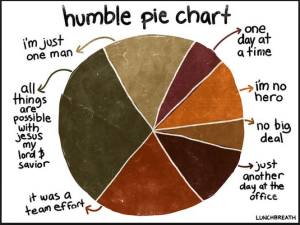
Appropriate H (not martyrdom, S-H or victimhood (↖️see chart) is firmly rooted in self-esteem, an inner security that comes from permission to be oneself, & the willingness to provide for one’s own needs & wants.
That way we don’t have to depend on what others think of us to be OK.

H
people are clear that, while they definitely know they have personal worth, they have perspective, understanding that each of us is a very small cog in a very large universe.
➼ With this broad & realistic view, the truly humble person cannot be humiliated.

NOTE: To develop H —
✥ children must form a secure attachment, starting in infancy, BY receiving consistent & loving parenting, firm guidance & realistic role-modeling.
✥ As adults – a most important aspect of H is the realization that our lives & concerns are valuable, but no more important than anyone else’s.
💟 These 2 TRUTHS are the opposite of our ACoA ‘education’!

DIAGRAM
Any extreme is unhealthy:
• Too much Pride & we act superior, untouchable
Too much H, & we’ll let every one walk on us

Healthy Pride is empowering
Healthy H means we don’t need to do impression-management

LaBouff & Assoc. ran 3 H studies (2012) with college students, which showed that humble people are more helpful than those who are less so.
Students who reported valuing humility were willing to help another student, even without much external pressure.

Additional studies echo this conclusion – humility is a consistent predictor of generosity, making a H person a more valuable member of society = Other people matter too, & we can matter more to others if we ‘matter less’ to ourself (self-centered ARR).

• H has been linked with better academic & job performance. Correlated with the need for Achievement (nA), it helps advance one’s fortune in the world, & is excellent for leadership.

Humble people have better social relationships: because they’re more cooperative, compassionate, flexible, forgiving, grateful, open, admit mistakes & avoid deception

• Exline & Hill showed that H people accept their limitations, are well-adjusted, kind, self-aware, & intelligent – without needing to be all-knowing.
They ALSO value the welfare of others, & are able to ‘forget themself’ when appropriate or necessary.

NEXT: Humility (Part 2)
ACoAs – ARROGANCE (Part 1)

I CAN ONLY STAND MYSELF  – if I pretend to be superior!

PREVIOUS: Humiliation (#3)

SITE: The Difference Between Confidence & Arrogance is Empathy
Teaching Humility in an Age of Arrogance

QUOTEs:“Much to learn, you still have” ~ YODA to Count Dooku, StarWars II
• “Do you wish people to think well of you? Don’t speak well of yourself” ~ Pascal

DEF: ARROGANCE (ARR) = inflating, exalting, over-valuing oneself. It’s “Bigging yourself up”, whether publicly or just inside your own mind, & often involves criticizing & knocking others down at the same time. (Ennea-Type #3)
“The act or habit of making unjustified declarations in an overbearing manner…. exorbitant claims of rank, dignity, estimation, or power”

♦️It is a major characteristic of all styles of narcissism – overt or covert, falling on a continuum from mild to severe. The extreme  expression of arrogance is Narcissistic Personality Disorder.  2 main types:
• Vulnerable – those who use arrogance to compensate for their insecurity
• Grandiose – who truly believe themselves to be perfect, without weakness or limitations.

It’s one of 7 features of “dark” personality traits, based on 7 basic fears, which are the False Self’s primary means of self-preservation.
• Arrogance = FEAR of vulnerability
• Greed = f. of lack / not having enough
• Impatience = f. of missed or lost opportunity
• Martyrdom = f. of worthlessness
• 
Self-Destruction
 = f.  of loss of control
• Self-Deprecation = f. of inadequacy
 Stubbornness = f. of change or of new situations (MORE…)

CHARACTERISTICS of ARR people (A G. Cerdan)
☂︎ Constantly talking about themselves & their achievements
☂︎ Charming – at first. Behind it is contempt, lack of empathy, resentment & selfishness
☂︎ Intolerant of anyone who doesn’t like or approve of them
☂︎ Never asking for forgiveness
☂︎ Over-compensate for insecurity – being loud, stubborn, showing off in dress & makeup….
☂︎ Tremendous need to be praised
☂︎ Trouble forming & keeping relationships
☂︎ Won’t admit mistakes, can’t handle criticism

ARR. is the result of Negative childhood experiences, causing:
a. deep (hidden) terror & insecurity (fear of abandonment)
b. the WIC’s dysfunctional strategy to ‘protect’ the Self
c. misconceptions about the nature of Self, life & others
d. a False Persona to hide a, b & c in adulthood

• We all have the potential to be arrogant in some area  of our life. But – for people terrified to admit or show common human limitations, it can become a dominant pattern.  This character defect represents the need to be seen as flawless, because exposing any weakness makes them feel unbearably vulnerable (like negative EnneaType 1, but not exclusively). See (Ennea-Flaws in All)

Hidden belief: “Who I really am will never be good enough for anyone to accept. So no one must ever see the real me.”
ACoAs are very familiar with this obsession with perfection, because our family punished or made fun of normal childhood needs & behavior, which they treated as unforgivable flaws!

Opposite poles 
– – Vanity (unhealthy False Self): 
an irrational / obsessive belief in our superior attractiveness or abilities as reflected in the eyes of others – which is falling for our own lies (egotism / narcissism).
It comes from the Latin vanities: empty, foolish, futile, untruthful

+ + Pride (healthy Confidence): recognizing, appreciating AND enjoying all our good qualities, rather than exaggerating or need yo make them up to mask or deny normal human limits & imperfection.
It’s a positive expression of the True Self, being realistic about our innate value & accomplishments  (“Worst & Best Personality Traits” – lists)

WHY do ARR people Succeed?
⚡️They use anger to intimidate
⚡️Being ‘difficult’ makes others give in to them more easily
⚡️Being dominant / domineering allows them to steal the show
⚡️Believing they’re superior helps them go for what they want
⚡️In disagreements, they attack the person rather than the issue

Arrogant leaders can do well in business, but rarely create lasting relationships – because they doesn’t inspire loyalty & trust. They’re often surrounded by users who are all too happy to take advantage of the egotist’s ruthless & obsessive need to ‘make good’, but will jump ship at the first sign of trouble

ARR is built on a variety of sandy / swampy foundations, such as:
– family lineage, ‘connections’, money, possessions
– achievements based on natural talents + hard work
– illusions / self-deception about non-existent personal qualities
– being stuck in past glory & accomplishments
HOWEVER none of these provide genuine self-esteem, which only has one source: Unconditional love!

NEXT: Arrogance #2

ACoAs & HUMILIATION (Part 2)
inner-critic I’VE LEARNED ALL TOO WELL
to humiliate myself & let others


PREVIOUS: Humiliation – Part 1


1. EXTERNAL Sources (cont)
a. Physical
b. Emotional (Part 1)

c. MENTAL
Being:
• always held at arm’s length (non-responsive mate, child, ‘friend’)
• deliberately overlooked or ignored
• falsely accused, or subject to slander, gossip, insinuations
• given the silent treatment, treated as invisible
• made to wait for someone unnecessarily, habituallymental abuse
• threatened with any form of abuse

Having
• acknowledgement or recognition withheld
• to agree with someone’s opinion or beliefs which contradict your own
• the attention you get only be a way to manipulation you
• to apologize unfairly, when not guilty of anything
• your experience or information dismissed, discounted, silenced

d. SOCIAL 
Being:
• forced to defer to others who are less honorable, intelligent or less qualified
• poor, unemployed, foreclosed, homeless
• reduced in authority, power, rank, responsibility, role, title
• publicly disrespected, downgraded, defeated, slighted
• shamed by bad investments, debt, bankruptcyignored
• subjected to punishment, social powerlessness, imprisonment
• shamed for appearance, character,  gender, heritage, race
• made the victim of a practical joke, prank, or confidence scheme

NOTE: Not all recipients of these experiences are innocent. While many people are true victims – some ‘earn’ one or more of these mistreatments by acting out, being abusive, disrespectful, criminal activities…. or by unconsciously setting themselves up, to have someone teach them a lesson, punish or pay them back.

This does not mean that humiliation is a legitimate way to treat anyone – but is often the way people retaliate on their abusers (perpetrator), or copy their original tormentor by inflict on others the injuries previously done to them.

2. INTERNAL Source: Self-humiliation
Being put down always comes from outside, something done TO someone, & is NOT acceptable to most victims.

However, if you were continually humiliated as a child – at school, in the playground, but especially at home – you came to believe you deserved it, so is the way you should always be treated (via the PP = introject).
Even though it makes you feel angry, sad, lonely, hopeless…. & maybe consciously you don’t think it’s right or fair – you’ve internalize the mistreatment (of course) & will act it out in many, or all, parts of your life

• For ACoAs, being humiliated is experienced as :
“You’re attacking my feeling shamevery essence, & it seems to make enough sense since I already doubt my own worth, so I feel shame”.

It represents a lack of self-respect – not about our abilities or actions – but about the core of our being, saying we have no intrinsic value.
Without ‘serious’ help to understand & deal with it, we assume it’s inevitable – perpetuating our self-degradation, & finding others who will also reinforce the original pattern

SHAME is internal. It’s an emotional response to an insult to our basic Self.
As adults, we can only feel humiliated if we agree with what’s said or done to us. When we’re insecure about our rights & our value, we’re more prone to feel shame when disrespected, because we give too much weight to what others think of us than to what we think of ourselves.
NOTE: Feeling ashamed is from us. But –
‘Being shamed’ is the same as ‘being humiliated’ – & comes from others

WAYS of functioning from shameS-H & FoA
🚩 an adult always acting or sounding like a child (childish / immature)
🚩 acting out in various ways, public drunkenness, lewdness, fighting
🚩 always grabbing the spotlight, being arrogant, showing off
🚩 being inappropriate in a particular setting (actions / language suited to some venues, but not the one you’re in)
chasing🚩 being sexually inappropriate, promiscuous
🚩 ‘chasing’ anyone who is just not interested or definitely unavailable, &/or something unrealistic, not appropriate…
🚩 dating people who neglect & abuse you
🚩 justifying or over-explaining yourself
🚩 making a fool of yourself – for attention, from rage or arrogance
🚩 not having or using common sense
talking too much🚩 not ‘letting go’, not accepting reality

🚩 punishing self or letting other punish you – for making mistakes
🚩 talking trash, over-using sexual innuendos
🚩 telling everyone your personal business / all of your flaws / dumping your problems in them
🚩 trying to do the impossible (reversed Serenity Prayer)
🚩 trying to convince a narcissist of your point of view, or that you’re right & they’re wrong

NEXT: Humiliation (Part 3)

ACoAs & HUMILIATION (Part 1)

humiliationI’VE BEEN DOWN SO LONG
I can’t imagine ever getting up!

PREVIOUS: Anger T & F, #2

SITE:Humiliation” (Wikipedia)

QUOTEs: “No one can make you feel inferior without your consent.” ~ Eleanor Roosevelt


» DEF: Being in a state of disgrace, a loss of prestige &/or self-respect.
A person who is continually subjected to severe humiliation will experience major depression, suicidal thoughts or actions, & severe anxiety states, such as post-traumatic stress disorder (PTSD).

RESEARCH: A study at the U of Michigan revealed that the same areas of the brain which light up when we experience a physical injury – are activated when we experience intense social rejection.
In other words, humiliation & isolation are felt just as strongly as body pain.

NOTE
: Humiliation is not the same as humilityThe opposite of Humiliation is Appreciation

HUMILIATION originally comes from external sources – which then get internalized as part of the PP voice (Introject).
✦ THEN – for ACoAs it comes first & foremost from our family, & then often from school, church, neighborhood…. It’s ‘being shamed’ rather than feeling ashamed

✦ NOW- a less severe event may cause us to “take offense” when something is said or done to us, which comes from what or how we think (cognitive, intellectual).
Whereas –
✦ Humiliation is more demeaning & hurtful – visceral, existential – about who we are fundamentally

In the present, most ‘victims’ disagree with the humiliation laid on them – don’t like it, know they don’t deserve it, see the treatment as unjust….but don’t believe they have any options, & so don’t challenge the source or change their environment

1. EXTERNAL Sources
Humiliation involves an event or ongoing situation that indicates unequal power in a relationship, where we are in a one-down position & unjustly diminished.
Often the painful experience(s) are vividly remembered for a long time after, & can lead to anxiety, especially if the exposure was prolonged. It requires:
victim/perp1. a Perpetrator exercising negative power,  in many different settings

2. a Victim who is truly powerless (child, minority, the poor….)
OR who is re-enacting a long-held victim role from childhood, so is who;; vulnerable to being humiliated
3. one or more Witnesses to or observers of – the event(s), such as family members, neighbors, teachers, the general public, peers, officials…. who usually do not object or help  (bystanders, helpers), sometimes even egging the perpetrator(s) on, as in bullying (Flying Monkeys)

➼ The following list was compiled by Leland R. Beaumont at Emotional Competency” & can be applied to children as well as adults.

a. PHYSICAL / SEXUAL (most visible)
Being
• boundary / privacy invaded, trespassed on
• denied basic needs &/or social amenities
• exploited, suppressed, violated
• forced to do or say something distasteful & self-shaming
• injured, assaulted (hit, spit on…), attacked
• isolated or physically abandoned
• the loser in a dominance contest / cheated on
• molested, incested, raped
• often beaten, slapped, kicked, punched
Having  your:elder abuse
• abilities diminished from being disabled, or movement severely limited
• basic personal freedoms lost (mobility, access, autonomy)
• competence / confidence damaged – from being tricked, trapped, mislead, opposed, sabotaged, let down
• goals & plans constantly thwarted, over a long time
• resources diminished from being defrauded, robbed, cheated, evicted
• safety or security reduced by intimidation or threat
• to see / watch a loved one sexually assaulted
• to watch a love interest flirt with another, causing intense jealousy

b. EMOTIONAL /PSYCHOLOGICAL
Being
• blamed for things that have nothing to do with you
• blatantly rejected, treated unfairly, forced to back down
• betrayed, cheated, lied to, defrauded, suckered, duped
• denied basic personal & emotional needs
• deprived of privileges, rights or human dignitymade fun of
• forced to swallow one’s pride
• laughed at, mocked, teased, ridiculed, given a dirty look
• lowered in ones own or another’s estimation, made to feel powerless
• dependent (not by choice), especially on weaker people
Being
 • made to look stupid or foolish
• manipulated, dominated, controlled, forced to submit
• taken for granted, used to fill a need in others
• denigrated for ones values & beliefs, made fun of
• snubbed, put down, disgraced, shamed (not ashamed)
• treated as an equal by someone of a lower-status
• treated like an object (it) or animal, rather than a person

NEXT: Humiliation (Part 2)

Anger MYTHS – T or F (Part 1)

anger moster -3

IT’S GOOD TO GET MY ANGER OUT – as long as it’s in a SAFE way

PREVIOUS: Myths =F (#2)


ANGER

🔐 is “all in your head”
True: that anger is first generated in the brain, but….
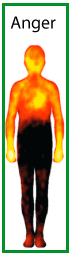
False: …..in that it’s not just a state of mind or made up. All emotions are primarily physical experiences, felt throughout the whole body. It’s instantly experienced in our muscles long before we’re conscious of how we’re feeling – the hairs on the back of the neck, tightening in shoulders, chest or gut, finger-temperature warming up, + RISING: blood pressure, blood sugar levels, heart rate, respiration rate…..

EXP: “I feel like I have a big fist pressing on my chest when I get that angry / I have trouble swallowing that / I have a knot in my stomach….”anger energy
➼ It’s impossible to hide anger from a skilled observer (body stance, tone of voice…), although many people miss the signs in themself
(FIGURE —> Finnish research )

🔐when suppressed, it always causes serious health problems
False: This is not inevitable, particularly if we have some control over whatever situation is causing the anger, but when unresolved it will create problems in most relationships.
INT:  the latest research has disproven the theory that suppressed anger results in stomach ulcers. The most common cause is a bacterial infection or drugs that attack the lining of the stomach. (Post: ‘Somatizing anger)

True/False: Researchers have also discovered there can sometimes be a correlation between anger & depression, but not always, & not automatically. Sometimes there is just anger, & sometimes there’s just depression (such as when it’s physical / hereditary)

ANGER
🔐 is the result of human conflict
False: Damaged parents regularly dump their anger on their young ones, even when the children haven’t done anything to ‘deserve / earn’ it.
And, as adults we can just as easily be angry/ cranky/ mean because of internal unhappiness & S-H – as from what others do or don’t do.
ALSO, a leading expert on anger has found that people can get angry by being exposed to foul odors, aches & pains, hot temperatures — none of which involve (or can be blamed on) the actions of others. (MORE….)

True: Continual conflict can easily escalate from —> irritation & frustration to —> rage to —> homicide or war. On a smaller scale, other people can push our buttons, especially the ones we haven’y dealt with (BUTTONS: being accused wrongly, being disappointed or disrespected, ignored, waiting too long….). 
Wars are fought over being wronged in some way, which generates anger,
OR greed on a large scale – which is not about anger

🔐 can be relieved or released by yelling, hitting, kicking or punching things (not people)….. & always needs to be dumped
False:  Some studies have shown that people who arbitrarily vent their anger in aggressive ways simply get better at being angry.
True
: Releasing anger appropriately is called “catharsis”.  Along with some form of Cognitive-Behavioral therapy (CBT), physical release of stored anger/rage-energy is necessary for full Recovery, especially – but not exclusively – for people who are Kinesthetically oriented.

Privately / safely letting it out in a safe, private place (pounding. yelling or punching) can release tension, but by itself doesn’t heal the underlying problem  (Post: ‘Volcanic anger’)
This can be done in the form of Brain Re-patterning, Trauma Release work, Core Energetics, Psychodrama…. (MORE…… // Anger & exercise)

ANGER
🔐 is relieved or eliminated by talking it out 
False: In her book “Anger:The Misunderstood Emotion”, Carol Tavris states, “Talking out an emotion doesn’t reduce it, it rehearses it. This is true for many who want to stay angry because it prevents them from feeling vulnerable.” This way of dealing with anger is actually resentment – because we’re only thinking about it (T), instead of actually feeling it (E).

True: It’s a way to start the process of becoming aware & owning how much hidden rage we have stored in our unconscious & in the body (muscles, organs, cells….)

NOTE: ACoA FoO therapy will often increase our awareness of the anger we’ve stored from childhood hurt as we come out of denial about how much damage we suffered as kids (thawing frozen emotions). Then crying & body-work is needed for actual release.

NEXT: ACoAs & Humiliation (#1)

Anger MYTHS – False (Part 2)

anger creature -2

IT’S VERY IMPORTANT
to deal with anger as it comes up

PREVIOUS: Anger Myths –
FALSE (#1)

SITE: “Why we shout in anger” – a Hindu teaching


ANGER

⚡️is an uncontrollable natural force, so can’t be reined in
False: Many people believe that once they’re angry they can’t influence it (“I can’t control my anger – it’s just who I am”) & therefore have to let it ‘run its course’. Not so.
While we don’t always have control of an external situation, no one can make us FEEL or BEHAVE in a certain way. Anyone can learn to be in charge of their reaction – via the Healthy Adult. It’s a skill set, like shooting a basketball or learning a new language. Practice, practice, practice!

⚡️is something that happens to us
False: Anger, as well as all other emotions, are our biochemical responses to events, & then may or may not be expressed as actions. Sometimes it feels like a physical impulse that’s out of our control – because it’s erupting from the unconscious, like a lightning strike. However, it is in fact energy that comes from us, rather than happening to us – triggered by our thoughts – inside (about ourselves) or from outside re. PPT (about others)

⚡️is only a problem when expressed (at all)
False: Only about 10% of people act out their anger inappropriately, & they are the visible ones – the squeaky wheels who get everyone’s attention.
Almost everyone else either suppresses it (“I don’t want to talk about it!”) or represses it altogether (“I’m not angry – really!”). Both groups need anger management classes just as much as the ‘ragers’.

ANGER
⚡️always leads to aggression / some form of violence
False: It may seem to be true if we were raised with one or more rage-aholics, & if we then also have chosen to stay with ragers as adults.
BUT healthy people have learned productive ways of processing & channeling their anger, so it never leads to being self-destructive or abusive to others.

Of course, chemicals (alcohol/ drugs/ some medicines, even food allergies…) can generate anger & set off a compulsion to be nasty, either because the cognitive brain isn’t in charge OR if we haven’t learned to recognize the symptoms of rage or how to handle them

⚡️increases as we get older
False: It’s the other way around – as people age, they report fewer difficult/ painful / intense emotions, & greater emotional control. People – like wine & cheese – do tend to improve with age. Research shows that the angriest people are 14 yrs old boys!
EXCEPTION : We’ve all seen or heard of crabby / nasty old men & women, but they’ve always been that way!

⚡️ is not a ‘problem‘ IF we don’t sound / look angry
deny angerFalse: Anyone who does not understand & appreciate the potential value of anger will have a problem with it. There are ways to tell if someone has hidden anger/rage, even when they don’t admit to it – by holding themseld stiffly, always being fearful, being overly nice, being paranoid, jealous, controlling….
(see posts: “Passive-aggressive anger” // Secretly angry ‘nice people’)

ANGER
⚡️is best dealt with by stuffing it 

False: Some of us think that learning to control our anger means having to always hold it in. WRONG. Instead, we need to be able to recognize when we’re angry, & learn how best to express it. Healthy adults don’t stock-pile emotions the way we had to as kids.  (Post: “Low-level anger“)

⚡️ is only a ‘problem’ for certain types
False:
All types of people experience anger – truck drivers, college professors, physicians, housewives, grandmothers, lawyers, geniuses, siblings, policemen, career criminals, poor people, millionaires, children, the elderly, clergy, people of any color / nationality / religion….. Anger is a universal emotion!

⚡️ is all about getting even
False: Getting-even-anger can be about revenge/payback, about wanting fairness, or childish tit-for-tat. But there are many other reasons for our anger, such as letting off steam over accumulated frustrations, asserting authority or independence, to protect against feeling vulnerable or used to cover up fear we may not even admit to. However, the main one is to protect ourselves from abuse. (Post: “Retaliatory anger“)

NEXT: Anger MYTHS T & F (Part 1)

Anger MYTHS – False (Part 1)

anger creature -1I NEED TO RECONSIDER what I thought was true

PREVIOUS: A. Categories #14

SITE: many poems @ ‘Anger

QUOTEs:  “Never give away your self-control to someone who isn’t yourself.”

ANGER
⚡️ is good
TRUE: Anger has a variety of positive uses. It can energize, help us get things done, cope with stress, promote self-esteem, & defend against inner fear & insecurity, and be a protection against abuse.
Like all other emotions, it is God-given/inborn, to warns us of real or perceived threats to ourself OR a loved one – an early warning detection system that tells us we need to change an undesirable / unsafe situation
💠
⚡️ is abnormal
False: Everyone experiences anger. We can see it in tiny babies, especially when frustrated, as they screw up their face & shake their tight little fists. It’s one of a wide range of emotions we need in order to communicate what we like and don’t like

⚡️ is not a “real” emotion
False: Some psychologists say that anger is a “counterfeit emotion.” While anger can be considered ‘secondary’ because it’s often triggered by others such as anxiety, embarrassment, fear, guilt, jealousy, shame….  – yet it is a separate emotion, since it’s possible to experience any of these other emotions without getting angry

⚡️is taken too seriously!cell pnone anger
False: The Venter / Spewer type thinks & often says that other people should understand they didn’t mean what they said in the ‘heat of the moment’.
However – many times they did mean exactly what they said, but needed the fuel of anger to let it out, even if exaggerated. AND – regardless of the rager’s intention – they do cause actual hurt, embarrassment, humiliation & fear.
ANGER
⚡️and love just don’t mix
False: They are 2 sides of the same coin. We usually don’t have strong emotional reactions to PPT we don’t care much or at all about. The more we love or need someone or something the more easily we can be disappointed, annoyed, frustrated, aggravated… by it/them, because we want so much from them. This can trigger anger when they push our buttons

⚡️‘disappears’ in Spiritual &/or Mentally Healthy peopleangry spiritual woman
False: The capacity to feel anger (E = emotion) is built in to the brain, wired to react to danger by flooding us with chemicals that push us to protect ourself & our loved ones.
Smart people pay attention to what sets them off (T = mental evaluation)

Healthy people choose to express anger in constructive ways (A = actions). Jesus, Gandhi, Martin Luther King, Jr…. felt & expressed their anger, but turned it into social reform that made the world a better place.  (Post: “Righteous anger”)

⚡️ is caused by other people
False: While others are responsible for what they do or say to us – our emotional reaction is on us (anger, fear, shock / amusement, pleasure, indifference….).
As adults – no one can make us ‘feel’. Our brain generates emotions & so we can choose how we think about an event, which can influence our emotions & how we act (T.E.A.)
EXP: we might choose to ignore ridicule, not feel hopeless when disappointed, not hurt when disrespected…. We don’t have to get mad!
ANGER
⚡️has to be ‘held in’ in order to control ourself 
False: First of all – what one needs to ‘control’ is behavior & thoughts – not emotions. The purpose of Anger Management training is not to make us sit on our anger, but to provide successful ways of dealing with it – which includes changing our abusive self-talk!

angry manFirst we have to learn to recognize when we’re angry (T), & have permission to feel it (E) without hurting ourselves or others. Then we can change our behavior (A)  (See post: Passive anger“)

⚡️is stronger in men than women
False: Based on surveys, both genders have the same capacity & frequency (about once or twice a week), but men report more intense anger, & are more likely to act on it.
Girls/women tend to hold on to angry feelings longer. So the only real difference is how each expresses this emotion, which is based very much on socially conditioning.

NEXT: Anger Myths – FALSE (Part 2)
Anger – CATEGORIES : Powerless, Rebel, Retaliatory (#12)

small red a.b.

I’LL GET YOU – if it’s the last thing I do!

PREVIOUS: Anger categories #11

SITE: “Violent Communication & child abuse…..


OTHER Anger-EXPRESSIONS (cont)

▪️PASSIVE anger
When we avoid dealing with any situation that severely upsets us, we’re likely suppressing both the awareness & the expressions of anger.
The underlying belief is that “I must never make anyone else uncomfortable, disappointed or displeased…. but it’s perfectly acceptable if I am”
This shows up as being emotionally self-dishonest, anxious, helpless, invisible, manipulated :
💭 Passives (Victims) – we let others choose for us, are inhibited, self-denying, always on the losing end of win-lose, only accidentally or indirectly getting what we want

🔻The Passive’s assumption is that their self-denial will produce the result they deeply desire – by being totally inoffensive – everyone will approve of & want to be with them.
Sad IRONY
▫️ Their rights are continually violated, while everyone else achieves their goals – at the victim’s expense
▫️ Other people will eventually become frustrated with the Passive’s wishy-washy-ness, costing them respect & credibility, AND make others angry
▫️ They’re never fully trusted because no one can tell where they stand. Some people may feel guilt or superiority – for taking advantage of that weakness
SO
Passives’ constant disappointment generates a lot of anger, which has to stay hidden. However it can also show up, indirectly as being resentful, holding a grudge, spreading nasty rumors, turning a cold-shoulder……

▪️REBELLIOUS anger
Rebellion in teens is a ‘normal’ stage of development, not automatically an indictment of their parents’ personalities or way of life. The need is to separate & individuate (S & I) from the adults, in order to develop their own Identity. It does not have to be severe or destructive.

In relatively healthy families it most often shows up as contrariness – constant disagreements with parental mores & points of view. Anger at family restrictions is a way to form necessary boundaries.
If allowed to run it’s course, young people will eventually settle into a way of life that suits themself & may actually end up agreeing with the family in some basic respects.

rebellion• However, in dysfunctional/ abusive families, any disagreement is seen as a threat to the whole fabric of the system (see Family Mobile)
While one or more children will become the ‘good boy or girl”, at least one other may become the rebellious, angry ‘difficult’ one, taking on the Scapegoat Toxic Role. Such children may be continually punished, accused of disloyalty, &/or thrown out.  It makes sense this child will conclude that since “No one cares about me, everyone thinks I’m bad – I might as well be bad” !!

As adults
– Rebellious anger is most often directed at any form of authority – being sullen & withdrawn or openly defiant, joining up with other unhappy peers, & show up in all kinds of anti-social behavior. It’s rage that’s projected onto others which we deny feeling about our family’s neglect incompetence, & many forms of abuse.

▪️RETALIATORY / revenge anger
This is another very dangerous type of anger – a primitive, destructive, violent response to a personal insult, injury or humiliation from others. It can surface as a direct response to someone else lashing out at us, but our intuitive ‘logic’ about wanting revenge is often twisted, conflicted & small-minded.

Sometimes the trigger is a real-world situation, other times it’s only a perceived wrong. Either way the intensity of our reaction will dependent on how much a current event reminds us of childhood hurts & disappointments.
Revenge-actions include being over-harsh, refusing to forgive & forget, bringing up hurtful memories from the past….

Anger + Violence = REVENGE
👹 Using ‘Violent Communication‘ toward bullies / intimidators can easily make them switch to the Revenge cycle, so the punishment doled out to the ‘Enemy’ (you) continues to grow.

Anger in the form of Revenge only encourages the problem, perpetuating the cycle of violence. No matter how much we want justice or pay-back, the cycle always ends in one person being a Victim. It never leads to a resolution. (SITE:R – will it make you feel better?“).

INTERESTING: Complete outline of Hamlet’s Revenges

NEXT: Anger categories #13