What ACoAs Know & Don’t Know

SO MUCH TO KNOW –
I’ll never get it!

PREVIOUS: Ennea-Triads – 9s, 1s (3b)

SITE: Self-esteem – the problem behind the problem


ACoAs are some of the smartest, most intuitive people around.  We had to be – to survive our childhood!  But we:
a. don’t acknowledge it (taught to not trust our judgment)
b. are ashamed of it (taught to not think so highly of ourselves)
c. are missing basic, ‘normal’ info about ourselves & the world

1. LACK of INFO
a. About Alcoholism in the family, denial – that they were drunk, that their drinking effected us, &
that our damage (& theirs) was not our fault or responsibility
Deny THAT WE :alcoholism
• were abused & neglected (on one or more of the 4 levels: physical, mental, emotional, spiritual)
• were molested, sexually or physically abused
• we carry deep pain, from all that trauma
• we don’t have to suffer any more
• we have a right to be here
• we can trust our intuition ….

b. About Healthy Living
• what Process actually is & how to use it
• what clear, sane Thinking ‘sounds’ like
• that in many situations we have Options & what they may be
• what we want to be / do, when we ‘grow up’. Some of us do know, but are not allowed to go for it & too scared to fail no crisis
• how to live without constant crisis, abuse, anxiety
• that we don’t have to manipulate to get our needs met
• that we can take care of ourself, if we grow a Healthy Adult
• how to be kind to our Inner Child – by growing a Loving Parent!
• what mental health is  (see posts on ‘Recovery’)
c. General
• how the rest of world actually functions
• what reality is – mental, emotional, physical
• what to SAY when someone says hurtful or outrageous things
• what healthy people are like  (ACoAs think they don’t get angry, overwhelmed, make mistakes, lose relationships…)
• why other people do what they do (get away with things, are entitled, can function well…)

2.  What is NORMAL – which has 2 meanings:
i. the opposite of crazy.  Our S-H says we’re crazy & everyone else is normal.  Yes, we do have distorted thinking, which can be corrected – but that doesn’t make us nuts.
⚀ It’s normal to: have emotions, to succeed via process, to mourn losses, to not get along with every one – all the time –  to always have some damage….

ii. what is average – for humans, & in your society
It’s about the behaviors & attitudes common to the majority. But in this meaning, normal is not always healthy! It’s what the norm was where you grew up, in your religion, in your neighborhood & school…
SO – normal could have been – drinking to excess, physical danger, verbal abuse, insensitivity, lack of education… OR being up tight, having to succeed, always looking good, doing the ‘right thing’…
⚀ This normal can be to: laugh when someone gets hurt or makes a fool of themself, to not help strangers in trouble, to stare at an accident on the street…
no happy reunion3. What’s NOT possible, or is unlikely
• for our parent to love us unconditionally
• to be free of all pain & suffering
• to have relationships that never end
• to be liked & wanted by everyone, all the time
• benefit from becoming a star, be famous, be adored, worshiped

4. What CAN be worked towards & accomplished

Screen Shot 2015-07-11 at 11.53.34 AM• diminished S-H & gain self-esteem
• be heard/ listened to/ get healthy attention
• have healthy friends & mates
• improved health & appearance
• an enjoyable career, creative outlets
• to belong & be accepted
• respected, treated well
• feel comfortable, safe, secure
• have fun, relax, enjoy life   – etc.

5. What ACoAs DO Know, BUT….
• what really happened to us as kids (abuse, neglect, coercion, torture) – BUT don’t want to admit or deal with
• some of the things we want in life – BUT are not allowed to have
• what we’ve learned & accomplished since we left home – BUT can’t admit or own it & use it for ourself
• ALL the things we figured out on our own, as kids & as adult – BUT don’t value or validate them because of:
— S-H – we dcaused anything bad that happened to us (then and now)chinese S-E
— shame – not allowed to have our need met, or our value our accomplishments
— lack of healthy mirroring – our real self wasn’t validated by our family, so we negate our natural abilities

💝 SELF-ESTEEM comes from validation & unconditional regard / love.
Validation means admitting what we know & learning what we don’t. Regard is being kind, patient & respectful toward ourself. It’s never too late to have a happy life!

NEXT: Ennea Development Levels – OUTLINED (#1)

Ennea: TRIAD EMOTIONS – 9s, 1s (Part 3b)

PREVIOUS:

 Ennea: TRIAD EMOTIONS + 8s (Part 3a)


891s “MANAGING” ANGER (cont)
► EIGHTS – Challengers (#3a)

◀︎▶︎ NINES – Peacemakers
♝ Complicated  : Some 9s recognize their anger, have feelings of resentment, blow up on occasion, may even experience road rage.
But since most do not “get angry” , they’re confused to hear it’s their leading emotional issue. But it’s this very avoidance that pushes them out of contact with themself

♝ Root: reacting to a chaotic early life, they deny anger in favor of a peaceful existence – driven by a need to pacify their environment & relationships
♝ Expressing anger & aggression, it’s processed unconsciously. They don’t like showing or even acknowledge having  it, but underneath tend to ‘smolder’.  Since they deny feeling aggression & resentment in order to not rock the boat, they don’t let on to the Self or others that they’re stewing. This results in losing contact with the Gut Center, so they act-or-not-act based on a disconnection from reality

type 9 Es♝ Acting out anger: In this triad, 9s are most out of touch with both anger & intuition, which they feel threatened by. They deny their instinctual energies as if to say, “What anger? That’s not me”.  While they do have this emotion like everyone else, they try to ignore it by idealizing everything in their world

♝ In relationships: finding their own anger so threatening, they bury & form a completely pleasing or passive exterior
♝ When boundary invaded, they don’t admit how angry it makes them, but it shows in a stubborn attachment to keeping the peace, whatever the cost. However, 9s do periodically erupt, betraying the reservoir of rage simmering deep below the surface.

♝ As a reaction to underlying fear: they need comfort & peacefulness in connections with others because of a great fear of being separated. So they try to stifle the source of power in themself  by repressing their assertive / aggressive nature, Also actively try to calm or suppress aggressiveness in others.
Re. not being held/ supported : they “hold” by engaging in repetitive mental or physical actions to soothe themself, as a narcotic (See Enn. Emotions, Intro)

♝
The Positive emotional state of NINEs is Peace & inner wholeness. Healthy 9s actively engage with the world, bringing a calming, optimistic, & highly empathic presence to others, while fully honoring their own worth
Their Virtue is Engagement / Right Action, engaging with life from a place of deep inner alignment. It’s an antidote to their “self-forgetting” – the tendency to fall asleep to their own desires to keep the peace

◀︎▶︎ ONES – Reformers
♝ Root: being humiliated, forced to follow a strict moral code, feeling unacceptable, unable to rely on a safe stable authority figure
♝ Expressing anger: they internalize it, from wanting to be perfect. But being impossible to achieve, the effort sets up a vicious cycle which triggering more anger, which they deny. The emotion is process by following a rigid set of religious or philosophical ideals
type 1 Es♝ Acting out anger: trying to make aggression into something noble, glorious – their superego represses normal instinctual energy & then comes back up as righteousness & rigid, compulsive ‘right action’
♝ In relationships: they feel anger but do everything they can to hide it. They have a burning desire to be perfect, & in their mind perfect people don’t get angry. They give themself no mercy, so also tend to be highly judgmental of others as well.
♝ Their response to boundary invasion is to suppress the raw energy of anger, redirecting it into efficient action, while holding on to their Passion = Simmering Resentment

♝ As a reaction to underlying fear of being condemned for normal human limitations & feelings, they need to see themself as reasonable, using strict self-discipline to always be right
Re. not being held/ supported: they “hold” by being self-controlled & trying to control or structure every aspect of their direct environment   (MORE... from Lynette Sheppard)

♝ The Positive emotional state of ONEs is a Sincere spirit & good intentions towards others, understanding that they have a personal roll in caring for the well being of all.
Their Virtue is Serenity, the inner peace & patience reached when they let go of the hyper-critical inner voice, accepting that things can be “perfectly imperfect” .

NEXT : What ACoAs know & don’t know

Ennea: TRIAD EMOTIONS – + 8s (Part 3a)

ANGER triadI FEEL SO MUCH ‘SAFER’
when I stay angry

PREVIOUS:

 Triad Emotions – 6s, 7s (2b)

BOOK: “Emotions and the Enneagram, Working Through Your Shadow Life Script” ~ Margaret Frings Keyes

567s Triad :  THE HEAD (2a, b)

891s – THE BODY / Instinctual Triad : Aggression and Repression
PHYSIOLOGY: this triad is associated with the brain stem (earliest developed part, also called “reptilian”), which controls motor movement, & connected with creative, sexual & bio-electric energy in the spinal column
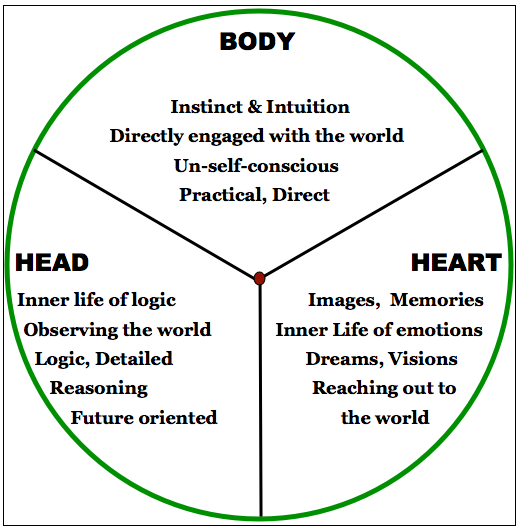
FOCUS: this ‘Center of Intelligence” uses visceral responses to understand the world, typically responding first from the gut, a place of intuitive ‘feeling’-knowing**

ROOT Emotions
: ANGER, Aggression, Resentment
RESPONSE : they tend to act without having to stop to think, are oriented to action, using body-based intuition to deal with relationship issues
891 triad Es
POWER: is in the ability to instinctively take action
TIME: mainly in the present, since actions can only be in the now
UNDERSTAND Life best when translated into physical activity or movement

**NOTE: In this context, it’s important to not confuse Feeling / Sensing (891s) with Sentiment (234s).
Feeling – is ‘background awareness’, spontaneously coming from deep within & so is more primitive, using bodily sensations, intuition, instinct… vs
Sentiment – the copy-cat show of the ‘Feeling’ triad, which is more surface, ‘skin deep’, based on energy picked up from the environment

◆ The 891 triad has to do with muscle movement, & therefore ‘knowing through doing’. Intuition helps them make correct, concrete decisions quickly & easily. They love to face reality head on AND rebel against injustice
But when resisting reality, & assuming there’s nothing else wrong with them, the resistance is held in various physical tensions (neck, lower back…..)
And, when stressed, processing verbal or written information can be slow, with trouble expressing themself verbally:
— angry 8s will think in caricatures or temporarily blank out
— repressed 9s tend to get mentally fuzzy, or go into long ramblings
— compulsive 1s tends to think only in Black & White

“MANAGING” ANGER
◀︎▶︎ EIGHTS – Challengers
♝ Root: use anger to hide a tender vulnerability & childlike innocence, from growing up abused, controlled & exploited, & with one weak parent bullied by other
Re. not being held/ supported: try to “hold” everything & everyone by forcefully taking charge (See Enn. Emotions, Part 1)

type 8 Es♝ Expressing anger & aggression: externalize, acting automatically. They’re consciously aware of anger about an unmet need, or use it to present themself as the ‘strongest’ one around.
They tend to bulldoze through life – letting their hostility out, then leaving others to “deal with it”. It’s their main way of getting what they want, & for coping with stresses or challenges.

♝ Acting out anger: the emotion is obvious to everyone because they feel free to express it. When their anger starts to build, it shows physically – raised voice, clenched fists, moving more forcefully…. When overcome with strong ‘animal instinct’, they react blindingly fast

♝ In relationships: 8s are comfortable with anger & are known to ‘stir the pot’ to get a reaction from others as a way of engaging, but will gladly overpower anyone who will let them. They tend to be confident, confrontational, decisive, willful.

♝ When boundary invaded, they react directly & forcefully to push away.
♝ Reacting to underlying fear : afraid of being vulnerable to others, they’re driven to be self-reliant & strong, so they can often be thoughtless, even heartless

With an UNHEALTHY childhood – 8s can become bullies, delinquents or gang leaders… & eventually their adult counterparts.

With a HEALTHY childhood – 8s become hard-working volunteers, protectors of the underdog, inspiring class presidents…. & eventually competent, moral, strong leaders in corporate, government or religious arenas.
• The inherent Positive emotion of 8s is an enthusiasm for life, moving into action & experience with their big energy.
• Their Virtue or higher emotional state is innocence, approaching life without cynicism or blame – the 8’s version of open heartedness – willing to be receptive to whatever comes, & therefore be vulnerable, without being weak.

QUESTIONS to ask yourself for 891s

NEXT:  Ennea GUT Emotions (3b)

Ennea: TRIAD EMOTIONS – 6s, 7s (Part 2b)

PREVIOUS: Triad Emotions (Heart +5s)

SITE: “Emotional Sobriety” (AA & the Enneagram)


567s Triad : “MANAGING” FEAR (cont)
►  FIVES – Investigators
(Part 2a)

◀︎▶︎ SIXES – Loyalists
6s, unlike 5s, have trouble trusting their own minds, which reel with negative, fearful possibilities, while not thinking things through for themself. They expect the worst to happen, so they spend a lot of time making sure they’re protected against every eventuality.

Wanting so much to be liked & feel safe, they constantly look outside for guidance – to authorities, beliefs, jobs, philosophies, relationships, savings…. But no matter how many security structures they create, 6s are still filled with doubt & fear – as long as they’re not listening to their own Inner Voice.
– Phobic 6s can end up mistrusting the very people & beliefs they’ve turned to for reassurance, while –
– Counter-phobic 6s will often react impulsively, confronting & defying the fear in an effort to be free of it – without considering underlying causes, or possible negative consequences of their rashnesstype 6 Es

Root: 6s are deeply afraid of being abandoned, which comes from people’s unpredictability. This makes them the most anxious of the 3 Types, & the most out of touch with their own sense of Inner Knowing & confidence

Express fear by: waffling between inner & outer expressions. Being at the center of the triad, they’re plagued by doubt, not quite sure what they think about anything. They can neither trust themself nor the outside world, but don’t actually experience it as ‘fear’, therefore their Janus-like quality

6s Deal with fear
either by rebelling against authority OR surrendering to it as :
◆ Phobic – overly anxious, always on guard, suspicious of anything unfamiliar. Don’t believe in their own abilities, so look outside to handle their anxiety & dread for them
OR
◆ Counter-phobic – repressing fear, pretending there’s absolutely no reason to ever feel scared. Surround themself with security systems & ‘helpful’ people

Respond to their fear:
by projecting several negative outcomes, &/or acting fearless as a way to cope with their ever-present insecurity
Alleviate fear
: by organizing their tribe into strong groups, & presenting a unified front against “them”. They ask everyone else for answers they could solve themself

◀︎▶︎ SEVENS – Enthusiasts
7s don’t expect things to work out very well, so they make sure to have multiple options, & deliberately stay clear of any form of unpleasantness – as much as possible

✦ To distract from hidden fears, they keep their minds occupied with exciting possibilities & options. Their main focus is on pleasure & getting what they want – with less concern for the needs or desires of others. They’re afraid of missing out, of not being connected to life

✦ When they want help, they look to others indirectly, getting info from conversation & by activities. They rarely look inward for guidance or at their own patterns of functioning, so they tend to not learn from their mistakes

✦ Being a thinking type PLUS wanting to have pleasant feelings – gives them a strong visual mind, so they can live in daydreams. But they also make every effort to act on as many of their ideas as they can – staying on the go, pursuing one experience after another, keeping themself amused

type 7 EsRoot: 7s are deeply afraid of feeling the pain that they secretly carry in their inner world – wanting to avoid further abandonment, deprivation & loss
Express the fear : by externalizing it, avoiding it entirely by distracting themself – always being ‘up’, always having options (to run) & always planning new feel-good escapes
Deal with fear: they’re always fighting negativity, failure & boredom, so even their ‘commitments’ have backup plans – just in case.  The need for constant stimulation can turn into an addiction to excitement

Respond to their fear: with positive thinking & taking on new challenges, losing themself in exciting adventures, trying to satisfy every need
Alleviate fear: by consuming everything they can, & becoming so great that they’re bigger & stronger than those around them. They accumulate people, experiences & possessions to insulate themself from anything unpleasant or painful.     (MORE…. )

NEXT : Triad Emotions – Part 3a

Ennea: TRIAD EMOTIONS + 5s (Part 2a)

FEAR triadI NEVER ADMIT TO ANYONE
that I’m deeply afraid inside

PREVIOUS: Triad Emotions (1b)


567s – THE HEAD / Thinking Triad: Fearful & Unsafe

PHYSIOLOGY: associated with the neo-cortex, most highly developed area in the human brain
FOCUS: primarily use logical, left-brain intellect, tending to ignore heart & gut input
ROOT Emotions: FEAR, Anxiety, Dread

RESPONSE: from their head first, then act or not act
POWER: comes from the ability to think
TIME: mainly to the future – what they look forward to, good or bad
UNDERSTAND Life  best when it’s translated into logic, sometimes in the form of rules & instructions

This group thinks AND creates much fear – via negative anticipation :567 triad -- fear
• 5s act too little, since so much time & effort is used to complete their thoughts before expressing them
•  6s deny the value of their thoughts & actions, flipping between extremes of too much – or – too little certainty, most out of touch with direct knowing
•  7s act too much & think too little or incompletely. Don’t stay with an idea long enough to see it through, so the Head Center’s optimal function – to completely understand – is aborted

◆ 5s & 7s (& some 6s) aren’t very focused on the outside world or on what others think – often seen as distrustful, superficial or uninterested.  However, these surface reactions are defense mechanisms against their fear of being destroyed in some way by a frightening world.

567s look for reassurance in B & W facts. Even though this can often be a positive, it becomes a negative when dealing with problems – they ignore intuition, emotions or actions, causing misunderstanding & conflict

◆ Their FEAR (not always experienced directly) creates a deep insecurity. Depending on the Type it’s expressed as  = ‘fear of failure’, = not doing the right thing, = missing good opportunities, & especially = not understanding what’s going on .
Since living in one’s head includes imagining, it can also include obsessive worry about what might happen.
When severely stressed, especially over a long time, fear can become panic, causing them come to a dead stop until they can get enough new info to proceed. (This is not the anxiety of the 234s, who react with impulsive activity).

“MANAGING” FEAR
► FIVES – Investigators
5s expect to run out of resources – so will hoard energy, info, money, time…. They assume they can deal with fear by constantly strategizing – as if honing skills enough will prepare them for anything scary ‘outside’

Relying on their first-rate thinking process to decipher what they consider an illogical world, ego-driven 5s can appear very cool, calm & collected – OR be secretive loners who focus their mind on the ‘nature of the universe’.
They hope that understanding reality in their own way will eventually allow themself to rejoin the world, but they never believe they know enough to participate with total confidence. Instead, they get caught up with increasingly complex inner worlds. type 5 es

Root: 5s early traumas & abandonments leads to considering the world as a scary place. Overwhelmed by emotions & life’s demands, they’re afraid of not knowing how to cope or not having enough facts to explain things

Express fear by
: live in their head, rather than connecting with others. They may take time to consider their emotions, but later & in private – so there’s a time lag between an event & their response

Deal with fear by: retreating to the safety of their private space, accumulating as much knowledge as they possibly can, & mulling everything over to make (mental) order of it all. They’re often disconnected from daily life & their emotions, assuming that figuring everything out will free them of dread, without actually facing it.

Respond to their fear: by collecting &/or hoarding money, possessions & energy tightly. Resentful of having their ‘space’ intruded on, they retreat from anything that make them anxious, into a private universe & only rely on themself
Alleviate fear: by using their intellect to feel omniscience, looking for answers to life’s riddles in isolation

QUESTIONS to ask yourself (for Types 567)

NEXT: Triad Emotions (#2b) Types 6 & 7

Ennea: TRIAD EMOTIONS (Part 1b)

PREVIOUS: Triad Emotions – 1a

SITE:  “How the Enneagram can Point you to God“, with each type

BOOK: The Enneagram: A Christian Perspective  – R. Rohr & A. Ebert

◀︎▶︎ TWOS –  Helpers / Caretakers
♝ Dealing with Emotions: 2s are the most externalized, focusing their grief & shame outwardly. They over-express positive aspects of their heart – at the expense of being real, so their  connections are incomplete or false . However, they get a lot out of giving of themself & conforming to the needs of others

♚ Shame: 2s compensate by denying hostility, trying always to act out an idealized image (good girl/good boy). They feel shame when confronted with any form of disapproval, because they want so badly to be accepted & loved.
The try to control shame by working very hard to convince themself & others that they’re totally virtuoustype 2 heart

They only allow themself pleasant emotions & thoughts toward others, while repressing ‘ugly’ ones (anger & resentment for not being appreciated) – denying that they may not be so unconditionally loving
— As long as 2s can get pleasant emotional responses from others, they feel valid, which helps control their shame

The ‘Positive’ emotion for 2s is a great capacity for empathy and care in relationships. Others naturally respond well to their warmth & friendliness, inviting a connection to the heart center where everyone is valued.
Their Virtue is humility – not devaluing oneself, but realizing ones true measure & worth, without inflation or deflation – by balancing between giving & receiving

◀︎▶︎ THREES – Achievers / Performers
♝ Dealing with Emotions: at the core of the triad, 3s are most out of touch with their heart-feelings, which are suspended so they can = make a good impression = get the job done, & = act as or become someone they believe will make the greatest impression or win the greatest accolades.
So they need to repress shame & grief, making it hard to know directly what they want or could own as theirs alone (needs, gifts, dreams, wants….)

type 3 heart♚ Shame: they deny shame by disconnecting from their heart, hiding from underlying sense of inadequacy, then trying to fill the gap by ‘being’ what they achieve.
They do feel shame (but don’t recognize it as such) with any form of rejection, because they so want to be desirable.

3s focus on accomplishing tasks & ‘managing’ shame by trying to become what they imagine a valuable, successful person is like. They learn to perform well & be acceptable, even outstanding, often driven to relentlessly pursue success as a way of staving off shame & fear of failure

NOTE: Healthy 3s – having bonded with a loving mother : they’re the most authentic people. Self-actualized 3s attract others with a magnetic personality
Unhealthy – if bonded to a narcissistic mother : they become sham-artists to hide an undeveloped soul. Hard-driving achievers, they claw their way to the top & crow when they get there, but their own narcissism drives others away
(ARTICLE by a Christian Type 3)

◀︎▶︎ FOURS – Individualists
♝ Dealing with Emotions: 4s under-expressing their connecting-heart, & turn their grief & shame inward. They have an artistic temperament, a love for aesthetics & are intense about everything – absorbed in their inner life, but away from their true feelings

♚ Shame: they try to control their shame by shoving hostility so deep – they can’t find it. But they do experience it when they don’t feel like they belong somewhere or are criticized, because they’re so afraid of seeming defective.
Being the most likely to feel inadequate, they compensate by focusing on how unique & special their style, emotions & talents aretype 4 heart

4s also cover shame by cultivating a rich, romantic fantasy life to escape dealing with ‘ugly’ reality – whatever seems drab or uninteresting – using dramatic emotions & imagination to soothe themself, & fill in the Self they’re think is missing.(More….)

The Positive emotion for 4s is authenticity, to experience their true feelings, whatever it takes. They can empathize with other’s suffering & grief, as well as their happiness.
Their Virtue is equanimity – the capacity to keep the heart open, accepting all feelings while staying grounded in the goodness of life. (More…..)

 NEXT:  Ennea-EMOTIONS #2a

Ennea: TRIAD EMOTIONS (Part 1a)

LOVE triadI’M SO FULL OF EMOTIONS
I don’t know what to do with them!

PREVIOUS: Triad Emotions – Intro

SITE: Enneagram: Ancient knowledge, modern psychology


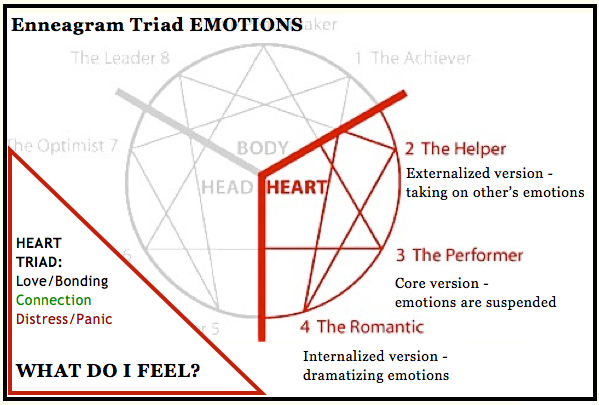
234s – HEART / Feeling Triad
: Low Self-Esteem & Longing
PHYSIOLOGY: triad associated with the mammalian part of our brain
FOCUS: this ‘Center of Intelligence” uses emotions, intuition & imagery – rather than bodily senses

ROOT Emotions
: SHAME, & GRIEF/Sadness, hidden HOSTILITY
RESPONSE: from their heart first, then the head, & gut last
POWER: from their ability to instinctively feel emotions

TIME: mainly to the Past, needing to feel connected to long-term relationships & events
UNDERSTAND Life: best when info is translated into symbols of desire, through people & stories about themselves or their old experiences

❖  234s long for a sense of identity, of figuring out “Who am I?”. Instead of going inward for this information, their main attention is on getting Affirmation From Others, especially those they feel close to, to the point of side-lining their own deepest needs. Total reliance on validation from others can lead to only being able to see themself thru others’ eyes, which is unreliable at best, &/or to low self-esteem & possibly despair. It’s also called the “image” triad, because of a concern with how they are ‘seen’ triad :grief

💔 GRIEF / Sadness comes from negating oneself by having substituted a ‘persona’ as a partial or full replacement for the True Self. As children they didn’t have accurate or adequate mirroring. Not being able to handle their pain, they chase after attention & validation. When they feel a real or imagined threat to a connection with an important ‘other’, they can get very distressed, even panicked. This motivates them to stay attached, or do whatever is necessary to re-connect.

IMMATURE: While they may seem very emotional to others, these Types are the least in touch with their primitive senses (the way 8s are). Their natural instinct is to pick up emotional energy from the environment, the same way an audience takes on the enthusiasm of a charismatic motivational speaker, & then acts it out as if it was their own, (like audiences do with Tony Robbins)

EXP: 4s can be pseudo-authentic (dramatic), who assume they must be unique to receive love…. Actually – for them true authenticity would be to include emotions they may think are too ‘ordinary’ (caring, comfortable, annoyed, disappointed….)
MATURE: When healthy, their sensitivity makes the 234 Types admirable, being highly valued for their genuine thoughtfulness & interpersonal skills.

🩶 Hidden AGGRESSION: 234s don’t openly acknowledge their wish/need to be aggressive. Instead they use manipulation, guilt & self-pity – more passive ways of asserting themself, which they consider safer

💔 SHAME : In this context, it’s the feeling of being “in the spotlight,” under scrutiny, rather than feeling ashamed of themself as human beings. It grows out of the deep-seated preoccupation with the need to “See me the way I want to be seen” which motivates their characteristic styles – rather than for who they truly are.

NEED to be SEEN
2s – it shows up as wanting to be recognized for their affection & care of others, a form of “possessive affectivity” **
** Affectivity – something influenced by, sensitive to or results from emotions – in this case fear in relationships leading to being controlling, from attachment anxiety

3s – their own success is most important, especially in career. This kind of recognition-need can be called ‘functional affectivity’**
** have emotions & attitudes which guide action & organize behaviors to promote fulfilling goals in specific environments

4s
– they deeply want recognition for their originality, with a need to be considered unique & special, often with ‘negative affectivity’**
** have many painful emotions – causing a more pessimistic outlook, analyzing failures more deeply, & be more sensitive to real or imagined rejection or stress

QUESTIONS to ask yourself – for 2, 3, 4s

NEXT: Triad Emotions (1b)

Enneagram: Triad EMOTIONS – Intro

triad emotions UNDERSTANDING MY EMOTIONS
helps me deal with life better

PREVIOUS: Ennea Triad Basics – #2c

SITE: “Personality tool: Understanding the Enneagram”. Scroll down for info on each type’s way of expressing emotions

CORE EMOTIONAL responses of the 3 Basic Centers
An important way of using the Enneagram is to identify & properly deal with the emotional essences of each triad – developed out of biological responses to survival threats. They can be seen across ALL mammalian behavior, via modern Affective Neuroscience. The same distress-emotions are triggered when the organism’s 3 BASIC NEEDS are not met.

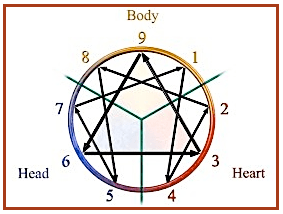
CENTERS: Feeling = Heart (234), Thinking = Head (567) and Gut (891) which includes = Instinctive (digestion, breathing, heartbeat) & Sensory aspects (running…).
🔆 Interesting: Gut reacts 30,000 times faster than Heart, itself 30,000 times faster than Head. (“The Fourth Way”)

Screen Shot 2014-09-28 at 10.38.50 AM◆ EVERY type is capable of experiencing ALL emotions, but each Center is driven by a main one. When things get tough, frustrating, won’t go our way…. there’s an inner ‘default’ setting that gets triggered
234s = Grief, Shame
567s = Fear, Anxiety
891s = Anger, Rage
Each Type handles it’s primary emotion differently:
❖ The first # is overt “externalizes” : 2 its shame, 5 its fear, 8 its anger
◆ The second # “represses /covert” : 3 its shame, 6 its fear, 9 its anger
✦ The third # “internalizes /neutral” : 4 its shame, 7 its fear, 1 its anger

Basic FEARS – Triad emotion are our automatic ‘natural’ way of responding to the world, but most people don’t realize it’s what fuels their daily reactions.
When these emotions are cut off from our Core Self, they generate the Type’s defense mechanism, which underpin all dysfunction.
While each Center has it’s preferred emotion, Riso & Hudson explained that
each TYPE also has an underlying fear – OF being: 
enn - Triand INFO1s – corrupt, defective, unbalanced
2s – unwanted, unworthy of love
3s – worthless
4s – without identity or personal significance
5s – helpless, incapable, useless
6s – unable to survive on their own
7s – in pain and deprivation
8s – harmed or controlled by others
9s – lost or separated from self & others

◆ Beatrice Chestnut, psychologist & teacher, condensed a human CHILD’s early needs into 3 challenges – emotional ‘disturbances’ when needs are not properly fulfilled:
A. Need to be mirrored – when their caregiver makes direct, loving, face-to-face, eye-to-eye contact, so the young child feels ‘seen’ for who they are.

MISSING: Distress/Panic, from the loss of connection & bonding.
Heart types innately pursue this need, but do it incorrectly by creating a False Persona. This makes it hard to be curious about themself, others & life.
They’re very busy watching what they do so it will fit their created IMAGE of being:
2s – thoughtful & considerate – so others will respond favorably to ‘such a selfless person’ who only thinks of others
3s – a confident, successful person – so others will respond with respect to such a competent, achieving individual
4s – a unique person, different from everyone else – so others will at least think they are special rather than lost or deficient.

B. Need to not feel fear – being protected from real danger, or whatever is imagined to be dangerous
MISSING: Fear/Anxiety, when experiencing the threat, challenge, or danger to their very security
Head
types figure out what makes life certain for themselves. Some fear is necessary & useful if it’s not all-pervasive & overwhelming. When fear overwhelms, it’s very hard to be open to & curious about all the good things available to us.
It’s also imperative to separate fear that’s real from what’s self-created (S-H)

5s – move away from anything that scares them, retreating into a solitary, private world where they only rely on themself
6s obsessively imagine future danger, &/OR act fearless, as a way of coping with their ever-present fear of life
7s try to avoid fear entirely with constant distractions, sticking to a positive attitude, always considering new possibilities, & planning escapes

C. Need to be held & supported – seen in very young children who want to be securely wrapped up & held, to not feel the threat of being dropped (injured or dead)
MISSING: Anger/Rage, when they experience not being able to depend on their caretakers to ‘back you up’ – neglected, violated & repeatedly deprived
Body Types can sense what’s wrong in their world, know what actions are needed to correct it & how to provide their needs. They want to control their experience & environment to deal with anxiety :
8s try to ‘hold’ everything & everyone by taking charge
9s ‘hold’ by repetitive activities that soothe them (narcotizing)
1s ‘hold’ by being self-controlled, trying to control or structure every aspect of life

LAYERS of the SELF enn -LAYERS of the SELF
Outer = COMPULSIVE : Behavior is automatic
Next = OBSERVING : Beginning of awareness, ability to notice & detach from compulsions
Semi-Inner = HIGHER : Increasing awareness & autonomy, the ability to access higher functions of the Centers
Inner/Center = ESSENTIAL :
Unified consciousness, not trapped in or identified with any one triad
(Chart: ‘Nine Paths’ 12/26/12)

Moving from the outer circle of Stress & Security points – towards our center – requires consistent self-observation.

NEXT: Triad Emotions (Heart – 234)

Excellent Inner Child movie

DON’T IGNORE ME!
I’ll act out what you deny!

PREVIOUS: Enneagram Triads (#2c)


For anyone interested in better understanding the Inner Child, I highly recommend the MOVIE:

“IF YOU BELIEVE“, 1999

— with Ally Walker as the overworked editor who has betrayed her own instincts & needs, &
— Hayden Panettiere (long before “Hero”) as Ally’s younger inner self, prodding her to return to her truth.

Synopsis at imbd.com

MOVIE:  http://www.free-online-movies-streaming.com/if-you-believe-1999-streaming/

NEXT: Ennea-TRIAD Emotions – Intro

Ennea TRIAD Basics (Part 4b)

PREVIOUS: Ennea Triads, Part 4a


3rd Triad (891)
(cont) : INSTINCT (Gut), Body-based character structure
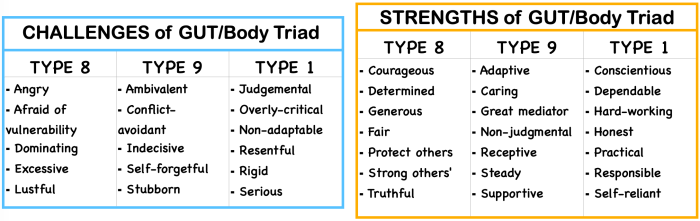
#8 = Leader — Energy: Larger than life, Dominating.
#9 = Mediator Energy: Diffuse extension, Comfortable
#1= Reformer Energy: Rigid containment, Righteous

In BIZ: They take a stand, act decisively, & take calculated yet appropriate risks. They develop alternative & solutions to problems, challenging conventional wisdom. They take ownership & demonstrate integrity.

For Inspiration: 8s use their Mental Center / 9s use their Body Center / 1s use their Heart Center (MORE….triad 891

Re. SPACE – When truly grounded (knowing exactly who & where they are in time, space & spirit), they develop healthy personal boundaries, with a clear sense of personhood & positive connections to others
EXP:
8s feel the need to conquer, to be certain of having a place for themself, so they assert their boundaries aggressively
9s will adapt to a new environment with seeming ease, but part of them remains disengaged
1s hold back & compare situations with their sense of right/wrong, afraid that if they let go they’ll lose control & have their boundaries ‘penetrated’

► 8s Function – Leadership & Self-assertion
They express anger easily & fast. They put their guard up so that no one can get through their defenses to hurt them. Their anger will surface in situations where they or someone else experiences injustice

GOWTH: 8’s can learn.… that there’s no contradiction between being sensitive to the hearts of others and having an effect in the world. In fact, the more they connect with others, the more they become a powerful force for good. Healthy 8’s can good gut instinct.pngbecome the kind of leader others will fall on their sword for
Positive potential: ability to take personal initiative, magnanimity, self-confidence, self-determination, self-reliance
Negative potential: combativeness, crude insensitivity, domination of others, ruthlessness
– They over-express their instincts, tending to dominate people & situations without pausing to think about others’ points of view

► 9s Function – Interpersonal Mediation & Receptivity
They tend to disconnect from their anger in order to build harmony & comfort, both for themself & for others, which can be referred to as “the anger that went to sleep”. They turn a blind eye to whatever threatens their peace

GOWTH: 9’s can learn.… that staying with discomfort in the moment & being present to engagement – even if there’s confrontation – is the key to true inner peace. They don’t need to retreat from anger or other uncomfortable emotions, & with limitless patience can help others feel truly loved & accepted

Positive potential: acceptance, creating harmony with others, emotional stability & physical endurance, un-self-consciousness
Negative potential: disengaged attention & emotions, neglectfulness, mental dissociation, passivity
– They’re numb to their instincts, which makes it very hard to hold on to their own agenda as the waves of life wash over them

► 1s Function – Ethical Standards & Responsibility
They don’t like expressing their anger externally, & can be very self‐critical, working hard to hold back their unconscious impulses.  (from ‘Enneagram Singapore’)

GOWTH: 1’s can learn.… that they’re not responsible for fixing everything, & accepting a situation isn’t the same as endorsing it. They can still accomplish a higher good while having patience with ‘what is.’ At their peak, they’re serene, conscientious, accepting & inspiring

Positive potential : conscience, delayed gratification, maturity, moderation, self-discipline
Negative potential: impersonal perfectionism, judgmentalism, rigid self-control, self-righteousness
– They internalize their instincts & check them repeatedly for validity, which makes them highly ethical but also a bit slow
✳️
Therapy with HORSES: Body Types 891 are taught to modulate the energy they put out through their gut centers, & allow the process to unfold naturally. After working with a big quarter horse named Black Jack, one executive reported “This is like having my own biofeedback machine. I get an instant response to how I come across and what happens when I change, just by watching this horse.”
– 8s need to modulate their intensity
– 9s need to focus, & direct their intentions with clarity
– 1s need to relax, & let go of their need to be competent & controlling – to simply BE with the horse. Easier said than done.

MEDITATIONS ‘Thoughts’ about meditation (& some humor) Scroll to 12/3/2012

NEXT: Ennea Emotions #1