List of HEALTHY Boundaries (Part 2)

I KNOW WHO I AM & WHAT I NEED, & I can say it clearly

PREVIOUS: Health Bs, #1

SITE: Personal Responsibility


💟 PRACTICAL EXAMPLES of Healthy Boundaries
What B do NOT DO ( Part 1)

♥️ WHAT Boundaries DO – THEY:
• act as a warning sign when’re about to get into relationships or places that are unsuitable or dangerous – for us
• allow the Healthy Adult to be in charge – to protect us from our own emotional instability when the WIC feels vulnerable
• identify the specific consequences of boundary invasions
THEY:
• prevent anyone from inappropriately injecting themself into our life, or trying to get us to do anything we don’t want to
• protect our values, & the right to always be treated with dignity & respect
• provide pre-set guidelines for all areas of life. When we periodically regress into a symbiotic or self-effacing state (inevitable), we may need someone to help us re-establish Bs

1. EMOTIONAL (Es)  BOUNDARIES in Part 1

2. PHYSICAL (P) – With Healthy Bs we CAN:
• comfortably distance ourself from anyone who can’t / won’t respect our Bs
• have self-esteem about our P self, no matter how we look
• protect our P space from intrusion, invasion or abuse
• say NO to food, gifts, touch, sex .…  anything we don’t want
• safely give & receive P comfort
• stay in our body (be congruent) “My body & I are one”
• touch & be touched – with discrimination
• weigh the consequences before acting on a sexual impulse
KNOW
• it’s OK to move towards or away from someone
• the most comfortable space between us & another
• what’s appropriate modesty & openness with ourself & others. Modesty is not = being a prude! It’s about self-respect.

3. MENTAL – With Healthy Bs we CAN:
re. OURSELF
• act assertively (not aggressive) by respectfully stating our opinions, emotions & needs
• empower ourself to make healthy choices & be responsible for our thoughts
• know it’s OK to have some privacy / secrecy without guilt, even with intimates
• know when a miscommunication or CD is ours & when it’s someone else’s
• know what we believe (values) & what we want
CAN :
• own our toxic family beliefs & work on replacing them
wisdom• say No / Yes honestly, & are secure when others say No to us
• take back our projections (see others for who they really are, not what we think or wish them to be – or who our parents were)
• think & speak for ourself (without always quoting someone else)
• trust our own decisions, defining our truth as you see it
• value our opinions, tastes & viewpoints, as much as those of others

With OTHERS  – With Healthy Bs WE can :
• avoid expectations – knowing that we might get turned down, but can still ask
• be in charge of deciding if a potential relationship will be good for us
• ask for practical information, when needed
relationship types• choose to go slow in a new relationship while checking for compatibility
• communicate needs & wants clearly in all relationships
WE :
✶ DO
stand up for our beliefs, even when in the minority
• give personal info gradually, then check how others respond
✶ know that accuracy is more important that agreement in communications
• notice any time others boundary-invade us
• recognize that friends & partners are not mind readers
• respect others’ boundaries (EXP : ask if it’s ok before touching, or taking something)
• teach others to treat us with dignity & respect

EMOTIONAL & MENTAL RECOVERY Truths
✦ Aloneness is a bounty from which we can choose what we want
✦ Friends can only stand by to watch & encourage, while we make our own discoveries
✦ Giving is never losing, & giving freely is a semi-circle which completes itself in receiving
✦ Help doesn’t always appear in the way we expect or demand
smarts✦ More is possible than we think, if we truly believe
✦ No one can tell us who we are
✦ No one can live our pain or our joy – for us
✦ No matter who walks with us, no one can walk it for us
💗
✦ Our eyes can never see as clearly as our hearts
✦ Sharing is not legitimate unless we keep enough for ourselves
✦ Second-best may really be just second-arrived
✦ To want nothing is as selfish as to give nothing
✦ Wisdom comes from hearing & believing our True voice
✦ What we think we want may be inferior to what we receive
SO: ✦ We may often feel we’re walking alone, but we never are IF we know who we are

NEXT: Repairing Bs – with Self
List of HEALTHY Boundaries (Part 1)


I WANT to CONNECT, NOT be enmeshed

PREVIOUS: Healthy Bs – Info (Part 2)


WHAT Boundaries (Bs) can NOT DO

re. US
• having your own boundaries does not create Bs for others
• by themselves, Bs don’t fix the damage in our ‘spirit’. The WIC needs healing before we can easily enforce our personal space
• they’re not about Right & Wrong. They’re based on our own value system & perspective, so may be totally different from someone else’s, rather than bad.

• Bs are not a form of deprivation, nor to limit our joy. Instead – with Bs we attract people who respect & care about us. So, our relationships get better, & we enjoy our activities because they match our values
• B are not set in stone. As we Heal & Grow, our Bs also 
expand & improve. We have the right to evolve, deciding what does & doesn’t work for us.

re. OTHERS
• Bs are not mean, selfish or ‘unfair’ just because someone else doesn’t like them. That may be how they feel, but it’s not an accurate evaluation. We set Bs for separation or protection from people who will otherwise ignore or trample on our needs & feelings. Sticking to our Bs is a way to maintain our integrity

• Bs are not attempts to control or punish others (don’t confused them with ultimatums or demands). They’re not a way to force people to change or do what we want – since that’s not possible. We can sometimes ask others to make a change, but have no control over whether they will or not (MORE….)

• Bs can not control, change or stop narcissist, bullies & pathological liars from trying to manipulate or control us.  We decide what we will or won’t put up with, but since abusers don’t listen, usually we just have to get away from them

• Bs should not be used to encourage unhealthy responses & behavior in others that are counter to our morals & beliefs.
EXP : Saying it’s OK with us IF someone acts self-destructively – ‘just not around us’.
We do need to distance ourself from someone who insists on staying Victim or Perpetrator, but we can point out kindly what we observe, for their benefit – as well as clearly state our own concerns & values.
EXP : “It hurts me to see you how you keep letting them belittle you….”

DEVELOPING EMOTIONAL (Es) Boundaries 
Healthy E-Bs lets us clearly know:
• Es just ARE, not good or bad, but range from most painful to most joyful
• as adults, our Es don’t depend on others’ actions
• our Es do not cause others’ actions or their Es
• pleasant & painful Es come from our own behavior
AND with Bs
• we can have access to a wide range of Es
• we do not blame PPT for events, taking responsibility for our feelings
• we now accept Es that we were taught to disapprove of (jealousy, greed, shame, indifference, rage….) & have compassion for ourself when they come up – without having to act on them
• we have control over which Es we express to others (who & where)

a. For OURSELF — Healthy Bs mean WE:
• acknowledge our Shadow self, without judgment or S-H
• are able to ask for help when needed
• are committed to & responsible for nurturing our full potential
• are responsible for our own happiness & fulfillment
• become our own Good Parent, for self-care
• don’t compromise values or integrity to avoid possible rejection
WE :
• have a strong sense of identity – know ourself well, have good self-esteem & self-respect – without arrogance
• know our own wants, needs & emotions (T.E.As)
• know our limits – not giving too much just so someone will like us
• know when a problem is ours & when it is NOT
• talk to ourself with gentleness, respect & humor
• value our opinions & feelings as much as those of others (often more)

b. About OTHERS — Healthy Bs mean WE:
• allow others to be responsible for their own happiness and fulfillment
• allow others to define their own Bs & limits
• are ok with others having intense emotions, without having to fix them
me vs you• communicate our Bs clearly in all relationships
• develop appropriate trust, based on current reality (what we know about them)
• don’t tolerate emotional abuse or disrespect from anyone
WE :
• have an equal partnership & expect reciprocity in close relationships, sharing responsibility & power
• have respect for others – not taking advantage of someone’s kindness or generosity, AND not letting others take advantage of ours
• move carefully, thoughtfully, step-by-step into emotional intimacy
• share sensitive information gradually, & only in a mutually sharing/trusting relationship

NEXT: Mental & Physical Bs #2

HEALTHY Boundaries – Info (Part 1)

yes / no I’LL LET YOU KNOW
how close you can come!

PREVIOUS: RIGID Bs (#2)

REVIEW: ‘Boundaries Defined


WHAT are Healthy Bs?
According to L. A Hayduk (1978), it’s “the area each person actively maintains around themself, into which others cannot intrude without arousing discomfort”. And Richard Stengel (1995) found that ‘Personal Space’ surrounds one’s ego-center, intuitively understood by all human beings

• Setting boundaries is about moderation & grey areas, which requires a person to be “fully differentiated” via S & I.  A good boundary-setter is willing to step into their uncomfortable ‘grey zone’ with a clear Yes or No line. They know who they are & who they’re not, taking responsibility for what’s theirs, & expecting / allowing others to take responsibility for what’s theirs

• Then 2 such people, already independent in their True Self, can be inter-dependent, close enough to stay connected with a positive impact on each others’ life, without unwanted intrusion. Healthy Bs are flexible enough so people can grow & change. Each can soften where their Bs are to encourage intimacy, or extend their Bs to create safety

• We all react to changes in environment, managing them to suit our unique ‘Comfort Zone’ – with specific rules for what works for us, so there are no absolutes. A severe decrease in available personal space makes us itchy. If that situation persists, this lack of control can cause psychological distress

🔒 PRIVACY
Social scientist Irwin Altman studied privacy in relation to all forms of Social Boundaries – what makes them optimal, balanced between ‘not too hot & not too cold’!
According to Altman (1975) Bs Are :
1. fluid – we decide how open or closed we are, in reaction to what’s going on inside or outside of ourself
2. not perfect – the amount of space we want or need to feel comfortable & fulfill a particular role, is often different from what’s available

3. flexible – our invisible Bs can be adjusted to different situations. With too much privacy (more is not always better), a person will start crowding others, given an opportunity.
With too little privacy, they compensate by withholding & isolating

4. 2-way – involves input from others, such as noise, and output to others, such as talking
52-leveled – individuals vs groups (public places, cyberspace…)

🔐 PROXEMICS
In the early 1960s American anthropologist Edward Hall was a pioneers in the study of humans’ spatial needs, who coining the word proxemics‘.
A subcategory of non-verbal communication, it’s about the impact it has on social interactions: how we respond to & use our personal space – the distance between ourself & others.

His research led to a new understanding of the human need for territory (animals do too), divided into:
▪︎ Personal – the immediate area surrounding a person. EXP: our body’s space-need & posture are unconscious reactions to subtle changes in sound & pitch of another person’s voice

▪︎ Territorial – the area people lay claim to & defend against others IS used to “propagate the species by regulating density”
This aspect includes the study of how space is organized in houses & buildings, the layout of towns & cities, & in collective forms such as Clans & Countries.

Some responses to B Invasion:
▪︎ choose less personal topics, talk about leaving, avoid eye contact
▪︎ increase inter-personal distance, turn away, leave
▪︎ AND, as with non-humans when pushed too far – reacting with aggression

Degree of Intimacy: Hall identified types of responses by the “angle formed by the axis of the conversants’ shoulders” – a combination of postures (sitting, standing, prone…) which are affected by nonverbal factors each person picks up from the other:
⚓︎ Kinesthetic – how close people are touching
⚓︎ Olfactory – amount of odor picked up
⚓︎ Thermal – degree of body heat
⚓︎ Touching – the ways they’re touching, or not
⚓︎ Visual – amount of eye contact
⚓︎ Voice – silent, very soft, soft, normal, normal+, loud, & very loud.

Cultural Factors : Hall noted that Realizing & Recognizing cultural differences helps eliminate discomfort people may feel when their inter-personal distance is too great (“stand-offish”), or too small (intrusive).

cultureThe Lewis Model of Cultural Types suggests 3 styles :
a. “Multi-active” cultures, that are warm & impulsive (Brazil, Mexico, Italy)
b. “Linear-active” cultures, cool & decisive (Germany, Norway, USA)
c. “Re-active” cultures, accommodating & non-confrontational (Vietnam, China, Japan)

NEXT: Healthy Bs – info (Part 2)

ACoAs & RIGID Boundaries (Part 2)

wallsI HAVE TO PROTECT MYSELF at all costs

PREVIOUS:  Rigid Bs (# 1)

SITEFamilies & Groups with Rigid Boundaries

BOOK:  Boundaries & Relationships,
— Charles Whitfield


OUR DAMAGE
:  As a result of boundary invasion throughout childhood, ACoAs didn’t develop our own. So our options are:
Thick walls, when both inner & outer Self are barricaded
No Bs, where we let everyone tramp in & out of our head & heart
Partial Bs, protecting only some parts, such as the inner but not the outer Self – usually based on previous bad experiences in similar situations
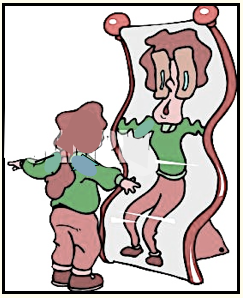
⚙︎ INFLEXIBLE 
Rigid Bs effect us & everyone we interact with, BY:
• ‘Abandoning’ ourselves – we ignore or eliminate so many available options that we can’t properly do self-care. Spiritually, we don’t take personal responsibility for our values….
Abandoning’ others – we withdraw, sulk, shut down & hide behind our wall, making it almost impossible for anyone to love, help or appreciate us

⚙︎ PHYSICAL
Stability helps us feel safe, which is very important to us, so all activities have to be predictable – no room for spontaneity or fun, last-minute opportunities, trying new things….  WE:
stay away• are stoic, have stiff body posture, maybe “stone faced”, trouble giving or receiving physical affection (afraid to let go), don’t like to be touched or hugged….
• are sexually cold or just disinterested, have perfunctory or pity-sex, OR are promiscuous without deep enjoyment, don’t use protection
• under-react to personal or external events, whether pleasant or unpleasant, or not at all

⚙︎ EMOTIONAL – WE:
• are aloof & disinterested, insensitive to anyone else’s feelings
• don’t seem to identify with other people’s problems, do not want to hear their troubles, especially when very upset or crying
• don’t trust anyone, generally suspicious of other’s motives, can be somewhat paranoid
• fear with abandonment and engulfment. No one can get close (staying too busy, pick fights, make plans & then cancel or just not show up…), to avoid being disappointed, hurt, or taken advantage of
isolated• have few or no close relationships. If we do have a partner, it may be in separate places or with little shared social life
• seem emotionally numb, don’t show or talk about feelings & emotions, rarely share personal info
• struggle with loneliness, self-disgust, anger & self-control, but cover it well

⚙︎ MENTAL – WE
:
• are more likely to lie, even about unimportant thing OR omit important facts
• don’t know how to make small talk. Are afraid to say the wrong thing
• don’t like giving anything to anyone. Refuse most social invitations
• have trouble identifying needs, wants & dreams
• ignore all feedback. If it’s criticism, it validates our belief that everyone’s against us. If it’s positive we assume it’s not real
• ‘listen’ to others without responding, in our own little world
• stick to pre-conceived ideas (from childhood), with no room for anything nereject helpw

⚙︎ SOCIAL – WE:
• feel like no one really knows or understands “the real me”
• generally – unconcerned with the world outside of own borders.
• have trouble receiving from others. If someone offers – we get mad or defensive
• won’t ask for help when needed, don’t know who to ask, believe no one will help anyway, so why try?
• make an effort to go for some goal – BUT all alone, & if we can’t achieve it right away, or fail, we stop trying & do without

Love requires Trust, & trust requires (appropriate) vulnerability.
ACoAs with rigid Bs sabotage any shot at healthy love by shutting out anything unfamiliar…. We keep everyone at arm’s length, pick the wrong people to trust, mistakenly associate all humans with the painful events of the past, assuming everyone is as dangerous as our family was / still is

Unrecovered, all wounded ACoA fear being vulnerable, because it means :
• our WIC will be exposed without protection because we don’t have a Loving, capable Inner Parent
• w’re not allowed access to our human rights & Bs, so are easy prey

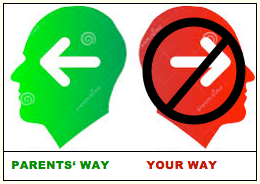
BOTTOM LINE: Rigid boundaries are walls built around us as a substitute for real ones. (see Healthy Bs.) They’re meant to keep us from getting hurt again, & trying get our needs met, by insisting everything be OUR way
UNFORTUNATELY they don’t work to our benefit. We just end up starving !

NEXT:  Healthy Boundaries – INFO (#1)

ACoAs & RIGID Boundaries (Part 1)

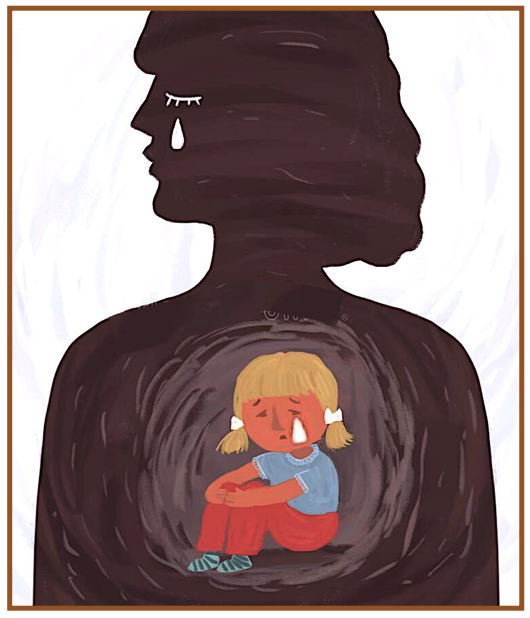
heart in jail
DON’T GET TOO CLOSE –
it’s the only way I can feel safe!

PREVIOUS: WEAK Bs. – #2


Healthy BOUNDARIES are about  having personal power.
When used appropriately they are our “line in the sand,” defining who we are & protecting ourself from unwanted influences.

• In any family – parents are supposed to provide emotional nurturing, & teach children how to function successfully in society.  This includes age-appropriate boundaries, allowing children enough leeway & options to find out who they are as separate individuals, not just extensions of the caretakers – while also providing appropriate protection from harm, which they gradually internalize & use as adults.rigid Bs

Unhealthy – However, in families where boundaries are too rigid, all power & control is with the parents. There’s no room for kids to breathe, make mistakes, take their own time to learn or be playful & relaxed.
One-sided power strangles communication, limiting or eliminating any real sharing between the generations (“no back talk” / “children should be seen & not heard”…)

• Some parents are monolithic – standing together as a unit, against the children, rather than for them
• OR one parent, often the father, is the tyrant dictating all rules, to be followed without question
— If the other parent simply capitulates or escapes, children at the mercy of the bully or mentally ill mate
— OR the weaker parent will join forces with the children, either to secretly help the kids, or in self-protection, & will manipulate/ coerce/ guilt the kids into obeying the abuser

• As CoA children become adolescents, they either withdraw or rebel.
EXP: Ben was a happy talkative little kid, friendly to everyone, even strangers. His narcissistic parents were performers, constantly forcing him to be on stage – which didn’t suit his personality.
Over the next 10 yrs. he lived thru several uprooting family moves, physical & emotional abuse at home & bullying at school. Gradually he withdraw, & by 13-14 he’d stopped talking or socializing. His parents wondered “what’s wrong with him”!

ACoAs develop overly-rigid Bs from families:
• that were too restrictive, dictatorial, cruel. Even though it made us very angry, we end up copying their pattern, afraid to break out of the suffocating shell they created
OR
• who were neglectful but emotionally over-dramatic & boundary invasive. Being constantly overwhelmed, confused  & terrified, we over-compensated by tightening our own Bs (becoming rigid), as a way to have a tiny measure of internal control, to quiet intense anxiety

EITHER way – Physical, psychological, emotional &/or sexual assaults forced some ACoAs to choose this per-version of Bs as protective armor (Toxic Rules & Roles  – (“how things have always been done // the right way to do things”….).
So, afraid of being personally violated -again-, we become inflexible & hyper-vigilant, even paranoid.
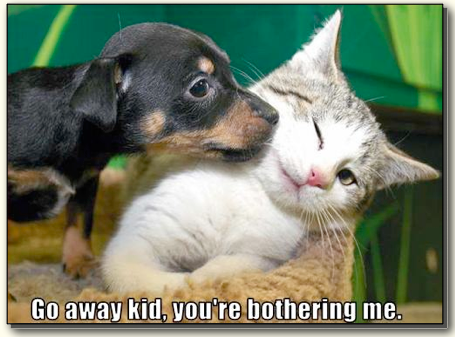
All our relationships suffer because we’re incapable of true emotional intimacy, convinced that if we let our guard down, we’ll fall under the total control of The Other. Instead of protection, it only leaves us deeply empty & lonely.(‘’Come here-Go way )

• Traumatized children naturally become very mistrustful (just like animals abused by humans). Since the Brain is innately organized in schematics…. we associate people & experiences in generalities.
Therefore ACoAs set up defensive walls against those who originally hurt us, & then extend them out to everything else, losing the ability to make the equation : people = pleasure.
EXP: A woman violated / beaten / neglected … in childhood by an adult male will definitely not trust any man. And a man ‘broken’ by beatings & betrayal from his mother won’t be able to trust his judgment or intuition about other women…..

ACoA irony: When isolation becomes unbearable, in desperation we reach out to whoever is immediately around, whether inappropriate or not.wrong guy
If that person or group shows any interest or kindness – we fall profoundly under their influence before even realizing it! For an instant we drop our guard & drift into the fantasy of finally being loved & taken care of. They become our sole obsession – for a time – convinced we can’t live without them

**Eventually, we’ll feel strangled & crushed, because rigid Bs are not Bs at all! They only mask a desperate longing for a connection that’s actually symbiosis.
▪︎ Hopefully we come to experience the toxic person / group as a virus invading our inner sanctuary, which must be expelled.
▪︎ We can crash-separate by devaluing & discrediting them, finding fault, starting fights or withholding & losing interest!
🔺 Alternatively – we can walk away with a smile, healthy self-esteeme, head held high.

NEXT: RIGID Boundaries (#2)

ACoAS & WEAK Boundaries (Part 2)

rigid BsI DON’T LET MYSELF TALK
so I don’t upset other people

PREVIOUS: WEAK Bs (Part 1)


REMINDER
:
The requirement for having appropriate Boundaries
IS
knowing what your NEEDS are & actively providing them, as best as possible.


CHARACTERISTICS of weak Bs
They represent not having the right to our needs, often expressed as a general passivity in life – letting people & circumstances push us around.
BTW, you may notice that some of these expressions of weak Bs are the same or similar to those of rigid Bs. This is only natural since the underlying causes all come from our unhealthy upbringing.

⚙︎ SEXUAL
We have weak Bs if we:
• attach our self-esteem to being sexually attractive
• can’t distinguish between love and sex
• have sex when OR with whom we don’t want to
• feel a need to always be in a sexual relationship
• “fall in love” at first sight  – just because someone seems interested or reaches out to us
• let others touch us, even when it’s uncomfortable or inappropriate

⚙︎ PRACTICAL
We have weak Bs if we :
• accept unwanted gifts to not hurt feelings or make others angry
• allow others to take as much as they want from us (time, $$, energy….)
• are indecisive & therefore unpredictable, undependable
• don’t protect our physical space, letting people  — stand or sit too close
— take and/or use something of ours without asking
• don’t acknowledge our need for privacy, but don’t object to being asked personal questions, don’t stop others from snooping around our things…… without doing something about it
WE:
• DO too much, either by being controlling (B invade), OR overly responsible (doing everything ourself)
have to do something a certain way or modify our behavior so that someone else can continue their unproductive or unsafe behavior – enabling any kind of bad or self-destructive behavior in others
• let others determine our wants, needs & tastes, sacrificing them to someone else’s desires or demands – no matter how subtly done
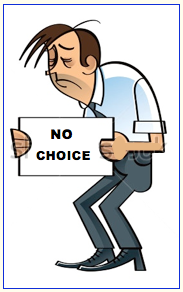
no choiceWE:
overcompensate for existing ! especially when we think we’ve messed up in word or action
• measure another person’s caring by material gifts – how much, what kind they give us
• sacrifice our own goals, projects & self-care to help others – from FoA
• set no specific limits on our willingness to help others
⚙︎ MENTAL
We have weak Bs if we:
• allow the expectations of others to define our potential
• always verbally agree with others, even when we actually don’t
• are afraid to ask for help, so have to constantly manipulate others to get what we want (indirect)
• compromise values & beliefs to please others or to avoid conflict
• get too close too fast, share too much personal info (TMI – especially about our faults) before establishing mutual trust
WE:
• ignore our inner voice & rely on others’ opinions, values & emotions
• know we’re covering something up or keeping a secret, such as battered wife & children hiding injuries, kids covering up parental addictions, emotional torture, mental illness….
• let other’s influence / effect our behavior, continue to be unclear about our own preferences
• personalize everything, over-reacting to feelings or behavior of others (assume other’s reactions are all about us).

⚙︎ EMOTIONAL
We have weak Bs if we:
• are constantly preoccupied with & overwhelmed by others’ emotions, needs & problems (take them on as if our own), feeling responsible for their happiness & fulfillment

• are dependent for our identity & emotional well-being on what others think of us, so become chameleons OR isolates
• are not comfortable being alone, at least some times
WE:blend or leave
• can’t say no, even when wanting to, for fear of rejection (abandonment)
• feel everything ‘too much’, not able to contain or soothe our own emotions
• feel & act like victims, have no balance of power or responsibility in relationships
WE:
• have a high tolerance for abuse, for being treated with disrespect
• ignore our own discomfort, anger, anxiety or fear so someone else can be happy & comfortable
• need constant reassurance from others that we’re acceptable
• people-please – saying yes when we want to say no, & then act out later, either on ourselves (S-H) or at others (passive-aggression)
• symbiotically attach ourselves to someone, something – anything!

NEXT: RIGID Boundaries – #1

ACoAs & WEAK Boundaries (Part 1)

weak BsI CAN’T SAY NO TO ANYONE
so they won’t get mad, or worse – leave me!

PREVIOUS: B. Invasions’ #3

SITE : 12 Signs You Lack Boundaries

REVIEW:Safe & Unsafe People”  and  ACoA Rules – Healthy (#1-3)

THRIVERS
People who were brought up in a relatively healthy home have what’s called a ‘cohesive or integrated self’, based on consistent, good-enough parenting. They got enough of their needs met early on, which gave them a strong psychological foundation in the form of the internalized Good Introject.
Thrivers have appropriate personal boundaries (Bs) that are self-protective, but which also allow them to be sensitive to the needs of others, making them open to giving & receiving nurture in relationships.
(READ excerpts from: “The Reciprocating Self…healthy Bs

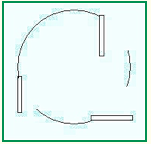
Healthy Bs  can be illustrated as a circle of our personal space – that has gaps, so we’re not walled in – but with a door at each opening, which WE are in control of.

In CONTRAST to Thrivers
• Since boundaries are not inborn, the way we were raised determines the state of our self-protective mechanism as adults. Weak Bs, also called diffuse, are a common result of a traumatic, chaotic childhood – when parents treated us as property, or an extension of themselves, or as annoying pests to be swatted away.
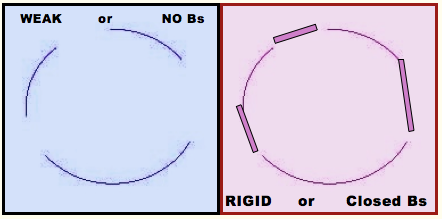
Screen Shot 2015-06-26 at 2.27.06 AMPINK – Walls: One unhealthy option is to keep all interpersonal door shut tight, keeping everyone out, so we’re always PMES starving (EXP : Averse Attachment style)
BLUE – no Bs  : we have those same gaps in our personal space BUT without any doors, so the openings indiscriminately let in useful, neutral or damaging info & experiences.  EXP: We’re available to absorb :
a. inaccurate, deliberately distorted or outright harmful information
b. the negative, poisonous energy of constant complainers, accusers, blamers, insulters…..
WHICH makes it easy for others to get under our skin or stomp on us!

 REVIEW : The family symbiosis shows up as members who ‘understand’, accommodate & over-tolerate bad behavior (spouse – of the drinker / rager…  children – of sick, abusive parents….), making them increasingly dependent on each other at the expense of having outside healthier relationships.

Many of our parents were over-controlling, sexually abusive, neglectful or attacking, using us as a substitute spouse or substitute parent (role reversal)…, while they disowned or tried to crush our True Self!
Whether totally oblivious, OR too involved in our lives in wrong ways, never leaving us alone — it was extremely hard for us to define who we were born to be.

In some cases the symbiotic connection takes a twisted form of empathy, so that members ‘feel’ each others’ thoughts & emotions, wishes & needs – especially their suffering.
This kind of empathy is engulfing & strangling, which prevents the children from having their own separate thoughts & emotions, AND from getting the comfort, understanding & help they need to develop normally. It stifles personal growth & independence, insuring that ‘outsiders’ are excluded from having meaningful relationships with anyone within the family.
Wounded ACoAs end up with :
i. a ‘vulnerable self’ with weak boundaries. They are easily hurt by people, places & things (PPT), but without adequate self-protection. Being more subtly needy, they actively connect with exciting narcissistic friends & mates, still looking for love in all the wrong places who are like the Toxic Introject.
More severely damaged ACoAs have:
ii. a ‘fractured self

, having been subjected to such severely toxic parenting that they have almost no internal resources (no strength, resilience, esteem, empowerment, hope…).  Without Bs they’re truly fragile – so desperate that they cling, whine, complain, ‘suffer’… OR may compensate by being demanding, controlling, rageful & cruel….but with fragile egos.

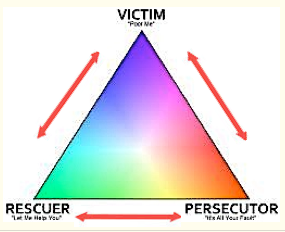
co-dep trinagle• The Co-dependent triangle : When in the Victim Role having weak Bs is more obvious – so when anyone disrespects an important boundary of ours (often that they’re not aware of) we feel discounted, hurt, oppressed, ignored, abused, taken advantage of – invisible.
The Victim’s slogan is “Poor me!”, yet we perpetuate it by staying with emotionally unavailable Persecutors OR co-dep Rescuers, trying to get the love & attention we desperately need but don’t feel we deserve.
HOWEVER, we can also turn into Perpetrators by imposing ourselves on others! becoming rageful when too frustrated with anyone who’s not capable of satisfying our demands.

NEXT: Weak Bs (Part 2) – Characteristics

ACoAs & Boundary INVASIONS (Part 3)

invisible THEY’RE SUPPOSED TO PROTECT ME
So why do I feel invisible?

PREVIOUS: B. Invasions (#2)

BOOK: Healing from the Trauma of Childhood Sexual Abuse: The Journey for Women~Karen Duncan

BOUNDARY INVASIONS (cont)
5. INCEST / sexual abuse (S.A.)
a. Overt
One of the great sorrows & tragedies of toxic families is the high incidence of sexual abuse. This is an abuse of power, not of sexual desire.
Any adult who perpetrates sexual abuse on a child is screaming their sense of powerlessness & is trying to compensate for that in a totally deviant way!
Not all are strictly pedophiles. Many abusers have unwanted sex with both adults and children, but their need to dominate a weaker person is at the very heart of their actions.sexual harassment
Sexual abuse is :
• any type of sexual contact between an adult & anyone under 18
• between a significantly older child & a younger child (sibling or non-family)
• when one person overpowers another, regardless of age

Generational Boundaries should never be blurred.
— In healthy families there’s a firm parental coalition with NO evidence of competing with their children. Each generation should have clearly marked territory. When they have a need, they seek out other peers.

— Shame-bound families are multi-generational, insular & loyal to toxic rules that demand control, perfectionism & denial.  They create chaos by promoting vague personal Bs & secrets, binding members together with fear of abandonment, trapping them in co-dependent alliances.
b. Covert
• In any form of sexual inappropriateness, the key is intension. Some actions may seem like ‘just being affectionate’ when in fact they’re not innocent, like a father who pays way too much attention to a daughter, attention which should rightly be directed to his wife or girlfriend.

Any parent who uses a child for their own gratification – either because of insecurity, being too isolated or their adult relationships are unsatisfactory – is only concerned with their own needs, so they are in no way loving!hug too tight

• Children crave & lap up attention, so having an over-attentive parent makes it easy for them to get caught in a web of lies & denial.
But they also know when something doesn’t FEEL right, even if they don’t have the words until they’re much older.
When a parent’s sexually-based attention is indirect ⏬️ (no penetration or other genital stimulation), it can be much more confusing for the child to identify as abuse, even when feeling creeped out.

ASK: Was there proper conduct at home (reasonable modesty)?
EXP – In many alcoholic & other dysfunctional homes, parents don’t bathe or groom themself … and are sexually indiscreet in their dress —> mother’s robe open to expose breasts, drunk father in loose shorts exposing private parts….

ALSO when a parent :
seduction• always paws at you, follows you around
• calls you ‘dirty’, a whore
• compulsively gives unnecessary enemas
• encourages sexually activity too early
OR
• hangs on to you in public, kisses on the mouth (esp. if you don’t want to)
• leaves pornography around
• listens in on your intimate conversations with a peer

• takes over your date or lover, making flirting comments
• talks about sex all the time, makes lewd jokes, refers to you in sexual terms
• watches you when you’re dressing or undressing, going to the toilet or bathing (you can tell when it’s not ‘clean’), or make you watch them
• walks in on you naked / often sleeps cuddled up to you
OR • having to sleep in parents’ bedroom for several years — subjecting you to see & hear parents having sex….

PRESENT: Our difficulty with Bs is a direct result of the atmosphere in our family, (review points 1 thru 5).
Boundary Invasions also occurred in school, on the playground, at church, in our neighborhood, with baby sitters….. SO, never blame yourself!

Naturally, now we’re responsible for correcting Bs, with the 3 As :
AWARENESS – how we were B invaded (add your own)
ACCEPTANCE – how we were damaged by it & act it out
ACTION – use whatever appropriate tools, groups & healthy people available to help our Recovery

NEXT: WEAK Boundaries – #1

ACoAs & Boundary INVASIONS (Part 2)

no limits

PREVIOUS: B. INVASIONS (#1)

ARTICLES: ‘Sexual Abuse / Trauma’
The Incestuous Family” – Roles re sexual abuse


BOUNDARY INVASIONS  
(cont)
2. MENTAL Coercion

3. Family SYMBIOSIS

a. Insecure parents :
push for an ‘us against the world’ attitude, hoping to increase family solidarity, powered by denial of dysfunction, & an unbearable threat to their sense of identity
can be over-protective.  On the surface it may look like love, but they’re only trying to keep us attached by dis-empowering us
📲 The underlying message is that we’re incompetent, weak & have to be afraid of everything

• may attribute the wrong motive to other kids or adults’ unpleasant/ abusive treatment of us, no matter what we actually did (cause trouble or not, be friendly or withdrawn….)
When we complained about the bullies, Mother may say: “Those kids are just jealous of you because you’re so much better than everyone else in the class”, which becomes the twisted thought “The boss doesn’t like me because I’m smarter than her”…. distortion

b. Distortions
 CDs cause many problems for children. IT :
• gave us a distorted view of how the world works, making it hard for us later on to take responsibility for our motives & action
• prevented us from – becoming fully socialize, taking normal risks & learning about the many options available in life
• severely increased our inappropriate school / social behavior, making it easy to be a target for bullying, insuring distance from peers, & forced to stay dependent on the family

Familiar phrases: Blood is thicker than water Never air our dirty laundry in public  ~  No one else will love you like we do
~ You’ll never make it on your own so we’ve got to stick together ~ We’re better than ‘those’ people
OR a childhood taunt:  “You have a face only a mother could love, & she died”!

c. Family Insularity is an attempt to feel safe BUT built on fear-based rules that inevitably lead to constriction, intolerance & an inability to collaborate / cooperate well with others.
Ironically it also creates isolation, scapegoating, unhealthy alliances & splits inside the family, which then get repeated in adulthood.
EXP: A  part of the dysfunctional family mobile, being trapped in a toxic ROLE, (Scapegoat. Lost Child….) had “negative benefits.” It seemed useful by ‘protecting’ a parent from their emotional problems, the consequences of their addictions, & whitewashing outright abuses.
As adults we look for the same kind of payoff when playing out our Role in the larger world (protecting a mate, boss….), which doesn’t work now either, only reinforcing our sense of being a failure.

4. Parental NARCISSISM (N)
a. Boundary invasions
• Ns require that everyone be their carbon copy, with no room for children to develop their individuality
• children need mirroring (reflecting back who the other person be like meis, without adding anything of oneself), but Ns can’t do that since they’re only projecting themself on to the child

Narcissists don’t recognize there are such things as Bs, that others are separate & not extensions of themselves. People either exist to meet their needs or may as well not exist at all. Anyone who provides narcissistic ‘supply’ will be treated as if they’re part of the controller, who demands the victim live up to their expectations (think: spider & fly).

• Some N. phrases:
“What’s yours is mine & what’s mine is nobody’s business”
“Do as I say – not as I do”, “Put a sweater on, I’m cold”
“No son of mine is ever going to…..”
“This is the thanks I get – after all I’ve done for you”
“Do that in the morning when you’re fresh” said by a mother always raring to go at 6 am, to her child who was born a dyed-in-the-wool night person!
Watch ‘Angry-martyr Narcissist” on YouTube

b. Role Ambiguity
Parental N. spawns much identity confusion. Since only their needs count, the children take on a parent role – “I am them”, & many a parent acts like a needy kid – “They are me”.

Family members aren’t sure who’s in or out of the clan, who’s performing what tasks or legitimate roles : Dad acts like a ‘girl’ , Sis is the ‘mom’, little Brother is the family shrink…..

Al-anon IMAGE: A co-dependent decides to kill himself by jumping off the roof of a tall building.  As he’s falling, someone else’s life flashes before his eyes!

NOTE: If you have firm boundaries in the face of a narcissist, the relationship won’t usually last! Good – better for you!

NEXT: B. Invasions (Part 3)

ACoAs & Boundary INVASIONS (Part 1)

B invasion

GET OFF ME!
You’re in my space!

PREVIOUS: B.Distortion (#3)

See ACRONYM page for abbrev.


FoO = Family of Origin

1. BEING INVADED
EXP: Picture someone across a room that interests you & they seem open to being approached. You start walking toward them but something is slowing you down :
tightly gripped around your neck & hanging heavily down your back is the invisible putrid body of your whole FoO (or maybe just one parent or certain sibling…). You realize you’re not free to have a one-to-one relationship with anyone, dragging around all that rotting baggage!

Some basic ways we were violated
1. PHYSICAL Boundary (B) invasions by parents & siblings
Starting in childhood – everyone needs their own private things, their space & time to be respected – as one way to find out who we are & be able to function autonomously as adults. Many of us did not have that opportunity. What were you allowed to have that was not violated?
Did you have ?
• to sleep in the same room as parents, allowed to sleep in their bed too often, shared a bedroom with a sibling…. – or too long
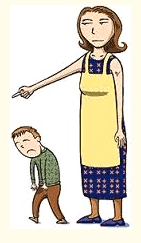
• no personal privacy : walked in on in the bathroom, opened your bedroom door or had to sleep in a common area, your mail & diaries read, listened in-on phone conversations, room ransacked ….
• forced enemas, constantly being poked or pulled at, ‘fixed up’, had to wear clothes you hated….
• others using your clothes & personal items without your permission
• to give a parent full recounting of everything you did whenever / wherever you were out, or what you were reading….

EXP: The PARTY LINE
With blurred boundaries, it’s quite common for person (A) in a toxic system to be the ‘communications hub’, in charge of hearing the grievances, messages, worries… of one member (B) about another in the family (C).
Then (A) passes the info on to (C), instead of (B) talking to C directly.

a. It makes the ‘hub’ person feel needed, important, in control, be in charge, to manipulate everyone, be the buffer, above it all….
b. It re-enforces everyone’s lack of good communication skills, fear of confrontation, of speaking their truth, of hurting others’ feelings or getting blow-back, of standing up for themself….

2. MENTAL Coercion (ongoing enmeshment)
a. Manipulations
Even our inner thoughts were invaded, usually by one parent, just like those African army ants! This is psychological bullying, “…. a poisonous form of parenting, compelling children to act or to choose” the adult’s way, never the child’s, with such tactics as:
• arguing, to convince child how wrong they are
hopeless• criticism or fault-finding
• sarcasm, ridicule
• verbal force – shouting
• distorted ‘logic’ – to totally convince child of parent’s point of view
• threats or warning of punishment if not quickly obeyed…..

RESULT of being bullied: the child will inevitably end up feeling despair, beaten down, out of control, hopeless, & eventually stockpile rage

b. Over-coercion
• This is a more intense form, coming from a rigid, narcissistic** &/or active-addict parent. In the ‘a’ category, bullies are aware their victim does not want to comply, but they don’t care.
In the ‘b’ form the perpetrator is not even aware that others – even their own children – have a mind or will of their own. They’re only interested in total compliance to their own narrow view of reality!
BTW, they treat everyone the same way if they can get away with it.

no way** Any difference of the child in taste, needs, opinions, style, way of doing things…. any sense of self not a carbon copy of the egotist – is labeled arrogance, defiance, disobedience, stubbornness…. So the child is constantly punished for not conforming to someone else’s personality! & will eventually become totally brainwashed or violently defiant.

• It would never dawn on an over-coercer that their child may legitimately:
— be too young to do or be exactly what the parent wants
— have an inherently different personality, with its own set of functional requirements
— have the developmental task of becoming a separate being, which includes disagreeing with ‘authority’ from time to time
— know some things the parent doesn’t. Narcissists think they’re never wrong!
EXP: Mom always said, literally: “I’m perfect” & meant it!

NEXT : = Boundary Invasions #2