Al-Anon STEP 10 – Comments (Part 1)

PREVIOUS : Use “THINK” instead of “feel” #2

SITE: Al-Anon Step 10  Questions (scroll down)

• MORNING MEDITATION READING = Today I will…..


AA/AL-Anon 10th Step: “Continued to take personal inventory & when we were wrong promptly admitted it.”

This Step separates into 3 distinct issues: inventory, wrongs, admitting

1. DOING a REGULAR (daily?) INVENTORY

a. STEP 10 is a general evaluation of our activities for some brief period. The actual purpose is to help us stay present for what’s going on inside of us on a continuing basis.

It’s an antidote to our compulsion to escape the WIC’s old pain that hasn’t been cleaned out yet –  by retreating into the ‘lala land’s of FB, TV, reading, over-doing…. & various addictions. It’s a way to not slide back into denial, back into just DOing instead of BEing, back into our ACA’s built-in “forgetter” state. 

b. WHEN? While it’s not stated, the assumption is that we take this step every day. In the Al-Anon book: “Paths to Recovery: Al-Anon’s Steps, Traditions and Concepts” a member writes that at first they did it once a day, then added a lunch time evaluation at work, so that anything that needed to be corrected could be done right away & then the afternoon would go more smoothly.

But each of us must find our own rhythm. The more regularly we get in the habit of checking in with ourself, the more we can connect with our True Self, & burn off bits & pieces of our damage.

c. Continuing a personal inventory does not exclusively mean listing all the flaws, mistakes, omissions… we’ve committed that day.
Yet in the literature & in meetings the focus is mainly on character defects we identified in Step 4.  About Step 10, one internet site says “Continue to watch for selfishness, dishonesty, resentment, and fear. When these crop up, we ask God at once to remove them…..”

d. Simply doing it this way is lopsided. To be accurate – make 2 very short lists of both plusses & minuses we observes in ourself. If we’re doing this during the day, they can be 2-5 for each side.

If it’s at the end of the day, we will benefit by only doing a positive inventory, as shown in the column —->. This is particularly important for ACAs because our focus is always on what we did wrong, which keeps us stuck in narcissistic S-H. (More on ‘wrongs’ in Part 2)

And, to be ‘rigorously honest’ – we need to include all T.E.A.s (thoughts, emotions & actions) – without self-judgement – BRIEFLY.  —> SO:

✔︎ What were my actions today?  This is what most of us focus on. It includes things like co-dependent people-pleasing or passive-aggressive reactions – which mostly hurts ourselves, but also hurts others by not being present with them (psychological dishonesty) – & some ways we abandon others.
ASK: Did I “Correct, Complain, Criticize?”
POSITIVE: Identify any & all actions, even if they’re easy, short, simple or repeated every day

✔︎ What were my emotions (Es) today?  annoyed, anticipating, anxious, bored, excited, grateful, pleased, relieved…?
Since ACAs have trouble identifying our Es, start by briefly listing any events of the day which might have bothered you but which you brushed aside at the time – when someone ignored you, your ex called, you got a compliment, you forgot something…..

Then ask yourself:  “IF I had had an E for each event, what might it have been? Sad, hurt, angry, relieved, pleased….

This inventory is particularly important if you feel drained, upset, antsy, obsessing…. at the end of the day but don’t know why.  Notice how unrecognized Es add up & may contribute to your unease. Just because we don’t FEEL them, doesn’t mean they’re not there!

NOW: You can acknowledge some of these Es you’ve learned to suppress (denial), & can talk about them in meetings, therapy & with sponsors – to bring them into consciousness.
IMP: This will prevent having to act them out.

POSITIVE: Include a list of comfortable Es you experienced – no matter how subtle or brief. It’s important to reinforce all positives (peaceful, happy, relieved, relaxed, amused, excited ….)

NEXT : Step 10 – #2 (re. Thoughts)

Use ‘THINK’ instead of ‘Feel’ (Part 2)

PREVIOUS: SAY Think, not Feel #1

27 POSTS: “Emotions….” (in 2011 + Jan 2012) – in case you  mistakenly think Emotions are being minimized 😱


THINKING
The human brain is built for language – mainly on the Left side – the mental tool that allows us to formulate ideas, & the cognitive rules for linking them together. Being able to think clearly & accurately needs a healthy, well developed top part of the brain.
The frontal lobe, particularly the prefrontal cortex, the area furthest forward – is involved in sophisticated inter-personal thinking skills. Both left & right sides are used for interactive social competence, & the mental skills needed for our emotional well-being.

USING Accurate LANGUAGE accurately
For members of 12-Step Programs or faithful practitioners of a spiritual path,  Spiritual Principles tell us to be honorable in all our ways – as much as humanly possible. One of those ideals is to be Trustworthy, & one way to do that is to be sure we “Say what you mean & mean what you say – but don’t say it mean.”

This allows others to depend on us, without being co-dependent, as long as we’re speaking from our Truth. To do that implies that WE:
• have internal permission to find out who we are, a day at a time
• are capable of & willing to be honest with ourself about what we truly think & feel, AND can tell them apart
•  have the right kind of language to figure those out, & then express them

Mental vagueness makes knowing that impossible, & inaccurate speech creates misunderstanding, so we stay isolated, & hurt others.
Instead, we need the right kind of info about such things as :
HOW TO
⚬ deal with disagreements & conflict
communicate emotions
⚬ develop healthy boundaries, to know when to talk or not
⚬ distinguish between rescuing & helping
⚬ say things from the Adult ego state instead of from the WIC or PP
⚬  talk to ourself with kindness & patience
KNOW :
⚬ what level of communication we’re dealing with ↗
⚬ who we’re talking to (sick family, loving mate, dumb boss….)
⚬ what’s appropriate to say in various situations, like when it’s ok to get personal, & when we’re over-sharing

🌟 GROWTH
Consciously, consistently practice saying “I THINK…..” instead of “I feel…” will greatly help to figure who WE are, contribute to our ‘sanity’ & improve our connection with others. Only use FEEL if deliberately meaning to refer to body sensations or emotions.

The easiest way to know the difference:
❇  Sensations & Emotions are ONE WORD each, as many as we are experiencing at the time: “I feel tired & achy, but relieved & happy / I feel hungry but I’m too excited to eat / I’m so jumpy – I can’t relax…..”

✳ Thoughts are always MORE than one word (any sentence). “I think it’s time to ask for a raise / How long do you think it’ll take? / I think you’re a pain-in-the–!”…..

NOTE: Thoughts —-> lead to —-> emotions (Es), but we rarely actually say the Es in conversation. “I feel like you don’t like me” does not actually state any emotion, although it’s implied .
💡 More accurately : “I’m angry / sad / frustrated / lonely / afraid…. because it seems (I think / observe) that you don’t like me”

And we don’t have to be limited to the word ‘think / thought’. Here are others that fall into the M category of PMES, ( Mental = cognitive)

• “I assume you know what you’re doing”
• “I believe it’s time to end this affair”
• “I concluded she was angry at me”
• “They didn’t consider that a legitimate option”
• “I’m convinced my neighbor is spying on me!”
• “I figure they’re going to be half an hour late as usual”
• “I gathered this is your favorite restaurant”
• “I can’t imagine anyone being willing to help me”
• “I know now that I can trust you”

• “Did you notice the way she were looking at you?”
• “I observe that he never finishes anything”
• “I can’t stop obsessing about that mistake I made”
• “I’m projecting that no one at the party will like me”
• “Don’t even speculate about that!”
• “He suspected them of lying to the cops”
• “Did you think I was insulting you?”
• “I keep wondering how soon I can leave – politely!”
• “Did you understand that lecture?”

NOTICE – they’re all sentences without any E words

EXERCISE: Write out (T) how you’d (incorrectly) say any of these sentences using “I feel that…. / I feel like….” EXP: “I feel like I can trust you now”

Regularly including one of these THINKING words ⬆ in your sentences – instead of FEEL –  is a hard habit to break, but well worth the effort!

«
PS:
This Chart identifies a wide range of Es, in 4 groupings. See how many you are aware of throughout your day. Stay aware for how they’re not thoughts.

NEXT:  Al-anon Step 10, #1

Use ‘THINK’ instead of ‘Feel’ (Part 1)

 PREVIOUS: Spiritual Resilience, #3

POSTs: Feelings aren’t facts // Anxiety & T.E.A. // ACoAs & Emotions


REVIEW: 
Many of us are addicted to using the word ‘FEEL’ incorrectly & indiscriminately in all our communications, causing all sorts of problems. In English (& maybe in other Western languages), we use ‘feel’ to talk about 3 totally different categories of meaning:

👣 • Feel as physical SENSATIONS (correct)
“I feel hungry, thirsty, exhausted, peppy, strong, need the bathroom, energized….”

💝 • Feel as EMOTIONS (correct)
“I feel sad, happy, sexy, excited, depressed, scared, angry, loving, sympathetic….”

🧠 • Feel as THOUGHTS (incorrect)
“I feel that they don’t want me around” / “Do you feel like you can do that?”

This 3rd one is the big problem. Why? After all, it’s the most common way everyone expresses themself, yet in this case we’re never referring to emotions (or even a sensation) but instead – only to thinking.
Feelings are not thoughts – see posts listed above. However, if asked how we feel, most of us tend to give long, sometimes rambling answers. And when therapists ask this question, they’re trying to elicit an emotion-answer. So they ask again: “How do you feel?” & off we go again, providing information (thoughts / opinions) but not emotions.

NOTE: This is not to dismiss our capacity to SENSE/intuit something about others . EXP: that Joe’s actually very upset, even though he’s acting all cheerful ….. that Mike & Sara have definitely cooled toward you – still polite but less available….

But saying “I feel like something’s wrong” does not indicate what you feel about it (sympathy/ frustration / anxiety / annoyance). It’s an observation – however accurate it may be – but not an emotion.

While this distorted way of talking may be the norm in our culture, for ACAs it’s of much bigger relevance, since it leads to profound confusion for ourself & when trying to communicate with others. It can make us say things like: “I feel crazy”.
? This could mean you’re overwhelmed by intense emotions, but crazy is a mental issue, not emotional
? OR that you’re lost in obsession about conflicting double messages (‘voices’)…. which are crazy-making, but doesn’t actually mean you’re crazy!
☆ Instead, you could say “I’m scared – because I don’t know how to handle this mess!”

IMP: For ACA, using the word ‘feel’ to mean ‘think’ makes it impossible to get the connection between our actual emotions – such as anxiety, worry, anger…. & what we’re saying to ourselves – usually negative thoughts (S-H / Projecting).
Without having that connection we can’t find out who we really are, be understood or get the help we need.
Long-term stress creates a communication split between the 2 halves of the brain – as a defense. Instead of working together, one side is used much more than the other, making it too dominant. Which side is ‘chosen’ comes from a combination of our native personality, the traumas we’ve suffered & our culture’s preferences. (Brain Repatterning exercises help get the 2 sides working together)

⚡ T.E.A. RESULT
a. Many damaged people (addicts, narcissists, may ACAs….) ‘live in their head’- the brain’s Left side. They:
• complain about everything, only talk about their actions (As) & gossip about what others are doing – whether they know them or not
• are only vaguely aware of what they actually think (Ts), even when they’re ranting about something!
• are numb to most or all their emotions which they’ve consistently buried (Es), & refuse to unearth – but act them out, usually to everyone’s detriment

b. The opposite type of wounded people (including very sensitive ACAs) are dominated by the functions of the Right brain – ‘drama-queen or king’ types, caught up in what they’re convinced are ‘true’ emotions (Es), but are instead too intense & too long-lasting.
1. Their Es are rarely if ever comfortable or joyous (not the high of being in a fantasy).
A healthy emotional life includes a wide range of Es, not just extremes

2. Their Es are never the bottom line issue – always going to rage instead of feeling sorrow or vulnerability, constantly anxious instead of feeling long-hidden anger, self-hate instead of feeling the original abandonment…..

3. The intensity is often way out of proportion to present-day events.
Healthy emotions fall mostly in the mid-range (+/- 20, not +/- 100 from neutral)

4. Their Es can go on & on, for weeks, even years.
Healthy emotions come & go rather quickly – a reasonable response to the moment, not about past or future

5. The intensity is actually messy globs of unprocessed old pain – real but “hysterical, because they’re historical”.
Since such people are automatically engulfed by painful Es whenever triggered, they don’t hear the very real – harmful – beliefs & obsessions hidden directly behind that wall of emotional flames.
Not being able to recognize their thoughts, they have no way to correct cognitive distortions from the Introject, or to comfort the WIC.

NEXT: Think vs Feel  #2

Developing RESILIENCE – Spiritual (Part 3)

PREVIOUS: Resilience – Spiritual #2

SITE: 3 Visualizations To enhance Resilience, Ultimate Meaning can be gained through activities that meet our soul-needs.


SPIRITUAL RESILIENCE (S>R>) Components  CHART ↘︎


1. Spirituality
2. Humility
3. Emotional Equilibrium


4. STOOL of balance
God’s Timing
– requires both Faith & Patience. God gives each person their own spiritual path, so how you travel on it will be different from everyone else. That means that some areas of your growth will seem to improve more easily, while others will take longer, & each of those time frames will be different for everyone else. So there’s no point in comparing!

⚙︎ Knowledge = of Soul & Spirit: we are created as spirit beings with a soul (Hebrew = nefesh), the personality made up of emotions, mind & will, encased in a body. The soul is meant to be ruled by our spirit – our breath of life – & the spirit is to be ruled by THE Spirit (Ruach), the supernatural part of a human that holds the breath of God which powers the entire being.
Compassion – as we stay connected to  The Spirit, we experience the ability to connect to everyone & everything else 

⚙︎ Wisdom = from The Knowledge. That deep understanding then forms a blend of social, emotional & mental processes, transmuting experience into wisdom. It’s an awareness of how things play out over time, providing balance between needs & wants. That gives us the S>R> to tolerate the uncertainties of life, as well as its difficulties

Truth – Wisdom gives us the courage to tell ourself the truth – about how we feel, what we think, want or don’t want. “You’re only as sick as your secrets” means owning up to the flaws we hide from ourselves. But wisdom also knows who, where & how much of it to right-tell to others

⚙︎ Zeal = goal oriented enthusiasm based on The Knowledge – the essence of a robust spiritual life – the opposite of complacency, but not fanaticism. 🪭 Because humans cannot feel enthusiastic & guilty at the same time, S>R> depends on continually working to outgrow behaviors that harm ourself & others (character defects from damage)

Free Will – the philosophical/religious concept of ‘moral liberty’ that says we can freely choose between right & wrong, consciously making decisions not determined by the biology of our brain. However, there are many influences out of our control, (Step 1), that Wisdom teaches us to accept without resistance, leading to S>R> 

5. Compassion
Developing it, both for oneself & for others, is one of the most overlooked aspects of the resilience skill set. While empathy is taking on another person’s perspective, & sharing emotions, compassion is when those feelings & thoughts include the desire to help, but with boundaries (not rescuing)

Research tells us that doing compassionate acts produce ‘good’ emotions
— internally, & in positive relationships (cooperation & collaboration)
— externally, which strengthens resilience.

EXP: In CA (2009) David Breaux asked people to write down their concept of Compassion & got back over 9,500 responses. He’s been using that input to provide spiritual healing to hundreds of people as a ‘street therapist’.

6. Post-trauma growth (P-TG)
Spiritual beliefs & practices provide a sense of purpose to one’s life which helps people know they’re not victims of arbitrary events. It’s a Belief in a Higher Power who is ‘in charge’ – God is on His throne – now & forever. This implies that what happens to us is not arbitrary, but does not eliminate or substitute our right & ability to choose actions & responses, creating balance. The ultimate in post-trauma growth (P-TG) in Biblical terms would be Jesus Christ’s resurrection.

7. Silence
Having Spiritual Resilience is based on a connection to Spirit. And that requires regularly quieting the mind to hear that ‘still small voice’ – our own & that of H.P. We are made up atoms & molecules held together with pure energy that keeps everything in the Universe moving in the right order. We can tap into that by being quiet – every so often.

The brain & the mind are different.
— the brain needs the right chemistry & health to function well
— the mind includes conscious & unconscious awareness – which we have some control over.
What works for some is meditating, for others it’s doing visualizations, & for many it’s praying. The important thing is that some form of quiet time needs to be a regular part of our day.  (MORE….)

NEXT: MBTI – Introvert T & F

Developing RESILIENCE – Spiritual (Part 2)

PREVIOUS: Resilience – Spiritual #1

SITE: The Spirituality of Resilience

COMPONENTS of Spiritual Resilience (S>R>)
We need to take care of the sum of our parts first before we can be whole. Mind, heart, body & soul (PMES) are all elements of our core, so not nourishing each one regularly leads to negative thinking & disordered behavior. Without a spiritual life, people are more likely to live in monotony, uncertainty &/or narcissism.

BALANCE is an essential feature of mental health – in this case the balance between faith & free will. Both are true & both are necessary. Faith could be expressed as religious participation, trusting the unseen from positive experiences.
Free will would be actively practicing the Golden Rule: ‘Love thy neighbor as thyself, or Do unto others as you would have them do unto you’.

1. Spirituality – Faith, Belief
Human beings’ innate self-righting ability – the capacity for Resilience – is connected to our basic spiritual nature. Activist Patrisse Cullors said: “People’s resilience, I think, is tied to their will to live, our will to survive, which is deeply spiritual. The fight to save your life is a spiritual fight”. When people include spirituality in how they ‘understand’ a tragedy they’ve suffered (ascribe meaning to events), they come thru it with much less trauma-hangover

As listed in Part #1 the term has several meanings, & people use it differently. It has been called Inner Growth, Mindfulness, a Spiritual Awakening….
In 2015 a request went out in the US & Germany: “How would you define the term ‘spirituality’?”and over 1,77o people answered. 10 concepts divided into 3 groupings (see chart above) emerged from an analysis of the responses

PRACTICAL Spirituality is the Regular Renewal of:
Basic trust that we belong. Resilient people have learned to trust their experience, intelligence & intuition. They don’t depend on over or under-trusting other people, but have a deep reliance on a power greater than themselves

• Commitment to & relationship with a personal Higher Power of your understanding
• Community participation with others of shared spiritual values, nurturing interactions with people & nature
Forgiveness – for oneself, & Reconciliation – with others, when possible

• Hope – believing in realistic possibilities & knowing practical options encourages constructive living in the present, thereby being responsible for future outcomes
• Self-acceptance – we are the way God made us. Value that!
• Sound values – a meaningful life philosophy to support & guide all relationships
Transcendent experience (s) that energize – developing our higher self (the soul)  (Christian renewal)  (3 Cs of Spirituality

2. Humility (not humiliation, which is = to shame another)
Being in charge of our own life is one of the cornerstones of Resilience (R.). That’s balanced against Humility – knowing & accepting our imperfections as human beings, without self-condemnation. Resilient people do not aspire to perfection! True resilience is based in reality, & Higher Truth is that only Higher Power is perfect – no human can even achieve it.

Perfectionism is a cognitive distortion (CD) many ACoAs are deeply committed to 😇 – from deep in the mind of our WIC. Catch yourself saying : “I don’t have to be perfect”. This implies you could be, you just don’t have to. NO – you can’t be – AT ALL.

Trying to be perfect is trying to be God! It’s true that not everyone believes in a Higher Power, but even on a psychological level – struggling to do the impossible always leads to disappointment, adding to our sense of abandonment.
Re. shame : John Bradshaw noted that there’s such a thing as psychologically ‘healthy shame’, which admits to realistic limitations. It’s the opposite of grandiosity – the child’s belief that they have no limits & there are no bad consequences.

3. Emotions
Developing emotional equilibrium is part of Spiritual Resilience, by correctly evaluating a situation, safely sharing the pain & receiving emotional comfort. Some psychologists have become aware of the connection between emotional regulation & religion.
Spirituality helps balance well-managed emotions with accurate healthy thinking, to form a spirit-in-action attitude that allows us to succeed by being ‘in the flow’ of life-energy.
Spiritual practices that help people cope with trauma-generated intense emotions include:
Acceptance & Forgiveness, which nurture empathy & modify harsh emotions
• Meditating on Scripture & Mindfulness, reducing excessive arousal
• Prayer, for gratitude & asking for help = an exercise in religious re-framing of events

HAND – explanations // the Jin Shin Jyutsu version w/ healing exercises // as hand acupuncture

NEXT: Spiritual resilience #3

Developing RESILIENCE – Spiritual (Part 1)

PREVIOUS: Resilience – emotions #2

SITE: Spiritual life coaching
(non-Christian)


BENEFIT:  Resilient people tend to find a bit of silver lining in even the worst situations, & are *Grateful* for the things they still are & have. While they certainly see & admit the bad, they’re not limited by it, or stuck in it

SPIRITUAL RESILIENCE (S>R>)
DEF: The ability to sustain one’s sense of self & purpose through a set of principles or values.
While it may be in the form of specific religious beliefs for many, it’s more than that – it’s a way of life. The West needs to go back to the awareness that Spiritual health is important in balancing heart & mind – which the East has never forgotten.

Spirituality can be:  Connecting with the sacred, believing in God as Higher Power with a personal experience, understanding life through events, connecting with the Existential Self, finding meaning & purpose, having ethical values & beliefs, positive relationships & helping others, & experiencing transcendence.

In broad terms, whether religious or not, Spirituality can be thought of as:
• Moral Responsibility: A healthy value system (personal code of ethics), spiritual
choosing what’s right for ourself first, then in relation to others
• Congruence: Acting honestly, living by our principles & listening to our intuition
• Altruism: Being concerned for all humanity, & doing what we can to help others – realistically, from healthy motives

Interesting: Various US military branches have started actively including Spirituality in their Resiliency Training. “As a pillar of Comprehensive Airman Fitness, maintaining & strengthening individual spirituality is a primary component for one’s overall well-being.” Fairchild AF Base, Wash.
Capt. Jeffrey Solheim (92nd Air Refueling Wing chaplain) explained that “Spiritual Resilience is about fueling & refueling our heart & soul – that inward part that helps to make sense of our existence & experiences…..”

Spiritual beliefs & general ‘right’ thinking allows people to see the world thru a positive (but realistic) lens, which benefits our day-to-day functioning, & offers solace in turbulent times – especially if supported by participation in like-minded communities.
A Spiritual focus helps to decrease anxiety, depression, addictions & suicide, while increasing personal & family intimacy & stability. It gives people the strength to work toward personal improvements, or to fulfill lifelong dreams.  (RAND Corp paper for the US Air Force).

In 2009, the Defense Department (DoD) conducted a psychological study showing how spirituality has helped service members cope with difficult & traumatic events. The study found that most of them use spirituality to cope with multiple deployments, combat stress or injury. The research also found that it lessens becoming overwhelmed by “moral injuries” – from participating in or witnessing terrible acts of war that conflict with one’s moral beliefs.

Before looking deeper into characteristics of S.R. – some comments:
✧ Many ACAs are OK with some kind of spiritual life, while others don’t believe in any Higher Power.
✧ Many of us are angry at ‘the God of our understanding’, because our understanding is immature & incomplete.
As kids we prayed & prayed for the alcoholic to stop drinking, for the rage, beatings & other abuses to end – but they didn’t. So we hate God – because we don’t understand the Laws of nature.  It’s a substitute for feeling legitimate rage at our parents, siblings…… (For comfort, read Psalm 3)

John Bradshaw pointed out that “Until the age of 7 we deify our parents. After that we parentalize our deity”.  So if our parents were drunk, mean, absent, judgemental, perfectionistic, narcissistic…. then we assume God is too & we don’t trust H.P. or want anything to do with spirituality.
But God is not an alcoholic parent! In recovery, one woman realized that she couldn’t trust a ‘male’ god because her father was brutal. So she decided to think of H.P. as female, & was then able to consider trusting “a power greater than ourselves.”

Since we are all spiritual beings, we short-change ourself by not correcting our WIC’s mis-understanding, & not updating our perspective – whatever form that takes. 12-Step Programs like Al-Anon are spiritual-based, using the power of the Steps & the group to heal our wounds. But it does not ask us to be religious, or even ‘believe’. Only to “keep an open mind & keep coming back.”
(Wide variety of articles re. faith, religion, spiritual anger…..)

NEXT: Resilience – Spiritual #2

Developing RESILIENCE – Emotions (Part 2)

PREVIOUS: R-emotions #1

QUOTE:  “Love does not need to be understood, just to be demonstrated” ~ Paulo Coelho

⬆️ Art work on Pictame: by Karina Sep from Poland.
Translation,
from top left to top right: Embrace Change – old state, decision to change, jump head first, chaos & confusion, defense against change, depression, I embrace it, second breath, new me, joy at the top, new life.

❤️ We can use this model ✒︎ to teach our WIC how to deal with difficult or unpleasant Es:
⚬ JUMP In! = Recognize & acknowledge them
⚬ STAND Strong! = Own them & Survive
⚬ RISE Up! = Grow from them & Thrive .….(explanations)

REQUIREMENTS for Emotional Resilience (E>R>)
Acceptance : In touch with your needs – what’s good for you & what’s bad for you, what’s lacking or OK things that simply don’t suit – and when it’s time to reach out for some extra help

Awareness: Learned to identify what Es you’re experiencing, either at the time or soon after

Capacity : Know you have a wide range of Es, that you can have more than one E at a time, & that they can sometimes be contradictory

Courage : Willing to risk facing your Es, in spite of being afraid of the pain. It will help to have the right external support

Focus : Notice & keep a connection to pleasant, positive Es, balancing them against the unpleasant ones

 Motivation : (internal locus of control) Know in your cells that you have the right to be in charge of your own life – as an adult – & are not pushed around by outside forces. So you have choices, in most situations

Permission : Have come to believe you have a right to all your Es, because they are our built-in early warning system of danger, AND a great source of comfort & pleasure

Responsibility : As adults – Know that your Es come from inside, rather than being caused by external People, Places or Things (PPT)

Self-esteem : Have a clear sense of your True Self, & are comfortable with all your qualities & characteristics, even those you want to improve or enhance. You know you are a basic source of feeling loved

SKILLS for E>R>
Attention : Keep an eye out for things that recharge your batteries & fill your cup, so you’ll have the reserves needed for hard times

Balance: Find & retreat to your personal sweet spot of peacefulness when needed, & be present in the moment without judgment (mindfulness)

Body info: Able to locate & experience physical sensations in your body that go with current Es, good at catching even subtle cues (clutch in the heart, Ick factor in the stomach, tingling nerves from fear ….)

Boundaries : Know what your Es are, & don’t take on the Es of other people in your environment, no matter how much you love or care about them

Connections : Understand, accept, & empathize with other people’s feelings more easily because of being in touch with your own inner life  (without absorbing theirs !). Can pick up social / emotional signals from others
Control : Able to regulate your E responses, considering the situations you’re in

Faith : in a Power greater than yourself Who can & will help get you thru painful events
Feel : Able to sit with Es instead of using distractions – but not necessarily alone

Gratitude : Identify & value your personality assets & accomplishment, as well as the good PPTs -people, places & things in your life – who help put great pain or small annoyances in proper emotional proportion & perspective

Reality: Separate who you are at your core from any situation or person that’s causing you temporary suffering

Support: Gravitate to healthy people who are happy to share your joys with you, as well as give you the space to grieve or work through other painful Es

Time: Understand & accept that all emotional wounds take time to heal – just like physical injuries (process). And that some – like deep abandonment pain – may never completely go away, but can be greatly reduced

Triggers: Identify, accept & work on the things that set you off the most (like being accused wrongly) – buttons installed by your family

Trust : Know you don’t have to push to figure everything out. Rather – allow time for your natural internal process & intuition to find solutions to difficult Qs in the face of traumatic events.

NEXT: Resilience – Spirituality

Developing RESILIENCE – Emotions (Part 1)

PREVIOUS: Resilient Thinking – #2

SITEs: 15 Traits of Emotionally Wealthy People

POSTS: All about Es (June/July 2011) & Accepting & Accessing Es (2012)


EMOTIONAL RESILIENCE (E>R>)
Emotional (E) STYLE the consistent way we respond to our experiences, governed by specific brain circuitry that can be measured scientifically. All stressors trigger emotional responses, so we need a solid mental & emotional foundation to help us cope.

Growth GOAL:
To be in charge of our Es, & function from a tough-soft healthy UNIT (not from the vulnerable WIC nor the hard, bitter PP).

DEF of E>R>

• An emotionally flexible state allowing a person to return to a previous ‘even keel’, by making big or small adjustments in response to stressful situations, without loss of basic identity
The capacity to bend or stretch without breaking, make meaning out of adversity & return to original condition

ACAs: Of course – what we would be returning to after another upsetting situation can hardly be called ‘an even keel’. The norm for us is some combination of depression, anger & isolation – fight or flight or freeze – or fawn!  So we’re not looking to bounce back to that, but aim for P-TGpost trauma growth.

Process: A major prerequisite for gaining E.R. is lowering the anxiety level that’s left over from our damaged childhood. That comes with doing deep FoO work, sometimes aided by the right kind of meds. It includes:
•  Correcting Toxic Beliefs, & changing defensive behaviors
• Finding the right combination of support systems
• Getting new, correct info about addictions & our human needs  and rights
• Re-experiencing old painful emotions, & learning what comfort is, and comforting ourself (Secure Attachment #1,2)

Frame-Reframe: Our E. are related to what we’re thinking about ourself & another person or event, related to our early experiences.
In a tough situation, ask which parts of the current situation are permanent & which can possibly change (see post Thinking #1)
Is my reaction colored by my wounded past OR seen thru healthy adult eyes?  // Do I need to think about this differently, OR is my evaluation accurate?”  (⏫️  CHART)

Pleasant Es: ACAs are addicted to painful Es – what we lived with day-in-day-out as kids. Healing allows us access to the pleasant-to-joyful ones as well, maybe for the 1st. time. All the literature refers to them as “Positive”, which implies we should not have the ‘negative one’. But we need a wide range, while not being stuck in old pain.

Research suggests that pleasant Es (amusement, awe, enjoyment, gratitude, hope, love, pride, self-respect, serenity….) provide many benefits. They :
Increase curiosity, open decision-making, mindfulness, physical health (7-10 years longer) better peripheral vision, connections with people, combine ideas more easily, & turn hopeful dreams into practical outcomes
Encourage emotional flexibility, healthy helping, the sense of ‘we’ instead of just ‘me’, tolerate ambiguity & uncertainly

Handling Es : In ‘R. ‘Individual #1‘, self-regulation was related to actions. Here it’s in relation to Es. Emotions also move us. Whether conscious or unconscious, all Es tell us to either Approach, Avoid, or Attack something or someone.

So, emotional resilience must include being in charge of our emotional responses, since they’re related to actions. Self-regulation is the capacity to manage strong feelings & impulses rather than ‘acting out’ inappropriately – the ability to calm oneself down when anxious or angry, & cheer oneself up when sad or depressed.

This doesn’t come naturally for young children because their emotions are bigger-than-life, their brain not yet fine-tuned, being programmed to be aroused (up) rather than to dampen (down). So it’s a skill all children must learn from adults – as their role models – if the caretakers are usually in control of their own Es & willing to actively sooth their children, when upset.

For those of us who got little or no soothing & had depressed or volatile parents – it takes time, consistent effort & lots of help – to develop this ability now. We need:
• new role models – available, fun, kind, reasonable, sober, & with boundaries
• AND daily communication with both our healthy AND wounded Inner Kids
(POSTS: resisting dialoguing)

NOTABLE Internal Experience
❤️
In a comfortable space my reality will be agreed with, validated & unchallenged. I don’t have to explain myself to be understood, or justify my feelings, because we all share them.
💛 In a safe place I can ask Qs without being judged. I can say what I think & know it will be validated as my Truth. Others can disagree, but it’s OK because that allows shared understanding & growth. (with boundaries)
💝 True dialogue happens where everyone is safe but not always comfortable.    (from Seattle Girl’s School)

NEXT
: R- emotions #2

Developing RESILIENCE – Thinking (Part 2)

PREVIOUS: Resilience – Thinking  #1

SITE: Basic differences between Optimists, Pessimists & Realists”


MENTAL RESILIENCE (cont)
Being mentally resilient gives us ‘response flexibility’ – the ability to pause > step back > reflect > shift perspectives > create options > & choose wisely.  Psychologist Linda Graham calls this process ‘de-centering’ – a way to not get lost in the moment. Then we can observe the experience from a neutral standpoint, & try to solve the problem – using appropriate thinking, instead of acting on impulse.

As a starting point for this ability – think about a child when very upset – just crying, pouting or raging. An attentive, caring parent could say “Use your words! Tell me what’s bothering you. What hurts? ! ”
Once the child is old enough to form thoughts & has a basic knowledge of emotion words – this can be very beneficial.
Taking a breath & the time to identify feelings & thoughts effectively switches the brain from the emotional narrative side (Right) to the observational, thinking side (Left).
This is not to deny or suppress the child’s upset, but rather it will teach them to find balance, which  promotes resilience.

“Living well is the best revenge” includes keeping a realistic sense of optimism, by accurate & flexible thinking in each situation. Reframing how we think about stressful events & correcting any cognitive distortion helps make hard times turn out better, in spite of unfair & undeserved suffering.

Dr. Martin Seligman put together the ABC model of “Learned Optimism:
“Beliefs (B) about an adversity (A) – not the adversity itself – cause the consequent (C) feelings. (see Post)
This means that external events do not automatically cause our Emotions – since what bothers one person is neutral to another. Actually, Reactive Emos come from what we think about painful events – which can be modified or changed. (More…..)

All forms of resilience require a certain level of maturity. Most of us are some combination of the following categories (Least to Most ‘psychologically/ spiritually’ mature) & we can even switch between them during the day.

OPPORTUNISTS – are very adaptable, seeing possibilities everywhere they can take advantage of, with little regard to how it affects others (think Quark of DS9)

PESSIMISTS – are either ‘addicted’ to a deprivation mentality, or skeptical worriers who need proof that something’s safe before they agree with an idea, take on a task, a relationship, a new way of life….

REALISTS – are independent, practical-minded & excellent problem-solvers. They see things as they are, without sugar-coating

OPTIMISTS – generally look on the brightest side, appreciating every little thing, & tend not to ‘understand’ anyone who’s depressed & negative (think Goldie Hawn or Jenna Elfman – in their early yrs)

IDEALISTS – look for things that have deeper meanings, working to form genuine relationships. They have a bright outlook on the future, but aren’t always realistic. Helping & seeing others succeed brings them joy.

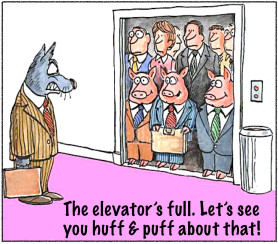
NOTE: What the top cartoon ↖️ does not include is that when Optimists are punched by life – they get up again & move on!
«

«
Pessimism  (P) & Optimism (O) on the brain
Neuro-scientists studying Ps & Os (with college students in the West) noticed that several parts of the brain (IFG=inferior frontal gyrus, the amygdala & anterior cingulate cortex) were activated differently when subjects were shown negative, neutral or positive images.
One result seen in these 2 scans:
a. When you ‘find out the world is better than you thought’ = updating beliefs in a positive direction,  the brain showed increased activity in the left IFG.
b. When ‘finding out the world is worse than you thought’ = updating beliefs in a negative direction, pessimists’ brains showed significant decreased activation in the right IFG.  The worse the participant’s mood (from a questionnaire), the higher the activation in that area.

Comparing Ps & Os, when using updated beliefs in a negative direction, both groups showed some activation in the right IFG, & but the pessimists had significantly less reaction in their left IFG than optimists.
Several other studies have also tied activation in the right IFG to pessimistic thinking.

Neurotransmitter systems also can differentiate Ps from Os. Sufficient Dopamine seems important in maintaining the positive bias, & low Serotonin has been implicated in the negative bias. (MORE….)

BTW – correcting chemical imbalances is the reason for taking meds – although not everyone can take them safely.

NEXT: Resilience – Emotions #1

Developing RESILIENCE – Thinking (Part 1)

PREVIOUS: Social 

SITE: RESILIENCE 101….  re. thinking


MENTAL RESILIENCE
💛 What we think
how we talk to ourselves – affects the quality of every part of our life. Research show that the #1 roadblock to resilience (R). is not genetics or past difficulties, but negative thinking (as adults). Our 5 senses always take in much more info than the brain can process easily or quickly. So to cope, it creates mental shortcuts (mostly unconscious), to simplify & make sense of it all, especially when under stress. Unfortunately this can backfire, often trapping us into making assumptions & jumping to conclusions.

When trying to figure out what went wrong, we wonder:
Who caused the problem? (me / not me)
How long will it last? (always / not always)
How much of my life does it affect? (all / not all)
ACAs usually answer these Qs based on childhood damage rather than current or universal reality – even for the slightest frustration or annoyance, like not being able to find something at home, much less the big hurts …  we think (from the WIC ) : Who = me , How long = always , How much = all of it!
✥ No wonder we procrastinate & feel hopeless! Note how they fit the ‘Pessimist’ column in ‘Thinking Part 2

Instead, being able to handle stressors well is built on positive beliefs about ourself & the world. Facing difficulties & disappointments takes courage & learning from them, sticking to goals, being creative – to use as future reference – to not get trapped in ‘victim mentality’.
And that starts with our inner dialogue – how kindly, respectfully we talk to ourself.
What are some of your negative labels that can be changed into legitimate positives? ⬅️
➖ ➖ In a desperate attempt to prevent feeling abandoned, many ACAs will keep chasing the wrong kind of people (unavailable, needy, narcissistic….who can’t connect) & in wrong ways (pushy, people-pleasing, controlling….) . This leads to constant disappointment, so we label ourself ‘stupid, undesirable, ugly, useless…..
➕ ➕ While our choice of relationships may need a radical shift, our drive to connect is actually very healthy. So we can legitimately say that, as “chasers”, we’re Courageous, Curious, Determined, Persevering, .…. With this cognitive correction we can travel on a new, positive path – to chase & catch the good things in life that fit our True Self!

💚 Post-traumatic growth (P-TG)
Traditional psychology equates thriving with R., which is: “reaching the previous level of functioning before a trauma”. However, in Recovery – thriving goes above & beyond R., to find the benefits within each challenge or trauma.
Q: How is it that some people – when they fall down – can get up even with a limp, dust themselves off & keep going, even improve, after a bad experience?
ANS: They have accumulated strong inner resources AND the right kind of external help.

We can find examples of P-TG in ancient spiritual traditions, literature, & philosophy. New studies of R. (‘benefit finding’) verify that after trauma – in spite of all their suffering – some people experience them as valuable life-changing events.
THEY:
•  are less triggered & have faster recovery time after future stressors occur
•  develop greater inner strength than they thought possible
• find unexpected possibilities open to them, & can tap into creativity
• rise to a new level of functioning, shaken out of routine or limitation
• have a new understanding of the world, & an appreciation for being alive
• have more emotional intimacy with loved ones & gain deeper spirituality

Mentally resilient people will look at any problem or difficulty & ask, ‘What are some possible solutions? , What action is most useful? , What are my available choices?, What do I need to change or improve?…..’
They see painful events as a chance to problem-solve & learn something from them – which builds confidence. They develop the habit of moving thru the pain instead of running from it,  preventing bitterness & resentments.

It makes them winners, no matter how limited their real-life options may be, because they’re happier – which is better for them & everyone around them. Realistic optimists don’t do drama. Without being in denial about the level of difficulty they face, they experience every situation in its proper proportion. For winners there are no ‘unbearable’ events. They just build their castles out of every stone life throws at them!
And they say YES to any & all good things that come their way.

NEXT: Resilience – Thinking #2