
 PREVIOUS : SLOW DOWN
SITE : “Stop Overdoing Your Strengths” – very extensive (Harvard Biz Review)
BOOK : “Do Nothing” (by @celesteheadlee)
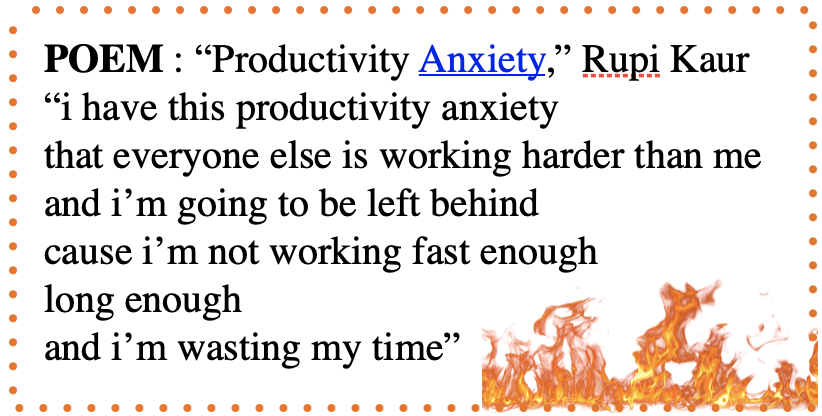
If you feel like this poem too – you may be stuck in a cycle of toxic productivity – typical of many ACoAs, a form of “not-enoughness”. This can drive us to act in ways that don’t align with what really matters to us. We subconsciously keep busy by compulsively working to avoid dealing with painful emotions, & issues in our current & past reality.
Here again is another aspect of how we use/ misuse TIME.
“Creative Hopelessness” of Toxic Productivity – an ACT term for waking up to the reality that what we are doing (over & over) isn’t working. (ACT =Acceptance & Commitment Therapy — about psychological flexibility).
Over-functioning is a classic wounded response formed during a toxic childhood. Being over-controlled, seriously neglected, &/OR trying to keep a chaotic household afloat, ACoAs take on too much responsibility at a very young age.
Of course, then we continue the pattern as adults — until we have enough Recovery to set appropriate boundaries on our actions. It’s a common but often overlooked reaction to internal or external stress, feeling compelled to “do more” as a way of coping — trying to manage & control many things that are actually not ours to handle.
Most people on the productivity wheel are on autopilot – from not being self-aware – by not checking in with themself regularly OR at all  . Over time, it leads to PMES burnout AND damaged relationships caused by letting others under-function & become too reliant on us.
Toxic beliefs in the WIC creating anxiety : I FEEL
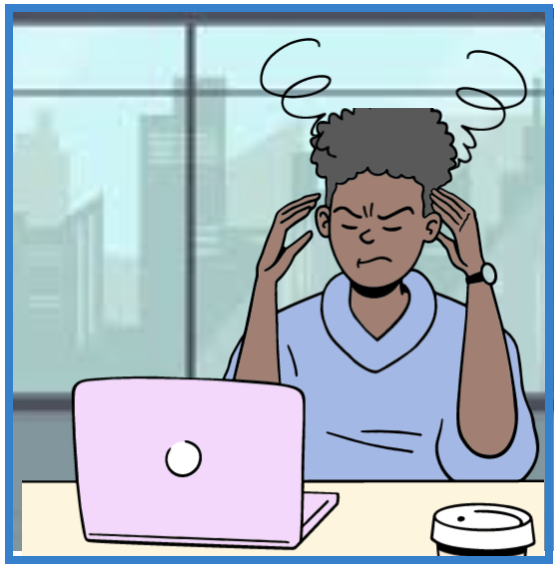 🥺 afraid there’s not enough for me
⚡️alone & long for people to see my value
⚡️anxious when I’m still (nothing to do)
⚡️guilty when I take time off
⚡️sad that I’m not where I “should” be in life
⚡️scared that I’m going to be left behind
⚡️ shame that I’m not enough. (add your own)
As mentioned in the previous post, the illusion is that we must be constantly ‘productive” to have any value at all ! much less to reach goals. Ironically this belief actually derails our dreams.
So it’s important to figure out why we get caught in overdoing.
📌 Notice why you’ve set certain goals for yourself, what’s their purpose & how do you spend your time. ASK :
— When it feels like I’m not doing enough, what do I do?
— How is this working? AND What price do I have to pay?
 Our native biology is doing its job when we’re low on reserves —> the brain is designed to shift into ‘drive mode’ when it seems we don’t have enough resources & need to compete for scarce goods (food, shelter, a mate).
Unfortunately : present-day messaging (broad media, social media, education…. ) floods our drive system with messages that we aren’t doing enough, are being left out (FoMo), don’t measure up, & are falling behind.
TOXIC Productivity
Toxic productivity is based on the deep-rooted conviction that you only have value from what you produce. So – if you’re always the person responsible for getting things done at home & at work, you may think you’re more in control, highly competent, & a valued member of your team or family.
HOWEVER, it :
º causes you to miss sleep & meals so you can work more
º ‘considers’ downtime as a waste instead of recovery time
º guilt trips you into not resting or taking breaks
º ignores or minimizes physical warning signs like headaches, fatigue, increased irritability, elevated resting heart rate
º promotes the habit of always being in ‘hustle mode’, at the expense of normal human and personality needs
You know it’s toxic when YOU :
♠︎ don’t have hobbies, a healthy social life or take vacations — because all your focus is on work or career (and money?)
♠︎ minimize or deny your real successes
 ♠︎ often feel work-related insecurity or guilt
♠︎ sacrifice time needed for yourself, family & friends – for the sake of productivity
♠︎ set your expectations unrealistically high, both for yourself & for the work
♠︎ undervalue or ignore your own physical, mental & emotional health
NEXT : OVER-DOING (2b)
 HEAL & GROW for ACoAs