
 PREVIOUS : ACoA Over-Doers in Relationships (#3a)
SITEs : 🔹” Weighing the cost of over-functioning”
🔹Under & Over-functioning in Relationships: A Bowen Family Systems Approach”
Over-doing (O=D) /O-functioning creates a reinforcing system deepening an unhealthy codependent pattern. It fuels chronic stress & burnout while corroding the connection. The over-doer becomes trapped in a cycle of anxiety-driven responsibility.
CONSEQUENCES to the relationship – of O-D
👫 Anxiety & control behaviors — Over-doing often stems from anxiety – if you’re afraid things will go wrong, you try yo prevent it, but this perpetuates the cycle
Attachment cycle trap — Emotional over-doers pair with under-doers, creating an anxious-avoidant cycle – where you the anxious partner feels on-edge while your avoidant one feels overwhelmed & pressured
 • Blocks partner autonomy — By constantly taking responsibility for others’ actions, you’re stifling their ability to grow, learn & develop problem-solving skills, leaving them less self-reliant
Creates ‘directiveness’ — The over-doer gradually considers their partner as “not quite as good”, relating in a directive, controlling way rather than as an equal
Emotional exhaustion — By constantly taking on more than your share of emotional & practical work, you eventually hit a wall of exhaustion, so you too become stressed, anxious, & overwhelmed
Enables Dependency — When you over-do, the other person has little incentive to contribute equally. This creates dependency, as if you’re a parent rather than a partner
• Intimacy deterioration — You’ll end up feeling alone, overwhelmed, & frustrated, while the under-doer can feel infantilized & incompetent, creating emotional distance
Justification masks reality — When someone repeatedly shows you their ability to function, make decisions… & you keep over-riding & ignoring the proof, you’re not treating then as the person they actually, which is insulting
Loss of Self — When you spend so much energy managing someone else’s needs, you lose track of your own needs, & personal boundaries. While thinking you’re doing the ‘right thing’ you’re undercutting your self-esteem & losing your identity
Relationship instability — This dynamic may have started with good intentions, but if continued will always lead to resentment as you feel your efforts go unnoticed or unappreciated, breeding frustration & anger, burnout & a lack of mutual growth, threatening the relationship’s survival
Repetitive conflict cycles — When partners feel misunderstood by each other, their disagreements & arguments go on & on, without clear resolution or change
Stifles Personal Growth —By constantly taking responsibility for anothers’ actions, you’re stifling their ability to grow & learn. You prevents them from developing their problem-solving skills & becoming more self-reliant.
«
 «
«
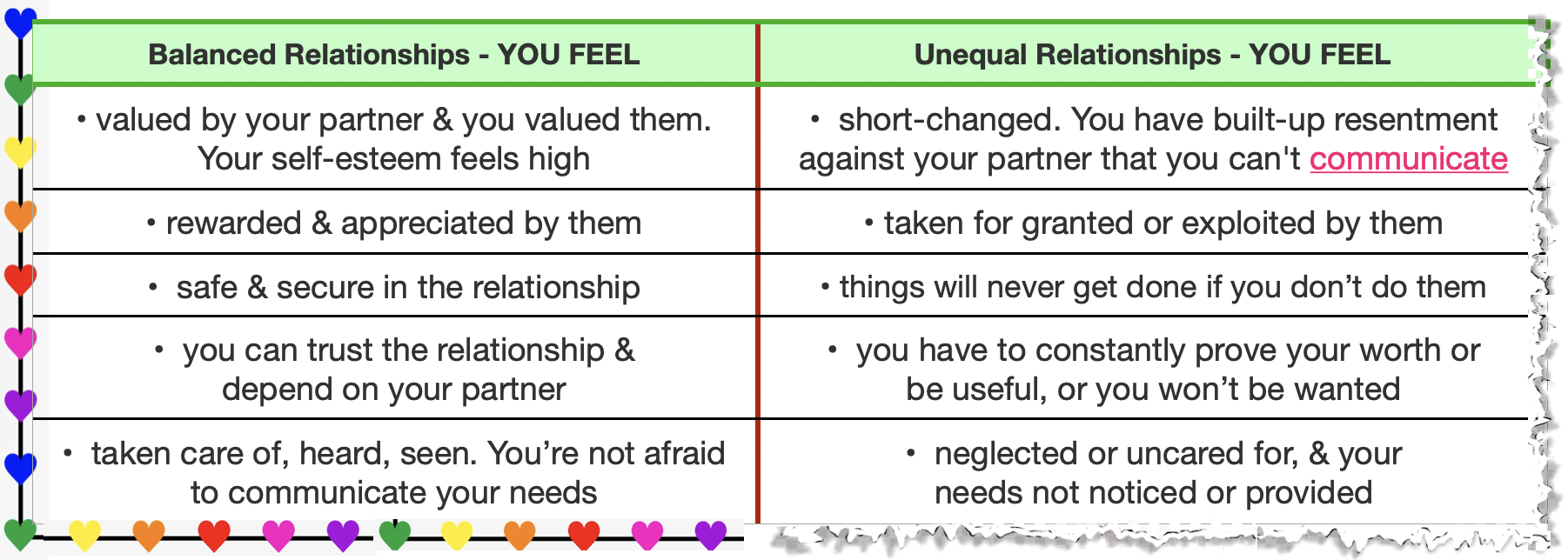
 CHANGING the PATTERN : Finding Balance is Key
❤️🩹 Acknowledge the Pattern – that overdoing is part of your relational behavior. Seriously, deeply think about the roots of the issue, such as anxiety, a need for control, & fear of abandonment.
❤️🩹 Communicate Your Needs — One reasons over-dong is that they have a hard time knowing, expressing & proving their own needs.
Once you can identify them, practice asking for them from your partner. Talk about how you two can share the load more evenly.
❤️🩹 Delegate & Share Responsibilities — A balanced relationship requires both partners to contribute equally. Start handing over some of your duties, so the other person can step up – even if they don’t do it perfectly (your way). Accepting imperfection is one key to letting go of over-doing.
 ❤️🩹 Set & Respect Boundaries — Another key to stopping is implementing healthy boundaries. Define where your part ends & the other person’s begin. It will help you regain your sense of self & encourage mutual respect. EXP: don’t help with your partner’s problems unless they specifically ask for your input.
❤️🩹 Practice Self-Compassion — It’s easy to be hard on yourself when you realize you’ve been over-doing, but it’s important to practice self-kindness, acceptance & patience. Over-doing may come from caring & wanting to keep things running smoothly. Take credit for wanting to learn & grow. Making changes is a slow process. so Be Gentle with yourself as you make the effort.
NEXT : Over-Doing GROWTH (#1)

