Emotional MATURITY – General

I INTEGRATE ALL PARTS OF ME
while still working on the ‘old stuff’

PREVIOUS: Emotional Immaturity (Part 3)

SITE : True Happiness (Emotional Maturity Questionnaire)

QUOTES: 🔅 “Maturity consists of no longer being taken in by oneself” Anon.

🔅 “Maturity is the ability to think, speak & act your feelings within the bounds of dignity. The measure of your maturity is how spiritual you become during the midst of your frustrations.”  Samuel Ullman (American businessman, poet & humanitarian)

EMOTIONAL MATURITY (EM) means having a healthy self-concept: not thinking too highly or too lowly of ourself, being part the world but realize we’re not the center of it

Characteristics can be identified in relation to AGE :
a. Social  – can relate well socially for our physical age
b. Emotional  – can handle emotions appropriate for our age
c. Spiritual  – can behave in a spiritually mature way

In ACoA language, EM develops slowly by minimizing the damage in our WIC & quieting / limiting the PP voice, as much as possible. Ultimately it’s about no longer having S-H & living from our True Self.
Maturity comes from growing the Unit (Healthy Adult & Loving Parent), who are regularly (but not always) in charge of the WIC, encourage the Natural Child to blossom, & keep in touch with our Higher Power.

• Maturity does NOT mean having eliminated all our damage, but rather to lessen the grip of the Introject, diminish accumulated old pain & be able to deal with our core wounds when they do surface, so they don’t take over & we can bounce back faster.imperfect

ACoAs are quite capable of developing mental, emotional & spiritual maturity – as long as we don’t strive for perfection*.  Actively using the “Principles of the Program” helps to outgrow the worst of our damage so we can live more comfortably in the present, instead of in our tortured past.  When psychological health takes root, we carry it with us even under stress, & express it in ‘all our affairs’

Perfectionism is a sign of immaturity, based in FoA & S-H,- a belief (CD) rather than an event or action.
To be human is to be IMperfect, & to be mature is to be OK with that!
Fortunately there are times when everything works out well = we’re successful at a task, reach a goal, or feel empowered. These do NOT come from perfection.
Basically, they’re just events without mistakes. Those moments are the result of our knowledge, effort, practice & persistence, help from H.P, our faith, & perhaps some ‘luck’.

KEY QUALITIES of MATURITY
confidence1. Emotional
Emotional Responsibility : identifying them, AND know they come from inside, rather than caused by other people, places or things
Self-control: accept & control our passions, impulses & desires. Can handle stress well, ‘let go’ & detach, know when we’re powerless over a situation
Self-esteem: have inner fulfillment, enjoy life, experience ourself as one source of love.  Have understanding of & insight into current reality.

2. Psychological / Mental
responsibleCognitive Responsibility: be accountable for our thoughts – beliefs, opinions & prejudices. Handle finances, have good work habits & are reliable
Mental Clarity: able to think clearly & rationally. Process information based on general reality, know how to gather & communicate information
Independence: make appropriate decisions & observe consequences in order to make better choices. Learn & grow from experience.

mental clarity3. Practical
Action Responsibility: know what we want & can make it happen
Function: make the effort to learn what we need to know in order to accomplish our goals
Participation: join group & community activities that encourage creativity, collaboration & empowerment, perhaps volunteer for a relevant cause

4. Relational / Social
Inter-personal Responsibility: treat people as separate entities with the right to their own needs, wishes & dreams (not use people)
relationalRespect: understand & tolerate different views, cooperate with peers or teams, care about others & support their concern
Connections: make connections easily, sustain intimate relationship, take in friendship & love, share decisions & resources

spiritual5. Spiritual
Moral Responsibility: have a healthy value system / code of ethics. Choose what’s right for ourself first & then in relation to others
Congruence: Act honestly, live by our principles & listen to our intuition
Altruism: have concern for all humanity, do what we can to help others – realistically!

NEXT: Emotional Maturity (Part 2)

ACoAs & Emotional Immaturity (Part 3)

putting things offAS MUCH AS I HATE IT
I can’t seem to let them go!

PREVIOUS: Emotional Immaturity (# 2)

QUOTE:  “Jealousy is a disease, love is a healthy condition. The immature mind often mistakes one for the other, or assumes that the greater the love, the greater the jealousy. In fact, they are incompatible. One emotion hardly leaves room for the other.” Robert Heinlein

IMMATURITY (cont)
10. SELF-CENTERED

The most basic trait of an emotional immature person. Never equate arrogance with self-esteem! All expressions of S-H are self-centeredness.
• actions indicate little regard for the needs & point of view of others, yet actually have very little regard for ourself (hidden S-H)
• overly sensitive, but mainly for things done to us – real or projected, rather than caring about the effect we have on others because of what we do.
IRONY – co-deps are overly focused on how others see us, BUT it’s still self-centered narcissism
WE
me. me. me• are preoccupied with our own ideas & fears, even when hidden by rescuing, hi-achieving, people-pleasing….. can result in social anxiety, from assuming everyone will judge, criticize & dislike us
• take everything personally, trouble separating issues & situations from our ego or personal reactions to a topic, ‘hear’ discussions about issues through a filter that makes everything about us
• talk more than listen, steering all conversations back to us. Don’t take the time to be thoughtful, understanding, compassionate or empathetic —
alternated with being lost in thought (dissociated) or consumed with our own views, worries, & outcome of our troubles (obsessions)

11. STIMULUS HUNGRY
stimulus hunger• addicted to adrenalin, drama & various forms of danger
• demand instant results from ourself & others, so have poor follow-thru. Our promising beginnings end in failure for lack of persistence, so our gifts & skills are often wasted
• have poor impulse control, & trouble with delayed gratification (“I want it now, now, now”- including Recovery!)
• have superficial values, & too concerned with trivia (appearance, social position, money & possessions, sexual desirability…)

12. STUCK in DAMAGE
• acting out our anxiety on family or relationship = self-blame, guilt & physical symptoms (body pain, auto-immune illnesses…)
BTW: This does includes the years in Recovery – but as long as we’re progressing, it’s OK no matter how slowly
• our sense of identity coming from the False Self
• staying loyal to our family by feeding our S-H, obeying Toxic Rules, acting from the Toxic Roles, using people / places / things as addictions
• trapped in our ‘story’ – using unproductive patterns of thinking & acting from childhood (repetition compulsion)stuck in mud

AGE is not the main basis for maturity. Many people live their whole lives as emotional babies, not always obvious on the surface.
Actual children ARE naturally immature.
But when ACoAs were young, we had to be little grownups so the ‘adults’ wouldn’t have to be loving & responsible parents. Most of our role models were wounded kids themselves, so we never had a chance to learn genuine maturity from them

13. UNHEALTHY RELATIONSHIPS
• compulsively choose unhealthy, inappropriate friends & mates, as well as work, living & social environments
• OR accept any person or situation offered to us, without considering if we like it, if it suits us, how safe or healthy it is….
• focus most of our efforts on winning over people who are not interested in us, OR tolerate boundary invaders
• in most relationships we react in extremes (idealize or demonize)
AND
• personal loyalty lasts only as long as the relationship is somehow useful to ourself
• having trouble with people important to us is usually caused by us being critical, impatient, over-reactive, having inappropriate expectations & making demands
• use relationships to manage our anxiety. Have a great need for a large ‘support’ system so we don’t have to face & outgrow our abandonment issues

14. UNHEALTHY THINKING
• Cognitive Distortions (CDs) are the mainstay of the immature (WIC’s) way of ‘understanding’ the world. CDs CAUSE:
• being stuck in flawed beliefs about ourself (S-H) & others (judgmentalism)
• confused thinking, and inappropriate actions or non-actions
• misreading & then mis-interpretation of social cues, so we ignore them completely or react badly from projecting our assumptions on to others
• not taking seriously any point of view different from our own . EXP: B & W thinking always leads to false conclusions

NEXT : Emotional Maturity – General

ACoAs & Emotional Immaturity (Part 2)

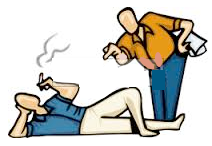
lazy-boyI’M DOING WHATEVER I WANT- 
no matter what ! 

PREVIOUS : Emotional Immaturity (#1)

See ACRONYM Page for abbrev.

QUOTEs: ◎ “If you’re always waiting to get caught, welcome to a life of immaturity” Eymadreamer
◎ “Immaturity is the incapacity to use one’s intelligence without the guidance of another” Emmanuel Kant

IMMATURITY (cont)
6. NOT FLEXIBLE

Opposing people & ideas – being emotionally rigid, AND insist there’s only one way to think about or do things “our way or the highway”
‣ consistently experience the world as being against us, feel unseen & unheard, which can lead to constant debating, arguing, fighting
‣ OR compulsively isolate, avoiding reality, especially when frustrated
‣ see everything in B & W (too much or too little, all or nothing) oppositional

Oppositional – compulsively take the other side of an opinion or event, even if we secretly agree with the first one :
‣ as a way to keep others at arm’s length emotionally (false protection)
‣ because of a fragile ego (False Self, WIC), we’re afraid of loosing ourself if we agree with someone else, instead of having a solid identity and real boundaries
‣ have great difficulty with any form of real or perceived authority, even when it’s legitimate
‣ resist taking advice & help, even when desperately needed

7. NOT SELF-AWAREMISSING :
• the ability to question or reflect on the consequences of our actions
• access to our Healthy Adult ‘voice’ based in the True Self
• awareness of how we communicate, that we don’t make genuine connections, or what effect we have on others by what we say
• appropriate sense of boundaries (over or under-functioning)
• awareness of our emotions or interior life (anxious, cutoff, reactive, stressed) OR why we think, feel & do what we do
• genuine empathy for or perspective about others

8. MANIPULATIVE
grudge-holding• experience the world as threatening, so hide our fear by subtly invalidating others (undermining), double talk, guilting, act weak & incompetent, play on other’s sympathy….
• highly self-absorbed, unsympathetic, passive-aggressive (covert hostility)
• hold on to unexpressed resentments, while our real intentions & behaviors are hostile : the con man, the gossip, the martyr, the two-face
• not able to face reality as an adult, we tend to often LIE, as a defense mechanism, even about small things, especially when not necessary. We gradually forfeit the trust of friends, family, and co-workers
• pretend to have emotional stability which we don’t actually have

9. OVERLY DEPENDENT
Symptoms : co-dependence & people-pleasing, dogmatism–intolerance of ambiguity, Fear of abandonment (FoA),
• act as Victim: always complaining or whining about something, or apathetic & numbed out. Focused on self-pity, waiting to be taken care of
• are indecisive – unable to make simple choices or decisions. You don’t stick to any you do make, from being easily influenced, bullied or manipulated by others
• basic emotional reactions to life = fear, distrust, anger & anxiety
WE
• get angry when a significant other (as parent-substitute) expresses their own needs & wants, when different from our own
• chronically expect some other person, place or thing to make life worth while. Needing others around all the time becomes a burden to them
invest ourself in any belief system or person who reinforces our own opinions (actually those of the WIC & PP), OR who promises rescue, privilege, salvation or status
WE
make snap judgments, are insecure, defensive – which is covered up either by being totally self-effacing or puffing ourself up all the time
• need to please everyone, in exchange for safety & gratification, doing ‘nice’ things for others only to have an advantage, so are rarely emotionally honest
• are prone to intense attachments or enmeshments (symbiosis), always dependent on someone else, when a reasonable amount of self-reliance should be present as an adult.
NOTE : This does not apply to temporary dependency caused by present-day trauma or major illness.

NEXT : Emotional Immaturity (Part 3)

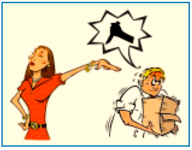
ACoAs & Emotional Immaturity (Part 1)

about MEWHAT DO YOU MEAN –
everything’s not about ME?

PREVIOUS: Accessing Es

See ACRONYM Page for abbrev.


Fundamentally, most people are being run by a combination of their bad parent & the WIC. This of course applies to all unhealed ACoAs & addicts, whether in Recovery or not, before doing deep FoO work. How these 2 ego states are expressed is determined by how our inborn nature reacts with the specific environment (family & culture) each of us grew up in.

Much of this blog is about the ways ACoAs express this immaturity.
☁︎ For some, our psychological & emotional under-development is noticeable to observers. Not believing in ourself, we live in deprivation (work, living space, grooming, education, health…), like 12 yr old orphans on the street!
• But even for those of us who are highly accomplished, without an integrated True Self we’re still emotionally, psychologically & Spiritually immature. This is hard to acknowledge – after all, who’d want to admit they’re still ‘functioning’ from a childish place?

Immaturity CHARACTERISTICSScreen Shot 2015-08-02 at 9.02.05 AM

1. ATTENTION SEEKING
• fishing for compliments, & having unreasonable expectations of others
• extremely competitive, a poor loser, perfectionistic & refuse to play or work if we can’t have our own way
• have a great need to get what we want, demanding immediate gratification. Feel we can’t bear to wait, even shout & command to be catered to
• secretly believe we’re somehow special, demand constant attention, sympathy & unearned respect, so can’t have satisfying relationship
• usually fake, inconsiderate, tactless & selfish, not looking beyond ourself – the child’s delusion that the world revolves around it

2. CONTROLLING
• act pushy & inappropriately whenever feeling out of control
• can’t stand others having needs & wants different from ours
• try to force others to be just like ourself, or our ideal
• want the whole world to be safe for ourself, so try to make everyone & everything conform to our view of what’s right & wrong

3. EMOTIONALLY UNEVEN
• can be pleasant as long as things go our way, then suddenly explode with anger over a trivial (but not to us) remark or incident.  Others don’t know how to be around us, never knowing how we’ll react
• don’t handle criticism well (over-react), take every slight as a personal attack, take ourself too seriously
WE
• find it very hard to forgive (let go of) slights & hurts. Either keep throwing it in someone’s face, or withdraw without explanation
• are easily frustrated. If things don’t go our way, demand that others change, or refuse to participate further. Can have temper tantrums, prolonged pouts & rapid mood shifts
out of control• are prone to jealousy & envy – may wish bad things on other who seem / are more fortunate
WE
• regularly feel like we’re going to lose control (& often do) & are afraid of change
• lack ability to be emotionally neutral toward others – are either irrationally negative (antagonistic) or blindly positive (idealistic & undeservedly loyal)
• find it hard to successfully manage Es during or after a crisis – either fall apart or become physically or emotionally distant, especially during a confrontation
• project our Shadow side onto others & then judge them harshly

4. NOT DEPENDABLE
• are generally unreliable, often late, not doing what we say we’ll do, letting people down (with lots of ready excuses)
• our life is chaotic & impulsive, making us unpredictable & ‘difficult’
• only focus on our own gain or loss, so have a hard time with integrity
• regularly promise things we can’t or don’t want to do, so constantly disappoint

PS: The toxic roles of Hero, Martyr or Co-dependent may make us seem ‘strong’ & responsible, but compulsive over-doing, placating, & people-pleasing are to the detriment of self-care & the true needs & feelings of others!

5. NOT RESPONSIBLE
king-baby• are convinced other people’s actions cause our lack of ability or poor performance
• avoid or deny having financial, work & relationship problems
• can become defensive or antagonistic if others point out any part we played in our troubles
• don’t have a realistic view of ourself, & can’t take in or use constructive criticism
• don’t own our part in bad situations, re. our problems with others
• make bad choices, or none at all
• rely on others for care and protection, being superficial & thoughtless

NEXT : Immaturity, #2

ACoAs – ACCESSING Emotions

LIFE GOES MORE SMOOTHLY
when I accept & manage my emotions

PREVIOUS: ACCEPTING our Es (#1)

SITE: 🔅5 Ways to Access Es


ACCESSING Es
For anyone who ever doubted that emotions are real – this digital map BELOW shows scientifically that various emotions create physical energy which can be visually located in the body, depending on which one is being experienced.   (MORE….. scroll to 5/25/14)

• We live in a culture that worships Do-ing over Be-ing, action over introspection, thinking over feeling. Even so, we need outlets for our emotions, no matter how much we deny having them.

◎ To do that, people will use sports event, concerts, movies, hanging out with rowdy friends…. not just as entertainment, to connect with others & enjoy favorite people or activities, but also to artificially generate emotions in socially acceptable ways. It’s called blowing off steam, escaping, just having fun…. but ultimately it’s a way to experience Es not otherwise acceptable – especially in public.

Even in Recovery, ACoAs struggle to access buried Es. We have many methods available to help us get to them, but we also need to be fully aware that it’s not wise or safe to try having all our feelings at once.
It’s important to not rush – “Softly, softly, catchee monkey” – slow & steady works best! Sometimes we can’t help being triggered, but with the right help we can get thru it, & come out of the tunnel feeling lighter

🧠 Feeling safe / unsafe is inseparable from neurological functions of the vagus nerve, connected to all major organs. It controls 3 sub-systems that helps us determine if a situation is safe, dangerous or life-threatening. When any one of the 3 is active it inhibits or shuts down the other 2.  (also related to depression….)
POST : “Dissociation – Healing” = re. the vagus nerve

• Ultimately, the only way to have access to buried Es is if we feel safe enough, which refers to an emotional state of being open & transparent. This means:
a. EXTERNALLY : searching diligently until we find Safe people with good boundaries who can be trusted to not abuse or abandon, & give us the benefit of the doubt in questionable situations
AND environments where we can cry, rage, be vulnerable… without being judged or ostracized. (More….)

b. INTERNALLY – consistently treating ourself much more kindly than we’re used to, so the Inner Child can come out of hiding or stop acting out everywhere.
As we grow psychologically & spiritually we can tolerate more of the buried trauma. IF we stay in the process, old Es will come up, then diminish or fade.
SITE: “Do your children feel emotionally safe?

TOOLS
DO regular bookending with the IC, and a short daily 10th Steponly list the day’s events briefly, & try to identify which Es might be associated with each one, pleasurable or uncomfortable.
1
. The basic triad of Mind-Body-Spirit is a natural place to start.
Mind: thoughts you’re have over & over tell you that something’s important, either pleasant or unpleasant. Careful attention to what keeps popping up will help identify hidden Es that are “running” you without your awareness

Body: tightness in the belly, between the shoulders, or any other place in your body, is a message that something’s out of balance. Focus on that area, breathe deeply into it to relax, then ask for info from your body about what’s going on

• Spirit: tuning in to your intuition, consider Spiritual Truths you believe in, observe how you react to others….. What is your relation to others? How clear is that spiritual connection which links you to all other humans ? (MORE…. )

IMAGES ▼ : Physical typography of basic (upper) & non-basic (lower) emotions associated with words. Body maps show regions whose activation is increased (warm) or decreased (cool) when experiencing each emotion. (Color Bar indicates t-statistic range. 0.05 FDR corrected, t >1.94)
««
SITEs: re. ANGER / re. LOVE 

🔅“The Art of Processing Emotion

🔅  Emotional Release videos on YouTube 

🔅 5 ways to access the sub-conscious mind directly – Hypnosis, Self-hypnosis, Meditation, Walking-meditation, Floatation tank

🔅 BODY (& brain) WORK: Brain Repatterining // Core Energetics // CranioSacral // ETF // Kinesiology // Reiki // Rolfing…..

Essential Oils to release
blocked Es (videos)
🔅 ‘The Emotion Code’ – get to Es trapped in the body’s electrical flow

NEXT: Emotional Immaturity, #1

ACoAs – ACCEPTING Emotions (Part 2)

PREVIOUS: Accessing Es #2a

SITEs: Power of Vulnerability”, Brene Brown – a TED Talk

• “...Why Feeling Bad is Actually Good

REVIEW all posts: What about Es // the Body & Es // ACoAs & Es // Repressing Es

QUOTE: “Unexpressed emotions will never die. They are buried alive and will come forth later in uglier ways.” ~ Sigmund Freud


1. Emotional INTELLIGENCE
(E.I., also called E.Q.) refers to our ability to understand & use emotional information to guide our thinking & behavior.

• The popular field of Positive Psychology is sometimes used to justify pushing away ‘unfriendly’ emotions. This suits people who don’t want deal with them.
▶︎ However “no matter how “dark”, Es are natural expressions of being human. They all have a message that will ultimately lead to greater clarity, if acknowledged & contemplated….. (From :”Why Feeling Bad is Good“)
Movie re E.Q.s
This includes USING:
• conflict as an opportunity to grow closer to others
• humor & play to relieve stress (not teasing or dark)
• effective nonverbal communication thru body language
(IMAGE from children’s movie 2015)

E.Q. COMPONENTS
▫︎ Empathy : understand emotional perspective & experiences of others, especially when different from ours
▫︎ Handling relationships : use info about Self & others to respond appropriately in social situations by developing healthy interpersonal skills
▫︎ Managing : act appropriately about any Es that occur in a situation
▫︎ Motivation : use self-control to channel Es toward a goal
▫︎ Self-awareness : recognize when & what emotions occur   (MORE…)

▷ Researchers have developed tests to measure E.Intelligence.
• People with high E.I. have greater mental health, show greater job performance, & usually work well in cooperative situations, being good at motivating & managing others
• People with low E.I. have low(er) self-esteem, often misinterpret emotional signals, have trouble in relationships, & are not as motivated to cooperate or perform well at work
Although E.I. probably has an inherited component, many psychologists believe that people can be guided into making better use of the E.I. they were born with but is still under/ un-developed.

T.E. A. – Remember that WE can:
• experience Emotions but not act on them at all
• have our Es & find the right place to ‘get them out’
• change how we feel emotionally (E) by coming to an aha! moment, or by mentally (T) understanding what’s going on with us (A)
• notice Es shifting from pain to —>discomfort, then ——>pleasure – when hearing a kind word or being with any accepting, comforting person

2. Emotional BALANCE – Since Emotion is mental energy, we can learn to identify & experience our energy level in the present moment, to see if we’re operating at a surplus or deficit. It’s not a stable state, but can slide around throughout the day.
Levels are from least to best :
f
. Depletion – feeling tired & stressed most or all of the time, with depression, anger & anxiety
e. Break-even – just getting by, with a few highs, but mostly lows, & sometimes really down. Often under stress, with some breaks

d.
Moderate emotional health (e.h.) – barely staying ahead of problems, & often falling a little behind. There is some energy for working to build your strengths & reduce drains
c. Fair e.h. – There’s a lot going for you – with healthy beliefs & action patterns. Still some energy drains to be worked on

b. Good e.h. – close to “the top of your game” most of the time. You add energy to the lives of others, & your participation in any project is an asset. You also greatly benefit when helping others by sharing knowledge & skills
a. Excellent e.h. – a fortunate & blessed position in life. Energy flows freely from within & all around you. There is great freedom – to choose how you use your abundant energy, as well as responsibility to give back to the world.
TAPE: Nurturing Your Inner Child.

MORE INFO
🔅 “Constructing Artificial EmotionsA Design (thought) Experiment” – online games to bring up suppressed Es
Emotions Analytics – a new field of E. communications” identifying Es via vocal intonations (iTune app)

🔅 How to Affect Emotions With Music
• Psychological info re music & Es
• “The Power Connection Process” for actors

NEXT: ACCESSING Emotions

ACoAs – ACCEPTING Emotions (Part 1)

accept Es -3IT TAKES A LEAP OF FAITH
to believe it’s OK to have my feelings!

PREVIOUS: “Getting to Know Your Es – Over, #2

SITE : “10 Ways to Access High-Positive Es”

REVIEW: ACoA have been conditioned to believe that having emotions – especially anger – is as evil as killing someone. (POSTs: “Positive uses” for anger).
Also, people living with an intense mood disorder for a long time (panic d., obsessive-compulsive d., manic-depression, rage-a-holism, paranoia….) tend to reject various emotions as unacceptable.
AND, not distinguishing emotions from action can lead to very dangerous behaviors such as self-harming, sexual acting out, chemical addictions…..

• While we do want to aim for serenity & a balanced life, it’s not healthy to cover up painful emotions (Es) & harmful beliefs (Ts) with a bunch of platitudes & ‘positive thinking’, especially without first cleaning out old childhood trauma

ACCEPTANCE
accepting EsHaving access all our Es – as they come up – is essential to becoming fully integrated & able to function well in the world. The processes is never continual or total. It’s just important to accept all of them.
While its sometimes necessary to have some distance from our Es or to even be temporarily shut down – as self-protection – long-term suppression causes bigger problems than whatever was being avoided in the first place.

✶ Naturally we have to take into account —
— the WIC’s over-reaction to people & situations, from the stock-pile of old wounds, &
— to our under-reaction from obeying the Toxic Messages, rather than our True Self.
As we heal & develop our “Unit” we can usually tell the difference between historical vs present-day emotional responses  (Getting to our Es)

TOOL
Acceptance EXERCISE – adapted from workbook “Get Out of Your Mind and Into Your Life,” by Dr. Steven Hayes – an intro to “Acceptance & Commitment Therapy”.
It can be used anytime we have ‘uncomfortable’ Es, starting with ones that are strong enough to notice, but not enough to overwhelm. With experience, this exercise can be applied to more intense Es as well.
USE : Image Streaming & 24 back-up procedures for visualization skills.
a. Identify the E. If there are several at once, pick whichever one you’d like to work on first. Deal with the others later. If you have trouble naming it, sit quietly & notice physical sensations & thoughts, considering what E it may be. If needed, look at a list of emotion words, then write the one (or more) that seems likely to fit

b
. With eyes closed
, picture how you want this E to look (a color, sound, cartoon, animal….). Then put that emotion-image 5 feet in front of you, so you can look at it outside of yourself. Later on you’ll take it back, but just for a few minutes allow yourself a bit of distance to observe it
c. While picturing the emotion, describe:
“If it had a size, what size would it be?
“If it had a shape, which one?
“If it had a color, which color ?

• Let yourself SEE & feel the size, shape & color you gave the emotion. Watch it for a few minutes & recognize it for what it is – energy that is not harmful. When you’re ready, let it go back to its original place inside you – with its added characteristics

d. With eyes open, consider what you’ve noticed:
• Look at the new dimensions of this E. Is there any change in it by getting a little distance?
• Is your reactions to it different? does it feel different in any way now?
• Write & date your observations.

processing-emotionsUse this exercise with any E. as often as you can.
You may notice positive changes in how you relate to them. As you become less afraid of feeling, it’ll be easier to accept & deal with them

—>  This 5-step chart by Will Meek, PhD. was modified from the book “Expressing Emotions” by researchers Kennedy-Moore & Watson.

Each step can include mistakes & corrections in the process = when we feel something, we can pause right then, & deal with it successfully.  (MORE….)

NEXT: ACoAs – ACCEPTING Emotions (Part 2)

ACoAs: Getting to our EMOTIONS – Over (Part 2)

confidence I CAN HAVE ALL MY EMOTIONS

and still be in charge of myself!

PREVIOUS: Getting to Emotions – OVER (#1)

SITE: The Emotional Sensitive Person

BOOK: Emotional Confidence ~ Gael Lindenfield


2. OVER-FEELING
(O-F)
a. DAMAGE

b. RECOVERY
EXP of a BETTER way to cope with Emotional Intensity
• Sue is an O-F with a strong-willed Inner Child. With great love & effort she has developed a bond of trust with her IC in Recovery.bad lunch

• Sue is on a blind lunch date in a small upscale restaurant. The man is an engineer, all left-brain & totally un-self-aware.

When he asks what she does for a living & she says ‘Healer’, he begins a lecture about how unscientific & useless that is!
Sue can feel her kid’s rage building to an explosion, but she knows that if she lets herself attack the man for insulting her & her chosen profession, she will only be making a fool of herself – and in such a small public, space!
SO —
— just before the angry words can leave her mouth, Sue quickly asks the man to talk more about his work. She’s not interested and is not listening, but it stops his ignorant comments.

This diverts the intense emotional energy long enough for her to have a private talk with her angry Inner kid :
“Honey, there’s no point in letting him have it. Remember Al-Anon says to ask: ‘How important is it?’ This guy wouldn’t get it anyway, & we’re never going to see him again.
The only important thing is that I don’t want us to be embarrassed here & sound like the crazy one, since I know we’re not!”  Her IC agrees & is mollified.

TOOLS: Heal & Grow “WORK” for Over-Feelers
GOAL – TO:
• become the Good Parents to our Inner Child that we never had
• learn & use the tools for coping with our intensity
• gradually get the piled-up pain out of our body so we’re not flooded all the time
• re-connect with emotions that have been repressed (Didn’t think there were any more?)

TOOLS : Similar to Under-feelers BUT with emphasis on calming
BODY WORK (Site:Trauma release)body work
Any that can be administered by a professional AND some we can learn to use on ourself
• Biofeedback – changes brainwave states, from very active to a calmer level
• EFT – re-wires the brain to not over-react to triggers
• Release work – Core-energetics, Gestalt, Qigong, Psychodrama,  … (A-Z therapies)
art therapyDRAWING / READING
• any workbook that teaches IC drawing
• express how the IC feels, past & present
• recovery & Inner Child books & literature
• spiritual lit, poetry …. anything to calm the mind & heart

SEEING / LISTENING
• any music, movie… that gets our Niagara Falls flowinglistening
• soothing, peaceful music
• for some of us – focus on the orchestra’s timpani – in rhythm with our rage
TALKING 
• to loving friends & family… but ONLY with people or groups genuinely able to tolerate intense emotions without judgment or trying to control
• 12-step Meetings, as often & as many kinds as possible
• Psychotherapy, including FoO work, Experiential, Primal, Gestalt….
VISUALIZING / SPIRITUAL
visualize• dreams, guided imagery, Hypnotherapy … for validation & nurturing
• Inner Child – putting an image to our experiences & then for continual comforting
• prayer, services, the Psalms … for wisdom & centering

WRITING – See list for Under-feelers
🩸 2-handed IC Dialogues – especially to comfort the WIC so it knows it’s not alone with all its ES anymore, listening thoughtfully, giving guidance, correct CDs & protect from the PP   lists
• Make a “ME” list of YOUR good qualities in PMES categories – to shift the pain to joy!

REMINDER: The more we clean out old pain in safe ways, the more room there is for healthy pleasure (not addictive highs) ! Our suffering will be replaced by a sense of relief & comfort.
✳️ Being comfortable is not boring! We just have to let the brain get used to it.
AND, as we developed healthy boundaries, our Sensitivity will then be a special gift, for :
• correctly identifying who & what is safe for us, in our environment
• empathizing with, comforting & helping others, but only those who are appropriate & only when we are able or want to!
(see posts: “Feeling Sorry For ., “Rescuing and “Healthy Helping”)

NEXT:  Accessing & Accepting Es (#1)

ACoAs: Getting to our EMOTIONS – Over (Part 1)

too many Es HELP, I’M overwhelmed –
I can’t cope with all these feeling!

PREVIOUS: ‘Under-Feeling’ (review)

SITE: “Handling emotional overwhelm


1. IN THE PRESENT
– emotional intensity comes from the Wounded Inner Child (WIC), who had to stuff & store all the hurt no one helped us process in childhood, day after day, year after year! “If it’s hysterical it’s historical”,

• Our self-hate, guilt & shame add to the mountain of misery we already carry, as well as staying with emotionally unavailable &/or outright abusive people.
Yet we stubbornly resist doing emotion-release work because we say we don’t want to feel the WIC’s pain – while we’re creating more pain with our damage!  Over-Feelers (O-Fs ) are already suffering! Why not clean it out & be done?

• Being swamped with old pain (and new) blocks our ability to have pleasure! We know we’re not happy but are so used to misery, we believe we’ll never be free. “Does a fish know it’s wet?” Unexpressed grief & rage keeps us stuck obeying our Toxic Rules.

• ACoAs need permission and courage to express distressing Es. Also, learn how to handle them appropriately whenever they surface, expressing them in the right places & in safe ways.

• One reason O-Fs are afraid of letting out intense rage & terror is because we honestly don’t want to hurt others. But sometimes, when our huge abandonment button gets pushed, our Inner Sadist (I.S.) raises it’s head, & we can’t stop ourself from saying & doing cruel things.  Afterward we feel guilty, ashamed & remorseful.  So O-Fs try to push big Es down too – just not as successfully as U-Fs.Screen Shot 2015-07-11 at 4.14.10 AM

IMP: If you’re over-sensitive (O-F) AND see it as a character defect – brainwashed to believe that by dysfunctional parents because everything seems to upset you, consider this:
• You were born with an very active limbic system (brain-seat of Es)
• It’s like having hyper-sensitive pale skin. If you’re out in the sun too long – without protection – you’ll get burned

• So too, an emotional ‘sensitive’ will have intense reactions to being burned by years of emotional abuse & neglect as a child – without the internal protection of an adult brain, & externally without safe adults to protect our little body & heart!   NOTE: It’s not the sensitivity but an abusive childhood that’s at fault!

2. OVER-FEELING (O-F)
a. Damage
O-Fs have a hard time holding in Es when hurt, so growing up we were scolded, punished, made fun of & misunderstood – everywhere.
We cried too much, were depressed, felt suicidal, threw tantrums, were clingy or rude, withdrawn or flamboyant…. The more we expressed our pain, the more we were abused, so the more pain we had to endure. AND – the more we showed distress at being abused – the more we were punished for it! Vicious cycle.

EXP: Jinny was a bright, intuitive & hyper-sensitive teenager. Not only had she been emotionally & mentally stressed since birth, but then hormones kicked in. Her ACoA parents had no clue how to deal with her – the narcissistic mother wanted her to ‘shape up’ & the depressed father identified with her but was powerless himself. One evening, in the kitchen, yet another insensitive comment from her mother set Jinny off & she began sobbing.

— Her father came in & told her to stop, which made she cry harder – so he slapped her.  His reason: “You were hysterical & I was trying to snap you out of it”.  It’s something he had once read, so thought he was being ‘helpful’! UGH!
Jinny was devastated by his betrayal – as he was ‘the kind one’.  She knew she was not hysterical & could think quite clearly!  Not everyone can “walk & talk & chew bubble gum” but she could, yet her father never bothered to find out who she really was!

• As a result of our experiences, O-Fs often hate having emotions but can’t suppress them, so we despise them as ‘weakness’!
Growing up we were rarely if ever comforted, left desperately alone with our pain – profoundly terrifying for any child.  Combining no empathy with being penalized for expressing legitimate suffering = taught us to loath being Sensitive.

• This enormous backlog makes un-healed ACoAs very touchy & easy to flare up. One O-F woman in early Recovery expressed it as : I’m an emotional hemophiliac – touch me & I bleed”!

NEXT:  Over-Feelers – #2

ACoAs: Getting to our EMOTIONS (Under)

feelings hurtFEELING BITE!
I won’t let anyone get to me

PREVIOUS: Feelings Aren’t Facts – #2

POSTs:  Emotional Maturity


ISSUE
ACoAs were trained to ignore our Es, often with tragic consequences. It prevents us from being able to identify what is:
• suitable or not for us          • mentally sane & logical
• psychologically healthy       • genuinely pleasurable
STYLE
• At its simplest: The Right brain governs our emotions & the Left brain our thinking (among many other things).
Connecting the 2 sides is a thick mass of nerves, the Corpus Callosum, allowing the halves to communicate, like being able to verbalize (T)<—> feelings (E).  (see posts re. M & F Brains)

• Everyone is born with a unique personality which then interacts with their  environment & training.  Growing up in constant stress, for protection the 2 sides can stop communicating. Then some people function too much from the L & others too much from the R. We can see this in the way we react to physical or mental hurt.

1. UNDER-FEELING – L brain
Under-Feelers (U-F) “live in their head” to avoid painful Es, cut off from a vital part of our being, & need ways to re-connect the ‘wiring’.
a. GOAL – TO:all Es
• feel all our emotions without judgment
• learn names of a wide range of emotion & be able to associate them with sensations the body generated in the limbic system
• learn how to manage painful emotions when they surface
• regularly use available tools to get in touch with repressed emotions
• nurture the Inner Child so our Abandonment pain diminishes – making us less afraid of Es!

TOOLS
• The exact order & stages (process) needed break thru layers of emotional denial is different for every person & can’t be predicted. Each of us starts at a different mile marker on the road to Recovery. So the effectiveness & timing of these activities will vary

• Any one, or a combination, of the following methods can bring up Es we had to push into the unconscious.  It takes patience & perseverance. Try as many as you can & never give up

BODY WORK — ANY available in your area, like:
acupuncture, to re-align meridians so energy can flow freely (Es are energy)
Brain Gym (re-patterning), to reconnect the 2 brain halves
• core energetics, a safe way to clean rage out
• craneo-sacral therapy, to get trapped cerebro-spinal fluid moving
massage, to release holding Es in muscles
◉  If none of these are available, go to a gym, find a place to run, get a punching bag, hit pillows, get a plastic bat & use it on the bed or couch
READING
• 12-step literature          • Personal-growth articles & books
• Spiritual works         • any other writing that ‘touches’ you
SEEING / LISTENINGspiritural practice
• movies, plays, classical & modern music, choirs
• old family photos, diaries, letters….
SPIRITUAL
• religious services, spiritual gatherings
• meditation, prayer….

TALKING
• 12-Step Meetings – Al-Anon,  ACoA, SIA (Survivors of Incest)….
• any form of therapy – individual, group, experiential, primal….sharing
• loving friends, getting family info from anyone willing to talk
VISUALIZING
• Inner Child visualizations & guided imagery
• ‘hypnosis’ – with a trained therapist or self-administered (fully awake but with focused concentration on a topic)
WRITING
Dreams – write them out using the Gestalt Method
Evening Inventory – Brief Journaling OR a positive 10th Step
4th-Step inventory: list of character defects, childhood traumas & losses – but NOT used for self-abuse!
2-handed IC dialogues – learning to listen to the Inner Child AND how to respond lovingly

 Lists of positive qualities – 5 or 6 categories (PMES, Natural abilities, Learned Skills, Talents, Interests, Personality traits… ). Use POST: “Our Timeline inventory”
–> Add to each category as often as you think of : things you do automatically, what you’ve learned in school or on your own, natural tendencies, tastes, interests…, whatever you’re good at, AND anything positive that other people say about youjournaling
Morning pages – stream of consciousness – first thing in the a.m. we’re less ‘defended’ against our inner truth (POSTs “Writing for Personal Growth

• keep a separate list of self-hating beliefs every day to ’hear’ how ugly & untrue they are.  ASK: “Would I say these things to someone I love?” If not, then why let the Pig Parent say them or let the kid agree with them? You can change that!

NEXT: ‘Getting to our Feelings’ – OVER – #1