Al-Anon STEP 10 – Comments (Part 3)


PREVIOUS: 10th Step #2

SITEs:  8 books for ACoA   ///   Apology GUIDE

AA / Al-Anon Step 10 : “Continued to take personal inventory & when we were wrong promptly admitted it.

1. Daily Inventory

2. AND WHEN WE’RE WRONG  (cont.)

🔻 Something that did not hurt or upset another, but which we are convinced did. Again, this is our narcissism – projecting how we’d feel if….. In fact, what we’re obsessing about may not have even registered, or if it did – it didn’t bother them.

So – ASK  “When I said/did ——, how did you feel?” (done right away, or at the next opportunity). Do not put your words in their mouth!
✔︎ If the other person was not upset, believe them & drop it!
THEN if you insist on explaining, justifying…. it’s not at all about making an amend to —-> the other person.
Instead – it’s all about you, trying to get them to make you feel better

✘ If it did bother them, then we can apologize, but not in a self-serving way by trying to justify our behavior!
However, sometimes BRIEFLY providing a legitimate context is helpful to the other person “I’m so sorry for ———, yesterday my mom was rushed to the hospital // I’d just had a chemo treatment…. // Sometime my brain-injury makes it hard to remember —– ” (Try not to use the word ‘but’ before the explanation!)

⚠️ Human mistakes  – not a tragedy. These can come from being tired, under great stress, over-doing or from ignorance. We need to have our own internal permission to be ‘normal’ (imperfect), to forgive ourself with kindness & then make any necessary corrections.
Most other people are not as upset about our errors as we are !

🔻 Things we said or did which actually hurt / harmed someone.
Sadly, the WIC still gets things backwards, as with the backwards Serenity Prayer.
We blame ourself for things that are not wrongs, while having great difficulty owning long-term defense mechanisms : superiority, lying, lateness, insensitivity, laziness, procrastination, S-H …..
Not noticing our unhealthy behavior is a lack of self-awareness – patterns we think “well, that’s just me” but are actually the False Self, & a deep-seated shame about our True-Self needs.

*    *    *    *    *    *
3. PROMPTLY ADMIT IT
a. Re. OURSELF –  The Program phrase “Let it begin with me” certainly applies here.
If we accurately identify a ‘failing’, we can promptly admit it to ourself – without shame or S-H.  Hard for many ACAs to do!

In Recovery we learn that character defects come from the wounded child &/or PP, so even with years of hard work they don’t go away fast or easily. We need to be KIND to ourselves, & patient with our process!
For in-depth info, read posts Outgrowing Co-dep Niceness #6a-7c”, re. Forgiving ourself.
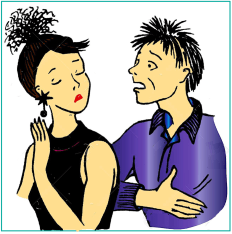
b. Re. OTHERS – 9th Step procedure applies here too – read post “Outgrowing Co-dep Niceness #8a = Being forgiven by others”.

A sponsor may suggest that “promptly” means to act within 48 hours – not a week or a year.  But for many ACAs it can take hours or days before we realize we need to make an amend, or to take the time to overcome shame, or calm down from anger, & get some perspective.

REMEMBER that in some cases the other person may not accept the amends or want to talk to us at all. Sometimes it’s not safe or even possible to reach them.
Also – an abusive boss, a mentally ill family member, a manipulative narcissist, the passive-aggressive….. can easily use a sincere ‘amend’ against us, if not right away, then some later time when it suits them.
We do need to use discretion & be self-protective.

Not wanting to apologize may seem like PRIDE on the surface, but actually it’s:
a. being ASHAMED of not being perfect
b. something that was shamed / punished in our family growing up
To be able to apologize ‘easily’ we can not be choked with SHAME!

💠   💠    💠    💠
Read: ACoA 12 Steps

ACoA 10th Step: “We continued to take personal inventory & to love and approve of ourselves.”
• This is not arrogance or narcissism, but rather, self-care.
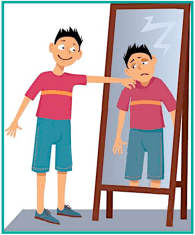
• It’s not about being at the extremes of either having to be “right” <—–> or of self-flagellation.
• AND keeping our side of the street clean does NOT mean staying with people who don’t want to be with us, who are subtly abusive or simply are incompatible!

By accepting ourself completely, we can slowly outgrow much of our damage, & uncover our True Self. This minimizes the amount & frequency of acting on character defects. It keeps us from isolating ourselves & judging everyone else.
“Admitting & Accepting” is the mental health of acknowledging our human-ness & the need to be part of the human race.

NEXT: MBTI Introverts

OUTGROWING Co-Dep Niceness (Part 4)

I WANT TO BE ABLE
to enjoy all my rights

PREVIOUS: Outgrowing …. #3

WOMEN:  What “She’s too nice” means
MEN : Break “Nice Guy” Stereotype


RECOVERY from “Too Nice Syndrome” (TNS) cont.   TOOL 2. SELF-WORTH
                      TOOl 3. ASSERTIVENESS
TOOL 4. HAVING RIGHTS
++ To outgrow P-P we need a replacement for the Toxic Rules that drive our co-dependence. We need to know our RIGHTS. This makes us less scared, giving us the courage to ask for what is rightfully ours, diminishing the grip of co-dependence

Instead of having to ‘sing for our supper’, we want to acknowledge & act on RIGHTS which are everyone’s birthright. They are strictly for our benefit, not in order to be ‘good’ or to take care of others.  As we start living by them, eventually they can become automatic!

❤︎ YOU have a RIGHT TO :
✑ Think, Feel, Speak & Act according to your True Self
✑ be treated respectfully, no matted the circumstance
✑ never say “I’m sorry” for being yourself, or just for being here & taking up space 😎
✑ discover your passions & pursue them without interference
✑ appreciate yourself whenever you stand your ground
✑ not feel guilty for taking care of yourself or saying ‘no’
✑ take time out to answer a Q or request (“I’ll let you know”)
TO :
not care – so much!  You can’t carry the burden of all the world’s problems – there are too many, just as the whole world can not care about yours. And since none of us has the power to fix another person, you can stick to handling the things that matter the most to you, to get the most out of your efforts

✑ offer no justification!  Don’t lie, but don’t explain. Trying to prove your point – to unreceptive ears – can easily become self-humiliating. When an explanation is required, keep your answers clear & short

❤︎ YOU have a RIGHT TO –
✑ make mistakes // to not know // to be incompetent (every so often)
✑ ask for help  // to change your mind // to ask Qs
✑ not be responsible for other people’s needs, actions or problems
✑ disagree with others & express your opinion // to not respond to ‘stupidity’
stop victimizing yourself

✑ be helpful & generous to others — IF you have enough PMES supplies of your own to share.  Only do what you are legitimately capable of, what fits with your own self-care needs & when you have the time (unless there’s an emergency that only you can deal with – which is rare)

✑ take time out for yourself, even a little every day – to dream, to imagine a new possibility or something creative, to process the day’s experiences, to revel in an accomplishment, compliment or triumph

✑  find & maintain contact with support systems in various parts of your life, the kinds that fit your personal tastes, your work concerns, family needs & social interests. Let others give you whatever help & encouragement they have to offer – if it’s what you need!

• Never chase perfection – there’s no such possibility for human beings. Only God is perfect. Focus on your actual qualities, natural talents & accomplishments
• Know when your kindness is being taken advantage of, speak up about it & pull back some
• Don’t compare yourself with others. Since each of us has a separate body & separate personality, we also each have our own life path. Live yours!

• Always be kind to yourself. Stop self-hating thoughts as soon as there pop up, checking to see what abandonment trigger set it off (BOOK: “Compassion & Self-Hate – An alternative to Despair“- T. Rubin)

As the Al-anon Closing says ” ……We aren’t perfect. The welcome we give you may not show the warmth we have in our hearts for you. After a while, you’ll discover that ‘though you may not like all of us, you’ll love us in a very special way – the same way we already love you.”

❤︎ YOU HAVE a RIGHT to assert all these rights! (‘My Rights – Qs’)

NEXT: Outgrowing co-dep #5a

Co-Dependent Anger-Niceness (Part 2)


I NEED SUPPORT

from ‘availables’!

PREVIOUS: Co-dep angry-nice #1

SITE: 6 Basic human NEEDS

Remember: we are “Damaged, not defective”!


NEEDS:
  As young, vulnerable beings every one of us had legitimate needs that were supposed to be met by caretakers, in order to flourish. Instead, many of us kept getting the message that our need were annoying, overwhelming, unacceptable, even ‘evil’. But since normal human requirements don’t go away, we had to find other ways to try to supply them.
As a result Co-deps & Passive-aggressives (P-As) interact with others from the False Self, both styles trying to get our disavowed needs met indirectly, while hiding fear & rage from early abandonment.
AND we also adopt these styles in an unconscious effort to ‘protect’ others from the WIC’s rage, which is murderous.

A fundamental human need is for connection, but unfortunately angry-niceness, in any form, prevents that very thing, keeping us from fulfilling our needs, wants & dreams.
Sadly, ACoAs tend to surround ourself & stay in relationships with un-recovering addicts & other narcissists – who take their damage out on us.

NOTE the difference between needs & obligations:
a. NEEDS are qualities, necessities & situations that are universal – see Maslow’s pyramid. There are also needs specific to you, based on your unique personality (using EnneaType, Myers-Briggs Type, Signs, Numbers, Learning Style, heredity…..)

b. OBLIGATIONS are activities that relate to functioning in the world as older children (homework, chores….) and as adults. People tend to say “I need to do the laundry, to get to work, to call my doctor, to finish this project, to do my taxes, to walk the dog….”. These are important but not your personality needs.


1. Co-Dependent version : one of their Toxic Rules is : “Everyone else’s needs are more important than mine (always)”. The obvious implication is that we should not have any needs of our own.
So co-deps focus all our energy on tasks & obligations, as if we could earn our way to heaven – the heaven of our family’s love! We take on too much – of everything – & then pile on the tasks of others as well, trying to do it all without help! No wonder we get sick, feel depressed, overwhelmed & angry!

2.  Passive-Aggressive version : one of the P-As’ toxic rules is “The world is a dangerous, dog-eat-dog place” so we have to protect ourself at all costs, hiding how angry we really are. P-As find it hard to take care of basic maintenance self-care tasks, or to honor outside obligations, like doing work they’re being paid to do. They show anger indirectly by stonewalling, or “forgetting”. It’s the WIC saying – not just “I don’t wanna” – but flat-out “I won’t! & you can’t make me! You don’t care about me so I don’t care either”, but we’re still waiting for magic. 

As adults we’re afraid to honor the need to set boundaries, & afraid to admit the need to be treated – at the very least – with respect, much less kindness. Asking directly for better responses from others is very hard for us, because WE :
• have been trained to not deserve better, so we think it’s selfish
• keep asking the wrong people when we do try
• refuse to admit the obvious — that unhealthy, narcissistic people only care about themself, don’t want to change, might retaliate in some form…..
• are convinced heathy people will ignore us !

Even so, we need to ask!  but from our ADULT, not from the WIC.
We may get some false promises from them, but even if you get thrown an occasional crumb, don’t let that keep you on their hook! It’s much better to stop chasing,.gather your resolve, back away & temporarily suffer crumb-withdrawal!

While most un-recovered people truly do not have the capacity to provide emotional connection (compassion, empathy, understanding, love….), we can still clearly state how we want them to behave toward us, ★ which is about actions, not emotions (T.E.A.). Otherwise, we end up feeling more & more confused, frustrated & hopeless, wondering why all our efforts aren’t paying off.
Speaking up from our True Self also benefits our Inner Child – no matter what the response is from others ! 

NEXT :

ACoAs MANIPULATING Self & Others (Part 3a)

Manip chartPREVIOUS:
Manipulating ourselves (#2c)

SITE: Motivation & Manipulation (<—- Graph )

BOOK : “In Sheep’s Clothing”
~ Dr. Geo. Simon, PhD
Ways to deny personal accountability & manipulate others  (Extensive outline of book)


ACoAs MANIPULATING (M.) OTHERS
Most of us learned to manipulate (based on CDs) by watching/ living with manipulative parents & other family members, but some come by the skill naturally. All of us had to use it, one way or another, to cope with the painful, complicated environment we grew up in.

M. is a form of ‘acting out’ (Freudian def). Translation for ACoAs:
Compulsively taking actions or ‘forgetting’ to act, as a substitute for expressing painful emotions we have but don’t consciously feel

REASONS for manipulating others:
By now, having lived in the world for some decades, we’ve had the oenvypportunity to watch how others function, & envy their ability to get their needs met, while we feel stuck in the mud of our damage.
But we’ve also had many life experiences of our own – some even positive – so we DO know something about how to manage, but rarely if ever apply that info to ourselves – while using our extensive care-taking skills for others

This causes intense deprivation in PMES ways, since we are:
• Not allowed to have needs & not allowed to ask for anything
• Assume no one will ever provide for us if we ask directly, will be angry & punish us, the worst being Abandonment – withdrawing their connection to us
• Don’t have a right to give to ourselves (we think it’s arrogance)
• Believe we don’t know how to – not having seen it from role models & not taught directly

confusedThis leaves us confused, ‘starving’, desperate – so we resort to the default position of manipulating – to (GOALS):
• prevent others from having power over us
• cover up Self-Hate, Shame, Loneliness
• get needs met from others instead of from self
• show our contempt for everyone, especially authority
• make connections the only way we know how, to keep from getting abandoned – ever again (FoA)

FORMs of Manipulation
1. Direct / Overt (“Throwing others on the defensive”)
Bullies come in many guises, sometimes like a spiked hammer, sometimes like a Southern rose, sometimes covered in sheep’s clothing.
Each type has gathered an extensive repertoire of techniques used to gain power & to deny any accountability for their actions.

The Workplace Bullying Institute defines it as “repeated, health-harming mistreatment of one or more persons (the targets) by one or more perpetrators”

The overt style uses deliberate, intense confrontation – to verbal bullychallenge people’s personal legitimacy, validity of their ‘performance’, or the value of their point, issue or complaint.
The goal is to put others on the defensive, & nothing works better than intimidation. Tactics can be fired off so fast that they’re hard to identify or separate, & the slickest perpetrators use several tactics at once

Most ACoAs hide their aggressive side, sometimes from themselves, but definitely towards others, behind the many faces of co-dependence.
Sometimes it only comes out toward strangers, but more often toward their intimates – their mates, children & closest friends.
bylly typesBut the bully/sadist is there, created in response to the humiliation we suffered for so long – the greater the original abuse, the more intense is our sadist/bully.

In Recovery we can make friends with this aspect of ourselves by acknowledging that “It really was that bad!”, safely venting our rage, & never letting the bully/sadist act out on others or ourselves.

EXP: Drama is a sign of manipulation, used to bury the real issues (personal or relational) in a giant pile of noise.  Includes:
• taking over every conversation, taking up too much space
• knowing how to get their way & insisting on it
• yelling & screaming, threatening or doing physical harm
• not good at sharing – anything
• talking over someone, ignoring all types of boundaries
• pushing their point of view rather than asking questions
• always bragging & showing off, to make others feel small
• pushing their way ahead of others, like in line
• writing / texting attack messages, all verbal abuse
• escalating arguments, not ‘letting go’ ….

Add your own

NEXT: Manipulating (Part 3b)

SAYINGS that MISREPRESENT (Part 3)

I’M NOT SURE –
what to ask for!

PREVIOUS: SAYINGS…  (#3)


REVIEW Intro in Part 1 

7. “Be careful what you ask for – you may get it”
❤️ YES – said as a warning
if you’re superstitious, self-destructive, have a habit of choosing badly….

GROWTH : There’s a different YES – not as a negative – but can be stressful at first. This is when we determine to make a positive change in our life, & perhaps ask HP for help – to be released from a bad relationship & find a good one, be provided with a new job/career, to live in a bigger, safer, more suitable location …..

And then it comes our way, not magically but because we did the foot-work and were in the right place at the right time.
BUT – if we’re not fully prepared to receive these blessings, we can feel uncomfortable, scared, unworthy….
That’s OK. If we ride it out & get validation from the right people, eventually we’ll be able to relax into it.

💜 NO – As ACoAs, we don’t want to be so ‘careful’ that we don’t ask, since many of us have a poverty/deprivation approach to life. It’s imperative we give ourselves permission to ask for what we NEED, first & foremost. This requires knowing who we are + knowing what our human rights are + being able to deal with the risk of not getting.

Also it requires that we never go to people who have already proven – a hundred times over – that they’re not capable or willing.
THEN we can begin, slowly, to ask for bigger & better things, healthy things, fun things….. and when we get them – take them in, be happy, be grateful. Enjoy!

8. “A good beginning makes a good ending”
💜 NO –
in most instances for ACoAs before Recovery. If we start by marrying an alcoholic &/or other addict, it’s for-sure going to cause years, even decades of great pain. It’s not uncommon for these to end with a bang.
OR – if we enthusiastically start an unsuitable job, try to do too many things at once, idealize a new partner, be great caretaker….. it’s likely to end in disappointment, frustration, exhaustion & rage

OR – if we start a good thing, such as exercising, a diet, an advanced degree, a recovery book, a 12-Step program or therapy…. all with the best of intentions, but it goes against our Toxic Rules, it’ll peeter out with a whimper. (“Anxiety & T.E.A.” ).

❤️ YES – if we pick the right kind of job/careers, or healthy & suited-to-us friends, mates, therapist, doctors….. then it’s likely that a good beginning would predict at least a neutral if not a good ending – when appropriate or necessary.

9. “Forgive yourself
❤️YES for harmful things you did as a result of your damage
💜 NO for being damaged in the first place!
POST: “Outgrowing Co-Dependent Niceness #6a

10. “Everything that has happened to me is OK because it’s made me the person I am today”.
There are a couple of ways this is wrong. Yes the things that happened in childhood naturally molded us, & for some people that was beneficial.

BUT for ACoAs, saying that what happened to us was OK – is cruel. Was it OK that you were beaten all the time? That you had to take care of everyone but not yourself? That you were mind-f–ed, punished for having emotions? That you were molested, raped, neglected, starved???? 💜NO!
If some or all of these were part of your early years, then all they accomplished was to form a False Self, which we mistakenly believe is who we are. (Our Wounded Inner Child

All the horrifying things that happened to us made us who are today – all right!  – into frightened, self-hating, over-working, ego-less wrecks.
But anyone in FoO Recovery knows that our healing work is to strip away the layers of defenses (self-destructive messages) to get to the person we actually are inside & would have been a long time ago – without the abuse!! (POST: “They did the best they could”)

NEXT: Sayings #4

ACoAs UNDER-Trusting (Part 1)

one eye open ALWAYS KEEP ONE EYE OPEN –
you never know where danger lurks!

PREVIOUS: OVER-Trusting (#2)

REVIEW post: ‘What is Shame


🏴 MISTRUST
= Suspicion
SO the lack of trust rests in ourself, by not using our intuition, observation, experience….  which causes a general sense of unease toward someone or something, but without proof (yet) — WHEN :
• you have no reason to think someone will do the wrong thing, but you don’t have a reason to trust them either
• OR: a person or situation seem questionable, but you intuition is picking up a hint from their words, action or manner
• OR: there’s actually no reason to be suspicious, so your mistrust is not deserved (paranoia)

🏴‍☠️ DISTRUST = Certainty, SO the lack of trust rests in ‘them
• when you have good reason to not trust someone based on your experiences with them, usually more than once
• are given reliable information about someone or something which lets you know they’re not safe / trustworthy

🔶 UNDER-Trusting (UT) as Adults (cont.) 
The way we think & react emotionally to how others behave – not paranoideven necessarily toward us – has a direct impact on our lack of trust (our Ts – CDs and Es – FoA).
It’s usually based on a combination of all our unhappy past adult relationships, but mainly those with our parents .

This can easily lead to a subtle, underlying paranoia that colors everything. What’s necessary for mental health & peace of mind is to see & understand who people are individually, & not lump them together as all bad or unsafe.

REALITY : We incorrectly ‘mistrust’ some people who —
•  are simply not interested in us – nothing personal – we’re just not a good fit, or they’re caught up in their own little world
•  really are insensitive, mean or otherwise unavailable, which hurts
•  are just taking care of themselves instead of focusing on us – at the moment – it feels like they’re turning their back, because we’re expecting them to be the good Inner Parent as our comforter & companion

Without a Healthy Adult ego-state the WIC can’t tell the difference between these 3 groups – so when disappointed, we regress into that old ‘slough of despair” (Pilgrim’s Progress), where “all is cloudy, hopeless & no one is ‘good’!”

🔶 WHY ACoAs DON’T TRUST
a. Abandonment (too many PMES losses)cling /rejected
In spite of the fact that we were raised by untrustworthy people & we still long to be taken care of, as adults WE —
— continue to cling to people, places & situations (PPT) which do not have to the inherent capacity to provide even our most basic human needs, much less compensate for all we missed out on in childhood. The combined of old & new deprivation adds up, which can be deadly for us & to those around us.

The less we’re treated with respect —> the more abandoned we feel —-> the more wounded we get —-> the more demanding the WIC becomes —> getting angrier & angrier.

When this core button is pushed we may use familiar character defects:
• withdraw, sulk, withhold          • be paranoid & accusatory
• get controlling & micromanage     • be clingy & desperatefreaked out

AND when our anxiety reaches a level of hysteria. we can’t stop ourselves from making a painful situation worse, setting others up to fight with or withdraw from us, increasing our sense of loss & mistrust.
Then we say “I knew it all along – no one is there for me!” even though in some cases we contributed to it

b. Self-Hate – As a result of original abandonment, WE:
Internally: • don’t know who we are, fundamentally
• can’t identify most our needs (even the basic, normal human ones) much less havwrongEllie the right to get them met
• are convinced we don’t deserve to be treated well, so don’t notice or reject anyone who is actually capable of being kind
• don’t trust our own knowledge, experience & observations

Externally: • we stay too long with unhealthy people
• don’t trust that anyone will ever be able or willing to help us
THEN – we say “I hate everyone, no one likes me, I don’t belong anywhere”….

NEXT: Under-Trusting (Part 2)

SYMBIOSIS & ACoAs (Part 1)

mother/infantAM I ME, AM I YOU & ARE YOU ME?
I hate myself, but I also want you to be exactly like me!

PREVIOUS: Autonomy & Attachment (#3b)

REVIEW: Ego States – CHILD


SYMBIOSIS

• As infants, all humans are born with a built-in biological & psychological set of tendencies, which interact with & responds to their specific environment in their own unique way – but without a formed personality

The child’s first connection is to the mother (usually), not aware of a difference between itself & its caretaker. This one-ness is normal & appropriate. It allows the child to feel safe & protected while gradually becoming acquainted with itself & the big world it has come in to

• Regardless of the type of family, nature & nurture (how we’re treated) combine to form what we think of as our SELF.  If born into a reasonably healthy one, the child is allowed & encouraged to develop the pre-set template they came into the world with

This creates a sense of external & then internal safety. Having permission to be oneself gradually makes it possible to function in the world as an individual who is comfortable in their skin & with other people

IN CHILDHOODmother rejecting
a. BROKEN Symbiosis – BUT, if the mother is not available or unable to connect with the infant to nurture it from a deep place of love, the symbiotic bond is never formed or is too soon broken, before the child can tolerate it

This can be:
— because of’ illness or death, spousal abuse, external trauma such as an accident, natural disasters, war…..
OR most commonly
— personality defects like narcissism, anxiety, depression, rage at having to be a caretaker, not wanting to be tied down…..

This creates intense & long-lasting terror in the baby, with the message that there’s something fundamentally wrong with it. Such children spend the rest of their life trying to forge that missing link with someone – anyone – to stop that terrible, relentless anxiety, SO-
• they end up alone, never forming any intimate bond – OR
• find another wounded soul they can attach to & live together in isolation  – OR
• keep being attracted to emotionally unavailable people, reproducing the very abandonment they so fear (trying to symbiose with the ‘distant’ mother)

b. UNBROKEN Symbiosis : at the other extreme – the mother who didn’t get that bond in her own infancy, will try to get it now from her child – creating a captive who can never leave them! heli-mom
This mother will make every effort to negate the child’s individuality in favor of her own needs & wants, to make that little person her clone, & will punish any disagreement or separation.

If there’s no one else available or strong enough to interfere with this suffocating attachment (father, sibling or other…) the child never has the freedom to develop it’s own identity, but stays dependent on the mother (& family or substitutes) for it’s very existence throughout life.

This child grows up TO (some or all):
• never leave home     • not have any rights
• be depressed, isolated, suicidal
octopus mom• have weak boundaries
• be unable to have healthy, autonomous relationships
• be terrified of abandonment in any form
• be unable to support themself
• not trust their own judgment
• not have their own opinions about things
• have symbiotic relationships with domineering people….
OR
If the child does get away, then as an A-CoA, they’ll be terrified of any close involvement with others. The fear of being engulfed again is so unbearable that it’s expressed as fear of commitment.
Even when they are in some form of relationship, it will be with extreme emotional detachment, a need for total control, endless sexual conquests, come here – go away interactions, irresponsibility…. or just walking away & never looking back!

➼ Both the strayers & the leavers are ripe for addictions, to fill that big emotional hole inside – but it never works
INFO: Symbiosis can be understood through the ego state model. In a symbiotic relationship, both people use only some of their ego states to relate to each other, which they combine, functioning as if they only had one identity between them. They get stuck in rigid roles, resulting in less flexibility.

NEXT: Symbiosis (#2)

‘TRYING TO LEAVE YOU’ Stages (Part 2)

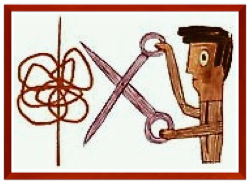
cutting strings

I GUESS THIS IS GOODBYE : (How could this happen to me!?)


PREVIOUS: Leaving
 (#1)

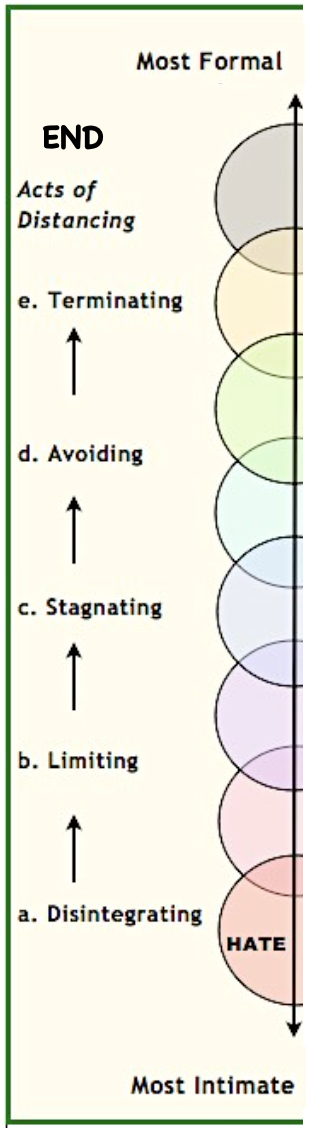
ACTS OF DISTANCING ▼  (cont)
5. DIFFERENTIATING
4. LIMITING

3. STAGNATING
Normal: They’re still together, but with a feeling of being stuck & not knowing how to make it better or how to get out. There’s not enough meaning or nourishment to keep it alive, but being in a long-term or committed relationship makes it harder to consider leaving.

They feel disconnected & depressed/ but stay together to avoid the pain of separation
Some form of talk is needed, but if either hints at starting an unpleasant conversation, they’ll find a way to prevent it so they don’t have to invest any feelings

stagnating• They have little to say to each other, are bored with the same old stories, don’t want any confrontation, & won’t talk about the relationship because it feels pointless

“Do you want to watch that program?” <> “No, but you go ahead” , “I don’t want to hear that again” <> “I know, you’re not interested in what I have to say!”

• One or both may be experiencing personal problems & possibly blame the other, rather than facing their own issues. But when people are no longer getting their needs met from their partner, they shut down the lines of communication & turn elsewhere

• People can start punishing each other for their own disappointment & loneliness: Well, she/he hasn’t helped me in a long time, so I’m not doing this for her/him”
– may be the kind of thinking behind further withdrawal.
💔

2.  AVOIDING

Normal: Now these 2 people who have been in a committed relationship, no longer see themselves in the dyad. They’ve withdrawn their emotions & are ‘spending‘ them elsewhere. Deep emotional distance is an indicator that the union is no longer salvageable. Each person knows in their mind  & heart they’ve detached, & need to protect themself

• They reorganize their lives to avoid being together & may even verbalize it: “I don’t want to talk to ____”.
It can also show up by sleeping in separate beds or rooms, & one or both looking for a new place to live

• People not living together will avoid calls, emails & texts.
“Leave me a message & I’ll get back to you” , “I’m really busy, so I’m sure you’ll understand if we don’t get together this week”

Usually there’s less fighting, but what’s left may be sniping, sarcasm, put-downs. Otherwise, communication is only about practical necessities, if at all
💔

1. TERMINATING (Final)
Normal: This stage can be done rather quickly or be dragged out for years.
• It’s the actual physical leaving of the relationship, with a little or a lot of psychological finality. If both parties can accept this, it makes it much easier to move on.

I can’t do this any more. This is the end for me.” <> “Yeah, sure, whatever separationyou say.”

• When one partner has come to their ending point, it’s important & respectful (be ‘clean‘) to actually tell the other person.  This is more likely with a longer-term connection.  Often with less developed ties, one person just stops taking calls, emails…..

• Verbal messages are used to prepare for the end by only using ‘I’ or ‘me’ statements, & meant to create finality & permanent distance “This relationship isn’t working for me anymore” , “Please don’t call me again” .

• It’s not uncommon for one or both people to have another relationship, job, even a new city… waiting in the wings, even if the new ‘love’ is temporary, to get them thru the transition.
✶ Leaving may actually be a benefit to both, even if it hurts. They may need the relationship to end so they can continue their career, their personal growth or to start a more suitable lifestyle.
♥               ♥                ♥

NEXT: “Trying to Leave you” (Part 2) – Clingers

RECOVERY – What IT IS & IS NOT (Part 2)

Screen Shot 2015-07-10 at 9.30.12 AMLEARNING HOW TO BUILD A LIFE
on the experience of those who know

PREVIOUS: RECOVERY – IS & is NOT (#1)

SITE: “25 Things you do as an Adult when you’ve experienced Childhood Emotional Abuse
(like the Laundry List)


RECOVERY
IS NOT….
❖…eliminating ALL pain from our life
IS...
❧…a combination of gains & losses, fulfillment & disappointment, joy & pain – part of being human, not superhuman.  Only addicts – of any kind – want ‘no pain’ & think that’s an appropriate goal
🦋

IS NOT…❖…trying to get from our family all the things we never got as kids, nor assume we can have a ‘great’ relationship with them – if only we were well enough

IS…❧…accepting there’s no ‘if only’ about our family & our childhood (SORRY!)
no more blame• It was their damage that prevented them from being all we needed.  It was never because of who we are/ were! Yes, it was done to us, at us, with us – but it was never ABOUT us  ie. our essence
and, unless family members have been growing too, or changing enough, we may take more radical steps

We can choose how to deal with them – by :
a. having rare or no contact, to protect ourself from abuse & mind games
b. no contact for a long time, until we are more healed, so our buttons (which they installed) get much smaller :)! Then re-connect & see….

c.
limited contact, to see who they really are, for clarification & validation of how they treated us – which will diminish our self-hate, & allow us to gain some emotional distance from the family drama
d. regular contact, spaced out AND only as friendly Adults.  Don’t expect them to be parental if they can’t. Interact superficially or only in ways that suites everyone. Don’t push for the impossible!

➼ Other people often disappoint, which can make us sad & angry. That’s normal. It just doesn’t have to devastate. NOW it’s truly up to us to become Kind Parent & Wise Adult for ourself, with the help of therapy, H.P., Program & other support systems.
🦋
IS NOT...❖…saying we have forgiven our family, as if it were an intellectual decision, made once & forever, hoping that will wipe out all of the damage they inflicted, & all of our pain

IS…❧…knowing that forgiveness is a gift from H.P. – a ‘letting go’ – as a result of our willingness to do Recovery work to clean out old emotional wounds.
Forgiveness is the end product of that work, rather than a prerequisite for growth, as many tell us. Forgiveness isn’t genuine without healing our rage & sorrow. (9 posts = 4 types)

PROOF : when we try to ‘will’ forgiveness & think it’s all behind us – eventually some life-event will stir up that unresolved pain & bite us in the butt. Besides, some abuses are un-forgivable! But we still have to let go of being a victim of our own rage by feeling the sadness that’s underneath (“Forgiveness Is an Inside Job“)
🦋

IS NOT…❖…getting over our rage, so we don’t have to feel it any more OR not having any more terror, worry, sadness… if/when we get ‘really healthy’Screen Shot 2015-07-10 at 9.38.11 AM

IS... ❧…knowing & accepting that we’ll always have some vestiges of the old pain, fear, rage, shame & abandonment hurt, BUT that those Es doesn’t have to control us
…. being willing to separate internally, from the bad voice & externally, from harmful people. It’s absolutely necessary to get away from damaging situations & negative thoughts. After all, if you kept scraping away at a sore on your skin, it wouldn’t heal, would it?

• At first this ‘letting go’ can bring up fear & depression, but with time, it will allow us to heal old wounds, making us less fearful & angry.
We can find & use new ways to deal with those painful Es – by: learning to accept & comfort ourself & letting them out in safe places & ways. Then we’ll experience pleasant & joyful emotions as well.

NEXT: RECOVERY – IS & is NOT (#3) 

ACoA : TOXIC Family RULES

Screen Shot 2015-07-09 at 12.10.53 PMTHEY DESIGNED MY STRAIGHT JACKET –
I’m gonna need some help getting it off!

PREVIOUS: Healthy Helping (Part 2)

SITE: Dysfunctional Family (Wikipedia)


RULES: No matter what our family environment looked like, all ACoAs have gathered a litany of TOXIC RULES, which we follow ‘religiously’, even well into Recovery – but hopefully less so with growth!

We absorbed these Toxic Rules from family, school, our community, religion…. They are the underlying beliefs the WIC is absolutely convinced are the absolute ‘truth’ which we are obligated to obey – on pain of death (abandonment)- even if we disagree or hate them. Notice the contradiction & conflict. No wonder we say we’re confused!

The BE and DON’T lists are the short forms, & just mirror opposites. Below are the expanded ones.  This is by no means complete. Each of us can have variations or additions.

INVENTORY: How do we know what our rules are?
a. Overview
As you read thru these lists – notice the ones that hit you the strongest. If you’re new-ish to recovery you may not recognize that you have more of them than you first think. Still confused?
✶ Ask yourself, & then siblings, mate, friends, therapist … for suggestions

✶ Do a Life Inventory, in 3-5 yr increments, listing all the major events you can remember – things that were important, relationships, when you started & stopped things, schools, moves, births, deaths …. choices made, opportunities we didn’t take…..
12065669231219144528Anonymous_work_in_progress.svg.med— Don’t go into detail. Just list things in one sentence each
— Notice the recurring themes, patterns, avoidances… What good things are missing?
— Ask : which toxic rules might your patterns represent?

b. Details
• Pick any one of the phrases that rings a bell & write what comes up.
— Where did you learn this? Who in your family exemplified it?
— How do you act it out in your life?
— How do your friends, lovers, bosses… express it?

• Take it very slow. Spread this exercise out over months & years, if needed. Maybe just write a little & go back to it when you have more info about yourself & your history
GOAL:

• See the toxic family rules you’ve been following – so clearly – that you won’t be fooled any longer into thinking they’re legitimate!
• Slowly disobey them by changing your behavior, an action at a time, a day at a time.

In the beginning – when you do some inventorying – you’re likely to feel fear & guilt. Those emotions prove you’re doing the right thing for your healing. Don’t give up!
• To orient yourself toward healthier goals –  pick out some Healthy Rules that fit your situation, & mindfully, deliberately, use one or more as often as you can (every day, a little?)

✶✶ Breaking family rules can create a lot of anxiety, as the Negative Introject will try to guilt you into returning to the fold – like good sheep.
So the work must be a slow & gentle but with steady process – with lots of support (Al-Anon as one of many resources)

If you read many other posts on this blog, you’ll see references to “Toxic Rules” over & over, so this post will give you a context for thinking about all the other topics & as you work with them. (Post: “Why Are You Stuck?“) .

«
NEXT : Healthy
Rules, #1