
 PREVIOUS:
Manipulating ourselves (#2d)
SITE: Motivation & Manipulation (<—- Graph )
BOOK : “In Sheep’s Clothing”
~ Dr. Geo. Simon, PhD
Ways to deny personal accountability & manipulate others (Extensive outline of book)
ACoAs MANIPULATING (M.) OTHERS
Most of us learned to manipulate (based on CDs) by watching/ living with manipulative parents & other family members, but some people come by the skill naturally. All of us had to use it, one way or another, to cope with the painful, complicated environment we grew up in.
M. is a form of ‘acting out’ (Freudian def). Translation for ACoAs: Compulsively taking actions or ‘forgetting’ to act, as a substitute for expressing painful emotions we have but don’t consciously feel
REASONS for manipulating others:
 By now, having lived in the world for some decades, we’ve had the opportunity to watch how others function, & envy their ability to get their needs met, while we feel stuck in the mud of our damage.
But we’ve also had many life experiences of our own – some even positive – so we DO know something about how to manage, but rarely if ever apply that info to ourself – while using our extensive care-taking skills for others
This causes intense deprivation in PMES ways, since we are:
• Not allowed to have needs & not allowed to ask for anything
• Deeply convinced no one will ever provide for us if we ask directly, will be angry & punish us, & worst of all being Abandonment – withdrawing their connection to us
• Don’t have a right to give to ourself (we think it’s arrogance)
• Believe we don’t know how to – not having seen it from role models & not taught directly
 This leaves us confused, ‘starving’, desperate – so we resort to the default position of manipulating – to reach goals. WE :
• cover up Self-Hate, Shame, Loneliness
• get needs met from others instead of from self
• prevent others from having power over us
• make connections the only way we know how (people-pleasing….) to keep from getting abandoned – ever again (FoA)
• show our contempt for everyone, especially authority
FORMs of Manipulation
1. Direct / Overt (“Throwing others on the defensive”)
Bullies come in many guises, sometimes like a spiked hammer, sometimes like a Southern rose, sometimes covered in sheep’s clothing.
Each type has gathered an extensive repertoire of techniques used to gain power & to deny any accountability for their actions.
The Workplace Bullying Institute defines it as “repeated, health-harming mistreatment of one or more persons (the targets) by one or more perpetrators”
 The overt style uses deliberate, intense confrontation – to challenge people’s personal legitimacy, validity of their ‘performance’, or eradicate the value of their point, issue or complaint.
The goal is to put others on the defensive, & nothing works better than intimidation. Tactics can be fired off so fast that they’re hard to identify or separate, & the slickest perpetrators use several at once
Most ACoAs hide their aggressive side, sometimes from themself, but definitely towards others, behind the many faces of co-dependence. (MORE in 3b)
Sometimes it only comes out toward strangers, but more often toward their intimates – mates, children & closest friends.
 But even so – the bully/sadist is hidden there, created in response to the humiliation we suffered for so long. The greater the original abuse, the more intense is our sadist/bully.
In Recovery we can make friends with this aspect of ourself by acknowledging that “It really was that bad!”. We can safely vent our rage, & never letting the bully/sadist act out on others or ourself using the healthy UNIT ego-states.
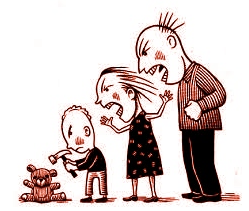
EXP: Drama is a sign of manipulation, used to bury the real issues (personal or relational) in a giant pile of noise. Includes:
• constantly bragging & showing off, to make others feel small
• escalating arguments, not ‘letting go’ ….
• knowing how to get their way & insisting on it
• not good at sharing – anything
• pushing their point of view rather than asking questions
• pushing their way ahead of others, like in line
• taking over every conversation, taking up too much space
• talking over someone, ignoring all types of boundaries
• yelling & screaming, threatening or doing physical harm
• writing / texting attack messages, all verbal abuse
Add your own
NEXT: Manipulating (Part 3b)




 HEAL & GROW for ACoAs