ACoAs – OVER-Trusting (Part 2)


PREVIOUS : Over-Trust #1

QUOTES:
“Love all, trust a few, do wrong to none.” ~William Shakespeare
“You may be deceived if you trust too much…. ” ~Frank Crane


AS ADULTS : OVER-Trusting (OT) (cont)
We are TOO EASY when we:
🥀 MENTALLY
• believe someone who tells us that we are crazy, wrong, stupid…. Sadly, we ‘trust’ they know more about us that we do
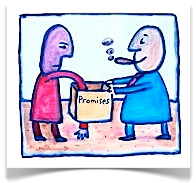
• believe each new promise made by someone who has repeatedly disappointed us – trusting they’ll come thru — this time

• let someone cajole or badger us into telling too much about ourself – too soon… we trust they won’t use it against us or for their own gain!
• are willing to believe anything an authority tells us, without question or checking with our gut — we trust they have our best interest at heart & that they know ‘everything’high road halo

🥀 EMOTIONALLY
• are so happy that someone who used to ignore or dislike us suddenly is friendly, now that we have some money, fame, a good-looking partner, a big job….. we trust that their motives are pure & it’s us they really like!

• go to someone we DO know is immature & unhealthy – to share our emotional upsets – we trust they’ll be supportive & nurturing — this time
• wait for others to give us ‘permission’ to say or do something — we trust they have the right to do so, & know better that us ….

🥀 BEHAVIORALLY
• “lend” money to someone who has proven to be irresponsible or outright dishonest — we trust that this time they really will pay it back
• keep ‘taking the high road’ with someone who’s mean, selfish & disrespectful – we trust that our goodness will somehow soften them!

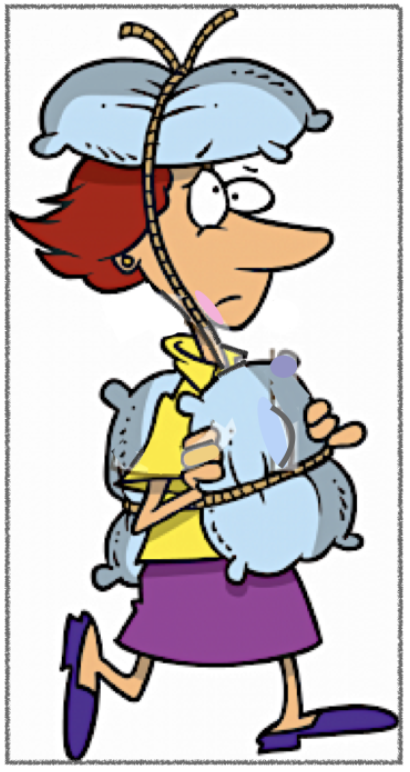
barbed-wireThis is a particularly dangerous illusion (not to mention arrogant & childish)  because:
🐾 persistently abusive people are hardened in their narcissistic shell, which makes it unlikely they’ll ever improve how they treat us
⚡️ the longer we stay around them the more their barbed-wire protection will tear away at our soul

ACoAs unconsciously assume that if we ignore the characteristics in others we don’t like or that hurt us, it won’t have any effect. Some of us – even in Recovery – say they wish they could stay unaware of how toxic their family & friends are, because then it wouldn’t hurt. WRONG.
That’s like saying that eating rotten food would NOT be harmful to our body – just because we’re so hungry that any food is better than none.

Some part of us knows this is ridiculous, but the WIC doesn’t want to face more unpleasantness. All the while we become further debilitated by sticking around for more poison that certain people automatically dish out. It does not matter if it’s deliberate or not. Barbed wire is barbed wire! Protect yourself.

WHY DO WE OVER-TRUST? (over & under types overlap)
a. FoA (fear of abandonment)
We want to be & stay connected – at all costs. If we admit what we know  -this person isn’t trustworthy- we’d have to back way off or detach altogether, which the WIC is terrified of

Instead, we overlook:
• being blatantly & repeatedly mistreated
• early or indirect hints someone tells us about themself = about being an addict, angry, cheap, insensitive, lazy, suicidal, untrustworthy  ….. NOTE : It’s amazing how often people tell us about their character defects ! Pay attention!

• available info about unsafe people given to us by many other sources (friends, co-workers, even family) ….
EXP: Consider how each new woman who got involved with Charlie Sheen ignored all the public exposure available about his abuse toward her predecessors, & then eventually also gets battered!
s-H/can'tb. Self-hate
Without recovery this is the ever-present ‘monster’ driving our obsession to have everyone like us / never think badly of us / never be angry with us, so :
• we assume everyone but us is OK, healthy, sane, reasonable – even those who continually mistreat us

• since we don’t trust our thinking, we defer to others, believe what they tell us, assume they must know what they’re talking about – just like we had to believe our parents, no matter how limited, twisted or inaccurate their communications were.

NEXT: Over-trusting #3

ACoAs – OVER-Trusting (Part 1)

being conned THE WORLD IS ONLY SAFE –  if I pretend to not notice the bad stuff!

PREVIOUS: Lack of Trust #2

SITE: 10 Warning Signs of being too trusting

QUOTE: “Never trust anyone completely but God.” ~ Lawrence Welk

OVER-Trusting  (OT) – as ADULTS
DEF: Ignoring information you already know about a person or situation (or a potential one you’ve been told about) that screams:  “I’m NOT safe. I’ll get you as often as I can. Don’t trust me” AND that everyone else – except you – can see!

📌 A therapist suggested to a client why she needed to be more discerning & less trusting:  “Some people you don’t let in the bedroom, some people you don’t let into the living room, & some you don’t let in the front door!”

🔷 WRONG reasons for trusting:
• Impulsiveness : chasing something or someone the WIC very badly wants, putting all our inappropriate hope & trust in how it will turn out (the way we ne-e-ed it to), without admitting what we already know. Not considering the consequences, such as thinking through possible danger to ourself or others

• Masochism : We tend to search out confirmation of prior expectations. ACoAs expect abuse & abandonment.
For abuse survivors with little or no Recovery – reinforcing the pain of unrealistic hope & unfulfilled trust (PMES abandonment) is often chosen over safety, comfort & pleasure.
We repeatedly trust the wrong people, guaranteeing disappointment, by fulfilling our self-destructing assumption – that there are no positive outcomes for us. (review the  TOXIC RULES)

• Risk-taking : Being desperate, or as an adrenaline junkie, we pursuimpulsivee a situation or person even knowing that the danger of going ahead is great (re. love, money sports….).
If we subjectively think the possible gains far outweigh any possible loss (illusion coming from the WIC), we’re willing to take the gamble, sometimes even with our life.

All of us ACoAs experienced years of trauma in childhood – at home, at school & in our neighborhoods.  We were deeply scarred by those experiences, but each of us handled it in our own way, depending on our basic personality AND our Toxic Family ROLES.abuse / fantasy
Those wounds were beyond anything we could bear, so we developed our own defensive posture:
• some have become overtly tough, angry, bitter
• others hide away from everyone
• some try to rescue & fix others to feel safe
• others escaped into a world of fantasy & have stayed lost, needing to see everyone thru rose-colored glasses!

THIS last defense mechanism is a thick blanket of vagueness to soothe the ache in our heart, BUT it makes us endlessly vulnerable to emotional, mental & physical vultures who can smell our ‘out-to-lunchness’ a mile away!

ACoA IRONY : Regardless of which protective style we act out, we’re trapped in another dilemma. Trying to mask how afraid we really are of everyone underneath, some of us carelessly trust everyone, especially the most damaging people! It’s so automatic we don’t even realize we’re being too credulous = because we need it so we can stay passive, with denial as our worthless safety blanket.

EXP: Josie hears a new acquaintance admits that she has trouble with friendships – they usually end in serious disagreements & separation.
Josie is starving for companionship & overlooks this vital information. Unconsciously her WIC thinks: “She wouldn’t do that to little ole’ meeee – I’d never hurt her or make her feel bad, I care too much, I’m so sweet….. so we’ll always get along” 😇

Yet, sure enough, at some point Josie says or does the ‘wrong thing’ & the friend gets mad at her – attacking, accusing, withdrawing ….. Josie is shocked, then hurt, confused & of course blames herself for the problem (as if this outcome wasn’t totally predictable!)

We excuse our psychological & emotional blindness by thinking or saying:blind-see
• I’m just trying to be a good person, I’ll give them another chance
• it’s wrong to judge others, & besides – they’re trying
• ‘they’ don’t mean to hurt me / can’t help how they are
• you don’t know their ‘good’ side, their good qualities
• …but they say they love me, give me money, ne-e-ed me
• I can’t make it without them
• & it’s my fault anyway, I deserve how they treat me  …

NEXT: Over-Trusting (Part 2)

ACoAs: Lack of TRUST (Part 2)

unsafe parentSEE, I TOLD YOU –
nobody’s safe!

PREVIOUS: Lack of Trust (Part 1)

See ACRONYM page for abbrev.


🕛 LIFE STAGES
🕕 DEF. of Legitimate Trust

 🕕 CAUSES of ACoA DISTRUST
PHYSICAL
• growing up in a neglectful, unpredictable &/or volatile family
• constantly subjected to undeserved bullying & victimization, by individuals & institutions
• death or loss of one or more loved-ones

EMOTIONAL
• emotional, physical &/or sexual abuse at the hands of our caretakers
• being chronically put down for the way we felt or for what we believed
• hostile relationship between parents, with siblings, with step-parents & other relatives

RELATIONAL
• parental infidelity, bitter divorce or loss of another long-term relationship
• our own painful relationships – being belittled, misunderstood, abused or ignored
• being cheated on / betrayed – sexually, emotionally, financially
• our confidential information betrayed by a trusted friend, relative, spouse or professional …..

SOME RESULTS
• we get so caught up in unresolved grief that we can’t open ourself up to others, terrified we’ll be left alone again, as if we’re still living in that household & still 5 years old!

• because of S-H, we can’t believe that we deserve attention, or anyone’s care & concern for us, so have a problem trusting even the positive, healthy & consistent behavior of someone who is sincere

🕕 ACoA thoughts / beliefs about NOT Trusting
Re. OTHERS
• there’s no such thing as a healthy relationship
OR – I wouldn’t know a healthy relationship if it fell on me!
• marriage is a prison sentence – I’ll be trapped & used – or left
• I can’t seem to find any good friends or good partners – so why bother looking?

• as soon as you let yourself care about someone – they leave you!
• I’m never letting anyone ever get close enough to me again so I won’t be vulnerable anymore
• people don’t really improve or change, & any ‘reforming’ is temporary or just fake (like an alcoholic getting sober)
• no matter what they say, it’s all manipulation to get their way. If I let myself believe & relax my defenses, I’ll be devastated when they go back to their old ways

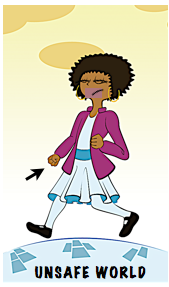
Re. OURSELVESunsafe world
The only way to survive & protect myself is to avoiding people as much as possible, because:
• I’ve been hurt so much & by so many in the past
• all men / all women are dishonest
• everyone’s out to get the most they can (from me)
• no one respects me
• if I let my guard down someone will step on me OR all hell will break loose
• if I open myself up people will use that info against me…. so how can I trust anyone?

 ♦️OUR LACK OF TRUST can CAUSE:
• Arguments with others, because of intruding on their privacy about what we think are their ‘suspicious’ activities, their lack of openness – often leading to retaliation from them
• Anxiety in us, especially when we don’t know where a loved-one is & we’re convinced they’re not being honest

• Deception – a partner or adult-child. being controlled & boundary invaded by us.  They may really be sneaking around doing the bad things we believe they’re up to,  OR they’re just wanting some privacy & peace of mind away from the family (us)
• Fear of reprisals from them for our constant accusations (our fear of abandonment), & judging them for not being what we want them to be (but trying not to punish them)

• Fear of risk, because we never got the mirroring, support & feedback to make scary changes, AND which we can’t receive in the present if we don’t trust anyone
• Low self-esteem in others, which we ‘encourage’ by constantly investigating them, questioning, following (suspicion is the opposite of acceptance)
• Miscommunication, or lack of communication, because we’re afraid to let others know what we really need, want or feel

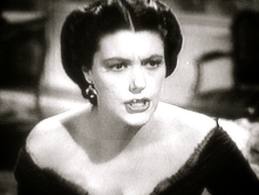
barbara-oneilMOVIE: “All This & Heaven Too”, 1940, staring Bette Davis. An excellent portrayal of a disturbed personality – the Count’s wife, played by Barbara O’Neil – who is a needy, narcissistic, desperately clingy & demanding shrew.

She has a deep fear of abandonment, is constantly suspicious of her husband, & rejects her children because they interfere with having her husband all to herself. This drives the children away from her & the Count into the arms the loving nanny – the very thing that makes her even more distrustful & enraged – leading to tragedy.

NEXT: ACoAs – OVER-Trusting (#1)

ACoAs: Lack of TRUST (Part 1)

con man
WHO CAN I DEPEND ON?
for sure NOT my family!

PREVIOUS:
 Early Trust Betrayal, #2

REVIEW post: ‘Parents Blaming us’


LIFE STAGES:  Erik Erikson, a German psychoanalyst heavily influenced by Freud, developed a psycho-social theory of personality development, which included the impact of external factors (parents + society) ON our:
• ego identity (the self)
• personal identity (what distinguishes one person from another)
• social/cultural identity (social roles we might play)

Erikson’s theory says every person must pass through a series of inter-related stages over the entire life cycle —>   AGES:
1. Infant   (Hope) – Basic Trust vs. Mistrust 
Birth to 18 mths
2. Toddler  (Will)    – Autonomy vs. Shame
18 mths to 3 yrs (MORE….)

IN Infancy (Stage 1) the main emphasis is on parental ability to nurture & care for the child, especially using visual contact & touch, so that :
• in a safe environment the child will develop confidence, optimism, security & trust
• in an unsafe home, they’ll develop insecurity, worthlessness & general mistrust of the world

In an episode of LIE TO ME, (TV series, Fall 2010), Dr. Lightman says:
“The way to make a disturbed personality is : Constant Criticism & Lack of Affection – it works every time” !

DEF. of Legitimate Trust
In OURSELF
• be able to rely on our own observations, judgement & intuition
• when exposing vulnerabilities to someone, assume they won’t take advantage of or abuse our openness, but know we can’t control their reactions
• have confidence placed in us by someone else, & accepting the obligation that entails
In OTHERS
• identify how someone is going to act (predictably good or bad) & gauge our probable losses & gains in dealing with them. 🫆It’s based on what we already know about them, using their past performance as a guide
• have a firm belief in the integrity, ability or character of a person or thing, from our own experience, or based on accepting the opinion of a highly reliable source
• Hope : to be able to rely on something or someone in the future / to expect a specific outcome with assurance

NOTE
• The Healthy Adult ego state knows no one can be perfectly dependable, & that the wish for it isn’t possible – so we wouldn’t expect it.
Secretly demanding others to be absolutely 100% ‘safe’ (before we can trust) is UNrealistic,  which makes us vulnerable to always getting disappointed, leaving us in the same old place – convinced that ‘no one’ is trustworthy

• There are legitimate reasons to not trust certain kinds of people – especially the not-so-obvious narcissists! – which we definitely need to acknowledge, & then stay away from.
Past experiences with them should not be ignored, especially as we become sure of our ‘evidence’.

EXERCISE : Keep a log for a month (or as long as needed) of each time you feel unsafe with someone, & see what patterns show up. Then take a small, definite action to change the situation or your part in the relationship

unsafeMISUNDERSTOOD
ACoAs often say : ‘I can’t trust anyone’ –  the focus being on people outside ourself. This is B & W thinking & not totally accurate. Although it[s true that our parents were not safe, most of us do have/ or have had a few people throughout our life who have proven themselves trustworthy (even if not perfectly!).
❇️ Instead – trusting needs to be focused internally – on our own intelligence.

MAIN reasons we say this ⬆️ – is that unhealed ACoAs :
a. haven’t learned to trust our own observations, experience, & intuition!
b. keep picking & staying with toxic people, & keep getting burned. Strange that we’re surprised each time!
c. want / expect / demand the assurance that whatever or whoever we put our trust in will never ever let us down, disappoint, abandon or hurt us!

This demand is:
demanging• B & W ‘all or nothing’ thinking (a CD) – typical of children & the emotional immature
• the position of the WIC, who wants everyone to be the good parent we never had, so we don’t have to grow up & take care of ourself
• an expression of co-dependence – being focused on others outside of ourself, instead of internally listening to what we know to be true.

NEXT: ACoA Lack of Trust (Part 2)

ACoAs: Early Trust Betrayal (Part 2)


PREVIOUS: Early Trust Betrayal (Part 1)

SITE: 5 Quick Lessons About Betrayal & Trust

See ACRONYM page for abbrev.


🙇🏻‍♂️ BETRAYAL
ways (cont)
a. Programing (Part 1)
b. Our caretakers were disappointing, undependable, untrustworthy, even sadistic – understandably leaving us feeling unsafe, terrified & frustrated beyond words!
We were subjected to:
• all forms of neglect, lies, sexual abuse, physical / mental / emotions torture, mind-f–ing, constant unavailability, never being told what to expect in new & scary situations, taking us to places not suitable to young emotions or the capacity to process….

AND, never underestimate the effect of inconsistency on a child, whether from broken promises, constant moving, conflicting messages, drunkenness, rotating caretakers, parents’ new mates,  or just plain carelessness

EXP: A 5 yr old boy is standing at the edge of the pool, hesitating to make the leap. The father, already in the pool says: ”Jump in & I’ll catch you”. The little boy, needing the reassurance, jumps towards his dad – who smirks & steps back, not catching his son! UGH!!

EXP: Equally devastating is the controlling, insensitive mother. One evening after being put to bed a young daughter hears the laughter of company downstairs & wanders into the living room to see what the fun is about.

waiting for unishmentThe mother in a rage at being embarrassed by her child’s desire for attention (in he PJs) drags her off to bed, promising to punish her – later. But in the busyness of being a hostess, she forgets her threat.

While the adults go on partying the terrified child curls up in a ball for agonizing hours in anticipations of a beating – which never comes.
That may seem like a good thing – but her little nervous system is being overloaded by prolonged terror, with no outlet & no one to comfort. The threat of is torture enough, while the mother is unaware of the long-term harm she’s done. ⚡️ That & other such events become anticipatory anxiety.

c. Higher Power also became untrustworthy. John Bradshaw’s stated:
“Until the age of 7 we deify our parents (as gods). After age 7 we Parentalize our deity”.

So if all children model their idea of God on their parents – & our parents were unloving & unsafe, then we concluded, at a profound level, that God (as we understand Him) is also unloving & unsafe!

EXP : ACoAs whose father was an abusive drunk &/or rage-aholic have trouble with a ‘male’ God, & feel more of an affinity with the idea of God as female. In reality, God is Spirit, & can be connected with in Spirit.
In ACoA meetings we say “God is not an alcoholic parent”.

• Other ACoAs may have been raised in a conservative religion, with no room for questioning, so we blame God for all our suffering (instead of our parents) & turn away from faith completely, or find a metaphysical path in another form. Eventually we have to face the actual source of our pain.

EXP: Some children pray fervently for years for their suffering to end, but as long as they’re trapped with damaging parents – it never does. This leaves them with the conviction that God is not listening, or that God is punishing them because they’re soooo evil. Since kids can’t really face that their parents are responsible for their suffering, they usually conclude God had abandoned them & therefore is not to be trusted!

HEALTH :  Denying our need for a faith-based life of any kind is a tragedy, because people are made up of Mental, Physical, Emotional & Spiritual aspects (PMES). We need a spiritual connection to be complete.

• Also, recovering from deep childhood wounds is such a difficult undertaking that we need help from “a power greater than ourselves” to heal at all levels of our being.  Anyone who has a regular spiritual practice can attest to the fact that it soothes the emotions, help us think more clearly & makes us better able to cope with life’s stresses.

NEXT: Trust –

ACoAs: Early Trust Betrayal (Part 1)

  1. angry father WHO CAN I DEPEND ON?
    for sure NOT my family!

PREVIOUS: Adult Play #2

QUOTE: “To be betrayed, the person must first experience trust in the betrayer….. Betrayal is probably the most devastating loss a person can experience.”


😥 BETRAYAL TRAUMA 😲
This is when the people or institutions you depend on for survival significantly violate your trust or well-being
EXP: physical, emotional, or sexual abuse perpetrated by a caregiver
Q: Does the victim need to be conscious of the betrayal to call it “betrayal trauma”?
ANS: “No.” Being mistreated is by definition betrayal, whether the child recognizes it explicitly or not.
While conscious awareness of it may be suppressed at the time of trauma & for as long as the victim is dependent on the perpetrator, strong feelings of betrayal will eventually surface.

✍️ THEORY
Traumatic events differ in degree of fear & betrayal, depending on context & characteristics of an event.
EXP : People with a history of childhood sexual abuse – which result in PTSD & dissociative symptoms – much more often reported feeling betrayed rather than feeling great fear.  Many other studies have found that betrayal is a psychologically toxic component of events.

😴  BETRAYAL BLINDNESS 😵
Betrayal blindness is the un-awareness, not-knowing, dissociating or forgetting about —> years of painful experiences. It may extend to betrayals not traditionally considered ‘traumas’ such as gossip, inequities in the workplace & society….
• Victims, perpetrators & witnesses can each have betrayal blindness to preserve relationships, institutions or social systems they depend on.

In Childhood
• Children automatically trust their parents (caregivers) – they don’t have a choice. But that trust can be destroyed early & easily if their family & community is unreliable, non-nurturing & dangerous. The earlier the trust-betrayal, the more long-term damage is done, since small children can’t understand & process such disappointment

• Kids don’t want the instability & cruelty of their home to be true, so they can’t afford to consciously admit their suffering is being caused by the unloving adults they depend on. If they did it, it would make life even more unbearable, so they do whatever they can to deny painful experiences (blame themself, fit into toxic roles, people-please, rescue…..)

• Years of emotional pain from abuse & neglect lead children to make definite & lasting negative decisions about themself & the whole world, based on very real events. These twisted conclusions & assumptions form self-hate, cynicism, bitterness & hopelessness.

That old accumulated pain is then mirrored & added to by rigid unhealthy ‘laws’ of other dysfunctional groups such as school, church, neighborhood. The combination becomes the basis for all future choices & interactions.  Toxic beliefs get ‘written in stone’ , very hard to change in any case but impossible to correct as long as they stay out of conscious awareness.

♻️ Besides internal reasons for ‘not-knowing’, there may be external reasons for suppression. Common demands for silence come from a specific perpetrator & others (family & society’s flying monkeys), to the point of never having the ‘event’ mentioned – much less acknowledged. More….)

“Experiences that have never been shared with anyone else may create a 
different internal structure than shared experiences”
BTW: Al-anon saying “You’re only as sick as you secrets”

🙇🏻‍♂️ BETRAYAL ways
disappointeda. Programing : We were brain-washed into not trusting our own observations, opinions, emotions & conclusions.
We were:
• told “you don’t feel that way /  that’s not how it is / I don’t know why you think that / Oh, nothing (is going on)” …..
OR
• not given important information about what was really happening in the family, leaving us with an uncomfortable feeling of insecurity, wondering what’s wrong, making up scenarios & blaming ourself, thinking we’re crazy !
AND
• expected to go along with the program, no matter —— how harmful to our mental & emotional health, that it didn’t fit our native personality, how little it allowed us to explore options & possibilities in the world, or find out what our true purpose is

EXP: “The Judds” was a reality show on the OWN tv channel (2011).
Mother Naomi slowly spilled all the ugly family secrets she’s been protecting for the past 60 yrs – murder, incest, suicide, neglect…. Daughter Wynona finally has an understanding of the problems between the two, & came to have compassion for & a new trust in her mother.
Sadly,  in 2022 the severely depressed Naomi shot herself ! — just before being inducted into the Country Hall of Fame. 😭

NEXT : Trust Betrayal, Part 2

ADULT Play – Benefits (Part 2)

family benefitsPREVIOUS: Adult Play (Part 1)

SITE: “The Power of Play” (long article)

QUOTE: “We do not stop playing because we grow old, we grow old because we stop playing”  – George Bernard Shaw


BENEFITS  of PLAY  (cont)
1. MENTAL //  2. PHYSICAL (Part 1)

3. EMOTIONAL / PSYCHOLOGICAL /SOCIAL Benefits
a. Reduces Struggle, Conflict & Worry – Because play includes using ones imagination & ability to fantasize, it acts as an antidote to violent tendencies, & so is a powerful catalyst for positive socialization.
Play provides us with an opportunity to choose alternatives to struggle, conflict & worry – that are healthier, more positive, promoting a sense of belonging & connection to other people.

• Alice Miller pointed out that people neglected & abused in childhood were often deprived of developing an inner fantasy life – missing the ability to process rage & frustration in their internal world. They become lost in fear, anger & obsessive worry, making them more likely to become violent toward others, even to the point of murder

b. Mutual play heals emotional wounds  Screen Shot 2015-09-16 at 11.44.59 PM
Vigorous play triggers endorphins that lift spirits & provide distractions from pain, fear, stress…
When done with others, whether friends or strangers, it helps us connect in delightful & meaningful ways that minimize loneliness

• Regular play can also heal hurt feelings, anger & disagreements. Studies show that emotionally insecure people slowly replace negative beliefs & actions with positive ones by living with a secure partner.
Emotionally safe relationships heal, & create emotional resilience

c. Provides ‘role relief’ – This is not about the ACoA Toxic Roles but rather the normal set of roles adults take on, such as worker, boss, spouse, parent, sibling, adult-child….
Play allows us to guard against ‘role fatigue’ (burnout).  Taking the time to balance between roles helps to foster self-expression by using different parts of our personality, & makes room to practice new kinds of activities. Getting stuck in one role, such as ‘mom’ or ‘worker’ can reduce spontaneity & aliveness

d. Gives Opportunities to Take Risks  Successful, happy people know the difference between safe & unsafe risk, and take healthy risks in small doses. We can choose to risk something important to achieve a beneficial goal.

We also need to manage incoming risk as an essential part of a full, healthy life. PLAY lets us experiment, explore & take risks with ideas & activities without worrying about consequences that could happen in “real life,” & teaches us that our fear-based ideas are not always true.

e. Brings joy into our life – A basic reasons for playing is simply the sheer joy of it, a happy state of being. So playing as often as possible can preserve & nourish our own hearts & that of our community. It creates laughter, & a feeling of inner peace, encouraging emotional resiliency.

4. SPIRITUAL  
❖ Sense of Lightness – Keep in mind we’re made up of Physical, Mental, Emotional & Spiritual (PMES) components.play is spiritual
The spiritual benefits of play are not easy to verbalize, since people have different meanings for this aspect of their life.  But it’s a very important part of our personal well-being, & the right to develop a healthy Self.

In childhood we start to give meaning to our life through story-making & playing out various possible scenarios. As adults – the ability to play & be active in things that suit our True Self – strongly promote a sound lifestyle

• Being absorbed in fun activities & caught up in the moment —> eliminates self-consciousness. Infused with pleasure, we delight in the sheer “lightness of being”, stimulating creativity.
Spiritual benefits can mean
we : love being alive, have a positive attitude, be the best we can, have a deeper understanding of the world & its possibilities
Spiritual benefits include: refreshing & recharging, restoring optimism, changing perspective, renewing our ability to do the work of the world

environment play❖ Enhances our Humanity – Play can have value on a broad scale – an important expression of our humanity, both imitating & advancing our growth.
Play allows the brain to exercise flexibility = maintaining & renewing neural connections that provide human potential to adapt, & successfully meet many environmental conditions.

❖ Preserves the physical world – Recreation & leisure can protect the environment, as it gives us a reason to keep our surroundings clean and beautiful, which promotes a healthier planet.

NEXT: Early Trust Betrayal (Part 1)

ADULT Play – Benefits (Part 1)

beach funPREVIOUS: Adults – the NEED for Play

BOOK: “Play: How it Shapes the Brain,  Brown, S. (2009)

QUOTE: “It is utterly false & cruelly arbitrary to put all the play & learning into childhood, all the work into middle age, and all the regrets into old age. ~ Margaret Mead

BENEFITS 
Playing is not only as an activity but also a state of mind which makes life enjoyable, whether we’re participating or just watching. It’s a form of release which allows us to connect with our Healthy Inner Child & the HIC of others.
😓 Shortages of the following benefits of Play predict possible health problems & emotional fragility

1. MENTAL
“I see Play as a way for women & men to establish mental balance, & embrace a healthy form of comfort” ˜ Jennifer Louden, Women’s Lifestyle expert
PLAY :
a. is a doorway to learning – a hands-on, minds-on learning process. The components of play are the same as those of learning :
– curiosity, discovery, games, novelty, pretense, risk-taking, social etiquette, trial and error, & other increasingly complex adaptive activities
play & learnPlay makes it fun to learn  perseverance – the rewards for mastering a new game shows us that it’s worth sticking to something – a necessary trait for healthy adulthood.
>> Perseverance & violence are rarely found together

b. inspires us to Think Differently – Walt Disney was dedicated to play, & his willingness to buck conventional wisdom changed the world of entertainment. He didn’t let criticism get in the way of his child-like imagination.

An Apple Computers ad: “Here’s To The Crazy Ones. The misfits. The rebels. The trouble-makers. The round pegs in the square holes. The ones who see things differently.
They’re not fond of rules & have no respect for the status-quo. You can quote them, disagree with them, glorify, or vilify them. About the only thing you can’t do is ignore them.
Because they change things. They push the human race forward. And while some may see them as the crazy ones, we see genius. Because the people who are crazy enough to think they can change the world – are the ones who DO !”

We’re always creating our experiences in life, so why not have some fun & develop a thirst for curiosity, like Leonardo DaVinci. The renewed sense of imagination could be endless!

c. reduces risk of Alzheimer’s & Dementia – According to various studies – challenging your mind with mentally stimulating leisure activities is great for your brain’s health (board games, cards, crossword puzzles, reading, playing musical instruments, writing, slow walking….)senior fun

Apparently these activities trigger chemical stimulation, resulting in an increased ability to learn, & possibly the ability to deal with or compensate for physical changes linked with dementia.
Play takes the mind off stressors, giving the body a chance to restore itself. Seniors who participated in activities they enjoyed, once a week for about 20-years, reduced the risk of dementia by 7% or more.

2. PHYSICAL
❖ Enhances Energy Levels & Reduces Stress – Too much stress increases harmful chemicals such as cortisol & nor-epinephrine, which disrupt the immune system, making us feel edgy, hostile & can lead to heart disease.
Dr. Blair Justice, Psych professor at Texas U. says: “Playtime is also essential to help adults relieve stress. You don’t have time to make yourself sick”.

• Body Movement is most often associated with PLAY, for children & adults  :
> exercise – releases sugars & fats into the bloodstream, while stimulating endorphins. It’s great for heart health, reduces hypertension & cholesterol, improves neurological & spinal problems, burns off stress-related hormones & improves sleep excercise

> sports – When we jump on or over stuff, play football, dance, run…. we receive the pure pleasure of feeling our bodies move & work. Dr. Stewart Brown defines it as “the spontaneous desire to release ourself from gravity”

> entertainment, which is fun & soothes tensions.  An online survey by RealNetworks, Inc., a ‘casual games’ developer, found: 53% play for stress relief
64% play games as a way to unwind & relax
42% believe game play is a way to keep their mind sharp
75% of responding parents see educational benefits for their kids

Less stress + more play (in the right proportion) increases longevity.

NEXT: Benefits of Play (Part 2)

ADULTs – NEED for Play

fun sailing

TAKING THE TIME TO PLAY
is needed by all adults

PREVIOUS: Play Experts (#3)

SITE: “Fun & Importance of Play”

QUOTE: “Surround yourself with people who take their work seriously, but not themselves, who work hard & play hard.”  ~ Gen. C Powell

PLAYING def : “Most importantly, the activity should not have an obvious function in the context in which it is observed – meaning that it has no clear goal.”  Scientific American

Animals and Humans
Jacob L. Moreno 1889-1974), the father of Psychodrama, wanted to be remembered for bringing laughter into psychiatry. He said that happy people tend to play a variety of roles allowing for rest, relief & rejuvenation, which increases spontaneity & creativity.
If “the un-examined life is not worth living” (Socrates), then “the un-lived life is not worth examining!” (Zerka Moreno, psychodramatist)

• Humans become more successful adults when they had the freedom to play as children. “Welcome to Your Child’s Brain…” tells us that play activates our brain’s reward circuitry, but not its negative stress response – so it encourages attention & action (“How does the brain develop?“) , (“This is your child’s brain on Play“)

🔔 Through play we learn to :
Analyze, Evaluate, Hypothesize, form and substantiate Opinions, Question, Predict & Persist through adversity.

• Play is widespread among all non-humans, beyond the familiar cases of mammals & birds, to vertebrates, even invertebrates, from lizards to squid. Play helps all species learn adaptive behaviors that increase their chance of survival, & provides :
> a safe way to release aggressions
> time to learn adult behaviors

INDICATIONS of animal play – IT:
1.  has no immediate survival purpose , is voluntary & seems to be done for its own sake (pleasure)
2. resembles a serious behavior, like hunting or escaping, but by young animals, & is awkward, exaggerated or modified
3. is usually seen when an animal is not under stress or doesn’t have something more ‘important’ to do (eating, sleeping or mating)

TRUE STORY, from Stuart Brown, pres. of the Nat. Institute for Play:
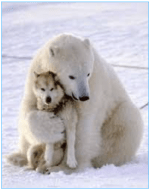
In a Northern freezing wasteland of snow & ice, a polar bear stalks a line of sled dogs. The bear picks out the last in the line & begins a predatory stalk towards her.
Onlooking breeders & trappers watch in horror as death slinks towards one of their prized dogs, & no one has a gun to defend her. The doomed dog turns & bows before the bear.

• But this is no bow of submission. She raises her rear high in the air, face smiling, tail wagging in a “play bow.” The bear rears up on hind legs & pauses in slight confusion, then bows down & begins to play with her.
They enjoy a raucous romp in the snow, tumbling, nipping, yelping & chasing, before the bear finally gets exhausted & leaves. The bear comes back every day for two weeks to see the dog AND play!

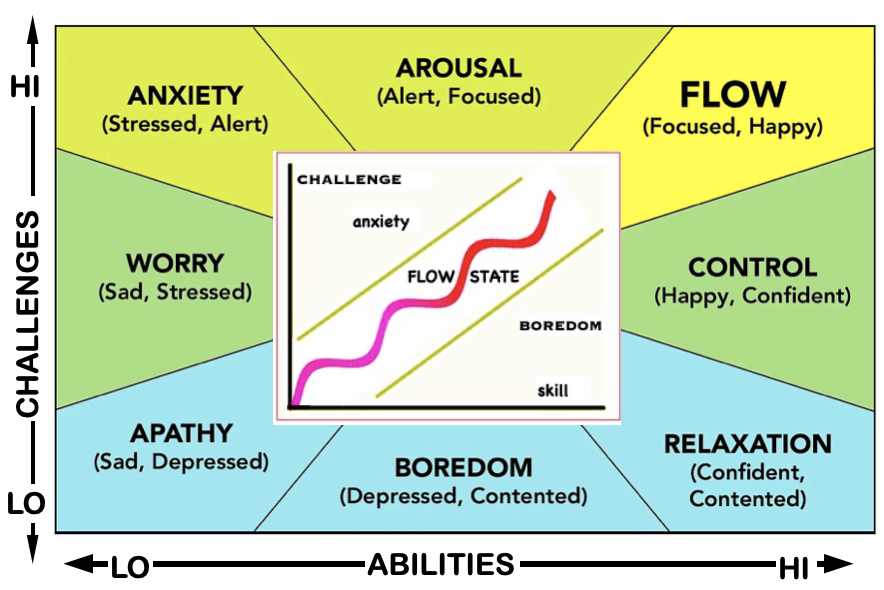
Play, creativity & flow.  Psychiatrist / author Mihaly Csikszentmihalyi coined the idea of “flow state” (in the zone), having studied play extensively, searching for things that contribute to a life worth living.
He explained that to be in flow, PLAY has to have just the right balance of difficulty & ‘solvabity’. If the game is too hard or too easy it loses its sense of pleasure. All participants, regardless of age or ability, must feel challenged but not overwhelmed

• Having at least one activity we do regularly just for fun is important for our ‘happiness quotient’. When we get really engrossed in an enjoyable activity, it puts our brain in a near-meditative state.
It can sharpen many skills, express creativity, help solve big problems, or just blow off steam. Sometimes the best way to learn a complicated subject is to play with it. ALSO – physical play delays mental decline in old age.

FLOW STATE provides:
> Clarity – great inner sharpness & a built-in understanding of things
> Confidence – not feeling anxious or bored, having an automatic sense that the activity is do-able & that your skills are up to the task
> Delight – a sense of bliss & positive detachment from everyday reality
> Involvement – complete focus & concentration, from innate curiosity & to good skill-training
> Motivation – intrinsic understanding about what needs to be done, & a desire to keep the momentum of play going
> Serenity – sense of peace & absence of worries about oneself
> Timeliness – thorough focus on the present, & lack of attention to the passage of time

NEXT: Adult Play Benefits (Part 1)

PLAY-ing EXPERTS (Part 3)

PREVIOUS : PLAY-ing EXPERTS (Part 2)

QUOTE: 📌 “A child who does not play is not a child, but the man who does not play has lost forever the child who lived in him, and who he will miss terribly.”  ~ Poet Pablo Neruda


MORE Play EXPERTS

Cindy Dell Clark is an anthropology professor at Rutgers U-Camden NJ, studying how children use play to cope with chronic illness such as diabetes & asthma. She found that kids use their imagination to handle stress & make sense of their disease. Most children (& young animals) roughhouse or fool around, but not all societies provide time & opportunity for pretend-play.

asthmaMany materially poor cultures focus on the family as a unit, needing their children to do chores, which is essential to their economic survival.
However, more prosperous societies do see Play as important. Because they can afford to consider everyone as autonomous individuals, & want their children to become independent, the children are encouraged to use their imaginations, tell stories & act out roles

Sandra Russ (2004), psychologist & researcher, found that Pretend Play encourages children’s capacity for cognitive flexibility & therefore creativity. It allows them to express pleasant & unpleasant emotions, which leads to modulating feelings & to integrate emotions with thinking. Now some educators are using pretend games to teach math & reading.

• The Root-Bernsteins (2012) studied a group of highly creative people – Nobel Prize winners & recipients of the MacArthur Foundation ‘genius’ grant. Researches found that these people played more early childhood games about make-believe worlds than the control (non-winning) participants who were in the same fields…..nobel winners

This “suggests a strong correlation between childhood world–play & adult creative achievement in the arts, sciences & humanities, considered the invention of plausible, probable or possible worlds”
EXPs: Charlotte Bronte, J.R.R.Tolkien,  Leo Lionni, Gregory Benford, Desmond Morris, Todd Silver…. (MORE….)

For anyone interested in the Bible, there is validation from the Highest level of authority – permission & encouragement to be happy :
1. God says: “…. be ye glad & rejoice forever in that which I create” Isaiah 65:18
2. “Our mouths are filled with laughter, our tongues with songs of joy…. the Lord has done great things for us, and we are filled with joy”  Psalms 126:2

3
. “When times are good, be happy. But when times are bad, consider this: God has made the one as well as the other.” Ecclesiastes 7:14
4. “…. may the righteous be glad & rejoice before God. May they be happy & joyful.” Psalms 68:3

COMMENTS – Whether we believe in a Personal God or not :
#1 – says we are valuable, that Higher Power doesn’t make garbage
#2 – reminds us we’ve been given benefits even if our parents told us we’re worthless, & couldn’t see our value
We DO have talents, skills, emotions, brains, options…. along with tools & people to help with Recovery. There is hope because we don’t have to be alone anymorecelebrate

#3 – tells us there’s a reason & a season for everything, that bad situations seldom last (especially smaller ones), even though it didn’t seem that way when we were kids

#4 – This one’s even harder to take in because for the most part ACoAs are convinced we’re anything but ‘righteous’. While this verse refers to our spiritual condition, even those of us who don’t believe in original sin still have Self-Hate telling us that we’re inherently (born) bad!

On the contrary, no matter how unworthy we ‘feel’, we have a right to live – to live well & be loved. LUKE 15 gives us 2 parables – of the Lost Sheep, whom the Shepherd searches for & rejoices when it’s found.
And the Prodigal Son, whom the father welcomes with joy at the return. Our original parents may have rejected us, but there are other people in the world who can & will accept us.

LOOK for healthy people who already have the capacity to love & know how to play, and learn from them.

NEXT: ADULT need for play