What about EMOTIONS? (Part 1)

PREVIOUS: “What others think of me is none of my business’ (#2)

REVIEW: 
Feelings Aren’t Facts

DEFINITIONS (Answers.com):
• The English word emotion (Es) is from the French émouvoir, from the Latin emovere, where e- means ‘out’, & movere means ‘move’, as TO emit & emote
• at its most basic: Es are pure mental & spiritual energy from the core of our being that makes us all one, where we meet & overlap as human beings
• they are short-lived psycho-physical phenomena that represent efficient adaptations to environmental demands (Levenson, ‘94)

• an E. is a particular mental state formed spontaneously rather than by conscious effort, often accompanied by physical changes
therapy couch 1• they are the part of our consciousness that involves sensibility: “The very essence of literature is the war between emotion & intellect” Isaac B. Singer

• Es are the result of combining external experience, brain chemicals, the way we think & the actions we choose —
— based on our native Self, our personal history, with the cultural rules & values we grew up with
• Es can be used to motivate us to take actions needed to connect, to protect ourselves, & to grow
• our Es liven those actions, which would otherwise be rigid or boring

• Emotions coordinate our many adaptive needs so we can function more efficiently, without those needs being in conflict or demanding attention all at the same time (food, shelter, reproduction, safety, sleep, communication….)
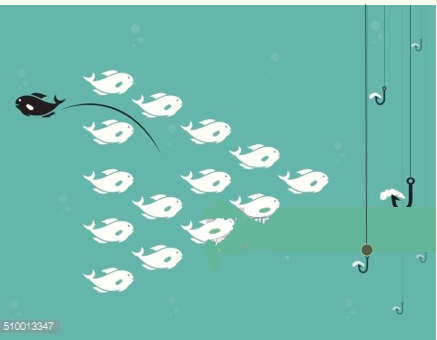
survivalEs make up an overriding brain-program that temporarily activates, deactivates, or modifies particular needs. This depends on the current situation – where 1 need is turned on, while another has to be put on hold  – so we can keep functioning properly (sleep vs go to work, stay connected vs withdraw from danger, achieve vs relax, socialize vs. regroup alone…..)

• From Affective NeuroScience (en.wikipedia)
Affect is an encompassing term, used mainly in psychology to describe emotion, feelings & moods, even though it’s more commonly used to mean Emotion

Feelings are our subjective impressions of emotions, private to the person experiencing them – based on perspective, beliefs & desires. A general state of consciousness independent of physical sensations and thoughts….

Moods are diffuse effects, generally lasting much longer than individual Es, but less intense. They represent an overall tone that effects one’s outlook on everything, for as long as the E lasts

• In “What are Emotions? And how can they be measured?” (2005) K. R. Scherer suggested 5 crucial elements:

📌 Action tendencies : motivational energy to prepare & direct motor responses – Es are the push to act in some way
📌 Bodily symptoms : physical aspect of an emotional experience, generated in the gut, but also experienced in other body parts
EXP: FEAR can be felt as tightening of the chest, stomach, throat, weakness in the knees…. & in panic attacks – as temporary blindness, inability to think, ‘clutched heart’, trouble breathing….

📌  Cognitive appraisal : Es provide an evaluation of events & objects. It’s the Mental component that which generate Es – what we think / believe about something, either healthy or unhealthy, accurate or not
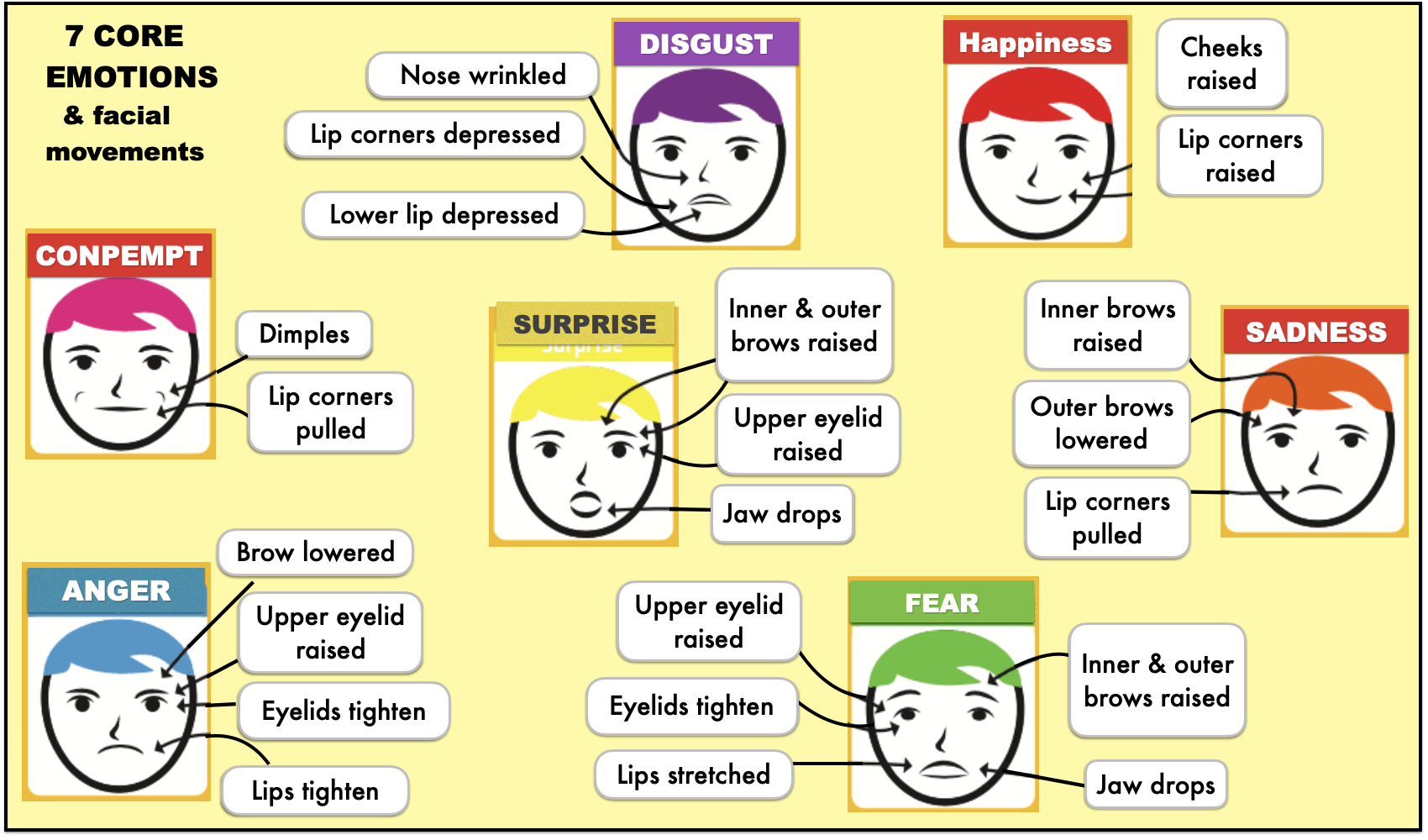
📌 Expression : facial & vocal output almost always accompanying an emotional state as a reaction to it, or indicate the intention of taking some action (unless using Botox! )
📌  Feelings : the person’s subjective experience of their emotional state, once it has occurred

BTW – Don‘t confuse feelings or emotions with:
obsessionCompulsions, which are actions we’re not in conscious control of – OR –
Obsessions (Os), which are over-focused, circular mental rumination, our hamster-in-the-wheel :
a. most Os are unconsciously —
— fueled by anxiety, trauma, S-H, FoA….
— supported by unhealthy thinking (CDs), wanting revenge, being one-up, proving oneself ….

b. less often (legitimate) Os may be:
POSITIVE uses • a way to rehearse phrases or counter-arguments from our Healthy Adult ego state
• ‘passions’, motivated by a deep need to connect with a H.P, to be of service to others or follow a creative goal.

BEST use • mentally reviewing a positive event recently experienced, to anchor it in memory. This is important for countering our “built-in-forgetter”, which automatically negates the good things in our life
Purpose : to solidify smarter ways of verbally responding, which can counter — ACoAs’ tendency to blank out when confronted or criticized (fear,) or — when told something outrageous, insensitive or mean (rage)

💎 Therefore, ‘obsessional repetition’ is a smart tool, creating new brain pathways, so the Frontal Lobes can stay ‘on line’ when we need them the most

NEXT: What about Es? (Part 2)

What Others Think of Me is None of My Business (#1)

LONELY CREATURES
We’re all social animals, but also need privacy

PREVIOUS: Safe & Unsafe People

REMINDER: See ACRONYM page for abbrev.

NOTE: Many people in the mental health field, spiritual practices & new-age wisdom say we shouldn’t worry about what others think of us. Yes, OK, but it’s not that simple! What they don’t tell you is that there’s 2 different aspects, the negative & the positive.

1. DAMAGE (ACoA version) – for anyone with limited self-esteem / S-H, there’s always the assumption that other people don’t like us – it’s our default position & hard to let go of.  And that has 2 parts too! Doesn’t everything?  AH, Dualism!  I can’t help it – I’m a 22/4 with an 8 Destiny. I see both sides – ‘now’. 🙂 Anyway…

a. Awkward (lame, a “drip”? —>)akward
• If we’re obnoxious, angry, childish, clingy, lazy, needy, selfish, un-groomed, or say lots of dumb things – OR just full of negativity & self-doubt, then most people will not like us!

• If we care, these problems can be worked on – if we have the courage, right kind of help & willingness to deal with the pain, sadness & fear that’s at the root all our ‘shortcomings’

• If we don’t care, or the resistance is too great to get past, the external signs & internal causes never get corrected. A great loss for us as individual & to society, but each has their own path.

b. Isolators: Some ACoAs (not about Extroverts / Introverts)
isolate• hide out because of some physical or mental disorder
• but mostly it’s from — Fear, Lack of good Boundaries & Self-hate : wounded souls who need lots of love but aren’t allowed to let it in, even when it’s available. They blame themself for everything that goes wrong. They ‘don’t belong’

• At the other extreme are those wounded ACoAs who are always angry,  complaining, dissatisfied & think they’re superior. They push others away & lose out. They have S-H too, but their whole focus is outside of themself, blaming everyone else for their troubles

c. Acceptable:  Most of us are not social misfits –
• we have an education, jobs, mates, maybe children & some outside interest. YET we think everyone is going to judge us harshly, find out we’re frauds, see  all our flaws… later if not sooner, especially if they get to know usbeing udged
• that’s straightforward Projection onto others of – how our parents treated us & now, our self-judgement

also, it’s Mind-reading (a CD). We’re sure we know what others are thinking – especially about us, & it’s always negative. That’s ACoA grandiosity.  Stay out of other people’s heads!
• Sadly, even when others like us, love, admire & laud us – we have a hard time believing it, don’t trust it, get embarrassed, tell them why it’s not true. Yuck!

2. Mental HEALTH  — All humans NEED connections, but in differing amounts.
a. Normal:
Extroverts. (They are 75-80% of the population, at least in the West)
They thrive on the energy absorbed by being around a lot of activity – choices, options, people, events….. even if not interacting with them directly.  (PS – not referring to the energy vampires).
Think: a walk in the park on a great spring day alone, when intro/extroeveryone’s out,  or an evening with a bunch of friends, just ‘messing around’. Doesn’t have to be heavy or deep, although that’s good too. Just being ‘part of’ feels great

Introverts need activity too with others, just in much smaller doses. They’re mostly comfortable one-on-one & in small groups, for short periods. They derive their energy internally, & are overwhelmed by too much external input.

NEXT: What others think…. #2

Forming Boundaries – with OTHERS (Part 2)

setting ;imitsIT’S UP to ME to SET MY LIMITS
it’s up to others to honor or ignore them

PREVIOUS: Bs with OTHERS (#1)

POST:   ‘ACoAs & Self-Esteem’

DEF : A boundary is a PMES space you put around yourself, & so do others for themselves

FORMING Boundaries (Bs) with OTHERS 
1. For OURSELF 

2. In Relation to OTHERS
a. Don’t punish others if they’ve forgotten your B. requirements. Consequences should be an inevitable outcome of the choices we each make. Outcomes (our reactions to them) may or may not feel like punishment to the B violator – depending on how intensely they’re still run by their WIC or PP.

• If you feel a strong urge to punish someone for ignoring your requests, it would be best to work on yourself before talking to them again. While they did indeed ‘stepped on your toes’, you may have let the violation go on too long, or else you’re making it too personal. NOT everything is about us!

★ Persistent B violators act like that with everyone, or anyone who will let them!  Do rage work in private, share about it in Al-Anon & therapy, pray for patience, & talk or write to your Inner Child.
Then remind the other person again, OR tell them they’ve crossed the line for the last time!

ii. Make a plan of action for when someone severely violates your Bs (& somebody will!) :
a. Tell them what you don’t like about their behavior – be specific. If you’ve already talked to them about it, refer back to those conversations
b. Ask they to stop immediately – when this is a possibility. If they don’t, then strongly insist
c. Ask for help from your support system when stressed, especially if you feel in danger
d. If there are no other options, walk away with as much dignity as possible, without sarcasm or nasty get-even comments.

💗 Thank anyone who honors your boundaries

REMINDERS
• You can not set Bs AND take care of someone else’s needs! They’re mutually exclusive

• When you feel angry, complaining, rageful, threatened, suffocated, victimized, whiny…..  it’s the pain of not having your Bs respected. These emotions are like flashing red lights telling you something’s wrong – something you don’t like, can’t stand or hate. It means you have to say or change something

• Talk to a Violator from your ADULT ego state,
— since you will inevitably get frustrated & annoyed with someone you love & don’t want to leave, who’s being a pain in the neck
— you may need to express your anger, to get past your resistance to speaking up. Anger makes us feel less vulnerable when we’re afraid —
— AND there are people who will only pay attention when you get ‘heavy’, but getting Adult-angry is not the same as being nasty (from the WIC or PP)

Avoid justifying yourself, apologizing for or rationalizing your needs – because it’ll sound like you don’t believe what you’re saying – so Violators won’t take you seriously either.
Say very little, OR offer a brief explanation – if appropriate & you feel ok doing it. It’s hard to be genuinely intimate with someone if you don’t tell them what’s bothering or hurting you

• At first you may feel afraid, ashamed or guilty when setting a Bs, so it’s it easier to let it slide.
— Do it anyway, the next time you’re with them – because it’s our job to let others know, & some don’t realize they’re trespassing
— Also, people don’t respect someone they can use, manipulate or control, even though they’ll try to get away with itangry at Bs

• Be prepared for anger, attacks, denial, opposition, resistance. Violators don’t like being reined in.
Don’t let their reactions make you doubt your rights! They’re just having a 2-yr olds’ tantrum when they don’t get their way. You have to be ready to enforce your needs, otherwise people will simply ignore you.

• The main prerequisite for good boundary setting is believing you have a right to them! When you’re sure, it will be clear to others even when you don’t say anything, AND fewer B-invaders will show up in your life

• ALSO: make a list of 5-10 ways you violate other people’s Bs. (ACoAs violating Bs) Work on correcting them.  You’ll  feel better about yourself!

NEXT: “What other think of me….”

Forming Boundaries – with OTHERS (Part 1)

THIS IS SO MUCH WORK!
But I feel better when I enforce my Boundaries

PREVIOUS: Repairing your Boundaries

POST: “Boundaries DEFINED


FORMING Boundaries (Bs) with OTHERS 

1. For OURSELF (previous)

2. In Relation to OTHERS
a.  Find a support system to help with follow-through.  No one can to go from weak to strong Bs instantly or easily, just because we heard a lecture or read a book. We need people who will remind us of our value, encouraging us to maintain & enforce our limits

b. Use an ACoA therapist, Al-Anon & ACA meetings & other resources – to identify & examine the underlying causes of your unhealthy Bs. While we may have an extensive knowledge of our background, we often need an experienced listener to tag distorted life-patterns that are so automatic we don’t even notice

c. Look for role models & other examples of healthy Bs in your life & in media (TED Talks, podcasts….).  In any situation that challenges your Bs, take a minute to ask: “What would my role model say or do?”
If they’re part of your life, ask them, but don’t assume that what’s good for them must be good for you. Try a variety of yes & no Bsoptions & come to your own conclusions. One size does NOT fit all

d. Identify specific people who YOU will:
— not tolerate any violations from (they’ve already proven to be dangerous, narcissistic, disrespectful…)
— give some leeway to, because usually they’re loving, kind, respectful, AND it’s not realistic to expect anyone to be perfect

e. Educate others on ways you want your Bs to be respected, by clearly stating them. Never assume that people know them. Bs need to be spelled out in detail, & for some people you may even have to write them down. Do not expect others to read your mind, even if they already know you

fSit down with each person you have a problem with & let them know what you need & don’t want from them. Try to get their agreement to honor your Bs.
Insist that everyone talk to you with respect – no more digs, making fun of, criticisms, controlling comments…. no matter what. That does NOT mean you lack a sense of humor !

talking @ Bs• With other adults : even if you get a verbal agreement, stay alert for how they actually treat you.
If they repeatedly can’t or won’t honor your request – limit your time with them, or end the relationship, after trying one more time.
You decide when to let go of them, based on the cost to you!
• With kids or teens, work out a plan to help them comply, using methods suggested by a Child Psychologist, or from books & online articles

g. Clearly state the consequences for violating your Bs, BUT NOT until you’re sure you can follow thru! Addicts & codependents have a tendency to violate Bs (deliberately or unconsciously is not the point) & Invaders will always test us, like 2-yr olds, trying to wear you down to get their way

⭐︎ Be ready to stand your ground, to prove you’re serious. How well you can manage that will depend on how strong your Inner Adult has become (in the UNIT)

h. Be consistent & persistent about confronting & enforcing violations, & do is as coolly as possible – even though it can be very tiring or enraging at first
It’s most effective when you don’t over-react emotionally, but come from the Healthy Adult Ego State. Otherwise people can just write you off as bitchy or crazy, especially if they want an excuse for their bad behaviorclear Bs

• If a particular wound in you is still unhealed – you’ll have a strong reaction to feeling abandoned or disrespected, making you anxious & angry
• If you have healthy Bs, you can speak up for yourself & then move on to someone or something else.
It’s not up to you to convince people how wrong they are. Your self-respecting actions will make the statement.

EXP: If someone is chronically late to meet you, tell them that if it continues, you won’t wait more than 15 minutes. Be sure you always have a plan B for yourself. WHEN they’re late again, do NOT wait. They’ll see you mean business – whether they change or not, & then they can decide how to act.

NEXT: Having Bs with OTHERS (Part 2)

REPAIRING Boundaries – with SELF

Bs OY, ANOTHER PROCESS!
It’s so much work – but I need it

PREVIOUS : Healthy Bs, #2

REVIEW Boundaries Defined // Source / / Info

SITE : “Setting Bs with Oneself”


REPAIRING Damaged Boundaries 
(Bs)
The source of unhealthy Bs comes from our upbringing. As a result – in the present – it’s a lack of self-worth, not believing we have any rights.
“SIEVES” (leaking from damaged or non-functioning Bs) are trying to gain value by trying to please others, so they let everyone invade their space, obeying Toxic Rules like “Everyone else’s needs are more important than mine”

1. FOR YOURSELF
a.
Form a clear sense of your personal values.
b. Identify specific ways your WEAK Bs are unproductive & self-defeating, & write down how they show up in your life. Think of ‘character defects’ as expressions of Self-Hate

c. Notice the fear-based beliefs that reinforce your resistance to change (CDs & Toxic Rules).  List specific ones that apply to you & how you act them out (talking & doing)

dIdentify all POSITIVE Bs that are important to you (5-15 items). These may shift over time, so stay current.
List at least 1 B. from each PMES category that you:
— absolutely will not compromise on, because they’re CORE
— can afford some wiggle room on, because they’re not as crucial to your comfort & safety

e. Make a “Who Am I?” journal. Have separate pages for PMES sub-headings like – Accomplishments, Education, Natural Qualities, Skills, Strengths, Talents, Tastes, Values …..
Fill in any characteristics that come to mind. Ask others to provide the positive qualities they see in you. Continue adding to it as you see more good things about yourselfself-writing

f. Write letters to yourself encouraging the changes you want to activate, that nurture your right to have healthy Bs.
Include 2-handed conversations with your:
Wounded Child, about how you’d like to help it heal from S-H
Healthy Inner Child – about ways you want to support it to be visible & happy
• Pig Parent (Negative Introject) – about how you don’t agree with its lies any more!

g. Make 2 lists of Personal Rights, for yourself & for relationships. Keep them on your phone so you can read them often & also keep hard copies on your mirrors, fridge…. (Qs re. Friends….)rights
Pick one ‘Right’ you’d like to develop & incorporate it into your life for a month. At the end of that time write down what happened & how you feel.
Pick another ‘Right’ & do the same….
Re. “Support” – see next post.

h. Keep a separate journal to record the PMES pain** you feel when you don’t stick to your Bs with others. The idea is to cut thru denial about how it affects you, practically & emotionally.
🥲 This kind of pain is NOT from self-recrimination or fear of rejection. Rather, it is the most basic pain of self-abandonment, reproducing what our parents did to us. Without connecting to our emotions, we keep repeating the old ways – as if they don’t cause more damage. It does!

**A certain level of pain is a useful motivator if it’s not too much. Don’t turn ‘failures’ into S-H, depression & isolation. Identify what led up to each B violation, because you were :hurting
• in a situation which pushed a very big button that’s still unhealed
• still letting the WIC run your life, or at least in certain areas….
• tired, ill or otherwise stressed, so more vulnerable
• unaware there would be problems in a new situation
• with the wrong person who always invades Bs, & who no one can stop

i. Regularly build in time for yourself, away from your job, mate, children, & pets – alone to relax (just veg).
Take space for spiritual growth, self-care, humor, fun & creativity, AND make plans to be with close friends
fun• If you have a hard time saying ‘No’, look for opportunities to practice, without anger if possible, or with anger if that‘s the only way – at first. Eventually people will get used to this change in you. If they don’t, one of you will inevitably let go

• If you have trouble saying “Yes” for one-to-one social events, or anything involving groups, be willing to accept an invitation from time to time. You’ll be uncomfortable, but do the Inner Child book-ending for each situation & see what the realistic outcomes usually are.

NEXT:  Forming  Bs with OTHERS (#1)

List of HEALTHY Boundaries (Part 2)
I KNOW WHO I AM & WHAT I NEED, & I can say it clearly

PREVIOUS: Health Bs, #1

SITE: Personal Responsibility


💟 PRACTICAL EXAMPLES of Healthy Boundaries
What B do NOT DO ( Part 1)

♥️ WHAT Boundaries DO – THEY:
• act as a warning sign when’re about to get into relationships or places that are unsuitable or dangerous – for us
• allow the Healthy Adult to be in charge – to protect us from our own emotional instability when the WIC feels vulnerable
• identify the specific consequences of boundary invasions
THEY:
• prevent anyone from inappropriately injecting themself into our life, or trying to get us to do anything we don’t want to
• protect our values, & the right to always be treated with dignity & respect
• provide pre-set guidelines for all areas of life. When we periodically regress into a symbiotic or self-effacing state (inevitable), we may need someone to help us re-establish Bs

1. EMOTIONAL (Es)  BOUNDARIES in Part 1

2. PHYSICAL (P) – With Healthy Bs we CAN:
• comfortably distance ourself from anyone who can’t / won’t respect our Bs
• have self-esteem about our P self, no matter how we look
• protect our P space from intrusion, invasion or abuse
• say NO to food, gifts, touch, sex .…  anything we don’t want
• safely give & receive P comfort
• stay in our body (be congruent) “My body & I are one”
• touch & be touched – with discrimination
• weigh the consequences before acting on a sexual impulse
KNOW
• it’s OK to move towards or away from someone
• the most comfortable space between us & another
• what’s appropriate modesty & openness with ourself & others. Modesty is not = being a prude! It’s about self-respect.

3. MENTAL – With Healthy Bs we CAN:
re. OURSELF
• act assertively (not aggressive) by respectfully stating our opinions, emotions & needs
• empower ourself to make healthy choices & be responsible for our thoughts
• know it’s OK to have some privacy / secrecy without guilt, even with intimates
• know when a miscommunication or CD is ours & when it’s someone else’s
• know what we believe (values) & what we want
CAN :
• own our toxic family beliefs & work on replacing them
wisdom• say No / Yes honestly, & are secure when others say No to us
• take back our projections (see others for who they really are, not what we think or wish them to be – or who our parents were)
• think & speak for ourself (without always quoting someone else)
• trust our own decisions, defining our truth as you see it
• value our opinions, tastes & viewpoints, as much as those of others

With OTHERS  – With Healthy Bs WE can :
• avoid expectations – knowing that we might get turned down, but can still ask
• be in charge of deciding if a potential relationship will be good for us
• ask for practical information, when needed
relationship types• choose to go slow in a new relationship while checking for compatibility
• communicate needs & wants clearly in all relationships
WE :
✶ DO
stand up for our beliefs, even when in the minority
• give personal info gradually, then check how others respond
✶ know that accuracy is more important that agreement in communications
• notice any time others boundary-invade us
• recognize that friends & partners are not mind readers
• respect others’ boundaries (EXP : ask if it’s ok before touching, or taking something)
• teach others to treat us with dignity & respect

EMOTIONAL & MENTAL RECOVERY Truths
✦ Aloneness is a bounty from which we can choose what we want
✦ Friends can only stand by to watch & encourage, while we make our own discoveries
✦ Giving is never losing, & giving freely is a semi-circle which completes itself in receiving
✦ Help doesn’t always appear in the way we expect or demand
smarts✦ More is possible than we think, if we truly believe
✦ No one can tell us who we are
✦ No one can live our pain or our joy – for us
✦ No matter who walks with us, no one can walk it for us
💗
✦ Our eyes can never see as clearly as our hearts
✦ Sharing is not legitimate unless we keep enough for ourselves
✦ Second-best may really be just second-arrived
✦ To want nothing is as selfish as to give nothing
✦ Wisdom comes from hearing & believing our True voice
✦ What we think we want may be inferior to what we receive
SO: ✦ We may often feel we’re walking alone, but we never are IF we know who we are

NEXT: Repairing Bs – with Self

List of HEALTHY Boundaries (Part 1)


I WANT to CONNECT, NOT be enmeshed

PREVIOUS: Healthy Bs – Info (Part 2)
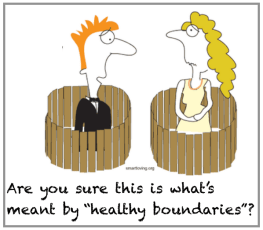

WHAT Boundaries (Bs) can NOT DO

re. US
• having your own boundaries does not create Bs for others
• by themselves, Bs don’t fix the damage in our ‘spirit’. The WIC needs healing before we can easily enforce our personal space
• they’re not about Right & Wrong. They’re based on our own value system & perspective, so may be totally different from someone else’s, rather than bad.

• Bs are not a form of deprivation, nor to limit our joy. Instead – with Bs we attract people who respect & care about us. So, our relationships get better, & we enjoy our activities because they match our values
• B are not set in stone. As we Heal & Grow, our Bs also 
expand & improve. We have the right to evolve, deciding what does & doesn’t work for us.

re. OTHERS
• Bs are not mean, selfish or ‘unfair’ just because someone else doesn’t like them. That may be how they feel, but it’s not an accurate evaluation. We set Bs for separation or protection from people who will otherwise ignore or trample on our needs & feelings. Sticking to our Bs is a way to maintain our integrity

• Bs are not attempts to control or punish others (don’t confused them with ultimatums or demands). They’re not a way to force people to change or do what we want – since that’s not possible. We can sometimes ask others to make a change, but have no control over whether they will or not (MORE….)

• Bs can not control, change or stop narcissist, bullies & pathological liars from trying to manipulate or control us.  We decide what we will or won’t put up with, but since abusers don’t listen, usually we just have to get away from them

• Bs should not be used to encourage unhealthy responses & behavior in others that are counter to our morals & beliefs.
EXP : Saying it’s OK with us IF someone acts self-destructively – ‘just not around us’.
We do need to distance ourself from someone who insists on staying Victim or Perpetrator, but we can point out kindly what we observe, for their benefit – as well as clearly state our own concerns & values.
EXP : “It hurts me to see you how you keep letting them belittle you….”

DEVELOPING EMOTIONAL (Es) Boundaries 
Healthy E-Bs lets us clearly know:
• Es just ARE, not good or bad, but range from most painful to most joyful
• as adults, our Es don’t depend on others’ actions
• our Es do not cause others’ actions or their Es
• pleasant & painful Es come from our own behavior
AND with Bs
• we can have access to a wide range of Es
• we do not blame PPT for events, taking responsibility for our feelings
• we now accept Es that we were taught to disapprove of (jealousy, greed, shame, indifference, rage….) & have compassion for ourself when they come up – without having to act on them
• we have control over which Es we express to others (who & where)

a. For OURSELF — Healthy Bs mean WE:
• acknowledge our Shadow self, without judgment or S-H
• are able to ask for help when needed
• are committed to & responsible for nurturing our full potential
• are responsible for our own happiness & fulfillment
• become our own Good Parent, for self-care
• don’t compromise values or integrity to avoid possible rejection
WE :
• have a strong sense of identity – know ourself well, have good self-esteem & self-respect – without arrogance
• know our own wants, needs & emotions (T.E.As)
• know our limits – not giving too much just so someone will like us
• know when a problem is ours & when it is NOT
• talk to ourself with gentleness, respect & humor
• value our opinions & feelings as much as those of others (often more)

b. About OTHERS — Healthy Bs mean WE:
• allow others to be responsible for their own happiness and fulfillment
• allow others to define their own Bs & limits
• are ok with others having intense emotions, without having to fix them
me vs you• communicate our Bs clearly in all relationships
• develop appropriate trust, based on current reality (what we know about them)
• don’t tolerate emotional abuse or disrespect from anyone
WE :
• have an equal partnership & expect reciprocity in close relationships, sharing responsibility & power
• have respect for others – not taking advantage of someone’s kindness or generosity, AND not letting others take advantage of ours
• move carefully, thoughtfully, step-by-step into emotional intimacy
• share sensitive information gradually, & only in a mutually sharing/trusting relationship

NEXT: Mental & Physical Bs #2

HEALTHY Boundaries – Info (Part 2)

WHAT’S COMFORTABLE FOR YOU  is Too close for me!

PREVIOUS: Healthy Bs – Info (Part 1)


REVIEW: Bs – ‘Healthy Source’

HEALTHY BOUNDARIES : HOW CLOSE?
Studies have formulated Personal Boundary distances for middle class people in Western & westernized countries.  In most social situations Americans require a comfort zone of 6 to 8 sq feet per person, & any violation of that buffer may trigger a strong reaction. In crowded cities people are most likely to just shut down – at least in public

1a. The Intimate Zone – the most important – is 6-18″ (15-45 cms). People guard this area as if it were their private property & only those who are emotionally close are allowed in, which include lovers, parents, spouse, children, close friends, relatives & pets
1b. The Close-Intimate Sub-zone: extends 0-6″ (15 cm) from the body, which may be entered only during intimate physical contact (whispering, hugging, kissing, sex…)

2. The Personal Zone – 18-48″ (46 cm-1.22m), the distance between us & others, at polite social functions like parties, any friendly gatherings & talking with close friends

3. The Social Zone – 4-12 feet (1.22~3.6m) – the distance from strangers, like sales or repair people, a new employee, anyone else we don’t know very well, & generally talking with acquaintances
4. The Public Zone – 12 feet (3.6m) – interacting with strangers & when addressing large groups

GENDER DIFFERENCES
 Personal space has been studied in relation to age, race, culture, mental disorder, menstrual cycle & gender. Regarding the latter, researchers have observed definite differences between the personal space needed by men vs. women in general (most women need less):
• Whether the distance is between 2 men or 2 women
• If a man in approaching a woman or vice versa
geneder Bs• Positioning:
men prefer being next to each other but face to face with an attractive woman. Men need more room around them, so will try to avoid crowds & personal invasion of any kind, reacting hostilely if they can’t

women prefer face to face, being more sensitive to the space next to them, & become wary if a stranger approaches from the side. Women generally keep their distance from both genders unless they feel safe, are more tolerant in crowded areas & seldom invade other people’s space  (More ….

• Studies also noted that children learn this spacing by age 12 if not before, as seen in a sample taken between kindergarten & 6th grade, where significant gender effects were found: Both boys & girls need more distance when around the opposite sex, & less when with their own. (Males – Female Differences)

General CHARACTERISTICS of Healthy Boundaries
▪︎ Appropriate, based on my inner life.  I set a boundary or let it go based on what I’m experiencing right now – which include my beliefs, choices, thoughts, decisions, feelings, intuition, needs & wants. So knowing what’s coming up for me in my external life is crucial in setting healthy boundaries to have healthy relationships

▪︎ Clear. I know my internal boundaries & those that I use in relation to others
▪︎ Firm. I decide how firm I want my boundaries to be, to get what I want or need

▪︎ Flexible. Healthy boundaries need to be flexible. I decide how close or far away I want someone to be in order to feel safe. Also – for healthy relationships, I need to let go of some boundaries & limits – when appropriate

▪︎ Maintaining. I have to consider whether to hold firm OR relax a specific boundary or limit – for some period of time, to get what I want or need

▪︎ Present. I need to keep my boundary in mind when in a specific situation, to identify which ones work & which don’t. If I don’t stay alert I may not be able to decide whether to ‘enforce’ it or relax it

▪︎ Protective. They help protect the well-being & integrity of my Inner Child
▪︎ Receptive. I need to consider when it’s useful or enjoyable to loosen a particular boundary a bit, so I can let another person, place, thing, behavior or experience in.
(Modified from list by Patricia Jones, ‘Alive in the Moment)

NEXT: List of Healthy Bs, Part 1

HEALTHY Boundaries – Info (Part 1)

yes / no I’LL LET YOU KNOW
how close you can come!

PREVIOUS: RIGID Bs (#2)

REVIEW: ‘Boundaries Defined


WHAT are Healthy Bs?
According to L. A Hayduk (1978), it’s “the area each person actively maintains around themself, into which others cannot intrude without arousing discomfort”. And Richard Stengel (1995) found that ‘Personal Space’ surrounds one’s ego-center, intuitively understood by all human beings

• Setting boundaries is about moderation & grey areas, which requires a person to be “fully differentiated” via S & I.  A good boundary-setter is willing to step into their uncomfortable ‘grey zone’ with a clear Yes or No line. They know who they are & who they’re not, taking responsibility for what’s theirs, & expecting / allowing others to take responsibility for what’s theirs

• Then 2 such people, already independent in their True Self, can be inter-dependent, close enough to stay connected with a positive impact on each others’ life, without unwanted intrusion. Healthy Bs are flexible enough so people can grow & change. Each can soften where their Bs are to encourage intimacy, or extend their Bs to create safety

• We all react to changes in environment, managing them to suit our unique ‘Comfort Zone’ – with specific rules for what works for us, so there are no absolutes. A severe decrease in available personal space makes us itchy. If that situation persists, this lack of control can cause psychological distress

🔒 PRIVACY
Social scientist Irwin Altman studied privacy in relation to all forms of Social Boundaries – what makes them optimal, balanced between ‘not too hot & not too cold’!
According to Altman (1975) Bs Are :
1. fluid – we decide how open or closed we are, in reaction to what’s going on inside or outside of ourself
2. not perfect – the amount of space we want or need to feel comfortable & fulfill a particular role, is often different from what’s available

3. flexible – our invisible Bs can be adjusted to different situations. With too much privacy (more is not always better), a person will start crowding others, given an opportunity.
With too little privacy, they compensate by withholding & isolating

4. 2-way – involves input from others, such as noise, and output to others, such as talking
52-leveled – individuals vs groups (public places, cyberspace…)

🔐 PROXEMICS
In the early 1960s American anthropologist Edward Hall was a pioneers in the study of humans’ spatial needs, who coining the word proxemics‘.
A subcategory of non-verbal communication, it’s about the impact it has on social interactions: how we respond to & use our personal space – the distance between ourself & others.

His research led to a new understanding of the human need for territory (animals do too), divided into:
▪︎ Personal – the immediate area surrounding a person. EXP: our body’s space-need & posture are unconscious reactions to subtle changes in sound & pitch of another person’s voice

▪︎ Territorial – the area people lay claim to & defend against others IS used to “propagate the species by regulating density”
This aspect includes the study of how space is organized in houses & buildings, the layout of towns & cities, & in collective forms such as Clans & Countries.

Some responses to B Invasion:
▪︎ choose less personal topics, talk about leaving, avoid eye contact
▪︎ increase inter-personal distance, turn away, leave
▪︎ AND, as with non-humans when pushed too far – reacting with aggression

Degree of Intimacy: Hall identified types of responses by the “angle formed by the axis of the conversants’ shoulders” – a combination of postures (sitting, standing, prone…) which are affected by nonverbal factors each person picks up from the other:
⚓︎ Kinesthetic – how close people are touching
⚓︎ Olfactory – amount of odor picked up
⚓︎ Thermal – degree of body heat
⚓︎ Touching – the ways they’re touching, or not
⚓︎ Visual – amount of eye contact
⚓︎ Voice – silent, very soft, soft, normal, normal+, loud, & very loud.

Cultural Factors : Hall noted that Realizing & Recognizing cultural differences helps eliminate discomfort people may feel when their inter-personal distance is too great (“stand-offish”), or too small (intrusive).

cultureThe Lewis Model of Cultural Types suggests 3 styles :
a. “Multi-active” cultures, that are warm & impulsive (Brazil, Mexico, Italy)
b. “Linear-active” cultures, cool & decisive (Germany, Norway, USA)
c. “Re-active” cultures, accommodating & non-confrontational (Vietnam, China, Japan)

NEXT: Healthy Bs – info (Part 2)
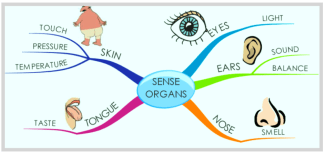
ACoAs & RIGID Boundaries (Part 2)

wallsI HAVE TO PROTECT MYSELF at all costs

PREVIOUS:  Rigid Bs (# 1)

SITEFamilies & Groups with Rigid Boundaries

BOOK:  Boundaries & Relationships,
— Charles Whitfield


OUR DAMAGE
:  As a result of boundary invasion throughout childhood, ACoAs didn’t develop our own. So our options are:
Thick walls, when both inner & outer Self are barricaded
No Bs, where we let everyone tramp in & out of our head & heart
Partial Bs, protecting only some parts, such as the inner but not the outer Self – usually based on previous bad experiences in similar situations

⚙︎ INFLEXIBLE 
Rigid Bs effect us & everyone we interact with, BY:
• ‘Abandoning’ ourselves – we ignore or eliminate so many available options that we can’t properly do self-care. Spiritually, we don’t take personal responsibility for our values….
Abandoning’ others – we withdraw, sulk, shut down & hide behind our wall, making it almost impossible for anyone to love, help or appreciate us

⚙︎ PHYSICAL
Stability helps us feel safe, which is very important to us, so all activities have to be predictable – no room for spontaneity or fun, last-minute opportunities, trying new things….  WE:
stay away• are stoic, have stiff body posture, maybe “stone faced”, trouble giving or receiving physical affection (afraid to let go), don’t like to be touched or hugged….
• are sexually cold or just disinterested, have perfunctory or pity-sex, OR are promiscuous without deep enjoyment, don’t use protection
• under-react to personal or external events, whether pleasant or unpleasant, or not at all

⚙︎ EMOTIONAL – WE:
• are aloof & disinterested, insensitive to anyone else’s feelings
• don’t seem to identify with other people’s problems, do not want to hear their troubles, especially when very upset or crying
• don’t trust anyone, generally suspicious of other’s motives, can be somewhat paranoid
• fear with abandonment and engulfment. No one can get close (staying too busy, pick fights, make plans & then cancel or just not show up…), to avoid being disappointed, hurt, or taken advantage of
isolated• have few or no close relationships. If we do have a partner, it may be in separate places or with little shared social life
• seem emotionally numb, don’t show or talk about feelings & emotions, rarely share personal info
• struggle with loneliness, self-disgust, anger & self-control, but cover it well

⚙︎ MENTAL – WE
:
• are more likely to lie, even about unimportant thing OR omit important facts
• don’t know how to make small talk. Are afraid to say the wrong thing
• don’t like giving anything to anyone. Refuse most social invitations
• have trouble identifying needs, wants & dreams
• ignore all feedback. If it’s criticism, it validates our belief that everyone’s against us. If it’s positive we assume it’s not real
• ‘listen’ to others without responding, in our own little world
• stick to pre-conceived ideas (from childhood), with no room for anything nereject helpw

⚙︎ SOCIAL – WE:
• feel like no one really knows or understands “the real me”
• generally – unconcerned with the world outside of own borders.
• have trouble receiving from others. If someone offers – we get mad or defensive
• won’t ask for help when needed, don’t know who to ask, believe no one will help anyway, so why try?
• make an effort to go for some goal – BUT all alone, & if we can’t achieve it right away, or fail, we stop trying & do without

Love requires Trust, & trust requires (appropriate) vulnerability.
ACoAs with rigid Bs sabotage any shot at healthy love by shutting out anything unfamiliar…. We keep everyone at arm’s length, pick the wrong people to trust, mistakenly associate all humans with the painful events of the past, assuming everyone is as dangerous as our family was / still is

Unrecovered, all wounded ACoA fear being vulnerable, because it means :
• our WIC will be exposed without protection because we don’t have a Loving, capable Inner Parent
• w’re not allowed access to our human rights & Bs, so are easy prey

BOTTOM LINE: Rigid boundaries are walls built around us as a substitute for real ones. (see Healthy Bs.) They’re meant to keep us from getting hurt again, & trying get our needs met, by insisting everything be OUR way
UNFORTUNATELY they don’t work to our benefit. We just end up starving !

NEXT:  Healthy Boundaries – INFO (#1)