Anger – CATEGORIES : Defensive, Double-binded (#6)

PREVIOUS: Categories #5

SITE: “Anger May Stem from Alcohol and Other Drugs


OTHER Anger-EXPRESSIONS (cont)
▪️DEFENSIVE anger
DIRECT cause: When we’re suddenly attacked, a primitive reaction is triggered of either fight / anger (need to be quick & hit hard) OR flight / fear (need speed & agility), with a boost of adrenaline giving power to muscles. When cornered, running away or giving in is usually judged by others as cowardly, so the initial fear reaction often turns in to anger, & the defensive person becomes the attacker.

EXP: If Joe uses aggressive anger on a colleague & Sam reacts with defensive anger, a loud argument is inevitable. Then if Sam switches to attacking Joe as a way to distract or get back at him, we get a see-saw effect, where the back-&-forthing becomes personal & the original point of the dispute may be completely lost

INDIRECT cause: On the other hand, wounded people who grew up being accused wrongly, made fun of, bullied…. tend to be automatically defensive, as a matter of course.
Defensiveness (verbal or physical fists in the air) is used when feeling attacked – whether intended by someone or not – & comes from not being internally safe.
It means we don’t experience the environment as benign, & therefore react, as WHEN :
• we feel compelled to protect our ego by justifying ourselves, as a way to push away feeling of guilt, insecurity, shame, or the fear that we really are wrong
• we take offense – too easily, too often – using anger to protect a ‘precious’ sensitive subject we have a vested interest in (a favorite person, prejudice or project….)
WHEN
• a button gets pushed (an unhealed old wound), such as being accused wrongly, ignored or made fun of, delays, frustration, unfairness….
• we react to allScreen Shot 2016-06-02 at 7.58.53 PM communications as potentially ‘dangerous’ to our well-being (a bit of paranoia)

BTW: There is a climate of entitlement among many young people today, which is assumed to represent self-esteem – but is not.
Some research on self-regulation suggests that under conditions of ego threat, people with a high sense of self-esteem – that’s actually narcissistic – may not be able to suspend their illusion of being great to make accurate self-evaluations.
An article by Fung Ming Chan notes that.there are two variations of high self-esteem:
— one that is pure self-worth, which is not inflated or unrealistic, vs.
—  the type that includes defensive responses in an unrealistically self-favorable way.  It’s this defensiveness that causes negative behaviors.
(from “Understanding Negative Consequences of High Self-Esteem: The Role of Defensiveness.” ~~ Kathleen Hoffman & Traci Mann)

▪️DOUBLE-BIND anger
DEF: DBs are created by trying to force you to obey or accept 2 opposing messages at the same time. You can’t object & you’ll be punished for whichever one you can’t ‘do’, so either choice will be the wrong one, causing loss & pain. Trapped between Scylla & Charybdis.      (Posts:  D.Messages  // D.Binds)

Anger used to create a DB
Ambivalent Sexism : When women have to choose between being liked but not respected, or being respected but not liked.
EXP: Workplace displays of anger raise the status of men BUT lower that of women

Anger from being put in a DB
The Person in a DB is trapped & as long as they try to please the Sender. They end up paralyzed, because there is no resolution (except to get out). This no-win position inevitably causes frustration, anger, & eventually helpless rage. (Women & Anger – D. Bind)

• Anger as Sarcasm
 CA anger-coach Cosmin Gheorghe writes:  “Sarcasm, in its most complex forms, creates a psychological double bind & psychological tension. What matters the most is the meaning, the meta-communication that occurs beyond the verbal. The fine line between humor & offensive communication creates a sort of adrenaline rush. Depending on circumstances, this tension will be released either as anger/ aggression, verbal relief or relaxation.” (MORE….. excellent info)

NEXT : Categories #7

Anger – CATEGORIES : Bullying, Chemical, Controlling (#5)

3 blue a.b.I HAVE TO PROTECT MYSELF at all costs!

PREVIOUS: Categories #4

SITE: Neural representation of facial-emotion reflects conceptual structure


OTHER Anger-EXPRESSIONS
(cont)
▪️BULLYING anger
Bullies vent their anger on those who don’t matter to them, or who they’re actively trying to undermine. They need to intimidate (using Anger + Fear) to be one up – using verbal assaults, seduction, mind games, political maneuvering….

Even though they are indeed fueled by aggressive anger, bullies can control outward signs of it much of the time when in public. They disguise their true intentions & emotions, especially around people they feel the need to impress, & so are unlikely to see the bully’s cruel side. (MORE….re. the workplace)

NOTE: Both bullies & other narcissists are only interested in getting their own way & can’t empathize with their victims. However, a basic difference is that:
bullies know their victims hate what’s happening to them & that they haven’t done anything to the perpetrator directly. Targets are just seen as fearful, passive & vulnerable (weak), so ‘deserve’ to be pick on, while —-

narcissists (especially NPDs) can’t even imagine that other people have needs or feelings different from their own, so are completely baffled when someone disagrees, balks or gets mad at them. They can’t understand how anyone would object to their words, demands or actions – since others are just tools to be used – not separate entities in their own right.

▪️CHEMICAL anger – some causes, including poor nutrition & low blood sugar :
• Biochemical – alcohol, drugs (‘roid rage, PCP berserking….), drug interactions, lead poisoning, stopped smoking
• Diseases : Alzheimers, cancer, heart, kidney, thyroid, Parkinson’s
• Medications : BuSpare types, Desyrels, Neurosine, Trazodone
• Neurologic : brain injuries, epilepsy, organic personality & pre-menstrual syndrome, TB

These & others greatly impair awareness & responses to external social cues because the brain cannot function normally. We see this in the violent or ‘mean drunk’ – what they say is likely what they really think & feel, unleashed because they’ve temporarily lost self-control. (MORE...)

▪️CONTROLLING anger
It’s used to gain power over other people & situation, to force things to go the controller’s way, or when something doesn’t turn out the way they wanted.
This anger is not always obvious, & can be in the form of : acting superior, being a poor loser, expecting that kiss/ make-up sessions will solve problems, not paying attention, not delegating, mistrusting everyone, showing off, talking over people’s heads, wanting center stage all the time….  (Post ACoAs acting controlling”)
EXPs:
• If someone is afraid of losing their job they may feel anger instead of the underlying fear, which can be acted out in many ways such as badmouthing co-workers, in the hope of getting them fired to save one’s own position
• If someone or group is afraid their candidate will lose an election, they might get angry & argue with anyone leaning toward the opponent to get them to switch sides, rather than focusing on the issues or the candidates’ records…..

Deliberate / Planned: Sounding & acting angry when the person is not actually upset about something – at least at first. These types really know what they’re doing. Since they’re all about control, they won’t usually blow up, making their reaction – when they do – quite shocking.

It’s a performance without having to invest any real emotion, a way to gain power by threatening or bullying others – but this only works on the damaged & vulnerable, & only for a while

This is a tactic actually taught to cops, interrogators & top salespeople, and used by some parents, teachers & bosses…. as a way to manipulate & intimidate a person or group into doing what they want (be quiet, buy a product, do a task, go away….)
OR used ‘positively’ by some preachers, therapists, politician or other group leaders – as a way to rouse a person or group to action for the good of their soul, their family, community or the world.
(Article: “What Do You Mean I’m Being Controlling?”)

NEXT : Anger Categories (Part 6)

Anger – CATEGORIES : Ambivalent, Avoidant (#4)

hospital a.b.
I HAVE NO CONTROL
over how I react!

PREVIOUS: Anger Categories (#3)


OTHER Anger-EXPRESSIONS (cont)
▪️AMBIVALENT anger
It is natural to feel anger towards the person/people who caused our childhood trauma, but that anger can be complicated by the feeling of ambivalence  :
IF the ones responsible for the abuse also did good things for us. Such ambivalence can be very painful & confusing, leaving us in conflict. We can feel anger, hurt, frustration…. AND gratitude, love, longing, missing them….

OR
– we can white-wash them, excusing the perpetrator/s by telling ourselves they didn’t know any better, they didn’t mean it, they were under great stress….
This confusion & denial will make it harder to feel the legitimate anger we have about the neglect & mistreatment, so we end up emotionally numb (a type of dissociative state)

OR – presently are living with someone you care about & want to stay with, but you find ‘difficult’ because of their damage – which also happens to trigger your buttons. Can you love & hate someone at the same time? Should you be angry or grateful (to be with them) ?

▪️AVOIDANT anger
a. One meaning is when someone makes a habit of trying to deny feeling anger all together – having experienced the awful results of aggression growing up, &/ or Screen Shot 2016-06-02 at 7.50.31 PMbecause of religious prohibition (anger=sin).
They’re extremely afraid of their own anger & that of others. On the surface their communication is: “I’m fine. It’s fine. Everything’s fine.”
Even when there’s a raging volcano in their gut, all that shows is a happy face, with nary a flicker of irritation. This is not passive-aggression – this is buried aggression.

• Since anger is a natural human emotions & everyone feels it from time to time, the more someone suppresses it, the more it builds up, until it consumes them – often in the form of an Immune Deficiency or other illness. Long-term suppressed anger damages self-esteem because it results in feeling too weak to assert one’s needs, which can lead to being scapegoated, depressed, paranoid, having debilitating worry….

b. A second meaning is about distancing oneself from the person who makes us feel angry – putting on a phony smile, not talking to them, never looking them in the face, staying away from them altogether….
Giving someone the cold shoulder or silent treatment – that we’re in any kind of relationship with – can be:Screen Shot 2016-06-02 at 7.50.39 PM
√ sidestepping confrontation, from not knowing how to proceed
√ a passive form of punishment for their offenses – supposed or real
√ a way to protect the other person from an outburst of our rage – which we’ll be sorry for later

• However, by not saying what bothers us as soon as possible (assertive anger), the option of working it thru is eliminated, since the person / group have no way of knowing they’ve caused an upset.
Their ignorance makes it more likely the ‘offender(s)’ will continue to be a source of aggravation. Of course, this applies to situations where there is at least the possibility of an improvement, but this can only happen if we at least make one attempt to communicate our anger & hurt

➼ In general, with both a & b styles, a chronic Avoider cannot escape accumulating a backlog of anger, which will at some point either explode or turn into long-term depression &/or illness

c. POSITIVE use : a third meaning is about ‘letting go’ of trying to connect with Co-dependents, Passive-aggressives or other Narcissists who can’t communicate directly & honestly.
EXP: We’ve tried 2 or 3x to ask the person or group for some satisfaction (‘Please stop ____,  Can we _____?, Would you be willing to_____?”)
BUT
— there is no discussion or change, OR
— there’s a promise of change but never any follow-thru.

Then avoidance is our only option – rather than staying & staying – with the false hope that eventually we’ll get our needs met!
Obviously, there are PPT that are best avoided altogether – since there’s no other way to stop being abused, and no way to have a resolution since the offender can’t/won’t change their ways.

NEXT: Anger Categories (Part 5)

Anger – CATEGORIES : Addictive, Aggressive (#3)

lite red a.b.

YES, I HAVE LOTS OF OPTIONS
but I only use the ones I know well

PREVIOUS: Anger Categories #2

SITE Top 5 Angry Cartoon Characters, w/ corrections

OTHER Anger-EXPRESSIONS

▪️ADDICTIVE anger
Addictions fall into : “substance” (chemicals) and “process” (co-dependence, food, gambling, hoarding, spending, work, anger….).
Science has proven that ‘rageaholism’ is real. Like any addiction, the emotion discharges catecholamine neurotransmitters : dopamine, epinephrine, norepinephrine & an adrenaline surge, with increased heart rate & blood pressure – which makes us feel alive, even euphoric. (Post:  Anger & the brain– #2).

Edie Weinstein, LSW wrote, “Addiction is characterized by inability to consistently abstain from the craving, as seen in  impaired behavioral control, dysfunctional emotional responses, diminished recognition of significant problems with one’s behaviors and with interpersonal relationships….. ”

Because such people have not learned other ways to feel good, they become dependent on their anger. They’ll often create a crisis or look for jobs & relationships which provide the rush of excitement they ‘need’. They may look for ways to be offended & opportunities to pick fights – pouring more fuel on the fire – creating conflicts wherever they go. (MORE….)

• As with substance addicts, people who needs a daily anger “fix” can get antsy & irritable or lethargic & bored – when it’s not available. They feel mental tension & physical discomfort, so that when the craving is finally satisfied, they experience some relief. It becomes a vicious cycle – the more the brain wiring is reinforced, the more the anger-produced chemicals are strengthened

Anger-high is used to elevate depressed mood & release pent-up emotions. It gives the ‘adrenaline junkie’ a sense of being in control, & covers other emotions like fear, frustration, hurt, sadness… Anger is forceful, so it’s used to re-gain a sense of power & status, but without the internal assurance of actually being safe & worthwhile

Such people need intensity, so their anger takes on an all-or-nothing pattern, & catecholamine neuro-transmitters are released, causing a blast of kinetic energy, but the relief is short-lived, often followed by a nasty emotional hangover, creating more problems than it solves

▪️AGGRESSIVE anger (direct)
This is intense anger expressed in visible behavior, designed to hurt the person we experience as having harmed us, or who triggers our old pain.
The attacks are the result of focusing so strongly on our own personal needs & wounds. In this state we’re oblivious to consequences (a narcissistic lack of empathy), so we’ll act out, causing trouble

Anti-social / having a bad attitude : finger-pointing, ignoring people’s feelings, open defiance, prejudice, stealing, stirring up trouble, unfair punishments, wearing clothes or symbols associated with violent behavior, willful discrimination….

Physical
: flashes of temper, physical or sexual violence of any kind (fist shaking, kicking, hitting, shoving, slapping, threaten with a weapon….), tailgating, excessively blowing car horn, slamming doors….

Verbal: used as armor & as a weapon, including vulgar or biased jokes, bickering, blaming, breaking a confidence, endless negativity & fault-finding, frightening by using threats of social or physical harm, foul language, insults, judging, labeling, malicious gossip, nagging, name-calling, refusal to talk, unjust accusations of immorality or of having detestable traits or motives….

ALSO: Sarcasm & Teasing – a way to express anger indirectly, with clever but cruel remarks disguised as humor.
EXP: “It’s OK that you’re late. I had time to read the menu―40 times!”

Teasers are often in denial about their underlying rage, thinking they’re just being funny, so they figure that if the recipient of a barbed witticism gets angry – that’s on
them. They feel justified in accusing the other person of over-reacting: “I’m just kidding…. you’re way too sensitive!”

But these kinds of comments are mean, so recipients will feel the hurt & withdraw or retaliate.  Although some people insist that mockery is a form of intellectual humor, the very word sarcasm is related to the Greek word ‘sarkazein’, meaning “to tear flesh like dogs.” Ouch! (MORE... 4 pages)

NEXT: Anger Categories (Part 4)

Anger – CATEGORIES : Most abusive (#2)

geen a.b. IT SEEMS SAFER
to turn the anger inward

PREVIOUS: Categories (Part 1)

SITEs: Self-Loathing // Anger turned inward


MOST HARMFUL
▪️SELF-ABUSIVE (S-H) ANGER (80-90% of ACoAs)
This form is anger at ourselves (self-blame) for not getting our needs met – being abandoned in one or more PMES ways in childhood.
All children automatically conclude they caused their pain (especially when it’s continual) because they naturally assume they’re the center of everything, & therefore everything that happens to them is about them.
A child’s logic says that “if I had been ‘good enough’, my parents would have provided enough of what I needed – acknowledgment, comfort, encouragement, safety, information, love, support….”

This anger is most harmful because it not only undermines the self-hater, but poisons everyone & everything around them. While it underscores the thinking of all unhealed damaged people, it’s the least acknowledged, since most suppress the awareness of it in themself

• It is expressed in all 3 T.E.A. forms – hurting ourselves with cruel, self-torturing Thoughts, excruciating self-loathing Feeling, & Doing self-destructive things or letting others harm us. In it’s simplest form, self-hate (S-H) is the —
— child’s belief that “everything which caused me pain in childhood – was my fault.”
— As adults, continuing the self-blame, & the resultant low self-esteem, the person decides it’s more ‘honest’ to be mad at themself than at others.Screen Shot 2016-06-01 at 4.43.25 PM.png

FROM the CHILD
S-H can start in infancy. Babies & young children have all kinds of habits, needs & emotions that parents prohibit &/or punish : being angry, demanding, greedy, jealous, needy, sloppy, ‘thoughtless’ ….

Their unloving reactions teach the child that parts of itself are unacceptable & have to be cut away. This creates a rejection of our True Self. “I’m not good enough, & never will be” becomes a core belief

FROM PARENTS
 Very damaged family members actually tell the child outright that they’re unlovable, too much trouble, worthless…. Parents who are rejecting, neglectful, shaming, over-demanding, Screen Shot 2016-06-01 at 4.43.45 PMoverprotective, overly punitive, overbearing…. insure a child’s S-H.

This kind of mis-treatment can result in a child being compliant (‘good girl/boy’) OR rebellious. In either case, it inevitably leads to depression & rage, which mask a deep fear, with a feeling of emptiness, drowning out happier emotions.

The LIE
S-H is a way to not feel powerless & vulnerable, starting at a time when that was our reality in life. The child decided, consciously or not, that “Since I caused the thing or person to hurt me (somehow my fault), then I can/have to change myself & them, so I can feel better.”
Not being able to change the people or situations in our environment compounded the S-H, seeing ourselves as total failures!
REALITY : we did NOT cause our early suffering, & so could not have cured it (the 3 Cs).

✦ Dorothy Block, in the intro to her book “So the Witch Won’t Eat Me”, explains how children turn their rage at their abandoning parents in on themselves, assuming that simply having the emotion of rage will kill the adults, so S-H is used as punishment for being potential parent-murderers!

✦ Dr. Rubin, in “Compassion & Self-Hate” gives a detailed picture of the many ways this anger is used against ourselves, as well as now to be self-compassionate

Self-INJURY
One form of turning anger on ourselves is physically harming our own body (the A of TEA) – such as cutting, overeating or starving, pulling out hair, hitting ourselves or banging our head….. done in order TO:senf-harm
😶 feel something, because having shut down on all the agony of childhood abuse & neglect, we go numb, & that’s as unbearable as the pain we’re trying to avoid (consider how upsetting numb hands or feet are)

♨️ to punish another person for causing / triggering our abandoned pain, to show them how much they’ve hurt us

🦠 to punish ourselves for something we’ve done wrong (getting angry, making a mistake, upsetting someone, not being able to control an outcome….)
BUT what we believe to actually be ‘wrong’ – is being born!

• QUIZES , including: Anger-Junkie Test
• “Why anger feels so d– good: Neuro-chemical way of self-soothing”

NEXT: Anger categories (Part 3)

Anger – CATEGORIES (Part 1b)

I NEED MY ANGER
to stand up for 
myself

PREVIOUS: Anger – Styles #4

BOOK ⬇️ : “How to Be Angry (for kids & teens) – and ACoAs??


1. HEALTHIEST
: ASSERTIVE anger
Being able to express anger appropriately comes with mental & emotional maturity – an aspect of self-respect, confidence & personal integrity – without family-driven CDs.  This form is realistic because it’s in response to genuine offenses or injuries in the present, rather than a cover-up for old wounds & grievances which are then projected on to other people or situations. We’re able to respond in the moment, whatever way is appropriate to the present situation.

It includes being able to evaluate any upset from the perspective of :
◽️ knowing our rights, thinking before we speak, being patient, not raising our voice unnecessarily
◽️ really trying to understand where others are coming from (think, need & are experiencing), which shows we care about ourself & our relationships.
Ultimately the (ideal) goal is to achieve a WIN-WIN experience for all concerned.
EXP: Being Self-PROTECTIVE

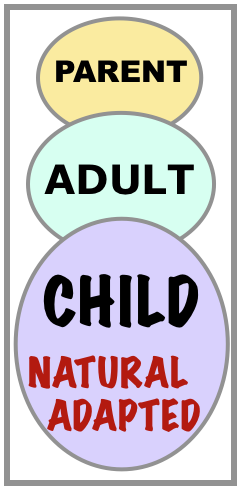
Being in our Adult Ego State allows us be in charge of our behavior (no matter how strong the emotion). Not afraid to admit when something bothers us, we can think of a rational, constructive, respectful approach before saying or doing anything.
Also, this gives us time to listen with an open mind to another’s point of view or explanation, and when possible – we can talk with confidence in a non-threatening way to help deal with a problem

• Constructive anger is assertive – it’s not held on to but rather released safely, allowing us to act in a positive way to remove obstacles from our path. It comes from a persistent desire to push toward solving a given problem rather than running from it. The underlying belief is:
“I have a responsibility to protect myself & my rights. And,
I respect others as fellow human beings, but not always accept how they behave”

• Constructive anger can actually help relationships grow & be more intimate, because it doesn’t get buried & come out in distorted, abusive ways. We can be honest with others about how we feel – direct & self-respecting, making ‘I’ statements, rather than blaming or attacking.

This allows others to know who we are, & when there’s something they can do or change, that will help improve the connection.
EXP: “I feel angry when you______ ”

• Constructive anger is also a key factor in moving people to join political & social groups, marches, crusades….. It’s about being fed up with how badly things are going, & the need to contribute to making positive changes.   (MORE…..)

Anger is PROACTIVE
🔸 When we’re trying to disconnect from an abusive narcissist (N.), anger is absolutely necessary to successfully escape. Anger overrides fear…. so allow yourself to feel angry. Show that anger assertively.
If you’re trying to go ‘No Contact’ with your N, feel your anger and use grey rocking. Sit in it.
It could save your sanity & maybe your life, as well as those of your children, if you have any. It will motivate you to do what’s needed.

• That does not mean being abusive or resort to name-calling, but it does give us the impetus to take action. Anger, unlike depression or despair, is a dynamic, Screen Shot 2016-06-01 at 4.21.04 PMtake-charge emotion that helps us make a stand, fight back, or get away.

IMP: Put your empathy on the back burner:

Eventually we can developed a level of empathy for narcissists because they have an emotional illness, & they do suffer.
But when you’re trying to disconnect, it’s better to hate them, even seeing their behavior as coming from a monster or demon. Save any empathy for later, when you’re stronger & safely away from the abuser(s).
❖ You cannot afford to have empathy for a narcissist WHILE you’re trying to get out of their clutches.
(
Modified from – The Lucky Otter’s Museum of Narcissism)

NEXT: Anger categories (Part 2)

Anger – CATEGORIES (Part 1a)

Screen Shot 2015-06-06 at 4.22.27 PMBEING ANGRY IS LEGITIMATE
but hurting others is not

PREVIOUS: Ways to react #5

POSTS: What about anger?
ACoAs
& Anger anger Pendulum

SITES: Pendulum & chart to identify anger style

Anger-EXPRESSIONS
Most people tends to use some or all of these mis-management styles at some point, depending on the situation & people involved. However, each of us chooses a preferred one (unconsciously & by family training) as our dominant pattern in daily interactions. So, just switching styles is not the answer – except for the HEALTHY form.

In addition to the standard list, now we’ve added:computer anger
COMPUTER: Anger/rage at either software or hardware that’s not working or too complex
INTERNET: Flaming emails, being flooded with spam, abusive texts, & lurking?….
TRANSPORTATION: Cutting someone off, tailgating, overt road-rage, drive-by shootings

NOTE: The following ancient story has to do with the harm we can inflict on others by our angry verbal & physical actions – NOT the harm in the emotion of anger itself.

ZEN STORY: There was once a young man who was as tired of his fits of rage as were those around him. He’d get mad at the most trivial things & then later apologize. The apologies stopped having any meaning because his behavior didn’t change.
He was convinced that his anger was ingrained, out of his control, & wondered why his loved ones couldn’t see that & accept him as he was. Finally one day he pleaded with his guru for help & enlightenment.

“Take a wooden board. Every time you get angry, drive a nail in it. Come back and let me know whenchinese story the board is full.”
The man followed the advice religiously. Before long, in just a few weeks, not a bit of space was left on the board – it was full of nails. He looked at it & felt ashamed. He went back to his master to report.
“Now, make a conscious attempt to control your outburst, & each time you succeed, take a nail out of the board. Bring back the board here when there are no more nails in it.”

He agreed, but this took much longer – many months in fact – to clear the board. Eventually he experienced a sense of control over his anger & felt relieved on seeing the plank cleared of nails. When he went back to the guru with empty board, he was told:

“Ah! I see you have cleared the board, but how dearly I wish you could restore it to its original state by somehow making these gaping holes disappear. The damage done in anger may be withdrawn – like first nailing & then pulling them out – however, it can never be undone. A mark will remain forever.”

IMP: This does not mean we eliminate the emotion, only change the way we express it!

CHART from Kundanchhabra 

NOTE: Here is the reference list for this blog ⬇️


NEXT: CATEGORIES (Part 1b)

Anger – Ways to REACT (Part 5)

heart brak angerLET’S SEE – WHAT LEVEL
of rage am I at right now?!

PREVIOUS: Ways to react (Part 2)


LEVELS of angerVariations (cont)    6. Emotional INTENSITY //
7.  Anger Matrix  // 8. Anger SPECTRUM

9. Anger Thermometer (Kassinove & Tafrate) 
• All uncomfortable emotions are signals we need to pay attention to, because they indicate that something’s bothering us or that something’s really wrong. And – maybe we need take an action, ASAP.
Knowing the levels of Emotion Signals is a way to be in charge of ourselves, but have to be learned. Awareness = Empowerment

THIS chart shows a gauge of anger levels, so each category can be expressed clearly & directly, using the word most closely identifying the intensity at the moment.

After considering the options, answer this Q, with the Percentage Level:
“When I consider what we’ve been talking about / what’s been happening, I feel__________”.

• Stress creates emotional & physical feeling states, & is part of life. When over-stressed, our ability to handle things goes down & the tendency toward anger goes up.
We over-do, yet over-expect what the payoff ‘should’ be.
OR – we blame ourselves for not being able to cope ‘perfectly’ in all situations, which is totally unrealistic, & is based on one or more CDs (cognitive distortions)

Sadly, our culture rarely gives permission to ‘do less’, nor gives the help needed to handle all that’s expected of us. SO – it’s up to us to realistically minimize stress & find as much support as possible, in order to thrive.

10.Anger Management Techniques” (Dr. DeFoore’s eBook” – Escalation levels : 1 = LEAST, 10 = MOST intense)
Level 1
. Cool, calm & collected. You may or may not actually be happy, but definitely not angry, anxious or irritated
Level 2. Slightly irritated or agitated, but not enough to bother you or affect your behavior. You can see the big picture about problems,
but it’s hard to relax

Level 3. Irritation & frustration are fairly high, just starting to affect your behavior. It is almost impossible to relax & it’s getting harder to put things in perspective or have empathy for others

Level 4. People are really starting to bother you, so you don’t have much patience. You usually don’t say anything, still stuffing the anger. You don’t feel settled at all, but can still focus enough to make realistic decisions

Level 5. Now you’re ready to yell – at that other driver, or text nasty messages to give someone a piece of your mind.
You don’t act on these impulses yet, but are getting short & irritable with others, while still trying to be friendly. Starting to have tunnel vision.

Level 6. Now it’s just not fun anymore. You’re frustrated & angry at yourself & pretty much at everybody else. Others are starting to notice something’s wrong, as you get more short-tempered & jumpy. Your thinking is not as clear as it usually is

Level 7. You’re thinking stuff like “This has to stop / I can’t take this any more / I’m going to show them they can’t do this to me / They’ll get what’s coming to them…..” You’re obsessing & very tense. You need help

Level 8.
Now you’re coming up with a (bad) plan. You can’t take it any more, so you’re going to take action, because it feels like you have no choice. Something has to change. You’re not thinking clearly, & even though you know it might backfire, you’re considering retaliation

Level 9. Now you do take action – yelling, threats & intimidation. getting angierYou’re wondering what more you can do to show how angry they’ve made you, & how wrong they are.
Your emotions are running you, without any logic. You really need some anger management help, but you probably don’t know it

Level 10
. At this point you’re dangerous to yourself &/or others – in fight mode, with the primitive brain in charge. You can only see one course of action (tunnel vision) & all you want is to make the pain stop.
You feel helpless & vulnerable, which is unbearable, but desperate to hide it. How else but with anger & lashing out? 
Immediate help is recommended!

NEXT: Anger Categories (Part 1)

Anger – Ways to REACT (Part 4)

PREVIOUS: Ways to react #3

SITEs: Managing anger-frustration

✦ 10 things to never say to your children

LEVELS of anger – Variations (cont)
4. Three TYPES of Anger
a. Hidden // b. Habitually IRRITATED // c. EXPLOSIVE

5. Anger EXPRESSIONS (CHART by Don Lehman Jr ▶️)
PART 3 covers the first 4 responses (a-d) Fight, Depression, Flight & Revenge. Here is the last, & the only healthy one:

e. Compassionate Confrontation (last on chart)
The appropriate response in most cases, when angry, but a rarely used ‘language’ in our culture, because it’s the hardest to implement at all, much less on a regular basis.

√ Flight and Depression responses are too passive, only encouraging the expression of Anger from others & cultivating Fear in us
√ Fight or Revenge – under normal circumstances are an over-reaction & too harmful, adding to a negatively charged atmosphere

Compassionate & non-violent expressions of anger avoid the need for the other 4 responses – in most cases. Instead of prolonging the Anger, appropriate ‘confrontation’ (dealing with it) will diffuse intense painful emotions & hostile behavior.

ragerEXCEPTION: When having to deal with mentally ill people & pathological narcissists for any length of time – frustrated anger is inevitable.
Their interactions are so toxic that Flight – in the form of physically removing oneself – is the only safe & wise course, especially when they unleash abusive rage at us or our loved ones.
(Posts : Recovering from Narc Abuse)

Also, we can put up a mental shield to protect our Inner Child from absorbing someone else’s rage-poison. It’s important to explain to our WIC that their intensity is coming from their WIC, and is not because of us.

Compassionate Confrontation may include:
• having the right state of mind (step aside, like a matador facing a raging bull)
• understanding what’s going on with both sides of a dispute/issue
• arranging a meeting, if possible (wait for a ‘good time’)
• explaining your observations & feelings, without ranting or blame
• actively listening to the other’s point of view
• trying to find a win-win solution
📌 This process may have to be repeated more than once to work itself out. OR it may not work at all!

6. Emotional INTENSITY (Adam Blatner, M.D.  7 levels)
(0) – Feel angry subconsciously but not show it
(0.5) – Anger shown through subtle clues
(1) – Displeasure shown without blame
(2) – Takes more irritation to cause a response
(3) – Anger with a scowl or harsh words
(4) – Anger with loud speech & expression
(5) – Losing temper, in a rage, physical aggression

7.  Anger Matrix (CHART ➡️ re. Elvis Dumervil)  is the same levels of intensity, but using fun statements to represent each

8. Anger SPECTRUM (MORE… scroll down)
Anger is experienced on a broad continuum -mild to extreme- with distinct levels that have different effects on us mentally, emotionally & physically (TEA).

The chart illustrates this broad range, the triggers that correspond to anger as it increases, & ways to deal with them. Notice the signs of escalation, such as when someone:
• starts pacing or fidgeting
• clenches fists, or tightens / untightens their jaw
• has sudden changes in body language or tone, used during a conversation
• changes type of eye contact (psychological intimidation)
• forms the “Rooster Stance” – chest protruding, arms more away from body….

When we notice & acknowledge Red Flags (Emotion Signals) in ourselves & in our environment, we can recognize anger as it builds. Paying attention to these signals will give us time toanger spectrum use anger- management skills which can be learned, to keep our reactions from getting out of control, & so interact with others better

EXP of Bad Parenting: Scolding a young child “Don’t be a baby”. This means: ‘don’t have your feelings OR don’t let your feelings control you’. Since adults are rarely in control of their emotion – how can parents expect children to be, especially without any guidance or example? (Bio-chemically & developmentally small children can’t anyway!)

Interesting fact: Children in many non-Western cultures are not expected to control their emotions until after age 6, when they’re trusted to herd animals, tend to younger children, & do other grownup work, including sitting still in school.
Naturally, for those with physical of mental difficulties, it can take longer.
BTW – ‘Being in control’ actually means having a choice, which in this case includes being able to think before reacting.
(Posts : “Anger & the Brain” ) 

NEXT: Ways to react #5

Anger – Ways to REACT (Part 3)

escape

I LOSE MYSELF IN ESCAPE
when I can’t face my ange

PREVIOUS: Ways to react (#2)


LEVELS of anger – Variations
4. Three TYPES
(cont.)
a. Hidden Type (Part 1)
b. Habitually IRRITATED Type  // c. EXPLOSIVE  (Part 2)

5. Anger EXPRESSIONS (CHART by Don Lehman Jr ↘️)
e. Last Compassionate Confrontationin next Post (#4)

a. Flight = (internal) running away from someone who is angry or is triggering our anger. This starts internally – shutting down emotionally, but can also take the form of temporary physical paralysis, leaving the situation as soon as possible, or permanently avoiding angry people / situations (isolation).
Sometimes the Flight response encourages aggression in the other person, if they feel disrespected or abandoned, adding to our Fear/Terror

Flight in adults is:
√ most often an inappropriate response to a current event – which may in fact not be abusive at all but is experienced that way – as a PTSD reaction from long-term childhood trauma
OR
√ appropriate when there’s a very real present-day abuser we need to get away from, which can be emotional & psychological, or a threat of imminent physical danger

b. Depression = (internal), when anger is not dealt with, & gets turned inward on oneself
• Lashing out can cause guilt & alienation, leading to depression OR
• Long-term depression creates isolation, make emotions overwhelming, & increases the likelihood of anger outbursts. Breaking this cycle usually requires therapy & sometimes meds. Al-Anon & Spirituality helps too.

c. Fight = (external) a verbally or physically violent confrontation, either to what’s ‘causing’ the anger or to the angry person. Usually a Fear cover-up reaction, the other half the Fight-Flight response hard-wired in our brain for protection.fight reaction
— Appropriate when we or someone / something we love is threatened
— Not appropriate in most current cases (also part of PTSD)
NOTE:
• Someone can accidentally step on our emotional toes (land-mine) & get blasted
• Unhealthy people who know us well, know our buttons & can always push them to manipulate, punish or get back at us (sibling, boss….)
• Some are perpetrators who use anger to get ‘a rise’ out of others, which many ACoAs will fall for, since we have hidden reservoirs of anger easily tapped into
• Narcissists can easily get us riled up because of their inability to consider us at all, as if we didn’t exist…….

d. Revenge = (external, indirect) can start as a retreat, in order to attack later (Passive-Aggressive), & can be habitual but unconscious.
When it’s deliberate, it includes obsessive planning, made between injury & retaliation.    IMAGE 🔽 : “Cycle of Revenge

Considered consciously, these angry people start by evaluating the possibility of winning or losing. Because of the emotional intensity, they can easily overestimate their personal power – getting into unnecessary losing battles (Fight).

Revenge & Fight responses from an anger-victim are linked:
– Revenge as a desire foo regain control over a situation
– Revenge as retaliation for an injury (real or not). If someone is truly in a powerless position, it may seem the only option to express ‘displeasure’.
Both can lead to increasing external damage, as each pours gasoline on the emotional fire

Abused children:
– may vow to never again let themselves be vulnerable, so become hostile toward others on the theory that “a good offense is the best defense”
– may over-generalize & want to take revenge on an entire group (all men, all authorities….), only some of whom may have actually harmed them
– may be reinforced & rewarded by becoming a bully, finding that it helps raise their ‘street cred’.   (CHART + good info)

• However, if a perpetually angry person’s emotions do not completely overcome their reason so that they figure they’ll lose by using a frontal attack, (Fight) they’ll resorts to the P-A Revenge response.
Punishment is then dealt out just as in Fight, but done later – when the victim least expects it, maybe in small doses & anonymously, or may come in disguised form. (2 Posts : ACoAs wanting Revenge“)

◀️ NOTE: Not Included in Lehman’s Chart, but part of the reactive sequence:
Freeze – Blanking out / dissociated, can’t talk, muscles get physically “scared stiff”.
Freezing is fight-or-flight on hold, preparing to protect yourself even more. It’s also called ‘reactive or attentive immobility’. It involves similar physical changes, but instead you stay completely still & get ready for the next move.

Fawn – a 4th F has been added, which is basically co-dependent people-pleasing .

NEXT: Ways to react (Part 4)