MASLOW’s pyramid of NEEDS – Intro (Part 1)


PREVIOUS: Dealing with Difficult People

SITE: ‘Unmet Human Needs’

*** POST : “ACAs – Vicious Cycle re. Needs


🔹 NEEDs  –
A psychological feature that arouses any organism (humans….) to move toward a goal, giving purpose & direction to their behavior.

NEEDS are normal, made up of all the elements required for developing a safe, stable & healthy life. Having an accurate & sufficient amount of them fulfilled is imperative, since a deficiency will have severe consequences : dysfunction or premature death

Having needs can be said to be the ‘costs of being human’. People who don’t have enough of them met (a ‘needy’ person) function poorly in their personal life & in society. Feelings / emotions indicate whether or not our needs are being met & to what degree – so they’re neither good nor bad, right nor wrong – just very necessary 🙄

EXP: Sexuality is used everywhere in our culture to sell goods & services, by stirring a desire for things we may or may not need. This works because sex is one of our basic instinctual needs, so we react automatically, unconsciously.

🔹 WANTs – Desires, wishes or aspirations that are not vital – things that must be (should be) earned. This is not to say we shouldn’t have wants. The desire to have someone or something good is part instinctive & healthy, & part personal taste – something to strive for that adds pleasure to our life

🔹 DEMANDs –  People (even famous or powerful ones) can get into trouble when they demand to have their wants met – especially without contributing anything positive towards getting them. Being demanding is arrogant,  presumptuous…. but comes from neediness & an immature feeling of unfairness.

We had every right to expect that our family provide normal human needs when we were young – but had little control about getting them. For many of us this was done poorly or barely at all, which created a sense of desperation that can trigger the compulsion to demand that others make up for those early deficits.

However, it’s not legitimate for adults to assume that other adults should fill the empty hole in our emotional/ psychological gut – which is our responsibility to provide. Nor is it ‘sane’ to demand something from a person who absolutely does not have it to give – like NPDs or the disabled.

❣️ HAPPINESS – The Pyramid of needs is one of the best-known theories of motivation. Inspired by the work of Carl Jung & humanistic psychologist Erich Fromm, Brooklyn-born American psychologist Abraham Maslow (1908-1970) believed that the urge for self-actualization is deeply entrenched in the human psyche, so that the desire for happiness is equally worthy of attention, but is usually based on more basic needs being met first.
He believed that a great personal (non-spiritual) tragedy for many is dying without ever knowing who they really could have been – their True Self. (Maslow’s life & writing)

This Hierarchy points out the possibility of growing intentionally – to develop our unique identity & skills, & use them creatively to benefit ourself & the world. Maslow was dissatisfied with the 2 main theories of his time – Freud’s Psychoanalysis which dealt with mental illness, & Skinner’s Behaviorism which reduced humans to mindless machines or animals.

He wanted to identify mental health & happiness, not just focusing on misery. To that end he studied positive human characteristics, looking at the lives of outstanding people such as Eleanor Roosevelt, Albert Einstein, African American abolitionist Frederick Douglass, & Jane Addams (the ‘mother’ of Social Work)…..

Synthesizing piles of research re. human motivation (the inner drive to get what we need), Maslow created his Needs pyramid in 1954. He concluded that when our basic physical needs are satisfied, other higher ones can be recognized & worked on, & once those are met, even higher needs can become our focus. The assumption was that people first have to be on a solid foundation – providing the Deficiencies (Level 1 -3), before they can work on Growth.

PS – as of the 2000s : This is no longer considered the best theory – being too rigid & not accounting for personal individuality.
However, it’s included here since the individual stages have validity.

NEXT: Maslow’s Pyramid #2

DEALING with Difficult People

PREVIOUS: Difficult types #2

 SITE: How to deal with each type


TRUTHS to REMEMBER about Difficults:

😽 We may be able to put a dent in their bad behavior with positive reinforcement – but it doesn’t work on everyone. The best we can do in any situation is to set firm boundaries – let them know you don’t want to be around their negative attitude, & won’t tolerate their bad behavior.

▷ Don’t take their behavior personally! Their negative patterns are their False Self

▷ Don’t fight back. Don’t try to appease them. It won’t work because they have an insatiable appetite for more – denial, drama, cruelty, isolation, arrogance …..

▷ Don’t try to beat them at their own game. They’ve been practicing their skills for a long time, & you’re a beginner by comparison

▷ NEVER try to change the difficult person, which you can’t do to anyone else anyway, only your reactions to their behavior. By shifting your responses, D.P. may decide to change….. but usually not. However, you will feel better.

▷ Do NOT make excuses for their behavior. When you do that you’re just enabling them to continue without having to admit any responsibility, & you lose your personal power

▷ Their behavior is habitual, so they act this way with most people. Think of others who’ve had a hard life but have not become difficult

Some Options – Handle them by:
• Avoiding • Circumventing • Confronting • Discouraging • Exposing • Identifying • Ignoring • Informing • Isolating • Neutralizing • Predicting • Rehabilitating yourself

COPING
• Act normally
When dealing with difficult people, it’s important to be your mature self – maybe even slightly better. It won’t help to people-please, try to control them or get angry

• Communicate well
If they’re still ranting or pontificating at you, see beyond the label or accusation.  If possible, propose another point of view – trying to understand where they’re coming from – without agreeing. Know how to ask the D.P. relevant questions & then give them lots of room to answer.  If they’re consistently unreasonable, don’t try to get through to them!

Control your Emotional Responses
Never lose your temper or shout at them. Being quiet & centered has a greater effect. Volatile or negative people often respond better when others are neutral or positive.
This may be hard to do consistently because they can get to us, but it’s worth the effort. By not engaging, we make our day more pleasant & maybe give them a break from their misery 😇 (POST : emotional resilience)

• Get direction from others
If necessary, consult someone you trust to talk over the situation or the personality type you’re dealing with – to get feedback, for guidance & to consider solutions, or just get important validation for your observations 

• Get down to the core issue
Try to find out what the real issue is that’s causing the D.P. their  problem (if possible) & then address that – rather than how it’s being presented

• Meditate
Take time to quiet yourself in whatever way works for you. If the situation is pushing a button in you, comfort the Inner Child, identifying what’s causing your anxiety or rage. Only then can you explain current reality to the D.P, & maybe work out some options

• Remember the numbers
Studies remind us that mental health plays a major role in maintaining physical health.
Negative people are more affected by stressful situations & are more prone to illness.

• Respect the person
No one likes to be treated disrespectfully. The more considerate we are toward D.P., the better they react. A version on the Golden Rule is: “Give respect, expect respect” while keeling boundaries.

• Stand back
Sometimes it’s best to ignore bad behavior, to get a perspective on the situation, especially if this is a consistent pattern of theirs, AND if you know the they’re ‘dangerous’ when under severe stress.
Remember – NEVER take their behavior personally!

Take a stand
At other times – it’s necessary to speak up for yourself, calmly saying what is acceptable to you & what is not. Understand your realistic options & develop one or more strategies based on that. Always have “Plan B”. Take actions & persevere.

NEXT: Maslow’s Needs pyramid,  INTRO #1

DIFFICULT People – Types (Part 2)

PREVIOUS: Difficult people – #1

SITE: Why being kindhearted attracts Toxic People


Some STYLES of Difficult People (D.P.) cont.
• Narcissists : one of the most D.P., they assume everything is about them, nothing is their fault, the world owes them, & they can do no wrong. However – narcissists come in several shades of puce // (in old French fashion). Those are the narcs who take everything personally, too easily slipping into abandonment & self-hate mode, making you feel bad for them

• Over-reactors : the emotional bleeders who are mortally wounded by any helpful suggestion for improvement, any hint at the need for a correction or change, or just looking at them the wrong way…. forcing everyone around them to walk on eggshells

• Paranoids : assume they’re always in some kind of danger. Being distrustful, they’re constantly suspicious of other people & their motives, interpreting comments & actions as being aimed against themselves

• Passive-aggressives : (see posts) They’re mostly big phonies – hiding upset emotions by pretending everything’s okay. However, their true feelings show up by sabotaging their own life or the activities of others, or sneakily getting revenge

• Pessimists : (see posts) believe they have no control over anything, but also that no one with power can be trusted. They think in B & W, & assuming the worst, undermining morale at every opportunity in every situation

• Psychopaths : (see posts), defined as “a pattern of disregard for, & violation of, the rights of others”. They can hide in plain sight because they’re good at faking ‘normal’, and because most people don’t want to believe someone they’re around can be so awful

• Subtle Snipers : experts at taking pot shots & making sneak attacks, they use mean humor, saying something ‘nice’ in a sarcastic tone, disapproving looks, innuendos (implied insult)…. but deny it all

• Tanks: aggressive, with in-your-face verbal & physical behavior – their goal is to overpower everyone at all cost: “I win/you lose!” They never back down, & expect others to either run away or attack back

• The Know-it-alls : addicted to showing off, they have a knack for b.s, but don’t actually know what they’re talking about. OR, they learn just enough about a subject to sound like an expert, which can fool some people, some of the time – all to get some attention

• Yes people : trying to please everyone & avoid confrontation, they agree without thinking things through. Reacting to the latest demand on their time, they over-commit, ignoring prior commitments, and never have time for themself. Then become resentful
• No people : disguised as a mild-mannered normal person, they fight to hang on to futility, hopelessness & despair, killing momentum & creating constant friction. More powerful than Hope, they’re deadly for morale, able to defeat good ideas with a single syllable

• Maybe ones: consumed by indecision, they get lost in analyzing things to death, but never take action. They procrastinate, hoping a better choice will come along, but they wait too long & miss out. Or, afraid to risk hurting or upsetting anyone, they say nothing at all

• Nothing ones : they afraid to contribute to any conversation. Give no verbal or nonverbal feedback. Nothing. They’re especially dangerous if they “Say Yes – but secretly mean NO”

• Silent ones – timid people who retreat into a shell to avoid conflict & personal responsibility. They may not be obviously difficult, but leave a hole in their environment. They get away with not talking because most people are uncomfortable with silence, who will too quick fill in the gaps for them
HOWEVER : Silent ones may be true introverts, needing quiet time to process or concentrate – or to shut out an uncomfortable/painful home or work environment. They’re not a D.P. but still can make some people wary or uncomfortable

NEXT: How to deal with….

DIFFICULT People – Types (Part 1)

PREVIOUS: Difficult People – Intro

SITE:  Humans are naturally Selfish

LOOKING at YOURSELF – just for a minute 😊
If we consider someone to be difficult – it may be that:
💧 our 2 personalities clash – which we can’t change or fix. It just is.
💧 we can be the difficult one, rubbing others the wrong way
💧 we misunderstand the other person’s behavior or group’s goal
💧 they are indeed difficult, but trigger an old unhealed issue in us

Since everyone brings preconceived ideas & attitudes to every situation, we tend to interpret observations of & interactions with others thru our personal lens – ‘glasses’ that are not always wiped clean. AND, much of the time we have no idea what’s really behind someone’s ‘weird’ style, yet we unconsciously fill in the blanks with wrong assumptions about them

Being disruptive in whatever environment they’re in, Difficult People (D.P.) push buttons in others – especially those who have to deal with them for a long time. It’s very wearing.
But what upsets you may only be irritating or neutral to ‘the next guy’.

So it’s truly empowering to figure out & deal with what sets us off, those buttons our family installed & are now stuck in the WIC. Fortunately we can understand the root cause of our reactions to D.P., instead of being confused, & feeling tapped by them.
It’s a 2-parter:
• identify your strengths, skills & preferences, as well as the old wounds that get triggered
• learn about each D.P. type & their antidotes
EXP of buttons: Being accused wrongly, treated as unimportant or invisible, having your ideas or work usurped by someone else, talked to as if you’re stupid or incompetent, trying to control you….

ASK yourself :
• What emotional tornado does this D.P. set off in me? (terror, rage, desperation….)
• What do I do in reaction? (fight, isolate, rat on them…..)
• In general, how do others handle my carrying on or withdrawing?
• How does my D.P. deal with my reactions ? (be hurt, justify, make fun)
Am I the difficult person triggering others to react badly?
• Do I just keep reacting to the D.P. in my life, OR am I diligently working to find better ways to manage myself & others?
👞 💼 👡 👜

Some TYPES
• Complainers : fearful, with little faith in themself or others, they assume the whole world is hostile. They’ll make a general complaint about something & then walk away without being specific. Nothing ever works out for them, & their constant discouragement can make others feel despairing too
VARIATION : Help-Rejecting ↗️

• Controllers / Dictators : they’re compulsive micro-managers, acting like they know best how to do – everything. They don’t want anyone to be different – it’s their way or the highway. They have a “pervasive pattern of grandiosity,” & can be vindictive when challenged

• Cranky : easily irritated about even the smallest frustration, indirect anger at the world for not automatically providing their needs. For some it’s deliberate, to help them get their way. For others, crankiness is a true reflection of being needy

• Critics : they find fault with everything & everyone, but are not interested in solving problems or improve situations. They won’t lift a finger to help, but are the first to point one  

• Grenades : after a brief period of calm, the grenade explodes into unfocused ranting & raving about things that have nothing to do with present circumstances – but you never know when they’ll blow

• Know-it-alls: they’re very knowledgeable & competent, but give long monologues with detailed, arrogant arguments to bolster their opinions. Their goal is to eliminate any opposition by finding flaws or weaknesses that will discredit other points of view

• Liars : most people lie a little, sometimes. But compulsive liars embellish or make up reality even when it’s just not necessary. They think it’s the only way to protect their vulnerable under-belly.  It insures that they’re unreliable, frustrating any kind of closeness.

NEXT: More Types #2

DIFFICULT People – Intro

PREVIOUS: PARENTING Introvert Children

SITEs:  How to Tell if You Are Self Absorbed


General CHARACTERISTICS


As ACoAs, when young
– we had no choice but to become enmeshed with our specific set of Difficult People, brainwashed into accepting their messages without objection and to ignore the damage it did to us. We were at their mercy, & rarely if ever did we get help to cope with them, or learn how to protect ourself in healthy ways.

So, it’s imperative to identify & acknowledge what & who we have to deal with, instead of questioning our observation of dysfunction, or denying them completely.

Difficult people (D.P.) are manipulative, controlling & bratty – with most people, most of the time – who function from defenses developed in response to their damaging background. Internally conflicted, their patterns are usually unconscious. Dedicated D.P. don’t like it when they can’t play out their shtick (pattern), or are called out on their negativity. When they don’t get what they want from one person or environment, they move on to the next innocent sucker.

DON’T IGNORE the red flags:
a. They rarely have empathy for others, &
b. Are always angry OR always miserable
While most people have one or more of the following characteristics – some of the time, in some circumstances – negative personality traits & attitudes of D. P. are entrenched, in the form of personality disorders (More….)

1. It’s all about them = Narcissistically opinionated, they always need to be the center of attention. Dramatic & fueled by reactions from others – their life is like a soap opera. Asking “How are you?” will open a can of worms, & a story can turn into a novel

2. They’re Victims = They’ve never gotten over childhood & marital trauma – stuck in the past, telling & re-telling stories of pain, failures & guilt. They’ll reel you in by using illnesses, family & tragedy – as a manipulation to make you feel sorry for them

3. They never do a favor without collecting = They’re always scheming to get something for nothing – self-serving, with no shame or compassion. If they do you a favor – you’re going to pay for it, big time. They’ll keep reminding you of what they did & what you owe, even though you’ve also helped them in the past. But admitting that you have -would not serve their interest

4. They’re oblivious = They have no idea what’s going on in reality – living in a world only they understand. They’re not dreamers & trailblazers, but rather in deep denial – undependable & irresponsible. They’re so vague it’s hard to have a serious conversation with them

5. They blame, gossip & whine = If they’re gossiping with you about others, they’ll do the same about you. They blame others for their troubles & whine to get attention. They complain about everyone – to you – but put on a big smile for the ones they just trashed.  (modified from Adorablequotes4u.com)

They’re some combination of :  • arrogant • disrespectful  • negative  • passive-aggressive  • pot-stirring  • selfish  • unmotivated & lazy • disregarding common decency or rules  • not responsible for their behavior

More SIGNS of a Toxic Person (the more of these, the more toxic)
NOTE – not all toxic people are obvious in how they treat others – like the bullies & tanks do. Some do it by withholding or being sneaky, but all have a harmful effect on others: Only what they think, feel & want matters . THEY :
• are critical, controlling & never consider anyone else’s (your) needs
• act like they’re fabulous & never make mistakes (perfect)
• dominate conversations, & leave no room for you
THEY
• drag up your past & use it against you, & won’t let you be different from them
• leave you feeling guilty & ashamed about who you are
• leave you wounded = feeling battered, bruised & torn apart
THEY
• make fun of even the smallest actual or imagined flaw in you
• spread gloom, & keep disappointing you
• violate your boundaries, & never respect a ‘no
AND
• The angry ones don’t care about your feelings & like to see you suffer
• When you’re around them you have to walk on eggshells
• Nothing you say or do is ever good enough for them
You end up ‘checking out’ &/or ignore your own values

NEXT: Difficult types #1

MBTI : PARENTING Your ‘I’ Child – DOs & Don’ts

PREVIOUS: Introvert CHILD

SITEs : How to Raise an Introverted Child” 

• “So Your Child is an Introvert”

15 ways to better parent your Introvert

Mistakes parents make with an introvert child

3 MBTI MOMS – & their gemstones)
PARENTS

to DO: Some time each day should set aside time for the child to not have to deal with anyone else or have to interact at all.
They don’t like small talk (especially with strangers). This isn’t shyness.
It means they:
1) want to skip meaningless chit-chat & stick to the important stuff
2) like to form a safe connection first – to trust that they’ll be listened to, understood, & taken seriously. This cautiousness is too often mis-interpreted, but is actually appropriate if the adults aren’t safe

DON’T insist that the child must talk as soon as you notice a problem or stressful situation. They won’t be able to clarify their thoughts until they’ve had time to sort thru what’s bothering them, maybe during a quiet car ride, or an hour climbing trees. Only then is it OK to ask something like – “How was your day at school?”

PARENTS
to DO: If you want your child to form a valuable connection with anyone new, start by being their ‘bridge’ instead of pushing them together & expecting things to take off ‘naturally’. That only works with Es, & even then not always. Then if the child is allowed time & space to feel safe, they’ll be more willing to connect
DON’T: Announce your I child as being shy (a form of shaming), or make them ‘perform’ small talk, which would be fake & create stress

• Because they process thoughts & emotions internally, it can be hard for parents to know what their I is feeling. Is take in stimuli, hold them & toss them around for a while to decide what they think, how they feel & if they want to respond to it all. When too much emotional turmoil builds up, & the child feels flooded, it can erupt as a ‘random’ or mis-directed outburst

• Comparing: the E child takes in stimuli, turning the energy right back out at the world. A disagreement with a friend? Loud angry words go ‘right back at’cha’. An exciting ride at the fair? Boisterous chatter, laughter, shouting. Enjoying a great movie? Exited reactions & commentary throughout. NOT like an I.

PARENTS
to DO: Make the effort to learn what your child is thinking & feeling. To help them communicate – when they’re ready – give them outlets like journaling, art projects or lots of time for free play with stories, imaginary characters or toys (pounding nails into a block of wood…). It’s also important to give them several possible words to choose from.
DON’T: Assume that because they’re is not having an outburst that they’re “fine.”! Tantrums are simply the last straw for an I. If that does happen, be totally accepting & available to listen thoughtfully. If they’re having trouble finding words, see if they’ll draw what’s going on, show it with dolls, toy soldiers, or make up a song, a rhyme…..

• They prefer single play dates to play groups, which is a balance against their need to be alone. One-on-one encounters allow kids to get to know each other more easily, & more deeply, which Is crave. This is generally true for most children, but imperative for inner-oriented ones.

PARENTS
to DO: Help your I child develop a few close friendships rather than a variety of ‘light’ ones. Keep birthday parties small & intimate.
DON’T: Equate happiness with being a social butterfly. The more people they have to deal with, the thinner they have to spread themselves. That makes it harder to enjoy time with others, or to process it all.

• They enjoy activities that let their minds wander. Any opportunity to think, pretend, get creative, solve problems, day-dream or otherwise stay in their head is welcome & beneficial. Great introvert activities:
— biking, climbing trees, fishing, gardening, hiking, jumping rope, learning an instrument, on a swing, painting, play dough, puzzles, construction, playing catch, reading, skating, sketching, swimming, writing….

PARENTS
to DO: Support & encourage your child’s natural interests. Notice anything they want to do or know about – if it’s safe & healthy!
DON’T: Force them to participate in group activities you think will ‘improve’ social skills or teamwork. While group sports do have a lot of value, not participating isn’t a negative. There are many other ways for children to assert talents, learn new skills, & develop strengths.
«


«
NEXT: Introvert child

MBTI : INTROVERT Children

PREVIOUS:
Introvert Growth, #3

SITEs: Why introverted kids are awesome

MBTI16 Types of MOMS


TELL your INTROVERT CHILD their special ways are normal:
❇️ You know yourself
Because you like to spend time alone & enjoy your own thoughts, you know a lot about yourself, & how different things can make you feel. Figuring out who you are & what matters to you is a great way to use all you traits to help you grow & develop your talents

❇️ You’re a talented problem solver
You have larger, thicker gray matter in your prefrontal cortex than your extroverted peers – that command center in your brain responsible for complex problem solving, information processing & decision-making.  Your brain is literally built to ponder. So when facing a challenge, you thrive on brain-power to work out solutions.

❇️ You’re careful & discriminating
Sometimes it pays to take risks, but you know it’s smart to ‘look before you leap’ into something. In fact, because information takes a longer journey through an introvert’s brain – than Extroverts – it’s normal for you to hang back a little & study new situations before deciding to participate, which gives you the chance to make better choices

❇️ You have amazing ideas
Taking the time to be quiet & listen to your inner voice, you end up with lots of interesting ideas that can eventually turn into great discoveries, products & careers. Like Bill Gates, J.K.Rowling, Emma Watson, Rosa Parks, Christina Aguilera…. Keep listening to yourself, and keep thinking!

❇️ You’re observant
You like to think about all kinds of things, which includes noticing & investigating what’s going on around you. Introverts think everything through thoroughly, creating pictures in their mind, which helps them vividly remember events & details. This makes you awesome at recalling your own stories & other people’s as well

❇️ You’re reliable
Chances are, even if they don’t always show it, the adults in your life know you’re dependable, which intuitively gives them confidence in you. They value & depend on you for being trustworthy. Being organized makes it easier to keeping your promises & plans, especially since you think carefully about your actions before you do something

❇️ You’re a great reader & writer
It’s natural for Introverts (Is) to love reading – as part of their quiet, alone time. And the more you read, the better you can write. Reading gives you inspiration for ideas & a better use of language, which you can show off in your imaginative & well-thought-out writing.

Being forced to write fast or in a short time is not your thing – you like to have space to think about the plot, the characters, locations & problems in the story you have to iron out. Isaac Asimov, author of ‘I, Robot ‘ once said, “Writing to me is simply thinking through my fingers.”
❇️ You make a great leader
This one may surprise you – you have wonderful leadership qualities which you can develop as you mature. Introverts project calmness in times of crises, think before they speak, & ask great questions – all the marks of an effective leader & doer

❇️ You’re peaceful
Introverts are rarely bullies, because they’d rather figure out how to explain their point of view than pick a fight. Because you have a calming effect on others, you can usually solve conflicts by talking it out, rather than getting physical. That doesn’t mean you don’t get excited or angry sometimes, but you don’t get crazy, especially in tough situations
❇️ You’re fair
You are a terrific listener, & want to hear everyone’s point of view before deciding what you think about a situation. People love to have a friend who will carefully evaluate what they’re saying & give fair opinions. You’re great at paying attention with your whole brain, not just the ears

❇️ You have deep friendships
You may feel overwhelmed or tired at a big, noisy party, but you love spending time with very close friends. Because you care deeply, are loyal, & have great ideas – you making close, even lifelong friends. This is one of the great rewards of introversion. (Song...)

NEXT: Parenting your Introvert child

GROWTH for INTROVERTS (Part 3)

PREVIOUS: Growth #2

SITEs: 56 Best Jobs for Introverts, by sub-type

BOOKs: The Highly Sensitive Person ~ Elaine Aron
The Biological Basis of Personality ~Hans J. Eysenck

HELPFUL SUGGESTIONS (cont.)
9. Go BEYOND your Comfort Zone

10. Identify your Cognitive DISTORTIONS (CDs)
Is are just as susceptible to distorted thinking as Es, which has nothing to do with temperament. If you’re prone to being emotionally flooded because of CDs, such as B & W thinking, personalizing, catastrophizing, over-generalizing…..you can be held back in life.
🔆 Learn about them, notice when they crop us, & then correct them, a little at a time.

11. Identify your EMOTIONS
Is need time to process emotions privately, but also to share them with someone who’s trustworthy.  To reduce denial, learn to identify Emotions so you know what you’re feeling. Give yourself permission to experience them all, without judgment, finding healthy ways to handle them internally & then express them safely.

• You can have a wide range of emotions – not just the ‘acceptable’ ones – without violating your values, & continue pursuing your goals (actions), no matter what your emotions are. Being able to manage them well can make it easier to deal with difficult relationship, or to work things out when others disappoint or act out on you

12. KNOW your I variation
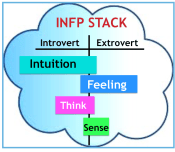
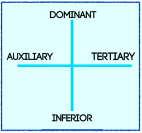
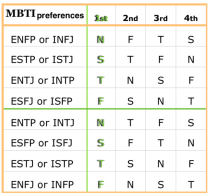
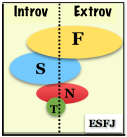
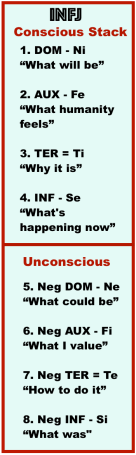
Introverts (& Es too) come in different ‘natural flavors’ ➡️, and each types has its own 4 MBTI level combination formed into a STACK, showing different proportions & orders of preference ↙️
EXP: The order of preference for an ISTJ in their ‘stack’ is based on the 2 middle levels (ST), from strongest to least ‘natural’ (More….)
And be sure you know the difference between I-ness & insecurity – so you’ll feel better about yourself. Confident people are : comfortable with their traits & abilities, are not afraid to admit limitations & know they’re generally liked by others – which has nothing to do with being E or I.

14. Practice SMALL TALK
Is often think that small talk is stupid & incredibly useless, even tiring. Their mind & emotions work differently than Es, preferring to stick to ‘big’ concepts & ideas. That’s okay, but ⭐︎ small talk is an important part of greasing the wheels of social interactions.
Most people are not ready or willing to ‘go deep’ at first or second contact – which is appropriate. It takes time to get to know others, & that means sharing ‘light’ interests first – to find compatibilities, & where you’re human like everyone else. If you do get along with someone, then you can try having the kind of conversations you enjoy.

13. PLAN ahead to rest after an event
Too often, Is get sucked in to over-doing at social events, to please family & friends – who are mostly Es!
OR – you may have done too many things while on vacation, or spent long hours on a business trip.

In the after-math of exhaustion on these occasion – you may decide to stay home in future.
Instead, it would be better to not limit your opportunities.  Set a preferred time-limit on group activities. Let people know what you need – & stick to it.
If you think they’ll be hurt or judge you for leaving early, explain what it means to be an I, & then take care of yourself.
Always PLAN ahead for down-time after each event to recharge your batteries.

15. QUALITY vs Quantity
Es tend to judge Is by the number of friends they have, but Is truly prefer spending quality time with only 1 or 2 close ones. Their friendships have a different flavor than that of most Es.
Uninformed people try to push Is into getting “out there more”, which adds to the unfair treatment & pain similar to what they grew up with. If you feel okay with the number of friends you have, ignore well-meaning people who think they’re being helpful.  There’s no right or wrong – only individual preferences.

16. Take time to RECOVER from disappointments
All of life includes setbacks from time to time, & this includes the path to success. When things don’t work out as expected or how you’d like, as a positive Introvert you can be fair & patient with yourself.
▪︎ First take the time to get over the frustration, anger & sadness.
▪︎ Then assess what happened – what’s your responsibility & what’s not, without self-recrimination.
👏🏼 Then – keep going !

NEXT: Introvert Children

GROWTH for INTROVERTS (Part 2)

PREVIOUS: Growth #1

SITE: 6 Things Every Extrovert Secretly Has To Deal With,

An Extrovert’s Lament, An Introvert’s Response’ ~ Sophia Dembling
•  7 things Introverts should know about Extroverts’ & vice-versa


HELPFUL SUGGESTIONS (cont.)
5. Accept unpleasant but constructive FEEDBACK
No matter which MBTI type you are, it’s not healthy to absorb everyone else’s arbitrary reactions, since most have noting to do with you & some are just mean. However, very sensitive people with lower self-esteem are afraid to hear anything other than positive comments, limiting their growth options.

Even so, if you have good friends, & they accept you fully, they can be the safest people to help identify any problems they see in your thinking or actions, & offer solutions. They want you to be the best you can, so evaluate their info, & if it suits you – use it to your benefit

6. Adopt a “GROWTH Mindset”
It’s the positive belief that you can get better at your chosen activities, rather than that your abilities are limited & ‘fixed’. EXP : “I can get better at networking.”
There’s lots of research that shows people with a growth mindset are more successful. Recognize you don’t always need to be outstanding at everything, only use the knowledge you already have & persevere. REPEAT : “I know what I know – but can’t know everything” & remember – “Progress not Perfection”! (More….)

ASK an Extrovert to explain how their world works. Understanding Es can allow you to interact with them better (when it’s important to you) – even though it’s not always your preferred type to spend time with.

EXP
: Extroverts reach out to the world & look for feedback. Is appreciate positive comments on a blog or FB, but trying to make the connection themself feels exhausting, so they don’t usually bother. Work on developing personal strategies that don’t tax you, but allow for positive relationships

7. Be OPEN to other people’s ideas
Is have a very active internal world, with some great ideas. Since you’re already busy processing a lot, getting external ones (especially unsolicited) may be way too much, which can make you cranky.
By knowing & accepting the need to limit your energy drain, you can pay attention when feeling put-upon, & set a boundary by waiting until you feel OK before responding.
You can always explain your style, so you can still listen to others (which Is are good at anyway), but only when you’re ready. You never know – their comments & insights may be useful, or at least interesting

8. Find ways to FUNCTION well in the world that doesn’t require acting like an E.
You can collaborate with a few others in ways that don’t over-stimulate you. Take your time to reflect & digest, accepting your need to mull things over for a long while, before taking action. Understand yourself well enough so you know when it’s best to go with your natural tendency, & times when it benefits you to (temporarily) override it.

EXP: DO something you’ve been wanting to for a while, rather than thinking some more about it. Procrastination may be insecurity, or worry about future performance & social pressures that can come with success. Instead of obsessing about potential problems, consider all the possibly wonderful outcomes.
It’ll turn out well enough if you just “Do it, but do it gently”. (Review  info re.“BISin Part 1)

9. Go BEYOND your Comfort Zone
Naturally, you’ll be able to connect with others more easily when doing something you enjoy. However, Is are often criticized for sticking to ‘boring’ activities (lectures, book groups, quiet dinners….). While these are actually great ways to meet like-minded people, it’s okay to go a little out of your comfort zone, by trying different ways to interact, as well as other kinds of events. (MBTI groups at MeetUp.com, & others)

In any large group where you don’t know everyone, your natural tendency is to hang back & just listen, rather than including yourself in conversations. BUT you have a lot to say. Take a small risk & add something you know about, or ask an interested question. You may connect with someone as interesting as yourself!

NEXT: Growth #3

GROWTH for INTROVERTS (Part 1)

PREVIOUS: INFJ

SITEs: MBTI Types as animals, some famous people, + Cognitive Functions

Life of an Introvert – illustrated (heart map)

Are an E or an I?


I-ness = Introversion

HELPFUL SUGGESTIONS (modified from Dr Alice Boyes)
1. Get to know your BIS (Behavioral Inhibition System)
BIS is a brain-based system that prevents a person from moving forward when they have competing needs (achieve success while avoiding all negative outcomes), or conflicting motivations (pleasing a parent vs. pleasing oneself).

• People with a strong BIS tend to be highly anxious – worried about real or potential ‘punishment’ – which can include negative responses (criticism) or something positive taken away (loss of solitude)…… When faced with an internal dilemma, a strong ‘stop’ signal will kick in, OR they may start & then stop – unable to finish.

• Introverts (Is) with a particularly sensitive BIS can benefit from staying alert for punishment signals from others (being judged, ignored, disappointed….) & fend them off before getting run over by their BIS.
🔅 Look for & accept rewarding opportunities in your daily life (complements, encouragement, praise, a raise…..) & learn to get as much of them as possible. (See post “Resilience – Traits : Positivity ratio” – scroll down)

2. Accept & appreciate your TEMPERAMENT
DEF: Personality is the whole being, & Temperament is the basic force that drives a person to behave in certain ways, unique to them.

Introversion is neither a virtue nor flaw – just a natural part of ones personality. Many Is grew up being shamed by family & peers for being ‘different’, leaving them feeling ashamed for being ‘less-than’.  That belief can now be corrected. (CHART….) — (also the Temp. Blends)

EXP: It’s normal for Is to be cautious about starting new relationships.
BUT, if you’re also brain-wired or been trained from childhood – to assume negatives first – it’ll slow connections down even more.
🔆 Work on looking for positive opportunities & risk reaching out once you’ve spent a little time observing how someone talks & acts. Trust your instincts.

EXP: It’s normal for Is to be focus inward – on being creative, paying attention to details & knowing things in depth.
BUT if you are also highly ambitious with a strong independent streak, you can become an entrepreneur, create a new product, fight inequality or ‘city hall’….
🔆 Identify long-term interests & passions, pursue them & self-correct when necessary. Explain your temperament when you need to, so others can understand your responses. (9 childhood aspects of temperament – some relating to I-ness)

3. Accept being “SLOW to WARM”
✒︎ This is part of your temperament style, expressed as:
✧ a little suspicious of new people, getting to know them rather than automatically trusting
✧ standing back to get a read on social situations before participating
✧ your warmth & friendliness are mainly for people you know & trust

✒︎ Identify anything that over-stimulates you. Once you know what drains you, avoid or minimize exposure, or find ways to work around them. EXP :
• Being in a huge store with too many options (‘Bed, Bath & Beyond‘)
• Forced to go in & out of social mode too often (work projects vs meetings)
• Noisy family gatherings….
• Interrupted to make a decision when trying to concentrate
• Severely irritated by loud commercials, street noises….
• Stadiums or concert halls full of screaming, clapping extroverts
• Too many emails, social media posts…..
• Too many people on the sidewalk you’re trying to navigate

Learning physiological & emotional self-regulation strategies will help you recover faster after being with stressful people or environments. (Resilience posts) // (14 Stress relief tips)

4. Accept ‘NO-REWARD’ Outcomes
These can be things like any delay that require patience.   Sometimes it’s about getting no response at all – to a text, a call, a biz proposal …..
⭐︎ Understand that : not getting what you want – right away, or at all – is not punishment, so do NOT take them as personal rejections.
Other people may be away, busy, ignorant or just jerks. And in business, some people or groups won’t know how to or can’t use what you’re offering
Remember that ‘Delay is OK” & “Man’s rejection is God’s protection”
(Tips for Not Personalizing Rejection)

NEXT: I Growth (#2)