Weak DECISION Styles (Part 1)

NO MATTER WHAT I PICK –
it’ll always be wrong!

PREVIOUS: Procrastinators Anon Tools

POST : Purpose of Emotions : DECISIONS


PART 1 = First 6 of 18 types of un-sound decision-making (D.M.) styles & their corrections. (No known source) While these types all represent dysfunction, people gravitate to one of these styles as a reflection of their inborn approach to life, along with an unhealthy upbringing.

• No matter what our personal style, ACoAs have a great deal of difficulty making decisions. This deficiency has nothing to do with our basic intelligence, only our damage. An apparent exception are those in the Hero / Rescuer family role – who seem to be able to make decisions easily & continuously. But the hidden worm in the fruit is that they only do it on behalf of others. Decisions for themselves are rare & usually unhealthy

– D.M. is the process of identifying & choosing alternatives, based on our values & preferences &
– D.M. is the process of reducing enough uncertainty & doubt about our options to give us the freedom to pick out the best one at the moment

SOME REASONS we have trouble with D.M.
• not having a clear identity (who am I, how do I present myself, what do I need or want….)
• letting the WIC (wounded inner child) be in charge of considering what to do, who either acts impulsively or is stuck / paralyzedbad decisions
• not trusting the knowledge, judgment & experience we’ve gathered throughout our life

• not realizing we have options to choose from, or better options than we think we have
not having permission to change our minds – about anything!
• being in denial about what we know regarding a person or situation

• fear of making the wrong choice – we think the wrong one will have life & death consequences, or result in severe punishment or self-hate, afraid of taking risks, asking for help, getting good things

• co-dependence: wanting to please everyone, all the time
• growing up with a series of double-binds (paralyzes us)
• not having enough or the correct information to decide accurately
• using CDs (cognitive distortions) in thinking about a problem

➼ As we Recover, some of these reasons melt away, some diminish & some we struggle with throughout life – & which is which will be different for different people.


Double BINDS – Resolving (Part 13)

ruggia0694cBEING THE CAPTAIN OF MY SHIP
is scary but liberating!

PREVIOUS: Double Binds (Part 11)

SITE: “Breaking the DB


REVIEW
Levels: Every person or system has its own built-in self-preservation, & acts to maintain their identity (in unhealthy or healthy ways) – as seen in the family mobile. To do this successfully, the system is able to change at one level (lower) in order to maintain itself an another ‘higher’ level. See DBs, #2.

• However, the same processes that keep a system from dissolving or spiraling out of control can also block, brake, constrain, hinder, inhibit or prevent development & transformation, using BINDS : any repetitive self-preserving pattern which never-the-less is inappropriate or unhelpful, & which the D.Binded person has not been able to change

• The structure of each bind is unique, & can be expressed many ways :
= conceptually – such as the line by Groucho Marx, “I don’t want to belong to any club that will accept me as a member”
= metaphors: “I’m trying to run round a track to overtake my ideal self twice, and the more I develop the more the gap widens.”
= non-verbally, as multi-layered conundrums, in indefinitely repeating patterns, as in R.D. Lang’s EXP of the CLASSIC ACoA knot! (in Modelling Bs & DBs)

Resolving DBs in Therapy
As clients become aware of their binding patterns they’re faced with a hard choice : to be forever trapped in them,
OR risk moving into that scariest of places – the Unknown. But as their DBs become clearer, the person may spontaneously reorganize their thinking, which modifies or eliminates their need to DB themselves or others.

PROCESS – See chart
Name & locate parts of your ideas in metaphoric language. ASK what’s underneath the DB beliefs, using “Being stuck is like …..” statements (in a cave, in mud, chained to a bed…. ) & Because ….. (Negative Benefits)

Clarify the patterns across ideas / beliefs (the T.E.A.s) AND the relationships between components – what does a. & b. have to do with each other?
• Once identified, the patterns themselves can be labeled, symbolically represented & explored (ankle chains, bugs in the brain, pressure on chest…… burning, drowning, crushed…. )

• Thus the modeling process (gathering all the elements & then subtracting what’s not relevant) continues at a higher, more inclusive level of organization (One Cognitive distortion inside all Toxic Rules)
The combination of components provides a Metaphor Landscape, a context in which a pattern of the patterns – the larger inclusive organization – emerges, providing the requirements for change (LEVELS – all the way up and all the way down …. excellent explanation) “‘Levels’ is a common metaphor for arranging experience. Lower levels are defined by more specific examples of higher levels.”

Note: The “Operational Closure” at each level of this procedure occurs when the various components and their inter-relationships are clear enough so that the whole frame is brought into the person’s consciousness.
FULL explanation of Chart ⬇️

Double BINDS – Changing (Part 12)

I KNOW THERE IS HOPEsmile
if I’m willing to stand firm

PREVIOUS: Double Binds (Part 6b)

SITE: “The Double Bind: The Intimate Tie” (Re. Schizophrenia & Borderline PD)

CHANGING the GAME
1. Mental, Practical –
“We learn the rope of life by untying its knots.” Jean Toomer, American poet / novelist (see Parts 8-11)

2. Emotional / Spiritual
LIFE is movement, & all movement has momentum. This means that our reactions & choices create changes in direction – we’re always ‘going toward somewhere’ (Desire), and ‘going away from somewhere’ (Aversion). It’s our normal state.
Anyone not aware of this basic Human Design principle is very vulnerable to manipulation – negative DBs causing stagnation, the opposite of Life.

⚑ Unfortunately, many spiritual teachings associate desire with shame, & aversion with virtue. ‘Followers’ – who consider themselves sooo higher-minded – take great pride in all the things they abhor, while convinced that needing / wanting is a personal flaw or sin. Of course, this is also the way to obey several Toxic Family Rules – which makes is easy for Double Binders to use this distortion to capture their audience – including you. (review DBs”, Part 1)

⚐ TRANSFORMATION (healing) cannot be forced, but is rather a process, & when or how long it takes is unique to each of us. However, as we know, there are tools available that encourage the shifts we’d like to experience, if we’re persistent.
🤔 For long-term changes we need a clear mind – free of enough repressed & denied emotions – so we can more easily access logical thinking & creativity. That will allow us to actually have choices, & find possible alternatives to the DMs we’ve absorbed

This requires the Receiver R (us) of DMs to have enough S & I, self-esteem & good boundaries – to no longer be overwhelmed by the terror of losing the connection with the S. Some fear is to be expected – so the process requires courage – the ability to take action in the face of anxiety.

One key to resolving D.Binds is to 1st realize they are a lie just like perfectionism or self-hate, & induce the illusioillusion/lien that we’re trapped.
As adults we always have some options other than those forced on us as kids. We can find alternatives, with help, if we’re willing to explore the beliefs & values that hold the illusion in place, based on what we assume is real.

• Many organizations across the world are now providing services that offer support, with practical tools to shape our future. ARTICLE “Let It Go: How to Not let things Bother You

• Mental, Emotional & Spiritual maturity** allow us to embrace paradox (DBs Part 9), instead of running away, by “passing through the dilemma of irreconcilable double-binds” (no-win). We can only do this if we’re willing to struggle through the various stages of personal growth.

Elizabeth Michaels’ book FACTICITY: A Door to Mental Health & Beyond – offers a sophisticated way of resolving paradox & resistance.
“Facticity is designed to shift the experience of living from either/or conflict to both/and – acceptance & balance. This NLP model includes a collection of techniques providing a framework for experiencing opposite dualities as complementary rather than in opposition.”

**Maturity is how well we :
♛ realistically understand situations in their present-day context
♛ are in touch with our emotions as well as in being in charge of how or when we express them
♛ usually respond from the Adult ego state, with ourself & in dealing with others. (Review posts)
♡ Maturity eliminates Perfectionism!

• A sign of this maturity is living in the middle state which can be called ‘Abiding’ – calmly BE-ing, or NOT-reacting.
Reacting is the endless see-saw between aversion & desire, which causes suffering. (‘DMs, Part 2’)
Firm Abiding is the place of balance between those extremes, but not a denial of needs. It’s similar to “grey-rocking“. It’s a place of peacefulness & assurance – aways a place of our choice.

★ If you have to – or want to – continually deal with a D.Binding control-artist, then being able to stay in Abiding-mode is indeed a personal victory! This is not easy & hard to keep up, but is a fundamental way to outwit DBs.

NEXT: DBs, Part 7b

Double BINDS – Verbalizing (Part 8a)

say what you mean SAY WHAT YOU MEAN
but don’t say it mean!

PREVIOUS: Double Binds (# 7)

SITEs: Escaping from the BD
“Double Bind Insults”


❤️ SPEAK UP about the Double Bind (DB), because “You’re only as sick as your secrets.” (Al-Anon). DBs can only control us as long as we deliberately ignore our own contradictory beliefs and their contradictory messages (loyalty to toxic family, not trusting our perceptions….), or keep them out of unconsciousness altogether.

🗝 LANGUAGE components help us become aware of embedded “thought viruses” in communication distortions, (Chart in #6a). To stand up to internal or external D. Messages which put is in a D. Bind, we need to know something about the way people express themselves.
✅ Congruent communication – (matching)
All parts of the communication are consistent, agree with each other, fit together, make sense.
But if what you’re ‘Receiving’ is not self-congruent, make sure you do not participate in the S‘s game of control, so you can point it out the best you can
(Communication outlined – many types)

Meaning
Listen for obvious or subtle contradictions in what someone says – or you say to yourself – often in the form of CDs.
Where’s the focus? Is the speaker – or you – talking about Thoughts, Emotions, or Actions?
Do the statements make sense? Are there obvious & hidden meanings?
EXP : What’s being implied when someone says “Even Jimmy got an A on that test!”?

 Levels
The function of each level of meaning is to synthesize, organize & direct the interactions on the level below it (ANIMAL – higher, vs cat // Forrest vs tree). Processes on a behavior level are different than those on a mental level.
EXP: Tying someone up would stop them from physically taking revenge, but not from continuing to plan it. In fact, it will often
encourage it. (MORE….)

Learn to discriminate between messages directed to different levels of experience, which automatically helps distinguish different levels of distortion (DMs, #1)
EXP of LEVELS, from highest to lowest
(1) identity (2) beliefs & values (3) capabilities (4) behavior (5) environment (6) spiritual = a type of ‘relational field’ that forms a sense of being part of a larger system beyond one’s individual identity.
EXP: “It’s a sin to lie” (2)
but “Don’t tell dad what I bought today” (4 or 6) = implied lying.

Meta-messages – a special type of communication, info provided that can be unspoken but always implied, which the R picks up on but can’t prove.
These come in the form of non-verbal signals – tone of voice, body language, vocal sounds (sigh, grunt…) or facial expressions – which contradict the spoken words (incongruent), sending a D.Message

Notice the small visible changes in unspoken cues when someone’s talking (a frown, inappropriate smile or voice tone, clenched fists, stiff posture …)
IF they’re at odds with the words being spoken. EXP: ACoAs are notorious for telling horrific childhood events while smiling, even laughing!

Paying attention can help identify mixed messages by tracking & sorting various types of verbal conflicts. It will free us to respond differently to Metas that confuse, reducing the power of the DB, & possibly allowing us to give the other person feedback, if desired & appropriate.

ALCOHOLIC RULES: don’t THINK, don’t FEEL, don’t TALK
ACoAs stay trapped in DBs when we hide our fear – from shame, S-H & feeling crazy, assuming others will laugh at or belittle us, cut us off…..

Instead, questioning our beliefs & talking about them weakens the hold DBs have over us.
We can’t afford to let fear & shame stop us! Rather than being lonely & passive victims, speaking THE ‘truth’ (not just our personal beliefs) lets us actively help ourselves, by not isolating with our emotional pain & mental confusion.

• Given the nature of D. Binds, it’s absolutely appropriate & necessary to need other people’ perspective to help us sort out the mess – those few we know to be safe & not caught up in the dilemma we’re fighting to escape. At the very least they can provide company & encouragement! “A burden shared is a burden halved.”

NEXT: DBs – Verbalizing (Part 8b)

Double BINDS – Re-Framing (Part 7)

sharng food
I CAN SEE THIS ‘MESS’
in a whole new light! 

PREVIOUS: Double Binds (Part 6b)


RE-FRAMING (NLP)
• A frame is the focus of attention we give to something (DBs #4a & b).
❖ Re-Framing (R-F) assigns another meaning to any upsetting situation, which helps us identify, interpret & respond to it in new ways.
It’s a powerful tool for solving problems based on assumptions that insure stuck-ness. (See ‘AGREEMENT Frame’)

• Dealing with DBs requires making cognitive leaps by using a broader perspective, by putting toxic communications into a larger context. While re-framing by itself seldom resolves a problem, it offers a way to “softening it” so a solution can be uncovered that’s acceptable, if not always always liked.

Re-framing asks “How can I think about or respond to this differently?”
This shift leads to self-empowerment, which leads to higher functioning & satisfaction, taking us from no-win to no-lose. (MORE…)

ACoAs are used to feeling trapped (‘Learned Helplessness’), but eventually in Recovery we can come to value the inherent freedom of dealing with OR resolving DBs. (also: Seligman – slideshare ). While we originally experienced DBs as a horrible trap, we can now see them as opportunities to choose what works for us.

As adults we have access to many different feelings (Es) & perspectives (Ts) to life’s events – like how each of us grieves a death differently, or how we show love. This means we can’t be “wrong” when expressing our True Self.
★ Damage is the same for everyone, but our essence is specific to us, so we can learn about & pursue our own style! (Grieving & DBs)

TYPES of Re-Framing
🧩 Context
Figuring out where a ‘problem situation’ or reaction would fit better – the context most appropriate for it, that would make it useful, an asset or skill
EXP: Dancing in the isles in a conservative church / synagogue / mosque would be severely frowned on, but not at a Pentecostal or African-American Baptist church!
🧩Content
Shifting the focus, either to a different part of the problem, & asking: “What else could this mean?”
OR seeing that the same situation can have a variety of meanings – good, bad or different

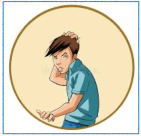
EXP: Someone was frowning ‘at me’. Were they annoyed with me? OR maybe they were :
• worried about a loved one
• thinking about a problem to solve
• looking at someone/ thing past my shoulder that upset them….—> none of which had anything to do with me!

🧩Value
Changing the meaning of a word or term, often done in marketing, where the same product is given a totally new purpose, a different use &/or presented to new markets.
It can also be the way a phrase is accented, as in the picture
EXP: Many pre-Christmas retailers will say they’ll help you “Pay less” with special deals, but the Berlin lingerie store Blush recommends a ‘smaller’ holiday gift: “Make your loved ones happy with less!”

DB QUESTIONS
Sooner or later we may run into someone who loves to ask unfair or impossible DB Qs – the kind that try to force the answer the (S) wants, no matter which way you answer.
Unless we can step outside the Bind, we’ll be in a catch-22 – angry & possibly humiliated.
These Qs are usually made up of 2 parts: Reference to a ‘bad’ thing or an assumed action PLUS the issue of frequency (★ MORE…. )

The S starts with an accusation OR assumption about you, then asks if you’re ‘still at it’ or ‘will be doing it’.
By framing the Q as closed, you’re expected to only give a Yes/No or other one-word answer, without a chance to address the actual topic
EXP: “Are still lying? / Have you stopped beating your wife? / When do you want to help us? / How much money can you contribute?”….

RE-FRAMING: The only sane & self-respecting way to handle this kind of verbal trickery is to treat it as if you heard an open question, so that you respond to the underlying assumption rather than the closed question.
EXP: “What makes you think I’m a liar? / I’ve never beaten my wife & never will / I don’t have time in my schedule to help / I’ve already contribute all I can”…. (Open vs Closed Qs)

NEXT: DBs – Part 8a

Double BINDS – Options (Part 5a)

wash the brain 

I NEED TO SCRUB MY BRAIN
until I’m free of this poison

PREVIOUS: DB – Frames (Part 4b)

SITE: 4 Double-Binds psychiatrists use on mental patients


OPTIONS in dealing with DBs
Once you – the R – have gotten caught in a Double Bind (DB) you’re going to have to accept that ‘getting away’ may be painful & slow, especially if the S is important to you & you’re afraid of loosing them.

Remember, people who use DBs need to control others & are NOT safe, most likely a severe narcissist, & therefore not truly loving. That’s an illusion they create & you buy into.
🔴 Feeling angry, frustrated & ‘crazy’ – about yourself & toward someone else – are your HINTS that they’re pulling a fast one on you, whether deliberate to not. It might be necessary to move out of their range, which is not easy, but it’s also not the only option.

• Getting relief from a DB situation starts by recognizing & addressing the Conditions which are required to produce it (see “How It Works”= DMs #3 and DBs, #2).
THEN – know that you have to ‘chose your poison’ & that there will be some repercussions for whichever side of the D.Bind you reject (disobey).

You will need the ego-strength (self-esteem) to bear whatever reaction you’ll get from the Sender you’ve known a long time, which can include raging, insults, threats, silence, shaming…. Since Ss are control freaks, they’re more likely to hang on & keep trying to keep you hooked rather than dump you. If you stick to not playing along, they’ll either adjust, withdraw or separate / leave

1. DO LESS: At first, if the pattern of interaction with a special person is so deeply ingrained & your connection to this S is like your childhood & probably symbiotic – you’re likely to be too mentally confused (T) & emotionally scared (E) to make radical changes (A).

The best thing is to DO LESS of whatever they’ve trained you to do/be, & see what happens. Naturally it will be uncomfortable – not just because of their reaction, but from your own feelings of guilt & fear of abandonment. Remember that guilt is the E. that comes from breaking a Toxic Rule or law.

EXP: No matter how much effort Anna puts into cleaning & prepping for Mother-in-Law’s visits, the older woman will always find something to find fault about!
IMPLIED MESSAGES: “I disapprove of you when you haven’t cleaned your house ‘perfectly’” (you’re such pig) and “I disapprove of you when you think you’ve cleaned everything thoroughly (I can always find something you missed)

So, finally Anna decides to only do the most needed cleaning & storage, & let the chips fall where they may. (Maybe – give mom something ‘legit’ to criticize?)

2. INTERMEDIATE option
– If you’re young enough to not care what your parents say,
– OR know yourself well enough to have a sense of what works for you, you can alternate between the ‘options’ presented in the D.Messages, with the understanding & acceptance that you’re going to get flack either way, BUT YOU’RE OK

EXP a : SO – between “I disapprove of you for not socializing (dating)” and “I disapprove of your choice of boyfriends when you finally do”
– YOU can choose BOTH – when you want to go out & with whom, & when you’d rather stay in to read (or secretly text with friends)

EXP b : MASH’s Klinger tried to get out of the war on medical grounds, SO –
X: he pretended to be crazy – BUT was told that –
Y: only crazy people would want to be in a war
Result – he was never allowed to be discharged
NOTE: This is a DM – the word “crazy” being used on two different logic levels. However, Klinger did not fall into the trap. In an impossible situation he chose the ‘crazy’ that suited him & went merrily on his way.

NEXT: DBs – Facing ourselves (#5)

Double BINDS – Frames (Part 4a)

Frames I’VE BEEN FRAMED –
but I’m innocent!

PREVIOUS: BDs (Part 3b)

SITE: Framing:…Least recognized daily Mental Activity


FRAMING Theory

Frames are made up of pre-conceived ideas that allow people to quickly organize & interpret new & complex information. They function as mental shortcuts or a “rule of thumb,” & in psychology, are known as scripts or schemata.
Framing is a feature of our brain’s architecture. Our minds react to the context in which something is embedded, not just to the thing itself.
EXP: The cover influences our judgment of the book, a line appears longer when vertical than when horizontal……

Goffman, in Frame Analysis wrote that people interpret what’s going on around them in their world through their primary framework – which is taken for granted by them.
He identified 2 distinctions within basic frameworks:
❖ natural = physical events, separate from any social forces
❖ social
= socially driven events, based on the whims, goals & manipulations of the players, but built on natural assumptions

EXP: If you look out of 2 different windows from the same room at a landscape outside – you’ll see 2 (maybe very) different aspects of that world. It hasn’t changed – only your perspective.

USE of Frames
re. THINGS
Artifact
: giving objects intrinsic symbolic value (car=freedom)
Contrast: describing an object in terms of what it is not
Slogans, jargon : using a catchphrase to make an object more memorable & relate-able
Tradition (rituals, ceremonies) : cultural values that give great meaning to every-day objects / artifacts (buildings, land….) .
re. IDEAS
Euphemism : serving to soothe, distract or reduce conflict (I put my dog ‘to sleep’)
Metaphor: expressing an idea by comparing it to something else
Spin: presenting a concept with a value judgement (positive or negative) not  immediately obvious, or create an inherent bias
Stories (myths, legends): narrative presented in a vivid & memorable way

🤓 Each type of frame has several parts, making up the whole. EXPs:
• Commercial Transaction has: seller, goods, buyer, money
• Communication: message, messenger, audience, medium, images & context
• Group Therapy: therapist, clients, personal problems, suitable location ……

Re. DM & DBs
Framing Theory can help make sense of how D.Messages lead to D.Binds, because it explains that “how something is presented influences the choices people make”.
★ If you don’t ‘set the frame’ – for yourself & with others – someone else will, AND whoever does – controls the situation by creating the context for everything that happens in the interactionFRAME Cartoon

• Controlling our frame is not necessarily bad. In fact we all do it every day – parent to child, teacher to class, boss to employee…. It’s only bad when the frame is designed to con, ensnare or control another person or group.

Our personal reality is constantly changing, & always includes our active participation. It’s made up of the events, objects, processes & facts we experience, & can only be fully understood in context.
EXP : if you say “I’m on a street”, that could be anywhere.

In almost any situation, we have the choice to either frame it in a positive light, or plunge it into the dark clutches of negativityFraming things in a positive way will improve our mood & help develop compassion for others.  “I know I can figure it out”

5 WAYS information can be framed
🔹Gain F – wanting certainty & positive gains, being risk-averse
🔹Loss F – choosing a desired goal with a significant loss, rather than an unwanted goal with no loss at all = risk-seeking

🔹Goal Frespond to info based on whether it helps or hinders you trying to improve your circumstances

🔹Temporal F – choose immediate smaller rewards over long term large ones
🔹Value F – respond better if available info is framed such that it affects what you care about

EXP of a GAIN F. re DB communication = Mother to her child : “Be spontaneous.”
If the child then seems to do something unexpected (spontaneous), he can’t actually be acting spontaneously, because he’s following her direction.
Mother wants total control, so the child has to be put in a no-win situation, to prevent autonomy. Subjected to this kind of manipulative communication over many years, it’s easy to imagine how this boy could become thoroughly confused – & mentally paralyzed.

NEXT: DBs & Frames (#4b)

Double BINDS / Basics (Part 1)

DB sanke I DON’T KNOW WHAT TO DO – I’m all knotted up!

PREVIOUS:Double Messages (Part 8)


QUOTE: “No problem can be solved from the same level of consciousness that created it.” ∼ Einstein

NOTE: This set of posts is a continuation of the Double Messages series. Please read or review those first.

🌀DOUBLE BINDS (DBs)
a. In the D.Messages posts, we looked at one side of this harmful transaction – mainly that of the Sender. All the basic components are the same for DBs, except for the crucial difference – the perspective of the Receiver (DMs, #2).

Eric Berne’s student Claude Steiner, in “Scripts People Live” showed how Senders & Receivers play an interactive game, each gaining points (Negative Benefits) – so the S is always in charge, while the R is always the victim & stays dependent (no S & I).   ➡️ IMAGE article re. DBs

b. The other side of the transaction is the Double Bind. One way the R gets hooked is when —
📣 they’re told specific words, while
👞 the accompanying actions or non-verbal reactions
🔕 directly contradict the  words that were said .
EXP: A mother screams at her child “I love you, and you’d better believe it or I’ll leave!”

• D. Binds are created by D. Messages as logic fails, Boolean questions** (in 3 parts) being asked in binary terms (in 2 parts). That doesn’t work.  A person is presented with a 3-way, no-win situation: You’re damned if you do / Damned if you don’t, and / Damned if you notice that you’re damned both ways

**Boolean Logic: the main operations are the conjunction ‘and’, shown as , the disjunction ‘or’, shown as , & the negation ‘not’, denoted by ¬ (More…), which correspond to the 3 major components of the DM. (DMs #3)

• Accepting or trying to deal with DMs leads to a great deal of angst, causing the R to think:
Re. Actions: “I must do them both, but I can’t, but I must, but I…. If I don’t then I’m really bad!” OR, in other cases
Re. Emotions: “I have to make sense of the 2 demands / expectations, but they don’t make sense, but I have to, but I can’t … I must be crazy!”
Since DMs are inherently irrational, they must NOT be honored, which then eliminates the D.Bind

🌀 TYPEs OF D.BINDs
CONFLICT : A struggle between equal but opposing forces (intentions). 
”Part of me wants to and part of me doesn’t.”
DILEMMA: A situation requiring a choice between 2 equally (un)desirable alternatives.  “I’m in trouble either way.”
IMPASSE: A situation where the intention to progress is stopped by a difficulty which can’t be overcome.  “I keep banging my head against a brick wall.”
PARADOX: A self-contradictory statement(s). 
”My head aches from trying to stop you giving me a headache.”  (More….)
Also see chart in DBs – Part 2

EMOTIONAL Bind patterns focus on giving you the illusory choice of how to feel. It’s less obviously harmful but still manipulative, & confusing:
a. Which chair would feel better, the soft one or the hard one?
b. Would you feel better if I ignored you or talked to you?
c. Which restaurant would you enjoy eating at, Olive Garden or Red Lobster?…..
>> The manipulation is the limiting of your physical & emotional choices.

Qs presented in binary form (either-or) eliminate the larger truth – that in reality you have several other possible options, like – MAYBE YOU :
a = would rather stand than sit, OR perhaps leave
b = are not interested in me either way, OR maybe prefer to talk later
c = don’t like Italian food OR chain restaurants, OR not hungry

NOTE: You’re not in a bind if you’re ‘allowed’ to speak up, object or offer a 3rd choice.
However, if you don’t go along with the other person’s suggestions, and they get angry, act hurt, plead, whine, make you feel guilty, threaten to leave…. you’re being offered a DB. Stick to your guns, don’t fall for it AND don’t feel bad!

NEXT: Double Binds (Part 2)

Double MESSAGES – Senders / Receivers (Part 2)

Screen Shot 2015-09-21 at 12.03.59 PM
I CAN MAKE YOU DO
what ever I want!               

PREVIOUS: DMs, Part 1

SITE: Double Bind Theory: Still crazy-making
after all these years”

SENDERS (Ss) are adults with some type of ‘power status’ in a relationship, the one-up position, assumed or legitimate, FROM:
• Parent to child
• Boss to worker
• Male to female
• Teacher to student
• Dominant to subordinate lover / spouse / friend
• Mother-in-Law to son’s wife
• Cop to perp, Politician to The People….

While most Ss are not conscious of what they’re doing, there are some who deliberately use this tactic to capture others : savvy business people, clever criminals, some religions, & those trained in high-powered sales, advertising, the military, media & government.
Confronting these Ss is either impossible or dangerous, so it’s best to avoid them when we can.

✦ Double Messages (DM) are a favorite way abusers control their victims (Receivers – Rs). Yet Senders False Selfrarely know they’re being ruled by a false self. Nor would they admit that they’re desperately lonely, even when not alone, yet terrified of genuine intimacy, & prone to creating drama wherever they are

• The much-used defense against their anxiety & vulnerability is to have as much power & control as possible, a life-long struggle for dominance – which can only provide a false sense of security.

• The S’s armor is the absolute conviction that all their actions are ‘for the good of others’ – so they’re never in the wrong! To maintain this self-created illusion they rely on blaming & shaming others.
This deflects any responsibility for their emotions or actions, making it clear that everyone else is ‘bad’ – except them, of course. Their private logic says that -naturally- anyone who opposes them is ‘against what is good’, & thus ‘deserves whatever they get’, justifying the S’s cruelty.

RECEIVERS (Rs)
DM ReceiverIn this destructive Game (see Part 3) the Receiver is anyone who gets caught – Senders can only get away with the psychological/ emotional mess they try to create if someone is vulnerable to this type of communication.

Being the Dominant One in every situation is definitely in the S’s mind, although the intended ‘target’ does not usually agree, which including those who may not be able to overtly stand up to the S, such as workers who need to keep their job.

IMP: In any social interaction, whoever reacts less has more power, explained in detail in “The Givers & the Takers”.
Reacting is an expression of investment or compliance – which humans only do with people & things we value. Rs are by definition reactors, so are automatically in the one-down position, always wanting to ‘please’, even if the other person is a complete stranger.

This is obvious with co-dependent ACoAs who have been conditioned to be afraid of displeasing anyone, consciously or not.
One can understand giving in to a loved one, but what kind of investment would an ACoA have in a stranger?
Well, the WIC is terrified of abandonment & needs everyone to accept & approve of it, no matter who it is, or whatever the personal cost. Although not everyone we deal with will take advantage, this fear automatically makes us fair game for manipulators.

So no matter how smart, educated, creative, thoughtful Rs are, by reacting they fall into the S’s frame by slanting the communication, who is then in control (Framing in DBs, Part 2)

EXP: At a pick-up place a guy wants to get lucky, so he approaches a pretty girl: “You know what? I have an instinct about you – a part of you is very sweet & innocent, and a part is a real pain-in-the-ass trouble maker. I bet I’m going to bring out the devil in you!” She not only shyly agrees to both versions, but is flattered & titillated, which = being seduced.

Because the girl reacts (positively) to the frame he has set up, the guy now has the power, therefore the higher value, therefore he ‘wins’.  Boy 1 – Double-Binded Girl 0!

♥ About ACoAs: DMs, Part 7a & b

NEXT: DMs, #3

Double MESSAGES – Basics (Part 1)

confusion  

YOU’RE DRIVING ME CRAZY!
Make up your mind – which do you want??

PREVIOUS: Rebuilding Trust (Part 2)

SITEs:  Types of ambiguity

The Double Bind: Intimate Tie Between Behavior & Communication”

Let’s start by looking at the basic way we process information.
CHART 1 is the Input-outgo loop everyone has. Our heredity, plus the type of beliefs, experiences, rules & personal preferences in each component part of us – determines how we understand & process incoming experiences, which then indicates our responses.

 CHART 2 is the Normal communication process with others. Here each person is doing what is shown in Chart #1.


DOUBLE MESSAGES
, on the other hand, are not-normal (unhealthy /sadistic) ways to transmit ideas, which always end badly for the one trying to decode the message being sent.
(‘How it works’ in Part 3).

Double Messages (DM) are used by a controlling Sender (S) <—> to enslave a vulnerable Receiver (R), who is then caught in a Double Bind (DB). Enslaved?? Yes, whether deliberate or not!

BTW
: a DM is not just repeating something twice!!, nor….getting differing opinions or answers from the same source…. nor trying to figure out what someone wants or means when they don’t know themselves

EXP of Double Message
A: Damaged parent to child “(Of course) I love you”.
Implied: “See how much I do for you, aren’t I a good mother/ father? I need you, so don’t ever leave me, or be mad, or expect me to…. right? (child has to agree)”  – AND

B:
Same Parent “(I’m trying to hide that) I don’t love you in a healthy way”.  (child has to ignore)
Implied by being continually judgmental & dissatisfied with child = “Don’t bother me, I’m always annoyed by you & your needs, you never do anything right / what I want / the way I want, you’re such a pain, get away from me!”)
opposite laws
C. ALSO – implied on the meta-level:
“If you point out or object to part B I’ll deny it, say you’re crazy or ungrateful & expect you to carry on as if you didn’t notice the contradiction.
Keep trying to please me even though I’ll never be satisfied, because you’ll sink (die) without me!”   OUCH!!

✤ Many ACoAs grew up in an atmosphere of this DM – & others – created by our family (DMs Part 2 – Form 3), which left us with a deep sense of futility & powerlessness about most things, especially of ever getting our needs met.
Now we live in a world of DBs, finding others who also do that to us, but even worse – it’s what we do to ourselves (most common one in DMs Part 5).

🦠 Double Messages create Double Binds, a ruthless way of forging invisible bondage based on fear of abandonment, which can only be completely effective when used against the immature or the already wounded.
DBs ultimately cause paralysis by trapping someone between the natural human wish to get away from bad things – like punishment, & go towards good things – like approval (aversion & desire).

• As shown in DMs Part 4 – Style 3, a threat delivered with a smile is still a threat, causing confusion. When confronted with a threat, we want to run away, but – ikey to DMsf the threat is combined with a smile, even a mock-smile, we may not know what to do.  Deer in the headlights?

• The KEY to figuring out DMs is that the same subject matter is being presented from opposite sides, AS IF both are true, at the same time!
EXP: I love you when you sing (show off)  / I hate you when you show off (sing)
NOTE: The main difference between DMs (from speaker / sender) & DBs (in listener / receiver) is = who holds all the power in this kind of relationship, which is always the Sender.
Otherwise the descriptions & procedures are the same – it’s only a matter of perspective. Also – it’s not correct to say “A DB is a mixed message that….”. Instead, a DB is the result of a mixed message that puts someone in a no-win situation.

NEXT: Double Binds (Part 2)