ACoAs – Set GOALS to MEET NEEDS (Part 2a)

implemeting goalsPREVIOUS: Meeting our NEEDS (Part 1c)

SITE: Develop Self-Efficacy Beliefs

QUOTEs: “Most men lead lives of quiet desperation” ~ David Thoreau


1. GOALS

2. IMPLEMENTATION
DEF: “Carrying a plan forward and making it work”
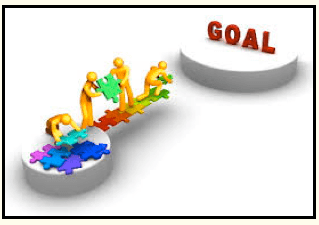
Once we’ve picked a goal & written it down, we can start figuring out how to accomplish it. Breaking it down into small chunks is vital, & will tell us if the goal is actually do-able, if we already can do it, or if we need to learn something first. The next steps include finding the right kind of help, being flexible in our thinking for making adjustments, & having contingency plans for the unexpected.

• How do we ACoAs try to ‘provide’ for our own needs? Not very well. Most of the ways are in the form of being controlling, isolating, lying, manipulating, over-work, people-pleasing, self-sacrifice, using others…. and most of us find it very hard to do actual PMES self-care.
We’re afraid to fully commit to being happy & fulfilled, because we:
— can’t afford to risk going all out for our core ‘love’ or talent, in case we fail. Then we’d have nothing – the loss would be crushing.
— and, the PP’s message is that we’re too stupid, unlovable, unworthy to get anything right, which the WIC agrees with,  so why try. Implementing goals? “Who do you think you are – anyway? / So you think you’re better than us???”

• Therefore, some of us :
— don’t know what we want, what to pursue, what to try out, drifting without any goals, just taking whoever or whatever comes our waypassive
— don’t even try to get our needs met, eeking out a survival based in scarcity mentality – barely enough money, companionship, sex, attention, accomplishment, minimum shelter /clothing / food…. even tho’ we actually have the ability to find & provide some or all of these things
— don’t take risks, sticking to the ‘safest’ route possible, living lives of boredom or ‘quiet desperation’, like working in a post office for 35 yrs, marrying someone we don’t like but will provide for us, being an active addict….

Others of us who are ambition / driven:
— are high achievers, either based on what our family pushed us into – which we hate, or from some natural gift we were born with, but which we continue to feel insecure about
— will succeed early in life (get a lead on Broadway, work on Wall Street, write a great first novel…. & then do something to ruin it so it slowly disintegrates – over the next 20-30 yrsambitious
— will make the effort in some arena, & may even succeed to some degree – BUT either can’t get beyond a certain level OR
— have to keep messing it up / failing / causing drama & problems / losing everything….
— work our butt off trying to be ‘the best’ so we can finally get the approval we’ve always longed for, but not ever to validate ourselves

WHY don’t we live in the power of our True Self?
➼ Because of the Double Bind: we’re not allowed to actually have our needs met BUT we can’t NOT have them. (ACoA Double Messages)
So, many of us try & fail, try & fail – over & over….. ending up hopeless, depressed & wanting to give up. Because of our childhood training, the brain becomes wired to only see ourselves & the world thru the eyes of dysfunction. We sabotage any goal which doesn’t conform to that training, which Freud called the “repetition compulsion”.

Our WIC thoroughly believes our only option is to stay attached to the family because they say they love us – of course – & the WIC is desperate to believe it, even tho’ we have years & years of proof to the contrary. To deny what we know, we keep obeying the PP voice & it’s toxic rules, (“If you don’t like it you have to stay”), since we assume that:
— the world isn’t safe AND we are sure that we are basically bad!
— if only we could be ‘perfect’ they’d finally, truly approve & love us
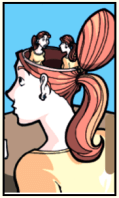
self-argumentSO – what are our deepest, most pervasive beliefs (Part 1)? What drives our goals & our actions?
Most of the time it’s the WIC’s cognitive distortions. Even if ACoAs can identify appropriate goals, we either sabotage our progress or can’t implement them at all. This is because it would mean disobeying the PP in our head & being disloyal to still-living family members. So instead, we’ve been using all sorts of dysfunctional PPT as a reason to act – on anything except our own need, dreams, desires & feelings! (motivators)

NEXT: Goals to meet needs #3
ACoAs – Set GOALS to MEET NEEDS (Part 1a)

GOALSPREVIOUS:
ACoAs Manipulating
Self & others, #3b


SITE: LIST of Personal Needs

SEE ACRONYM page for abbrev.


Process
includes 3 PARTS : GOALS, Implementation &
People.
In terms of T.E.A., this topic focuses on the A. (actions), since just thinking (T) about what we want is not enough, althought it is the starting point.  THEN we have to act on our own behalf.
1. GOALS
Psychologist tell us that people who make consistent progress toward meaningful goals live happier, more satisfied lives than those who don’t.

PURPOSE: Goal-setting is absolutely necessary & appropriate in order for us to be  successful – when it’s grounded in our Rights as human beings AND in our own personal interests. Goals are a normal part of Adult thinking, providing long-term vision & short-term motivation.
Clearly defined goals:
bulls eye- goal• potentially minimizes procrastination & confusion (but doesn’t eliminate it, since they still has to acted on)
• can help to organize our time & resources
• let us know what additional info we need to gather, if any
• allow us to observe & acknowledge progress as we go along, even if the process is hard work & it takes a long time to ‘arrive’
• help us measure & take pride in successful outcomes, which raises self-confidence

Before taking an action, especially when the outcome is important to us, the questions we need to be clear about are : —> “What is my surface goal? then —> what’s under that? & then —> what’s my motivation? then —> under everything, what’s my deepest, perhaps unconscious, desire/wish/hope in this situation?”
Every action we take – or inaction – is driven by a goal – to find food, to not get fired, to buy something we want or need, to hang on to a relationship, to avoid pain, to please an authority, to learn something new, to entertain ourselves, to express creativity, to be accepted, protect loved ones……
and all goals are based on some need, normal human needs such as acceptance, attention, achievement, comfort, connection, knowledge, love, safety, shelter, validation….. needs in all 4 PMES categories.

Each action aimed at reaching a goal:
• is a decision, often unconscious (3 Posts)
• which is based on our individual idea about how to achieve that (procedure)
• which in turn is formed by our most basic beliefs / rules about ourselves & how things function in the world.

EXP: Goal : To cross the street
〰️ Beliefs / rules — I can get to the other side safely, always look both ways, don’t run into traffic or you can get hurt or killed, jay-walking will get you a ticket (in some places), if you’re with someone else make sure they’re safe too …..
〰️ Procedure – Stop at the corner, wait until the light is green, then go

• Appropriate goals & healthy ways of achieving them are based on knowing who we are & our Human Rights .
Recovery EXP: 15 minutes before an evening lecture in a big auditorium a janitor is buffing the front vestibule floor, with the door wide open – so the noise is quite disruptive to the waiting audience. Bev goes out to ask the man to close the door. He completely ignores her, even though she stands there briefly to make sure he’s heard her. Nothing. She goes back to her seat. A minute later a man from the audience does the same – & the janitor closes the door!

noiseQs: ACoAs – If you were Bev:
— How would you be feeling – anger, resentment, S-H, shame…. ? and,
— What would you be thinking? “That <**☹︎**>, how dare he ignore me?…. / I should have been more forceful / I shouldn’t have bothered him / he’s a chauvinist pig….”
— Would your goal have been to get the noise down PLUS be validated, respected, honored – as a female, by a hostile male?

What was Bev’s goal? ONLY to dampen the noise. She was willing to make the effort, which was appropriate, but how it got done did not matter to her!
When we function from our True Self, with enough validation & support in our life from ourselves & from legitimate sources, we don’t try to get it (or demand it) from people who can’t or won’t give it!

NEXT: Getting needs met (1b)

ACoAs MANIPULATING Self & Others (Part 4b)

in chargePREVIOUS: Manipulating #4a

SITE: TED talk by Dan Pink : The puzzle of motivation 

See ACRONYM page for abbrev.


RECOVERY
Manipulation consists of 3 basic parts, a negative effort to fill-in the missing 3 positive needs of Safety, Belonging, & Mattering:
a. Scheming – To get, get out of, or have someone else do something
b. Calculating – Being dishonest, devious, conniving
c. Controlling – Wily, sly, crafty

Of course
– many ACoAs will rigorously deny using these tactics, especially a & b, especially those of us who feel powerless & depressed. But S-H, co-dependence, boundary invasion, lying, withholding….. are definite examples of them

REVIEW of Recovery Tools:
To grow, these harmful & useless patterns need to be addressed honestly (like the AA / inventoryAl-Anon 4th Step or other inventories), to keep track of how we manipulation ourselves & others.

More than likely we’ll need help identifying behaviors & attitudes, since they’re so deeply woven into the fabric of our daily lives we don’t even realize what they are. “Does a fish know it’s wet?”

Then going on to Step 5, we can begin overcoming shame & loneliness, by speaking out loud the specific ways we’ve been using this defense ‘game’. Program has a saying: “You’re only as sick as your secrets”, so sharing our 4th Step is important, if it’s done with compassion, in the right place, with safe people.

All manipulation is a way to con ourselves into believing we should not have any needs, while conning others into providing them (or we do without) – because we can’t eliminate having them! SO, in order to heal:

• In every situation – start by remembering you have one or more needs, on different PMES levels. Identify them – first on the physical level (help to pick out a present, cleaning the house, getting a job, health issues….), & then on a deeper level – the emotional need (validation, comfort, respect, support…..).

This is only do-able if we accept that all our needs are legitimate, & then practice providing them, both from ourselves & from appropriate outside sources

• Use book-ending to prove to your WIC that getting your needs met now IS possible.
As adults, our efforts are successful more often than not – as long as we “go to the food market for food rather than the hardware store!”take astionc

• Be willing to sit with uncomfortable Emotions your WIC feels, when you:
— ask for help AND get it!
— try on a new behavior
— take better care of yourself
— stop an old pattern …..

• Build self-esteem – changing S-H messages into compassion, patience & self-kindness. If you KNOW you’re a worthwhile person, then you KNOW you have a right to your needs

• Make a daily effort to go to the right PPT for help to get your needs met legitimately – in non-exploitative ways

• Accept – graciously – that sometimes people can’t provide what you ask for – either at that specific time for their own reason – or not at all, because they don’t have it to give.
This is not a reflection on your worth or how they feel about you. Nor does it automatically make them bad or selfish. Either wait until they’re available, or go find another resource.

SOME IDEAS to WORK ON: GO —
FROM “I want everyone else to do what I want” all needs
TO “Others have the right to do things their own way”

FROM “Everyone is or should be just like me”
TO “I can see that others have their own identity separate from mine, who deserve as much respect & care as I want for myself”

FROM “Everyone else is only a source for provide my needs”
TO “I admit that others don’t owe me what I didn’t get from my family”

FROM “Everyone else is the solution to my problems”
TO “I’m responsible for finding answers & solving my problems”

FROM “Everything is THEIR fault”
TO “I’m responsible for my own actions”

FROM “I always have to be right, about everything”
TO “I can only know what’s right for me at this very moment, & it’s OK to be wrong, or not know something

FROM “I have to have my way, or else (I’ll die or I’ll kill you!)”
TO “I take care of myself, so I’m rarely desperate”

FROM “I’ll do anything to keep others from being angry at me (experienced as abandonment = separation, aloneness & death)

TO “Other people have a right to their emotions, including anger. I’m not a helpless child anymore. I have experiences & options – to take care of myself – even IF the other person temporarily withdraws, or is permanently gone.”

Manipulation is NOT a successful way to survive & feel safe.

NEXT: Goals to Meet NEEDS #1

ACoAs MANIPULATING Self & Others (Part 4a)

re-frameMPREVIOUS: Manipulation #3c

SITE: Response Options to a Controlling/ Manipulative Person

See ACRONYM page for abbrev.


RE-CAP – Manipulation (M) is the resort of :

a. the legitimately powerless (consider Children, Women, Poor & homeless, the Chronically ill, Minorities….), usually in small ways

b. anyone who internally believes themselves to have no options (the Learned Helplessness of ACoAs, addicts, victims….) BUT who actually do have the capacity to empower themselves – with the right help & persistent work in Recovery

c. AND, ironically, high achievers who’ve clawed their way into positions allowing them to be high-level manipulators, usually on a large-scale.

MOTIVATION: By definition, such people shouldn’t need to manipulate – their whole life is about getting exactly what they want, BUT at any cost.
These externally powerful bosses, politicians, parents, church leaders, salespeople…. have to be one-up, using every dirty trick in the book

This tells us that the seemingly ‘lucky ones’we envy also grew up in very damaging circumstancsuperiorityes, leaving them with a great need to compensate. Hidden under many layers of intelligence, determination & deviousness, they do not feel OK ‘just as they are’, with both strengths & limitations, so they rarely let their vulnerability show, even to themselves

They’ve suppressed the awareness of their basic needs (safety, unconditional love & acceptance, mirroring, help….. AND having emotions!), which they consciously consider as weaknesses.
Instead they settle for being feared, having power of others, looking good on the outside, & accumulating as much money & ‘stuff’ as they can manage.

So like the rest of us, whatever childhood needs were punished or neglected – will become the focus of their life’s activities, & how those are expressed will depend on their individual native personality, combined with the social environment of their upbringing.

M. RE-FRAMED
a. In order to change the need to manipulate, we need to start by identifying our specific ways of ‘getting over’, looking at the harm they do when used, & their long-term effects

b. Instead of simply considering Manipulation as an evil thing (motivation ideasbad, arrogant, narcissistic), we need to also understand it as a defensive maneuver. It’s used by the WIC in an attempt to provide for itself what our family & community should have but didn’t.
We began using it to survive as kids, & we’ve continued it as adults, fed by toxic family messages & bad examples.

c. On the surface this character defect is made up of conscious or unconscious BEHAVIORS, but to get anywhere we need to focus on MOTIVATION, rather than on visible actions.
Motivation is goal-oriented energy which moves us to action, using mental focus & physical exertion to reach specific outcomes.

Motivation Types
1. PRIMARY / basic = unlearned & common to both animals and humans (food & shelter, sex, fear & aggression, avoidance of pain….)
or SECONDARY / learned = which can differ from person to person (need for achievement, need for power….)type of motives

2. EXTRINSIC M.= when somebody else tries to make you do something
or INTRINSIC M. = when you want to do something

3. PULLING M. = external goals that influence how we act in order to achieve them
or PUSHING M. = internal changes (emotions, beliefs, hunger, illness….) that trigger a specific desire to act

4. POSITIVE M. = having the desire and the willingness to get or achieve something good
or NEGATIVE M. = to avoid undesirable or threatening situations

As for all human being, our primary motivation is survival – in any way possible. And for ACoAs – the over-riding need is for SAFETY – by avoiding possible abandonment & punishment (which feel like the same thing!)

SAFETY, BELONGING & MATTERING are essential to good brainbelonging functioning, allowing us to live well:
• the greater the feeling of safety, both emotional & physical, the more easily we can take appropriate risks
• the greater the feeling of connection with others, the more we can feel we’re in this together & belong
• the greater the feeling that we personally matter, that we can make a difference, & are contributing to the greater good, the greater the success in all parts of life (MORE….)
SO, since our upbringing did not provide us with these 3 fundamental needs – manipulation is the way we think we’ll be safe. Unfortunately it doesn’t work!

Motivation: The Why’s of Behavior(7 theories)
Study of Motivation”(Scroll down)

NEXT: Manipulation #4b

ACoAs MANIPULATING Self & Others (Part 3c)

in your head PREVIOUS: Manipulation #3b

SITE: 8 Ways to spot Manipulators

See ACRONYM page for abbrev.


Manipulative TACTICS (cont.)
Foot-in-Door
Start by asking someone for a small favor they don’t mind doing, then when they’re in the middle of it, add on other things or ask for the big thing you really wanted – making it hard for them to say nofoot in door

Guilting
Telling a conscientious victim they don’t care enough, are too selfish or have it easy, to keep them in a self-doubting, anxious, submissive position. OR make someone feel bad that you don’t have qualities, people or things the way they do (you’re jealous /envious), so they’ll feel sorry & volunteer to help you

Judgmental – the (T) form of T.E.A.
— all the time about everything, which is narcissistic
— occasionally, when old abandonment terror is triggered by a person or situation, but you don’t recognize it’s a reminder of childhood neglect & abuse

Mirroring (negative)
Physically &/or verbally copying someone you want to influence, by using their same body language, intonation pattern, language, preferences… making them feel ‘seen’ – so then they’ll copy you (symbiosis)

Over-promising
Saying yes to anything asked of you even when you’re not interested or it doesn’t suit you, & you don’t have time anyway – just so you’ll be liked. You over-book & then forget or cancel at the last-minute

One up-One Down
a. Feel superior – morally better with more value as a person, rather than being better at certain things (not just having a higher IQ), in order one upto keep everyone away, & not acknowledge your need for connection, help, comfort….

b. Feel inferior, believing you’re worse than everyone else (weaker, dumber, less capable….)
— to stave off assumed inevitable abandonment, disappointment AND
— obeying Toxic Rules “I am unlovable” / “I’m too much trouble” / “Don’t have needs”….
— living in deprivation, trying to get others to meet your needs

c. Fake humility – hiding the compulsion to dominate – by being the servant, helper, assistant, perhaps to serve a ‘higher cause’…. while controlling things from the wings

People-Pleasing / Perfectionism
Constantly trying to be or do whatever others want, or what you think they need/want, going above & beyond what’s called for or expected. Make yourself indispensable so they’ll approve of you & never ‘go way‘

Victim
Put a burden on others to be the ‘good parents’ you never had, BY:
• dismissing your own ‘voice’ & not taking up enough spacevictim
• going along, suffering in silence – but others can feel it
• give up what you want to avoid conflict, but are quietly resentful
• don’t ask questions, but always trying to explain or defend yourself
• talk in indirect or convoluted ways, instead of declarative statements
• withholding, as a form of silent disapproval
• believing you have nothing worthwhile to contribute……

COMBINED Manipulation of Self & Others
Taking on the Scapegoat Role as a child (NOT the same as being scapegoated by the family). It’s the child’s attempt to spare the obvious narcissist / addict their pain, by taking it on & acting it out for them – assuming this will alleviate the heaviness it can feel in others.
It’s a way the child denies admitting that the abandoning adults are as sick as they are & not willing to change

This manipulative tactic (usually unconscious) continues into adulthood – the ACoAs continuing to sacrifice their own needs, good name & protect familystanding in life – if it will make others ‘feel better’ by avoiding responsibility for their own damage

On one level this Role is genuinely taken on in the name of love, but at a deeper level it’s about the fear of losing connection, the ultimate childhood terror.
Unfortunately, the sacrifice is never successful or unappreciated, only being disrespected & dismissed. So when the Scapegoat is treated badly or ignored, this ACoA gets very angry at anyone they’ve been trying to ‘save’.

Adult Scapegoats only focus on being rejected or & invisible, left outfeeling unloved, excluded, attacked – BUT not seeing that they
— allow themselves to be used & toyed with by unscrupulous types
— experience real or imagined slights as a direct rejection, as if others are focus on them, or hell-bent on hurting them
— perpetuate childhood environment of fear, loneliness & abandonment BY not having a strong core identity based on self-esteem & self-respect.

NEXT: Manipulation #4a

ACoAs MANIPULATING Self & Others (Part 3a)

Manip chartPREVIOUS:
Manipulating ourselves (#2c)

SITE: Motivation & Manipulation (<—- Graph )

BOOK : “In Sheep’s Clothing”
~ Dr. Geo. Simon, PhD
Ways to deny personal accountability & manipulate others  (Extensive outline of book)


ACoAs MANIPULATING (M.) OTHERS
Most of us learned to manipulate (based on CDs) by watching/ living with manipulative parents & other family members, but some come by the skill naturally. All of us had to use it, one way or another, to cope with the painful, complicated environment we grew up in.

M. is a form of ‘acting out’ (Freudian def). Translation for ACoAs:
Compulsively taking actions or ‘forgetting’ to act, as a substitute for expressing painful emotions we have but don’t consciously feel

REASONS for manipulating others:
By now, having lived in the world for some decades, we’ve had the oenvypportunity to watch how others function, & envy their ability to get their needs met, while we feel stuck in the mud of our damage.
But we’ve also had many life experiences of our own – some even positive – so we DO know something about how to manage, but rarely if ever apply that info to ourselves – while using our extensive care-taking skills for others

This causes intense deprivation in PMES ways, since we are:
• Not allowed to have needs & not allowed to ask for anything
• Assume no one will ever provide for us if we ask directly, will be angry & punish us, the worst being Abandonment – withdrawing their connection to us
• Don’t have a right to give to ourselves (we think it’s arrogance)
• Believe we don’t know how to – not having seen it from role models & not taught directly

confusedThis leaves us confused, ‘starving’, desperate – so we resort to the default position of manipulating – to (GOALS):
• prevent others from having power over us
• cover up Self-Hate, Shame, Loneliness
• get needs met from others instead of from self
• show our contempt for everyone, especially authority
• make connections the only way we know how, to keep from getting abandoned – ever again (FoA)

FORMs of Manipulation
1. Direct / Overt (“Throwing others on the defensive”)
Bullies come in many guises, sometimes like a spiked hammer, sometimes like a Southern rose, sometimes covered in sheep’s clothing.
Each type has gathered an extensive repertoire of techniques used to gain power & to deny any accountability for their actions.

The Workplace Bullying Institute defines it as “repeated, health-harming mistreatment of one or more persons (the targets) by one or more perpetrators”

The overt style uses deliberate, intense confrontation – to verbal bullychallenge people’s personal legitimacy, validity of their ‘performance’, or the value of their point, issue or complaint.
The goal is to put others on the defensive, & nothing works better than intimidation. Tactics can be fired off so fast that they’re hard to identify or separate, & the slickest perpetrators use several tactics at once

Most ACoAs hide their aggressive side, sometimes from themselves, but definitely towards others, behind the many faces of co-dependence.
Sometimes it only comes out toward strangers, but more often toward their intimates – their mates, children & closest friends.
bylly typesBut the bully/sadist is there, created in response to the humiliation we suffered for so long – the greater the original abuse, the more intense is our sadist/bully.

In Recovery we can make friends with this aspect of ourselves by acknowledging that “It really was that bad!”, safely venting our rage, & never letting the bully/sadist act out on others or ourselves.

EXP: Drama is a sign of manipulation, used to bury the real issues (personal or relational) in a giant pile of noise.  Includes:
• taking over every conversation, taking up too much space
• knowing how to get their way & insisting on it
• yelling & screaming, threatening or doing physical harm
• not good at sharing – anything
• talking over someone, ignoring all types of boundaries
• pushing their point of view rather than asking questions
• always bragging & showing off, to make others feel small
• pushing their way ahead of others, like in line
• writing / texting attack messages, all verbal abuse
• escalating arguments, not ‘letting go’ ….

Add your own

NEXT: Manipulating (Part 3b)

ACoAs MANIPULATING Self & Others (Part 2b)

child in chargePREVIOUS: Manipulating OURSELVES (#2a)

DEF: Con / conning – to persuade by deception, cajolery…..

POSTs: Negative Benefits
Emotions & the Body
Dealing with the PP (healing)


REVIEW
It’s important to remember that we all have an Inner Parent, but for us as ACoAs & addicts, one part of this Ego State (voice) is usually contemptuous & cruel, while another part may be kindly but weak, both sides neglectful in important ways.

“Introjections involve attitudes, behaviors, emotions & perceptions that are usually gathered from influential or authoritative people in one’s life. They are neither digested nor analyzed; they are simply adopted as a part of one’s personality as concepts that one considers should be believed or behaviors that one thinks ought to be followed.” (MORE…..)

Except for psychotics / sociopaths / malignant narcissists, the super-ego (Introject) provides an endless self-policing process, to reinforce family restrictions long after the original authority is changed, unavailable or gone.

• Object Relations Theory: D. W. Winnicott said that when we use the defense mechanisms of projection or introjection …. we (temporarily) hand over omnipotence to another person, letting them be our manager – even tho they may never be aware of it!

A classic example of Introjection is Butters Stotch, in SOUTH PARK, who seems to have completely internalized his alcoholic father’s frequent use of grounding as a punishment.

INNER CHILD : WIC’s manipulation
As laid out in other posts (ACoAs & S-H), the WIC is so used to having to do everything itself, with little or no resources & info, that it A-P-Cbelieves it still has to be that way – even tho it’s terrified & full of self-loathing. What an awful double bind!

Originally, being in a powerless situation as children we got a little sense of power & control by doing everything for ourselves AND doing without. So NOW – the WIC will try to sabotage any attempt by our healthier Voice (True Self) to take over, in order to stay attached to the PP!

Re. the OUTSIDE
The WIC cons us about our dealings with the whole world, especially at work:
• that showing up/ being visible means that we’ll be judged
• that we have to work extra hard & do the impossible to not get fired
• that we have to know everything, or we’ll be humiliated
• that being ‘perfect’ is the only way we’re allowed to live
• that we have to give others whatever they want so they won’t leave..

FALSE: ALL forms of self-conning are lies! We need to regularly remind the WIC that he/she —
• is NOT the one who is supposed to work, that’s only for the adult
• is NOT seen by other adults, they only see the grownup-us
• is NOT responsible for the company’s agenda, the demands of bossed, the plight of co-workers…..
• is NOT supposed to be in charge of every-day functioning. That’s the job of the UNIT – Healthy Adult/ Loving Parent.he world.

Re. our INSIDE: The WIC cons us with Self-Hate, to not have to be our own motivator & be in charge of our life –
• I’m stupid, stupid, bad, bad, wrong, wrong, weak, weak…..
• I don’t know how to do anything, & too dense to learn
• No one loves me, and no one ever willS-H results
• I can’t love anyone, I don’t know how to connect
• No one is safe & I can’t trust anyone

• No one will ever help me or be there for me
• I’d be better off dead, they’d be happier
• I’m boring, in the way, too much trouble
• I’ll never safe, happy, have my dreams
• I don’t have a right to ….
• If I let go of them I’ll die -OR- they’ll die!
• I wouldn’t recognize a healthy person if I fell over them
• I have to rescue them. I’ll do anything to make them feel better, not feel abandoned, stop drinking, be happy…..

NEXT: Manipulating OURSELVES (Part 2c)

ACoAs MANIPULATING Self & Others (Part 2a)

heart-conned

PREVIOUS: Manipulation & Needs (Part 1)

SITE:   8 Negative Thoughts That Manipulate Your Mind

REMINDER: See ACRONYM page for abbrev.


ACoAs MANIPULATING OURSELVES

While we think of ourselves as victims – which we were as children BUT are no longer – we are now victimized internally by our Negative Introject as well as our damaged Adapted Child, who desperately clings to the old ways. Fed by the PP & constantly reinforced by the WIC, Self-Hate carries a powerful energy – to prevent us from being able to S & I, in order to have a better, more satisfying life.kid-whipped

Even in Recovery, some of find it very hard to shift out of paranoia, self-destructiveness, hopelessness & procrastination. These & many other ‘character defects’ are expressions of our WIC, who is looking for parents to take care of her/him,
& is adamantly opposed to having our own positive UNIT be that caretaker! (inner parent & adult). In truth, the WIC only wants the original parents – to love us unconditionally.

A kids, because we were continually around addicts, abusers – Wounded Children themselves – in our most vulnerable years, we had no choice but to absorb their distorted view of us, themselves & the world. Most of what they passed on to us are manipulations – anything to not look at themselves or take responsibility for their words & actions. Sadly, we are doing exactly the same thing – which many of deny & are insulted at the very suggestion.

WIC-PP alliance
Program & others Personal Growth modalities tell that all Recovery & emotional maturity is “an inside job”, yet many of us keep focusing outside of ourselves. So, while we only think of Manipulation as something done to others, for us as ACoAs, the most intense manipulation is internal, coming from the PP who controls the WIC.

The WIC who in turn constantly tries to convince our rational self of what the PP is saying. The PP is especially loud when we try to take the power away from it – to take care of ourselves, by loving our Inner Child (wounded & healthy parts) in all the ways our original family never could.

PP’s Manipulation (Negative Introject)
Everything the WIC believes originally came from the people we grew up with. Now the PP is in our head, continuing the barrage of lies. To keep us attached to the toxic family system, it uses every dirty trick in the book to paralyze us.  It’s made up of the ‘us/we’, a composite of the adults who programmed our thinking & outlook on life.
It says to the WIC:
• you’re crazy, over-reacting, too sensitive
• you don’t know what you’re talking about
• you can’t do it without us, you’re too weakStep on the WIC

• WE NEED you, only WE count, we’re suffering
• you don’t really feel that way
• you’ll be sorry when we’re gone
• you’re ungrateful – look at everything we’ve done for you
• it was never that bad, you’re just being a dram queen/king
• you owe us, we did the best we could

PROBLEM: Physically an Adult, but still emotionally immature:
1. We believe these manipulative lies, so we consistently, persistently don’t counter the lies the WIS & PP are selling, perpetuating our S-H

2. In reality we do have intuition, we’ve accumulated a great deal of knowledge & experiences, had moments of clarity, have very real choices & opportunities…. which the WIC ignores, forgets or completely negates

3. There have been a few people who have helped us along the way, we have had a few pleasurable moments, there have been a few opportunities to heal & grow, but we undervalue or deny them completely! And for some us – there have been more than a few. Yet we let the underlying Toxic Messages keep winning out.

NEXT: Manipulating OURSELVES (Part 2b)

ACoAs MANIPULATING Self & Others (Part 1)

controling manipulatorPREVIOUS: Multiple Intelligences

SITE: “Steve Jobs – biography by Walter Isaacson  & Commentary by Dave Smith

See ACRONYM page for abbrev.

DEFs : Manipulation (M) is made up of a series of statement &/or actions, always indirectly trying to &/or succeeding in get our needs/wants met, in round-about ways


Normal – must be used sparingly, & only when there is no other legitimate option. When used for good, one can try to manipulate others to help a worthy cause, but even when well-intended, for M to be effective it has to target people’s weak spots

Unhealthy  – Because M is never straightforward, it’s hard to spot, especially when used by an experiences & skilled perpetrator, for strictly selfish reasons (narcissistically).
The subtle control of M can easily be overlooked or denied – our awareness buried under obligation, love, guilt, fear of abuse, FoA & long-term exposure

Severe – A perpetrator / bully forcefully controls another person or group who feel or actually are powerless to resist (child, battered spouse, sex slaves, gang members, war victims…..) to satisfy the manipulator’s ‘sick’ needs

PURPOSE – For ACoAs, addicts & other wounded people:
M. is used to try getting needs/wants met by underhanded tactics, to extract from other PPT something they may or not want to give
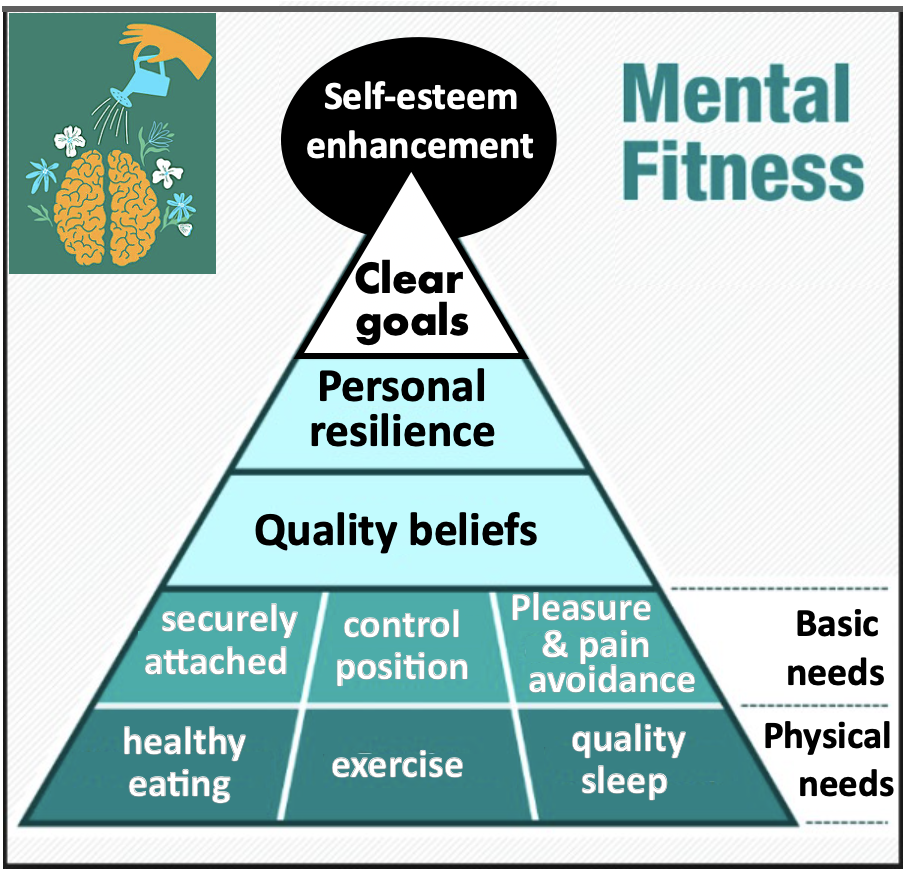
OR trying to force PPT (person, group, environment) to provide something we need/want which they actually do not have tomental fitness pyramid give
AND which in many cases we can provide for ourselves OR find a more direct way of obtaining something we lack – from appropriate sources

Re. NEEDS: It’s important to note the 2 major categories of needs.
Without deep FoO work we compulsively, slavishly insist on reinforcing unhealthy childhood patterns.
This insures that we stay deprived the same ways we were back then.
Normal needs
a: Those which EVERYONE has, & which we can’t get rid of because they’re fundamental to our humanity

b: Needs specific to YOU, based on your native personality
EXP: need to be/live near water, or other outdoor nature // to be artistic/creative // to be orderly/organized….

c. AND to some degree your specific needs in response to repeated harmful childhood PTSDevents & severe trauma
EXP:
— need to live in one location for the rest of one’s life after moving 10-20 times as kid
— need to not be around crazy/angry people – at all, ever!
— need for a great deal of predictability…..

Unhealthy ‘needs’ / compulsive desires TO —
• please & be approved of by parents who can’t be pleased
• stay in unhappy, unsuitable or abusive relationships, jobs…. for fear of abandonment & disobeying Toxic Rules
• hang on to negative thinking & actions, believing it’s ‘safe’
• keep using addictions (sex, food, spending, internet, chemicals….)
so we don’t have to face the pain underneath

• keep trying to fix other people, especially those who don’t want to change/grow/improve
• keep chasing people who don’t want to connect with us, always finding the one person in the group who will reject us
• always be one-up on others, to show off, to act superior
• grab & hang on to position, power, status…. at any cost to others
• always be the center of attention   (Add your own)

MANIPULATIONsqueeze my brain
General:  serving a hidden agenda, to coerce others into giving in. Perpetual manipulators present themselves as strong & in control, but underneath – have a great deal of insecurity & a deep sense of personal powerlessness to get their needs met – directly. They can’t connect to or keep healthy, loving relationships

vs Influenceinfluence
Used on others to advance a goal, a mark of normal social interactions – in general, & a way of functioning effectively in the world – personally. Uses direct, honest communication, recognizing the integrity, boundaries & rights of others, including the right to not go along with the attempted persuasion

vs Boundaries (Bs)
Knowing our rights & personal needs so well that we can set Bs byB invade telling others what’s acceptable & what’s not. Like with influence, it’s also direct, but a way of getting our needs met without depending on other people’s help or co-operation. Comes from having permission to provide for oneself, & having access to choices

vs
Personality Disorders (PDs)

In PDs, manipulation is a defensive style permeating a person’s every interaction, even tho they may hide their true intention, & act in ways that look ‘normal’, which in itself is a manipulation.

NEXT : Manipulating OURSELVES (Part 2a)

TYPES of ANSWERS (Part 2)

answer types I’M MUCH LESS CONFUSED
when I know what kind of answers I’m hearing

PREVIOUS: Types of Qs (Part 3)

QUOTES: “You can tell whether a man is clever by his answers. You can tell whether a man is wise by his questions” ~ Naguib Mahfouz, Egyptian writer

“The reason I talk to myself is that I’m the only one whose answers I accept.” ~ George Carlin

3 WAYS to RESPOND
UGLY – not responding at all.
• ‘Legitimate’ only if protecting yours3 ways to answ.elf or someone important to you, a legal matter or matter of national security.
• Uncomfortable – not responding when asked an impertinent, rude or sensitive Qs

BAD – forcing the person asking the Q to work hard to figure out what the answer actually is. Not getting to the point, making things too complicated, or leaving out vital info…. leaves the listener confused, uncertain & frustrated – even if they finally figure out what the point was.

GOOD – making clear, declarative statements right away.
Especially in business settings, the most effective type of answer summarizes the bottom line succinctly first, and then gives supporting or background information if needed.

Categories of Responses:
Direct Info (“I won’t be able to go with you on Wednesday”)
Yes (“Yes, I do need to know what time you’re leaving…”)
No (“No, I don’t understand what you’re asking…”)
Maybe/ I’m not sure (“I might not be able to finish that in time…”)
Tip – with this last one, it’s always a good idea to continue with “…but what I do know is…” (Chart)

PROCEDURE for Answering
• Consider any Q an opportunity to provide information about yourself
• Pause a couple of seconds before responding, even if you know exactly what you want to say, to put your thoughts in order – to be clear & avoid misunderstandings
• Ask for clarification if you don’t understand the Q
• Be positive, don’t be afraid to say how you feel, or mention your skills & accomplishments – if relevant
• Ask the questioner if they understood your answer. Don’t be afraid to clarify or repeat your point

RESPONDING to:
Qs of Fact or Procedure
The purpose of these Qs is to gather/share knowledge, & the answer is a matter of rule, requiring evidence & reasoning. There is either a right & or a wrong answer
types of responsesQs of Judgment
Because these Qs lend themselves to debate in order to identify the best solution, answers require evidence & reasoning through multiple viewpoints. There’s no one correct answer, only better & worse ones
Qs of Preference
Answers are a matter of preference, calling for subjectivity, since the purpose of these Qs is to elicit opinions & personal tastes (Dr. L. Elder & Dr. R. Paul)

* * * * * * * *
MAIN TYPES of Answers
AVOIDING
When asked a ‘difficult’ or sensitive Q that would reflect badly on the responder or their ‘party’, tactics can include answering a Q with a Q, trying to draw attention to some positive aspect of the topic, totally changing the subject… Politicians are especially well-known for using this style

DIRECT & HONEST
This is what the questioner is looking for when asking a Q. Usually given in declarative sentences.  “Keep it simple —”

DISTORTING
Distorted answers tend to be based on a responder’s ‘understandinSdistorted answ.g’ of social norms, stereotypes & other forms of bias.  Different from lying, people may not realize their answers are influenced by prejudice, or they exaggerate to seem more ‘normal’ or successful.

LYING
Ultimately a form of protection, no matter how unnecessary, ‘unhealthy’ or harmful. A questioner may be able to pick up on a lie based on how plausible the answer is, but also on any non-verbal communication used immediately before, during &/or after the answer is given.

OUT of CONTEXT
The respondent will say something totally unconnected or irrelevant to the Q, or try to change topics. The answer may seem ‘logical’ to the speaker because what lead up to their answer is silently processed in their head, but all that’s verbalized is the end result – so it won’t make sense to the questioner, not being a mind-reader. In all such cases – if the issue is important enough – it’s necessary to focus the responder back to the original Q by repeating or rewording it

PARTIAL – People can often be selective about which questions or parts they wish to answer. This can cause confusion or distortion

REFUSING – The respondent may simply refuse to answer, either by remaining silent or by saying, ‘I am not answering’

STALLING – Althoscary Qsugh similar to avoiding answering a question, stalling can be used when more time is needed to formulate an acceptable answer.  One way to do this is to answer the question with another question.

NEXT: Manipulating