What NOT to do with NARCISSISTS (Part 3)


«
PREVIOUS : What NOT to do (Part 2)

SITE : Will they ever change?

WHAT NOT to do with NPDs (cont) 

16. DO NOT assume shared values
BECAUSE if you do – you’l be constantly confused. “Why did they do this or say that?” You can not use rational thinking & normal social rules to understand Ns. They operate from a different world view, & accepting that is the only way to deal with them for your sanity

17. DO NOT not give or receive money
BECAUSE if you do – you’ll always get screwed. That includes:
– depending on them, accepting financial ‘help’ or moving in together
– making large purchases together, accepting large gifts
– signing contracts, such as a lease or business venture
– getting a pet or having children with them, if possible

There is no such thing as a ‘free lunch’ with an abuser. ANY financial (& emotional) ties to a N will only work against you in the long run. You’ll be the one paying, in more ways than one  (POST: “N’s Financial abuses“)

18. DO NOT expect loyalty
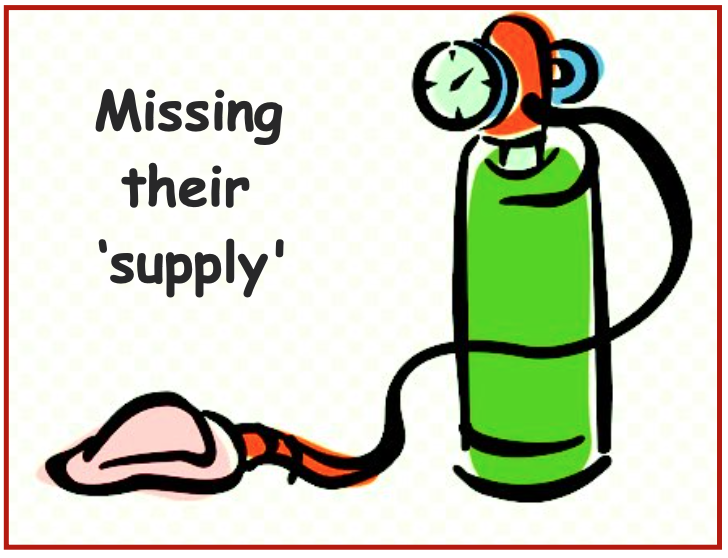
BECAUSE if you do – you’ll be continually disappointed & hopeless. Normals are stunned at how quickly & easily Ns dump a friend, lover….  when they’re not getting ‘fed’. Their shaky sense of self gives their needs a life-or-death quality, so they have to move on to a new supply (person) – fast. Ns use language as tools & weapons rather than to speak the truth. When they expressed undying love & faithfulness, they were lying.

19. DO NOT keep falling for their lines
BECAUSE if you do – you’ll end up trapped in The Matrix or Westworld. Notice how they say the same things over & over – about everything – even using the exact same words, like it’s on a CD!
You keep hoping you’ll get back to those early glory days when you were soooo happy with the N. But since that was a con job, it won’t. However, if you start getting wise & pulling away they’ll temporarily revert to an earlier charming ploy. If that doesn’t work – they may rage.

20. DO NOT accept their false accusations
BECAUSE if you do – you’ll become more & more depressed, isolated, self-hating, even paranoid. Their lies are often said behind your back, to your boss, with friends, even family, & especially to your children. Ns are emotionally dyslexic – shamelessly accusing you of traits they know they’re guilty of. They need to make you think you’re wrong & that they’re perfect.

21. DO NOT ask them for help in a crisis
BECAUSE if you do – you’re sure to be let down. It’s not unusual to hear horror stories from survivors callously abandoned or bullied by their N during the worst moments of their lives, in times of grief, loss or life-threatening illness.

A variation is Narcissistic Ghosting, when a N promises to help with a project or difficulty, but never shows up nor texts to cancel. Later they act as if they had never been thoughtless or disrespectful. 

22. DO NOT let them confront you, without you having documentation
BECAUSE Ns are really great at talking in circles, lying, changing the subject & reciting all your faults & mistakes –
but NEVER any of theirs, so they come out smelling like a rose – to anyone who doesn’t know them.

Situations that you need proof for can include ; years of private manipulation, business & personal negotiation, physical & sexual abuse, harassment or stalking.
Documentation is imperative to resist their gaslighting & hoovering attempts &/or if you’re going to bring a legal case against the abuser. Don’t take phone calls.  Sticking to e-mail, text or voicemail, but in-person meetings should always include bringing someone trustworthy with you as witness.

NEXT: DON’Ts – #4

What NOT to do with NARCISSISTS (Part 2)

PREVIOUS : What NOT to do (#1)

SITE : When it’s all About THEM


REMEMBER
: YOU can NOT get a totally blind person (Ns) to see

WHAT NOT to do with Ns (cont)

9. DO NOT pay constant attention
BECAUSE if you focus on everything they do & say you’ll become totally distracted from your own needs & goals.  Don’t let yourself be unsettled by the N’s constant ‘attention seeking’. Create firm boundaries while acknowledging the N’s desires without always giving in – unless you really can or want to

10. DO NOT personalize what they do
BECAUSE all their behavior patterns are about THEM – never about you! Yes it affects you, but not about you.  Until you get it, you’ll feel bad about yourself.
Taking personally what Ns do or say grants them real estate in your mind & heart, which is exactly what they want. They’ll target anyone who happens to cross their path. While their worst abuse is often reserved for those closest to them, no one is immune. It’s not personal, it’s just how they are.

11. DO NOT try to justify or explain yourself
BECAUSE if you do – you’ll just make a fool of yourself. Ns like to undermine & see you squirm. Explaining your emotions or justifying beliefs & opinions is a waste of time. They’re not listening – only interested in winning, not communicating.

Do not defend yourself ever – but especially to a N, who will try hard to make you doubt what you’ve experienced or heard them do & say. Ns use attack questions or sarcasm to put others on the defensive – so you’ll feel the need to explain your very right to be alive

12. DO NOT minimize their outrageous behavior
BECAUSE if you do – it will wear a hole in your mind & spirit. Ns’ total self-absorption takes up all the psychic oxygen in the room. Over time, people constantly exposed to NPDs become inured (numb) to how badly they’re being harmed. Ns deceive, manipulate & humiliate others. Don’t whitewash or excuse them & never ignore how dysfunctional their words & actions are

13. DO NOT expect them to own their part
BECAUSE otherwise you’ll drive yourself ‘crazy’ trying to convince the N. It’s a waste of time to make them be accountable for any unhealthy behavior. They only take credit & give blame, never apologize or admit responsibility. They see their accomplishments & successes as a ‘special’ talent, so they have to project their flaws on to others

14. DO NOT give in to their love-bombing attempts
BECAUSE if you do – you’ll get conned into thinking they care about YOU. Their early overwhelming attention is actually the way Ns fast-forward false emotional & physical intimacy.

It’s meant to manufacture a quick connection so they can ‘feed’ on you. Don’t let them. Don’t respond right away to every text, call or request for in-person meetings. Give yourself time & space to think

15. DO NOT give them ammunition
BECAUSE if you do – they’ll use anything you divulge to humiliate & control you, especially when you’re most vulnerable or in need. The more personal information you share – especially in the early ‘pink cloud’ days of the relationship – the more ammunition they’ll have to use against you!

That means : don’t talk about your deepest wounds, fears, insecurities & traumas. Everything will inevitably be thrown back at you to paint you as unstable, crazy, too sensitive or ‘losing it’. It may be a personal tidbit you mentioned in passing or a deep ‘truth’ you shared in confidence.

And they will, even if not right away. They can attack when you least expect it, when they’re angry at you about something – especially when you inadvertently displeased them, complained about something they did or didn’t do, or just weren’t paying them any attention.

NEXT : What NOT to do (Part 3)

What NOT to do with NARCISSISTS (Part 1)

PREVIOUS : Ns & INTIMACY

SITE : Narcissistic Love vs Unconditional Love


BIG Don’ts re NPDs –
rules for unhealed (& unaware) co-dependent ACAs

1. DO NOT try to change them – ever!
BECAUSE no-one can change another person, but especially a N, who doesn’t see anything wrong with themself.

Unhealthy co-deps are deeply afraid of feeling abandoned by others, & don’t believe that have any options because they’re not worthy, and believe they don’t have any effect on the world.
So if a N chooses us, we’re grateful, since we think no one else will ever want us, so we would be alone forever if we left the N.

2. DO NOT fall for the N’s “poor-me-suffering” game
BECAUSE it’s a con-job – to get you to do all the internal work in their life for them, so they never have to.
❗️When you’re very attracted to someone, take the time to find out who they really are before you commit yourself – emotionally, financially, friend-wise career-wise…..

Ask other people who’ve known this person a long time (especially ex-s), their siblings, anyone who’s worked with or for them….. AND pay attention to the Red Flags – what they are telling you about themself (everyone does).

Also, how you feel physically & emotionally when you’re with them as well as after being around them. Are you angry & drained? Do you look forward to their company, or dead it?

3. DO NOT try to save them from themselves
BECAUSE :
a. you can’t, & they won’t let you
b. their armor is too thick to penetrate
c. their denial is fool-proof (you being the fool)
d. their self-destructiveness is deep-seated
e. they love to destroy others as well
f. to ‘get better’ they’d have to be introspective & take responsibility, which NPDs never will

4. DO NOT underestimate the power of narcissism (N)
BECAUSE if you do – it will suck you in to being used in their clever but desperate search for Supply for attention, control, power, sexual conquest, wealth…. Their hunger is bottomless, & the drive to ‘feed’ is so powerful that Ns will even betray people ‘closest’ to them

With NPDs (most severe form of N) –  minor behaviors may shift over time, but their underlying psychological dynamic lasts a lifetime. So hoping narcissists will ever improve is a delusion

 5. DO NOT be confrontational….
….. about anything, or that they’re a N, if possible.
BECAUSE if you do – they’re likely to lash out in rage or punish you in some other way for exposing them. It can be total silence, or major gaslighting or more love-bombing to win you back & make you think they’ve changed. It’ll only keep you stuck in the abuse cycle

6. DO NOT take them at face value
BECAUSE if you do – you’ll be left holding an empty shell. All that glitters is not gold. Ns work tirelessly to present a perfect facade of superiority & certainty, to keep others guessing. Underneath, many (but not all) feel empty, insecure & illegitimate.
😷 Don’t mistake the mask as an indicator of goodness or truth

7.  DO NOT expect empathy or fairness
BECAUSE if you do – you’ll always be left hanging, or worse – keep getting re-traumatized if you’re an ACoA.
Empathy comes from the assumption that everyone is worthwhile, deserving equal attention & compassion – which Ns do not believe. Their grandiosity & sense of entitlement eliminates consideration, fair-play or reciprocation

8. DO NOT try to beat them at their own game
BECAUSE they’re much better at one-upmanship than you are. Ns spend all their time perfecting a campaign of self-aggrandizement, carrying out more manipulative actions in a week than most people do all year.
Ns have a mortal fear of being humiliated & feeling inferior. So, great energy goes into cultivating ego-boosting sources, at others’ expense

NEXT: Don’t do…. #2

Narcissists & INTIMACY

 
PREVIOUS : Narcissists’ FEARS (#2)

❧ INTIMACY
Genuine intimacy includes trust, understanding & being understood. It relies on endurance, safety, mutuality, respect & transparency. Without appropriate self-disclosure, there can be no intimacy. Anyone in an intimate relationship (beyond sex) can reveal vulnerabilities without expecting it to be used against them.

People with personality disorders (PDs) are afraid of mature intimacy – which includes being seen with genuine emotional involvement & requires being honest with oneself, which N’s are not.
😵‍💫 Un-‘educated’ partners of NPDs confuse intensity with intimacy.
Ns are extremely good at giving the appearance of intimacy, but can turn it on & off as it suits them. When they’re short on Supply, , they offer such a  good fake version of being needy, which is very appealing, & hard to resist. But when they’ve gotten their hit, they immediately go back to being selfish. Ns are the ultimate users.

Def:  “NT S/Os” means neuro-typical significant others.
Generally, Ns are extremely confused & uncomfortable when ‘normal’ people try to bond with them. So Ns may not recognize that this is the ‘push – trigger’ that starts them devaluing the non-narc partner or friend, who will never be able to convince the NPD that their fear of intimacy is at the heart of their relationship-problems.

N’s PROCESS of DEVALUING
💌the N meets a S/O who has the ability to provide the kind of love they crave, & is available
💌 this triggers the infatuation / idealization phase in the N
💌 at first it creates a feeling of euphoria which comes from powerful neuro-chemicals that anesthetizes the N, which temporarily dampens their reflexive instinct to throw up protective narc-defenses

📭As the relationship continues, the N’s high wears off (end of infatuation phase) & they return to their ‘normal’ unhealthy state

🎈Unaware of the N’s internal change, the S/O continues to offer unconditional love. Since the N didn’t get this from parents in childhood, they can never trust that anyone else will ever provide it

🎁Mature intimacy offered by the S/O comes with the inevitable traveling companion of “vulnerability”, which NPDs cannot tolerate. It exposes old abandonment pain & the fear of future loss, which they’ve never learned to face or how to deal with (POSTs : “What Recovery Is / Isn’t“)

TRIGGER ALERT
💔
The N is subconsciously triggered when they start to FEEL emotions that come from someone loving them, which are are new & so alien that it causes a great deal of confusion.
They feel intimidated & overwhelmed.
🤎 This subconsciously sets the N on high alert, potentially being ‘forced’ to experiencing their greatest enemy – emotional pain

😱 In this state of hyper-sensitivity the N can start to experience mounting anxiety, despondence & irritation, with a sense of impending doom – without understanding why
⚡️Before long the N is caught up in a Category-5 emotional hurricane of rapidly changing feelings, attacked by the stinging rain of vulnerability-terror

⚡️They’ll convert “softer” emotions toward the S/O into anger, & possibly hatred, with a stronger & stronger urge to get rid of the source of the pain

⚡️The N’s maladaptive defenses prevent them from distinguishing friend from foe, so they act against their own best interests – to get rid of the love being offered.
Their subconscious starts whispering an endless stream of self-hating & paranoid intrusive thoughts ↘️, which convince the NPD-sufferer to accuse the S/O of causing their ever-increasing angst & agitation

⚡️The tragic twist is that it’s the S/O’s love that inadvertently triggers the N, by providing them with the very thing they’ve always wanted – mature adult intimacy – but which they’re terrified of trusting

⚡️Unfortunately, since the N is not consciously aware of what’s going on inside, they inevitably push the S/O away, unable to recognize that their misery has nothing to do with the S/O, who’s done nothing wrong

💔 Pushing away the very people who are truly capable of psychological / spiritual intimacy & love leaves the N even more deprived & ‘starving’. But it provides temporary relief from their intense anxiety, leaving a feeling of relief & elation after unshackling these ‘chains’.
After that wears off,  depression & isolation can set in (loss of the fantasy), but eventually their emptiness will push the N to start the cycle all over again.
Unable to be their own healer & comforter, they need to use other people to ‘feed off’ of.

(SOURCE : Tod Skyler, attorney)

 NEXT: N ‘helpers”- BYSTANDERS #1

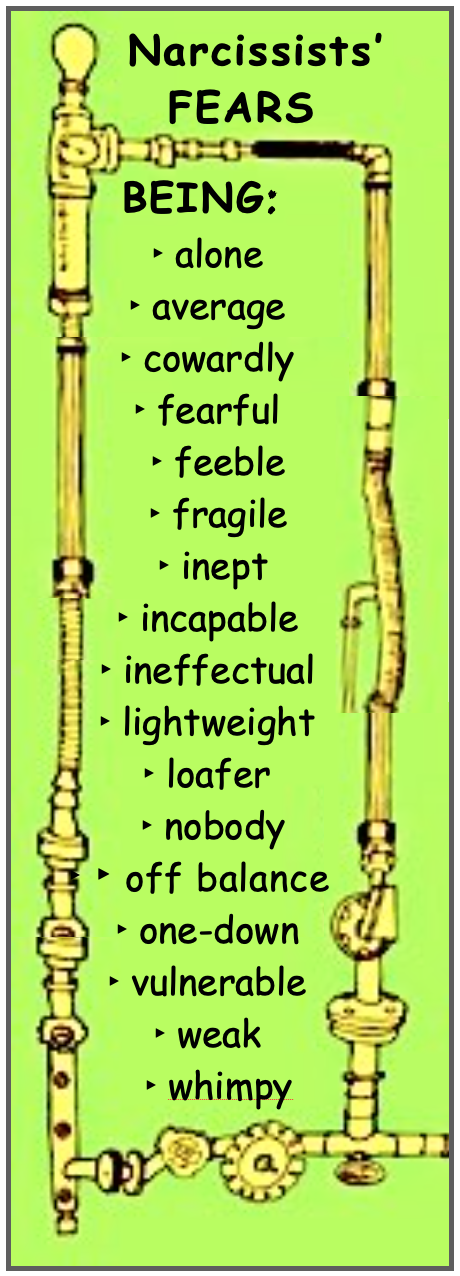
Narcissists’ FEARS (Part 3)

PREVIOUS  : Narcissists’ FEARS (Part 2)


What SCARES Narcissists? (cont)

❧  Low Status
Many overt Ns relentlessly pursue positions of power & influence – even as far back as high school – such as being class president. It was more than just a popularity contest, & now it’s serious competition to keep accumulating power. Ironically, many Ns seem to expect recognition or admiration without any actual accomplishments or achievements, assuming they deserve power because they were ‘destined’ for it.

❧ Not able to communicate
G– forbid a N would be have to be without a cellphone, iPad or any other device – for even a day, much less a week. It would feel like torture & undeserved punishment. They need to be able to contact ‘Supply’, people to fill the void in their personality. Not being able to do so weakens the N.

❧ Poor or fading looks
Ns don’t actually have to be good-looking to move through life on their narcapades. Those types can still find, use & discard available sources, just not as high a quality as they think they have a right to.

But if a N starts out attractive, then finds their looks fading, from over-indulgence, illness, accidents or just aging…. they won’t be able to keep or compete as well for high-level Supply. With a bruised ego, they may decide to spend money or get someone else to pay for physical upgrades, like new clothes, physical enhancements….. whatever will makes the shallow N feel more desirable.  

❧ Poor health
It’s particularly hard on Ns, but they’ll try to make sure to have an ever-present empathetic victim to cater to their needs, & nurse them back to health. If their illness is chronic, & they have a spouse or adult-child they can control, they make sure to have a lifetime slave at their beck & call. Also, active addicts find their continued use an effective way to trauma-bond their Supply. 

❧ Remorse
It’s not just that they can’t feel remorse, it’s that they actively refuse to fake-express it – by apologizing. They fiercely reject feeling bad about hurting others, which shows a very deep fear of emotional weakness. Remorse is acceptance & admission of having made a mistake. For proud & haughty Ns, this is unthinkable.

❧ Self-evaluation
Ns have a false idea of themself as superior beings, but some part of them knows it’s all a lie, which their mind shields them from facing. To look into this constructed part their identity would mean confronting everything that’s wrong with their personality, which Ns dread almost more than anything.

❧ Shamed
This is about Public Humiliation. Ns greatly value social standing & reputation, assuming others think as highly of them as they do of themself. It’s interesting that Ns fear shame, not guilt —> which comes from feeling bad about hurting someone, or doing something wrong – which they don’t.
Being shamed scares Ns because it would threaten their self-image

❧ Your clarity & memory of self
Hi on their no-no list is for you to remember life before you met them. Because it’s one of their big fears, they’ll use all the manipulative tactics in their arsenal to deaden your self-awareness & reprogram your mind to fit the N’s self-view.

❧ Vulnerability, & expressions of Emotions
Narcs often use cognitive empathy to fake interest in other people’s emotions. They use it to “gain entry” to your vulnerability, to establish a trust & rapport using false kindness & ‘understanding’.
However, they loathe being vulnerable themself  & showing their emotions, seeing these as weakness. Instead, they use  their mimicking skills to take advantage of you when your adult defenses are down

❧ When you change the status quo
Narcissists hate change whenever it’s out of their control. When you choose yourself, you choose to remove yourself from abuse. That frustrates them.
But remember – you have a right to focus on your healing, even if it makes the N  miserable (temporarily). Do not feel sorry for them – they’ll just replace you!

❧ Death
Ns think of themself as all-powerful, all-knowing superior beings – even the Coverts, who assume they have the power to harm someone just with their thoughts & feelings!
Death is the ultimate destroyer of even the most powerful, making them like everyone else, forcing the realization that all their maneuvering to ‘stay on top’ were pointless. Oh Horror!

NEXT : Narcs & INTIMACY

Narcissists’ FEARS (Part 2)

PREVIOUS  : Narcissists’ FEARS – + Def. (#1)


What SCARES Narcissists? (cont)

❧ Caught at being a fraud or liar
Ns are famous for lying or exaggerating to make themself seem important or impressive to others, as well as to make themselves feel better about their status. Since they know they’re stretching the truth they’re secretly worried about being caught. So calling them on their B.S. can set off a rage, a distraction, justifications, or more lies

❧ Commitment
Being in a relationship will mean that a partner will get to know the N, including faults & embarrassments. Letting people see imperfections in their character is unbearable. Also, “sexual narcissism” (usually in men) is presenting a false image that they’re much better in bed than they actually are. Long-term relationship will expose any inadequacies in this area too.

❧ Consequences
This is setting boundaries with a N, stating what will happen if they overstep, & then implementing the results you warned them about.
This doesn’t make any sense to them since can’t see when they’re wrong, & can’t understand how anyone would ever think they were.
And even if the N ‘admitted’ a mistake, they simply wouldn’t care. So they over- or under-react to boundaries being set for them, using anger or ‘serious talks’ as a way to intimidate you into backing off

❧ Factual Talk
Many Ns use excessive, long-winded language charged with grandiose emotion, spending their whole lives using the emotional language of other people to their advantage.  They skew reality to meet their worldview, & believe their truth is always the truth.

Therefore, they hate when anyone challenges them with realistic facts, instead of your emotions. Ironically, they can retaliate with more arguing (cognitive) & hysteria (their emotions) trying to elevate the conversation’s intensity by throwing an emotional temper tantrum. This childish response simply shows how they feel out-of-control

❧ Gratitude
Like remorse, gratitude is another emotion seen as a sign of weakness by Ns – as if it gives the appreciative person power over them. Since Ns never do anything for ‘free’, they can’t imagine someone else showing them a kindness without payment expected.  Or, Ns can’t admit they may have needed help. Either way, it means they owe someone, which would make them someone’s equal, or worse yet ——> one-down.

❧ Insults
Insults are about the person – their identity – & Ns are hypersensitive to being verbally put down. They feel the sting of it more than non-Ns, a crushing blow to their already fragile ego.
They’ll brood & sulk about it for weeks, or never get over it – depending on the words used & who said them – even plotting revenge toward the person who caused the injury.

❧ Jealousy
Ns are extremely possessive of their human Supplier – even when devaluing & discarding someone. Their jealousy can be in the form of constant accusations, or will show up intensely if their victim actually cheats, leaves – or just pays more attention to someone else. They don’t want to lose even a smidgin of attention.

❧ Lack of admiration
In the N’s mind, admiration from others is the source of their power, so without it they’re nothing. When marginalized or ignored – for whatever reason – they experience it as being invisible, feeling totally irrelevance & unimportance – which they can’t bear.

❧ Lack of resources
This is mainly about physical needs. Yes, many Ns work long hours, to buy the best & the biggest,  a way to fill the inner emptiness. Since Ns believe they’re entitled to everything, doing without something – or having it taken away – can cause panic.
Also, losing practical resources, such as a car & house, will limit their ability to find & seduce someone new to take care of them

❧ Losing at anything
Ns can be extremely sore losers, acting just like toddlers in a tantrum. They may seem to be struggling to accept losing, but then lash out when they do, which can lead to plenty of cheating & dramatic reactions for not being “on top”. 

EXP: They can pretend they don’t care about winning, insist they “let the other person” take the spotlight, OR refuse to accept that they lost & awkwardly act as if they are the actual winner, OR may attack or humiliate the winner, repeatedly stating the person in charge (boss / referee) was incompetent, stupid, blind….

NEXT : N’s FEARS, #3

Narcissists’ FEARS + Def. (Part 1)

PREVIOUS : READER TYPES #2

SITE:
“10 ways to discourage a N from dating you“


DEFINITIONS re. Ns
🃏Narc Collapse : when their manipulations & vulnerabilities are exposed or criminal activity caught, they no longer care what image they project, not able to be in control of themself as they used to, they act unstable, even unhinged. AND they can spring back as fast as a rubber band, or stay collapsed for some time.

🃏Narc Injury : they’ll react badly (s0000 wounded)  to real or imagined criticism / judgment, or when boundaries are set for them, or attempts are made to hold them accountable for harmful behavior. – Psych Central

🃏Narc Tears : Don’t be fooled – they’re crying for themself, not for you. These are crocodile tears, a term from an ancient anecdote about crocodiles weeping for the victims they’re eating. Here it’s about an NPD who wants to kill or actually causes the death of someone – but then publicly lament the loss. They may cry when their victim says they’re going to leave, or the N’s abuse is identified by anyone, or sometimes when watching movies, TV, or the news

Even their emotions are narcissistic. IF their tears are real, the pain is about themself, & provides some attention. They get ‘supply’ in the form of sympathy or by giving them the benefit of the doubt, or the empath doing things for them out of pity.

🃏 Narc Trauma-Bonding : Victims become deeply attached to a Narc by the use of ‘intermittent reinforcement’– the manipulative maneuver of abuse mixed in with periodic affection at unpredictable moments. Each time the N is ‘kind’ the victim feels hopeful that things are finally better – until the next round. BTW – periods pf relief are always brief, while the cruelty takes up most of the relationship.

🃏Narc Rage : the N reacts with intense anger, aggression, or passive-aggression when they have a disappointment or setback, which shatters their illusions of entitlement, grandiosity, & superiority, triggering their sense of inadequacy, shame & vulnerability.
◇ ◇ ◇

What SCARES Narcissists?

🚯 The N’s MAIN fear is of being Alone – without a steady stream of human ‘Suppliers’ of worship! So much so, they’ll even go back to an inadequate previous resource (parent, lover, guru, boss….) who they previously dumped & slandered – if they don’t have any other option at the moment.  “A lonely narc is a vulnerable one.”

❧ Authority
Ns detest authority – because they resent having to answer to anybody but themself. Any whiff of authority threatens their inherent desire for power & control. To survive, many Ns are passive-aggressive toward bosses & other authority figures, seething inside with resentment that they don’t have all the power they think is their due. Others can come across as combative & unfit in professional environments. If confronted by their inappropriate behavior, they tend to deny or rationalize their behavior.

❧ Being told NO
This is one of their most hated words, along with Truth & Silence. Ns are used to manipulating & weaseling their way into getting what they want – spending their whole life charming people into meet their needs. Telling them NO – & being adamant – will usually get you an angry reaction. They’re not just frustrated,  they’re downright confused by it! having no understanding that you have needs different from theirs.

❧ Criminal Justice System…
….. if
facing Jail. They hate any serious loss of freedom, from ankle monitoring to house arrest to actual prison time. They think: “How could I end up in jail for something I definitely did & assumed I’d get away with!”
Unfortunately, Ns are very good at manipulating the judicial system, from cops to their own lawyers to judges, coming up with such crazy justifications for their behavior that it ‘has to be’ true.

❧ Criticism
Criticism is usually about what the Ns did or didn’t do which displeased someone else – not about their carefully crafted identity.
That’s why criticism is less deadly to a N than an insult. No – they won’t like it at all, since they’re actually very sensitive – but only for themself.
Criticism will take a toll on them, but may be laughed away or met with comebacks. They’re also famous for throwing the criticism right back at the speaker : ‘Yeah, well you did……’

NEXT: N’S FEARS – #2

Types of READERS (Part 2)

PREVIOUS: Type of Readers, #1

QUOTE : “What I love most about reading is that it gives you the ability to reach higher ground & keep climbing.” ∼ Oprah


TYPEs of People (cont)

📱Highbrows
Don’t even think about gifting this reader a paperback romance from the supermarket. They take pride in their knowledge of the classics, or whatever book former presidents or influential scholars are currently raving about in their annual reading lists.
These types can’t be bothered with mass-market fiction or whatever the rest of us are reading on the beach. So unless you’re also a bit of a literary snob, you’re not likely to have a discussion with them about your favorite authors.

📱Hopeless Romantics
You probably guessed it – they are a die-hard fan of romance novels, & don’t care what Highbrow Readers or Nonfiction Nerds think. You can probably find every Danielle Steel novel ever written sitting on their shelves, along with a variety of historical romances & Nicholas Sparks staples.
And when the actors for the inevitable film adaptation are finally announced, you know they’ll have something to say about it!

📱Note-Takers
For some of you, your high school Lit teacher made you turn in your copy of Lord of the Flies to check your homework-assigned margin annotations.
But the Note-Taker doesn’t do this for a grade – it’s their passion! The margins in some of their old paperbacks could probably tell stories that beat the book itself. Taking notes while you read (fiction or nonfiction) can be a great way to process information & reflect on your own thoughts about the text.

📱Nonfiction Nerds
From self-help, to travel memoirs, to brilliant how-to hacks, the Nonfiction Nerd prefers facts over fiction. They’ll devour numbers, historical accounts, true-crime & every kind of real-life story. And they’re not wrong – after all, life is full of great stories.
We don’t always need made-up ones to stay interested. Plus, if you love picking up bits of random knowledge, the Nonfiction Nerd style is a great addition to your favorite one

📱Players
There’s plenty of love in this reader to go around (just don’t tell the others). The Player doesn’t like choosing favorites, but thanks to their curious mind & multi-tasking abilities, they don’t have to.
They can start mornings with an inspirational self-help book, & doze off in the evening with a bookmark in the latest sy-fy or romantic bestseller. Not everyone is comfortable with this kind of juggling, but The Player needs it to feel nourished

📱Repeaters
Polar opposite of the Player. Once the Repeat Reader pairs up with a book or author, they’re loyal for life. Whatever good intentions you may have when recommending a new book to them, they may smile politely before picking up their cherished copy of The Sun Also Rises for the 100th time, & are never bored. They’re not exactly obsessive (?), they just like to snuggle down & feel cosy with what’s familiar

📱Serial Binging
These readers are like Netflix binge-watchers – once they get a feels for a group of characters or a particular writer’s style, they can’t & won’t stop until they’ve read everything available so far. And pity the poor soul who has to keep this type company while they anxiously wait for the next release! Remember the long lines waiting hours for the next Harry Potter ? (see article)

📱Series Lovers
These people must read (or audio-listen to) groups of consecutive novels – in whatever genre they’re passionate about at the moment – ongoing novels that carry over the same location & the same main characters throughout. That way they don’t have to feel * abandoned* at the end of a favorite story. When they get their fill they can move on to anther series

📱Vacationers
Life’s busy. Sometimes the only chance you get to dive into a good book is on holiday. The Vacation Reader loves to unwind with a page-turner, whether they’re sprawled out on a beach, riding on a train, or sitting in their backyard with a glass of wine.

They read for pleasure, so don’t limit themself to just one genre or class like Highbrows. Because they don’t have much free time, when they do get to unwind, they choose what makes them happy.

NEXT: RETURNING TOPIC : Narcissists’ FEARS, #1

Types of READERS (Part 1)

PREVIOUS: Journaling, #4


Reading STYLES

Skim – rapidly, for the main points
Scan – rapidly, to find specific info needed
Intensive – in shorter texts, for detailed info, with emphasis on precise understanding
Extensive – in longer texts, often for pleasure & for overall understanding
Revision – rapidly, to confirm understanding of familiar info

Reading STAGES :
♦︎ Before – get an overview from table of contents, headings….
♦︎ During – read actively (highlight, make notes) & critically (ask pointed Qs)
♦︎ After – thinking about the text, & make a brief summary

TYPES of people
📱Book Clubbers
They make most of their reading choices from what their book club has been assigned at the moment, or on the recommendations of whichever celebrity book list they’re following.
And they’d be in good company. Prominent figures such as the Obamas, Mark Zuckerberg, & Oprah are all known for sharing their suggestions, which are usually on point. Ask a Book Clubber what they’re reading – they can always help you find your next page-turner!

📱Catharsis Seekers
A good book should provide some ‘feels’, whether to make you laugh, sob, or feel nostalgic. Catharsis Seekers want to feel it all. They can even get so emotionally attached that they’re thrilled when a character falls in love & very sad when one dies.
If you’re thinking about a book character as you go through your day – you’re emotionally hooked.

📱eBook Deniers
Though many of us appreciate the benefits of an eReader, the eBook Denier refuses to adapt. They want the feel, smell & comfort of crisp pages, getting great pleasure from seeing treasured stacks of hardcovers & paperbacks piled up everywhere.
Technology is a godsend for lots of things, but don’t waste your breath trying to convince the eBook Denier a Kindle is much easier to use

📱Fiction Lovers
On the other end of the spectrum from the Non-fiction Nerds sits the Fiction Junkie, who is uncomfortable with too much reality. They’re not interested in the way things are or were. They crave stories from other worlds, other times & other dimensions.

But that doesn’t mean the characters aren’t real to them – just try talking to a Harry Potter superfan for 5 minutes & you’d think they studied at Hogwarts right next to Ron & Hermione.

📱Fickle Readers
These people might have a little of everything on their reading list, but have trouble seeing the job through. Unlike The Player, who knows how to spread the love around, the Fickle Reader tends to get bored fast – so they quickly move on to whatever catches their eye next. You could build a fort out of all the half-read books they have lying around

📱Film Buffs
Some people like to see film adaptations after they’ve finished the book. Others don’t, claiming the films are never as good as the books. And some prefer grabbing a copy of the book after falling in love with characters on the big screen. Either way – no judgment here

📱 Genre Snobs
These focused souls find a literary category early on & stick to it for life, or at least a decade. Some are only interested in anything non-fiction, considering the ‘other’ beneath their intelligence & therefore a waste of time. Some will only read spiritual or religious literature, others only technical manuals…. each turning up their nose at other categories. We may rightly think they’re missing out, but they’re satisfied

📱Harry Burns
In When Harry Met Sally, Harry explains that he likes to read the last page of a book first, so in case he dies, he’ll know how it ends.
These readers love to do the same, & they’ll keep doing it, whether you think it’s clever or a crime punishable by death.
FYI: If you’re thinking about planning them a surprise party, don’t.

📱 Hate-Readers
These are the people who will not allow themselves to quit reading a book they don’t like or that doesn’t hold any interest – even though they realize this after 2-3 chapters. They’re afraid they might miss something, OR have the illusion that it will get better if only they persist. Unfortunately the rest of their relationships are similar – they “stay too long at the fair!”, hanging on to people that are toxic or that they’ve outgrown. Don’t!

NEXT : Type of Readers, #2

WRITING for Personal GROWTH (#4)

 PREVIOUS : Writing for Personal Growth (#3)

SITE :“550 Prompts for Narrative & Personal Writing”


REMINDER : You do NOT have to answer every Q. each time you write. It will depend on how much time you have & if you’re very tired or stressed. You can do them in groups, or if short on time – pick one from each of the following 3 ‘books’ & only write the first thing that comes to mind. Use these Qs for your benefit, not as obligation. Do NOT let the WIC get overwhelmed.
                                    Writing PROMPTS

Practical = for Planning, ASK :
What am I going to do? How am I going to do it?
What tools or resources do I need?
Who can I ask for help / advice?
What would be the first steps?
«
Personal  = for Self-awareness & deeper reflection, ASK :
What made me who I are today, & why / how?
What have been the most memorable events of my life, & why?
What have been the happiest moments of my life, & why?
What would my ideal life look like?

Why are my major fears?
Why do I keep worrying / obsessing about _____ ?  
& Why am I hanging on?

Writing IDEAS for CHILDREN
🌼 Nature Journals – these can be used to keep track of the flora & fauna they see in nature, especially the species that interest them most

🌕 Daily Prompt – responding to a variety of prompts will give children a good open-ended opportunity to write about a new topic every day

❄️ Emotions Journal – when writing about their feelings, children can learn new vocabulary, identifying & recognizing emotions in themselves & others.

🚌 Vacation Journal – this fun version can be a good bonding opportunity for the whole family (or classroom). All the child needs to do is add pictures, memories, souvenirs, & anything else that reminds them of their vacation (Morin, 2018) «Journaling benefits to children 
📗 Enhance their reading skills, which helps with communication (written & verbal)
📝 Improve writing skills, including grammar, sentence structure, spelling & vocabulary

🔎 List pros & cons of something when needing to make a decision
🔎  See the positives as well as negatives in any situation
🔎 Gain insight into their own motives (for actions) & other’s motives
🔎 Plan out & practice tough conversations in advance
🔎 Reflect on their thoughts about something after the fact

💗 Opportunity to explore & identify all their emotions 
💗 Take advantage of an outlet for things that are hard to express or uncomfortable to share
💗 Help them deal with “big feelings” in practical & safe ways
💗 Give them permission to feel “taboo” emotions like loneliness, sadness, anger..… & for some – relaxation, relief & enjoyment! 

NEXT : Types of Readers, #1