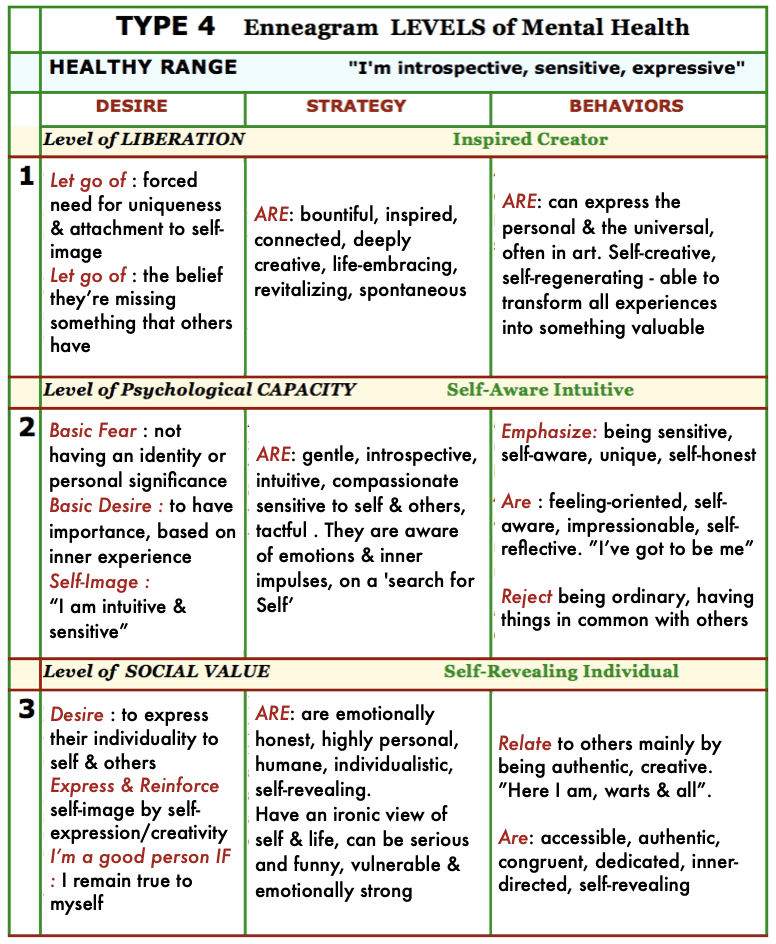
Enneagram – 9 LEVELS for TYPE 6

k13563303I WANT EVERYONE
to make me feel safe

PREVIOUS: Type 5 Levels

SITE: Type 6 overview


LEVELS by TYPE (cont.)

TYPE 6 – Troubleshooters
♦︎ Healthy Levels – Inner guidance : Courage. Able to be brave & committed.
♦︎ Unhealthy Levels – Self-abasement : Self-destructive behavior. Struggle with anxiety & rebelliousness.

HEALTHY 6s : “I am skilled at seeing & averting danger.”
♦︎ The Security Expert: Adventurous, intrepid, self-reliant, brave, seeing dangers before others do & skilled at averting it

● Courage overcomes the vice of Fear & Doubt, having realized that fear is conquerable. Committed & security-oriented, at High Performance level they’re trustworthy, dedicated, dutiful & warm. They constructively point out potential problems before those become major issues. They value teamwork, are cooperative, supportive, loyal team players. They often have a quirky, dry sense of humor.
«

«
AVERAGE 6s
: Safety & security are more important to me than to most
♦︎ The Cautioneer: They’re too ‘careful’, predictable, reliable, safe, secure, stable
● Life corrupts the ideal of complete confidence into the delusion that faith is too risky, & instead should be replaced by doubt. This gives the appearance that they’re winning the survival war, but instead become nay-sayers, consistently focused on what might go wrong.
«
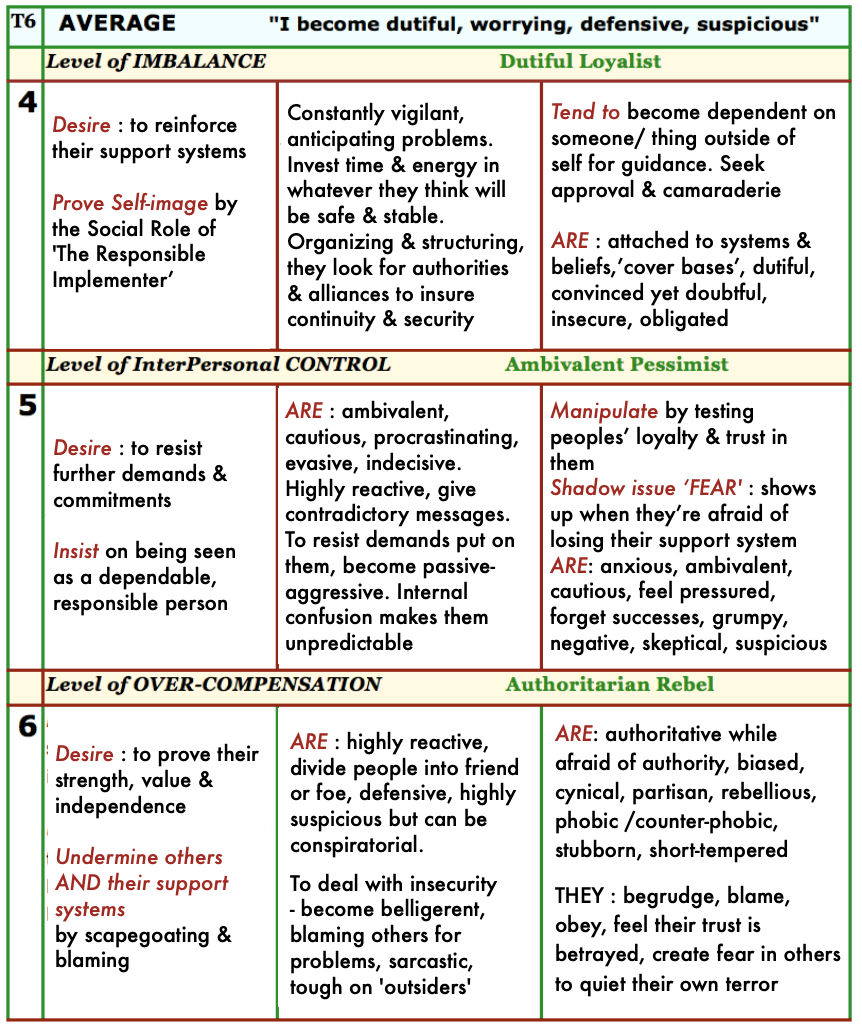
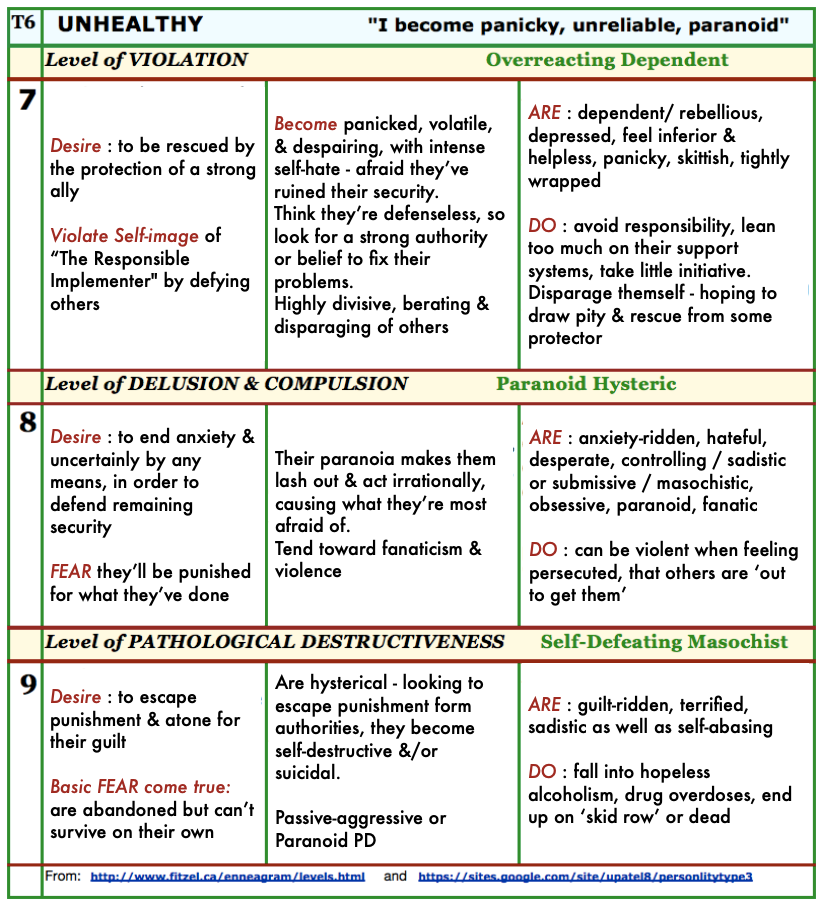
UNHEALTHY 6s: I am suspicious, paranoid.
♦︎ The Paranoid: They’re erratic, fearful into conspiracy theories, jealous, unsure, suspicious
● Disliking unpredictability & rapid change, they can become anxious,
blaming, doubting, reactive, suspicious, volatile & worrying.
«
 «
INTEGRATION
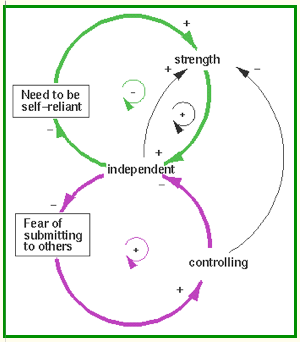
Type 6 LEVELS♦︎ Healthy loop: Run by the Basic Desire of ‘Needing to be secure’ which makes 6s loyal to others, especially authority. This increases their sense of safety, which satisfies their need & balance is formed.
♦︎ Average state: when 6s are not so loyal to others, they feel insecure around them. This increases the need which may spur them to seek out authority and become loyal to it, or more loyal to their peers. That will balance the loop so 6s can recover.

♦︎ Unhealthy loop: Run by the Basic Fear of ‘being abandoned’ which makes 6s suspicious & distrustful of others. This reduces their sense of security, which further increases the basic fear & prevents balance.

LENS you see the world thru: “Where is the danger? What might be the worst-case scenario? How can I/we prepare for it? What are peoples’ underlying motives?”

GROWTH: We can see from the diagram that a way to help break the control of the basic fear is to weaken the unhealthy loop. Sixes can refrain from distrusting others, and begin to be more loyal to others.

~~~~~~~~~~~~~~~~~~~~~~~~~~
LEVEL 5 in BIZ (Mid-Average)
AS LEADERS
6s can come alive under adversity, as they can be clear & strong when facing a known problem. If / when 6s overcome their self-doubt they can be courageous & determined leaders.
'average' levelsYOU:
— are a master at ‘circling the wagons’ to defend against a common enemy
— can become passive & a procrastinator when not challenged or opposed
— have a tendency to focus on flaws & talk in “yes buts… what ifs…..”
— keep refining & improving your work, with great endurance & bravery, over long periods of time
— like to express all negative expectations before considering positive alternatives, so that any potential threats are accounted for.

SUPERVISING Type 6 WORKERS
Keep your word with your type 6 employees – it greatly helps the relationship if you have integrity. Their trust is not given easily – it needs to be earned.
They’re unsettled by too much positive feedback, so mix in some negative comments to prove you’ve considered all angels. To get the best from Average 6s, let them know your reasons for wanting something done, and never order them around.
THEY:
— have strong analytical powers. They understand trouble & will want to help, especially if the boss is the underdog in a work situation
— tend to play devil’s advocate, listing all the things that could go wrong
— are very loyal to those who ‘deserve’ it. Once the boss is on their team they’ll help fight her/his battles as their own
— don’t like surprises, needing security & predictability
— need clear plans with fallback positions, & want backup data with contingencies.   (From: Global Leadership Foundation)

NEXT: Type 7 Levels

Enneagram – 9 LEVELS for TYPE 4

k13563296I HAVE TO BE DIFFERENT 
or I’ll be boring (& bored)!

PREVIOUS: Type 3 levels

SITE: Type 4 overview


LEVELS by TYPE (cont.)
TYPE 4 – INDIVIDUALISTS / Designers
♦︎ Healthy Levels – Are Self-Renewing & Inspirational. Able to model creativity and intuitive power for others
♦︎ Unhealthy Levels – Are Clinically depressed & Suicidal. Held back by moodiness & self-consciousness.

HEALTHY 4s: It’s important to go beyond the limits of convention.
♦︎ The Revolutionary: They’re artistic, aesthetically oriented, creative, edgy, expressive, individualistic, inspired, intuitive, self-aware & sensitive.
Equanimity overcomes envy, giving calmness & composure.  They return to the knowledge of “Origin”, that everything in the universe came from the same origin point, so Beings are fundamentally connected to each other. Embracing & enhancing life, they encourage others to be everything they can be. They break new ground & bring depth to their work life, push the envelope & find ways to put a unique stamp on whatever they do.
«

«
AVERAGE 4s
: Being told “You’re odd / weird” is welcome proof  that I’m staying true to myself.
♦︎ The Unconventionalist: different, experimental, idiosyncratic, open, unique
• Life’s difficulties corrupts the ideal of Unity into the delusion that everyone is fundamentally fragmented & separated. 4s notice what’s wrong in their life, & so envy what others have. They rely on that envy to give themself the illusion of unity, as a way to connect to others in a counter-productive fashion, becoming self-indulgent & alienated.
«

«
UNHEALTHY 4s
: I’ve lost touch with reality (but may not know it)
♦︎ The Stranger: Become progressively moodier, hypersensitive &
withdrawn. Can be bizarre /schizotypal/ schizophrenic, cut off from everyday current reality, delusional, irrational, masochistic
«

«
INTEGRATION
(Loops)
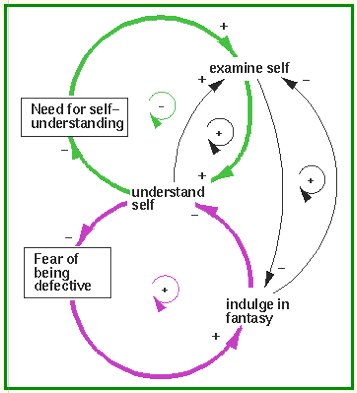
Type 4 LEVELS♦︎ Healthy loop: Run by the Basic Desire of ‘Needing self-understanding’, they allow emotions to surface & examine them compassionately in order to understand themself. Then the need is satisfied & balance is achieved.

♦︎ Average state: when 4s’ don’t closely examine their emotions, they can’t understand themself, which increases the need to figure out who they are. This can push 4s into a willingness to face their feelings, establishing a balance.

♦︎ Unhealthy loop is run by the Basic Fear of ‘being defective, which can cause 4s to ignore their True Self, allowing their emotions to overwhelm them, so they indulge in wild fantasy about themself. This leads to understanding themself even less, further increases the basic fear & prevents balance.

LENS you see the world thru : “How can I express my creativity and uniqueness in this situation?”
GROWTH: Breaking the grip of the basic fear comes from not indulging in fantasy & starting to examine oneself realistically.

~~~~~~~~~~~~~~~~~~~~~~~~~~
LEVEL 5 in BIZ (Mid-Average)
AS LEADERS
At this level Type 4’s authority comes from what they know. Their main strength & weakness as leaders come from the same place – an unwillingness to compromise their vision
'average' levelsYOU:
• are usually a romantic, passionate star
• hold a strong personal vision & inspire with the force of personality
• fervently pursue an elusive goal, so achieving them is a problem
• want to stay emotionally engaged & are attracted to inter-personal ‘drama’
• achieve goals in order to be distinctive – different & unusual
• excel with a business approach where unique presentations count

SUPERVISING Type 4 WORKERS
Honor type 4 employee’s unique way of seeing & doing things. If you want them to work hard, let them know how a project needs their personal touch. The more enthusiastic they are the harder they’ll try. Be emphatic rather than helpful – instead of giving a 4 the answers, give them the opportunity to express themself.
THEY:
• want distinctive work, preferring jobs which call for creativity, even genius
• need to feel respected for their personal vision & ideas
• their efficiency is tied to their mood. When their emotional life is disrupted their attention to work suffers
• like to be connected to ‘special authority’ – people in their field who stand for quality instead of popularity
• feel demeaned by having to perform a task they consider ‘common’, but which is defined by each #4 differently
• want to feel that their creative ides have been received, understood & appreciated.
(From: Global Leadership Foundation)

NEXT: Type 5 Level

Enneagram – 9 LEVELS for Type 3

k13563290I WORK HARD &
I want all the attention

PREVIOUS: Type 2 Levels

SITE: Type 3 overview


LEVELS by TYPE (cont.)
TYPE 3 – ACHIEVERS
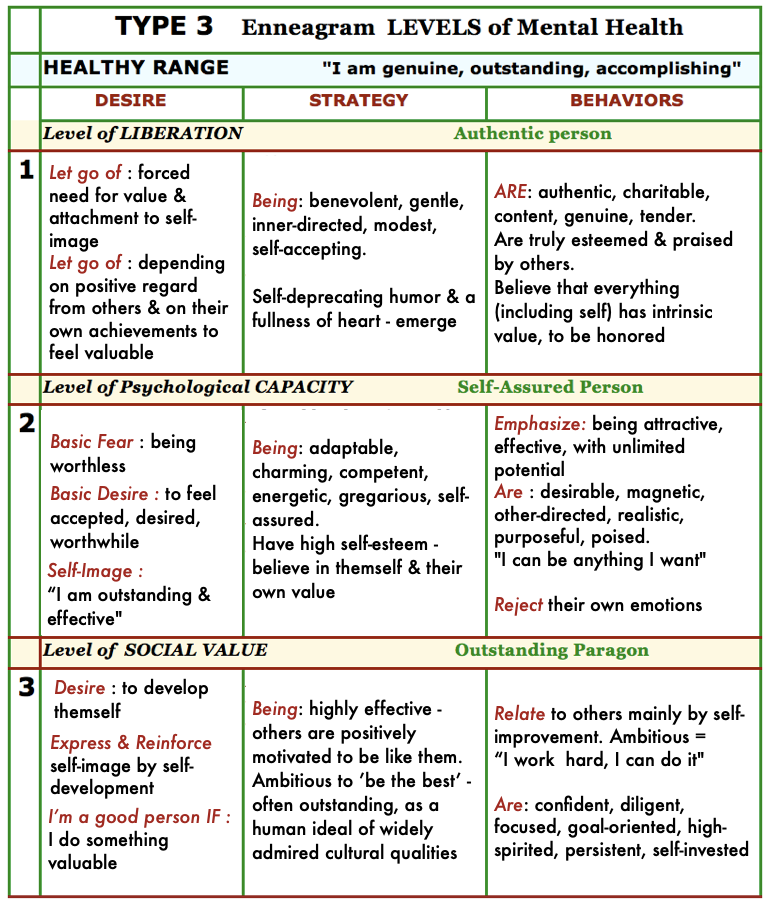
♦︎ Healthy – Have Authenticity & Self-Acceptance. Able to inspire others as an example of personal excellence & emotional honesty.
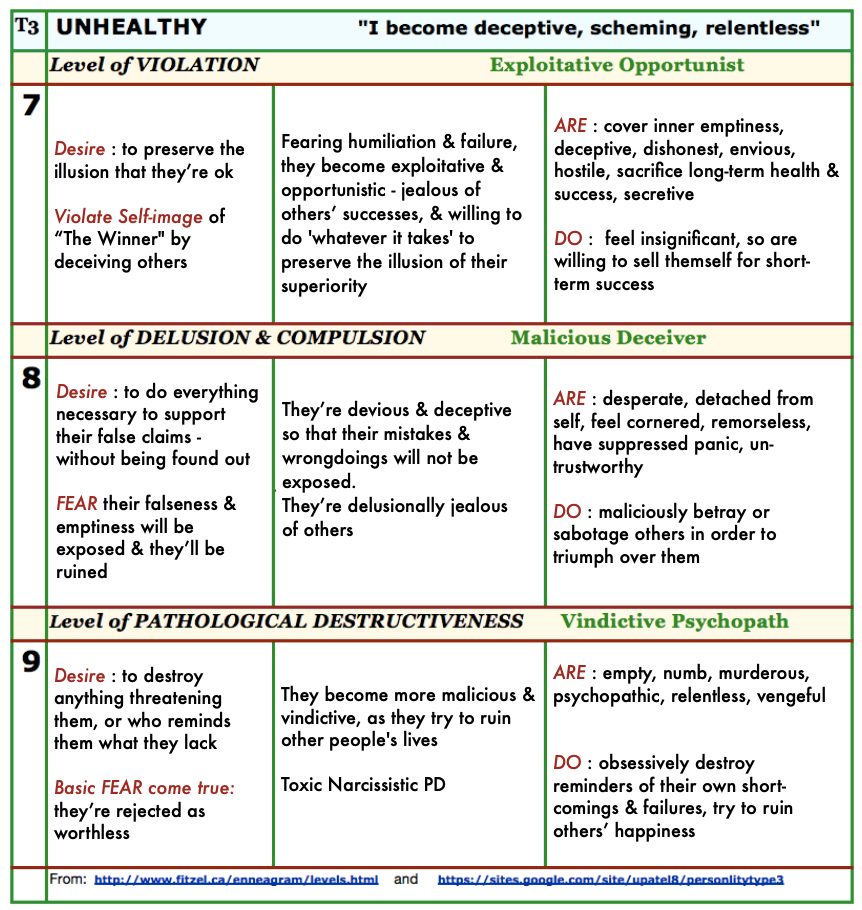
♦︎ Unhealthy – Psychopathy & Mono-maniacal (obsessive) behavior. Blindly pursue success & status.

HEALTHY 3s: “I can effortlessly handle the spotlight.”
♦︎ The Performer: You are adaptable, attractive, authentic, charming, competent, enthusiastic, inner-directed, a motivator, self-assured

● Truthfulness overcomes 3’s flaw of Deceit, by accurately expressing reality & being down-to-earth. You have grand & successful ideas, but those are earned & reflect reality. You’re open, generous & warm

● Promoter / good communicator : once given a goal you’ll work tirelessly to achieve it, & so can energize those around you with a can-do attitude. You’re a skilled performer/entertainer, effortlessly handling the spotlight, impressive without being arrogant.
«

«
AVERAGE 3s
: “I desire some level of fame in my community.”
♦︎ The Histrionic: You are a chameleon, calculating, career-focused, competitive, goal-oriented, a social-climber.

● You find it hard to value yourself, so are preoccupied with fame, prestige, social status & wanting others to find you impressive. Not truly aware of how you come across, you’re only focused on how attractive or unattractive you are to others. You treat people as objects – either as being helpful to you or as a barrier to getting the job done – both of which people resent.
«

«
UNHEALTHY 3s
: “I will do anything for attention, even horrible things.”
♦︎ The Envier: You are arrogant, deceptive, envious, exploiting, immoral, overly competitive, narcissistic, pushy, self-serving, sleazy, superficial, vain, untrustworthy
● You constantly compare yourself to others more accomplished/ successful, longing for what you don’t have. You’re convinced that being ignored is = to not existing, so will act inappropriately to get attention, chasing an idealized image.
«

«
INTEGRATION
(Loops)
Type 3 LEVELS♦︎ Healthy loop: The Basic Desire of ‘Needing to be admired’ pushes 3s to work hard to improve themself & to succeed, often gaining admiration. Feeling seen & admired, the need is satisfied & balance is reached.

♦︎ Average state
: 3s don’t work hard to improve themself, so others admire them less, which increases 3s’ need to be praised. This can spur 3s to make more of an effort, & then balance is created
♦︎ 
Unhealthy loop : They’re run by the Basic “Fear of being rejected”, causing 3s to be overly competitive & hostile towards others, as a defense, making them even less valued, which increases 3s’ basic fear & prevents balance.

LENS
you see the world thru: “How can I be successful? How can I accomplish the next goal as efficiently as possible?”

GROWTH: Don’t be competitive but focus on self-improvement instead

~~~~~~~~~~~~~~~~~~~~~~~~~~
LEVEL 5 in BIZ (Mid-Average)
AS LEADERS – 3s prefer the position of Leadership. Main challenge is balancing a laser-focus on efficiency with the interpersonal, coaching-heavy demands of mid-level management, BY separating Self-worth from performance.
'average' levelsYOU:
— are highly functional, with a huge appetite for hard work
— focused on goals & keeping other moving toward getting results
— thrive on measuring your achievements
— can easily adapt or change their style to fit what’s popular or desired – in whatever environment you’re working in, like a chameleon
— compete for titles, & produce for the bonuses
— are acutely aware of differences in status, & want to climb as high as they can
— only see people by appointment, so get on their list! You’re too busy to schmooze.

SUPERVISING Average Type 3 WORKERS
Don’t waste your type 3 employee ’s time – be well prepared & get to the point.   Give a clear outline for achieving success, being explicit about what’s expected in their performance & the outcome. Don’t interrupt them when they’re going full steam And do what you say you’ll do.
THEY:
— are more likely to focus on quantity rather than quality
— prefer short-range plans & deadlines, or reasonable stopping-points, so they can get the praise they crave
— can do several things at once, using shortcuts & filling in details late
— tend to assume they know more than they do – the ‘instant expert’
— want to be efficient & save time, even of that means cutting corners
— want to know their efforts are valued, & need clear feedback on how well they’re doing
— confuse their real self with their work role of “I am what I do”
— don’t tolerate criticism, & blame others for any failures
(From: Global Leadership Foundation)

NEXT: Type 4 Levels

Ennea – 9 LEVELS for Type #1

k13563295I WANT EVERYONE
to be perfect so I’ll be right!

PREVIOUS: Levels of Development – Intro (Part 4)

SITEs: Personality & the Brain” / #1 Overview


LEVELS by TYPE
NOTE: Each type is divided into 9 levels of Psychological Health, 1= highest & 9=lowest, grouped into Healthy, Average & Unhealthy. These 9 posts are a summary of these sub-groups by Type, in broad strokes, based on Oscar Ichazo’s work.

TYPE 1 – The REFORMERS / Perfectionists
♦︎ Healthy  – characterized by Acceptance & Wisdom, leading others through integrity & reason.
♦︎ Unhealthy  – use Condemnation & Punishing behavior. Hindered by perfectionism & resentment.

HEALTHY 1s  “I am hard-working and ethical”
♦︎ The Upstanding Citizen: accepting, conscientious, ethical, hard-working, objective, responsible & wise. Rational yet idealistic.

Right Action** overcomes the 1’s vice of anger & resentment, bringing them closer to their ideal of perfection. They have high standards, integrity, live by their values, are commitment to quality & don’t cut corners. They do more than is expected of them & finish most things they start.
** Right Action is the ethical conduct that aligns with universal moral truths, compassion & mindfulness
«


«
AVERAGE 1s:
“I maintain my spaces in an orderly way.”
♦︎ The Perfectionist: clean, conscientious, neat, organized, punctual, responsible & tries to live up to good moral standards

● Reformer / crusader ‘high-minded’ idealist.  They’re hard on themself, which ‘leaks out’ as resentment & being critical of people-places-things. Constant frustration at ‘things being wrong’ makes it seem like they’re making headway in advancing what is “right”, but actually their indirect anger pushes their internal world further from it. The tempting path of perfectionism can lead to unintentional & counter-productive outcomes.
«


«
UNHEALTHY 1s
: “I am obsessive-compulsive”
♦︎ The Anal-Retentive: closed-minded, controlling, inflexible, overly traditional, self-righteous
● They’re ever more dogmatic, impersonal, intolerant, judgmental, moralizing, & can only see one ‘right way’ – theirs.
«

«
Type 1 INTEGRATION
Type 1 LEVELS
♦︎ Healthy loop:
The Basic Desire of Needing to be Right leads 1s to seeking truth & do the right thing. When they do, the need is satisfied & balance is reached.

♦︎ Average state: 1s don’t work to seek truth as much, so the need to be right increases. If 1s work hard toward their heart’s desire, balance can be created.
♦︎ Unhealthy loop is run by the Basic Fear of “being condemned”. As a defense 1s judge & correct others right off, but since this is not right it adds to their basic fear & prevents balance.

LENS you see the world thru: “I see what’s wrong & how it can be improved. I carry around an internal yardstick I use to measure myself & others.”
GROWTH: Stop correcting others & start examining yourself for ‘truth’.

~~~~~~~~~~~~~~~~~~~~~~~~~~
LEVEL 5 in BIZ (Mid-Average)
AS LEADERS
The best ONE leaders are
conscientious & rock solid, with the end goal always in mind
Enn- 4-6 LEVELSYOU:
• are guided by quality control, since for them quality & control go hand in hand
• have a clear picture of the ‘correct’ results & the best way to get there
• tend to direct & define procedures, keeping others on the designated track
• like to plan in detail & to follow it rigidly

• lead by executing this plan & assigning responsibility for each part
• find it hard to delegate, worrying about getting the job done right
• tend to correct others & often criticize instead of praise
• have usually risen thru the ranks, so can see who the hard workers & team players are – or aren’t

SUPERVISING Type 1 WORKERS
Your type 1 employees need a plan to work toward, so you can either form a strategy with them or let them make one for themselves – within the context of your project. As a leader you need to play by the rules with 1s & clearly explain what you want.  When either praising a 1’s performance or discussing work deficiencies, be specific & detailed
THEY:
— are very practical, so can shape abstract ideas into step-by-step procedures
— are devoted to being on a schedule, so you need to be on time too. And if you make them late they won’t easily forget or forgive
— need specific guidelines, so loopholes can be very confusing
— prefer DO-ing rather than feeling, & focus on work rather than relationships
— need a great deal of structure in assignments & reports

As a worker – if your boss is a 1, find out how they like things done & do it that way. It will make your life a lot easier.     From: Global Leadership Foundation

NEXT: Levels of Type 2s

Ennea – LEVELS of Development Outlined (Part 4)

levels 4EVERY BIT OF KNOWLEDGE
helps me on my journey

PREVIOUS: Levels outlined – #3c

SITE: SAMPLE of “Enneagram Monthly” magazine


OVERVIEW : The movement thru the levels is a barometer of how much we’re attached to vs free from our Type’s fixed self-image. (Defects #1). People generally operate within a certain range of levels throughout life.
EXP: Earlier in life a person may have operated between levels 5 – 7, while later in life some maturity may raise them to levels 2 – 5.

The 9 Psychological Levels help us see/find:
1.  Our FALSE self – The physical, emotional & mental habits that prevent our ability to experience the Authentic Self :false self
— the emotional (Passion) & mental habits (Fixation) that shut down our heart, body & mind
— The Basic & Secondary Fear that unconsciously drives our specific Personality Habits (weakness)
— The shadow side of each type – our defensive responses . While we imagine being open & present to reality, we’re actually caught in the unconscious pattern of our ‘persona’.

2. Our AUTHENTIC Self – Path of growth & transformation for each typetrue self
— The tools we can use to awaken joy, spaciousness, clarity, intuitive knowing & deep connection with self/others, which comes from being less defended, more Present
— The practices available to each type to digest & outgrow the defensive habits developed in childhood as a response to suffering.

MOVING UP? – In a talk by Edward Morler “Integrating the Enneagram of Personality with the Levels of Emotional Maturity”, he stated that modern Enneagram theory regarding Levels of Emotional Health does not offer much in terms of how to move from one level to the next. (How each level deals with a problem in Part 2) (Morler articles)
HELPING: In terms of how a leader / therapist / teacher / minister…. can use this list to help improve someone’s life – once you’ve identified the level someone is presently at, you can try moving them up the scale ONE stage at a time, & only as far up as you are. EXP:
— When someone is in apathy (9), remind them of a reason to grieve (if seeing his mom in bed in a pathetic depression – remind her of a house they once had and lost)
— When someone is grieving (8), bring up something anxiety-provoking (7) ….. until they’re in a much better place.

SOLVING – Steps to making changes when facing a problem:
1) Recognize the problem
2) Own the problem (“What am I contributing to this ?”)
3) Forgive oneself, & acknowledge one’s positive contributions
4) Do something different.
~~~~~~~~~~~~~~~~~~~~~~~~~~~~~~~~~~~~~~~~~~~~~~~~~~

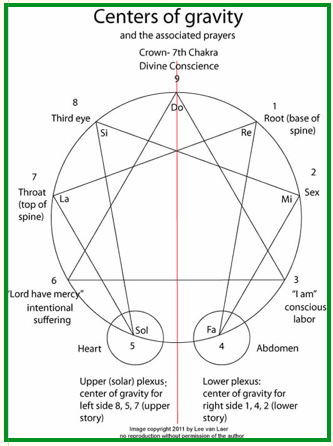
CENTER of GRAVITY
SEE: ‘Ennea Strengths #2’ // ‘Centers of Consciousness – Basic Triadsennea 2 halves
Just as we each has our own version of all 3 Centers (emotions, intellect, instinct), our personality has a center of gravity in one of them – our Type – which puts a specific ‘spin’ on the meaning of those 3 categories for each of us.
It’s also useful to look at the chart divided vertically, because the Energy Centers (power sources /chakras) of the 2 sides do fundamentally different kinds of ‘growth work’. (MORE…..)

ctrs of gravityRIGHT side = the “lower” story – which relates to the physical, natural, mechanical forces. The dominant center of gravity is found at #4, the lower portion of the central nervous system plexus, located in the abdomen, below the navel

LEFT = the “upper” story – relating to the conscious, spiritual forces. Its center of gravity is found at #5, commonly referred to as the solar plexus, corresponds to the center of the spine, & heart energy position

To have integrity what’s needed is a permanent & well-formed center of gravity,** with a whole integrated I-system (healthy ego) held inside one’s Being & assimilated into the Real-I.

**Centre of Gravity : In behavioral & developmental contexts, it refers to the core psychological characteristics, values, or dominant focus of a person’s thoughts, feelings, & decisions.
EXP : a person deeply invested in their career or physical well-being has a “center of gravity” rooted in achievement or fitness.

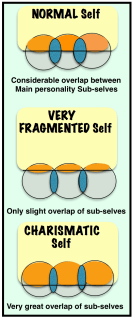
CHART:  the fragmented Self  is the result of a person’s multiplicity ofI’s  not being recognized, & so the parts (ego states) are not able t0 relate to each other.  Instead, they fight & bicker among themselves, only functioning on the periphery, while the False Self pretends to be Unified-I.

As we start to understand what the multiple-Is are, how they work & relate, we can gradually move to internal unity. Right-side work on oneself begins with the creation of a permanent center of gravity.…

NEXT: the 9 levels of each type – TYPE 1

Ennea – LEVELS of Development Outlined (Part 3c)

levels 3c IT’S PAINFUL TO SEE
who I grew up with!

PREVIOUS: Levels of Development – part 3b

SITE: “Essential Wholeness: Integral Psychotherapy, Spiritual Awakening, and the Enneagram”- Eric Lyleson


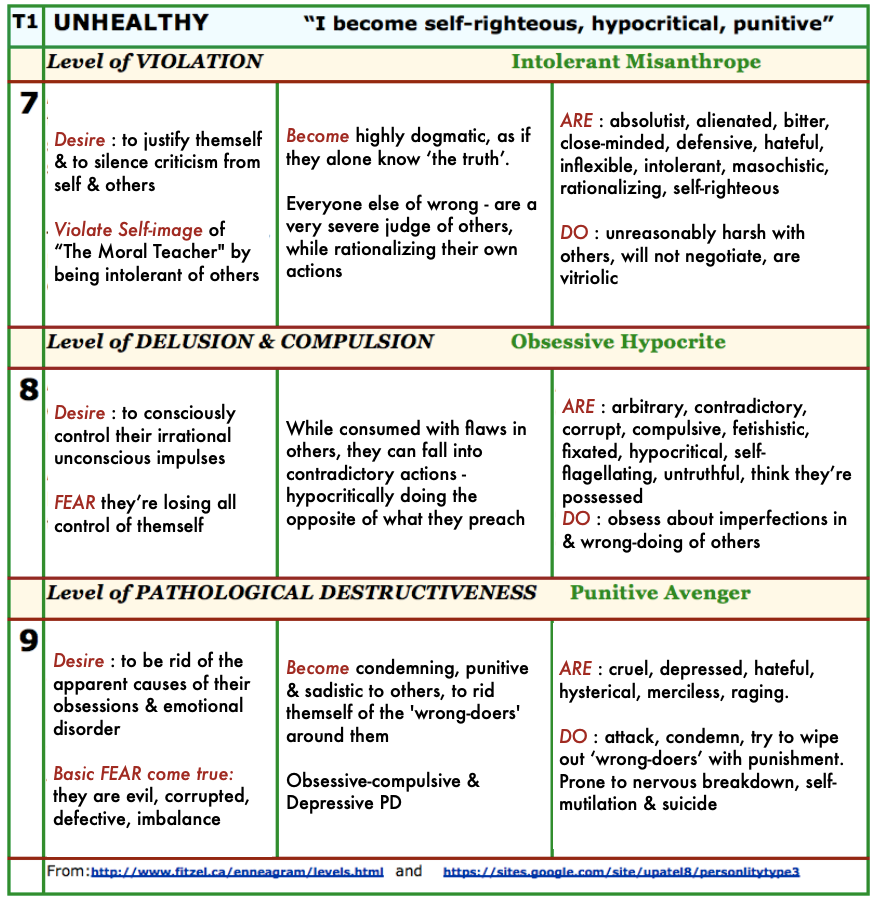
UNHEALTHY (7-9) – ALL Types
LEVEL 7 – Violation
♦︎ External Behaviors – We are dissipated, eccentric, empty, isolated, rejecting, unstable. We burn bridges & retreat
♦︎ Internal Attitudes – We are guilt-ridden, impulsive, nihilistic – with dark fantasies & negative expectations. We devalue, feel besieged but defenseless

♦︎ Desire is To – cut off all connections with the world and people (“to hell with everything”)
♦︎ Basic Fear of this Level – That the world is closing in on us

At Level 7, believing that life has violated us, seeing ourself  as victims, which allows us to justify any offensive or abusive action. We become so desperate to get our needs met that it turned inwardleads to terrifying behavior – we’re willing to harm ourself & others, causing serious conflict & damage.

● We tend to over-indulge in anything we think will eliminate our pain (food/drug/alcohol abuse, sex, exercise, self-cutting…), but since they’re just an escape from dealing with reality, they causes more suffering.
● We get highly dogmatic, intolerant, inflexible, self-righteous & very
judgmental. Tend to deal in absolutes, as if only we know “The Truth” & everyone else is wrong, while rationalizing our own destructive actions.
* * * *
LEVEL 8: Delusion & Compulsion
♦︎ External Behaviors – We are erratic, sinister,  repelling others & have chronic insomnia. Can become delirious, may hallucinate, project
♦︎ Internal Attitudes – We are horrified, nauseous, manic-depressive, overheated, with weird perceptions. We distort reality, resist all help, become schizoid (withdrawn / separate)

♦︎ Desire is To – endure / survive our terrors (staring into the abyss)schizoid
♦︎ Basic Fear of this Level – That we can no longer defend ourself from both inside & outside influences

At Level 8 – Have become obsessive about imperfection & the wrong-doing of others, although we may fall into those very actions, hypocritically doing the opposite of what we preach.

* * * * *
LEVEL 9: Pathological Destructiveness
♦︎ External Behaviors – We try to annihilate others & self-annihilating, suicidal, are ‘autistic’, deranged, paralyzed, with psychotic breaks
♦︎ Internal Attitudes – We implode, are internally chaotic, desperate for oblivion, split off. We feel panic-stricken & damned

♦︎ Desire is To – leave “reality”, to eliminate all sensory input, to break away from any kind of awarenessdestructive
♦︎ Basic Fear of this Level – Our basic fear comes true: we are helpless, incapable & useless

At Level 9 we condemn everyone, becoming punishing & cruel – to rid ourself of “wrong-doers.” Severe depression, a nervous breakdown & suicide attempts are likely. Generally corresponds to the Obsessive-Compulsive and Depressive personality disorders.

* * * * * *
EXP: TYPE 5 person’s disintegration (re. school-shooting)
“On December 14, 2012, Adam Lanza killed his mother, drove her car to Sandy Hook Elementary school where he gunned down 20 children and 7 adults before taking his own life.

It seems that Adam was a typical Enneagram #5 – highly intelligent, socially withdrawn with an inability to emotionally express himself.

• Pent up anger waits for a trigger.  Any Type follows the same downward pattern as they deteriorate. Fives decide they need less & less of everything, including food, clothing, hygiene. They tend to become reductionists and worse, nihilists….”(MORE…..by Marcel Elfers)

«
NEXT
: Levels of Development – part 4

Ennea – LEVELS of Development Outlined (Part 3b)

levels 3bI HATE BEING “AVERAGE”
but I’m working my way up!

PREVIOUS: Levels of Development #3a

BOOK: “Personality Types “~ Riso & Hudson (excerpt pages)


MEANING of the 3 Mental Health GROUPINGS (cont.)

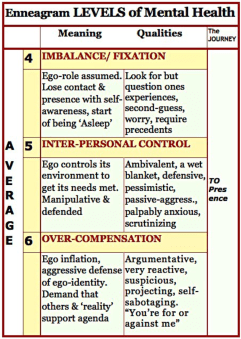
AVERAGE (4-6) – ALL Types
LEVEL 4 – Imbalance
♦︎ External Behaviors – We are non-conforming, dilettante or expert, we acquire technique, collect, delay closure, practice, prepare, study, withdraw
♦︎ Internal Attitudes – We are acquisitive, abstracting, encyclopedic, knowledgeable, uncensored, uncertain. We analyze, build models, conceptualize & ‘fine tune’

♦︎ Desire is To – feel safer & more confident by retreating into our mind & imagination (like a Tinker Toy)
♦︎ Basic Fear of this Level – That others will demand too much of us, & then our inner world will be threatened.

At Level 4, we become more attached to / identified with a self-image we’ve created, & tend to reject any of our qualities & actions not consistent with that ‘picture’. Protecting our self-image comes at the price of limiting our options.
● We now believe that by striving for the qualities listed at Level 2, we’ll be able to meet our needs.
● Dissatisfied with reality, we become high-minded idealists, thinking it’s up to us to improve everything, so can become crusaders, critics, advocates. We get into “causes” & try to explain to others how things “ought” to be.
* * * *
LEVEL 5 – Inter-personal Control
♦︎ External Behaviors – We are flighty, high-strung, impractical, mis-interpreting, offbeat, preoccupied, secretive, speculative. We create fantasy worlds, compartmentalizing ourself into parts
♦︎ Internal Attitudes – We are agitated, absent-minded, detached, distant, indiscriminate, intense – complexifying, minimizing & ignoring our needsrigid anxious

♦︎ Desire is To – shut out intrusions (be more ‘in their head’)
♦︎ Basic Fear of this Level – That others are attacking our niche or our competency

At Level 5 we’re afraid of making a mistake, so everything must be consistent with our ideals. We become orderly & well-organized, but emotionally constricted, impersonal & puritanical, rigidly keeping feelings & impulses in check. Often workaholics, can get anal-compulsive, fastidious, punctual & pedantic.

●  In personal relationships we are manipulative & controlling, insisting that people accept our self-image. Unfortunately they don’t always respond the way we want, leading to tension & conflict.
● At this Level, we start to see the Shadow Issue of each type – the hidden elements of our personality that represents the major defect each type needs to correct in order to grow.
* * * * *
LEVEL 6 – Over-compensation
♦︎ External Behaviors – We are contentious, far-fetched, insensitive, prickly, scornful, submissive. We argue antagonize, provoke, rationalize
♦︎ Internal Attitudes – We are cynical, extreme, greedy, impatient, intellectually arrogant, pessimistic, stingy. We are distrusting & jump to conclusionsuptight anxious

♦︎ Desire is To – scare off anyone who threatens our niche or inner world
♦︎ Basic Fear (red flag) – That we’re never going to find our place with people or in the world

Throughout the Levels, the strategies we use are a way to ‘manage’ underlying anger, shame, or fear.
At Level 6 we over-compensate for those emotions. We’re so desperate to have others accept our self-image that we end up being offensive –  abrasive, indignantly angry, moralizing, scolding.
● We’re highly critical both of self & others: judgmental, picky, perfectionistic. Impatient, never satisfied with anything unless it’s done according to our prescription.
● Are very opinionated about everything : correcting people and badgering them to “do the right thing” – as we see it.

From:  “The Everything Enneagram Book by Susan Reynolds
“While it’s true that part of your type is genetically predetermined, without question our early childhood experiences vastly affect our development.
The quality & style of parenting, in conjunction with environmental givens — health, income, education, location, and wealth or dearth of physical, emotional, or spiritual resources — have everything to do with our ability to function at the higher, the middle, or the lower spectrum of our EnneaType.

We began life whole, but whatever happened in our early life led to a set of adaptive behaviors that suppressed our essence & created a self-constructed ego. ennea symbol
These traits are sustained by habit & the failure to examine our beliefs. If our childhood was particularly dysfunctional, our coping mechanisms will likely be more rigid and more neurotic than those people who had “normal” or idyllic upbringings. Fear grows in proportion to the dysfunction — the greater our early childhood family’s dysfunction the greater our underlying fear, anger, or need for relationship.”

NEXT: Levels of Development – part 3c

Ennea – LEVELS of Development Outlined (Part 3a)

galaxy  I WANT TO IMPROVE MY LEVEL
so I can live better

PREVIOUS: Healthy Levels (Part 2)

SITE: “Identity & Type


ANALOGY: Psychological layers (like the Ennea-levels) are like layers of apparel – is how we ‘clothe’ ourself, but are not our Essence.
Outer – what we present to the world – like a man’s jacket. He can easily put it on or take it off, but it’s what he usually wears when he goes out. 3 levels
Middle  – how we are with our family & friends – like his pants and shirt. He can take them off, but is not likely to do so & then walk down the street in his underwear.
Inner  – what we only show to our most intimates, or keep totally private – like his underwear. He can easily take it off, but like most people, isn’t willing to walk naked through town. At home he’ll first take off his jacket, later his pants & shirt, & maybe only be naked when taking a shower. His clothes are what he uses, they’re not who he is.

MEANING of the 3 Mental Health GROUPINGS (see Part 2)
Everyone can express the achievements or tackle the lessons of the various Levels, no matter which Type, but how we handle the tasks & demands of any given Level will depend on our Number.

Most often, people live within a certain continuum of consciousness they believe to be their ‘self’, anywhere from the clarity of ‘Presence’ (Level 1) to self-harming behaviors (9). At any given moment, we are more OR less Present, in contact with ‘Being’ (Human Being rather than a Human Do-ing). Presence distinguishes the Essential from the ego-self, the real from the illusory.

Starting in 1973, Don Riso observed that a person might be healthy (high-functioning), average (‘normal’), or unhealthy (destructive to self & others), depending on what was motivating them at any given time.
He also observed that while people’s basic Type stays the same throughout life, the level they’re functioning from can fluctuate a great deal day-to-day, as well as over the years.

HEALTHY (1-3) – ALL Types
LEVEL 1 – Liberation level 1 optimal
♦︎ External Behaviors – I’ve become compassionate, energetic, enraptured, knowing, pioneering, profound, revolutionary, visionary
♦︎ Internal Attitudes – I’m awed, clear-minded, comprehending, immediately discerning, non-attached, participating, trusting

♦︎ Self-Actualization – I let go of the identification with a particular self-image, & are separate from the environment (an outside observer)
♦︎ Basic Fear of this LEVEL – Being helpless, incapable, overwhelmed, useless

At our best (no matter which Type) we have become extraordinarily wise and discerning. We no longer see ourself as limited & incomplete, having integrated qualities that were rejected at Level Two, & so truly come into balance. When living from Level 1 we realize that we DO possess what we were always looking for. By accepting what is, we become transcendentally realistic, knowing the best action to take in each moment. We are connected to ‘the Truth’ – humane, hopeful & an inspiration to others
* * * * *
LEVEL 2 – Psychological Capacity
♦︎ External Behaviors – I’ve become aware, curious, clever, perceptive, playful, unusual
♦︎ Internal Attitudes – I’m attentive, fascinated, have sensory acuity, objective, observant, unsentimentalcompetence
♦︎ Desire
is To – be capable & competent (have something to contribute)
♦︎ Basic Fear of this Level – Of not being smart enough, since intuition & perceptions aren’t strong enough to give us confidence.

At Level 2 we achieve the full potential that our ‘personality’ allows us, for the most part being very open-minded & tolerant. Although we have preferences, we can act largely without bias.
We recognize our gifts, talents & qualities – trusting them : we are conscientious, have strong personal convictions, an intense sense of right & wrong, with personal, spiritual & moral values. Our desire is to be mature, moderate in all things, rational, reasonable & self-disciplined.
* * * * *
LEVEL 3 – Social Value
♦︎ External Behaviors – I’m communicative, creative, innovative, inventive, learning, original, skillful, tinkering
♦︎ Internal Attitudes – I’m concentrating, exploratory, focused, independent, open-minded, patient, uncompromising, whimsicalsocial interest
♦︎ Desire
is To – master something in order to gain confidence & create a niche for ourself
♦︎ Basic Fear IS – not having anything of valuable to contribute (unprepared)

At Level 3 we form a stronger, clearer identification with our self-image, wanting to share our talents & abilities, believing that they will have a positive impact on those around us.
Extremely principled, we always want to be fair, objective & ethical : truth & justice are primary values. It’s no longer enough to just hold a certain picture of ourself to stave off underlying anxieties. We also want to show others who we are – with personal integrity & a sense of responsibility – which reinforces our self-image. Having a higher purpose often leads to being teachers & ‘witnesses to the truth’.

NEXT: Levels of Development – “AVERAGE”

Ennea – LEVELS of Development Outlined (Part 2)

levelsTHE MORE INFORMATION I HAVE
the better I can understand others

PREVIOUS: Levels of Development outline (#1)

SITE: Rob Fitzel, Canadian engineer


OUTLINE
● Our Enneagram personality Type is guided by a basic desire, the driving motivation behind most of our behavior, staying largely the same (though sometimes distorted) throughout the levels.
The qualities of each LEVEL apply to every TYPE – within it’s unique style, no matter how different the types are from each other.
SEE: “Freudian Enneagram”, connecting his id/ ego / superego to the EnneaTypes. (scroll down)

NOTE: The right hand column of the 3-part chart below identifies the different categories of THE JOURNEY, in relation to how much Presence or Essence we’re in contact with at the various levels. Presence is: “Living in direct connection with what is fundamental & most genuine in us, free of the social & childhood conditioning which originally caused us to abandon or hide our Truest nature.”

USING the Enneagram LEVELSEnn- 1-3 LEVELS
PERSONALLY Understanding the characteristics of each Level shows us how we can move up thru them to become more balanced, open, present, relaxed & to take healthy responsibility – by being self-aware & self-honest. Most importantly we can learn about behaving in line with our deepest inner truth.

● If we apply our type’s higher qualities to dealing with stressful people & situations – using respect, compassion, gentle honesty, kindness,…. problems tend to be resolved more easily & effectively, which helps us to grow & improve, by accessing more of our natural potential.

● If we only focus on the negative, staying in the middle levels (4-6) we’re more likely to be dishonest with ourself, beat ourself up, blame others, complain, be easily agitated, play victim, & generally act against our inner wisdom.

● If we deal with life’s problems mainly using the lower qualities of our type (7-9) – blaming others, being avoidant, irresponsible, harshly critical of ourself & others – then things are likely to stay bad or get worse.

At WORK : It’s very useful to figure out what level bosses or employees are functioning on, since it can make all the difference in our performance & morale.
Negatively – their character will indicate the amount & intensity of the competition, distrust, excessive conflict, individual rewards, job insecurity, lack of clear working agreements and stress/tension….

Positively – those factors help us have work appreciation, clarity of roles & goals, collective accountability, direct communication, the tools to do the job right, degree of trust, & an overall sense of being able to make a difference.

EXP of levels expressed
RESPONDING to a problem: from most mature to least (1—–>9): Level 1: Be a Leader –> a Doer –> a Coper –> an Opposer ——> a Manipulator (most dangerous, a con artist pretending to be a doer) –> Level 9: be a Victim

DEALING with a problem: from most mature to least (1—>9):
Ennea-Type 1: See the issue as an opportunity –>
Merely cope with it –> Be antagonistic towards it –> Be angry at it –> Be Passive-aggressive –> Fear it (of the potential loss) –> Be anxious about it –> Grieve –> Level 9: Sink into apathy, or Die  (Edward E. Morler, M.B.A., Ph.D)

NEXT: Levels outlined (Part 3a)

Ennea – LEVELS of Development Outlined (Part 1)

psych levels I’M AFRAID TO FIND OUT
what level I’m at!

PREVIOUS: What ACoAs know & Don’t know

SITE: Enneagram & Addiction


Psychological LEVELS
 Each of the nine Enneagram Types contains its own 9 levels/stages of possible psychological development, (don’t confuse Types & Levels), starting at the bottom: from the most destructive (level 9) to the healthiest (level 1) – see chart above. This categorization was developed by Don Riso in 1977, added to by Russ Hudson & used by Ken Wilber in the study of personal & cultural evolution.

● The Levels are a way of picturing the “skeletal” structure of each Type,
& account for differences between people of the same Number, as well as the shifts we see in ourself & others over time. Moving upward on the scale means becoming less bound by the limiting defense mechanisms of our type, to become truer to our Real Self, to be more present in the moment. Moving downward sinks us deeper into damage, increasing our distance from objective reality.

• Unless we know each Type well there can be confusion in identifying someone. People of the same Number may seem quite different from each other when coming from differing levels of mental / emotional health. And different Types can seem deceptively similar, depending on which stage they’re in. To identify anyone correctly, focus on the Passion, and listenlevels of developmet to the way each type used language.

● These stages are NOT fixed. The Level we act from can change even in the course of a day, based on feeling peaceful or stressed – usually to the one above or below our ‘normal’ level. Because levels are (potentially) fluid, it’s perfectly normal to do this depending on the situation.
— Anyone working on self-improvement will be able to move up one or two on a more permanent basis, with great effort, but most commonly we migrate from lower to higher & back down again throughout life, while the majority stay in the mid range of 4 to 6

— Very few people achieve level 1, altho some do touch it from time to time, & while they’re likely to slide back down, they usually stay in the 2 to 4 range.
— And no one drops from the uppermost levels to the bottom 3, especially not all at once, unless there is severe physical trauma to the brain, or long-term exposure to severe abuse.
EXP: This is what can happen to a happy well-adjusted child who is forced to endure repeated beatings, verbal assaults &/or sexual abuse, over a long time

OVERVIEW by RANGE: At each level, we use different strategies to reinforce our sense of self / ego-identity. NOTE: ‘ego’ = the created self-image. These divisions apply to everyone, no matter which Type one is.
LEVELs 1-2-3 : Healthyhigh achivement
Anyone who in the process of Self-actualizing (not 100% or all the time) : high functioning & operating successfully, who can use admireable / balanced / consistent, reliable ways of thinking & acting. There’s a sense of flow, being fully engaged with the task at hand, moving with little or no friction against the internal & external world.

a. INSIDE: Not strongly identified with their self-image. Are free to express & reinforce their identity, by acting consistent with the ‘persona’, as well as letting go of it when appropriate
b. OUTSIDE: In High Performance mode, they see other people as valuable in their own right, with unique needs & tastes, separate from themself, & can balance their needs with those of others.
● High-functioning people have a personality – it doesn’t have them

LEVELs 4, 5 & 6 : Average
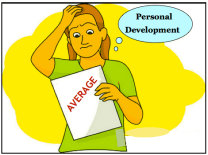
averageEgo-driven people are neurotic but still functional, & can contribute to society, but are limited in some specific way. They have a mix of productive & energy-sapping patterns.
● In this ‘normal’ range, people are generally self-focused, mainly on image – wanting to be seen in a certain way. They use social roles, manipulation & controlling others to reinforce their sense of self. They interact others based on their own needs, with less concern for what others may need. This can generate resistance & resentment toward them, but they won’t understand why.
● Average-range people believe they are their personality (“It’s just the way I am”)

LEVELs 7, 8 & 9 : Unhealthy
Unhealthy / Pathological people are already – or in the process of being – so out of control that they develop personality disorders such as being obsessive-compulsive, & may eventually lapse into psychosis. There is an increasing sense of ‘spinning their wheels’, heightened internal & external conflict, resistance, trouble with the public….poor reportcard

● In this Acute/Chronic Stress range these people’s focus is so narrowed down to themself that they can break with reality. Their self-image is completely different from how others see them, since they experience others mainly as objects rather than human beings, putting a great strain on all relationships.
● For lower-functioning people, the personality has them & they just act out of it automatically.

NEXT: Levels outlined (Part 2)