SAYINGS that MISREPRESENT (Part 1)

I WANT TO BE CLEAR
about what I’m saying

PREVIOUS: Growth for the Scapegoat #3

SITE:Use of Language (Many links re. the meaning of words & phrases)

INTRO
CONFUSING
: We all use short-cuts in daily conversation, which is understandable, but sometimes this can do us a disservice.
There are truisms we take for granted, phrases & sayings we repeat without considering what they really mean. We assume they are correct, & that they apply across the board  (the latter is B & W thinking – a CD).

It is said that the unconscious has no sense of humor & is completely literal. It’s the reason affirmations need to be said in the positive: “I have a right to be happy…. rather than “I don’t want to suffer any more”, and stated as if our goal had already happened; “I am making / have made $100,000 in sales this year”, rather than “I wish I could make….”.
Language is so important, not just to connect well with other people, but mainly to connect with ourself in the healthiest possible way. The Inner Child is always listening to everything we say to others, & at the same time is listening to the Bad Parent voice shouting or whispering in the background.
It’s up to the UNIT (healthy adult & loving parent) to make sure our language is kind as well as accurate.

In terms of having good mental boundaries, “Accuracy is more important than agreement”. Just because everyone else believes or does something – doesn’t mean we have to. Don’t let others confuse you. Don’t follow the crowd!

☁︎ NOTE: How we use Language is as important in the quest for ‘sanity’ as other factors. The words & phrases we choose either help or hinder our progress.

1. “I deserve to / You deserve it…..”
The problem is the word ‘deserve’. Sounds OK? Well, in terms of actual meaning, ‘deserve’ refers to something given as a reward for acceptable, special or difficult behavior (as in: “Here is your A+ / medal / Oscar / gold watch…..you deserve it”). It’s something earned, which is OK, since it’s good to be recognized & honored for accomplishments.

So it’s a ❤️ YES if you’re rewarded for earning a living, getting a good grade, winning at a sport or climbing a mountain….

BUT it’s a definite 💜 NO when speaking of our rights as a person. We’re not supposed to deserve them. They’re ours no matter what. Using ‘deserve’ in the context of personal growth is misguided, because it implies that our worth is based on how much & how well we DO things.

This reinforces our difficult childhood, when we were only acceptable (if at all) based on the condition of how well we conformed to dysfunctional rules, instead of being loved unconditionally for just being here.

So, connecting “I deserve …..” with self-worth is a subtle distortion, disguised as Recovery, which ignores our BE-ing. The implied message is: “Produce or lose!” It sneakily tells us that we have to keep on earning validation & permission to have things which are in fact universal Human needs (love, freedom, respect, identity, guidance, dependability….), & therefore should not have to be struggled for.
This deep-rooted negative assumption is why we keep trying to be perfect & please everyone – neither of which are possible !

2. “Well, at least you’re alive, You’ll be just fine, You’re strong”
❤️ YES – of course. We want to affirm life & let people know we care about their existence.
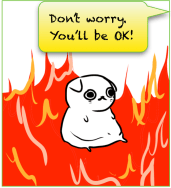
❤︎ However, without making this a NO, there is a way in which these phrases are a kind of insensitive throw-away. With many people it’s just a polite standard response.

But if you just had a devastating loss & may even be injured – like a serious accident with a death, a full-scale house fire, a near drowning, a severe physical assault, a major illness…. You’re in pain, in mourning, in shock! so those comments are not comforting or uplifting.
Without looking for pity or to be rescued, some indication of empathy or sympathy would be welcome, rather than a glib pat on the head.

NEXT: Phrases #2

Ennea – LEVELS of Development Outlined (Part 3b)

levels 3bI HATE BEING “AVERAGE”
but I’m working my way up!

PREVIOUS: Levels of Development #3a

BOOK: “Personality Types “~ Riso & Hudson (excerpt pages)


MEANING of the 3 Mental Health GROUPINGS (cont.)

AVERAGE (4-6) – ALL Types
LEVEL 4 – Imbalance
♦︎ External Behaviors – We are non-conforming, dilettante or expert, we acquire technique, collect, delay closure, practice, prepare, study, withdraw
♦︎ Internal Attitudes – We are acquisitive, abstracting, encyclopedic, knowledgeable, uncensored, uncertain. We analyze, build models, conceptualize & ‘fine tune’

♦︎ Desire is To – feel safer & more confident by retreating into our mind & imagination (like a Tinker Toy)
♦︎ Basic Fear of this Level – That others will demand too much of us, & then our inner world will be threatened.

At Level 4, we become more attached to / identified with a self-image we’ve created, & tend to reject any of our qualities & actions not consistent with that ‘picture’. Protecting our self-image comes at the price of limiting our options.
● We now believe that by striving for the qualities listed at Level 2, we’ll be able to meet our needs.
● Dissatisfied with reality, we become high-minded idealists, thinking it’s up to us to improve everything, so can become crusaders, critics, advocates. We get into “causes” & try to explain to others how things “ought” to be.
* * * *
LEVEL 5 – Inter-personal Control
♦︎ External Behaviors – We are flighty, high-strung, impractical, mis-interpreting, offbeat, preoccupied, secretive, speculative. We create fantasy worlds, compartmentalizing ourself into parts
♦︎ Internal Attitudes – We are agitated, absent-minded, detached, distant, indiscriminate, intense – complexifying, minimizing & ignoring our needsrigid anxious

♦︎ Desire is To – shut out intrusions (be more ‘in their head’)
♦︎ Basic Fear of this Level – That others are attacking our niche or our competency

At Level 5 we’re afraid of making a mistake, so everything must be consistent with our ideals. We become orderly & well-organized, but emotionally constricted, impersonal & puritanical, rigidly keeping feelings & impulses in check. Often workaholics, can get anal-compulsive, fastidious, punctual & pedantic.

●  In personal relationships we are manipulative & controlling, insisting that people accept our self-image. Unfortunately they don’t always respond the way we want, leading to tension & conflict.
● At this Level, we start to see the Shadow Issue of each type – the hidden elements of our personality that represents the major defect each type needs to correct in order to grow.
* * * * *
LEVEL 6 – Over-compensation
♦︎ External Behaviors – We are contentious, far-fetched, insensitive, prickly, scornful, submissive. We argue antagonize, provoke, rationalize
♦︎ Internal Attitudes – We are cynical, extreme, greedy, impatient, intellectually arrogant, pessimistic, stingy. We are distrusting & jump to conclusionsuptight anxious

♦︎ Desire is To – scare off anyone who threatens our niche or inner world
♦︎ Basic Fear (red flag) – That we’re never going to find our place with people or in the world

Throughout the Levels, the strategies we use are a way to ‘manage’ underlying anger, shame, or fear.
At Level 6 we over-compensate for those emotions. We’re so desperate to have others accept our self-image that we end up being offensive –  abrasive, indignantly angry, moralizing, scolding.
● We’re highly critical both of self & others: judgmental, picky, perfectionistic. Impatient, never satisfied with anything unless it’s done according to our prescription.
● Are very opinionated about everything : correcting people and badgering them to “do the right thing” – as we see it.

From:  “The Everything Enneagram Book by Susan Reynolds
“While it’s true that part of your type is genetically predetermined, without question our early childhood experiences vastly affect our development.
The quality & style of parenting, in conjunction with environmental givens — health, income, education, location, and wealth or dearth of physical, emotional, or spiritual resources — have everything to do with our ability to function at the higher, the middle, or the lower spectrum of our EnneaType.

We began life whole, but whatever happened in our early life led to a set of adaptive behaviors that suppressed our essence & created a self-constructed ego. ennea symbol
These traits are sustained by habit & the failure to examine our beliefs. If our childhood was particularly dysfunctional, our coping mechanisms will likely be more rigid and more neurotic than those people who had “normal” or idyllic upbringings. Fear grows in proportion to the dysfunction — the greater our early childhood family’s dysfunction the greater our underlying fear, anger, or need for relationship.”

NEXT: Levels of Development – part 3c