ACoAs & HUMILIATION (Part 1)

humiliationI’VE BEEN DOWN SO LONG
I can’t imagine ever getting up!

PREVIOUS: Anger T & F, #2

SITE:Humiliation” (Wikipedia)

QUOTEs: “No one can make you feel inferior without your consent.” ~ Eleanor Roosevelt


» DEF: Being in a state of disgrace, a loss of prestige &/or self-respect.
A person who is continually subjected to severe humiliation will experience major depression, suicidal thoughts or actions, & severe anxiety states, such as post-traumatic stress disorder (PTSD).

RESEARCH: A study at the U of Michigan revealed that the same areas of the brain which light up when we experience a physical injury – are activated when we experience intense social rejection.
In other words, humiliation & isolation are felt just as strongly as body pain.

NOTE
: Humiliation is not the same as humilityThe opposite of Humiliation is Appreciation

HUMILIATION originally comes from external sources – which then get internalized as part of the PP voice (Introject).
✦ THEN – for ACoAs it comes first & foremost from our family, & then often from school, church, neighborhood…. It’s ‘being shamed’ rather than feeling ashamed

✦ NOW- a less severe event may cause us to “take offense” when something is said or done to us, which comes from what or how we think (cognitive, intellectual).
Whereas –
✦ Humiliation is more demeaning & hurtful – visceral, existential – about who we are fundamentally

In the present, most ‘victims’ disagree with the humiliation laid on them – don’t like it, know they don’t deserve it, see the treatment as unjust….but don’t believe they have any options, & so don’t challenge the source or change their environment

1. EXTERNAL Sources
Humiliation involves an event or ongoing situation that indicates unequal power in a relationship, where we are in a one-down position & unjustly diminished.
Often the painful experience(s) are vividly remembered for a long time after, & can lead to anxiety, especially if the exposure was prolonged. It requires:
victim/perp1. a Perpetrator exercising negative power,  in many different settings

2. a Victim who is truly powerless (child, minority, the poor….)
OR who is re-enacting a long-held victim role from childhood, so is who;; vulnerable to being humiliated
3. one or more Witnesses to or observers of – the event(s), such as family members, neighbors, teachers, the general public, peers, officials…. who usually do not object or help  (bystanders, helpers), sometimes even egging the perpetrator(s) on, as in bullying (Flying Monkeys)

➼ The following list was compiled by Leland R. Beaumont at Emotional Competency” & can be applied to children as well as adults.

a. PHYSICAL / SEXUAL (most visible)
Being
• boundary / privacy invaded, trespassed on
• denied basic needs &/or social amenities
• exploited, suppressed, violated
• forced to do or say something distasteful & self-shaming
• injured, assaulted (hit, spit on…), attacked
• isolated or physically abandoned
• the loser in a dominance contest / cheated on
• molested, incested, raped
• often beaten, slapped, kicked, punched
Having  your:elder abuse
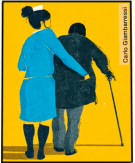
• abilities diminished from being disabled, or movement severely limited
• basic personal freedoms lost (mobility, access, autonomy)
• competence / confidence damaged – from being tricked, trapped, mislead, opposed, sabotaged, let down
• goals & plans constantly thwarted, over a long time
• resources diminished from being defrauded, robbed, cheated, evicted
• safety or security reduced by intimidation or threat
• to see / watch a loved one sexually assaulted
• to watch a love interest flirt with another, causing intense jealousy

b. EMOTIONAL /PSYCHOLOGICAL
Being
• blamed for things that have nothing to do with you
• blatantly rejected, treated unfairly, forced to back down
• betrayed, cheated, lied to, defrauded, suckered, duped
• denied basic personal & emotional needs
• deprived of privileges, rights or human dignitymade fun of

• forced to swallow one’s pride
• laughed at, mocked, teased, ridiculed, given a dirty look
• lowered in ones own or another’s estimation, made to feel powerless
• dependent (not by choice), especially on weaker people
Being
 • made to look stupid or foolish
• manipulated, dominated, controlled, forced to submit
• taken for granted, used to fill a need in others
• denigrated for ones values & beliefs, made fun of
• snubbed, put down, disgraced, shamed (not ashamed)
• treated as an equal by someone of a lower-status
• treated like an object (it) or animal, rather than a person

NEXT: Humiliation (Part 2)

Anger & the BRAIN (Part 3)

brain chemicals

DON’T KNOW WHAT’S WRONG
must be those pesky chemicals!

PREVIOUS: Anger & the Brain (Part 2)

SITE: “Helping children with anger


2. EMOTIONAL REACTIONS (cont)
a. The ‘Reptilian’

b. The LIMBIC SYSTEM (cont.)
iii. The Amygdala (cont)
While there are successful action-tools to manage hostile responses to life’s difficulties, chronically angry people may have trouble using them if their brain isn’t producing enough acetyl-choline, the hormone which tempers the more severe effects of adrenaline & helps to schedule REM sleep.

BTW: Introverts generally have higher level of this calming neuro-transmitter, so they’re more comfortable being alone, not needing a lot of stimulation in order to burn off excess adrenaline.(More...)
AND – they’re highly sensitive to Dopamine, so – too much will over-stimulate them.

✤ Under sudden stress, the brain is wired to make us react before we can properly consider the consequences. While the amygdala is very efficient at warning us about a threat –
it can only react from previously stored action-patterns, so it’s not good at judging or evaluating what to do about it.

When flooded with emotions, it hijacksthe rest of the brain, so the prefrontal cortex (PFC) gets temporarily cut off, without the thinking-option of checking if our behavior is reasonable, appropriate or safe.

EXP: When anger takes over, a person will tend to ‘shoot from the hip’ instead of from the head. However, resilient people (emotionally & chemically balanced) are able to make a faster recovery from stress, allowing them to BrainCoherenceEmotionuse the thinking brain more easily to calm emotional intensity.

✤ Emotional flooding does not excuse bad behavior, but it does mean that managing anger properly is a skill that has to be learned, NOT something we’re born able to do instinctively.

NOTE to ACoAs: This is another reason there are times when we can’t seem to respond successfully or at all – until well past the event. It’s when we’re shocked by someone saying or doing something that scares our WIC, whether outrageous, actually harmful, or just because it reminds us of our family.

For many us, it’s only later – sometimes much later – that the cortex is finally able to kick in & lets us think of all the ‘right’ or clever things we could / wish we could have said. Very annoying, especially in the modern world where words are more often needed than fists!
(See ‘Communication discrepancies in “D.M., #5”)

Re. the Amygdala in Animals
Overactive – When their brains were stressed by electronic stimulation, they became aggressive. As the irritation continued (just as ACoAs suffered as kids), the amygdala became overactive, dramatically increasing the subjects’ agitation & short temper
Missing – When the 2 structures were removed, the animals became very tame, no longer responding to things that previously would have caused rage, fear or sexual interest….

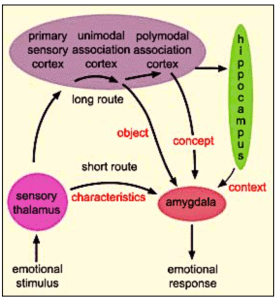
FEAR PATHS:
Information (stimuli) first goes to the thalamus & then to 2 parallel pathways:
√ The ‘low road’/ short route (12 milli-sec.) provides a fast, rough impression of the situation, bypassing the ‘thinking’ brain. This creates an emotional response before all the facts are in

√ The ‘high road’ / long route (24 milli-sec.) – goes from emotional input, thru the cortex to the amygdala – allowing the brain to determine if an event is truly life threatening.
If the frontal cortex rationally decides that it’s not, it dampens the intensity of the amygdala’s quick reaction, via the unconscious. (MORE…. birth – age 7) (Circuitry & Sense of SELF)
In Humans
:
When the amygdala is damaged, experiences which should cause alarm don’t get to the cortex for processing (high road), so that person will compulsively go toward dangerous things, even when repeatedly warned against doing so – because the fear response is missing (low road).
too much risk
EXP:  When one woman had her amygdala removed to stop her seizures, those were eliminated.
But also – she was no longer able to recognize fear or anger in herself, or in other people’s voices.
However, she could still identify & understand expressions of sadness, disgust, happiness, & surprise.
◆ In the case of PTSD, the input / event route through the cortex isn’t able to dampen enough of the fear response that has already taken place previously & repeatedly in the low road.

NEXT: Anger & the Brain (Part 4)

What ACoAs Know & Don’t Know

SO MUCH TO KNOW –
I’ll never get it!

PREVIOUS: Ennea-Triads (3b)

SITE: Self-esteem – the problem behind the problem


ACoAs are some of the smartest, most intuitive people around.
We had to be – to survive our childhood!  But we:
a. don’t acknowledge it (taught to not trust our judgment)
b. are ashamed of it (taught to not think so highly of ourselves)
c. are missing basic, ‘normal’ info about ourselves & the world

1. LACK OF INFO
a. About Alcoholism in the family, denial. THAT:alcoholism
• they were drunk, or that their drinking effected us
• we were abused & neglected (abuse is perpetrated on one or more of the 4 levels: physical, mental, emotional, spiritual)
• we were molested, sexually or physically abused
• we carry deep pain, from all that abandonment
• their damage & our was not our fault or responsibility
• we don’t have to suffer any more
• we have a right to be here
• we can trust our intuition   -etc.

b. About Healthy Living
• what process actually is & how to use it
• what clear, sane thinking ‘sounds’ like
• that we have options & what they may be
• what we want to be / do, when we ‘grow up’ – some of us do
know, but are not allowed to go for it & we’re too scared to failno crisis
• how to live without constant crisis, abuse, anxiety
• that we don’t have to manipulate to get our needs met
• that we can take care of ourselves, if we grow a Healthy Adult
• how to be kind to our Inner Child – grow a Loving Parent!
• what mental health is  (see posts on ‘Recovery’)

c. General
• how the rest of world actually functions
• what reality is – mental, emotional, physical
• what to SAY to people when they say hurtful or outrageous things
what healthy people are like EXP: ACoAs think they don’t get angry, overwhelmed, make mistakes, love relationships…
• why other people do what they do (get away with things, are entitled, can function well…)

• what is NORMAL – which has 2 meanings:
i. the opposite of crazy.  Our S-H says we are crazy & everyone else is normal.  Yes, we do have distorted thinking, which can be corrected – but that doesn’t make us nuts.
It’s normal to: have emotions, to succeed via process, to mourn losses, to not get along with every one, all the time, to have some damage….

ii. what is average – for humans, & in your society
It’s about the behaviors & attitudes common to the majority. But in this meaning, normal is not always healthy! It’s what the norm was where you grew up, in your religion, in your neighborhood & school… 
SO – normal could have been – drinking to excess, physical danger, verbal abuse, insensitivity, lack of education…OR being up tight, having to succeed, always looking good, doing the ‘right thing’…
It’s normal to: laugh when someone gets hurt or makes a fool of themselves, to not help strangers in trouble, to stare at an accident on the street…
no happy reunion
a. Not possible or unlikely
• our parent to love us, unconditionally
• to be free of all pain & suffering
• to have relationships that never end
• to be liked & wanted by everyone, all the time
• to be a star, be famous, be adored, worshiped

b. Can be worked towards & accomplished
• diminish S-H & gain self-esteem
• be heard/ listened to/ get healthy attentionScreen Shot 2015-07-11 at 11.53.34 AM
• healthy friends & mates
• improved health & appearance
• an enjoyable career, creative outlets
• to belong & be accepted
• respected, treated well
• feel comfortable, safe, secure
• have fun, relax, enjoy life   – etc.

3. What ACoAs DO Know
• what really happened to us as kids (abuse, neglect, coercion, torture) – BUT don’t want admit or deal with
• some of the things we want in life – BUT are not allowed to have
• what we’ve learned and accomplished since we left home – BUT not allowed to admit or own it
• ALL the things we figured out on our own, as kids and as adult – BUT don’t value or validate, because of:
— S-H – we deserved anything bad that happened to us (then and now)chinese S-E
— shame – not allowed to have our need or our value our accomplishments
— lack of healthy mirroring – our real self wasn’t validated by our family, so we negate our natural abilities

SELF-ESTEEM comes from validation & unconditional regard / love.
Validation means admitting what we know & learning what we don’t. Regard is being kind, patient & respectful toward ourselves. It’s never too late to have a happy life!

NEXT: Ennea Development Levels #1

Enneagram – Type STRENGTHS (Part 1)

ennea jewels IT’S GOOD TO ACKNOWLEDGE
my special strengths & talents!

PREVIOUS: Type Weaknesses (Part 3c)

SITE:  Enneagram Types & Tips for Happiness (iTunes) Jackie Wells Smith


CORE qualities = our GIFT
● The flip side of each Type’s ‘defect’ is the characteristic which allows us to self-actualize – our Virtue / Strength. These exist in immature form when we’re born, & are supposed to mature over the course of a lifetime (like an acorn), but can only do so IF planted in good soil – ie. a safe, loving family.
> If Nurtured, the Strength will allow us to grow into something grand

> If Hindered – it will be used incorrectly, to everyone’s detriment.
We know that a damaging childhood environment stunts the healthy development of our specific core quality – so it doesn’t turn into a mighty oak – which is what happens to most ACoAs – before Recovery. SO an essential part of our process is to find healthy people-places-things (PPT) that help us undo the damage & allow our precious acorn to RE-grow correctly. “It’s never too late to have a happy childhood” – NOW.

● The reverse of the “defects” are the 7 Heavenly Virtues:heavenly virtues.png
Charity, Faith, Fortitude, Hope, Justice, Prudence, Temperance + 2

The coordinating Enn. Strengths are:  (#1 – #9) : Serenity, Humility, Truthfulness, Equanimity, Detachment, Courage, Sobriety, Innocence, Action
— These positive qualities can also be used as PROCESS, starting at #9, which represents “The Whole” – for planning a trip, making a meal, running a company, pursuing our Recovery…

● To find our Type, we start with the exaggerated expression of the self – the defect – & trace it back to its original state. Our harmful ‘Habits of Mind’ (CDs) come from over-using /mis-using the Strengths, which are our most natural positive tendency – what we’re best at & our fundamental way of approaching the world. Therefore, the positive quality hidden in the flaw is our GIFT, with both the characteristics of Divinity & of human personality, which we bring into the world to share with others.
EXP: 2s love to help people, but damage turns it into co-dependence.
Healthy 1s like things to be done right, but damage turns it into judgmental perfectionism. Healthy 5s love to be quiet & study, but damage turns it into isolation or being pedantic (a know-it-all) …..

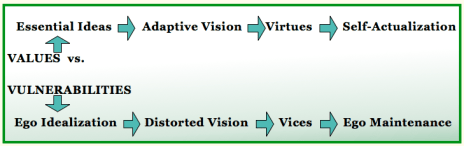
VALUES
● In “Types of Men” (1928), Eduard Spranger wrote that people are best understood through the study of their values. In the 1960’s Gordon Allport, father of Personality Psychology, agreed that perValues vs Vulnerabilitysonal values are the basis of our philosophy of life.
OUR:
Vulnerabilities come from what caused our essence to be distorted
Values come from what each Type finds most important & deeply wants

● Another way of saying all this is: At the heart of each person’s adaptation to the world are inborn aptitudes & abilities, present as potentialities in our core self. These energizing talents form our values, which we hold dear, influencing our motivations & perspectives on life. They orient & focus our vision – identifying what’s important to us, what to organize our life around, what to live for. While we can appreciate & express something of all the 9 qualities, temperamentally we favor a specific one which guides our attitudes, behaviors, emotions, energies & perceptions – expressions of our Essence.

a. From a spiritual point of view, we are told that human being were made in the image of God (Genesis 1:27), ie. God’s character & attributes reflected in us, such as compassion, rationality, love, hatred, anger, mercy…..
b. From a psychological view, human nature shows up in differing points of view & their accompanying ways of experiencing, evaluating, perceiving, understanding & responding to the world.

The “Primal Catastrophe”
Unfortunately most people lose touch with our specific Essence early in life. The Defect of our type is formed in response to the primal catastrophe of our childhood – the loss of connection to the Divine. In Christian terms, we’re born separated from God by our sin-nature, forgetting our birthright as children of God. In reaction, humans develop 9 different (ineffective) strategies to try reconnecting with Spirit & our deepest self.
holy ideas
● The Virtues/ Strengths identify the way to reconnect to Essence, out-growths of the spiritual insights called Holy Ideas (Holy = objective spiritual reality, expressed in the higher, essential qualities of the human mind). Since our Type’s Ego Desire is a mix of divine yearning & ego questing – in spite of the distortions – ‘personality’ has a sacred impulse at its core.

Ego vs. Essence ?
Essence = Our True Self, originating at birth. It’s different for each Type, & depends on the basic flavor of True Nature which each Number is most sensitive to, based on one’s Holy Idea. When we’re in touch with it, we feel an all-encompassing sense of aliveness, connection & well-being.

Ego: Not the Healthy Self from Psychology, but rather our False Self, the
‘personality’ with all its illusions, defenses & hidden features, which is only a reflection or imitation of our individual True Reality.
— It’s not accurate to think in B & W terms: ‘negative’ ego/ personality being an extreme opposite of ‘positive’ Essence, because humans are on an ego/Essence continuum all the time. Being aware of, understanding & working with both aspects are needed for our growth.
A.F. Almaas reminds us in his book Diamond Heart Book Four: Indestructible Innocence: “The personality is not something that needs to die or be thrown away…. but rather to be developed over time, to be refined & integrated with the sense of Being-ness” (p. 69).

NEXT: Enneagram – Type STRENGTHS (Part 2)

Enneagram – Type ‘DEFECTS‘ (Part 3c)

Vices 3cI WANT EVERYTHING TO BE EASY
so I don’t have to work on myself

PREVIOUS: Type Vices (4,5,6)


TYPE 7 – The ENTHUSIAST
(also 6w7 & 8w7, somewhat)
FEAR : of being deprived & trapped in pain, so avoid dedicating themselves to a person or situation, over-stimulate themselves & always live in the future
INTERNAL Story: “I must always be excited”

WEAKNESS : Reject any hint of seeing or admitting to the serious & painful sides of life – optimism is the ONLY option. Insist on putting off committing to anything, never ‘sitting still’
DEFENSIVE PATTERN: ‘Rationalize’ away uncomfortable experiences by re-framing them as ‘not a problem’, or denying responsibility for their part in it. They avoid suffering, hanging on to the self-image of being OK

HIDE from others: “I’m not as happy as I appear to be.”
Gluttony / greed causes 7s to use their charm, humor & liveliness to ensure they’ll always have more than enough of the good things in life. They struggle to hold the facade of happiness & fun, while also feeling anxiety, doubt, disappointment & sadness – like everyone elseenthusiast

PROJECTION: Experience others as boring, dull, joyless, modest, negative, overly serious, pessimistic, restricted & unimaginative.
7s think it’s up to them to make everything great, insure others are happy & imagine an optimistic future, see the good in things, & give others something to laugh about

MANIPULATE by: distracting & entertaining others & being upbeat – so they can get their way, insisting that others meet their demands for pleasant stimulation & satisfaction (narcissism)
Create CONFLICT by: being demanding, distracted, escapist, excessive,
impatient, irresponsible, over-extended, restless, scattered, thrill-seeking

✥ ✥ ✥

TYPE 8 – The CHALLENGER (also 7w8 & 9w8, somewhat)
FEAR: of being harmed & controlled, & so are aggressively dominant, forcing their agenda & desires on others
INTERNAL Story: “I must always be powerful”

WEAKNESS : Are resentful & angry if they feel at all defenseless, or believe someone is out to get them / take advantage. Insist on always being in charge
DEFENSIVE PATTERN: ‘Denial’ – re-direct energy by strength of will to controlling their environment, to maintain a self-image of being strong

HIDE from others: “I’m not as powerful or in control as I appear to be.”
Lust & craving makes 8s seek power, or at least the appearance of it. Believe they need to run everything, that without authority & respect – from everyone – they won’t be able to protect themselves by impacting their environmentdominant/bossy

PROJECTION: Others are seen as ambivalent, bleeding hearts, naive, needy, overly dependent, phony, sentimental, unfair, weak.
So it’s up to 8s to right all injustice, give others a dose of reality, protect & toughen others up

MANIPULATE by: throwing their weight around, bluff, make big gestures, dominate, demanding that others do as they say
Create CONFLICT by: being bad-tempered, blunt, confrontational, cynical, defiant, forceful, pushy, rageful, vengeful, willful

✥ ✥ ✥

TYPE 9 – The PEACEMAKER (also 8w9 & 1w9, somewhat)
FEAR: of loss of love & being abandoned, so they avoid being assertive, expressing their ideas or taking self-directed action
INTERNAL Story: “I must always be peaceful,”

WEAKNESS : Ignore things that need their attention – completely, or procrastinate until the last-minute. Insist on not noticing problematic issues and on staying neutral in unpleasant interactions with others
DEFENSIVE PATTERN: ‘Narcotization’ – to avoid conflict & keep a self-image of being comfortable or harmonious.
They get lulled into an emotional coma, deadened to uncomfortable reality by adjusting / molding themselves to fit other people’s desires or demands​

HIDE from others: “I’m not as agreeable as I appear to be.”
Indifference keeps 9s from voicing any disagreement. They take the easy way out, avoiding discussion rather than face dissension. They hide their own desires, afraid of being disliked if they make too many (any) demands, or if their needs are different than those around thempeacemaker

PROJECTION: Others are seen as aggressive, conflicted, demanding, excluding, frantic, inconsistent and pushy.
9s think it’s up to them to pacify the world, bring everyone together, calm them down & make others lower their expectations.
Also, they avoid their own plans & desires, & then project that others
ignore them, don’t take them seriously & consider their plans & dreams unimportant

MANIPULATE by: ‘opting out’, resisting others, being indecisive or inattentive, & passive-aggressive
Create CONFLICT by: being complacent, emotionally unavailable, ineffectual, resigned, stubborn, unaware of their own anger, unrealistic.

NEXT: Enneagram STRENGTHS (Part 1)

Enneagram – Type ‘DEFECTS‘ (Part 3b)

enn defects 3b


I WISH I DIDN’T HAVE TO
deal with these defects

PREVIOUS: Enneagram Defects, Part 3a

SITE: Everything Enneagram book


TYPE 4 – The INDIVIDUALIST (also 3w4 & 5w4, somewhat)
FEAR: of being insignificant, unseen, without identity – so they become moody, hypersensitive & pretentious
INTERNAL Story: “I must always be unique”

WEAKNESS : Being ordinary is experienced as boring, but also makes them ‘feel’ like a nobody, so they’re jealous of other people-places-things. Insist on having all of their emotional needs met at once
DEFENSIVE PATTERN: ‘Introjection’ – to avoid ordinariness & keep self image of being authentic. Internally they magnify a positive ideal, & obsess on self-blame for any painful outcome ​

HIDE from others: “I’m not as sensitive as I appear to be.”
Envy/ jealousy that others seem to have more & are treated better than themselves – so 4s to develop an aura of emotional hyper-sensitivity. They want special treatment, thinking it’ll compensate for all the unfair treatment they’re experienced

PROJECTION: Being ‘Common’ is projected onto others, who individualistare seen as detached, insensitive, overly cheery, plain, predictable, rude, shallow AND not terribly interesting or refined.
4s think they unique & interesting, but always misunderstood. So they think it’s up to them to restore class, refinement & sensibility to the culture

MANIPULATE by: being erratic, temperamental, hard to get’, making others “walk on eggshells”
Create CONFLICT by: being dramatic, emotionally demanding, moody, pretentious, self-absorbed, self-indulgent, temperamental, withholding

✥ ✥ ✥

TYPE 5 – The INVESTIGATOR (also 4w5 & 6w5, somewhat)
FEAR: of being helpless, useless & incapable, of be emotionally overwhelmed, so avoid as much contact as possible with the world
INTERNAL Story: “I must always be detached”

WEAKNESS: Their urge to know everything on a topic or situation helps avoid a sense of emptiness. Insist on personal space & non-interference
DEFENSIVE PATTERN: ‘Isolation’ – withdraw to avoid feeling small & helpless, & keep self-image of being all-knowing. Provides the space to develop a sense of structure & try to understand their ‘problem’

HIDE from others:“I’m not as smart as I appear to be.”
Holding back / isolating prevents 5s from having to share their emotional life with others – mainly relating by their intellect. Their source of strength is in accumulated knowledge, using it to keep others away

PROJECTION: Project their 1d1319272f56a3120542ebd0cfc1112flack of all knowledge onto others, so feel like they’re surrounded by a “confederacy of dunces” (Sherlock Holmes). Others are considered emotional, foolish, overly effusive and chatty, myopic, oblivious, shallow-minded, stupid.

5s can either avoid others entirely, OR research & discover TRUTHS, & then enlightening everyone else

MANIPULATE by: staying preoccupied with thoughts & projects, distancing emotionally from others  (Forum….. )
Create CONFLICT by: being detached, extreme, high-strung, impractical, isolated, preoccupied, provocative, unconventional, uncompromising

✥ ✥ ✥

TYPE 6 – The LOYALIST (also 5w6 & 7w6, somewhat)
FEAR: of never having support, & not being able to survive on their own, becoming defiant, defensive & suspicious
INTERNAL Story: “I must always be secure”

WEAKNESS : Anxiety, doubt & worry lead to a lack of trust in themselves, so are indecisive & procrastinating. They fluctuating between a need for be close & a need to be alone, between self-distrust & over-reacting
DEFENSIVE PATTERN: ‘Projecting’ – their feelings on to loved ones & authority figures​ – to avoid feelings of rejection & to keep a self-image of being loyal

HIDE from others: “I’m not as committed as I appear to be.”
Fear of being punished & disapproved of, from an internal or external authority figure, drives 6s to be overly-responsible & loyal. This makes them seem committed to any given cause, which is mainly to their own need for securityloyalist

PROJECTION: project rebelliousness & power onto others, who are seen as flighty, isolated, overly trusting, negligent, reckless, threatening, & trying to get away with something

📌 For fearful 6s the world is experienced as disappointing & unsafe, so it is up themselves to create certainty, order, safety & security everywhere
📍 Counter-phobic 6s (not conscious of their great fear) project ambivalence onto others, especially authority, seeing them as inconsistent & untrustworthy – so they must scold or train others to be consistent & fair

MANIPULATE by: being evasive, complaining, testing others’ commitment to them
Create CONFLICT by: blaming, being defensive, doubtful, evasive, negative, pessimistic, reactive, suspicious, worried.

NEXT: Defects – Part 3c

ACoAs: REBUILDING Trust (Part 2)

rebulding trust
TRUST STARTS WITH ME –
but I have a right to reciprocation

PREVIOUS: Rebuilding Trust (Part 1)


1. BETRAYED – by OTHERS

2. BEING the Trust VIOLATOR
These suggestions apply mainly to being in a ‘commuted’ love unit, but can also be used re. family members & close friends.
If
both people want to stay connected AND you’re willing to face your misconduct —
broken-hearta. in GENEAL (re. friends, work…. ) – if the problem is that you were neglectful, manipulated, said cruel things, didn’t keep promises, stole, lied, threatened, hit ….. THEN identify the behavior & stop doing it immediately
• be sincere – your victim is closely scrutinizing your motives & intentions

b. in an INTIMATE relationship – if you were unfaithful – cut off all connection to the “other” person
• take responsibility for your actions – don’t blame anyone else or make excuses
• provide an honest apology & a thorough account of what really happened – and if possible the why of your actionspromise keeper

• do not expect instant forgiveness & reinstatement, especially if you’ve been disloyal, untruthful & undependable before
• take immediate action to restore the rift between you & the other person, including listening to & validating their emotional pain & outrage, which you caused

• know you’re likely to be on probation, but if the relationship is important to you, commit to behaving in an upstanding way & then work at keeping your promise
• restate or change your shared goals & interests you can both build on
• be able to sustain good behavior over the long haul
• be willing to get professional help (individual & couples), go to AA, Al-Anon, pray for healing of underlying damage……

😻 BUILDING Trust in an Intimate relationship
✤  Be Authentic – uncover & live in your True Self which included the Natural Child ego state, which includes all talents, attitudes, tastes, genetic tendencies, learning styles, personality type…. as well as basic weaknesses

Keep your Word – Realistically, do what you say you’re going to do, SO don’t promise anything you can’t / don’t want to do
Be Transparent – nothing hidden (text messages, websites, finances … & no stockpiling unexpressed emotions

Don’t Lie – neither blatant lies, nor letting the other person believe something that’s not true
Confess Promptly (see 3 posts re. AA’s 10th Step).
No one can be perfect. Instead of letting problems fester, quickly & appropriately admit omissions, lies & mistakes (0000)

😰 BOTH : To HEAL
🔺 Know the Details –  Violator gives their side of the event, to provide you with a broader perspective : What, when, where? What may have contributed to this situation? Are there mitigating circumstances?

🔺 Release Anger – Betrayed person (you) need to acknowledge anger, & use healthy ways of getting it out. The offender too needs to express resentment & anger harbored from before

🔺 Commitment – Both parties need to define what’s required to stay committed, IF they want to keep the relationship
🔺 Rebuild Trust & the Relationship  – see below  (MORE….)

QUALITIES of any GOOD Relationship – BEING:
Approachable – willing to listen & when necessary, be able to handle things you may find hard to hear.
Appreciative – don’t take each other for granted & be realistic. Say ‘thank you’ when deserved & give compliments when appropriate & sincere  (showing Love)

Caring & Kind – Don’t stop saying “I love you”. Find ways to be thoughtful, considering the other person’s tastes & preferences.(5 Love Languages)couples love
When angry, state your Es in a way that will do the least emotional damage.  You’re more likely to be heard, &  prevents a buildup of resentments in the other

Fun to be around – a sense of humor is always welcome. Plan enjoyable things to do together that are relaxing & entertaining. Have your own interests as well, so you have something new to contribute
Helpful – approach problems together. Combine the best skills & natural talents of each to solve life’s difficulties, creating a greater sense of unity & strength

Positive – think confidently about yourself (but arrogant), & treat the other from the same point of view. Start from the assumption that you both have the possibility of growth & happiness, without overlooking limitations & flaws

communicate Respectful – appreciate & value your differences, as well as enjoying your similarities. Don’t try to change the other, but be clear about what you need, & would like to see improved in the relationship
Trustworthy – see post. Be consistent!
Understanding – encourage open communication of needs, opinions & emotions

NEXT: Double Messages – Basics #2

ACoAs: REBUILDING Trust (Part 1)

backstabbed
IT’S HARD TO LET GO
when I’ve been disrespected

PREVIOUS: Being Trustworthy

QUOTE:To be trusted is a greater compliment than being loved.” ˜˜George MacDonald, Scottish novelist

1. BETRAYED – by OTHERS
Because ACoAs have been let down again & again by our family, as adults we continue the pattern of feeling unsupported:

1. BY assuming we have an understanding with a friend, lover, boss…. that they will treat us with respect & reliability – without actually talking to them about our needs & hopes, nor getting an agreement from them!

• We expect people to be able to read our minds – the way a small child legitimately needs their parents to be able to do – showing that we’re still functioning emotionally from the WIC

• So when someone doesn’t come thru for us the way we expect (but unsaid by either party) we feel betrayed .
BUT what has actually been betrayed are our own hopes, illusions, fantasy & assumptions about the other person!  In these cases others have not betrayed us, since they did not make the commitment we imagined, whether emotional, physical, financial or verbal

2. BY keeping people in our life who DO continually disappoint, while longing to be with someone we can truly depend on.  To change who we choose we need to continually work on S & I

• When we catch someone actually messing up, they can react several ways: apologize insincerely, make excuses, withdraw or attack us.

These tactics are meant to deflect responsibility from themself
, while underneath they may be:
• puzzled as to what they did wrong, because they’re shut down (Es) & in deep denial (Ts) about their character defects, so they can’t change what they don’t understand
• indifferent, insensitive, narcissistic – don’t care about you
• may feel self-hate, shame, guilt, fear, anger, but can’t own them, so they need defenses (character defects) as protection

There are MANY WAYS to be betrayed, and not just by a cheating spouse or lover.  Itstay or go can be by paid professionals, family members, friends, colleagues, bosses or clergy
•  If you’ve been hurt on many occasions by someone you believed in, you have to decide if you can continue, or need to end the association.
Choosing between the 2 is rarely easy or fast, but in most cases leaving is ultimately the best for your PMES health – if possible. At the very least you can put some distance by using healthy boundaries.

• If you want to continue the relationship (or not), you need to & have a right to ask for a ‘talk’ to clear the air, but they may not be able or willing.
You can’t force someone to admit to flaws in the way they treat you, nor change the way they act, no matter how hard you try!

🧩 STAYING with a VIOLATOR
As the Violated person, you need to:
• identify & deal with painful emotions of betrayal (shock, anger, hurt, disappointment, fear…) – instead of excusing the other by minimizing their bad behavior, the practical consequences & emotional distress

• ask for total transparency – no more lying or double-dealing. They need to be forthcoming without always being prodded
• going forward, believe the person’s actions not their words

• adjust your expectations to what’s actually possible in this situation. Evaluating unrealistic hopes or demands you have of the other person
• be respectful, positive & kind (not punishing or vengeful), but stay awake

• look at yourself too, for any way you may have contributed to the problem.  You did not cause their behavior but may have helped create a climate which made it inevitable or too easy for them to acting out – including things you did NOT do or say

• decide if you can forgive. This does not mean white-washing or overlooking bad behavior. Work to understand the reasons behind it & having some compassion for their weaknesses – knowing the choices made are from their WIC. But the actions are unacceptable, so letting go of hurt may take time

NEXT: Rebuilding Trust (Part 2)

Being TRUSTWORTHY

being reliable
TRUST ALWAYS STARTS WITH ME –
by honoring my awareness & knowledge

PREVIOUS: Healthy Trusting (Part 2)

QUOTES: “One who does not act in accordance to the deep voice of his inner conscience can not be honest, truthful, trustworthy, loyal & faithful to anyone.”  ~ Anuj Somany, Indian Poet & Civil Engineer

“A relationship without Trust is like a car with our fuel – it can not move ahead.”∼ Invaji

“Never be afraid to trust an unknown future to a known God.” ~ Corrie Ten Boom

TRUSTWORTHINESS
DEF:
Being consistent in what you say & do – the same at work, at home & everywhere else. You don’t pretend to be someone else – you are accountable, reliable, responsible & resourceful. “Consistency reinforces trust.

We first need to be reliable toward our Inner Children. Then we’ll express that quality with others, which gives ACoAs the sense of empowerment we say we want. With an inner assurance & positive outer experiences, it reduces anxiety in ourself & the people we deal with.
Trustworthiness is based on a combination of our natural Personality, shared Values, Skills, Integrity & Good-will – which applies to all types of relationships.

BEING T. requires that WE:
• have mostly stopped obeying the Bad Parent voice & all it’s Toxic Beliefs
• are not driven by Self-Hate
• no longer have to lie in order to hide ourself (from the  ACoA Laundry List )
• be much less afraid of abandonment, so can take reasonable risks
WE:
• have burned off enough rage so we don’t have to take it out on others, no matter how subtly
• don’t need to compel anyone to stay with us, to insist others see us, to prove ourselves….
• are able to hear our own ‘still small voice’ & act on it
• know what our rights, skills & talents are, & not afraid to use them

POSITIVE EXPRESSIONS
Psychological – BE:
• first & foremost honest with yourself, based on self-esteem
• able to resist temptations to hurt others for your benefit
fair in all your interactions – treat others as you want to be treated
• respectful of people’s point of view, even when you deeply disagree
UNIT in chargeBE:
concerned for others as individuals who have their own path in life (not ours). It gives insight into why people do things or are the way they are
empathetic with others’ difficulties whenever possible, without taking care of or fixing them
sympathetic with others’ humanity – allow for faults & mistakes
• able to communicate accurately, openly & transparently (not manipulative, needy, passive-aggressive, controlling, sullen or using CDs)

Practical – BE:
dependable, keep your word, follow thru – within reason. Don’t over-commit, try to impress or promise things you can’t deliver or have no control over
competent and efficient  – not perfect
consistent and predictable – not controlling or rigid
BE:
• able to keep other people’s secrets & personal information to yourselfgood communiaction
• faithful & loyal to those who’ve earned your trust
defend or protect others whenever possible
BE:
• able to listen carefully, with an open mind, without losing yourself
• willing to talk about what you personally know or have experienced, rather than spouting facts, exaggerating or being boastful
AND:
defend or protect others whenever possible
ask others about what they know & how they feel – do not be arrogant, superior, narcissistic
share control, when appropriate, encouraging co-operation & allowing yourself to be supported

BENEFITS of being Trustworthy
happy kidRe. US
• We feel good about ourselves, have self-respect & can hold our head high in any situation
HINT: A happy Inner Child makes for a happy Adult!
• It represents good character (requires doing the ‘right’ thing even when it’s costly or risky), which allows us to build a good reputation
• We find & enjoy abundance in any area of life, & connect with others in our search for a satisfying existence

Re. OTHERSfrindly biz wmn
• Being authentic makes us stand out & become known for integrity
• It makes people want to be around us
• Others like dealing with us professionally, are pleased to see us socially & generally feel comfortable around us
• It makes it easier to get others to cooperate on projects & events
• It contributes to making our community & the world a better place

NEXT: ACoAs Rebuilding Trust – #1

HOW to TRUST

how to trust 

IF I PAY ATTENTION
I’ll know who to trust!

PREVIOUS: Healthy Trusting #4


LIE DETECTING

• To safely trust requires a relatively healthy Inner Self we can depend on to correctly evaluate our environment & identify how people, places or things make us feel emotionally & physically (in our gut).
> Safety does not come from being naive, a patsy or unrealistic, which is Over-T.

• Some of us are naturally better at reading body language & have a higher social IQ, while others have to work at it, but it can be accomplished.
When we first meet people we can’t know if they’re going to be honest, dishonest or some mix.  As we get to know them, we’ll be able to tell if they’re reliable, noticing things like verbal inconsistencies & physical cues of lying or evasion

Interesting: Nancy Carter & J. Mark Weber (2010) surveyed a group of MBA students in Toronto & found that 85% believed that cynical people (low-trusting) are better at detecting liars. Scientists then filmed people in fake job interviews, half of whom were told to include some lies. These videos were then shown to the original students.

catch a liarTo everyone’s surprise it was the high-trusting (others) participants (not acoa-type over-trusters) who had the best lie-detecting scores.
They were the most sensitive to deceit, noticing physical giveaways like fidgeting & changes in voice tone & pitch.
The cynics scored the worst, more often ‘hiring’ the participants who had lied – which shows that using skepticism as a defense can be a handicap! (MORE….)

This suggests:
• even though low-trusters will usually assume others are lying to them – perhaps as a project of their own tendency to lie – they’re not very good at actually spotting when others are being dishonest
• because high-trusters are better at spotting lies, they’re less fearful of being duped, making it easier for them to be comfortable in the world & taking social risks. Also, people who are generally predisposed to trusting others are perceived by others to be trustworthy (MORE… )

PRACTICAL TRUST in BIZ comes from assessing someone’s:
a. Ability – basing expectations on some proof that a candidate has the knowledge & skill to function in a way that meets your needs or requirements
EXP: Check their credential & references, give a trial period & then re-evaluate. ONLY ask them for what you KNOW they have to offer from first-hand experience or reliable sourcesContrats

b. Integrity – how well the hired person sticks to principles that are acceptable to you AND that you’ve mutually agreed on, including:
• honoring standards of legality, fairness, excellence…..
• meaning what they say
• a history of follow-thru
This may still require a written contact, to cover unforeseen future changes or difficulties
EXP:  > your spouse keeping their promise of fidelity
> the company you work for provides all stated commitments
> the contractor does the remodeling job, & for the price quoted

c. Respect / Caring – in personal relationships, trust developed over time, so you know the person:
• cares enough about your welfare to either be of help, or at least not get in your way, OR
• has your best interest at heart & their motives are ‘clean’, OR
• will do anything they can (appropriately) to be there for you, thru thick or thin, while still taking care of themselves  (MORE….)

You can Trust SAFE people by ALREADY HAVING the:
• Emotional health to rely on appropriate, safe others (being vulnerable enough), to give them the opportunity to treat you in a fair, open & honest way
• Ability to let safe people into your life & build relationships based on mutual respect, caring & concern, so both can grow & mature independently
• ‘Trust’ glue of good relationships, that allows your True Self to flourish
• Inner assurance of acceptance from the person who you can share secrets with
• Assurance that things are fine between you – so that, come what may – nothing can disrupt the bond you have with each other

BEING ABLEsafe people TO:
• Choose the right people to be supportive & reinforcing, even when you’re ‘weak’ / needy
• Let safe-others know your emotions & reactions, with the confidence they’ll respect you & not take advantage
TO :
• Share your innermost Truth with a few others, with the belief – from experience – they won’t spread it around
• Assume safe-others won’t intentionally hurt or abuse you if you make a mistake
• Open up to let safe-others in on your background, problems, concerns & limitations, assured they won’t cut you off because of them.

NEXT: Being Trustworthy