PREVIOUS: RE-ORGANIZED pages
THESE TOOLS ARE GREAT.
I’ll try them later!
PREVIOUS: ACoAS & Procrastination (#5)
POSTS: “ACoAs & Procrastination” / / “Weak Decision Styles”
Procrastinators-Anonymous.org – “a fellowship of men and women who share their experience, strength and hope with each other that they may solve their common problem and help others to recover from chronic procrastination.”
TOOLS for RECOVERY
1. Break It Down: Break down projects into specific action steps. Include preparation tasks in the breakdown
2. Visualize: Plan what to do, then imagine yourself doing it. The more specific & vivid the visualization, the better. See yourself doing the task, and doing it well.
3. Ask Yourself Why: While you’re visualizing doing the task, see if you can detect what it is about it that feels awful to you, & what uncomfortable emotions you’re avoiding. Knowing what’s behind the avoidance can help you get past it so you can address real problems & ignore irrational fears.
4. Focus on Long-Term Consequences: Procrastinators have a tendency to focus on short-term pleasure, & shut out awareness of long-term consequences. Remind yourself how panicked & awful you’ll feel if the task isn’t done, then imagine how good it will feel when the task is finished.
5. Avoid Time Binging: One reason procrastinators dread starting is that once they start they don’t let themself stop. Plan to work on a task for a defined period of time, then set a timer. When the timer goes off, you’re done for now. 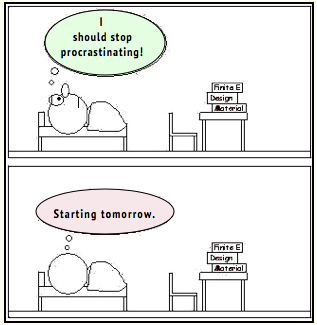
6. Use Small Blocks of Time: Procrastinators often have trouble doing tasks in incremental steps, SO wait for big blocks of time that never come. When you have small ones, use them to work on the task at hand
7. Avoid Perfectionism: Procrastinators have a tendency to spend more time on a task than it requires, SO tasks that should be quick to do take an agonizingly long time. Notice this tendency & stop yourself. Some things require completion, not perfection.
8. Keep a Time Log: Increase your awareness of time by logging what you are doing throughout the day. This is a great diagnostic tool for discovering where your time went, & an excellent way to become better at estimating how long tasks take.
9. Develop Routines: To help structure your day and make a habit of things you always need to do, develop routines for what to do when you wake up, regular tasks of your workday, & what needs to be done before bedtime.
10. Bookend Tasks and Time: Use the Bookending board on the P.A. Web site to check in throughout the day, or at the beginning or end of specific tasks you are dreading.
Please visit Procrastinators-Anonymous.org for more info. Details are at the top of the Bookending board. AS A REMINDER:

«
NEXT: WEAK Decision Styles, #1


















 I FEEL SO POWERLESS