ENNEAGRAM Basics (Part 1)

ENNEAGRAM

FINDING OUT MY TYPE
makes me squirm

PREVIOUS: ‘Keep the focus on yourself (#3)”

SITEs:
♦︎ Multidimensional Enneagram Immersion  

♦︎ The Enneagram, Jung & MBTI

BOOK: “3 Keys to Self-Understanding” – Pat Wyman, combines the MBTI, Enneagram & Inner Child Work

INTRO
Essentially the Enneagram shows us how we CAN BE, at our best, as well as how we ARE – including our weaknesses. It is a merciful delusion-buster that opens us to the truth of our experience by
the use of radical awareness and compassion

• It is a Map of Wholeness. Its primary purpose is to study the universal Human Soul expressed in each of us, to connect us with what is deeper than our outer persona – legitimate but limited – and toward what does not come from our ego-fixations (weakness to be overcome).

QUOTE: “Always remember that it is your birthright & natural state to be wise and noble, loving and generous, to esteem yourself and others, ➡️
The Wisdom of the Enneagram, Riso & Hudson (p 41)

• It’s a “nature/nurture” system, with both social & genetic components for each Type. They are psychological templates tied to brain development, as well as the influences of our environment, & so can be considered ‘programs’ or life-scripts. They also point to Carl Jung’s 9 psychological processes of consciousness & 9 distinct versions of the his Shadow archetypes, all of which makes the Enneagram a powerful system for self-understanding.

• The 9-point diagram gives us nine different sets of values & filters through which we can view the world, a way of describing inner experience as well as conscious self-image. But it goes enn SYMBOLdeeper, indicating unconscious motivations as the source of thoughts, emotions & actions. It can help people recognize & expand the boxes they’re already in, & ultimately be a way to dissolve those boxes.

• The Enneagram SYMBOL is an ancient form to describe the path of self-development. It can be traced at least as far back as the Greek mathematician Pythagoras (c. 500 BC), improved on by Christian & later Sufi mystics (c. 500-1000 AD).
It was re-introduced in the 20th cent, starting with the Armenian mystic George Gurdjieff (a controlling Type 8), the founder of an influential Inner Work school, who drew from Sufi tradition & focused on sacred dance, using musical notes for each type.

• Then Oscar Ichazo, the South American student of ancient wisdom, formed the Arica School, updating the Enneagram by creating a system of Types using Gurdjieff’schief feature as a starting point. More recent writers, including Claudio Naranjo, Don R. Riso, Russ Hudson & Helen Palmer, have developed the Enneagram further, adding a psychological emphasis to its spiritual base.

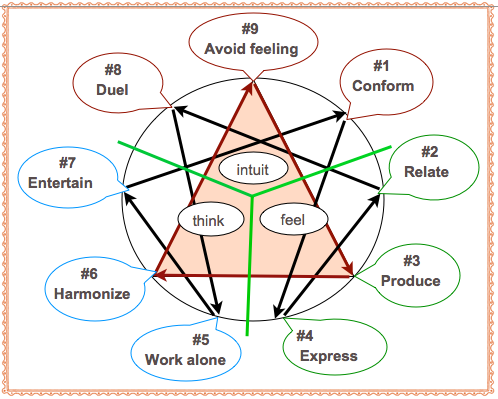
The symbol is made up of :
♦︎ A circle, representing the whole experience of life & the container within which we live our lives. It’s used AS:
– a Process, when moving around the circumference
– an Experience, if taken as a whole
– a Point in time. It speaks to the cyclical nature of change – death follows life, life follows death – with its progression through time  (CHART  ↖️ )

♦︎ A triangle, dividing the ‘ONE’ into 3 parts, which introduces things outside  influencing the Process (movement), with internal intentions & connections to each other.
The points touching the circle (9, 3, 6) are where external energies provide the fuel needed to drive any procedure, including needed Change. It represents the universal Law of Three (man-woman-child, Body-Mind-Spirit, the physical-emotional-intellectual body)

♦︎ The Six straight Lines show the relationships between the steps in the Process, which overlap & are coordinated. They are the ‘one’ divided by 7, which equals a repeating fraction is .142857142…,**,  not including the triangle points. ➡️ (Chart) scroll down (ALSO…..in Wikipedia).
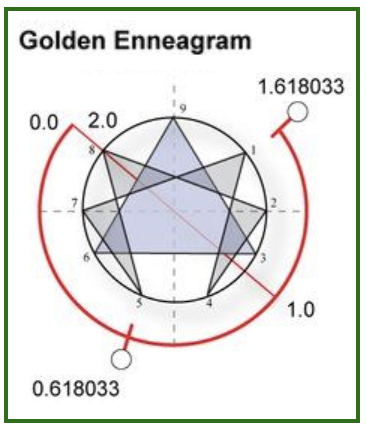
** The Enneagram has been associated with the invention of the decimal system.

Placing these decimals around the rim form the 6-line web showing the essential internal movement of the universe, & gives us the direction of our personal growth-work as we move around the outer circumference.
The “missing” 7th line is the point in the center of the circle.

EXP: Step 1 is influenced by steps 4 & 7 via their connecting lines (arrows)

NEXT: Enneagram Basics (Part 2)
“KEEP the FOCUS on YOURSELF” means? (Part 2)

Screen Shot 2016-01-17 at 7.11.01 PM
PREVIOUS: KFY (Part 1)

POST:  Healthy Helping


1. KFY is NOT a justification for our narcissism!
(cont.)  
Review Part 1

2. KFY may mean FACING the pain that YOU:
• had a traumatic childhood you’re afraid to admit & deal with
• know it’s time to let go of some illusions, but are still hoping
• don’t like yourself very much, altho you’re ‘supposed to’
• feel like your life is way out of control, but don’t know how to fix it
• want to take risks, but sure you’ll make mistakes or be rejected
• think your friends only like you because you do so much for them
THAT you :
• hate your job, but afraid to change, holding on until retirement
• hate salads, even though you eat one every day for lunch
• want a divorce, but are afraid to leave & be alonesad woman
• want to change but don’t know how.
Your life is a mess.

It could also mean YOU’RE:
• depressed, & have been for decades
• exhausted from anxiety, even though it doesn’t seem you’ve done much today
• ‘supposed’ to love parent/ mate/ child/ friend…. but don’t (or not anymore)
• terrified of commitment, but also terribly lonely
• not getting any younger, & have so many regrets……
Adapted from Karen R Koenig

“Keep the Focus on Yourself” requires positive Self-honesty :
It’s about always looking for & admitting OUR motives & emotions that propel our thoughts & actions! (without shame, guilt or S-H).
They may come from the WIC, Bad Parent OR – UNIT.
So they’re not always negative. We can legitimately have ok motives, (not co-dependent), which must include our own needs & values

WAYS to KFY
a. Mind your own business
KFY is mainly about staying out of other people’s lives (fixing, Rescuing other adults) – no matter how dysfunctional they may be, how much we think we can help them, AND no matter how much we love them.
In almost all cases, they’ve had many opportunities to get the help we think they need, but ignored or blatantly rejected every one. Stay on your side of the fence.

EXP – Unhealthy: A mother is ‘hele-hovering’ over her daughters’ actions & feelings because she feels guilty for the girl’s problems (not mainly from loving her & wanting her best)

b. Be your own Motivator
Make decisions, choices & take actions based on who you are – your needs.
ACoAs, Co-Deps & addicts use other people, substances or circumstances to give us a reason to function – or an excuse to withdraw from life. We work, go, help, risk…. only long as it’s for someone / thing outside of ourself.

However, we DO have many of the skills needed to run our own life! We must use them to take care of ourselves first, before thinking of others.
EXP – Healthy: “I took that difficult course to learn more about my career & improve my performance” (not self-motivationto please my boss or make myself look good)

c. Be Responsible for yourself
Identify our Toxic Beliefs, & work on correcting them, so we can be in charge of ourselves & our actions in the world. We don’t have the right to expect anyone else to do that for us – our whole life can pass by waiting for that.

Even if we find someone who would, it always comes with a high price – being controlled, kept immature, prevented from healing & expressing our potential.
EXP – 1/2 &1/2 : “I wanted that bigger car because it makes me feel important” (not just because my wife liked it)

d. Listen To Your Gut
Trust the True-Self Inner Voice. There’s a difference between being jerked around by our PP or WIC’s emotions & obsessions, steeped in anxiety from obeying and also trying to resist the Toxic Rules -vs- information provided by our Core self

It’s that still small feeling in the center of our body that won’t go away – telling us when somethings right or wrong for us. Trust “I know what I know”. Once we get quiet inside (low anxiety) we can hear it. We’ll be surprised how accurate it can turn out to be
EXP – Healthy : “I stopped being friends with that woman because I kept getting that ‘ICK’ feeling in my gut whenever we talked” (even though we had a lot in common).

NEXT: KFY #3

“KEEP the FOCUS on YOURSELF” means? (Part 1)


I HAVE TO TRAIN MYSELF
to be self-aware!

PREVIOUS:
 Confident People #6

SITE: “(Not) Keeping the focus on myself” ~Al-Anon


REVIEW: “Keep the Focus on Yourself” (KFY)
Many sources say to be mentally / emotionally mature we need to be responsible for our own TEAs (thoughts, emotions, actions). This is confusing for ACoAs, because on the one hand:
• we were taught by family & religion NOT to notice our own needs, tastes, ideas, values… only focus on others, which means we’re can’t KFY
AND on the other hand —
• ACoAs take on too much responsibility, for things others are doing or have done (abuse, neglect, carelessness, selfishness….), as well as blaming ourselves for imperfections (limitations, lack of knowledge, mistakes, EVEN good things like emotions, ambition, normal human needs….)

SO, no matter how intelligent or accomplished, without Recovery growth, many ACoAs actually don’t know what KFY means or how to do it. We’re all familiar with the PP’s poisonous voice whispering: “Who do you think you are?”

But that’s exactly the point: In order to KFY, we have to know who & what WE ARE!
But since we didn’t develop that as kids, we have to work on it now – every day. With persistence, eventually it does become the new normal

NOTE: The key to KFY is telling the truth about what motivates our thoughts & actions, which comes from the freedom to BE & express True Self. EXP:
“I’m upset because I’m disappointed …..” said without anger
” I yelled because I’m really scared…. “, without excuse or justification

EXP of not KFY 
Joey forgot to bring home the milk Sarah asked for. She gets angry & calls him a few choice names. The REAL reason she’s angry is not that they need the milk so badly, but she interprets his neglect (T) as meaning that Joey doesn’t consider her important – as a person.
That leads to feeling hurt (F), but she doesn’t say that. it’s easier to attack than be vulnecontrollingrable

KFY is NOT a justification for our narcissism!
It’s NOT:
• saying things like “I think that you should____, If I were you I would/ wouldn’t____” & then proceed to tell someone who we think they are, what they should do or think…. instead of finding out who they actually are, what they want, what they’ve already tried….

• expecting / demanding that others fulfill our needs, just because “I want it” – without considering if they want to help, what state they’re in, if they’re available, what they’re legitimately capable of, what’s appropriate to ask of others….
It’s NOT:
• an opportunity to attack, dismiss /negate or point a finger at others & then excuse it by saying: “It’s just my opinion”
• manipulating others to take care of us, because we don’t want to do it for ourselves
• doing whatever we feel like (jerk others around, lie, attack, be insensitive, undependable, withholding…..), because we’re afraid of being controlled, or want to get back at the whole world for what our family Screen Shot 2016-01-17 at 7.03.27 PMdid to us
It’s NOT:
• convincing someone to go out of their way for us & then change plans at the very last-minute, just because we have something better to do or just don’t feel like it
• use other people to get what we want, to get ahead, to vent our rage
• trying to get someone to be/do what WE want – so we don’t have to deal with ourselves

Al-Anon’s “Courage to Change”, (pg. 29 ):
“I am learning to be honest with myself. I will not use my Recovery as an excuse to justify my efforts to change other people’s thinking.
Trying to control others only gets me in trouble. Instead, I will promptly admit such mistakes & put my energy back where it belongs – by focusing on myladder to heartself.”

NEITHER would “Keeping the focus on Yourself” mean we’re :
• selfish & arrogant, because it takes attention away from ‘them’ (the narcs)
• disobedient when we KFY, because we were taught to only think what ‘they’ tell us to

NEXT: KFY (Part 2)

Being CONFIDENT (Part 6)

IC confidencePREVIOUS: Confident #5

QUOTES: “To wish you were someone else is a waste of the person you are.” ∼ Meelia121
• “Confidence, like art, never comes from knowing all the answers. It comes from being open to all the questions.” ~ Earl Gray Stevens,
UK peer

REMINDER: Do NOT let yourself get overwhelmed by this 6-part list. It’s meant to be a guide, qualities to work towards. Acknowledge when you have expressed a little of any one of these in your daily life, & remind your Inner Child of your progress!

CONFIDENT People (cont)
are free to assume 
“Why not?, Why not me?” True confidence allows people to have access to many PPT, with the right to ask for & get a piece of whatever’s available in their environment – but done fairly & legitimately. They create networks & relationships, often quietly behind the scenes. They choose their own path instead of following the most used one

☼ They know there’s ‘enough for everyone’ (attention, connection, recognition, love….), so they don’t have to wait endlessly for permission to express their ideas or get what they’ve earned – to be acknowledged, chosen, ‘discovered’, given info, helped, hired, promoted….

are shrewd
(clever, crafty – not sneaky). Being practical, savvy & having good judgement creates self-confidence, gives them an edge. They know when to keep going, & when to step away from a situation.
They’re often good at quickly sizing up others, figuring out social hierarchies & potential hot buttons. When they combine being clever with wisdom, they can get a lot accomplished without stepping on toes.

BTW: Crafty means taking an existing idea & turning it into something new, exciting & dynamic, or coming up with fresh ideas at a moments notice, & able to deal with stress in ways most others would never think of doing

 are accepting & respectful. Confident people are often the most accepting of others no matter their shortcomings – even when they don’t like someone – because they respect themselves & know that all humans are part of a larger whole. They can because they:
> know & own their own weaknesses, so don’t judge others
> understand everyone’s different, with their own process
> don’t need others to be a certain way to feel safe
> realize they don’t have the power to change others
➼ They try to live by: “I will do unto others as I would want them to do unto me & my loved ones.”

THEY
trust their judgment.
Instead of focusing on trusting others, they rely on their experience & observations to identify who’s safe & who’s not. They rarely second-guess themselves, because they know their rights as human beings, as well as their personal tastes & opinions

celebrate their successes, & those of others. They’re proud of their accomplishment & appreciate any ‘good luck’ that comes their way. Even when they ‘lose’ to someone (fairly), they’re truly happy when others do well, especially loved ones, because it allows them to be surrounded by accomplished & happy people. So they don’t mind when the spotlight shines on others.
🌈
THOUGHTS: Confidence is one of the most attractive & powerful traits we can have – when it’s grounded in self-esteem & respect for others. People are drawn to those who are comfortable with themselves.
• Confidence does not automatically come from genius or beauty, but by the way we think & feel about ourselves & the world. That means anyone can become confident. (YOU too!)

• Confident people search out & make use of all the resources available in their world to improve life for themselves & others

• Confident people are not ‘up’ all the time, which would be unhealthy & unrealistic. When they’re ‘down’, stressed, confused or it won’t be forever :
> they’re able to find a way under, over or around the discomfort, either by themselves or with help
> they can balance Emotions with realistic Thinking, not ignoring either side

NO ONE has all these positive characteristics – at least not 100% each. Confident people will have many of them – but in varying proportions, with some showing up early in their life, others not until much later.
REMEMBER: Progress, not perfection!

NEXT: Keep the Focus on Yourself, #1

Being CONFIDENT (Part 5)

GENUINE, HEALTHY CONFIDENCE
is an expression of self-esteem

PREVIOUS: Being confident (Part 4)

SITE: ‘Creating Confidence

QUOTES: “Don’t waste your energy trying to change opinions … Do your thing, and don’t care if they like it.”∼Tina Fey

⭐︎ “A diamond doesn’t start out polished and shining. It once was nothing special, but with enough pressure and time, becomes spectacular” ∼ Solange Nicole

REMINDER: Do NOT let yourself get overwhelmed by this 6-part list. It’s meant to be a guide, qualities to work towards. To look at the cup half full – or more – notice & then acknowledge when you have expressed a little of any one of these in your daily life. Then give yourself a pat on the back, & remind your Inner Child of your progress!

CONFIDENT People (cont)
Screen Shot 2015-10-03 at 10.41.41 PM stand out in a crowd. They tend to be more successful in life, have better personal relationship & perform better at school or at work

aren’t afraid to look silly. They don’t mind being seen when they’re not at their best. Occasionally “looking bad” makes them more human & accessible. They don’t try to be 100% a 100% of the time.
They can be unprepared, caught off guard, the butt of a joke, having a bad hair day, or find that the equipment isn’t working for a presentation – without becoming self-conscious or awkward.
They may be able to quietly ‘fix’ the problem, get help or just go with the flow, depending on the circumstance.

☼ Confident people have a good sense of humor, about themselves & life in general, so even if they can’t tell a joke to save their lives, they can appreciate the irony in everyday events. Being genuine & unpretentious encourages other people to laugh with them, not at them

THEY:
avoid self-promotion. Positive self-assurance permits genuine modesty / humility. They’re not as bothered (as insecure people) if they don’t get all the credit for their ideas or hard work. Braggers are insecure & lack self-respect, who secretly think “Please notice me & tell me I’m special”.

Confident pwith friendseople know what they’re capable of – or not – & their actions speak for them. They enjoy being acknowledged, admired, lauded, respected…. because they’re comfortable with who they are & what they’ve achieved. But they don’t need the glory from others, since true validation is an inside job

don’t need approval from the whole world. A professional & social network of hundreds, even thousands may have some business advantages, but don’t contribute to self-esteem.
Confident people would rather have the respect & trust of a handful of people they consider important.

Where ever they go or what they try, those who truly matter believe in them & are consistently supportive, whether at home, at work or in public.

don’t gossip, envy or compare. They can keep confidences (+), & don’t want to participate in rag-fests (-), not having a need to be one-up to anyone. They don’t compare themselves to others, or others to each other. Each person is unique, with their own personality & experiences. Al-Anon says to not “compare & despair”.
They rarely focus on envy or jealousy, (which is intensified by comparisons), because they’re empowered by achieving their own goals. For confident people, what others are or have is ‘none of their business’.

THEY:
appreciate compliments. Allowing oneself to receive, graciously & with appreciation, is a sign of solid self-esteem. Knowing their abilities & value, they don’t need to minimize or reject expressions of honor & validation from others, freely given. It lets other have the joy of giving, as well.

This self-knowledge also helps distinguish between compliments that are genuine, & those that are manipulative & controlling.
EXP: “Thanks, I really worked hard on that ____. I’m pleased you recognize my efforts.”

are thankful & don’t complain. They keep in mind all the benefits & blessings they DO have, & work toward what they still lack or desire – if it’s possible. They acknowledge, appreciate AND enjoy what’s available, which generates inner peace.

NEXT: Conficence #6

Being CONFIDENT (Part 4)

bounce backI KNOW WHO I AM
& it’s OK to not be perfect

PREVIOUS: Being Confident, Part 3

SITE: Line of confidence” chart, to help businesses & families

QUOTES: “The more you love your decisions, the less you need other to love them too.” Anon
“I am not what has happened to me. I am what I choose to become.” Carl Jung

REMINDER: Do NOT let yourself get overwhelmed by this 6-part list. It’s meant to be a guide, qualities to work towards. Looking at the cup half full – or more – notice & then acknowledge when you have expressed a little of any one of these in your daily life. Then give yourself a pat on the back, & remind your Inner Child of your progress!

CONFIDENT People (cont):
like to learn, & try new things. They’re eager to find out about a verity of cultures, ideas, locations & ways of doing things. With an open mind, they gather wide knowledge, as well as have strong personal opinions about things that are important to them. They’re genuinely interested in what others think, & listen attentively. They know a lot, but realize there’s always more to learn. Trying new things encourages personal growth & opportunities to connect with otherscareful listening

listen much more than they speak. One study found that over 80% of confident people don’t talk randomly, nor a great deal. In most cases they’d rather listen, but when it’s their turn, they talk easily & boldly.
While they’re comfortable expressing themselves, they know when to be quiet. Because they’re not driven by deep anxiety, they can let others shine – or be wrong – without jumping in

☼ They’re not shy about sharing their knowledge, but don’t need to show off or preach. They already know what they think, so want to know where others are coming from.

They understand that most people like to talk about themselves, so it’s OK to give others the opportunity. They tend to ask open-ended questions that gives someone a chance to be introspective & to be ‘seen’, such as: “What do you do, how do you do it, what do you like about it, what have you learned from it…. ?”

are driven to improve themselves. They take the time to be introspective, evaluate their actions, own weaknesses, process any leftover childhood damage, & always look to the future.

They relish searching for & finding out how things work, what they can do to improve themself & their performance – in all area of life – willing to outgrow bad habits that hinder their progress

THEY : 
• are supportive, but don’t interfere. They put other people at ease, giving them honest support & encouragement when called for. They see the positive qualities in others, & let others know what they admire – without jealousy or bitterness – creating long-lasting healthy relationships.
AND, they stay out of people’s way when they can’t be of help or are not needed, instead of having to put their two cents in

don’t mind making mistakes. They can admit in any circumstance that they don’t have all the answers. Not worried about being wrong, they can graciously accept & admit it when they are. They bounce back from errors, using it as an opportunity to learn about what’s correct or what works best.
Even the most confident people have some insecurities. They’ve learned that life is full of ups & downs, & that feeling insecure may depend on where they are, who they’re with, their health, good or bad events…. but it doesn’t last.

recognize mistakes & setbacks are learning opportunities. They don’t berate themselves for errors in action or judgment, realizing that every mistake is an opportunity to find out more about their likes & dislikes, who other people are, what’s possible or not in the world. They just figure out ways to be more successful next time. Seeing errors or setbacks in this way shifts ones thinking, creating more confidence (reframing).

NEXT: Confident People (Part 5)

Being CONFIDENT (Part 3)

LET’S SEE, I’M A:
boss, parent, extrovert, learner….

PREVIOUS:  Being Confident (#2)

QUOTEs:
“The only person you should try to be better than – is the person you were yesterday” ~Anon
⭐︎
“Being comfortable with who you are is the ultimate threat.”∼ Sean Beaudoin

REMINDERDo NOT let yourself get overwhelmed by this 6-part list. It’s meant to be a guide, qualities to work towards. Acknowledge when you have expressed a little of any one of these in your daily life. Give yourself a pat on the back, & remind your Inner Child of your progress!

CONFIDENT People (cont):
use positive language. “Up” words reinforce a confident image, talking positively about their life or their environment. In social situations they avoid foisting their problems on others, keeping complaints & criticism to a minimum, since it’s not useful in most relationships.
— When meeting new people they’re not shy about leading with a personal introduction, which underscores respect for themselves, & signals that what they have to say is worth listening to

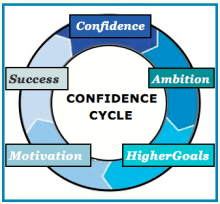
stick to their principles. They know what they believe in, & are willing to confidence cyclestand up for those beliefs (silently or out loud), even when in the minority.
They maintain personal integrity by doing what they believe to be correct, whether others encourage or mock them. It’s about doing the right thing for the right reason, even when no one is watching.
SAYING: “If you don’t stand for something, you will fall for anything.”

THEY:
are ambitious & competitive. It’s one of their main traits, but not used to step on / over others.  They know what they want, easily define their goals, &  persistently work toward them. They love to test their skill & ability to handle demanding situations against the best efforts of others, because they believe they win, even if they ‘lose’.

use alone-time ‘wisely’. They’re not often lonely when no one is around. They may use free time to process recent events, work on a hobby, do a spiritual practice, converse with their Inner Child,  be in nature, or just enjoy being quiet & peaceful. If they need to hide out or isolate, to recover from an illness or great stressor, they make the time. And it’s temporary.

are determined & hard-working. They know their goals are their own & are worth pursuing, so they won’t abandon them, even if they have to be delayed or sometimes seem impossible.
They believe it’s better to try & fail, & continue trying, than to give up and let doubt take over. They know the best path to reaching their goals is to put in a sustained effort, no matter how difficult or tiring. Hard-working people are confident, and confident people are hard-working. It’s a chicken-egg thing. But they also know when to rest!

THEY:
accept change & delay. It is said that “Change is the only constant.” While confident people may not always like the changes they have to deal with, they accept the necessary one (that they have lille or no control over) and do their best to go with the flow. ALSO, they can manage the frustration of waiting for things to unfold, knowing that some things take longer than others. “Delay is OK”

take responsible risks. They are able to take reasonable / realistic risks because they’re not afraid to lose or to be wrong. While confident in their abilities, they’ve also have learned that nobody wins them all, but they do have a good chance to win some otriskingher time or in a different situation. They’re willing to go the extra mile, but know the difference between a gamble and a risk, so they’re not foolhardy nor act impulsively.

☼ They always try to minimize potential dangers to themselves & others by making informed choices among available options, & consider the pros & cons of possible outcomes. They prepare as much as they can, & then take whatever actions they feel are worth the possible benefit they’re aiming for. Gaining enough benefits in life makes the occasional loss bearable.

NEXT: Confident People (Part 4)

Being CONFIDENT (Part 2)

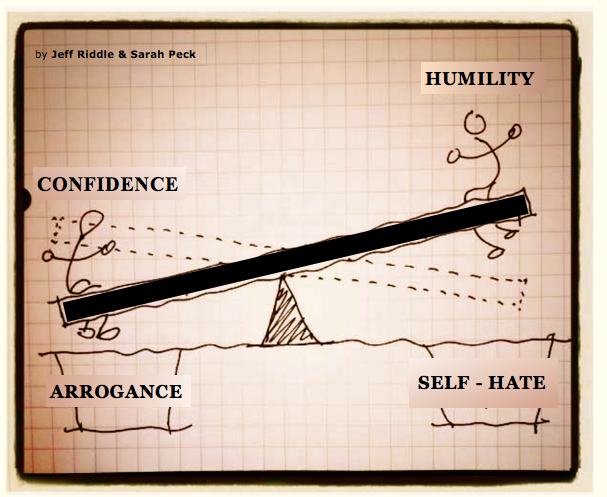
confidence balance    

I BALANCE the EXTREMES BETWEEN
healthy & unhealthy,
too much & too little….

PREVIOUS: Being Confident (#1)

QUOTE: “When you are content to simply be yourself, & don’t compete or compare, everyone will respect you.
Kindness in Thinking creates Profoundness.
Kindness in Words creates Confidence.
Kindness in Giving creates Love.”  Lao Tzu

REMINDER: Do NOT let yourself get overwhelmed by this list. It’s meant to be a guide, qualities to work towards. Looking at the cup half full – or more – notice & then acknowledge when you have expressed a little of any one of these in your daily life, give yourself a pat on the back, & remind your Inner Child of your progress!

CONFIDENT People (cont):
take responsibility for their thought, emotions & actions (TEA) . This includes all their positive parts, as well as the less ideal ones. They don’t need to blame others when things don’t work out, but also don’t take on blame for things that have nothing to do with them

can be alone with their own thoughts. They know that mental GIGO means thinking, reading & listening to positive, healthy, enjoyable things, which can improve their knowledge & lift the spirit.
Their inner dialogue is not harsh from S-H, nor confused by the PP, or fear of abandonment & lack of self-awareness.
So they don’t have to fill every minute with conversation, technology (TV, e-mail, cellphones, texting, web surfing, playing games….) & other drugs & time-wasters, in order to numb out

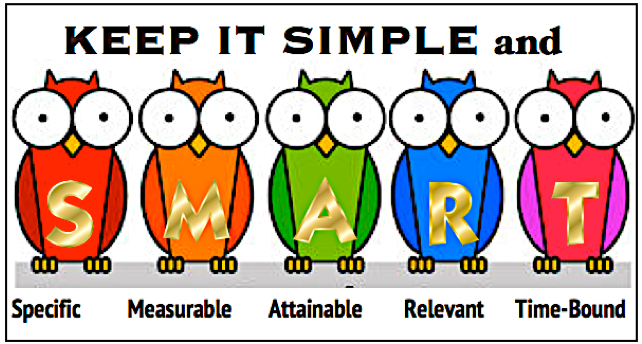
S.M.A.R.T.

‘keep it simple’. Whenever possible they find the simplest, sanest way to do things, no matter where they are or who they’re dealing with.
They’re not attached to ‘drama’,  never have to re-invent the wheel, & don’t hang out in convoluted, torturous thinking, or awful-izing. Knowing who they are & what they want, they can think clearly, so don’t easily get sidetracked or manipulated

THEY:
trust their instincts.  They pay careful attention to their environment, pick up on non-verbal cues, listen to the feeling in their gut & the still small voice in their head. They do not ignore these cues, even though they can’t be explained logically. Instincts are an important tool in their bag of life skills, guiding them on their path, helping to make the best choices

accept help whenever they need it. They’re not ashamed of not knowing everything, or of not being able getting helpto do everything themselves, so are not afraid to ask for & receive emotional support & practical help.
Confident people are secure enough to admit having limitations, & don’t see that as a sign of weakness.
They know that when searching for help they pay someone a huge compliment – it shows genuine respect for that person’s expertise & judgment, or wouldn’t have asked them. They’re eager to learn from others

• take care of themselves. They don’t wait for others to do for them what they can do for themselves.  They’re willing to learn easier & better ways to do things, & find procedures to make their life less complicated or stressful

are optimistic. They have a realistic view of their future, knowing from experience that bad situations eventually right themselves, & that many stressors can be overcome with sensible plans. They have the ability to see the light at the end of the tunnel, & plan their journey toward it.
Optimism allows confident people to believe they’ll be OK, no matter how bad the current situation may seem. They never give up, but know it’s good to regularly take a break

In reality, everyone experiences an occasional knock to their self-worth. In those cases, confident people take time out to question their motives & review their choices, but don’t get paralyzed. Their mind is focused on solutions, so they take actions as soon as possible, or keep working towards a better outcome in the future. One antidote to doubt is an increase in productive activity. (CHART – confidence vs doubt)


NEXT: Confident People (Part 3)

Being CONFIDENT (Part 1)

confidence
BEING A CONFIDENT PERSON
makes me happy, not arrogant

PREVIOUS: Double Messages (#9)

QUOTE: “Don’t let what you can’t do – stop you from doing what you can do.” John Wooden, sports coach & motivational writer

DEF: Confidence comes from a positive & realistic assessment of one’s abilities, creativity, knowledge, personal judgment, power, talents, & worth.

CONFIDENT people are usually HAPPY PEOPLE
ACoAs: Remember that we were not allowed to be ourself from the get-go, so we have to work hard at uncovering our True Self, fighting the PP voice which doesn’t want us to uncover it.
Contrary to what many of us have been taught, self-confidence is not arrogance, which is an over-evaluation of one’s worth, often displayed in offensive expressions of superiority & false prideWellness aspects

➼ The following are some basic characteristics of mentally healthy people – GOALs which everyone can strive for. No one is confident all the time, so we are NOT looking for perfection in anything – only progress!

CONFIDENT People:
• have a clear sense of self – they know who they are, fundamentally – their basic inborn qualities, special abilities & gifts, their hard-earned accumulated knowledge, likes & dislikes, dreams & hopes.
They’re not afraid to admit their flaws & limitations, but don’t dwell on them

• don‘t beat themselves up. Being human is to not be perfect, which they accept, & so aren’t ashamed of being limited or of having shortcoming. When they don’t know something or have a ‘weak’ moment, they identify the issue, try to find a solution, dust themselves off & keep going. There’s never a legitimate reason for self-criticism or abuse

follow their goals & dreams. They’re comfortable owning their talents & desires, knowing those are part of their True Self. They don’t let fear, doubt or other people’s negative opinions prevent them from pursuing their plans & visions. They want to have a purposeful life – to fulfill as much of their destiny as possible, & contribute to improving society

THEY:
• show confidence by how they carry themselves. Unless they’re ill or disabled (which does not diminish them), they have a self-assured walk, stand or sit with head straight, shoulders back, give eye contact when engaged in conversation…. In any case, they’re ‘comfortable in their skin

Screen Shot 2015-09-29 at 1.58.05 PM pay attention to their health. GIGO (Garbage in, Garbage out) applies to the body as well as the mind, both of which they treat with respect.
As much as their circumstances will allow – they give themselves quality nourishment :  healthy food, fresh air, relaxation & activity, regular medical attention, appropriate vitamins & medication…. as needed

learn from their past without dwelling on it. They’re willing to acknowledge & deal with old trauma, so they can heal. They recognize how old thinking & behavior patterns limit their progress, & are determined to improve whatever they can. They keep moving forward, but accept & learn from the past, knowing wounds are part of their identity

don’t absorb criticism. Because they regard themselves positively, they don’t feel judged or belittled, even if someone is trying to do that, especially people who know very little or nothing about them. They’re not shaken by others’ opinions, & in many cases don’t even bother defending themselves

THEY:
refuse to stay victims. Not everyone had a painful or traumatic childhood, but everyone has had difficulties & challenges sometime in their life. The confident person refuses to let stressors get them down for too long – even if they truly were victims as children.

Feeling compassion for oneself in not the same as self-pity, which is more about believing one is powerless & hopeless than feeling sad about experiencing painful events.boundaries
— AND they refuse to be victimized  as adults- won’t let others abuse or take advantage of them, because they know their own worth, without arrogance

have strong personal boundaries. They know their needs & rights, so can ask for what they want, or stop others from inappropriately imposing their needs or desires.
They don’t try to please others just for the sake of making others happy, to prevent being ‘abandoned’. They know when to say Yes or No, but not as a way to be controlling or boost their ego.

NEXT: Being Confident (Part 2)

Double BINDS – Resolving (Part 13)

ruggia0694cBEING THE CAPTAIN OF MY SHIP
is scary but liberating!

PREVIOUS: Double Binds (Part 11)

SITE: “Breaking the DB


REVIEW
Levels: Every person or system has its own built-in self-preservation, & acts to maintain their identity (in unhealthy or healthy ways) – as seen in the family mobile. To do this successfully, the system is able to change at one level (lower) in order to maintain itself an another ‘higher’ level. See DBs, #2.

• However, the same processes that keep a system from dissolving or spiraling out of control can also block, brake, constrain, hinder, inhibit or prevent development & transformation, using BINDS : any repetitive self-preserving pattern which never-the-less is inappropriate or unhelpful, & which the D.Binded person has not been able to change

• The structure of each bind is unique, & can be expressed many ways :
= conceptually – such as the line by Groucho Marx, “I don’t want to belong to any club that will accept me as a member”
= metaphors: “I’m trying to run round a track to overtake my ideal self twice, and the more I develop the more the gap widens.”
= non-verbally, as multi-layered conundrums, in indefinitely repeating patterns, as in R.D. Lang’s EXP of the CLASSIC ACoA knot! (in Modelling Bs & DBs)

Resolving DBs in Therapy
As clients become aware of their binding patterns they’re faced with a hard choice : to be forever trapped in them,
OR risk moving into that scariest of places – the Unknown. But as their DBs become clearer, the person may spontaneously reorganize their thinking, which modifies or eliminates their need to DB themselves or others.

PROCESS – See chart
Name & locate parts of your ideas in metaphoric language. ASK what’s underneath the DB beliefs, using “Being stuck is like …..” statements (in a cave, in mud, chained to a bed…. ) & Because ….. (Negative Benefits)

Clarify the patterns across ideas / beliefs (the T.E.A.s) AND the relationships between components – what does a. & b. have to do with each other?
• Once identified, the patterns themselves can be labeled, symbolically represented & explored (ankle chains, bugs in the brain, pressure on chest…… burning, drowning, crushed…. )

• Thus the modeling process (gathering all the elements & then subtracting what’s not relevant) continues at a higher, more inclusive level of organization (One Cognitive distortion inside all Toxic Rules)
The combination of components provides a Metaphor Landscape, a context in which a pattern of the patterns – the larger inclusive organization – emerges, providing the requirements for change (LEVELS – all the way up and all the way down …. excellent explanation) “‘Levels’ is a common metaphor for arranging experience. Lower levels are defined by more specific examples of higher levels.”

Note: The “Operational Closure” at each level of this procedure occurs when the various components and their inter-relationships are clear enough so that the whole frame is brought into the person’s consciousness.
FULL explanation of Chart ⬇️