What is CHARACTER ? (Part 1)

WHO AM I? my flaws or….

PREVIOUS:  Emotional Maturity

SITE: Personality Types (scroll down)


PMES = Physical, Mental, Emotional, Spiritual

ACoAs suffer unnecessarily for many reasons
– one of which is NOT believing we have any positive qualities. All we can see are the problems created by our False Self, which was developed in reaction to our upbringing, but which we assume is the real us.
Because originally we had such distorted mirroring (seeing ourself only thru the eyes of our dysfunctional caretakers) we deny our natural gifts.

• Yes, we have ‘character defects’, but these are extensions of our S-H & are how the WIC learned to function, rather than what our Healthy Child or ‘Unit’ are capable of. Even so, these gifts do show up in many of our accomplishments throughout adulthood.
The next several posts provide some positive qualities essential for PMES maturity – to ponder, identify & then own!

EXP: Julie chased boys since she was 9 or 10, but she never caught any. By her 30s she was defeated & full of S-H. She told a therapist: “I’m such a pathetic jerk – all this time I’ve been doing the same stupid thing, with the same awful results!”
The therapist replied: “You’re not stupid, pathetic or a jerk – you’re persistent. Now you can focus that quality in a new direction – toward the goal of emotional & mental growth, as well as fulfilling your dreams!”, which Julie eventually did – successfully!
😘
CHARACTER (C):
• DEF: C. is “the stable & distinctive qualities built into an individual’s life which determine his or her response, regardless of circumstances.”
• C. refers to the specific combination of aspects which make a person unique, expressed in their habits, likes, values, dislikes, behaviors….

• Psychologist Lawrence Pervin says that moral character is “a disposition (strong tendency) to express behavior in consistent patterns of functions, across a range of situations.”
• Similarly, academic Arthur S. Adams said: “Good character is the quality which makes one dependable, whether being watched or not.”

• C. is multi-dimensional & must be measured in ways that do justice to its breadth & complexity. It’s made up of specific psychological mechanisms that express the presence or lack of virtues such as wisdom, courage, humanity, justice, temperance, and transcendence.

Positive Qualities expressed in T.E.As.
CURIOSITY

❖ Curiosity Thoughts: “That doctor sounds like she knows what she’s talking about. I wonder if she could help me with my specific problem & if she’s taking on new patients?”
❖ Curiosity Emotions:
• I wanted to ask her a question about ____, but I’m angry that she’s ignoring me
• I want to take this risk, but I’m afraid to try
• I see new possibilities, & it excites me
❖ Curiosity Actions: I went to see the boss. I stood quietly, waiting in line. I asked the teacher questions. I expressed my interest by a smile & leaning forward…..

FLEXIBILITY – The ability to respond easily & appropriately to new or changing Emotional moods or physical conditions in our environment – by changing or modifying actions & beliefs as needed, without great agitation or drama.flexible
Willing to shift our Actions to comply with the plans or ideas given by authority figures who we need to deal with.
Flexible Thinking : Consider a new or different way of ‘seeing’ a person, event or chain of events (reframing).  EXP:
• DO NOT = be stubborn, compromise what’s right, get upset when plans change
• DO = respect the decisions of others, look for the good in changes.

HUMOR  – Laughter is an essential part of a healthy, happy life.   It helps people smile & feel relaxed by seeing the lighter side of things. It can help to manage physical &/or emotional pain, enhancing our immune system & reducing stress.  VALUE – TO:
• take a break every day to laugh, be playful   • not stay discouraged but find what’s already positive in one’s life   • see the foolishness of human self-importance  • treat every job as important • be an energy-giver to others    (POST : “Resilience & HUMOR “)

NEXT: What is Character, Part 2

Emotional MATURITY – Relational, Spiritual

I CAN SEE THINGS CLEARLY
making all my relationships easier

Previous: Emotional Maturity – Emotional

REMINDER: See ACRONYM Page for abbrev.


RELATIONSHIPS
a. Re. YOU

• are playful, creative & express your silly, zany side
• can accept your current limitations, & get help as needed
• evaluate legitimate criticism, accepting it gratefully, glad for an opportunity to learn & improve
• can take in genuine love & respect, in big or small ways, without ‘paying’ for it
YOU
world friends• accept responsibility for who you pick to be with & how you act with them, adding to your self-respect
• have sufficient & the right kind of boundaries, by knowing your values, needs & tastes
• can regularly say ‘“No” to harmful requests, or what will over-extend you
• don’t get easily offended, don’t bite when baited, but also let others know what’s acceptable or not
YOU
• form deep relationships with people from other backgrounds, races, cultures, & classes
• genuinely care about others & express that in all you do
• are comfortable being intimate with appropriate people, being approachable & easy to be with
• can relate well with others, connecting in a cooperative & positive way, while knowing you don’t fit with everyone
avoid insulters• know when to be a realistic help to someone vs. when to let go, so they can handle their own life
• thoughtfully evaluate friends & social contacts, avoiding people & situations that push your buttons, but rather pick those who bring the best out in you
• know when to be a realistic help to someone vs. when to let go, so they can handle their own life
• don’t expect special consideration from anyone, but are comfortable being appreciated, thanked & valued


b. Re. OTHERS – YOU:
• are friendly & share resources, cooperative with peers & teams, where appropriate
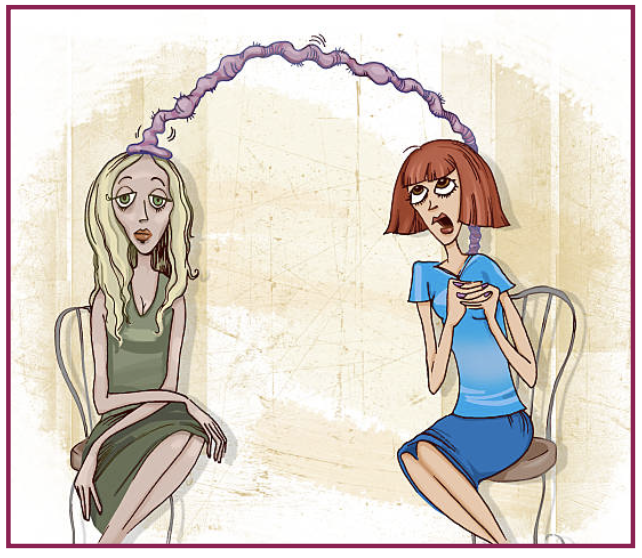
• are are a good listener, without judging, trying to fix or push your own way of doing things
• can ‘confront’ someone when they’ve disappointed or hurt you, using the “I’ form, without attack or blame
YOUgetting along
• can nurture others without rescuing or controlling
• can work inter-dependently with others when required, without having to be the center of attention or dominating others
• cooperate in order to find win-win solutions to disputes. If an answer isn’t good for each party involved, it won’t be good for the relationship
YOU
• aren’t easily fooled by or idealize people or situations that are unhealthy, abusive or just not right for you
• don’t judge others you don’t understand or are very different. Try to learn, connect & be a peacemaker when possible
• empathize with others’ experience & Es, imagining what it’s like to be in their shoes
• forgive others for hurting you, & yourself for any wrongs you’ve done, making amends when possible without shame or self-hate
YOUconflict resolution
• look for the good in others rather than use a critical eye, with compassion
• offer information & make decisions clearly, with respect
• resolve conflict in a clear, direct & respectful way (NO avoidance or put downs, escalating tensions, or going to a third-party rather than to the person directly)
• understand & accept others as they really are, not what you want them to be

5. SPIRITUAL
GENERAL – YOU:
• are are filled with joy & a sense of humor, rather than being wounded because of what others say or do
• an are organic part of a larger whole, contributing your part to each group you’re a member of
• found a meaning in life that gives a connection to all humanity, not just self-interest
spiritual connections• have humility (“I have value but not better than”), rather than humiliated
YOU
• know life is full of uncertainties, but aren’t brought down
• have inner abundance so can be generous & unselfish, which is satisfying
• live by the motto “Don’t quit before the miracle”, so don’t use endless escapes (chemicals, sex, money, food, suicide….)
YOU
• have outgrown the “all or nothing” stage, appreciating the Golden Mean (desirable middle between two extremes, from Aristotle, Confucius…).  Recognize that most people or situations are a combination of good & bad
• some insight & wisdom to see the beauty & value in all of life, in spite of the negatives 
• take care of yourself because you’re precious & God doesn’t make junk

SPECIFIC  – YOU:
• believe in a caring God who is always available, knowing that the Supreme Being is not an alcoholic parent!
• acknowledge & appreciate all the opportunities & help that God has already provided, which support you in surviving or outgrowing your difficulties
• enjoy being alone in quiet reflection with God & yourself (the personal version of daily prayer & meditation)spirit-human connect
YOU
• have a definite set of personal & spiritual principles to live by
• have faith in a Power greater than yourself, & keep that connection current
• obey the spiritual essence of the Golden Rule:  “Thou shalt love thy neighbor as thyself”, while making sure you don’t harm yourself
• pray for guidance & healing, to be given grace & peace, instead of trying to ‘go it alone’
• thank God for all past life experiences, understanding how He has used them to uniquely shape you

NEXT: What is Character #1

Emotional MATURITY – Emotional

maturity 3I’M WILLING TO GROW –
beyond my early training!

PREVIOUS: Cognitive & Practical (#1)

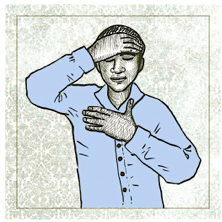
SITE: Self-Soothing Hand positions Exercises (helps with PTSD)

See ACRONYM Page for abbrev.

QUOTE: “We grow sometimes in one dimension & not in another, unevenly….. mature in one realm, childish in another. The past, present & future mingle, pulling us backward, forward, or fixing us in the present. We’re made up of layers, cells, constellations.” Anais Nin


Def: Emotional Maturity (EM)
is expressed in ways that appropriately fit our chronological age – with increased adjustment, stability & self-regulation.  Psychological Wiki
PURPOSE – is TO:
1. acknowledge healthy qualities we’re already developing, based on personal growth – to appreciate our Recovery progress
2. know what personal goals to work toward
3. know what to look for in others* – lovers, mates, friends, family (adults), bosses…..

✶ ACoAs will say they wouldn’t know a healthy person if they fell over them.
WELL – here are some guidelines – for YOURself & about others! Keep a copy on your phone, desktop & bathroom mirror
PS: As emotional wounds heal & distorted beliefs are corrected, we can claim these EM characteristics, & see many areas of our life gradually improve

soothing handsEMOTIONAL GOALS & ACHIEVEMENTS – YOU:
• accept yourself unconditionally, even for the things that are incomplete, unattractive or need improving
• accept & tolerate anxiety & other uncomfortable Es
• accept & face guilt when breaking family rules
• accept that some stress is part of life, rather than trying to hide, without creating drama.  Can meet emergencies with poise
YOU:
• admit & are able to work through Es (fear, anger, pain…) from traumatic events in your life (divorce, major illness, death, disasters….) rather than pretending nothing’s wrong
• are comfortable expressing Es in a healthy way, from the Adult ego state
• are in touch with a full range of Es. Not afraid to find out what they are at any given moment, but not overwhelmed or driven by them
• aren’t afraid to feel sadness & cry, as well as explore the reasons for it
self-pity• can handle disappointment, so are a good loser, deal with defeat without whining or blame
YOU
• have a reasonable amount of patience at reasonable delays, & have self-control in adversity. Accept you sometimes have to adjust to other people’s convenience, needs or limitations
• have Es in perspective, from a balanced internal place rather than B & W extremes. Accept that “If it’s hysterical it’s historical”
• have mostly outgrown envy & jealousy, being honestly glad when others have success or good fortune
• know how to manage & cope with old or new pain
• let yourself be vulnerable without shame or terror, & can let others see your unsuccessful / soft side, but only when appropriate & with safe people
• recognize anger or rage & express them appropriately, in a way that leads to your growth
YOU
forgive• aren’t overly ‘sensitive’ or touchy, can feel your Es but not so easily hurt
don’t have to “show off” in socially unacceptable ways to feel important
• don’t require approval from others to feel good about yourself
• don’t need to constantly find fault, but also aren’t idealistic & unrealistic (in denial) about things that are genuinely harmful
• don’t worry about or try to fix things that are beyond your control
• don’t indulge in self-pity (“woe is me”), understanding the law of compensation* operates in all of life.
IMP: Having compassion for ourself & our misfortunes, which are not of our making, is not the same as self-pity, which only blames others for our pain without taking any responsibility for having to heal our wounds

*Compensation: All life is about trade-offs – good for bad, & bad for good. It’s an amend or reward for loss or deprivation. Anything that makes up for the lack or limitation of something else
“As there is no worldly gain without some loss, so there is no worldly loss without some gain:
• If thou hast lost thy wealth, thou hast lost some trouble with it
• If thou art degraded from thy honor, thou art likewise freed from the stroke of envy
• If sickness hast blurred thy beauty, it hath delivered thee from pride
• Set the allowance against the loss and thou shalt find no loss great.”
English Metaphysical poet Francis Quarles (1592 ~ 1644)

NEXT: Emotional Maturity – Relational, Spiritual

Emotional MATURITY – Cognitive, Practical

maturity 1

‘I KNOW WHAT I KNOW’
and I’m also willing to learn

PREVIOUS: Emotional Maturity – General

NOTE: As recovering ACoAs, many of us start the maturing process much later in life than we would have if we’d come from a healthy, loving family. This is perfectly understandable.

Therefore, we need to
:
mourn the loss of time & possibilities our damage has stolen from us
safely express our rage at the unfairness of having to clean up the mess our parents & environment bequeathed us
• consistently work at Recovery, & persevere no matter how hard & long it takes
• keep looking for, finding & accepting appropriate people & support systems that will nurture our growth
• know in our bones that Recovery & therefore EM is a realistic goal for ourself NEVER ‘compare & despair’, since you are NOT someone else!

COGNITIVE – ABLE TO:
• be self-appraising, & comfortable with who you are & what you want in life
• take responsibility for your decisions. Admit when you’re wrong, without being overly guilt- or shame-ridden
• consciously look for the motives behind your own actions, with wisdom & compassion
• face reality, in yourself & in others, the way things are right now (acceptance)
TO:
• decide what you believe, based on experiences & feelings, not on what others say or do – or want of you. Believe “I know what I know”
bla, bla, bla• realize there are many different opinions in the world, & you can’t use others to form your identity
• change your opinions about people or situations when receiving new info
TO:
• accurately chose info from available data, then apply it to make positive decisions for yourself
• mainly use reason to decide how to act. You need Es to say what’s suitable or not – for yourself, but they are not always or automatically to be acted on
• think before acting to be in control of your behavior
TO:
• eliminate magical thinking (grandiosity), unrealistic expectations, projections….
• live with being imperfect & sometimes failing. It does not reflect on your personal value, no matter what you were told as a kid
• thoughtfully listen to others’ opinions. You can understand & tolerate differing views, without diminishing yourself in any way
gaather knowledgeTO:
• accept not everyone will feel the same way about a situation, stimulus or idea as you do
• understand the relationship between core values & Es
• always want to learn new things to improve yourself, making you more effective & useful in the world

PRACTICAL – ABLE TO:
• admit & deal with the consequences of your actions or inactions
• accept when you don’t succeed at something. Figure out what went wrong, learn from any mistakes, & make the necessary corrections – when possible, & without shame
• asses the risks of a potential or planned situation (date, interview…) that you’re already familiar with, OR that you know enough about to evaluate – without projecting negatively.
When assessing possible pitfalls / risks of an upcoming event, do research & then use that info wisely (not impulsive, compulsive)
TO:
• balance family, rest, work & play – without trying to do it perfectly, or do it well all the time
shoot for dreams• be mainly self-reliant in all areas of life, but not isolated or afraid to ask for help when needed
• follow through with things you’ve started, even when it’s hard, but also know when to let go of a hopeless situation
TO:
• know what you want to do with your life & then pursue it with enthusiasm & patience, persevering even when there are obstacles
• plan ahead, being realistic & practical, rather than letting things go ’till the last minute. Use inspiration & intuition when faced with an unexpected problem, but not as a substitute for being prepared
• tackle difficult & demanding situations – even when scared – trusting you can use knowledge & experience, not forgetting past successes
TO:
balancing• take overall responsibility for your own life (& small children), without endless excuses, but not be responsible for the lives or needs of (most) other adults
• use moderation & balance in all things, but allow for extremes once in a while when appropriate
• work hard toward your goals, not compulsively or to the point of exhaustion, but with a reasonable plan that can be modified or enhanced according to circumstances

ARTICLE:Knowing your Strengths gives you Clearer Direction

NEXT: Emotional Maturity – Emotional

Emotional MATURITY – General

I INTEGRATE ALL PARTS OF ME
while still working on the ‘old stuff’

PREVIOUS: Emotional Immaturity (Part 3)

SITE : True Happiness (Emotional Maturity Questionnaire)

QUOTES: 🔅 “Maturity consists of no longer being taken in by oneself” Anon.

🔅 “Maturity is the ability to think, speak & act your feelings within the bounds of dignity. The measure of your maturity is how spiritual you become during the midst of your frustrations.”  Samuel Ullman (American businessman, poet & humanitarian)

EMOTIONAL MATURITY (EM) means having a healthy self-concept: not thinking too highly or too lowly of ourself, being part the world but realize we’re not the center of it

Characteristics can be identified in relation to AGE :
a. Social  – can relate well socially for our physical age
b. Emotional  – can handle emotions appropriate for our age
c. Spiritual  – can behave in a spiritually mature way

In ACoA language, EM develops slowly by minimizing the damage in our WIC & quieting / limiting the PP voice, as much as possible. Ultimately it’s about no longer having S-H & living from our True Self.
Maturity comes from growing the Unit (Healthy Adult & Loving Parent), who are regularly (but not always) in charge of the WIC, encourage the Natural Child to blossom, & keep in touch with our Higher Power.

• Maturity does NOT mean having eliminated all our damage, but rather to lessen the grip of the Introject, diminish accumulated old pain & be able to deal with our core wounds when they do surface, so they don’t take over & we can bounce back faster.imperfect

ACoAs are quite capable of developing mental, emotional & spiritual maturity – as long as we don’t strive for perfection*.  Actively using the “Principles of the Program” helps to outgrow the worst of our damage so we can live more comfortably in the present, instead of in our tortured past.  When psychological health takes root, we carry it with us even under stress, & express it in ‘all our affairs’

Perfectionism is a sign of immaturity, based in FoA & S-H,- a belief (CD) rather than an event or action.
To be human is to be IMperfect, & to be mature is to be OK with that!
Fortunately there are times when everything works out well = we’re successful at a task, reach a goal, or feel empowered. These do NOT come from perfection.
Basically, they’re just events without mistakes. Those moments are the result of our knowledge, effort, practice & persistence, help from H.P, our faith, & perhaps some ‘luck’.

KEY QUALITIES of MATURITY
confidence1. Emotional
Emotional Responsibility : identifying them, AND know they come from inside, rather than caused by other people, places or things
Self-control: accept & control our passions, impulses & desires. Can handle stress well, ‘let go’ & detach, know when we’re powerless over a situation
Self-esteem: have inner fulfillment, enjoy life, experience ourself as one source of love.  Have understanding of & insight into current reality.

2. Psychological / Mental
responsibleCognitive Responsibility: be accountable for our thoughts – beliefs, opinions & prejudices. Handle finances, have good work habits & are reliable
Mental Clarity: able to think clearly & rationally. Process information based on general reality, know how to gather & communicate information
Independence: make appropriate decisions & observe consequences in order to make better choices. Learn & grow from experience.

mental clarity3. Practical
Action Responsibility: know what we want & can make it happen
Function: make the effort to learn what we need to know in order to accomplish our goals
Participation: join group & community activities that encourage creativity, collaboration & empowerment, perhaps volunteer for a relevant cause

4. Relational / Social
Inter-personal Responsibility: treat people as separate entities with the right to their own needs, wishes & dreams (not use people)
relationalRespect: understand & tolerate different views, cooperate with peers or teams, care about others & support their concern
Connections: make connections easily, sustain intimate relationship, take in friendship & love, share decisions & resources

spiritual5. Spiritual
Moral Responsibility: have a healthy value system / code of ethics. Choose what’s right for ourself first & then in relation to others
Congruence: Act honestly, live by our principles & listen to our intuition
Altruism: have concern for all humanity, do what we can to help others – realistically!

NEXT: Emotional Maturity (Part 2)

ACoAs & Emotional Immaturity (Part 3)

putting things offAS MUCH AS I HATE IT
I can’t seem to let them go!

PREVIOUS: Emotional Immaturity (# 2)

QUOTE:  “Jealousy is a disease, love is a healthy condition. The immature mind often mistakes one for the other, or assumes that the greater the love, the greater the jealousy. In fact, they are incompatible. One emotion hardly leaves room for the other.” Robert Heinlein

IMMATURITY (cont)
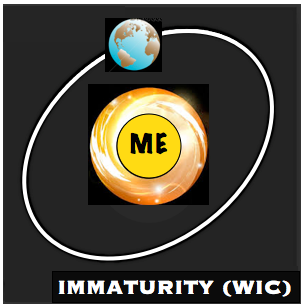
10. SELF-CENTERED

The most basic trait of an emotional immature person. Never equate arrogance with self-esteem! All expressions of S-H are self-centeredness.
• actions indicate little regard for the needs & point of view of others, yet actually have very little regard for ourself (hidden S-H)
• overly sensitive, but mainly for things done to us – real or projected, rather than caring about the effect we have on others because of what we do.
IRONY – co-deps are overly focused on how others see us, BUT it’s still self-centered narcissism
WE
me. me. me• are preoccupied with our own ideas & fears, even when hidden by rescuing, hi-achieving, people-pleasing….. can result in social anxiety, from assuming everyone will judge, criticize & dislike us
• take everything personally, trouble separating issues & situations from our ego or personal reactions to a topic, ‘hear’ discussions about issues through a filter that makes everything about us
• talk more than listen, steering all conversations back to us. Don’t take the time to be thoughtful, understanding, compassionate or empathetic —
alternated with being lost in thought (dissociated) or consumed with our own views, worries, & outcome of our troubles (obsessions)

11. STIMULUS HUNGRY
stimulus hunger• addicted to adrenalin, drama & various forms of danger
• demand instant results from ourself & others, so have poor follow-thru. Our promising beginnings end in failure for lack of persistence, so our gifts & skills are often wasted
• have poor impulse control, & trouble with delayed gratification (“I want it now, now, now”- including Recovery!)
• have superficial values, & too concerned with trivia (appearance, social position, money & possessions, sexual desirability…)

12. STUCK in DAMAGE
• acting out our anxiety on family or relationship = self-blame, guilt & physical symptoms (body pain, auto-immune illnesses…)
BTW: This does includes the years in Recovery – but as long as we’re progressing, it’s OK no matter how slowly
• our sense of identity coming from the False Self
• staying loyal to our family by feeding our S-H, obeying Toxic Rules, acting from the Toxic Roles, using people / places / things as addictions
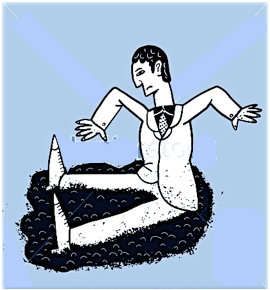
• trapped in our ‘story’ – using unproductive patterns of thinking & acting from childhood (repetition compulsion)stuck in mud

AGE is not the main basis for maturity. Many people live their whole lives as emotional babies, not always obvious on the surface.
Actual children ARE naturally immature.
But when ACoAs were young, we had to be little grownups so the ‘adults’ wouldn’t have to be loving & responsible parents. Most of our role models were wounded kids themselves, so we never had a chance to learn genuine maturity from them

13. UNHEALTHY RELATIONSHIPS
• compulsively choose unhealthy, inappropriate friends & mates, as well as work, living & social environments
• OR accept any person or situation offered to us, without considering if we like it, if it suits us, how safe or healthy it is….
• focus most of our efforts on winning over people who are not interested in us, OR tolerate boundary invaders
• in most relationships we react in extremes (idealize or demonize)
AND
• personal loyalty lasts only as long as the relationship is somehow useful to ourself
• having trouble with people important to us is usually caused by us being critical, impatient, over-reactive, having inappropriate expectations & making demands
• use relationships to manage our anxiety. Have a great need for a large ‘support’ system so we don’t have to face & outgrow our abandonment issues

14. UNHEALTHY THINKING
• Cognitive Distortions (CDs) are the mainstay of the immature (WIC’s) way of ‘understanding’ the world. CDs CAUSE:
• being stuck in flawed beliefs about ourself (S-H) & others (judgmentalism)
• confused thinking, and inappropriate actions or non-actions
• misreading & then mis-interpretation of social cues, so we ignore them completely or react badly from projecting our assumptions on to others
• not taking seriously any point of view different from our own . EXP: B & W thinking always leads to false conclusions

NEXT : Emotional Maturity – General

ACoAs & Emotional Immaturity (Part 2)

lazy-boyI’M DOING WHATEVER I WANT- 
no matter what ! 

PREVIOUS : Emotional Immaturity (#1)

See ACRONYM Page for abbrev.

QUOTEs: ◎ “If you’re always waiting to get caught, welcome to a life of immaturity” Eymadreamer
◎ “Immaturity is the incapacity to use one’s intelligence without the guidance of another” Emmanuel Kant

IMMATURITY (cont)
6. NOT FLEXIBLE

Opposing people & ideas – being emotionally rigid, AND insist there’s only one way to think about or do things “our way or the highway”
‣ consistently experience the world as being against us, feel unseen & unheard, which can lead to constant debating, arguing, fighting
‣ OR compulsively isolate, avoiding reality, especially when frustrated
‣ see everything in B & W (too much or too little, all or nothing) oppositional

Oppositional – compulsively take the other side of an opinion or event, even if we secretly agree with the first one :
‣ as a way to keep others at arm’s length emotionally (false protection)
‣ because of a fragile ego (False Self, WIC), we’re afraid of loosing ourself if we agree with someone else, instead of having a solid identity and real boundaries
‣ have great difficulty with any form of real or perceived authority, even when it’s legitimate
‣ resist taking advice & help, even when desperately needed

7. NOT SELF-AWAREMISSING :
• the ability to question or reflect on the consequences of our actions
• access to our Healthy Adult ‘voice’ based in the True Self
• awareness of how we communicate, that we don’t make genuine connections, or what effect we have on others by what we say
• appropriate sense of boundaries (over or under-functioning)
• awareness of our emotions or interior life (anxious, cutoff, reactive, stressed) OR why we think, feel & do what we do
• genuine empathy for or perspective about others

8. MANIPULATIVE
grudge-holding• experience the world as threatening, so hide our fear by subtly invalidating others (undermining), double talk, guilting, act weak & incompetent, play on other’s sympathy….
• highly self-absorbed, unsympathetic, passive-aggressive (covert hostility)
• hold on to unexpressed resentments, while our real intentions & behaviors are hostile : the con man, the gossip, the martyr, the two-face
• not able to face reality as an adult, we tend to often LIE, as a defense mechanism, even about small things, especially when not necessary. We gradually forfeit the trust of friends, family, and co-workers
• pretend to have emotional stability which we don’t actually have

9. OVERLY DEPENDENT
Symptoms : co-dependence & people-pleasing, dogmatism–intolerance of ambiguity, Fear of abandonment (FoA),
• act as Victim: always complaining or whining about something, or apathetic & numbed out. Focused on self-pity, waiting to be taken care of
• are indecisive – unable to make simple choices or decisions. You don’t stick to any you do make, from being easily influenced, bullied or manipulated by others
• basic emotional reactions to life = fear, distrust, anger & anxiety
WE
• get angry when a significant other (as parent-substitute) expresses their own needs & wants, when different from our own
• chronically expect some other person, place or thing to make life worth while. Needing others around all the time becomes a burden to them
invest ourself in any belief system or person who reinforces our own opinions (actually those of the WIC & PP), OR who promises rescue, privilege, salvation or status
WE
make snap judgments, are insecure, defensive – which is covered up either by being totally self-effacing or puffing ourself up all the time
• need to please everyone, in exchange for safety & gratification, doing ‘nice’ things for others only to have an advantage, so are rarely emotionally honest
• are prone to intense attachments or enmeshments (symbiosis), always dependent on someone else, when a reasonable amount of self-reliance should be present as an adult.
NOTE : This does not apply to temporary dependency caused by present-day trauma or major illness.

NEXT : Emotional Immaturity (Part 3)

ACoAs & Emotional Immaturity (Part 1)

about MEWHAT DO YOU MEAN –
everything’s not about ME?

PREVIOUS: Accessing Es

See ACRONYM Page for abbrev.


Fundamentally, most people are being run by a combination of their bad parent & the WIC. This of course applies to all unhealed ACoAs & addicts, whether in Recovery or not, before doing deep FoO work. How these 2 ego states are expressed is determined by how our inborn nature reacts with the specific environment (family & culture) each of us grew up in.

Much of this blog is about the ways ACoAs express this immaturity.
☁︎ For some, our psychological & emotional under-development is noticeable to observers. Not believing in ourself, we live in deprivation (work, living space, grooming, education, health…), like 12 yr old orphans on the street!
• But even for those of us who are highly accomplished, without an integrated True Self we’re still emotionally, psychologically & Spiritually immature. This is hard to acknowledge – after all, who’d want to admit they’re still ‘functioning’ from a childish place?

Immaturity CHARACTERISTICSScreen Shot 2015-08-02 at 9.02.05 AM

1. ATTENTION SEEKING
• fishing for compliments, & having unreasonable expectations of others
• extremely competitive, a poor loser, perfectionistic & refuse to play or work if we can’t have our own way
• have a great need to get what we want, demanding immediate gratification. Feel we can’t bear to wait, even shout & command to be catered to
• secretly believe we’re somehow special, demand constant attention, sympathy & unearned respect, so can’t have satisfying relationship
• usually fake, inconsiderate, tactless & selfish, not looking beyond ourself – the child’s delusion that the world revolves around it

2. CONTROLLING
• act pushy & inappropriately whenever feeling out of control
• can’t stand others having needs & wants different from ours
• try to force others to be just like ourself, or our ideal
• want the whole world to be safe for ourself, so try to make everyone & everything conform to our view of what’s right & wrong

3. EMOTIONALLY UNEVEN
• can be pleasant as long as things go our way, then suddenly explode with anger over a trivial (but not to us) remark or incident.  Others don’t know how to be around us, never knowing how we’ll react
• don’t handle criticism well (over-react), take every slight as a personal attack, take ourself too seriously
WE
• find it very hard to forgive (let go of) slights & hurts. Either keep throwing it in someone’s face, or withdraw without explanation
• are easily frustrated. If things don’t go our way, demand that others change, or refuse to participate further. Can have temper tantrums, prolonged pouts & rapid mood shifts
out of control• are prone to jealousy & envy – may wish bad things on other who seem / are more fortunate
WE
• regularly feel like we’re going to lose control (& often do) & are afraid of change
• lack ability to be emotionally neutral toward others – are either irrationally negative (antagonistic) or blindly positive (idealistic & undeservedly loyal)
• find it hard to successfully manage Es during or after a crisis – either fall apart or become physically or emotionally distant, especially during a confrontation
• project our Shadow side onto others & then judge them harshly

4. NOT DEPENDABLE
• are generally unreliable, often late, not doing what we say we’ll do, letting people down (with lots of ready excuses)
• our life is chaotic & impulsive, making us unpredictable & ‘difficult’
• only focus on our own gain or loss, so have a hard time with integrity
• regularly promise things we can’t or don’t want to do, so constantly disappoint

PS: The toxic roles of Hero, Martyr or Co-dependent may make us seem ‘strong’ & responsible, but compulsive over-doing, placating, & people-pleasing are to the detriment of self-care & the true needs & feelings of others!

5. NOT RESPONSIBLE
king-baby• are convinced other people’s actions cause our lack of ability or poor performance
• avoid or deny having financial, work & relationship problems
• can become defensive or antagonistic if others point out any part we played in our troubles
• don’t have a realistic view of ourself, & can’t take in or use constructive criticism
• don’t own our part in bad situations, re. our problems with others
• make bad choices, or none at all
• rely on others for care and protection, being superficial & thoughtless

NEXT : Immaturity, #2

ACoAs – ACCESSING Emotions

LIFE GOES MORE SMOOTHLY
when I accept & manage my emotions

PREVIOUS: ACCEPTING our Es (#1)

SITE: 🔅5 Ways to Access Es


ACCESSING Es
For anyone who ever doubted that emotions are real – this digital map BELOW shows scientifically that various emotions create physical energy which can be visually located in the body, depending on which one is being experienced.   (MORE….. scroll to 5/25/14)

• We live in a culture that worships Do-ing over Be-ing, action over introspection, thinking over feeling. Even so, we need outlets for our emotions, no matter how much we deny having them.

◎ To do that, people will use sports event, concerts, movies, hanging out with rowdy friends…. not just as entertainment, to connect with others & enjoy favorite people or activities, but also to artificially generate emotions in socially acceptable ways. It’s called blowing off steam, escaping, just having fun…. but ultimately it’s a way to experience Es not otherwise acceptable – especially in public.

Even in Recovery, ACoAs struggle to access buried Es. We have many methods available to help us get to them, but we also need to be fully aware that it’s not wise or safe to try having all our feelings at once.
It’s important to not rush – “Softly, softly, catchee monkey” – slow & steady works best! Sometimes we can’t help being triggered, but with the right help we can get thru it, & come out of the tunnel feeling lighter

🧠 Feeling safe / unsafe is inseparable from neurological functions of the vagus nerve, connected to all major organs. It controls 3 sub-systems that helps us determine if a situation is safe, dangerous or life-threatening. When any one of the 3 is active it inhibits or shuts down the other 2.  (also related to depression….)
POST : “Dissociation – Healing” = re. the vagus nerve

• Ultimately, the only way to have access to buried Es is if we feel safe enough, which refers to an emotional state of being open & transparent. This means:
a. EXTERNALLY : searching diligently until we find Safe people with good boundaries who can be trusted to not abuse or abandon, & give us the benefit of the doubt in questionable situations
AND environments where we can cry, rage, be vulnerable… without being judged or ostracized. (More….)

b. INTERNALLY – consistently treating ourself much more kindly than we’re used to, so the Inner Child can come out of hiding or stop acting out everywhere.
As we grow psychologically & spiritually we can tolerate more of the buried trauma. IF we stay in the process, old Es will come up, then diminish or fade.
SITE: “Do your children feel emotionally safe?

TOOLS
DO regular bookending with the IC, and a short daily 10th Steponly list the day’s events briefly, & try to identify which Es might be associated with each one, pleasurable or uncomfortable.
1
. The basic triad of Mind-Body-Spirit is a natural place to start.
Mind: thoughts you’re have over & over tell you that something’s important, either pleasant or unpleasant. Careful attention to what keeps popping up will help identify hidden Es that are “running” you without your awareness

Body: tightness in the belly, between the shoulders, or any other place in your body, is a message that something’s out of balance. Focus on that area, breathe deeply into it to relax, then ask for info from your body about what’s going on

• Spirit: tuning in to your intuition, consider Spiritual Truths you believe in, observe how you react to others….. What is your relation to others? How clear is that spiritual connection which links you to all other humans ? (MORE…. )

IMAGES ▼ : Physical typography of basic (upper) & non-basic (lower) emotions associated with words. Body maps show regions whose activation is increased (warm) or decreased (cool) when experiencing each emotion. (Color Bar indicates t-statistic range. 0.05 FDR corrected, t >1.94)
««
SITEs: re. ANGER / re. LOVE 

🔅“The Art of Processing Emotion

🔅  Emotional Release videos on YouTube 

🔅 5 ways to access the sub-conscious mind directly – Hypnosis, Self-hypnosis, Meditation, Walking-meditation, Floatation tank

🔅 BODY (& brain) WORK: Brain Repatterining // Core Energetics // CranioSacral // ETF // Kinesiology // Reiki // Rolfing…..

Essential Oils to release
blocked Es (videos)
🔅 ‘The Emotion Code’ – get to Es trapped in the body’s electrical flow

NEXT: Emotional Immaturity, #1

ACoAs – ACCEPTING Emotions (Part 2)

PREVIOUS: Accessing Es #2a

SITEs: Power of Vulnerability”, Brene Brown – a TED Talk

• “...Why Feeling Bad is Actually Good

REVIEW all posts: What about Es // the Body & Es // ACoAs & Es // Repressing Es

QUOTE: “Unexpressed emotions will never die. They are buried alive and will come forth later in uglier ways.” ~ Sigmund Freud


1. Emotional INTELLIGENCE
(E.I., also called E.Q.) refers to our ability to understand & use emotional information to guide our thinking & behavior.

• The popular field of Positive Psychology is sometimes used to justify pushing away ‘unfriendly’ emotions. This suits people who don’t want deal with them.
▶︎ However “no matter how “dark”, Es are natural expressions of being human. They all have a message that will ultimately lead to greater clarity, if acknowledged & contemplated….. (From :”Why Feeling Bad is Good“)
Movie re E.Q.s
This includes USING:
• conflict as an opportunity to grow closer to others
• humor & play to relieve stress (not teasing or dark)
• effective nonverbal communication thru body language
(IMAGE from children’s movie 2015)

E.Q. COMPONENTS
▫︎ Empathy : understand emotional perspective & experiences of others, especially when different from ours
▫︎ Handling relationships : use info about Self & others to respond appropriately in social situations by developing healthy interpersonal skills
▫︎ Managing : act appropriately about any Es that occur in a situation
▫︎ Motivation : use self-control to channel Es toward a goal
▫︎ Self-awareness : recognize when & what emotions occur   (MORE…)

▷ Researchers have developed tests to measure E.Intelligence.
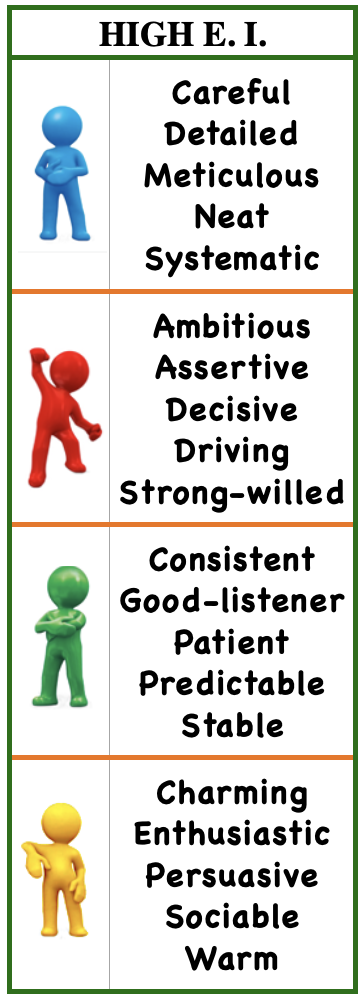
• People with high E.I. have greater mental health, show greater job performance, & usually work well in cooperative situations, being good at motivating & managing others
• People with low E.I. have low(er) self-esteem, often misinterpret emotional signals, have trouble in relationships, & are not as motivated to cooperate or perform well at work
Although E.I. probably has an inherited component, many psychologists believe that people can be guided into making better use of the E.I. they were born with but is still under/ un-developed.

T.E. A. – Remember that WE can:
• experience Emotions but not act on them at all
• have our Es & find the right place to ‘get them out’
• change how we feel emotionally (E) by coming to an aha! moment, or by mentally (T) understanding what’s going on with us (A)
• notice Es shifting from pain to —>discomfort, then ——>pleasure – when hearing a kind word or being with any accepting, comforting person

2. Emotional BALANCE – Since Emotion is mental energy, we can learn to identify & experience our energy level in the present moment, to see if we’re operating at a surplus or deficit. It’s not a stable state, but can slide around throughout the day.
Levels are from least to best :
f
. Depletion – feeling tired & stressed most or all of the time, with depression, anger & anxiety
e. Break-even – just getting by, with a few highs, but mostly lows, & sometimes really down. Often under stress, with some breaks

d.
Moderate emotional health (e.h.) – barely staying ahead of problems, & often falling a little behind. There is some energy for working to build your strengths & reduce drains
c. Fair e.h. – There’s a lot going for you – with healthy beliefs & action patterns. Still some energy drains to be worked on

b. Good e.h. – close to “the top of your game” most of the time. You add energy to the lives of others, & your participation in any project is an asset. You also greatly benefit when helping others by sharing knowledge & skills
a. Excellent e.h. – a fortunate & blessed position in life. Energy flows freely from within & all around you. There is great freedom – to choose how you use your abundant energy, as well as responsibility to give back to the world.
TAPE: Nurturing Your Inner Child.

MORE INFO
🔅 “Constructing Artificial EmotionsA Design (thought) Experiment” – online games to bring up suppressed Es
Emotions Analytics – a new field of E. communications” identifying Es via vocal intonations (iTune app)

🔅 How to Affect Emotions With Music
• Psychological info re music & Es
• “The Power Connection Process” for actors

NEXT: ACCESSING Emotions