Ego States – Injunctions & Consequences

PREVIOUS : Ego States – Basics #5

POSTs : “What is Self-hate?”  //  ES = ego-state

ACoA event  : An Al-anon ‘sponsor’ was having dinner with a sponsee who was making fun of herself about a negative pattern, as if it was amusing. The sponsor didn’t react the way she expected, & after a beat said “You obviously don’t have a sense of humor!” Sponsor replied quietly : “I don’t laugh at self-hate”.

Psychological T-shirts 
Eric Berne, MD said this term helps explain how we can hold two existential / mental positions simultaneously –  usually one is conscious (“driver”) & the other subconscious (“injunctions”). Both layers come from the original parent, & each represents it’s own Life Position, but in conflict.  (⬇️ IMAGE…)

The T-shirt concept (Front = True Self, A. or C. ego state) vs Back = False Self toxic beliefs from P1 or Po shows how we sabotage what we want the most. The combination results in self-harming / defeating attitudes & actions, causing so much frustration & emotional suffering. In many cases, it leads to recurring thoughts of suicide, even if it’s not acted on directly. (See below)

Without Recovery work, the hidden beliefs win out because there are more of them & are usually generational. (DRIVERS – slide 43, vs INJUNCTION – slide 44)
T-Shirt EXPs:
Front: “Someone please love me”   Back: “Not you, Stupid!”

Front: “Keep your distance!”
Back: “A little closer please” (‘Come here, Go away’)

Front: “Why does this always happen to me?”
Back: Kick Me

Front: “I was only trying to help”
Back: Now I’ve Got You, You SOB!”

Front: “Please tell me what to do”
Back: “So I can tell you why that can’t work” (“Yes, but” game)

Front: “I hate you!”    Back: “Don’t leave me!”  Audible book 
Front: “Please love me”    Back: “I’m not worth it!”

These double messages are good examples of psychological games people subconsciously initiate & participate in. (See 4 Games).

Many times the only way you can tell you’ve been caught in a subconscious game is the bad feeling that surprises you after its over. “I’m ok – Your not” or vice versa can start as an innocent question, but ends with a knot in stomach or chest , & you haven’t a clue what just happened.

The surprising bad feeling is known in TA as the “Payoff” for playing the game. BUT – while it’s often somewhat irritating, this feeling is also weirdly satisfying because it confirms your existential position (“OK Corral” statements).
⬇️ Expanded explanations re. how each injunction originated

«
SUICIDAL Ideation
One of the ways wounded people’s Inner Child ES tries to soothe itself is by having fantasies of dying, to eliminate severe current or long-term suffering.

Many ACoAs admit to having an on-&-off lifetime of suicide imaginings – even to the point of mapping out several possible methods. Some have actually tried, but only half-heartedly, or were rescued by a friend or loved one at the last minute. And some have succeeded.
What such people didn’t realize is that what they’re trying to kill is the torture coming from the Pig Parent voice (-CP), the negative Injunctions that goad the Adapted Child (-AC) to anxiety & despair – because it doesn’t have an internal protector.

In Recovery we can modify or subdue many Toxic Beliefs, & develop an empowering ‘UNIT’ that will eliminating the need to destroy one’s whole self. (See also “HEALTHY RULES

EXP of un-ambiguous destructive parental message, leading to career stalling, frustration or outright failure, & depression —>

💔 For people seeking Recovery but still consider ending their life, Tony White (T.A. analyst in AU) suggests that :
1. the therapist can encourage the FREE CHILD (+FC) to stay alive based on its ⬆️ ambivalence (but not to please anyone else)
2. if the person is willing, they can make a CONTRACT with themself, the Adult ES with the wounded Adapted Child ES : “I will not harm myself or kill myself accidentally or on purpose, for ‘X’____ time”  The A2 & C1 together decide how long they can stay alive. This can be renewed as many times as needed.

NEXT : Ego State (ES) – Summary
EGO STATES – ACoAs


PREVIOUS: Ego states Basics #3

SITE: T.A. – Transactional Analysis lesson


ACoAs
 & EGO STATES
Carl Jung is credited with the concept of the “Divine Child”, but the term broke into the mainstream mainly with the book “Your Inner Child of the Past” (1963) by Hugh Missildine, MD. Modern IC work is an outgrowth of ‘Ego Psychology’, ‘Family Systems Therapy’ & Transactional Analysis

In the 1970s the concept of the Inner Child & co-dependence became popular.  In the ‘80s & ‘90s John Bradshaw did an excellent series of TV specials focusing on ACoAs & the IC.
This chart is from Eric Berne’s breakthrough book “Games People Play“. In its simplest form it’s the basis for all modern Inner Child work. For Berne, an ego state is ‘A system of feelings accompanied by a related set of behavior patterns.’

💜 When we’re grown-ups, our E.S. are meant to be built-in resources we can call on as needed, but for ACoAs — aspects of the basic states are distorted (WIC), deficient (poorly functioning Adult), even missing (Loving Parent) due to our upbringing

Under stress we revert to old patterns, which for ACoAs is either the WIC or PigP getting activated. It takes over, while the others recede, having less control, less able to help

Our immature ‘Parent & Adult’ parts are expressed mainly (or only) from the WIC’s point of view – with a child’s emotional range, & only with a child’s limited, perhaps twisted, knowledge of reality.
SO :
• Internally – we mistake our parents’ beliefs, rules, slogans…  for here-&-now adult reality (PigP voice), so that toxic beliefs are taken as facts
• Externally – we may easily be convinced that everyone’s laughing at us because “they” always laughed at us (WIC’s thinking from past experience).

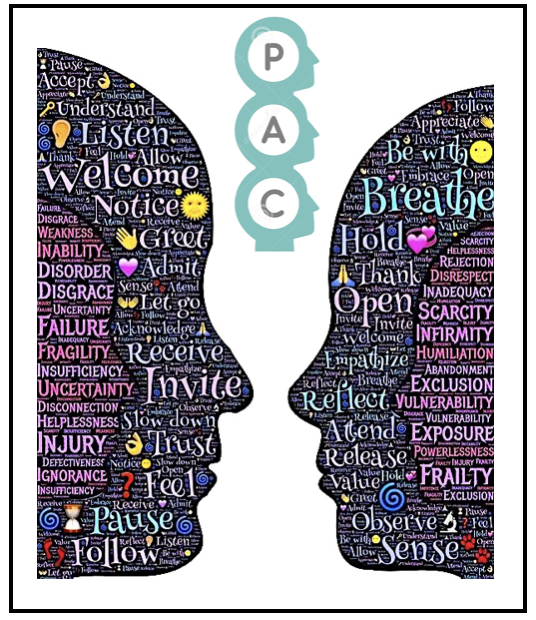
That’s even true in spite of years of education & a wide variety of positive experiences! In Recovery we can find more constructive ways to protect the total personality (PAC).
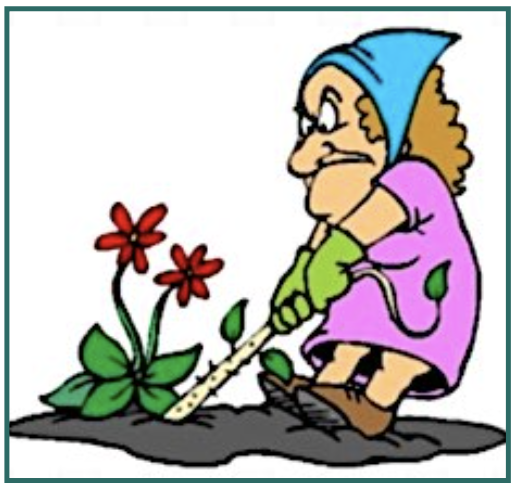
Current reality is contaminated when overlaid with unresolved emotions & memories of early experiences which became psychological weeds. Our E.S. growth becomes stunted, emotionally & mentally stuck in Child Mode – not our fault, but has to be corrected

Unmet childhood needs which are disallowed – are often disguised by behavior opposite to what’s actually required, like beating oneself up as way to force oneself to ‘behave better’. The original need was to prevent punishment, BUT is now turned into self-abuse!
EXP
Bad PARENT : “Why can’t you do anything right?”
Victim CHILD: “I know I’m dumb. Nothing I do every works out!”
Disconnected ADULT: “Let’s see, next I need to __, & then I’ll go __, and then I can __ …..

It’s normal for each E.S. to act differently when trying to accomplish something, no matter what the goal is. How the Adult part will handle a situation is not the same as an Inner Child or Loving Parent. This is not a problem for a healthy person, since appropriate actions are chosen to fit the situation EXP: Screaming at a concert (IC), being serious at funeral reception (A)….

But when a ‘sane’ Executive E.S. is not available, some internal Voices are frozen in terror, or all are out of synch with each other.
Each wounded state then pulls in a different direction, trying to fill needs that are at odd with each other – especially under stress. This makes it hard to feel emotionally grounded & mentally stable, so we feel like we’re going crazy. We are NOT!
EXP:
👨🏽‍🦱 The WIC’s version of an adult (A) can make us intelligent & very hard-working, but most of our efforts are meant to quiet some secret anxiety (FoA, guilt, S-H, shame…)

👮🏽 The WIC’s version of a parent (P) – actually the Introject – is:
✎ internally very harsh toward the C’s child
✎ externally dedicated, clever & kind – but only towards others
✎ OR very mean to others, while feeling scared & vulnerable

Because the Inner Child is ALL of our history, we can speak of it in the plural, having to do with more than one version of the wounded part – different ages, possibly of both genders, & each one holding an aspect of our early self – sad, angry, scholarly, defiant, carefree…. the suicidal one, the determined one, the caretaker, the bully….

NEXT: Ego states – Adult #1

EGO STATES – Development & Trauma

I HAVE DIFFERENT ‘VOICES’
for different situations

PREVIOUS: ES Basics (@2)

YouTubeTransactional Analysis, Ego-states 1-3


DEVELOPMENT & TRAUMA
Ego States seem to develop from normal differentiation (separating general concepts into specific meaning – good vs bad….), the introjection of significant others, & a child’s reactions to trauma

According to Dan Siegel, E.S. can become fixed when a positive OR negative event is experienced repeatedly, or when a traumatic event is overwhelming. In general, they become parts of the Self, some by reacting to other people, some by internalizing them

a. Integration = Combining & incorporating previously unconnected ‘objects’ into one larger entity. Through this mental skill a child learns to group concepts together, such as combining Dog and Cat into a complex unit called ‘Animals’ //  Mother and Father becoming ‘Family’.

A healthy identity is made up of combining all conflicting reactions in Personality (needs, instincts & habits), gradually organized & then harmonized into a whole.
According to Jung, it’s the process by which the individual & collective unconscious are fused, which then becomes ‘maturity‘, & can help a person move past negative behavior patterns.

When conflicting ‘reaction tendencies’ are not resolved, the resulting internal stress will be expressed as unhealthy activity, but may be so disruptive it leads to dissociation, potentially even the disintegration of the Self into separate parts (More….)

b. Normal Differentiation = A separation of general concepts into specific meaning (opposite of Integration). Children slowly separate out their own identity from that of other family members – by having different opinions & values, while still being able to stay emotionally connected to them.
They learn to discriminate between what they like & don’t like, which become entire patterns useful for dealing with parents, teachers & playmates. Eventually it makes S & I possible. (More…..)

EXP: This mental skill helps us understand that one set of actions is appropriate during a sporting event but not at a business meeting.
If this separating process become excessive & self-defeating, it’s usually called ‘dissociation‘ – withdrawing from current reality

c. Introjection of significant others :
Children automatically accumulate groups of beliefs, emotions & behaviors from their caretakers. Some will be acceptable to their True Self, but for ACoAs, most will be harmful.
▻ If YES, the behaviors get included into their sense of identity (this is me)
▻ If NO (qualities of abusive / neglectful parents) the behavior ‘clusters’ become Inner Objects (not me) which have to be managed by creating defense mechanisms
d. Trauma
To survive overwhelming neglect, rejection & other kinds of abuse, children form internal E.S. which:
✎ end up in constant conflict (PP vs Natural Child… // PigP vs Healthy Adult //  WIC vs Natural Child…. ) OR
✎ get cut off from each other (dissociated) to save the child’s sanity

♥︎ Sadly, these choices prevent a feeling of security, & therefore the ability to extract & enjoy the best from the outside world

EXP: Healthy children can create a imaginary playmate, but eventually don’t need it, replacing it with real-life friends.
BUT a lonellonely childy, isolated child may cannibalize part of its True Self to produce such a ‘friend’, so the imaginary companion feels very real & is hard to give up. It would feel like killing a part of oneself – instead of getting re-integrated

💔 When such a child is forced to push aspects of the Self out of awareness because of conflict & environmental pressure :
☀︎ those disowned parts can eventually be channeled into Work/Career, Research, Creative expressions….. but the person will still be emotionally crippled
☀︎ but more often the result will be social awkwardness, isolation, procrastination, unfulfilled dreams
☀︎ & in a very few, this mutilation of the human soul can show up later in life in a different, more damaging form as multiple personalities. (“We, the Divided Self”, Watkins & Johnson, 1982).

Watkins & Watkins, at Montana U, worked with people who had deep inner conflicts between various ego states which make up the “family of self” – using behavioral, cognitive, analytic, or humanistic methods to create a kind of internal diplomacy.
Applying their “Ego-state therapy” showed that complex psycho-dynamic problems can be resolved in a relatively short time, compared to more analytic approaches. (More….)

NEXT: Ego States – Intro (#4)

EGO STATES – Basics (Part 5)

PREVIOUS: E.S. Basics – #4

POST : Psychological Disorders – Neurosis, #3c Similar info ⬇️

T.A. FRAMEWORK
✿ 1st Order Structural ES =
represents the basic personality structure of an adult person – how we’re made up, and how we relate to others.

First POSITION = Healthy use is Self-Awareness. It’s when we’re connected to our own body, as we look, feel & hear the world from our own viewpoint. It’s the Child’s desire to discover its identity, wants & needs. “How does this conversation or communication affect ME?”

TOGETHER :
P1 – 
info “taken in” from external sources – is Second Position.
A1 – not related to a person’s age… oriented in the present, in charge of executive functioning – is Third Position
C1 – neural network (automatic “programs” stored in the implicit memory of the subconscious) – lives in First Position.

NEGATIVE :
● When the Externalizer gets stuck in 1st, it operates from the Angry / Defiant Child ES, as Persecutor . The person’s thinking & feeling is highly narcissistic, “All-about-me”.

● When the Internalizer gets stuck in 1st, it operates from the Vulnerable Child ES, as Victim . The person’s thinking & feeling is highly dependent, “I’m helpless-hopeless-worthless”.
✒️    ✏️ 🖍    🖌

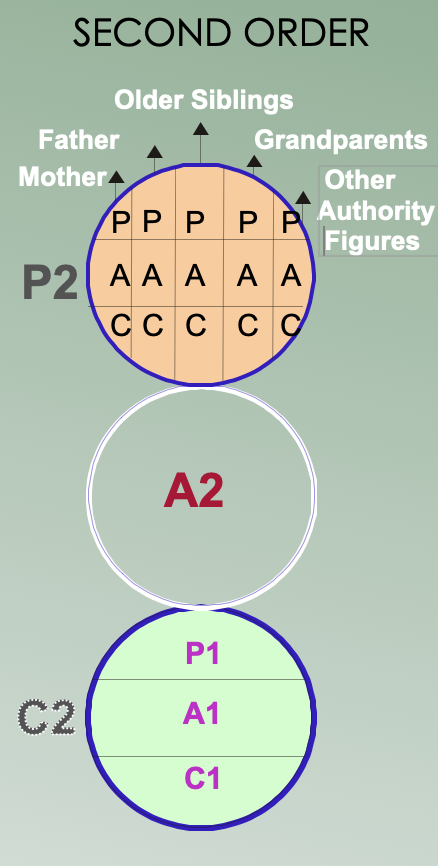
✿ 2nd ORDER Structural Model – deals with the core shape of our personality – what we thing & feel, not what we do or how we act. Also – describes the various ego-states, & gives info re. their origins

Second POSITION = Healthy use is Empathy.
It makes up the ideal PAC expressions in the fully developed, well-adjusted adult.
It’s extremely valuable for being able to deepen rapport with others, providing much flexibility when involved in a conflict with someone else.

At this level of consciousness, the 3 ego states make assessments logically & mostly without emotion, collecting & storing information from many different sources in the environment as well as from each ego state, working together.

“The creativity of A¹ (natural child), honed by the logic of A² (actual adult), is behind every great idea & advance of civilization” ∼ Berne. 

INTROJECTS = made up of our parents ego states that we absorb. These come from their parent-figures, and subtle changes occur each time they’re passed down to the next generation.
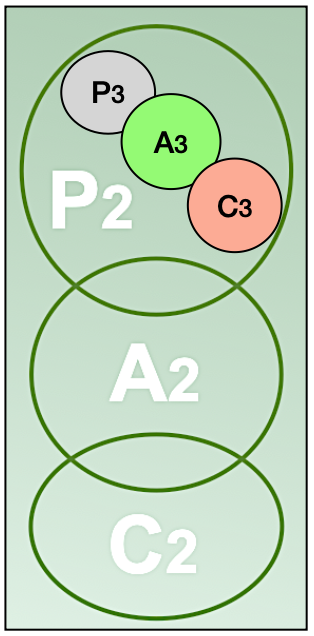
P3
= Parent 3 –in– Parent 2 : all the messages from our parents & caretakers – that our P2 camcorder recorded   

A3 = Adult 3 –in– Parent 2our understanding of the ‘nature of reality’ FROM the explanations they gave us as to why their rules & commands are important + our version of what they meant

C3 = Child 3 –in– Parent 2 : any secret / covert messages we picked up from them —> at the same time as the / literal / overt messages in A3 Adult

❤︎ IDEAL
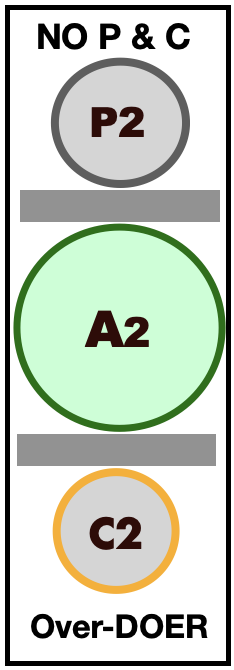
 – The perspective & thinking in our A2 content : 
P2 = Parent-in-the-Adult is “all-about-the-child“, able to nurture & protect ‘real’ children

A2 = Adult-in-the-Adult is wise, mature, makes good decisions by consulting the other states, acting on behalf of the whole person whenever executive functions must be carried out 

C2 = Child-in-the-Adult is the ideal representation of a well-adjusted, non-wounded Child with no issues from the past

NEGATIVE:
◆When the Externalizer gets stuck in 2nd, it operates from the Critical Parent as Persecutor in the Drama Triangle.

◆ When the Internalizer gets stuck in 2nd, it becomes other-centered as Rescuer. The person ‘caretakes’ a Victim from either Nurturing or Critical Parent – instead of oneself
✒️    ✏️ 🖍    🖌

✿3rd Order Structure – contains the 3 modes indicating our tendencies toward & evaluations about —> our preferences & avoidances. They’re reflexive responses to stimuli. Includes infancy – when active thinking in any meaningful way has not yet started.

Third POSITION = Healthy use is Objectivity / Detachment.
It’s the Adult Ego State‘s ability to study ourself & our relationships, adopting an independent observer role to gain a new perspective, a good way to “step out of” an emotionally intense situation

✿ P1 = Parent-in-the-child or the Adapted Child / Magical ParentThe stored fantasy about what would happen if we didn’t follow Parental messages

❀ C1 = Child-in-the-child or the Natural Child / the Infant. Stored feelings & body sensations in response to those fantasies

A1 = Adult-in-the-child or the Little Professor. Our early decisions about what to do / not do   (MORE… in Child #7)

NEGATIVE : If we get stuck in 3rd, we tend to intellectualize & analyze situations… becoming disconnected from our body & emotions, so we can seem more like robots than people (Computer Role).

 Externalizers stuck in 3rd are the Emotionally absent / Disengaged partner, typical in a codep relationship. They stay in Adult mode to distance or block out the painful emotions of their Vulnerable Childor the volatile emotions of the Angry Child.

Internalizers in a codependent relationship get stuck in the ‘Impression Management’ position or ‘What Would Other People Think’ Syndrome.
Weak boundaries make it hard to say NO. These people come mainly from the Vulnerable Child (fear of more abandonment) & so must stick to Adult mode (logic, facts) as protection.

(From “Shoot for the Moon…”  and Internet of the Mind” 

NEXT: Parent ES, Part 1

EGO STATES – Basics (Part 4)


PREVIOUS: E.S. Basics – #3

SITE: “Childhood Abandonment Issues


CONTAMINATION
Even if we spend a lot of time in Adult mode, it’s not unusual to fall into Bad Parent or Wounded Child E.S. when faced with enough stress. This can be from a pile up of real-life events, or by bumping up against an unhealed wound. Then the 3 states no longer work together, regressed to an earlier time in our life, with the specific experience, beliefs & training at that experience / trauma

a. We may just hear whispers in thoughts & feelings (anxiety). OR
b. move fully into one of those 2 states absorbed from our past,
✎ outwardly AS:
• damaged Parent – abusive, controlling, know-it-all, or over-indulgent, symbiotic rescuer….
✎ alternating with:
• damaged Child – sullen rebeller, raging scapegoat, needy victim, incapable isolator….

These create energy blockages masking our True Self & preventing us from being ‘in the flow’- founded on negative beliefs about Self & others, used to justify unhealthy decisions & actions

We absorbed repeated comments from family / society…. about something as if it were a fact or reality, when it was only their experience or belief – not ours – BUT we took it in & then made it our own ‘truth’

Symptoms of this blockage depend on which E.S. is dominating at the time :
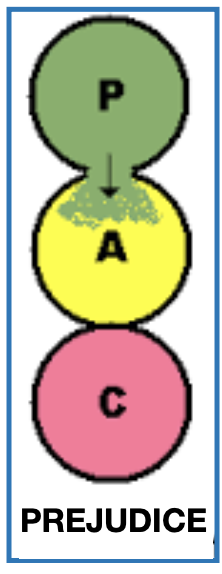
#1🩸When the PigParent bleeds into the Adult we mistake Parental beliefs & messages as Adult reality.
We may think & act out of ‘superiority’ hatred, such as narrow-mindedness, racism or religious judgement.

EXP: “If you want something done right, you have to do it yourself”/  mother: “all men are bums / father: those ‘people’ are taking all our jobs”….

#2🩸When the Wounded Child bleeds into the Adult, we mistake the Child’s beliefs for Adult reality. Things in everyday life can trigger old trauma, so the WIC becomes frightened at or angry about things that may or may not be dangerous or unpleasant in themself. (Fantasy or Illusion – not necessarily pathological)
EXP: “Nobody likes me / I can’t do anything right /  / Nothing ever works out for me / If I’m perfect, famous / rich… then everyone will love me” ….

#3 🛠 When both PigP & WIC bleed into the A. at the same time, we combine Parental & Child messages, as iff they’re doth Adult reality (even when they’re contradictory) EXP : WE —
• can have a sharp negative belief which terrifies us : “Anyone different from me is bad & so I’m always in danger” OR
• can have a sense of superiority, feeling entitled : “I’m better than “them, so I can do whatever I want”

☞ Interesting : In #3, the Adult is Ego-syntonic – not in conflict within itself, whether its ‘position’ is accurate / healthy – or not.
It happens when we believe that what we feel  & think is completely true & unchangeable (“I’m always right, my way is the only correct one // God is demanding, I have to be perfect)….

EXP
: Our inner (P) voice ways “Children should be seen & not heard”, so our (C) agrees: “I’ll be safe if I’m quiet” The adult ego state does not check the combination for accuracy nor include experiences that disproves the statements.
Most others in our peer group will agree with us, so only someone outside the circle will catch logic flaws (CDs) – if there are any.
🔎   🔍      🔎   🔍

✺ Communication CHANNELS
When 2 people or groups interact, each come from one of their E.S., & this can shift during the exchange – possibly several times.

a. Crossed transactions occur when Person 1 says something from one ego state, expecting Person 2 to respond from the same  E.S., BUT instead, receives a response from a different one. This naturally results in breaking connection, but is a useful way to ‘force’ a shift in communication, as a diversionary tactic

3-types-of-transactionsb. Ulterior ones consist of hidden messages used to manipulate, chosen by the Inner Child, originally as a survival tactic. It occurs when the Sender offers a social message on top & a psychological message underneath. The Receiver senses the dual message & usually feel uncomfortable or confused.
Resulting actions taken by the Receiver are determined by the psychological (ulterior) level of the transaction, because the secret agenda carries the most weight (More…)

c. Complementary transactions are ‘clean’, & can continue indefinitely. We tend to regularly prefer 1 of these options, but can shift into the others, depending on who we’re dealing with.
🔆GOOD exchanges between 2 people or groups =
❥ Adult #1 to Adult #2 : problem-solving
❥ Nurturing Parent to Natural Child : care-taking
❥ Natural Child to Natural Child : having fun, being creative
❥ Controlling Parent to Adapted Child : giving guidance & instructions

🔸ADEQUATE communication
✦ Nurturing Parent #1 to Nurturing Parent #2 : will discuss how to care for others
✦ Controlling Parent to Controlling Parent : will agree what rules to apply to others
✦ Adapted Child to Adapted Child : will be compliant or rebellious together   (MORE….)

NEXT: E.S. Basics – #5

EGO STATES – Basics (Part 3)


PREVIOUS : Ego States – Basics #2


EXCLUDED Ego States(ES)

Our Adult voice provides the ability to form a Narrative Identity, which is the internal & progressive story of the Self we develop to make sense out of our life.
Trauma interferes with this integrative capacity, causing ES to become excluded, disorganizing the Self. The child’s experience of abusive caregivers is absorbed in a series of toxic Parent / Child ego states.

Berne suggested that shutting out one or more of their ES is a serious issue since the person suffering from P.A. or C. exclusion will have behavioral problems. EXP : a mother unconsciously excludes her Child ES because she’s overly-responsible, looking after every one else’s needs – except her own.

a. Missing Inner PARENT: When Child bleeds into A. & P. is unavailable, the person has a weak conscience, missing ready-made rules about how the world works. They do whatever they want with little or no regard for others, making up their own rules in every situation.
They’re good at using intuition to sense what’s going on around them, while acting irresponsibly, without conscience. They’re prone to self-destructive behavior in the pursuit of self-gratification.
EXP : “Con Merchants”, politicians, mafia bosses…

b. Missing Inner CHILD: When Parent contaminates Adult & C. is unavailable, the person has shut out memories of childhood, most likely having been victims of early severe trauma. They don’t see things from different points of view or let themself get close to anyone, rarely expressing emotions, being unaware most of the time of how they feel.
They can’t ‘let go’ to be spontaneous or have fun, are rigid & controlling with little sense of humor, taking themself & everything else too seriously, must always be ‘right’, be a know-it-all….

c. Missing Inner ADULT: When A. is unavailable completely, there’s no ‘reality’ guide. It’s the most disabling of the 4 types of exclusion, so the person will be confused, disoriented, switching between Parent & Child ego states. At it’s extreme they may be narcissistic &/or paranoid, acting in bizarre ways, obsessed with the past or focused the future. Possibly diagnosed as bi-polar or psychotic.

🔴 ACoAs – in it’s ‘milder’ form this version is less psychologically severe (NON-psychopathic) because the ‘absent’ Adult ES seems to be ‘on’ while almost totally unavailable to the person for themself.

HINT – a limited version of the AES is compulsively employed on behalf of others as Caretaker / Rescuer, in their work & career life, driven by the FALSE self. These ACoAs can be competent, even obsessive – as long as their intelligence & skills are used to benefit someone or something else. The price is being racked with anxiety, terrified they’ll be found out to be ‘frauds’, no matter how well they do their job!

AND, when ACoAs are able to successfully ‘take care of business’ – often in a crisis at work or in their family – it’s usually short-term, & then they collapse back into the terrified Child ES. This is very likely because the activity, no matter how valid – is coming from the person’s teen-age self, not an actual adult.

ALSO, even with eduction, skills & accomplishments, we know that rescue-helping / caretaking can not be generated by a healthy, fully-functioning AES because it’s riddled with cognitive distortions (CDs) which make many of our choices ineffective or self-harming.

SO, since the Adult ES functions ‘nakedly’ (not flowing from the True Self), the PigP & WIC are still very active. They’re just relegated to the person’s subconscious (Jung’s “Shadow”), operating strongly in the form of cruel self-talk, anxiety & second-guessing.

d. Missing BOTH Parent & Child, so only ADULT is available
⬅️ This is a classic state typical of ACoA Doers, where the person has thoroughly silenced the Critical Parent voice and the needy Wounded Child (-AC) early in life – to cope with continual overwhelming trauma.

They’re addicted to “living in their head”, assuming they’re being rational, trying to explain everything with logic – but their reality is full of holes because of CDs. They substitute Do-ing for BE-ing, keeping frantically busy to ignore the PigP & not have to feel accumulated painful emotions.

NEXT : ES- Basics #4

EGO STATES – Basics (Part 2)

All-About-Me-ow

 PREVIOUS: E.S. BASICS #1

NOTE: For detailed info on other states, read posts: Parent E.S. // Child E.S.


Several EGO STATE (E.S.) MODES
The Ego State model provides a way to look at our internal world in the context of our personal history. *T.A. = Transactional Analysis

PAC + & -➡️ This CHART combines 3 models  :
☆ T.A. – Eric Berne’s PAC structures
Functional Fluency 
☆ & ‘OK Corral’  (see below)

Just as with traffic lights, red means stop & green means go – so here all red modes are unhealthy ways of functioning. These are the result of trauma, causing negative energy blockages from those outdated experiences, & which now invite negative reactions to us from others (one of the other red styles).

The Integrating Adult is healthy (center), as are the green modes of the Loving Parent & Natural Inner Child, inviting positive responses from others.

☆ Functional Fluency (FF) – describes & explains key aspects of human social functioning – specifically about our social “response-ability”, the art & skill of inter-personal effectiveness. Derived from Eric Berne’s T.A. & based on extensive research, it has the advantage of being extremely practical & down-to-earth.

This CHART ⬇️ shows a range of basic social behaviors, a framework for understanding & building positive relationships. It’s a tool for developing emotional literacy, which is the sensitivity & skill needed for both self-awareness & knowing how to deal with others.

FF can be used by our Adult E.S. to improve self-awareness, understanding, empathy & social competence, especially in business, in order to:
• sort out misunderstandings
• use authority to everyone’s benefit
• manage a team so that members thrive
• care for others without becoming worn out

Learning how to expand & enrich the use of the 5 POS modes,  (+ control, + Care, + Socialized S, + Natural S. & Central A.) makes it possible to modify or change the 4 NEG modes, allowing us to develop greater Emotional Intelligence, such as self-motivation & social competence.
Research paper ‘Update on the Functional Fluency Model in Education’, includes: “….ways it links up with – & is different from – other E.S. models”

This CHART ➡️ is more detailed, combining T.A. & FF Models, showing how it can be used to identify behavior in any ego state. The term “accounting” is of crucial importance – ie. showing up, & being in charge, as Pos or Neg. (Adult E.S. – #1).

Depending on which E.S is activated, people may be in ‘Accounting’ by:
• using the full here-&-now skills of the Adult E.S.
• expressing abilities & tendencies of one of the Parent figures, or
• the immaturity of one of the Child E.S.

Identifying someone’s Accounting state (Reality assessment) can give us a sensitive & accurate understanding of where they’re coming from, since it’s easier to recognize what people are doing than what they are not doing – ie. what’s missing.

It’s also a way to understand T.A’s 4 levels of discounting – which is the denial OF a problem, it’s importance, the possibility of change & personal abilities needed for changes.

☆ The OK CORRAL, (Franklin Ernst, 1971)
Eric Berne (T.A.) believed that we are all born ‘OK’ – good & worthy. Frank Ernst developed this idea into the OK matrix, also known as ‘life positions’. (See explanations for each quad)
 OUR goal is to grow into the GREEN quad!
This format is a helpful shortcut for ACoAs to observe & identify what attitude we & others have at any given time – so we know who or what we’re dealing with

Life Positions are used to justify decisions & behavior, which Berne referred to as ‘existential‘ (includes self-awareness), our default state when under stress.
They can change as we develop & grow, but the one we started out with is a theme that runs through our life – the beliefs & decisions we make about ourselves / others from childhood experiences

Based on the OK Corral, this CHART ▶️ shows the 4 positions expanded into 8 – which includes how we experience others based on our self-view. It adds existential & behavioral life defaults which can be used to explore & understand cooperation or conflict.

These positive & negative ways to see ourselves & others are not to be confused with actual ability, capacity or habitual activities. (MORE….)

NEXT: Basics E.S. (Part 3)

EGO STATES – Basics (Part 1)

inner child
I HAVE SEVERAL PARTS INSIDE
& I feel best when they get along!

PREVIOUS: Process, Recovery #2b

REVIEW: S & I – Healthy Individuation

EGO STATES (E.S.)
• We’re all born with the potential for 3 basic personality components – Parent / Adult / Child (P.A.C.) which vary in size & importance. They show up early in life in immature form, & are supposed to keep developing throughout life.
They’re called ‘ego states’ – because whichever one we’re in at the moment we think of as ‘me’, our sense of identity (ego = Self). Each is internally consistent, having its own Thoughts, Emotions & Actions (TEA).ESs-Basic part 1

Experiences & activities from childhood become grouped into these ‘clusters’, also called the “Family of the Self” (NOT schizophrenia), which are neural pathways in the brain forged by chemical connections as a result of thinking, feeling or doing (TEA) the same thing over & over, year after year.
How well these internal parts get along among themselves – in order for the individual to function effectively – can vary greatly from person to person

These clusters contain our conscious beliefs, opinions, inner ‘voices’, attitudes… & include memories, roles, physical feelings & postures, mental rules….
They become our habitual way of responding toward ourself & the world, each cluster formed around some point of view or common ‘truth’, either healthy or not – depending on upbringing & native personality
Healthy =  P : “I protect” / A : “I get things done”/ C : “I play”

Unhealthy (P) may organize around rigid rules
“I have to rid the world of all wrong-doing / It’s my way or the highway”
Wounded (C) may base it’s sense of identity on —
“I have to be perfect to be loved / I have to hide all my needs”
Limited (A) may focus on self-importance
“I want everyone to be impressed // I have to do___ no matter what”

E.S. are conscious aspects of our psyche which we can shift in & out of – one minute acting like a kid, the next handling a problem in Adult mode…. Unlike 2 of Freud’s 3 states (superego & id), ego states are visible, making it possible to notice, value, work with & modify aspects of them, if desired. Even so, most people are not aware of having different states, much less which one they’re expressing at any given moment.

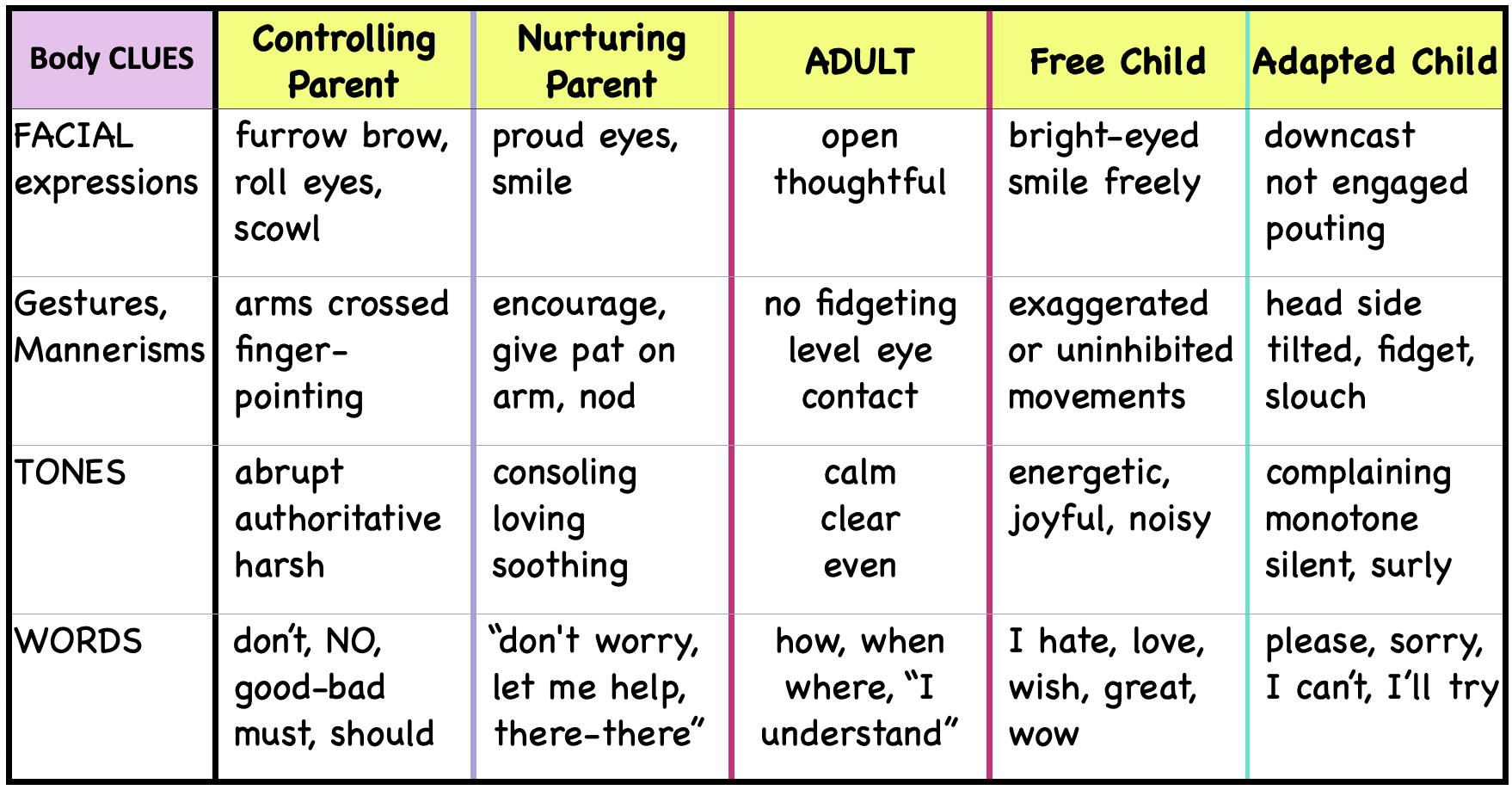
However, they can be noticed by others, just by listening to or watching how someone acts, even if they don’t know the terminology. Whichever E.S. is ‘on’ has its own reactions to events : “Boy, is he being a brat!”(C),  “You’re not the boss of me! “(PigP), “Yes, your suggestion is workable” (A)

🔴 General rule: Most people you deal with are either coming from their Wounded Child (WIC) or Negative Parent (PP) ego state

NORMAL – Childhood parts become integrated into a larger whole, with the Healthy Adult in charge. They work well together internally, partly because they include Adaptive Introjects of caring, supportive caretakers & teachers, as healthy role models.

This allows such people to function successfully in the world because they :
• act in appropriate, productive ways
• experience & manage a full range of Es
• have flexible rather than rigid thinking
• hold positive beliefs about Self & the world
• live in the present (instead of all in the past or all in the future)

HEALTHY ego states form in childhood in response to positive, affirming relationships within a family that’s loving & able to connect to the child in all 4 PMES ways (physical, mental, emotional, spiritual)

EXP of a mature internal dialogue
Healthy ADULT: “Hmmm, it’s Saturday. I want my place to look, feel & smell nice, so I’m going to clean today”
Playful younger CHILD: “NOOO, I want to play. I want to go to a movie with my friends & have fun!”

Loving PARENT: “I know little one, but the place is not in good shape right now, & you know how much better you feel here when it’s all clean & fresh.
We can do something you like tomorrow, & then we’ll have even more fun knowing we’re coming back to a nice clean home”
Older CHILD : “Ugh! I know you’re right & I won’t stop you, but you’d better keep your promise!”

NEXT: Ego States – basics (Part 2)

PROCESS – Recovery (Part 2b)

good lifeRIGHT ACTION
makes life easier

PREVIOUS: PROCESS – (#1)

Posts: Toxic Beliefs” // Risk
Why Are You Stuck?

See ACRONYM page for abbrev.

BOOKsRecycles of Power” & “Cycles of life”, ~ Pam Levin

REVIEW: ‘Emotional processing happens when we can cope with distressing events – over time, so that new experiences can occur (stressful or not) without a return to the previous upset. Everyone goes through things that cause pain, but for most people those emotions don’t last.

Why do some look at a situation without fear while others are gripped by a fear or anxiety so strong they are paralyzed? Scientific research has identified  the cause as cognitive-emotional processing, in which both feelings regarding the incident and thought processes were involved — not just an overly emotional response or a lack of normal emotional processing ability.’ (“Anxiety & T.E.A.“) feed the mind
🌺
HEALTHY PROCESS  (2a cont)
a. Awareness  //  b. Acceptance

c. ACTIONS
i. WHAT – Present-day behavior patterns are :
• based on how the real world works & our many experiences
• motivated by self-respect & permission to act on our own behalf
• the result of S & I – taking center stage in our own life
• considering our effect on others, without being co-dependent

ii. HOW
• always looking for possible, appropriate options
• asking for, gathering & using a variety of help
• considering realistic consequences
learning by trial & error, & never giving up
• taking appropriate risks, then observing the results

iii. WHO – Definitely by the “UNIT”
• Healthy Adult – the competent, objective part of us that has accumulated knowledge & experience about ourself & the world
• Loving Parent – the mature care-taking part of us that has both kindness & boundaries, patience & limits, compassionate but realistic

vi. ABOUT
• acting on our needs & in accordance with spiritual beliefs
• always give ourselves & others enough time to get things done
• it’s based on sound planning, & knowing our current limitations
• choose activities that are pleasurable but not self-destructive
• consider both the ‘price’ & rewards of our actions
• do things for our own growth, not just for others

• know timing – don’t force or try to control but don’t wait too long, don’t try to do too much at the same time or schedule things too close together
• NOT use activities to cover up self-hate, loneliness, avtimingoiding painful emotions & relationship difficulties
• some actions need to be repeated many times, to be effective
• sometimes NO action is the best option
• stop to decide what to say or do, before ‘jumping’ (not reacting)
🌺

RECOVERY – 2 major ways to change our actions:
1. Do the opposite of our old behavior patterns (“Actions: Healthy Opposites post). The trick is knowing what rational, healthy opposites are

2. Doing the same activity for an opposite reason.
The basic issue here is motive. This is even trickier, unless we are clear what our reasons are for taking actions. And, others may not understand, so some people will give us a hard time, or walk away frustrated & disgusted

EXP:  We may repeat an old behavior : staying in bed a lot, sleeping longer than usual, spending more time alone than with others (assuming we’re not physically ill), eating ‘family type’ foods
a. Old Motivation: To escape, to not feel old pain, not deal with difficult life situations, fear of ‘people, places & things’

b. Healthy Motivation (same action, new reason)
self growth• to recover from re-experiencing deep emotional trauma (childhood pain)
• to process a major stressor in the present (death, divorce, moving, marriage, a baby, new job, a fire…), when too many things are happening at once, especially if we have no control over those events
• recover from Introject attacks – because we’re doing so well (back lash)
• catch up on a lot of positive, new input – internally or externally
• resting up after a big event (wedding, surgery, travel….)

Also: IF we can NOT take some positive actions we would like to. YET – we can practice patience – keep working at it & never give up!

NEXT: Ego States – Summary

PROCESS – Recovery (Part 2a)

 YOU MEAN PROCESS WORKS?
Yes. And it’s not a dirty word!

PREVIOUS: Process – ACoA version

BOOK:  PASSAGES, ∼ Gail Sheehy

  1. ACoA PROBLEM (part 1)

2. HEALTHY PROCESS – using Al-Anon’s 3 As
a. AWARENESS (Aw) – mainly ‘head’
i. What: Process is usually about information, based in reality
• something about ourselves, our past, the people we do/did interact with – those ‘AHA‘ moments that makes sense of something confusing or distressing
• it can be the end result of years of study & self-examination or by making an intuitive leap
• can also be about buried emotions which surface, sometimes unexpectedly, as a shock or as a result of conscious Recovery work
• a moment of ‘Spiritual Awakening’ – which lights up our inner worldawareness

ii. How: Aw. can come from:
• books, TV, movies, songs, websites, blogs
• therapy, 12-step programs, ministers, other healers
• talking to family, friends – even strangers
• meditation, journaling, drawing, Inner Child Writing or visualizations…

iii. Who – is comes mainly from the Healthy ADULT ego state, which observes & learns from everything in the present, accumulating & putting pieces of info together – in our own unique way
• It does not include information coming from fear, self-hate, shame, guilt… So, NOT from the bad parent or the wounded child ego states

vi. About
• accepting that self-esteem is not arrogance, selfishness or ‘ego’
• active addicts made poor parents, friends, mates, bosses
• following the toxic family rules is soul murder
• knowing that perfectionism is an expression of self-hate
& THAT:
• it takes a certain amount of Recovery to realize just how damaged self-confidencewe really are! – as denial diminishes, & we can handle the truth about our family
• no matter how hard we try to improve ourselves, some people will never like us or be comfortable around us
THAT:
• some people won’t see us or agree with some strong belief we hold — IF agreeing would cost them their sense of personal equilibrium (unhealthy)
• our identity cannot, must not, depend on having everyone like or approve of us
• some people will not appreciate the changes & improvements that come from our growth
• we won’t convince others of our point of view or beliefs — IF it contradicts their Inner Truth (healthy), AND we shouldn’t try!

b. ACCEPTANCE (Acc) – mainly about Feelings & Process
☆ covered extensively in posts : ’Acceptance & ACoAs
i. What:
• it takes time to thaw out (lessen rigid defenses) enough to allow old accumulated emotions to surface.  Still hidden in the unconscious, all that pain powers the engine of our S-H & lack of clear identity
• the opposite of our WIC’s alcoholic grandiosity, which makes us think we have impossible powers, over everything, all the time
• taking responsibility for our own lives, while thoroughly acknowledging what happened to us as kids
• the essence of the Serenity Prayer
• Al-Anon’s 3 Cs “I didn’t Cause it, I can’t Control it, I can’t Cure it’ good group

ii. How – by:
• a conscious effort to deal with reality, as much as we can
• being willing to consistently be there for our IC
• having a loving, safe & smart support system
• persevering, no matter how long it takes
• understanding what to acc. & what not to put up with
• connecting with an H.P. of our understanding, to heal us

iii. Who – mainly acc. the Wounded Inner Child (WIC)
• psychically, we have a huge ‘trans-atlantic’ multi-stranded steel cable, with one end attached to our solar plexus & the other to our family (dead or alive), AND
• that in Recovery we have to snip away at each strand that feeds us their damage, while keeping any that are safe, healthy & useful. This takes time, effort & repetition

vi. About self-love
• all emotions give us legitimate information about our experiences & what’s bad or right or us
• we are damaged, NOT defective. Damage can be healed
• S-H is a defense against feeling the original abandonment pain
everything self-hate tells us is always a LIE
❗️transferring personal power from the WIC to our developing UNIT
normal = human = imperfect = OK / acceptable

NEXT : Healthy Process – “Actions” (Part 2)