ACoAs: PATTERNS of Mistrust (Part 1)

protect heartI HAVE TO PROTECT MYSELF AT ALL COSTS
– even if it keeps me from being loved!I

PREVIOUS: UNDER-Trusting (Part 3)


IMP:
We are not to blame for being deeply mistrustful of everyone.
But we also need to be clear about how we perpetuate the patterns created by our trauma so we can stop beating ourself up, feeling ashamed, & limiting our options. (CDs: INFO & the Brain)
Instead, we can try out new internal beliefs & external actions.

• We have experienced many, many betrayals by the important people in our life – from family, friends, spouse, school, church or government. Some or all of these betrayals are so extreme we may never be able to forgive, regardless of what the ‘gurus’ tell us.
This is not to deny the benefits of forgiveness – just that if we can’t do it (yet) but believe we should, or else we’re bad/sinful, we unfairly add to our self-hate & sense of failure, which retards recovery.

PATTERNS* of Mistrust
* All of these are being generated by our WIC in an attempt to protect ourself from further harm.  But they’re totally unsuccessful, since they prevent us from getting the closeness & love that heals – that we so desperately want AND have a right to. These behaviors are all forms of control – based on trying to stave off more PMES abandonment.

a. FAKE ME
WIC pretendingAs a child we definitely got the message that who & what we were was unacceptable to our parents. So as adults, when interacting with others, the WIC – in dress-up – tries to ‘improve’ our presentation by twisting in unnatural avatars, into something we think some present-day person or group is going to want or find acceptable

• We spend a lot of time trying to figure out “how I should feel, what I should wear, what I’m going to say”…… & never get it quite right, because it’s artificial. Of course, if we’re being run by our WIC who’ still believes the PP, we don’t know our True Self so can’t relate from a place of empowerment. It’s very hard to be safe and healthy at the same time.

b. LABELING

Some of us decide at the beginning of a relationship (potential friend or lover) what kind it’s going to be, without having enough information about the other person to know, or giving it enough time to develop organically.  We may think: “THIS ONE IS :
• just going to be a friendship
• just for sex
• isn’t going to last
• just casual
• permanent  / ‘the one’
• the one I can’t live without
• I’ll love forever”……

Again, we’re trying to control the outcome to be prepared for the inevitable abandonment we expect.  Preconceived notions MAY –
• actually create a self-fulfilling prophecy of loss because we prevented a connection from growing into something positive
• shock us with unexpected results, if we have illusions about it
• severely disappoint all unrealistic expectations
• occasionally surprise us by turning into something better than hoped for
AL-ANON SAYING : “Take the action & let go of the result”

c. PARANOIA
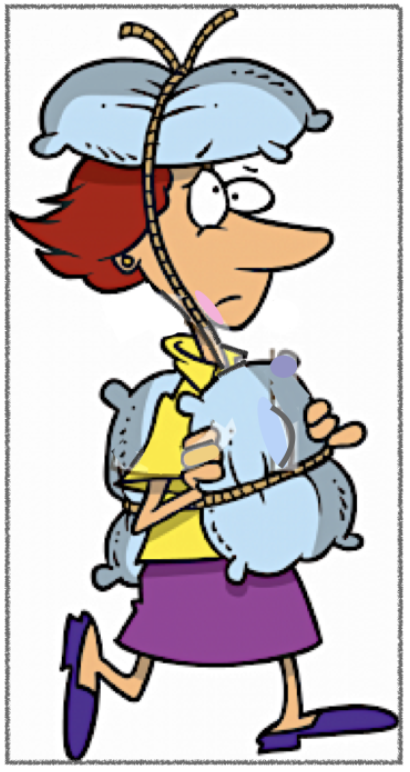
Because we were so often hurt as a child, we conclude that for the rest of our life everyone** will inevitably do us harm, sooner or later.  So we assume the worst of anyone we meet, men and women, although some of us may be more afraid of one gender than another, depending on which parent was more consistently damaging or crueler.paranoid
• We actually scan our environment for the potential danger we’re sure is there & – of course – we find it
• We ALSO ignore all the neutral or positive people & things around us, so we can maintain our ‘story’ that “The whole world is dangerous”, in order to validate our childhood trauma

** This is our reaction even with people who have consistently proven to treat us well, making it hard to benefit from anyone who can be there for us in healthy ways

d. OVER-TRUSTING (recent post)
SEE the Red Flags waving in our face. Everyone tells us about themself, subtly or not, yet we ignore all the unhealthy things we hear & experience about people we ‘need’, staying too long at the party & getting trampled. Then wonder why we can’t trust!

NEXT: Patterns of Mistrust (Part 2)
ACoAs UNDER – Trusting & the Brain (Part 3)

untrustworthy

I DON’T WANT TO BE ALONEbut I’m afraid to let anyone in 

PREVIOUS: Under-Trusting (#2)

POST : ”Lack of Trust

QUOTES: “Our distrust is very expensive.”  ~Ralph Waldo Emerson
“He who does not trust enough, will not be trusted.” ~Lao Tzu

INFO
🪴 Perception of competence = A person’s self-evaluation of their abilities, skills & readiness to succeed in specific areas
POS : The assumption that when we need to cooperate with other people, we’re capable of providing each other with what’s needed
NEG  :  In abusive situations, an obvious violation of competence is the neglectful parent – those doubting their skills experience higher stress & may withdraw from interacting with their children.

Perception of intention – the ability to infer another person’s motives, goals or underlying plans – just from observing their behavior.
POS : In a trusting relationship – it’s believing that everyone’s working towards a shared desire, & no one’s going to be exploited
NEG : However, we can’t / should not trust someone we think or know is trying to use us for their own benefit

🔶 WHY ACoAs DON’T Trust (Part 2)
🔶 RESULTS of UNDER-Trusting (UT)
🥀 EMOTIONAL
• we miss out on the joys & challenges of intimacy by never letting our guard down, AND we don’t find out what’s really going on with others
• it makes us bitter & cynical about people, missing out on great friendships & love – which would be healing
• we miss out on fun & companionship, which would alleviate some of our loneliness, AND provide relaxation

🥀 PERSONALdeprivation
• Keeps us isolated : if we became suspicious / paranoid in childhood, then the isolation makes us more so – because we don’t know what’s really going on around us
• Makes it hard to fulfill our potential, because we don’t trust genuine praise, NOR helpful info from friends, bosses, teachers….

🥀 SOCIAL
• Don’t let others know who we really are – not just our needs but our abilities, SO don’t get the mirroring & validation that’s crucial for success
• Lose respect & ‘street cred’ at work for not being more social or a team player
• Miss outlonely-senior on available info & opportunities that are better suited  to us
• People won’t easily come to us for our knowledge, expertise, help… SO we don’t get the admiration & honors we’ve earned & desperately want
• Possibly lose loved ones, friends, even jobs – by being suspicious, stingy, unfriendly, uncommunicative

🥀 BEHAVIORAL
• Deprivation – we end up having to do everything ourself & what we can’t do alone gets left undone – even if it’s important
• Keeps us from taking legitimate risks (requires trust in the possibility of good outcomes), because we don’t have help when truly needed (sick, moving, fired, divorce, kids…)
spiritual disconnect• On a broader scale, under-trusting separates us from the world at large. It can make us suspicious of anyone ‘not like us’, potentially leading to anti-social behavior
• IT makes it hard to have a spiritual connection, which prevents us from the sense of belonging to the human race, leaving us ‘out in the cold’ just like we were in our family.
*    *     *    *    *
🟩 The BRAIN & Trusting
1.2015 study with 82 participants showed differences in brain structure based to how trusting someone is of others.
Most important finding :  the ventral medial prefrontal cortex was larger in those who tended to be more trusting, the area that evaluates social rewards.

ALSO :  the volume of the amygdala was greater in 2 groups – those who were most trusting & those who were least trusting of others. This brain structure helps encode & remember things that are emotionally important to us.

2. Many of our decisions hinge on how much we trust others, built on past dealings with a person OR their reputation.
Another study used MRI to brain-scan participants while playing a Trust Game with various partners who – by social reputation – were pre-labeled as fair, unfair & indifferent, in order to make trust-based decisions together.

Any activated part of the brain uses more oxygen, so the more oxygenated blood that flows into an area, the stronger the signal.
RESULT : the area called the caudate (deals with decisions & responds to reputation) “lit up” most strongly in the ‘trusters’ when dealing with unfair or indifferent partners, but not with the fair ones.

NEXT: Patterns of Mistrust – #1

ACoAs UNDER-Trusting (Part 2)

001c0405llALL AUTHORITY IS BAD& determined to keep me down!

PREVIOUS: UNDER-Trusting (#1)

POST : “Unrealistic Expectations


🔶 UNDER-Trusting (UT) (Part

🔶 WHY ACoAs DON’T Trust (cont.)
a. Abandonment // b. Self-Hate

c. Shame  (IMP : first read posts re. shame)
• We feel such deep shame about feeling unlovable, the bad seed, a mess, too damaged…. that we withdraw from others so they won’t see who we “really” are & what we need
• OR we compulsively tell everyone all the things that are wrong with us (TMI)
& then feel ashamed for exposing ourself – but keep doing it

It’s true that our culture generally does not value or respect vulnerability – only a ‘stiff upper lip’. So if we talk to the wrong person about our pain, they’ll make fun, dismiss, judge, say we’re “overreacting, it’s all in the past, we should be over it by now.”….. but the most common thing we’ll hear is : Don’t be negative” – which BTW is about Thinking, not Emotions! ➡️

NOTE: This is not the same as sharing about our inner wounds in meetings or therapy, where it’s appropriate, even though we feel shame & fear of punishment & rejection in those places too

EXP – Angela borrowed $35 from a recovery friend. She was going thru a very hard year & kept putting off repaying. Then she moved to another city & lost touch. The woman finally tracked her down & angrily demanded her due, saying Angela was irresponsible & not to be trusted.

Angela was very upset, knowing she was in the wrong, but also realizing that trying to always look good on the outside, she had been too ashamed to tell the woman about her health & money troubles, which would have helped her ‘friend’ understand the delay.

d. Unrealistic Expectations
unrealisticEven though many ACoAs can’t or don’t want to be dependable, honest or fair (#3 on the ACoA Laundry List) we have a desperate need for everyone else to be.

Also, we’re too literal  – so we assume / need to believe that people mean exactly what they say. This is normal for children, but not realistic as adults.  If we hear:
✦ “ I’ll bring you the book tomorrow”, we look forward to getting it the next day
✦ “I’ll call you right back”, we sit around & wait, & wait…..
✦ “Let’s get together soon”, we want to know exactly when

THEN if they don’t come thru, ACoAs get very upset, leaving us:
• deeply disappointed, so our mistrust gets reinforced
• feeling S-H, convinced that it’s personal (NOT), that it’s our fault, we weren’t likable, assertive, clear enough….

REALITY – The other person may:
• be a people-pleaser, just being polite, so the ‘promise’ is not sincere, but not malicious
• have meant it at the time they said it, but got busy, forgot, got distracted or delayed….
YES, occasionally we run in to a narcissist or sadist who is just messing with us (maybe like one of our parents or classmates…) but that will be rarer, unless we’re still living with someone like that! reation to authority

e. Authority
ACoAs automatically distrust all authority figures because the first ones in our life were cruel or weak. This then gets extended to the ‘ultimate authority’ – God.  Now we react in one of 3 ways, by:
⚡️ being victims & people-pleasers OR rebelling & fighting OR withdrawing & isolating

• This is understandable as far as early experience is concerned. However, as adults we’ll continue fearing all authority ONLY as long as we’re not yet empowered ourself.
If we’re still interacting with the world mainly as a WIC, then we continue to depend on others, & so are always vulnerable to bad parent figure – teachers, bosses, therapist, doctors, politicians….
🔺With a True Self, healthy self-esteem & good boundaries, we can be on an equal footing with others

leadershipUNHEALTHY: Some ACoAs need to be ‘the authority figure’ so that:
• we can punish others for what was done to us
• no one can take advantage of us
• we can put others in their place (down)

HEALTHY: Some people are born to be leaders, entrepreneurs, self-motivators, & can grow into taking on the mantle of power without misusing it.  Not everyone is born to be ‘under’ someone’s authority (working for others).

NEXT: Under-trusting (Part 3)

ACoAs UNDER-Trusting (Part 1)

one eye openALWAYS KEEP ONE EYE OPEN –
you never know where danger lurks!

PREVIOUS: OVER-Trusting (#2)

POST : ‘What is Shame

See “Acronyms” for abbrev.

🏴 MISTRUST = Suspicion  — the lack of trust rests in us, by not following our intuition, observation, experience…. This shows up as feeling a general sense of unease about someone or something, but without proof (yet) WHEN :
• you have no immediate reason to think someone will do the wrong thing, but you don’t have a reason to trust them either
• OR: a person or situation really does seem questionable, because your intuition is picking up a hint from their words, action or manner
• OR: there’s actually no reason to be suspicious, but your mistrust is not deserved (paranoia)

🏴‍☠️ DISTRUST = Certainty — the lack of trust rests in ‘them’, WHEN :
• you have good reason to not trust someone based on your many experiences with them, not just once
• you’re given reliable information about someone or something which lets you know they’re not safe / trustworthy

🔶 UNDER-Trusting (UT) as Adults 
The way we think & react emotionally to how others behave – not even necessarily toward us – has a direct impact on our lack of trust (our Ts – CDs and Es – FoA).paranoid  This is usually based on all our disappointing & painful relationships with unsafe adults in the past, mainly those with our parents.

Those experiences can easily lead to a subtle, underlying paranoia that colors everything. Going forward, what’s necessary for mental health & peace of mind is to see & understand who people are individually, not lumping them together as all bad or unsafe.

REALITY : We incorrectly ‘mistrust’ some people WHO —
•  are simply not interested in us. It’s nothing personal – we’re just not a good fit, or they’re caught up in their own world
•  really are insensitive, mean or otherwise unavailable, which hurts
•  are just taking care of themselves instead of focusing on us – at the moment – This may feel like they’re turning their back, because we’re expecting them to be the good Inner Parent for us – as comfort & companionship

Without a Healthy Adult ego-state the WIC in us can’t tell the difference between these 3 groups – so when disappointed, we regress into that old ‘slough of despair” (Pilgrim’s Progress), where “all is cloudy, hopeless & no one is ‘good’!”

🔶 WHY ACoAs DON’T TRUST
cling /rejecteda. Abandonment (too many PMES losses)
Because we were raised by untrustworthy people, as adults we’re still longing to be taken care of by someone else. So WE —
— continue to cling to people, places & situations (PPT) which do not have to the inherent capacity to provide even our most basic human needs, much less compensate for all we missed out on in childhood. The combined of old & new deprivation adds up, which can be deadly for us & to those around us.
Accumulation over the years : the less we’re treated with respect —> the more abandoned we feel —-> the more wounded we get —-> the more demanding the WIC becomes —> getting angrier & angrier.

When our core abandonment button is pushed we may resort to using familiar character defects: freaked out
• withdraw, sulk, withhold          • be paranoid & accusatory
• get controlling & micromanage     • be clingy & desperate

AND when our anxiety reaches the level of hysteria, we can’t stop ourself from making a painful situation worse, setting others up to fight with or withdraw from us, increasing our sense of loss & mistrust.
Then we say “See, I knew it all along – no one is there for me!” even though in some cases we contributed to it by our behavior & choices

b. Self-Hate – As a result of original abandonment, WE:
wrongElliInternally: • don’t know who we are, fundamentally
• can’t identify most our needs (even the basic, normal human ones) much less have the right to get them met
• are convinced we don’t deserve to be treated well, so don’t notice or reject anyone who is actually capable of being kind
• don’t trust our own knowledge, experience & observations

Externally: • we stay too long with unhealthy people
• don’t trust that anyone will ever be able or willing to help us
THEN we say “I hate everyone, no one likes me, I don’t belong anywhere”….

NEXT: Under-Trusting (Part 2)

ACoAs: OVER-Trusting (Part 3)

promise the moon WHAT’S WRONG WITH PRETENDING
everything’s just fine?

PREVIOUS: Over-trusting (#2)

See ACRONYM page for abbrev.

POST: “People should treat me better, BUT I won’t let them

🔷 We trust TOO EASILY when we…. 
(Part 2)

🔷 WHY DO WE OVER-TRUST?  (cont)
a. FoA (fear of abandonment)
b. Self-hate

c. Co-dependence — a form of “Delayed Stress Syndrome” or PTSD
• we use people as substitute parents instead of being our own, so we can’t afford to notice flaws or limitations in them, no matter how glaring
• we don’t have the right to object to other people’s b.s., so naturally we would never think of calling them on it (see Toxic Rules)

copdep• we depend on the opinions & values of others too much, convinced they know things we don’t, so EVEN when we have knowledge or intuition about a person or situation – we ignore it, especially if someone else disagrees
• we don’t want to, god-forbid, hurt anyone’s feeling by ‘suspecting’ them of being less than trustworthy – as they blatantly or subtly do us in!

EXP: Social conformity: As unhealed adults, if we’re forced to be part of a group where trust is expected / demanded – by a parent, teacher, boss, gang leader — no matter how irrational, unfair, evil, illegal — we will go along with their agenda, otherwise we’ll be severely punished, labeled coward &/or ostracized (may be true if we chose & stayed in the wrong one)
OR:
Despair: Being in a hopeless situation we can’t get out of (like a child in an alcoholic home) – then trusting whoever’s in charge is the lesser of 2 evils, as a way to survive

d. Illusions
Growing up – constant disappointment in our family makes us long for everyone else  we can depend on, so to make up for it, we put people on a pedestal :
• IF our parent was mentally ill, we idealize anyone who sounds ‘normal’ & functional – even tho’ they may be selfish or controllingidealize sickness
• IF our parent was violent, we idealize anyone who seems calm, even tho’ they may be emotionally numb & unavailable

• IF our parent was verbally cruel, we idealize people who are ‘nice’, even tho’ they may be a people-pleaser & therefore not totally genuine
• IF our parent was absent, we idealize people who ‘want us’, even tho’ they may just be using us to take care of them …..

e. Confusion
• Our family didn’t model appropriate behavior, seeing everything in B & W – drama, extremes, deprivation…. so now we evaluate the world using the same lens.  We have trouble distinguishing nuances of good vs bad behavior & don’t consider proportions. Instead of looking for relationships made of 70 – 80% positives with only 20 – 30% negatives (which is reasonable), we settle for the crumbs of only 10 – 30% positives – if that – & ignore a huge pile of crap!

sweep it away• When someone hurts & disappoints us, especially if we love & / or admire them, we tend to push away whatever we feel & think about their behavior – sweeping it under the carpet & saying nothing. Instead, we hold in our anger & get depressed.

They may or may not be in the wrong, & we may or may not be overreacting – even when they are off-center. The positive thing to do is first to process any rage & CDs we may have,  & only then talk to the person about the situation – if possible – but only from our Healthy Adult ego state.  If done correctly, we’ll feel much relief, whether they hear us or not!

• And sometimes we have friends, family members, co-workers & acquaintances who are basically OK, are on our side, or at least neutral – BUT who we secretly accuse of being unsafe because :
◇ they’re not 100% perfect in their interactions with us – OR
◇ their positive regard for us is too much to take in, so we dismiss it, or
◇ they do admire us, at a distance, but are not actually friends, so we don’t trust they can see & appreciate us …..since they’re not ‘taking care’ of us

REMINDER:  As long as we’re being run by the Wounded Inner Child, we find it very hard to separate people who are permanently unsafe from those who are only unsafe some of the time, from those who are genuinely trustworthy.

NEXT: ACoAs – UNDER Trusting (Part 1)

ACoAs – OVER-Trusting (Part 1)

being conned THE WORLD IS ONLY SAFE –  if I pretend to not notice the bad stuff!

PREVIOUS: Lack of Trust #2

SITE: 10 Warning Signs of being too trusting

QUOTE: “Never trust anyone completely but God.” ~ Lawrence Welk

OVER-Trusting  (OT) – as ADULTS
DEF: Ignoring information you already know about a person or situation (or a potential one you’ve been told about) that screams:  “I’m NOT safe. I’ll get you as often as I can. Don’t trust me” AND that everyone else – except you – can see!

📌 A therapist suggested to a client why she needed to be more discerning & less trusting:  “Some people you don’t let in the bedroom, some people you don’t let into the living room, & some you don’t let in the front door!”

🔷 WRONG reasons for trusting:
Impulsiveness : chasing something or someone the WIC very badly wants, putting all our inappropriate hope & trust in how it will turn out (the way we ne-e-ed it to), without admitting what we already know. Not considering the consequences, such as thinking through possible danger to ourself or others

Masochism : We tend to search out confirmation of prior expectations. ACoAs expect abuse & abandonment.
For abuse survivors with little or no Recovery – reinforcing the pain of unrealistic hope & unfulfilled trust (PMES abandonment) is often chosen over safety, comfort & pleasure.
We repeatedly trust the wrong people, guaranteeing disappointment, by fulfilling our self-destructing assumption – that there are no positive outcomes for us. (review the  TOXIC RULES)

Risk-taking : Being desperate, or as an adrenaline junkie, we pursuimpulsivee a situation or person even knowing that the danger of going ahead is great (re. love, money sports….).
If we subjectively think the possible gains far outweigh any possible loss (illusion coming from the WIC), we’re willing to take the gamble, sometimes even with our life.

All of us ACoAs experienced years of trauma in childhood – at home, at school & in our neighborhoods.  We were deeply scarred by those experiences, but each of us handled it in our own way, depending on our basic personality AND our Toxic Family ROLES.abuse / fantasy
Those wounds were beyond anything we could bear, so we developed our own defensive posture:
• some have become overtly tough, angry, bitter
• others hide away from everyone
• some try to rescue & fix others to feel safe
• others escaped into a world of fantasy & have stayed lost, needing to see everyone thru rose-colored glasses!

THIS last defense mechanism is a thick blanket of vagueness to soothe the ache in our heart, BUT it makes us endlessly vulnerable to emotional, mental & physical vultures who can smell our ‘out-to-lunchness’ a mile away!

ACoA IRONY : Regardless of which protective style we act out, we’re trapped in another dilemma. Trying to mask how afraid we really are of everyone underneath, some of us carelessly trust everyone, especially the most damaging people! It’s so automatic we don’t even realize we’re being too credulous = because we need it so we can stay passive, with denial as our worthless safety blanket.

EXP: Josie hears a new acquaintance admits that she has trouble with friendships – they usually end in serious disagreements & separation.
Josie is starving for companionship & overlooks this vital information. Unconsciously her WIC thinks: “She wouldn’t do that to little ole’ meeee – I’d never hurt her or make her feel bad, I care too much, I’m so sweet….. so we’ll always get along” 😇

Yet, sure enough, at some point Josie says or does the ‘wrong thing’ & the friend gets mad at her – attacking, accusing, withdrawing ….. Josie is shocked, then hurt, confused & of course blames herself for the problem (as if this outcome wasn’t totally predictable!)

We excuse our psychological & emotional blindness by thinking or saying:blind-see
• I’m just trying to be a good person, I’ll give them another chance
• it’s wrong to judge others, & besides – they’re trying
• ‘they’ don’t mean to hurt me / can’t help how they are
• you don’t know their ‘good’ side, their good qualities
• …but they say they love me, give me money, ne-e-ed me
• I can’t make it without them
• & it’s my fault anyway, I deserve how they treat me  …

NEXT: Over-Trusting (Part 2)

ACoAs: Lack of TRUST (Part 2)

unsafe parentSEE, I TOLD YOU –
nobody’s safe!

PREVIOUS: Lack of Trust (Part 1)

See ACRONYM page for abbrev.


🕛 LIFE STAGES
🕕 DEF. of Legitimate Trust

 🕕 CAUSES of ACoA DISTRUST
PHYSICAL
• growing up in a neglectful, unpredictable &/or volatile family
• constantly subjected to undeserved bullying & victimization, by individuals & institutions
• death or loss of one or more loved-ones

EMOTIONAL
• emotional, physical &/or sexual abuse at the hands of our caretakers
• being chronically put down for the way we felt or for what we believed
• hostile relationship between parents, with siblings, with step-parents & other relatives

RELATIONAL
• parental infidelity, bitter divorce or loss of another long-term relationship
• our own painful relationships – being belittled, misunderstood, abused or ignored
• being cheated on / betrayed – sexually, emotionally, financially
• our confidential information betrayed by a trusted friend, relative, spouse or professional …..

SOME RESULTS
• we get so caught up in unresolved grief that we can’t open ourself up to others, terrified we’ll be left alone again, as if we’re still living in that household & still 5 years old!

• because of S-H, we can’t believe that we deserve attention, or anyone’s care & concern for us, so have a problem trusting even the positive, healthy & consistent behavior of someone who is sincere

🕕 ACoA thoughts / beliefs about NOT Trusting
Re. OTHERS
• there’s no such thing as a healthy relationship
OR – I wouldn’t know a healthy relationship if it fell on me!
• marriage is a prison sentence – I’ll be trapped & used – or left
• I can’t seem to find any good friends or good partners – so why bother looking?

• as soon as you let yourself care about someone – they leave you!
• I’m never letting anyone ever get close enough to me again so I won’t be vulnerable anymore
• people don’t really improve or change, & any ‘reforming’ is temporary or just fake (like an alcoholic getting sober)
• no matter what they say, it’s all manipulation to get their way. If I let myself believe & relax my defenses, I’ll be devastated when they go back to their old ways

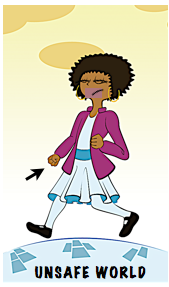
Re. OURSELVESunsafe world
The only way to survive & protect myself is to avoiding people as much as possible, because:
• I’ve been hurt so much & by so many in the past
• all men / all women are dishonest
• everyone’s out to get the most they can (from me)
• no one respects me
• if I let my guard down someone will step on me OR all hell will break loose
• if I open myself up people will use that info against me…. so how can I trust anyone?

 ♦️OUR LACK OF TRUST can CAUSE:
Arguments with others, because of intruding on their privacy about what we think are their ‘suspicious’ activities, their lack of openness – often leading to retaliation from them
Anxiety in us, especially when we don’t know where a loved-one is & we’re convinced they’re not being honest

Deception – a partner or adult-child. being controlled & boundary invaded by us.  They may really be sneaking around doing the bad things we believe they’re up to,  OR they’re just wanting some privacy & peace of mind away from the family (us)
Fear of reprisals from them for our constant accusations (our fear of abandonment), & judging them for not being what we want them to be (but trying not to punish them)

Fear of risk, because we never got the mirroring, support & feedback to make scary changes, AND which we can’t receive in the present if we don’t trust anyone
Low self-esteem in others, which we ‘encourage’ by constantly investigating them, questioning, following (suspicion is the opposite of acceptance)
Miscommunication, or lack of communication, because we’re afraid to let others know what we really need, want or feel

barbara-oneilMOVIE: “All This & Heaven Too”, 1940, staring Bette Davis. An excellent portrayal of a disturbed personality – the Count’s wife, played by Barbara O’Neil – who is a needy, narcissistic, desperately clingy & demanding shrew.

She has a deep fear of abandonment, is constantly suspicious of her husband, & rejects her children because they interfere with having her husband all to herself. This drives the children away from her & the Count into the arms the loving nanny – the very thing that makes her even more distrustful & enraged – leading to tragedy.

NEXT: ACoAs – OVER-Trusting (#1)

ACoAs: Lack of TRUST (Part 1)

con man
WHO CAN I DEPEND ON?
for sure NOT my family!

PREVIOUS:
 Early Trust Betrayal, #2

REVIEW post: ‘Parents Blaming us


LIFE STAGES Erik Erikson, a German psychoanalyst heavily influenced by Freud, developed a psycho-social theory of personality development, which included the impact of external factors (parents + society) ON our:
• ego identity (the self)
• personal identity (what distinguishes one person from another)
• social/cultural identity (social roles we might play)

Erikson’s theory says every person must pass through a series of inter-related stages over the entire life cycle —>   AGES:
1. Infant   (Hope) – Basic Trust vs. Mistrust 
Birth to 18 mths
2. Toddler  (Will)    – Autonomy vs. Shame
18 mths to 3 yrs (MORE….)

IN Infancy (Stage 1) the main emphasis is on parental ability to nurture & care for the child, especially using visual contact & touch, so that :
• in a safe environment the child will develop confidence, optimism, security & trust
• in an unsafe home, they’ll develop insecurity, worthlessness & general mistrust of the world

In an episode of LIE TO ME, (TV series, Fall 2010), Dr. Lightman says:
“The way to make a disturbed personality is : Constant Criticism & Lack of Affection – it works every time” !

DEF. of Legitimate Trust
In OURSELF
• be able to rely on our own observations, judgement & intuition
• when exposing vulnerabilities to someone, assume they won’t take advantage of or abuse our openness, but know we can’t control their reactions
• have confidence placed in us by someone else, & accepting the obligation that entails
In OTHERS
• identify how someone is going to act (predictably good or bad) & gauge our probable losses & gains in dealing with them. 🫆It’s based on what we already know about them, using their past performance as a guide
• have a firm belief in the integrity, ability or character of a person or thing, from our own experience, or based on accepting the opinion of a highly reliable source
• Hope : to be able to rely on something or someone in the future / to expect a specific outcome with assurance

NOTE
• The Healthy Adult ego state knows no one can be perfectly dependable, & that the wish for it isn’t possible – so we wouldn’t expect it.
Secretly demanding others to be absolutely 100% ‘safe’ (before we can trust) is UNrealistic,  which makes us vulnerable to always getting disappointed, leaving us in the same old place – convinced that ‘no one’ is trustworthy

• There are legitimate reasons to not trust certain kinds of people – especially the not-so-obvious narcissists! – which we definitely need to acknowledge, & then stay away from.
Past experiences with them should not be ignored, especially as we become sure of our ‘evidence’.

EXERCISE : Keep a log for a month (or as long as needed) of each time you feel unsafe with someone, & see what patterns show up. Then take a small, definite action to change the situation or your part in the relationship

unsafeMISUNDERSTOOD
ACoAs often say : ‘I can’t trust anyone’ –  the focus being on people outside ourself. This is B & W thinking & not totally accurate. Although it[s true that our parents were not safe, most of us do have/ or have had a few people throughout our life who have proven themselves trustworthy (even if not perfectly!).
❇️ Instead – trusting needs to be focused internally – on our own intelligence.

MAIN reasons we say this ⬆️ – is that unhealed ACoAs :
a. haven’t learned to trust our own observations, experience, & intuition!
b. keep picking & staying with toxic people, & keep getting burned. Strange that we’re surprised each time!
c. want / expect / demand the assurance that whatever or whoever we put our trust in will never ever let us down, disappoint, abandon or hurt us!

This demand is:
demanging• B & W ‘all or nothing’ thinking (a CD) – typical of children & the emotional immature
• the position of the WIC, who wants everyone to be the good parent we never had, so we don’t have to grow up & take care of ourself
• an expression of co-dependence – being focused on others outside of ourself, instead of internally listening to what we know to be true.

NEXT: ACoA Lack of Trust (Part 2)

ACoAs: Early Trust Betrayal (Part 1)

  1. angry father WHO CAN I DEPEND ON?
    for sure NOT my family!

PREVIOUS: Adult Play #2

QUOTE: “To be betrayed, the person must first experience trust in the betrayer….. Betrayal is probably the most devastating loss a person can experience.”


😥 BETRAYAL TRAUMA 😲
This is when the people or institutions you depend on for survival significantly violate your trust or well-being
EXP: physical, emotional, or sexual abuse perpetrated by a caregiver
Q: Does the victim need to be conscious of the betrayal to call it “betrayal trauma”?
ANS: “No.” Being mistreated is by definition betrayal, whether the child recognizes it explicitly or not.
While conscious awareness of it may be suppressed at the time of trauma & for as long as the victim is dependent on the perpetrator, strong feelings of betrayal will eventually surface.

✍️ THEORY
Traumatic events differ in degree of fear & betrayal, depending on context & characteristics of an event.
EXP : People with a history of childhood sexual abuse – which result in PTSD & dissociative symptoms – much more often reported feeling betrayed rather than feeling great fear.  Many other studies have found that betrayal is a psychologically toxic component of events.

😴  BETRAYAL BLINDNESS 😵
Betrayal blindness is the un-awareness, not-knowing, dissociating or forgetting about —> years of painful experiences. It may extend to betrayals not traditionally considered ‘traumas’ such as gossip, inequities in the workplace & society….
• Victims, perpetrators & witnesses can each have betrayal blindness to preserve relationships, institutions or social systems they depend on.

In Childhood
• Children automatically trust their parents (caregivers) – they don’t have a choice. But that trust can be destroyed early & easily if their family & community is unreliable, non-nurturing & dangerous. The earlier the trust-betrayal, the more long-term damage is done, since small children can’t understand & process such disappointment

• Kids don’t want the instability & cruelty of their home to be true, so they can’t afford to consciously admit their suffering is being caused by the unloving adults they depend on. If they did it, it would make life even more unbearable, so they do whatever they can to deny painful experiences (blame themself, fit into toxic roles, people-please, rescue…..)

• Years of emotional pain from abuse & neglect lead children to make definite & lasting negative decisions about themself & the whole world, based on very real events. These twisted conclusions & assumptions form self-hate, cynicism, bitterness & hopelessness.

That old accumulated pain is then mirrored & added to by rigid unhealthy ‘laws’ of other dysfunctional groups such as school, church, neighborhood. The combination becomes the basis for all future choices & interactions.  Toxic beliefs get ‘written in stone’ , very hard to change in any case but impossible to correct as long as they stay out of conscious awareness.

♻️ Besides internal reasons for ‘not-knowing’, there may be external reasons for suppression. Common demands for silence come from a specific perpetrator & others (family & society’s flying monkeys), to the point of never having the ‘event’ mentioned – much less acknowledged. More….)

“Experiences that have never been shared with anyone else may create a 
different internal structure than shared experiences”
BTW: Al-anon saying “You’re only as sick as you secrets”

🙇🏻‍♂️ BETRAYAL ways
disappointeda. Programing : We were brain-washed into not trusting our own observations, opinions, emotions & conclusions.
We were:
• told “you don’t feel that way /  that’s not how it is / I don’t know why you think that / Oh, nothing (is going on)” …..
OR
• not given important information about what was really happening in the family, leaving us with an uncomfortable feeling of insecurity, wondering what’s wrong, making up scenarios & blaming ourself, thinking we’re crazy !
AND
• expected to go along with the program, no matter —— how harmful to our mental & emotional health, that it didn’t fit our native personality, how little it allowed us to explore options & possibilities in the world, or find out what our true purpose is

EXP: “The Judds” was a reality show on the OWN tv channel (2011).
Mother Naomi slowly spilled all the ugly family secrets she’s been protecting for the past 60 yrs – murder, incest, suicide, neglect…. Daughter Wynona finally has an understanding of the problems between the two, & came to have compassion for & a new trust in her mother.
Sadly,  in 2022 the severely depressed Naomi shot herself ! — just before being inducted into the Country Hall of Fame. 😭

NEXT : Trust Betrayal, Part 2

ADULT Play – Benefits (Part 2)

family benefitsPREVIOUS: Adult Play (Part 1)
SITE: “The Power of Play” (long article)

QUOTE: “We do not stop playing because we grow old, we grow old because we stop playing”  – George Bernard Shaw


BENEFITS  of PLAY  (cont)
1. MENTAL //  2. PHYSICAL (Part 1)

3. EMOTIONAL / PSYCHOLOGICAL /SOCIAL Benefits
a. Reduces Struggle, Conflict & Worry – Because play includes using ones imagination & ability to fantasize, it acts as an antidote to violent tendencies, & so is a powerful catalyst for positive socialization.
Play provides us with an opportunity to choose alternatives to struggle, conflict & worry – that are healthier, more positive, promoting a sense of belonging & connection to other people.

Alice Miller pointed out that people neglected & abused in childhood were often deprived of developing an inner fantasy life – missing the ability to process rage & frustration in their internal world. They become lost in fear, anger & obsessive worry, making them more likely to become violent toward others, even to the point of murder

b. Mutual play heals emotional wounds  Screen Shot 2015-09-16 at 11.44.59 PM
Vigorous play triggers endorphins that lift spirits & provide distractions from pain, fear, stress…
When done with others, whether friends or strangers, it helps us connect in delightful & meaningful ways that minimize loneliness

• Regular play can also heal hurt feelings, anger & disagreements. Studies show that emotionally insecure people slowly replace negative beliefs & actions with positive ones by living with a secure partner.
Emotionally safe relationships heal, & create emotional resilience

c. Provides ‘role relief’ – This is not about the ACoA Toxic Roles but rather the normal set of roles adults take on, such as worker, boss, spouse, parent, sibling, adult-child….
Play allows us to guard against ‘role fatigue (burnout).  Taking the time to balance between roles helps to foster self-expression by using different parts of our personality, & makes room to practice new kinds of activities. Getting stuck in one role, such as ‘mom’ or ‘worker’ can reduce spontaneity & aliveness

d. Gives Opportunities to Take Risks  Successful, happy people know the difference between safe & unsafe risk, and take healthy risks in small doses. We can choose to risk something important to achieve a beneficial goal.

We also need to manage incoming risk as an essential part of a full, healthy life. PLAY lets us experiment, explore & take risks with ideas & activities without worrying about consequences that could happen in “real life,” & teaches us that our fear-based ideas are not always true.

e. Brings joy into our life – A basic reasons for playing is simply the sheer joy of it, a happy state of being. So playing as often as possible can preserve & nourish our own hearts & that of our community. It creates laughter, & a feeling of inner peace, encouraging emotional resiliency.

4. SPIRITUAL  
❖ Sense of Lightness – Keep in mind we’re made up of Physical, Mental, Emotional & Spiritual (PMES) components.play is spiritual
The spiritual benefits of play are not easy to verbalize, since people have different meanings for this aspect of their life.  But it’s a very important part of our personal well-being, & the right to develop a healthy Self.

In childhood we start to give meaning to our life through story-making & playing out various possible scenarios. As adults – the ability to play & be active in things that suit our True Self – strongly promote a sound lifestyle

• Being absorbed in fun activities & caught up in the moment —> eliminates self-consciousness. Infused with pleasure, we delight in the sheer “lightness of being”, stimulating creativity.
Spiritual benefits can mean
we : love being alive, have a positive attitude, be the best we can, have a deeper understanding of the world & its possibilities
Spiritual benefits include: refreshing & recharging, restoring optimism, changing perspective, renewing our ability to do the work of the world

environment play❖ Enhances our Humanity – Play can have value on a broad scale – an important expression of our humanity, both imitating & advancing our growth.
Play allows the brain to exercise flexibility = maintaining & renewing neural connections that provide human potential to adapt, & successfully meet many environmental conditions.

❖ Preserves the physical world – Recreation & leisure can protect the environment, as it gives us a reason to keep our surroundings clean and beautiful, which promotes a healthier planet.

NEXT: Early Trust Betrayal (Part 1)