Anger – Negative USES (Part 1)

negative anger

 I CAN CONTROL ANYONE
when I’m angry

PREVIOUS: Anger – positive uses

SITEs:The Downside of Anger

• “Angry/negative people can be bad for your brain” (Mirror Neurons &  Emotional contagion).

BOOK: “IN SHEEP’S CLOTHING re. manipulative people

► ANGER  is UNHEALTHY – when it:
📌 Causes big problems
If situations which generate anger are not solved or are just walked away from, anger will build until there’s some kind of explosion, leading to trouble (being expelled or fired, arrested, injuring others, auto-immune illness, bad relationships…) T.E.A. circles

📌 Doesn’t happen enough
• Repressing our anger teaches others that it’s totally OK to treat us with disrespect, insensitively, or blatant abuse
• AND, it allows us to continue to stay less emotionally aware & less socially skillful, & therefore less valuable in society
• Leaking it out indirectly teaches others that we’re not actually safe to be around, not empathic or emotionally responsible

📌 Happens too much
The chronically angry person – who tends to express anger more than 5-6x a week, as in having ‘a chip on your shoulder’. It makes others feel they have to walk on eggshells around that person

📌 Lasts a long time
When it’s more than a day, for around 30% of people. It tends to go along with obsessions, Toxic Beliefs, CDs, S-H & difficulty with personal Boundaries.
For ACoAs, anger & rage often lasts for months, even years – with no resolution, because WE:
• are not allowed to feel the angry at all, especially at our parents, or at any kind of abuse
• deny the depth & breadth of the anger, & the other emotions that are underneath
• have never been taught how to express it correctly & productively

When it is :

📌 Expressed badly
(unsuccessful/harmful) : being passive-aggressive, giving the cold shoulder, insulting, shouting, swearing, retaliating, spreading rumors, malicious gossip….. OR
when food, chemicals, media…. are used to calm down / numb out

📌 Over-reactive : the intensity of emotion & physical / verbal expression are out of proportion to the trigger – because the current incident stepped on a ‘sore toe’ from past abuse. And if others also get angry in reaction to us, things can easily escalate, often obscuring the original upset.

BITTERNESS has been described as “the crusty disease that grow on unprocessed anger…. which has boiled, simmered, & then found to be so unpalatable that it’s been thrown into the deep freeze of our unconscious psyche.
Refrigeration doesn’t work well, since cooled anger turns to resentment & bitterness. It has an annoying tendency to leak out at inappropriate times, upsetting good relationships, disturbing our dreams & filling us with a vague discontent.” ~ Elizabeth Spring,  MA

RESENTMENTS are the mental version of anger – not the actual emotion. They’re obsessions recounting real or imagined hurts we’ve experienced, with no way to move past them.
• According to Philosophy Prof Dr. R.C Solomon, U of TX:
– Resentment/ bitterness is directed at someone of higher status than oneself
– Anger is at those of equal status, &
– Contempt is at those of lower-status.
These are painful emotions which mainly harm us IF held for too long, & then inevitably spill over onto others (targets).
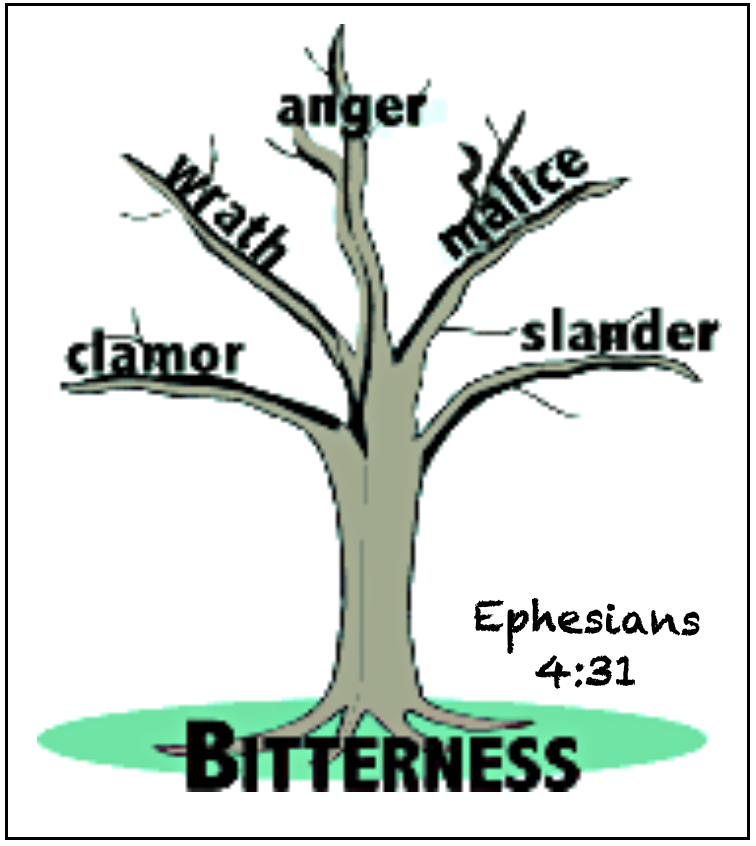
√ The underlying cause of Bitterness (tree) is having suffered long-term abuse when one truly was or felt powerless to stop it
√ Resentment, which is focused on someone else, can be triggered by remembering very upsetting experiences they caused us
√ When turned on oneself, resentment becomes remorse, & then S-H (More.…)

• Unacknowledged hurts can take the form of: Animosity, Antagonism, Implacability (not appease-able), Hatred, Infantile Narcissism, Pathological Pride, Vindictiveness, Verbal, Physical & Emotional cruelty. (Explanations….).

Al-Anon reminds us that: “(unrealistic) expectations are planned disappointments, leading to resentment.”  There are many people, situations or things in the present we can hook the resentments on to, but all are smoke screens for the underlying pain of unresolved childhood trauma.

NEXT: Negative Uses (Part 2)

Anger TYPES (Part 2)

PREVIOUS: Anger TYPES (Part 1)

SITEs: The Primacy of Anger Problems
Anger Problems: A Smokescreen for Fear-Shame Phobia
• 5-min. stress release exercise (Green : Anger —-> Compassion, Love)

⬆️ HAND : Emotions for each finger (painful & pleasant forms), with  senses & body areas, & how they’re connected to the Spinal Column 

🌐
DEGREES of FEAR & ANGER
We can use the temperature chart below to stay aware of what we’re T.E.A. chartfeeling, mainly driven by what we’re thinking, since the combination directly effects how we act (TEAs)

• Whenever possible, especially around people we don’t know, are not close to, or who are unhealthy (active addicts & other narcissists), it’s self-protective & appropriate to only show how we feel on the outside of the Emotion Circle 🔽, because those reactions are milder.Screen Shot 2014-12-26 at 10.41.37 PM
In most social situations, people will be more comfortable around us if we’re ‘tentative’ or ‘pleasant’ — > rather than ‘hysterical’, ‘aggravated’ or ‘enraged’…. making us more likable, which we all want, whether we admit it to ourselves or not. ( 2 CHARTS )

ALSO, if we do let out how we actually feel – from the center of the circle (intense) – it can influence others to become reactive too, as a result of echoing our feelings (via mirror neurons), so that when we:
• get enraged, others may also get angry
• feel depressed, others can get ‘down’,
JUST AS when we:
• get exited, others tend to also feel happy
• feel calm, others can feel more relaxed

REMINDER: This in not to deny our emotions, nor to be co-dependent – worrying about how others feel. Always distinguish between having an emotion & expressing it. It is a reminder :
➼ to stay awake for what’s going on inside, & work on letting the Adult ego state be more in charge, rather than the WIC
AND
➼ that we do have an effect on others – surprise, surprise! which many of us don’t realize – or believe – since our family never saw or responded to the REAL us.

For many of us, we were treated only as a burden, a nuisance or as a useful ‘tool’. 
So now we need to become visible to ourself & choose healthy people to correctly mirror us (validate) – people who have good boundaries & a clear sense of their own True Self.  (MORE…..The Anger Thermostat)

Anger as predictive SYMPTOM of Psychological Disorders

Intermittent Explosive Disorder (IED)emotional illness
Periodic eruptions of anger & rage, which are not in proportion to circumstances, most commonly seen in impulsive young men – but also for some ACoAs.
In this state they may threaten, assault others, harm themself, &/or destroy property. Such eruptions come after a period of heightened internal tension, followed by a feeling of emotional release, & then immediate regret

Depressive Disorders
Diminished self-esteem, heightened self-pity, irritability, low mood, low frustration tolerance – can create anger-control problems. Men are less likely to report depression & anxiety, with ego-shame an underlying cause. For women it’s more likely fear-of-abandonment, loss & rejection.

Anxiety Disorders
Sufferers of Depression & Anxiety are often in a continual state of tension. Their overworked nervous system alternates between hyper-arousal & exhaustion, priming the brain for an anger or rage reaction.

This group includes those with Generalized Anxiety, Panic attacks, PTSD, & Phobias. Also, OCD (mainly physical), setting the stage for resentments, because the person is more likely to hang on to envy / jealousy, fear of abandonment, & fantasies of being disrespected, harmed or victimized – in the present.

Personality Disorders are characterized by overall rigidity & denial.
Obsessive Compulsives : OCPD – mainly psychological, and OCD -mainly chemical – sufferers act as if their life depends on reaching a particular goal or having their demands met. Anger rises when those are frustrated. They are demanding, judgmental & perfectionistic.

Narcissists (NPD) are subject to rage reactions when their desperate need for attention or admiration is frustrated
• Histrionics (HPD) are vulnerable to angry outbursts when emotionally flooded
• Borderlines (BPD) are exceptionally vulnerable to anger because of weak or nonexistent sense of belonging & self-worth. This causes a roller-coaster emotionality, with rage reactions & unstable relationships.  (See all Psych Disorder posts w/ extended info).

CONSTRUCTIVE ANGER
In contrast, for healthy people, anger comes from their Adult ego state, in response to a specific present-day issue, prompting us to act in a positive way to protect against danger, to remove an obstacle in our path, or to right an injustice. (More in other posts).

NEXT: ANGER – ways to react (Part 1)

Anger TYPES (Part 1)

dragging angerI’M STILL CARRYING
all this baggage – mine AND theirs!

PREVIOUS: Anger & the Brain (#5)

SITENaming types of anger – worksheet

NOTE: That Anger is considered a secondary emotion is only part of the story. Yes – it’s often used to cover up more vulnerable emotions we don’t want to experience or admit to (fear, guilt, neediness, loneliness….), but it’s also an underlying feature of neurotic narcissism & sense of entitlement (Post : “Narcissistic Rage” – scroll down a bit)

However, like anxiety, anger is an appropriate & legitimate instant reaction to anything threatening our physical, psychological, spiritual or existential integrity.
Being angry in stress circumstances is to assert of our most basic identity. Without it we wouldn’t be able to defend ourself or those we love, when needed to fight for freedom, or for what we truly believe in & value

😡 BASIC CATEGORIES identified by psychologists
Hasty & sudden – connected to the impulse for self-preservation. It’s shared by human & non-humans, when tormented or trapped
• Settled & deliberate, a reaction to perceived deliberate harm or actual unfair treatment by others. These 2 forms are occasional & based on triggers. However,
• Dispositional is related more to personality traits than instincts or thoughts – someone who is more easily irritated, sullen, rude, difficult to work or deal with…. & therefore the anger is character-driven

RANGE of expression chart tells us that:
Silent, unexpressed anger – like deliberately ignoring someone – is experienced by the ‘target’ as psychic murder

Loudly expressed anger may be experienced by others as physical murder.  Overt rage tends to be sudden, undeserved & often uncontrolled. It unleashes waves of negative energy on another person, making them instantly weak. Both types are especially harmful to children

😡 INTERESTING distinction:
WET ANGER – the eyes water & voice shakes, the type we hate because we’re angry and crying. It makes us feel weak, because it shows we still care too much
DRY ANGER – when the face is like stone, the voice is sharp, which means we’re done! ~ Unknown

😡 OUR PAST ANGER
OLD but ongoing: Anger as a direct result of the trauma we’ve suffered, often on a daily basis, & therefore reasonable, but not caused by a current event. It’s long-term, maybe just under the surface simmering, or suppressed. But the origin is very real, especially when we were the most vulnerable & powerless.

Directed AT US: Someone’s current behavior toward us triggers our deep well of fear, frustration & hurt (Aaron Beck, 1980s).
Our anger-reaction is an attempt to protect ourself from further injury when feeling threatened, slighted or rejected – deliberate or not. Our rage can be explosive & feel like it’s taking over, since the situation reminds us, consciously or unconsciously, of very real childhood PMES abuse.

This explains out-of-proportion reactions, because “If it’s hysterical, it’s historical”. While the source was real, often the present cause is not actually dangerous, because the triggering incident is neutral or minor, AND we are no longer a powerless child, even though we may be run by the WIC.

observing abuseHappening TO SOMEONE ELSE: Intense anger in the present, but not from something happening to / at us. It’s an empathic over-reaction to something we see or hear actually happening to someone else, pushing an unhealed button

EXP – We can get very angry when we:
• see a mother verbally abusing or ignoring her child
• watch a movie where someone is being treated as if invisible, made fun of, threatened, beaten, molested….
• see animal abuse or neglect (identification with)….. bringing up memories

😡 INTROJECT’s Anger (the PigP)
Anger we carry absorbed from one or more passive-aggressive or raging parents / caretakers. It became so much a part of us that now we don’t even recognize it as “not mine”.

We absorbed all their emotions, (not our choice at that time) from:
• adults unloading their disowned rage & hurt on to us, as verbal & physical abuse
AND from :parent's rage
• a genuine love for our family, the Child’s desire to ‘help’ our parents by taking on some of their suffering, as if we could lighten their burden

IMP
: ACoAs need to separate out their anger & rage from our own – their childhood disowned pain passed on to us vs. our anger at how they treated us. Then mentally ‘package it up’ & return it.
This can be done with visualizations, drawings & body work.

NEXT: Anger Types #2

Anger & the BRAIN (Part 6)

DON’T KNOW WHAT’S WRONG
must be those pesky chemicals!

PREVIOUS:
Anger & the Brain (# 4)

SITE:The Brain in Love – areas that are ‘switched off’

See ACRONYM page for abbrev.


1. ASYMMETRICAL
Although most brain functions can be found in both hemispheres (More…), each side has its specializations. The 2 main organizing principles for emotions in the pre-frontal cortex (PFC) are based on the slight differences in lobe size, & the differing ways they processing emotions, which are:
a) ‘Emotional Valence’ (pleasant-unpleasant)
b) ‘Motivational Direction’ (approach-withdrawal)

Under positive circumstances, these complementary processes give us the ability to maintain & achieve current action-goals in the face of emotional distraction (sad, angry, excited…..)

2. COMBINED ⬆️
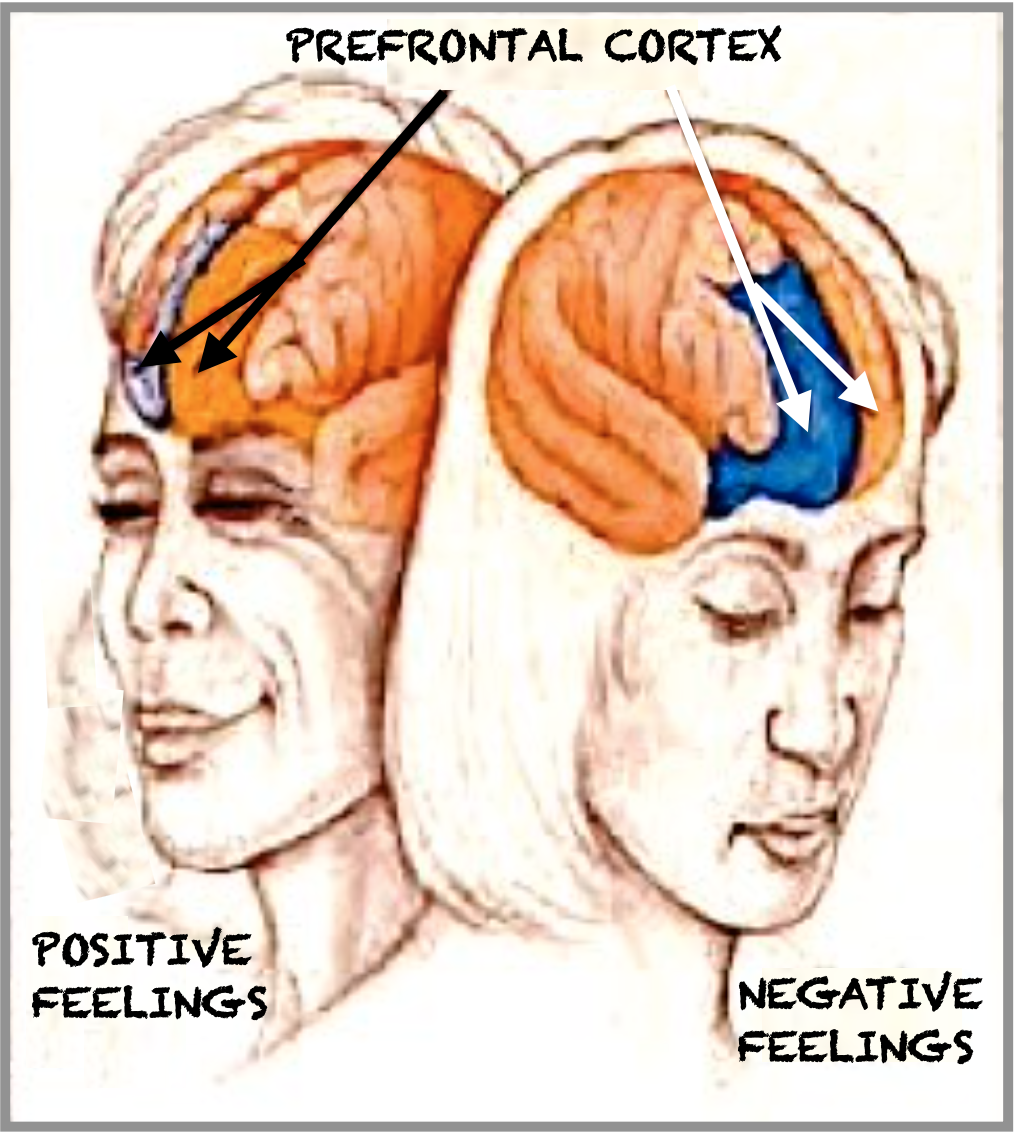
a. Approach – The LEFT lobe of the PFC mainly produces chemicals for connections, that allow us to experience pleasurable emotions (joy, interest, relief, love, pleasure…), making it easy for us to be close to others. Damage to this side causes depression.
ALSO – it mainly controls verbal ability & decision-making – about what experiences to store in memory. Interesting : ‘Positive’ emotions improve verbal memory, but hinder spatial memory.

b. Withdrawal – The RIGHT hemisphere is the main source of chemicals generating unpleasant & painful emotions, such as fear, dread, anxiety, disappointment…. which create the desire to withdraw.
These emotions are especially needed to encourage withdrawing from or avoiding inappropriate & dangerous situations. Damage to this side causes anxiety.

ALSO – it mainly deals with spacial tasks, retrieving & monitoring the value of stored memories, & nonverbal movement such as facial expressions. The reverse of the Left side, RIGHT side’s ‘negative’ emotions improve spacial memory, but hinder verbal memory. (🔼 CHART + info)

Howeveranger seems to be a special case, since it’s more likely to activate the LEFT lobe of the prefrontal cortex. Even though we’ve been taught to think of anger as a negative, Señorita Neus Herrero, (U. of Valencia, Spain) points out that :
“Normally when we get angry we show a natural tendency to get closer to what made us angry, to try to eliminate it.” This is healthy.

This response offers a hint as to why many people prefer feeling anger or rage when upset, rather than emotions that are under the anger, such as fear, terror, loneliness, disappointment….(which come from being vulnerable) because it give one a sense of power, and maybe even pleasure. Notice when you or someone else is smiling during or after being angry!

For ACoAs under long-term duress, since the emotional hijacking interferes with our ability to think clearly, we react to everything as if it were an actual danger to us. This can keep us angry, even paranoid – believing we’re still in danger – the way we truly were as kids. (Drawing )

► Being continually fearful, enraged, lonely… in childhood – will burn out much of the neuro-chemicals that would normally create a sense of well-being (left lobe), so we’re left with too much of the down-side ones (right lobe). This can become a chronic condition & will need various treatment to correct (meds, food, herbs, exercise, therapy….)

✿ The 2 amygdala bulbs also determine what memories are stored and in what brain areas, based on how intense the emotional response is to whatever we experience.
Studies by Larry Cahill, PhD at UC Irvine showed that the amygdala is involved in learning & remembering in specific ways:
WOMEN are more likely to remember details of emotional events because their left lobe is more active, while —
MEN are more likely to remember only the gist of emotional events because their right side is more active. (Improving Memory)

SITE: ◆ “Differences in Male & Female brains”- size of areas, chemicals, stress reactions…… (See also Posts re. M/F  Differences)
◆ The Whole Brain Model ➡️  used as a tool to “Improve Team Dynamics & Job Productivity”combines :
A variation of the Myers-Briggs Inventory (psychology) + structural brain parts + Left-Right hemispheres + the 4 brain quadrants (physiology)
Scroll down to see charts (Also on YouTube…..)

CHART below (scroll down: Anger: Amygdala +/ – PFC)


Anger & the BRAIN (Part 4)

pain/anger ME ANGRY? NAH –
it’s all in my head!

PREVIOUS: Anger & the Brain (# 3)

SITES: The 4 theories of Emotions

Brain Chemical Released When Angry


ANGER on the brain
A normal amount of anger is necessary & appropriate to function well in personal relationships & in the outside world.

The brain processes anger as stress, so it prepares us for the eventuality of fight-or-flight by elevating blood pressure, cortisol, serum glucose levels….
A certain amount of arousal is vital for efficient remembering, but when it’s too high, (as when we’re very angry) it seriously diminishes the ability to concentrate EXP: it’s hard to recall details of a really explosive argument.

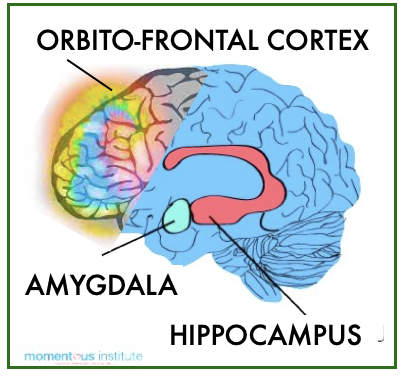
◆ The orbito-frontal cortex (OFC), the lower part of the prefrontal lobes, integrates sensory information from various other parts of the brain, such as weighing the value of reward-to-action, combining sensory input that turns taste into flavor….

Damage to the OFC can result in:
a. addictive behavior (over-eating, gambling…), so that the immediate thrill of a vice is chosen over the greater rewards of healthy choices & emotional stability.
b. over-reactions in behavior when very angry, because our cognitive understanding & interpretation of sensory experiences are distorted (an ‘innocent’ touch, hearing someone laugh, being accidentally bumped….)

◆ In a Harvard study of anger & the brain, MRIs of normal people showed that anger increases blood flow activity to:
> the amygdala, which deals with emotion & vigilance, and
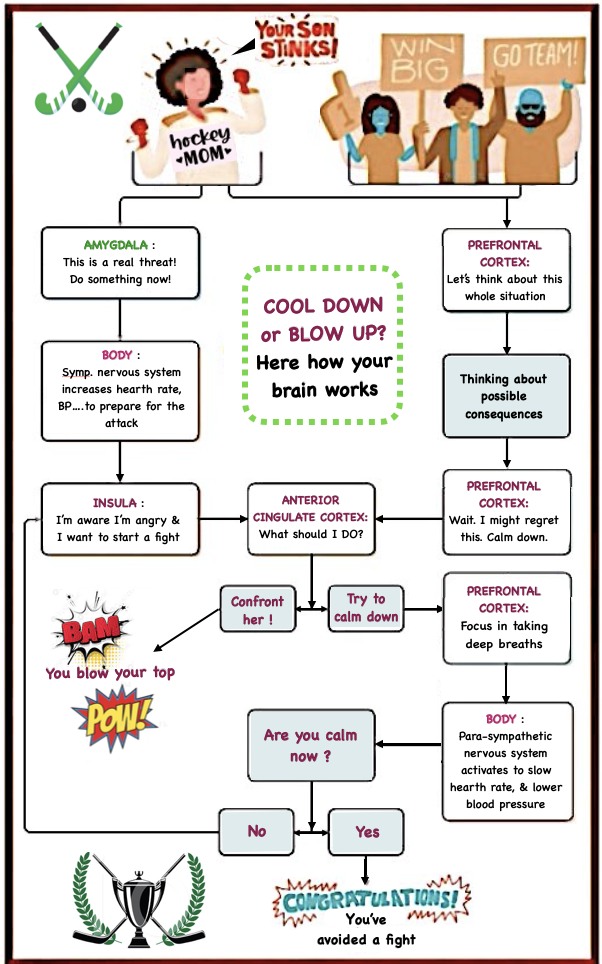
> the cortex, which can cool the ‘heat’ of responses from the central & primitive parts of our brain, allowing a person’s conscious to decide how to respond, or totally inhibit acting on impulses.

However, severely depressed people may not have the correct balance of brain activity, so are not able to recognize & control their anger, which can lead to violent rages. (Darin Dougherty, Asst. Prof.)
SITEs:Trauma response to Anger” // Brain and Development effected after Child Abuse

Researchers at the Hotchkiss Brain Institute in Calgary, Canada, discovered that one of the effects that anger has on the brain – is that neurons in the hypothalamus stop working properly.
Normally these neurons (cells) receive chemical signals that prompt them to either switch on or off.
Certain neuro-transmitter chemicals produced when we’re angry interfere with these functions, jeopardizing the brain’s ability to slow itself down, by blocking the growth of new neurons & causing the death MY hormone interactionsof existing ones – leading to depression, memory impairment & learning problems.

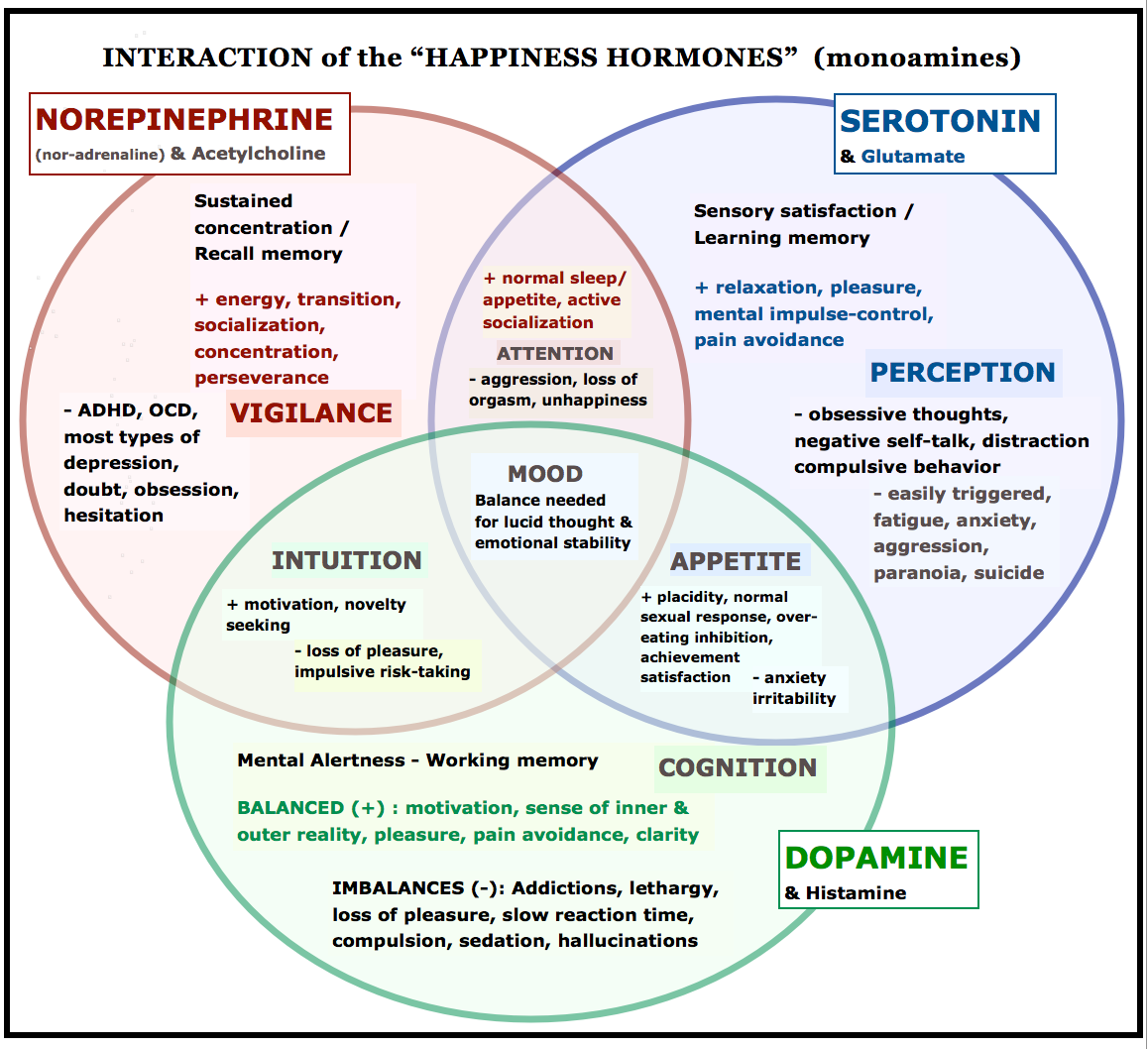
Happiness Hormones” are mono-amines, the main neuro-transmitters which animate the brain (how neurons transfer an impulse between them across a synaptic space) .

They’re associated with a variety of moods, playing a vital role in feeling, thinking & acting (T.E.A). When they’re up & running correctly, they produce a sense of well-being. These include:
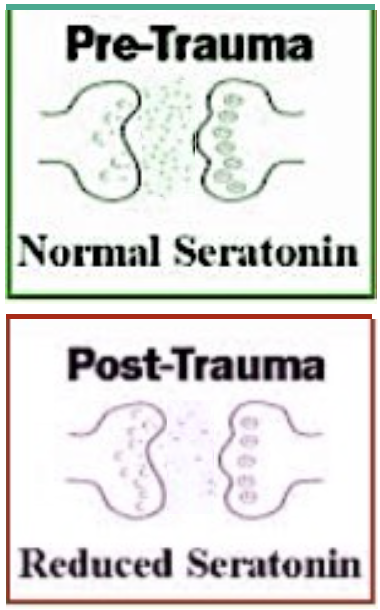
‣ Serotonin, involved in emotion, overall mood, & keeping aggressive social responses in check. When low, it’s harder to control our reactions when we’re angry
‣ Dopamine is released to push us toward something good, or avoid something very bad. It also determines how angry we get when we’re upset

‣ Nor-epinephrin
(nor-adrenaline) prepares the body for ‘fight or flight’’
√ depressed people have Lower levels of this hormone
√ we get a ‘rush’ from combined epinephrine & nor-epinephrine
SITEs: Leadership chemicals (scroll down) / “Meet your Chemicals” (cute slides)

BTW: Normally, when we get angry, frustrated or feel other ‘uncomfortable’ emotions – because of some real or perceived danger – the adrenals quickly release the catecholamines Dopamine + Epinephrine & Nor-epinephrine, combined in a 80%-20% proportion.

They prepare the body for ‘fight or flight’, so we can deal with whatever is causing the anger, but the influx of these chemicals can also lead to acts of aggression in some situations.
In reverse, when they’re depleted or out of balance they cause physical & emotional disturbances, including anger, depression, anxiety, obsessions…

✤ Interestingly, these same chemicals are also generated by fear. It’s one reason why FEAR & ANGER are directly opposite each other on the Plutchik ‘Wheel of Emotions’. (“Identifying Emotions, #1)

FILL-IN form: FEAR Self-Inventory (+ info, charts, growth….)

NEXT: Anger & the Brain (Part 5)

Anger & the BRAIN (Part 2)

Screen Shot 2015-01-15 at 3.31.02 PM
MY ANGER GREMLIN

is in charge at the moment!

PREVIOUS: Anger & the Brain (#1)


1. RATIONAL THOUGHT (Part 1)

2. EMOTIONAL REACTIONS
a. The ‘Reptilian’ brain-stem, or hind-brain (Old) – is responsible for basic survival functions, including such built in instincts as = cold-blooded behaviors, the desire for top-down hierarchy, & obsession with ritual.

It accounts for anger, the desire for revenge & retaliation, fears, jealousy, self-preservation, selfishness (keep what’s ours), violence & being protective of our tribe (stay close to our small circle & suspicious of others). (More….)

NOTE: The term “reptilian” is not a biological term, just a way of referring to a primitive part of the brain technically called the basal ganglia. EXP:  ‘ADD’ is a Reptilian Brain problem (More…)

b. Limbic System, (part of the Mammalian / Mid-brain), is at the top of the brain-stem, on either side of the thalamus & deep in the middle of the whole brain mass. It’s Command Central for emotions & emotion-connected memories, mainly made up of the amygdala,
hippocampus & hypothalamus.

• The Thalamus – while not a direct part of the Limbic System – acts as a kind of railway signal-box. As information comes in through the senses, it goes directly to the thalamus, which sends the signals off to different parts of the railway yard (brain) – to the cortex (rational) & the limbic system (emotional) at the same time, although the latter will react a lightning split-second faster than the cortex, often sending people into flight or fight when it’s not really necessary in a current circumstance. (More…)

i. The Hippocampus is very important in converting short-term memory into things we can remember for the long haul. It sends memories out to appropriate part of the neo-cortex for long-term storage, & retrieves them when necessary. It helps us develop clues for recognizing relatively safe/unsafe circumstances, & to form new memories about how to avoiding problematic people/places/things (PPT).lost memories
If DAMAGED:
• a person can’t build new memories, & so ends up living in a strange world where recent experience fade away, while older memories are untouched
• an over-active hippocampus generates constant fear, so the person is always looking for “common sense” things to do / not do, for self-protection, when nothing is dangerous  (Rage & Brain Anatomy)

ii. The Hypothalamus plays a major role in regulating hormones, the pituitary & adrenal glands, body temperature…. Also instinctual & emotional processes, & production of peptides in reaction to stress.
There is a rage ‘center’ on one side, & the chemicals it produces dock in those anger receptor-sites. The physical effects last as long as these chemicals are in the blood, which is not a problem with short burst of anger, but chronic bouts are dangerous & sometimes lead to early death….
INFO: Your brain…./ Brain Tutorial / Emotional Biochemistry / Peptides & moods

iii. The Amygdala, made up of 2 almond-sized organs are just above the hypothalamus, & a few inches from each ear. Among other functions, they produce & sort out a wide variety of possible emotions available to us – anger, disgust, fear, shame, attachment, pleasure, sexual desire…. (CHART)

◆ When the brain perceives a threat, we experience fear, anger, worry…. from both unconscious & conscious pathways. The amygdala is central to both.

√ The unconscious component of any emotion is analyzed by the nervous system, the amygdala determining the threat level, & the hypothalamus regulating emotional intensity
√ The conscious part involves evaluation by the neo-cortex, the hippocampus & amygdala, which coordinate the awareness of feeling, & bodily sensations of emotion, particularly fear. (Decision-making & Emotions… // Emotions outweigh Logic)

NOTE: A hormonal flush (adrenaline, testosterone, peptides….) can temporarily throw us out of control, when we may say or do things later regretted.
This chemical cascade lasts longer than we’ve been led to believe. Quieting down from an angry state of arousal can take as long as 20 min. – before we can actually think again.
That’s why “counting to 10” does not usually work – it’s just not enough time.

ALSO, having long-lasting hormones in the body explains why we can over-react to a small incident ‘out of the blue’ IF we’ve recently had a powerfully angry reaction to something else & seemed to have calmed down, but still had the chemicals active in the bloodstream (rage-calm-react).

NEXT: Limbic System, cont. (BRAIN, Part 3)

ANGER & the BRAIN (Part 1)

'the Brain'TOMORROW WE TAKE OVER THE WORLD”
: Pinky & the Brain

PREVIOUS: What about anger #4

SITE: “Your Brain & What it does

SEE posts: ‘Emotions & the body (Part 1-3)

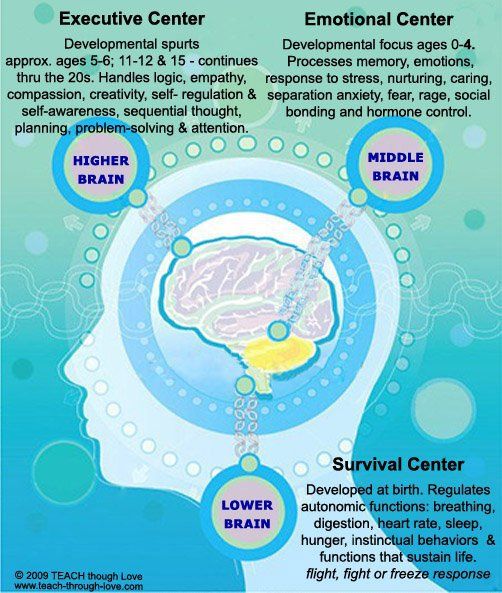
OVERVIEW: When considering the relationship of anger to the brain, it helps to have context. All parts of the brain inter-connect with all other parts. Each structure & each neuro-chemical has multiple functions, doing different things in different locations.
But greatly simplified, the brain does have Left & Right side differences, & 3 major sections – Old, Middle & New. In reasonably healthy people, & under normal circumstances, rash impulses (Old) & emotions (Middle) are modified & managed by the ability to think things through (New). amygdalabypass

Interesting: “The Little History of the Mind-Brain

1. RATIONAL THOUGHT is formed in the front part of the Neo (cerebral) cortex, the top / outermost layer of the brain, which integrates higher mental & instinctive functions, general movement & perception.

🔸The Pre-frontal cortex (PFC) makes up the largest part, the 2 lobes above & behind the eyes. It’s the ‘seat’ of personality, & its main job is to provide the ability to process information (internal or external input), so we can decide how to use information located in other sensory & memory centers throughout the brain

• Together, the 2-part PFC is a high-level filter for emotional control, but each hemisphere does it differently. They give us access to the accumulated & then stored info that tells us how to communicate & interact appropriately in private or public situations.
It helps us take actions based on a specific goal in the moment, & does this in part by preventing irrelevant stimuli from interfering (we can keep reading a book even if there’s lots of noise nearby….).
The PFC is also the location for self-talk.

Interesting: “Listening to yourself – Inner Speech across the lifespan”

3 brain centers✿ The PFC carries out executive functions (higher-level mental processes that organize lower-level ones, to regulate & verify behaviors)
in order TO:
• consider future consequences of current activities
• determine what’s unreal vs real, rational vs. irrational, appropriate or inappropriate… & filter out right from wrong
• figure out conflicting thoughts (same-different / better-best / good-bad)
• have social ‘control’ (suppress urges we know can lead to unacceptable outcomes)
• identify expectations based on actions (possible outcomes)
• make sound judgments & work toward defined goals
• plan responses to complex or difficult problems
• process our current environment, as well as past memories (see “Brain anatomy)

BRAIN ORGANIZATION
There are 3 main models for how the brain works, & combining them gives the most accurate picture. They are:
Hierarchy: some things must happen before others can work. The brain’s lower levels must be working in order for the higher ones to function correctly
Value systems: some things are more important than others
Synchronization: what’s happening or not happening, all together at any given moment, has a big impact on the brain

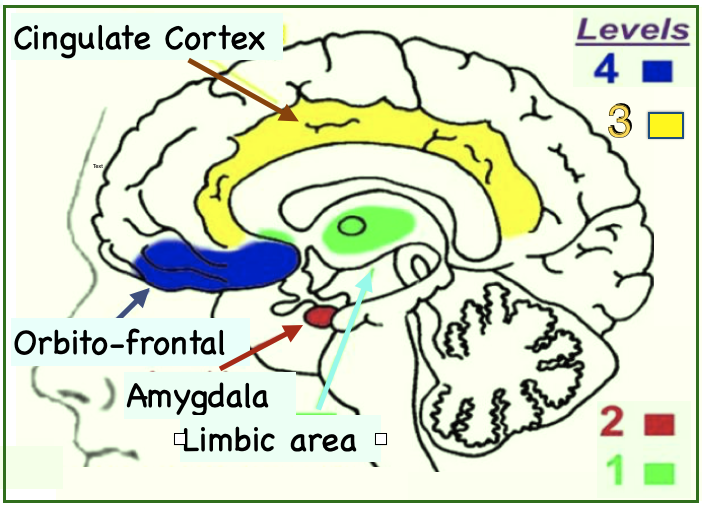
🔸“The Life Model” chart of the brain’s right hemisphere shows the emotional-regulation control center** made up of 4 levels (similar to DNA & processor chips)
Together they keep the brain’s activity running smoothly – as long as emotions don’t get more intense than the system can handle

** CENTER functions, which are needed to be human, include 19 essential & nonverbal skills that can be learned & passed on from one level to another…..
EXP : We like people with these control-center skills & generally avoid people who lack them (MORE…..)

A healthy Center is built on positive & joyful experiences with significant relationships, which results in a great capacity to cope with stress.

When someone has had too many bad life experiences, the brain has a much more limited capacity or skills to regulate & cope, & needs help to heal itself.
The LEVELS
1. Lowest –  controls personal reality – how we identify (name) our experiences. Also can cut off thinking
2. Subconscious – fight, flee or freeze, controls our basic evaluations – how we understand our experiences
3. Conscious – from the cingulate cortex – is for self-regulation, governing motivation for everything we do, synchronizing our life rhythms
4. Conscious (highest, from the PFC) – gives us our Identity, ‘Who I am’. Also, the ability to quiet ourselves – to not ‘lose it’, stay upset for too long, or over-react.

NEXT: Anger & the Brain (Part 2)

ACoAs – What about ANGER? (Part 4)

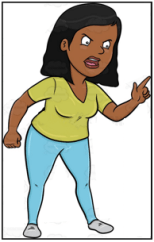
angry b. womanI NEVER KNEW ABOUT
all the ways to use anger

PREVIOUS: What about anger? #3

SITE: Why we shout in anger – a ‘teaching’


WOMEN’s anger (usually) has to do with close relationships – hurt from being let down by family members & friends, or that these people expect too much without giving much in return

MEN
’s
anger (usually) tends to be more abstract – about strangers, objects that aren’t working correctly, & larger societal issues that prompt concerns about right / wrong.
Also being one-down, disrespected, unappreciated

CHILDREN’s anger (young) tends to be about goals or objects being blocked, like a toy taken away or having to stop playing at bedtime…..
BUT also about being abused & treated unfairly (MORE….)

VOCABULARY
Most ACoAs never learned to identify emotions – at all – much less when we’re angry. This also applies to those of us who are ‘big feelers / sensitive ‘emotionals’….because to survive we had to cut off large parts of ourselves.

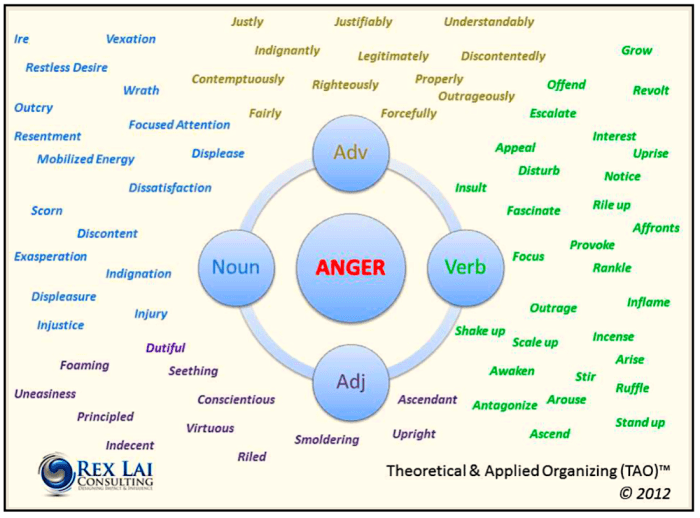
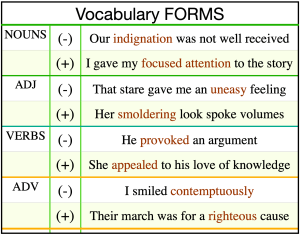
This chart
shows the many ways anger can be expressed, depending on the grammatical form being used. Not all the terms are ‘negative’ but are all related, for-or-against, falling into, or rising above.

Anger words & their opposites are used in language as : ➡️

DEGREES of anger
from most mild to most intense:
annoyed, irritated, cranky, frustrated, aggravated, agitated, miffed, peeved,
sulking, offended, bitter, indignant, exasperated, incensed, pissed, outraged, hostile, spiteful, vengeful, resenting, wrathful, raging, furious, ferocious & livid.

Bitterness combines long-held unresolved (E) anger + (T) obsessions + CDs, therefore it’s both emotional & mental

Hate – the emotional hardening of intense hurt + unremitting anger, because of constant stress without an outlet or practical options
Self-Hate : Childhood Rage at parent(s) turned on oneself

Dr. Robert Sternberg (2005) suggests 3 things which contribute to forming & maintaining Hatred:raging bull
a. Avoidance: by distancing from a person or group, we don’t get rounded / balanced info about them, which – if we had – might likely change our perspective and emotions

b. Intense Anger, contempt, disgust, the quick-conditioned limbic responses (E), which the cortex (T) doesn’t have time to check for accuracy
cIntense Beliefs (negative, judgmental), hardened & rigid, which ramp up emotional intensity – used to justify denouncing, degrading or destroying the hated person or thing

Temper is the broad term for expressing anger AND a state of mind. Dictionary def: Habit of mind & Heat of passion, especially in the form of irritability, impatience, outbursts….

It can mean “temperament”, as in: having a calm disposition OR to be out of temper.
But it’s usually meant as an outward expression (action) of anger. In ACoA language, it’s our PP or WIC reacting to a present situation, based on old painful experiences.

❗️Anger is a natural response to aggravating / stressful PPT, but does not need to be acted on TOWARD someone or something – only acknowledged, felt & vented in safe ways.temper/anger

However, when our judgment (T – the mental component) becomes clouded or distorted, the feeling (E) takes over & dictates our actions (As), called ‘loosing one’s temper’ – seen in various forms of acting out, such as :
— breaking things, punching walls, verbal attacks, yelling…. OR
— neglect, ‘forgetting’, the silent treatment, withdrawal….

Plutchik’s ‘Wheel of Emotions‘ shows ANGER & FEAR as opposites. SO:
🥶 When someone is constantly fearful, full of anxiety, only seeing thru victim lenses, they are suppressing a great deal of anger
😡 Conversely, people who are mainly bitter, react too easily with anger & are generally ready to fight (even indirectly) – are suppressing mountains of fear, sadness & disappointment.

• Being stuck at either extreme is very harmful – to the individual, to their family & to the world at large. A tremendous amount of energy gets used to suppress those mountains of “unacceptable” emotion, while some deep part of us knows we’re not completely honest.

Having to deny ANY part of ourself – to ourself – comes from a distorted, untrue belief that we don’t deserve to be treated well (loved, respected, comforted, successful….) & never will be.
BUT we can’t help wanting it, to the point of obsession.
See the: “Serenity Prayer backwards!”

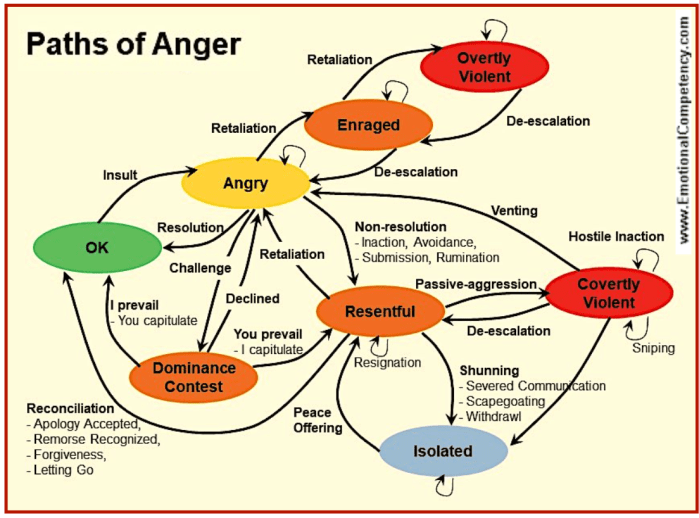
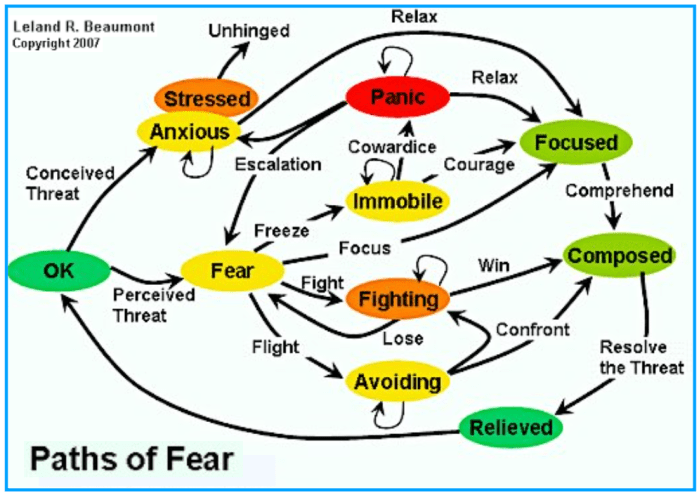
FLOW CHARTS from Emotional Competency.


NEXT: Anger & the Brain (Part 1)

ACoAs – What about ANGER? (Part 2)

resentful??
I’M NOT RESENTFUL!

That’s all in the past, right?

PREVIOUS: ACoAs- What about anger (#1)

BOOK: Strategies for Survival in an Angry World”  ~ Dr Eva Bell


DEFINITIONS

☁︎Anger – A temporary & episodic emotional reaction to a frustrating situation. It’s ‘rational’, because the cortex is still functioning, so the person can think & decide actions
▸ A strong, uncomfortable emotional response to something unwanted & not fitting with our values, beliefs or rights (triggered)

☔︎ Irritability –
 A milder feeling in reaction to minor annoyances that happen as part of our daily routine
➤Aggression – An intentional desire to harm someone or something

♨️ Rage – An “irrational” emotion – the un-reasoned, automatic, instinctive protection used to roughly push away danger to self or someone/ something vital & loved.
Often in the form of an explosion, sometime as completely irrational behavior (no conscious thought), sometimes very deliberate!

🚯Hostility 
– An emotional feeling of distrust + a negative mental opinion of everyone (chronic antagonism), causing a person to indiscriminately harm or want to harm others.

🛑 Hate
 (internal)
• extreme hurt which has hardened into cold rage.
In childhood it accumulates from being powerless to stop repeated & relentless abuse & neglect.
As adults, it’s
a. from persistently blaming others for our problems, instead of finding & using valid ways out of bad situations
b. as Self-Hate – turning our legitimate rage at family & environment back on ourself
🎴
BIG PICTURE T.E.A.
Psychologists consider the 2 most basic human emotions to be love & fear (Es), which colors our thinking (Ts) & so our actions (As). All other emotions are seen as nuances & variations.

😍 LOVE generates: caring, compassion, contentment, happiness, honesty, enjoyment, satisfaction, trust….  (Diagrams in Part 5)
❖ Unconditional LOVE is the only source of self-esteem!
(see Posts: “Being Loved“).  Healthy Love is what make a child feel safe, & Love is the all-powerful healer of wounds.

BUT – ACoAs did not experience a genuine sense of being loved, even if our parents said it or thought they did.
How do we know this? Because of the intense fear under everything we think, feel & do – seen in our S-H, FoA, PP….

🥶 FEAR generates : anger, anxiety, confusion, control, depression, guilt, hurt, inadequacy, loneliness, sadness, shame….

All ACoAs are fear-based, having been thru so much abuse, chaos, controlling, denial, judgement, lies, narcissism & neglect – to ever feel totally safe – without healing

And sooner or later – fear always generates ANGER. Being constantly scared – with no comfort, no relief, no explanations…. will pile up & turn into RAGE.
NOTE : counter-phobia & addiction-to-excitement are defenses, not lack of fear.
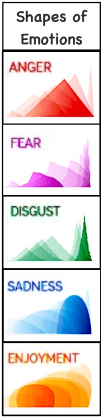
⬆️  Emotion GRAPHS – computer models from the Atlas of Emotions

★ Normally, all emotions are short-term, in-&-out reactions to some immediate event, & in this form – anger is not a problem. In fact, modern psychologists view anger as a mature emotion experienced by everyone at times, having survival value. When understood & accepted, it can often be used to correct life’s imbalances, although it’s not possible in every situation.

But when painful EMOs persist for days, months or years – from living in harmful situations – they got stockpiled, without having:
✦ permission to be experienced as true emotional responses to abuse & losses
✦ anyone to listen to us, identify them (give them words) or comfort us
✦ an opportunity to process the events, so we wouldn’t have to suppress or deny them

NOW, painful emotions are being held in place by toxic T.E.A.s:
◽️(T) The WIC / PP’s thinking in the form of CDs, mental obsessions about something unpleasant/ unacceptable, without understanding our interaction or participation in the problem

◽️(E) mountains of unprocessed pain accumulated from old hurts & unmet needs, suppressed awareness of all that hurt, in order to keep going (denial)

range of Es◽️(A) staying in harmful or inappropriate situations we know are not good for us, and continuing to live in self-deprivation (not enough company, education, finances, fun, love, rest, self-reflection, sex, support….)

REMINDER – Thoughts & Actions can be either Positive, Negative or Neutral,
 but EMOTIONS are never negative!
They can range from :
                most
Joyful <—–> to most Painful (+/- 100)
       with the calmest, pleasantest in the mid-range (+/- 20).

NEXT: What about anger – Part 2

ACoAs – What about ANGER? (Part 1)

frustrationI’M SO FRUSTRATED
I don’t know what to do with myself

PREVIOUS: New Year Celebration

BOOK: Metaphor & Emotion, seeing the body as container for emotions: “She unleashed her anger, his anger is smoldering, you make by blood boil…..”

BASICs the more we know about something, the easier it is to understand, deal with & be in charge of it. So it is with anger.

1. Anger is a perfectly normal emotion – created by the physiology of our brain & body. It’s not only universal, but absolutely necessary, and NOT something to be cured as if it were a disease.

Anger is a healthy reaction to a grievance, so one of its positive intentions is to focus our attention – so we can modify or eliminate an aggravation or abuse, wherever possible. The benefits of appropriately expressing it include overcoming our fears, & building confidence to respond to threats, danger & mistreatment.

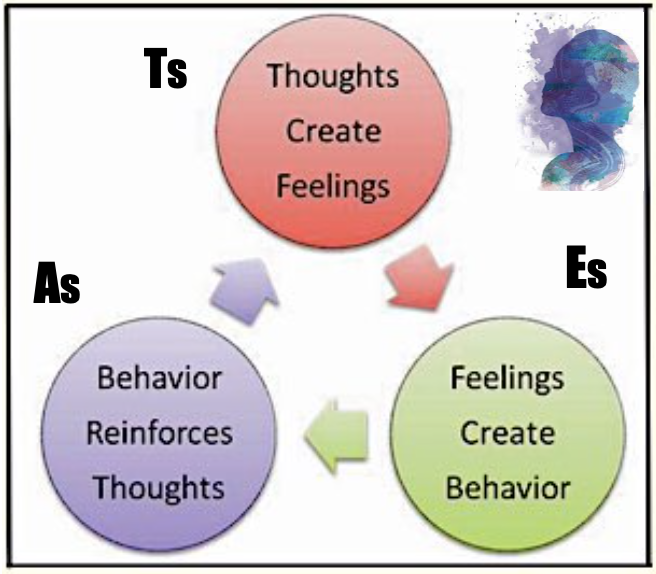
T.E.A.
The problem is not in having (feeling) the emotion (E),
►but rather in what we’re saying (T) to ourselves about a situation which greatly upsets us,
▶︎and the kind of behavior (A) we use to express it, based on what we learned as kids.
We need to FEEL our anger, but we do not always need to outwardly E. HEAT mapACT it out on others!

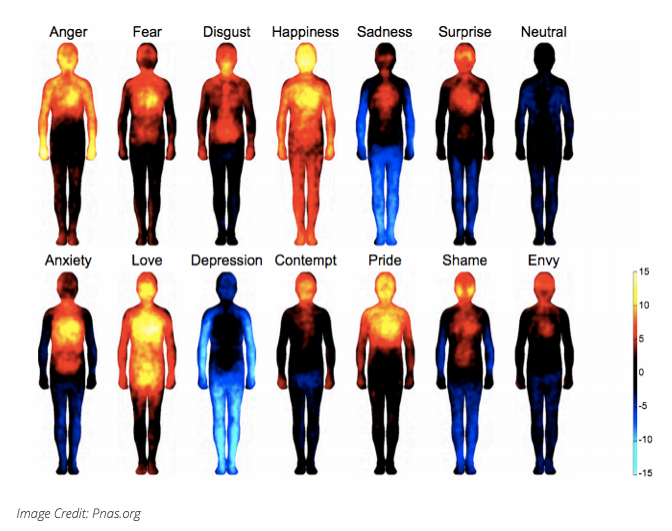
2. Like all emotions, anger is actual energy – no matter how intense – scientifically proven, as seen on these scans.
Heat maps of emotions —->

3. Anger is considered one of the secondary emotions – a response to primary Es such as intense FEAR (from being abandoned, attacked, disrespected, forced, offended, pressured, trapped…..). This does not mean it’s unimportant or to be ignored.
It’s secondary because it’s a composite of other more fundamental ones (Plutchik’s 8 Primary Es), AND because it can’t tell us directly what the underlying unmet NEED is, only that something is wrong.

🔹  However, it is a very useful starting point. Instead of being afraid of it, we can successfully use anger, guilt, anxiety…. as helpful indicators of what’s going on in the background (unconscious), giving us the opportunity & choice to ‘fix’ the real lack, which would then make us feel better.
The problem for ACoAs with solving this Q. (‘What’s missing?’) is that we’re not allowed to know what we really feel NOR what we actually need.
So these 2 aspects have to become part of our understanding & daily vocabulary before anger can be a useful tool.

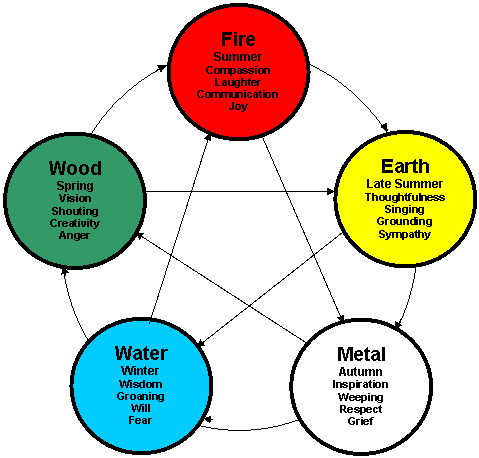
FiveChart24. Anger is part of the Wood Element – which governs the eyes, gallbladder, liver, & tendons. In the short-term, & by itself (without action), the emotion itself is not harmful.
But because it is energy, generated by chemicals in the brain, we can damage ourselves in PMES ways when we suppress the anger / rage, especially for a long time. The chemicals can ‘fester’ inside & cause a variety of problems (headaches, high BP, auto-immune illness…. ).

Denied anger results in lowered quality of life, causing mental & emotional numbness, which can then draw us toward violent situations as a release. It will also negatively effect many parts of the body, such as the:
√ Muscular (tightness) & Immune (over-worked) systems
√ Liver – causing our decision-making abilities to be diminished
√ Gall bladder – causing gallstones (condensed anger) & migraines

✤ At the other extreme is acting out the anger in ways that directly injure ourselves & others – especially when aimed at children.

5. How each person reacts (emotional intensity + behavior patterns) is formed by a combination of : genetic predispositions, cognitive problem solving skills, family / culturally-learned behaviors & past experiences

6. We hear even ‘respected ‘speakers’ talking about “negative emotion”. Wrong!
Es are either degrees of 🔺pleasurable OR degrees of 🔻painful.

NEVER think or talk about anger & other uncomfortable / ‘unacceptable’ / painful emotions AS negatives!
Anything designated as a negative is automatically considered bad – which in this case means we should not be angry, under any circumstances.

NOT so. Without feeling & owning legitimate anger – we are easily abused, frightened & manipulated – & so become or stay victims.

NEXT
: What about anger? – Part 2