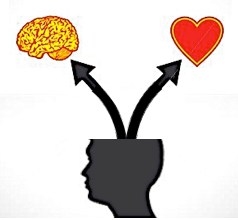
Ego States – ADULT (Part 2)

inner girlI NEED TO WATCH OUT FOR
ways the Child or Parent take over

PREVIOUS: ADULT Ego State (#1)

ACRONYMS :
H.A. – Healthy Adult
G.P. = Good Parent
H.C – Healthy Child

PURPOSE of ADULT  (cont)
b. Regulating  //  c. Accounting
d. INTEGRATING
🔻Unintegrated Adult – the rational, competent part of us which many ACoAs use to get along at work & in a variety of relationships, but which doesn’t connect with the Inner Child, is easily swayed or blocked by old damage & can’t ally with a Loving Parent, because there is no LP

🔺Integrated Adult – is expressed in many of the same ways, but mainly as the primary ‘executive’, interacting with both P & C ego states, to form a whole personality. It prevents the WIC or the PigP from running our life

Adult FUNCTIONS
✦ The Adult E.S. can be compared to a computer or regulator, in charge of un-emotional activities such as decision-making & problem-solving
✦ it lives in the present, is able to be spontaneous & adaptable
✦ is intelligent, logical, organized, evaluates facts based onScreen Shot 2015-09-02 at 5.34.10 PM available data

✦ has a keen sense of awareness, understanding, insight – knows what’s possible & what’s not in the real world

is fully awake to the environment, constantly updating itself through every-day experiences, to keep on top of things
✦ estimates probabilities, observing & processing information dispassionately

can ask for help & apply practical problem-solving strategies when things get tough
✦ determines appropriate actions with enough rational input, & draws from recorded ‘tapes’ of a Positive Introjected Parent

looks for information rather than staying scared or making assumptions. Makes an effort to search for knowledge, both from necessity as well as for pleasure (curiosity)
while not focused on emotions, is balanced, not over-or under-reacting
funadult ESctions from understanding that most things are done with a medium level of importance or intensity (not dramatic)

allows the Healthy Child & Good Parent to have intimacy because it provides good boundaries, as a result of knowing what its rights & personal needs, so is not afraid to connect with others
knows who is safe & who’s not, because it can see people as they truly are, rather than idealizing or undervaluing

takes the best from the past & uses it appropriately in the present by integrating its strengths with the G.P. & H.C.
✦ Is not overly influenced by harmful childhood experiences, does’t project personal or family damage onto others

NOTE: When ACoAs function too much from the Adult E.S., we live ‘in our head’, not in touch with feelings & can’t relate to others emotionally

Eric Berne (T.A.) wrote that coming from an Integrated Adult E.S. does not only mean being rational / reasonable, but also provides access to feelings, values & attitudes. It allows the 3 parts to work together as a whole, in current reality – internally as well as externally. The Adult ego state is “principally concerned with transforming stimuli into pieces of information, then processing & filing them on the basis of previous experience” (Berne, 1961).

🔸 The healthy Adult-in-the-adult (rather than the Child’s version of an adult) is fully in contact with Healthy P & C, allows us to see all current options & possible resources – given who we are, in relation to what we need & what’s going on now.

❥ When in the A. ego state – we’re aware of what’s real and what isn’t, & act accordingly.
So when we experience emotions in response to something in the moment – like feeling sad when a friend moves away – our behavior is consistent with how we actually think & feel, (T.E.A.) rather than reacting from our unhealthy past (raging, attacking, withdrawing….).

structure❥ With the A. in charge – we communicate that “WE are OK”, able to choose which mode to switch into depending on what’s called for, without giving up the A. ‘in charge’ position. (see Overview of E.S.)

EXP: As long as the Adult is ‘on’, Child can have fun at the beach or at a nightclub without getting into trouble or hurting others…. & Parent can help someone or run a work project – without overstepping boundaries or taking on too much responsibility….

NEXT: ADULT E.S. (Part 3)
Ego States – ADULT (Part 1)

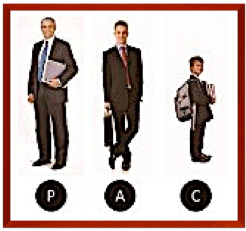
PAC male
A HEALTHY ADULT INNER VOICE
helps me function well in the world

PREVIOUS: Ego States – Summary

SITE: T.A. tests & definitions

REMINDER: Ego states (E.S.) are in our conscious mind, & only one can be in the foreground at any given moment. Whichever one is on the ‘front burner’ is called The Executive  – for the length of time it’s in charge.
Healthy people can switch between ego states, as needed – most of the time.  It’s NOT supposed to be a rigid framework, but many ACoAs are trapped in the Wounded Child E.S.

All E.S. function on a continuum, from mild to severe … AND a person can go from OK to NOT OK & back again more than once throughout a day. We can catch this by noticing physical & verbal characteristics
Parent : Language is made up of value judgements, lecturing, scolding, controlling….  About ‘You…’ or ‘One…’ rather than “I or me”. Posture tends to be leaning forward

Child :  Words are direct & spontaneous. Physically, the person can be sullen from anger, stiff w/ fear…. If in the Adapted C. = may cry silently. In Free C. = have fun & maybe be excited-noisy
IF comfortable – they’re engaged, attentive, use hand gestures….
ADULT
PhysicallyPosture is erect, maybe with tilted head (listening). Attentive, interested, straight-forward, non-threatening & non-threatened
VerballyTone is measured, clear, precise, crisp, rational, logical.  Words are clear, definable, factual: “It’s a cold day so we’ll need extra clothes”.
Talks in terms of: why, what, how, who, where & when, how much, in what way. Uses comparative expressions, reasoned & accurate statements

PURPOSE of Adult E.S. = “Neo-psyche”, for survival of the Self
a. FACTUAL: This part of us concentrates on Reality, lives in the present & holds the accumulated data of all our experiences.
It begins forming around age 6 to 10 months & is assumed to be fully developed in a normal person by age 12 (from T.A.), but its actual function is not related to a person’s age.
The A. deals with external facts (“It’s 5 pm, the train is late…”), analyzing & solving problems, also using information from Parent & Child states, giving us the ability to successfully deal with the world

b. REGULATING: The A. is in charge of supervising & managing the activities of both adult vectorsInner Parent & Child, AND intervening between them when necessary.
It allows us to keep control of those other 2 states – to not let the P. become too rigid, controlling, pontificating (“Do as I say not as I do”) nor the C. too out of control, selfish, hurtful ( “I’ll kill that so-&-so!”)

EXP: When PigP beats up IC : “You’re no good, look at what you did wrong again, you’re useless”, the WIC will agree: “I’m no good, look how useless I am, I never get anything right”.

🔸 However, if we’ve developed a Healthy Adult (free of C.D.s) then when the PigP acts up – it will step in, first to stop the Introject from doing any more damage, drawing the Child away from it, & work on correcting its Toxic Beliefs. Then the A. can make space for the Good Parent to comfort the abused Child

c. ACCOUNTING Mode is part of the ADULT (A.) – the only E.S. that gives the ability to actually solve problems which can not be successfully done by either the P. or C. This is because when trying to correct things from those 2 states, the problems keep coming back.

In the present, the A. makes balanced choices & decisions, based on stored info from a wide range of reality-experience, rather than from dysfunction.
To have a rounded view & consider future actions, potential outcomes are weighed against the reactions of Healthy Parent & Healthy Child, as well as real-world consequences  (MORE…. re. Accounting – scroll way down)

Accounting Mode interacts with other E.S. without energy blockages. When it’s available & stable (uncontaminated by PigP or WIC), we operate appropriately in the here-&-now, having absorbed any positive parts of our Historic Parent & Archaic Child experiences. This allows us to choose which mode to draw from, depending on the current situation, without regressing into either negative Historic or Archaic states.

NEXT: ADULT Ego States (Part 2)

EGO STATES – Development & Trauma

I HAVE DIFFERENT ‘VOICES’
for different situations

PREVIOUS: ES Basics (@2)

YouTubeTransactional Analysis, Ego-states 1-3


DEVELOPMENT & TRAUMA
Ego States seem to develop from normal differentiation (separating general concepts into specific meaning – good vs bad….), the introjection of significant others, & a child’s reactions to trauma

According to Dan Siegel, E.S. can become fixed when a positive OR negative event is experienced repeatedly, or when a traumatic event is overwhelming. In general, they become parts of the Self, some by reacting to other people, some by internalizing them

a. Integration = Combining & incorporating previously unconnected ‘objects’ into one larger entity. Through this mental skill a child learns to group concepts together, such as combining Dog and Cat into a complex unit called ‘Animals’ //  Mother and Father becoming ‘Family’.

A healthy identity is made up of combining all conflicting reactions in Personality (needs, instincts & habits), gradually organized & then harmonized into a whole.
According to Jung, it’s the process by which the individual & collective unconscious are fused, which then becomes ‘maturity‘, & can help a person move past negative behavior patterns.

When conflicting ‘reaction tendencies’ are not resolved, the resulting internal stress will be expressed as unhealthy activity, but may be so disruptive it leads to dissociation, potentially even the disintegration of the Self into separate parts (More….)

b. Normal Differentiation = A separation of general concepts into specific meaning (opposite of Integration). Children slowly separate out their own identity from that of other family members – by having different opinions & values, while still being able to stay emotionally connected to them.
They learn to discriminate between what they like & don’t like, which become entire patterns useful for dealing with parents, teachers & playmates. Eventually it makes S & I possible. (More…..)

EXP: This mental skill helps us understand that one set of actions is appropriate during a sporting event but not at a business meeting.
If this separating process become excessive & self-defeating, it’s usually called ‘dissociation‘ – withdrawing from current reality

c. Introjection of significant others :
Children automatically accumulate groups of beliefs, emotions & behaviors from their caretakers. Some will be acceptable to their True Self, but for ACoAs, most will be harmful.
▻ If YES, the behaviors get included into their sense of identity (this is me)
▻ If NO (qualities of abusive / neglectful parents) the behavior ‘clusters’ become Inner Objects (not me) which have to be managed by creating defense mechanisms
d. Trauma
To survive overwhelming neglect, rejection & other kinds of abuse, children form internal E.S. which:
✎ end up in constant conflict (PP vs Natural Child… // PigP vs Healthy Adult //  WIC vs Natural Child…. ) OR
✎ get cut off from each other (dissociated) to save the child’s sanity

♥︎ Sadly, these choices prevent a feeling of security, & therefore the ability to extract & enjoy the best from the outside world

EXP: Healthy children can create a imaginary playmate, but eventually don’t need it, replacing it with real-life friends.
BUT a lonellonely childy, isolated child may cannibalize part of its True Self to produce such a ‘friend’, so the imaginary companion feels very real & is hard to give up. It would feel like killing a part of oneself – instead of getting re-integrated

💔 When such a child is forced to push aspects of the Self out of awareness because of conflict & environmental pressure :
☀︎ those disowned parts can eventually be channeled into Work/Career, Research, Creative expressions….. but the person will still be emotionally crippled
☀︎ but more often the result will be social awkwardness, isolation, procrastination, unfulfilled dreams
☀︎ & in a very few, this mutilation of the human soul can show up later in life in a different, more damaging form as multiple personalities. (“We, the Divided Self”, Watkins & Johnson, 1982).

Watkins & Watkins, at Montana U, worked with people who had deep inner conflicts between various ego states which make up the “family of self” – using behavioral, cognitive, analytic, or humanistic methods to create a kind of internal diplomacy.
Applying their “Ego-state therapy” showed that complex psycho-dynamic problems can be resolved in a relatively short time, compared to more analytic approaches. (More….)

NEXT: Ego States – Intro (#4)

EGO STATES – Basics (Part 1)

inner child
I HAVE SEVERAL PARTS INSIDE
& I feel best when they get along!

PREVIOUS: Process, Recovery #2b

REVIEW: S & I – Healthy Individuation

EGO STATES (E.S.)
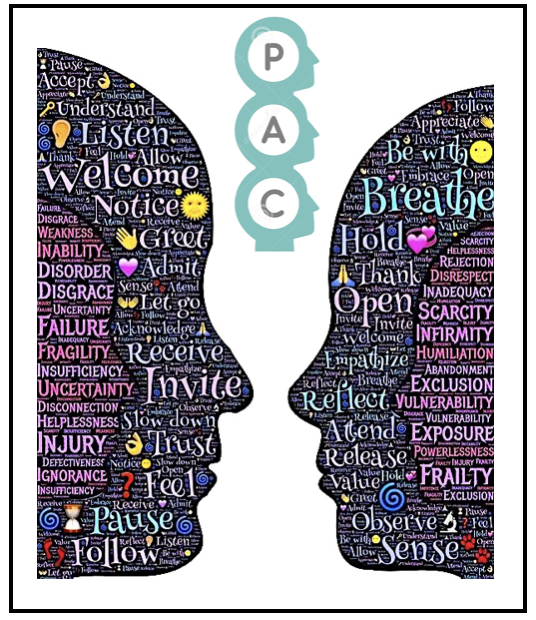
• We’re all born with the potential for 3 basic personality components – Parent / Adult / Child (P.A.C.) which vary in size & importance. They show up early in life in immature form, & are supposed to keep developing throughout life.
They’re called ‘ego states’ – because whichever one we’re in at the moment we think of as ‘me’, our sense of identity (ego = Self). Each is internally consistent, having its own Thoughts, Emotions & Actions (TEA).ESs-Basic part 1

Experiences & activities from childhood become grouped into these ‘clusters’, also called the “Family of the Self” (NOT schizophrenia), which are neural pathways in the brain forged by chemical connections as a result of thinking, feeling or doing (TEA) the same thing over & over, year after year.
How well these internal parts get along among themselves – in order for the individual to function effectively – can vary greatly from person to person

These clusters contain our conscious beliefs, opinions, inner ‘voices’, attitudes… & include memories, roles, physical feelings & postures, mental rules….
They become our habitual way of responding toward ourself & the world, each cluster formed around some point of view or common ‘truth’, either healthy or not – depending on upbringing & native personality
Healthy =  P : “I protect” / A : “I get things done”/ C : “I play”

Unhealthy (P) may organize around rigid rules
“I have to rid the world of all wrong-doing / It’s my way or the highway”
Wounded (C) may base it’s sense of identity on —
“I have to be perfect to be loved / I have to hide all my needs”
Limited (A) may focus on self-importance
“I want everyone to be impressed // I have to do___ no matter what”

E.S. are conscious aspects of our psyche which we can shift in & out of – one minute acting like a kid, the next handling a problem in Adult mode…. Unlike 2 of Freud’s 3 states (superego & id), ego states are visible, making it possible to notice, value, work with & modify aspects of them, if desired. Even so, most people are not aware of having different states, much less which one they’re expressing at any given moment.

However, they can be noticed by others, just by listening to or watching how someone acts, even if they don’t know the terminology. Whichever E.S. is ‘on’ has its own reactions to events : “Boy, is he being a brat!”(C),  “You’re not the boss of me! “(PigP), “Yes, your suggestion is workable” (A)

🔴 General rule: Most people you deal with are either coming from their Wounded Child (WIC) or Negative Parent (PP) ego state

NORMAL – Childhood parts become integrated into a larger whole, with the Healthy Adult in charge. They work well together internally, partly because they include Adaptive Introjects of caring, supportive caretakers & teachers, as healthy role models.

This allows such people to function successfully in the world because they :
• act in appropriate, productive ways
• experience & manage a full range of Es
• have flexible rather than rigid thinking
• hold positive beliefs about Self & the world
• live in the present (instead of all in the past or all in the future)

HEALTHY ego states form in childhood in response to positive, affirming relationships within a family that’s loving & able to connect to the child in all 4 PMES ways (physical, mental, emotional, spiritual)

EXP of a mature internal dialogue
Healthy ADULT: “Hmmm, it’s Saturday. I want my place to look, feel & smell nice, so I’m going to clean today”
Playful younger CHILD: “NOOO, I want to play. I want to go to a movie with my friends & have fun!”

Loving PARENT: “I know little one, but the place is not in good shape right now, & you know how much better you feel here when it’s all clean & fresh.
We can do something you like tomorrow, & then we’ll have even more fun knowing we’re coming back to a nice clean home”
Older CHILD : “Ugh! I know you’re right & I won’t stop you, but you’d better keep your promise!”

NEXT: Ego States – basics (Part 2)

PROCESS – Recovery (Part 2b)

good lifeRIGHT ACTION
makes life easier

PREVIOUS: PROCESS – (#1)

Posts: Toxic Beliefs” // Risk
Why Are You Stuck?

See ACRONYM page for abbrev.

BOOKsRecycles of Power” & “Cycles of life”, ~ Pam Levin

REVIEW: ‘Emotional processing happens when we can cope with distressing events – over time, so that new experiences can occur (stressful or not) without a return to the previous upset. Everyone goes through things that cause pain, but for most people those emotions don’t last.

Why do some look at a situation without fear while others are gripped by a fear or anxiety so strong they are paralyzed? Scientific research has identified  the cause as cognitive-emotional processing, in which both feelings regarding the incident and thought processes were involved — not just an overly emotional response or a lack of normal emotional processing ability.’ (“Anxiety & T.E.A.“) feed the mind
🌺
HEALTHY PROCESS  (2a cont)
a. Awareness  //  b. Acceptance

c. ACTIONS
i. WHAT – Present-day behavior patterns are :
• based on how the real world works & our many experiences
• motivated by self-respect & permission to act on our own behalf
• the result of S & I – taking center stage in our own life
• considering our effect on others, without being co-dependent

ii. HOW
• always looking for possible, appropriate options
• asking for, gathering & using a variety of help
• considering realistic consequences
learning by trial & error, & never giving up
• taking appropriate risks, then observing the results

iii. WHO – Definitely by the “UNIT”
• Healthy Adult – the competent, objective part of us that has accumulated knowledge & experience about ourself & the world
• Loving Parent – the mature care-taking part of us that has both kindness & boundaries, patience & limits, compassionate but realistic

vi. ABOUT
• acting on our needs & in accordance with spiritual beliefs
• always give ourselves & others enough time to get things done
• it’s based on sound planning, & knowing our current limitations
• choose activities that are pleasurable but not self-destructive
• consider both the ‘price’ & rewards of our actions
• do things for our own growth, not just for others

• know timing – don’t force or try to control but don’t wait too long, don’t try to do too much at the same time or schedule things too close together
• NOT use activities to cover up self-hate, loneliness, avtimingoiding painful emotions & relationship difficulties
• some actions need to be repeated many times, to be effective
• sometimes NO action is the best option
• stop to decide what to say or do, before ‘jumping’ (not reacting)
🌺

RECOVERY – 2 major ways to change our actions:
1. Do the opposite of our old behavior patterns (“Actions: Healthy Opposites post). The trick is knowing what rational, healthy opposites are

2. Doing the same activity for an opposite reason.
The basic issue here is motive. This is even trickier, unless we are clear what our reasons are for taking actions. And, others may not understand, so some people will give us a hard time, or walk away frustrated & disgusted

EXP:  We may repeat an old behavior : staying in bed a lot, sleeping longer than usual, spending more time alone than with others (assuming we’re not physically ill), eating ‘family type’ foods
a. Old Motivation: To escape, to not feel old pain, not deal with difficult life situations, fear of ‘people, places & things’

b. Healthy Motivation (same action, new reason)
self growth• to recover from re-experiencing deep emotional trauma (childhood pain)
• to process a major stressor in the present (death, divorce, moving, marriage, a baby, new job, a fire…), when too many things are happening at once, especially if we have no control over those events
• recover from Introject attacks – because we’re doing so well (back lash)
• catch up on a lot of positive, new input – internally or externally
• resting up after a big event (wedding, surgery, travel….)

Also: IF we can NOT take some positive actions we would like to. YET – we can practice patience – keep working at it & never give up!

NEXT: Ego States – Summary

PROCESS – Recovery (Part 2a)

 YOU MEAN PROCESS WORKS?
Yes. And it’s not a dirty word!

PREVIOUS: Process – ACoA version

BOOK:  PASSAGES, ∼ Gail Sheehy

  1. ACoA PROBLEM (part 1)

2. HEALTHY PROCESS – using Al-Anon’s 3 As
a. AWARENESS (Aw) – mainly ‘head’
i. What: Process is usually about information, based in reality
• something about ourselves, our past, the people we do/did interact with – those ‘AHA‘ moments that makes sense of something confusing or distressing
• it can be the end result of years of study & self-examination or by making an intuitive leap
• can also be about buried emotions which surface, sometimes unexpectedly, as a shock or as a result of conscious Recovery work
• a moment of ‘Spiritual Awakening’ – which lights up our inner worldawareness

ii. How: Aw. can come from:
• books, TV, movies, songs, websites, blogs
• therapy, 12-step programs, ministers, other healers
• talking to family, friends – even strangers
• meditation, journaling, drawing, Inner Child Writing or visualizations…

iii. Who – is comes mainly from the Healthy ADULT ego state, which observes & learns from everything in the present, accumulating & putting pieces of info together – in our own unique way
• It does not include information coming from fear, self-hate, shame, guilt… So, NOT from the bad parent or the wounded child ego states

vi. About
• accepting that self-esteem is not arrogance, selfishness or ‘ego’
• active addicts made poor parents, friends, mates, bosses
• following the toxic family rules is soul murder
• knowing that perfectionism is an expression of self-hate
& THAT:
• it takes a certain amount of Recovery to realize just how damaged self-confidencewe really are! – as denial diminishes, & we can handle the truth about our family
• no matter how hard we try to improve ourselves, some people will never like us or be comfortable around us
THAT:
• some people won’t see us or agree with some strong belief we hold — IF agreeing would cost them their sense of personal equilibrium (unhealthy)
• our identity cannot, must not, depend on having everyone like or approve of us
• some people will not appreciate the changes & improvements that come from our growth
• we won’t convince others of our point of view or beliefs — IF it contradicts their Inner Truth (healthy), AND we shouldn’t try!

b. ACCEPTANCE (Acc) – mainly about Feelings & Process
☆ covered extensively in posts : ’Acceptance & ACoAs
i. What:
• it takes time to thaw out (lessen rigid defenses) enough to allow old accumulated emotions to surface.  Still hidden in the unconscious, all that pain powers the engine of our S-H & lack of clear identity
• the opposite of our WIC’s alcoholic grandiosity, which makes us think we have impossible powers, over everything, all the time
• taking responsibility for our own lives, while thoroughly acknowledging what happened to us as kids
• the essence of the Serenity Prayer
• Al-Anon’s 3 Cs “I didn’t Cause it, I can’t Control it, I can’t Cure it’ good group

ii. How – by:
• a conscious effort to deal with reality, as much as we can
• being willing to consistently be there for our IC
• having a loving, safe & smart support system
• persevering, no matter how long it takes
• understanding what to acc. & what not to put up with
• connecting with an H.P. of our understanding, to heal us

iii. Who – mainly acc. the Wounded Inner Child (WIC)
• psychically, we have a huge ‘trans-atlantic’ multi-stranded steel cable, with one end attached to our solar plexus & the other to our family (dead or alive), AND
• that in Recovery we have to snip away at each strand that feeds us their damage, while keeping any that are safe, healthy & useful. This takes time, effort & repetition

vi. About self-love
• all emotions give us legitimate information about our experiences & what’s bad or right or us
• we are damaged, NOT defective. Damage can be healed
• S-H is a defense against feeling the original abandonment pain
everything self-hate tells us is always a LIE
❗️transferring personal power from the WIC to our developing UNIT
normal = human = imperfect = OK / acceptable

NEXT : Healthy Process – “Actions” (Part 2)

PROCESS – ACoA Version (Part 1)

process 1


WHO NEEDS PROCESS?
I’ll just jump to the end. Much faster & less hassle!

PREVIOUS: Book version cancelled


ACoAs HATE process!

Process is the practical HOW TO of living well
, something ACoAs barely learned, or not at all.
Our FAMILY (& other adults) :
• were not good role models (incompetent, drunk, controlling, bossy, weak, procrastinating, fearful – or just unavailable / absent)
• expected us to know what to do automatically (read their mind?)
“behave, make us proud, always look good, never mess up, learn a skill, go to college, be a good son or daughter / student / Christian…’

• wouldn’t let us help them do things (so we thought it meant we were hopelessly inept – even of we were only 6 or 10, or a teen…)
• either gave us incomplete or incorrect info, or didn’t help us figure out the process, expecting too much while getting frustrated & angry with us for not getting it right away, & ended up disgusted & abusive

✒︎ Did I mentioned? ACoAs HATE process & will do anything to avoid it, including not even notice we’re avoiding it!  We want to get THERE as fast as we can, like yesterday. We’ll see why.

goalsSO – what is it? A series of action steps or growth stages, between where we are now & where we want to be = HERE ——>/——>/——>/——> GOAL
The overall procedure is a series of –
A – Actions
Each step also has 2 major aspects –
T – (thoughts) ie. Information
E – & emotions

1. PROBLEMS : This looks simple, no? But nothing is simple for us!  (3 CHARTS…..)
a. ‘HERE’ : wherever we’re starting from. Seems obvious? Well, not always for ACoAs. We’re often either in lala land or in S-H about our current status. What’s needed is a fair assessment of our strengths, weaknesses AND outside resources/ support
So we ask: QUO VADIS? (Where are you going?)

b. ‘GOAL’: Another hitch. Because –
• many of us don’t know what we want, need, like, feel… so how can we have goals?
• we’re not allowed to think for or about ourself without interference, so we deny knowing what goals we may have
• some goals are only those we were programmed to take on
• some of us have very clear goals & strong desires – BUT are not allowed to pursue them (form the PigP),who am I
and the WIC is too terrified of failing or losing, if we tried

• other of the WIC’s goals aren’t within our capacity, not realistic or just plain unhealthy. If we focus on something that’s not feasible, naturally we’ll never achieve it, which just adds to our sense of hopelessness. (“Weak Decision Styles)
So we have to carefully think through what we’re aiming for

c. The STEPS: Next problem –
• we don’t know what the steps are – for many types of process
• we want to skip the ones we can’t handle instead of asking for help
• our family didn’t go thru process-steps, so we don’t know what stages ‘look like’
• we were expected to be little adults – so they wouldn’t have to be real adults – forced to skip the process of normal childhood developmental growth levels.  So we think that’s how it’s done:
“ACoAs get their MSW first, & their Birth Certificate later!”

Process is about ACTIONS. Each step is made up of:
 c1. Information (facts) – like how to make a resume, fill out forms, think thru a problem….. ACoAs are VERY smart, but we’re a human version of HAL, in ‘2001’.
Think: millions of data crystals fitted into the slots of our processing core – some are missing, many are there but corrupted & others are in perfhead & heartect working order BUT not linked to the recognition software! ie. – we don’t OWN all the good & accurate things we DO KNOW!

Even so, ACoAs are avid learners, book junkies, always searching, trying  to figure out how ‘normal’ people function. So this point is more manageable.  We can easily find info, especially now, on the net.

c2. Emotions – mainly FEAR (anxiety) like when we have to cold-call, interview, talk to a stranger at an event…. This is the real sticking point. We brought with us from childhood:
• OLD Emotions: so many painful experiences which never got validated or processed, so there’s a deep well of terror – which we now project on to anything that seems hard

• CURRENT Emotions from toxic beliefs : that Rolodex of negative Rules in our head which we obsessively repeat, insuring we won’t be able to take healthy actions if at all.
Negative thinking (CDs) creates high anxiety!  It’s not just the old fear that cause problems. It’s what we’re still believing right now that’s scaring us!

NEXT:  Healthy PROCESS (Part 2a)

REPLACING the Negative INTROJECT

against the NI 

I HAVE THE POWER, ALREADY –
to defend my WIC from the NI / PP!

PREVIOUS :  Introject (Part 3)

See ACRONYM page for abbrev.


To HEAL & GROW – the
TWO major goals are :
1.  Develop a strong, clear voice of our own, that we can follow – to be comfortable & even successful, in all parts of our life
2.  Form a POSITIVE INTROJECT, developed from healthy external sources. The idea is to ‘take in’ a new way of seeing ourself that’s emotionally self-sustaining, rather than endlessly dependent on others to feel OK.

Ways to disconnect from the Negative Introject (PigP) by developing our own identity (S & I) with help:
• actively practice disobeying the Toxic RULES
• believe in our Right to have needs, opinions & dreams
• clearly identify what the PigP is telling us & then counter it
• continually work at diminishing S-H by admitting original pain
AND
listen careful• develop strong boundaries with others, rather than walls, especially with anyone who treats us like our family
• get external acknowledgement & then continue internal validation of what we went thru as kids & still put up in the present, so that the PigP can’t fool us any more
• gradually separate the WIC’s dependence on the PigP & transfer it’s loyalty to our developing UNIT by always being the Good Parent
AND
• have the courage to say NO to unhealthy & unsuitable people
• learn what our own healthy, intuitive, inborn voice is saying, & then listen to -and- act on that instead
• thoroughly ‘get’ that the PigP abusive & therefore harmful
• use that validation to be in touch with our pain, rage & sorrow at the original abuse, so we’re not wasting energy in denial

Distancing from the PigP
• We can tell it move aside, leave our Inner Child alone, shut up in there!…. OR
• We can try to sooth the bad voice by validating it’s pain / fear… and telling it we understand its pain, that it will not be harmed by anything positive we’re doing for ourselves, BUT never agreeing inner childwith it
OR
• don’t respond at all – ignore it.  Talk to the WIC instead, soothing & comforting it. The better your connection with the kid, the less power the PigP will have.
The PigP will try to fight for its life, but with consistent self care, eventually it’ll get quieter & fade, even if it’s still in the far background
BEFORE
IF WE – tried to protect one parent from the other, because the victim one was too weak to stand up for themself; OR if one parents left, or died
Then we became the replacement punching bag, or spouse-substitute, or tried protecting them by magical thinking….

IF WE – took on a depressed parent’s suicidal feelings (even if they never acted on them directly)
Then we became suicidal, from love and a child’s magical belief that we could then keep them alive…

In RECOVERY – we can gradually shed as much family damage as we’re able. Once we identify what’s our damage & what’s theirs, we can say daily affirmations, do visualizations t& disagree with the bad voice. inner workings

IF we’re still attached to an old family role & reproduce it in current relationships
NOW we can give our parents back to each other. It was THEIR relationship, their marriage, their loss… SAY: “Dad / Mom, You’re not my mate. I give you back to him/her to deal with. I have my own life to live & it was never my job.”

IF we’re still attracted to physically, mentally, emotionally & spiritually dangerous people or situations unsuitable to growth
NOW we can give them back the responsibility for their own life, so we don’t have to act on their wish to escape. We don’t have to kill ourselves. PACK UP what’s theirs. Then mentally go up to each person & return it – lay the box or bag at their feet AND walk away!

Develop a POSITIVE INTROJECT
It’s appropriate to ABSORB all kinds of positive feedback from outside sources – accurate, intelligent, patient, positive, realistic, supportive, validating, & spiritual.
Healthy mirroring & guidance can be FROM :
• a loving family member, if there is one
• any appropriate 12-step Program, rehab, workshops…
• a knowledgeable psychotherapist, & perhaps a group therapy
free inner child• helpful books & literature (psychological & spiritual)
FROM :
• our Higher Power, spiritual or religious teachers/ leaders, if suitable
• successful well-known people, as role models & inspiration
• craneo-sacral & other knowledgeable body workers, nutritionist…
• good friends, a supportive mate, caring adult-children AND pets
• business partners, clients, acquaintances – anyone who values your abilities ….

Remember to calm your WIC when it gets overwhelmed by how much there is to sort out in Recovery. Like with any new skill – it takes knowledge, guidance, time & practice.

NEXT: Notice re. book version of blog

Negative INTROJECT (Part 4)

 
IF I LISTEN CAREFULLY
I’ll be able to catch the NI’s lies

PREVIOUS: Negative Introject (# 3)


💠PRISONERS of the Negative Introject  (Part 3)

💠INVENTORY
A starting point to free ourselves of our self-destructive attachment to the Negative Introject (PigP) is to clearly hear what’s being whispered in our inner ear. We may never completely rid ourselves of it, but can go a long way toward setting it aside

• Take each phrase below that applies – write down how it feels emotionally (Es), & what negative patterns you’ve developed in response to it (As). Then for each one, find a loving & logical counter you can tell your Inner Child.

The PigP (IT) voice, reflecting our actual family:
✒︎ “I’m JUST TRYING to HELP YOU”
• but everything it says is actually cruel, discouraging, fear-based & inaccurate or distortedinner talk
✒︎“I want to be proud of you, isn’t that normal?”
⚠️ unfortunately it’s ONLY about how we reflect on it, not what’s truly good for us

✒︎ “You can do anything you want”
⚠️ but only as long as it approves
✒︎ ”You’re such a Good Boy / Good Girl”
⚠️ as long as you act the way it wants

✒︎ “I just want to stop you from making a big mistake”
– It’s projecting:
⚠️ its own fear of taking any risk, much less positive ones
⚠️ mistakes it has made, without owning them or explaining to us
⚠️ its inability or unwillingness to see our personality & skills

Can it imagine us as a separate being who may know what we want? maybe very different from them?
OR PigP repeats:
About youinner-critic
• You’re a looser so don’t bother, you never do anything right anyway
• you’re ugly, stupid, selfish… no one will ever want / love you
• no matter what you do, you’ll never get anywhere ….
💟 NONE of these are true about us!

About the world : “Sure, you can leave home (us) but just remember —
• the world is a dog-eat-dog place, don’t trust anyone
• no one will help you, you’re on your owndog-eat-dog
• everyone’s out to get you, so always watch your back….”

This may be what our parents went through. In some ways it can be true about the outside world, but for us, it was definitely true about our home life!

The Negative Introject is ONLY interested in itself, NOT us, no matter what it’s saying.  We need to get this on a cellular level – even if it claims to “only wants our best”.
It’s really talking about its own survival, focused only on its own loneliness, fear of abandonment & self-hate, NOT ours. It’s their dis-owned projections that’s now our PigP.

Role reversal : to the degree that the PigP represent one or both damaged parents, who were also run by their WIC’s pain, it wants us to take care of it. The originals were narcissists (or sadists) – emotional children who wanted to be rescued, to vent their rage & frustrations, using us to dump that on. Only their needs counted!

For many of our caretakers, the only “power” they had in the world came from controlling weaker beings (us) who wouldn’t defy them or leave – sometimes employees or friends, often a spouse, always the kids.
This is crucial to understand, because the WIC is still trying to get their attention & love, which is not possible!

YES, our extejudgmentalrnal parents may say / have said they love us, but even if they felt an attachment, it is / was in a selfish way – as an extension of themselves, not for who we are inherently.
We can tell this by:
• the fact that we never felt safe, seen or loved by them, AND BY
• noticing all the ways they disapprove(d) of us – not just some behaviors & choices as teaching tools, (normal for loving parents), BUT of our Natural Self – our very essence!

AND NOW – if we spend any time with the original source of the Introject PigP we absorbed —> afterward we feel depressed, confused, rageful, incompetent, self-hating, guilty, even suicidal.

NEXT: Positive Introject – Healing

Negative INTROJECT (Part 3)

bad voice 2
SHUT UP IN THERE!
I don’t know how to get rid of you

PREVIOUS: Introject (Part 1)

See ACRONYM page for abbrev.

💠PURPOSE of the PigP (Part 2)

💠EGO STATES
A Healthy Self would include the Natural Child as our essence, & a relatively un-wounded Adapted Child, composed of the positive values, mores & beliefs of its specific society. Eventually well-adjusted people also form a Healthy Adult & Loving Patent ‘UNIT’ learned from a family with competence, generosity, humor, self-esteem, social ease & love.

However, OUR:
a. ADULT may or may not be functional – some of us put all our energy into being ‘competent’ while others barely get by, waiting for someone else to be the Good Parent for us.
b. Introject (PigP  / ‘IT’) holds all of the dysfunctional familys accumulated minuses, along with some plusses, & secretly runs our lifeCHILD e.s.

c. Adapted Child holds all of our damage, from trying to Do or Be whatever we thought would finally get our parents’ approval & acceptance – but never did
EXP: If you liked & were good at sports AND they (only) approved of you for that, you’d put all your energy into being the best at sports – not just to express yourself, but to wring a drop of acceptance from them. Anything else, like needs & emotions, were sacrificed

d. Natural Child is mostly hidden, yet peeps out in spite of the PP
EXP: being good in school, winning awards, love of music, reading, sports, being quiet vs, being boisterous…. AND even our choice of addictions reflect our natural personality. Why do some people choose sex over a food addiction, pot over alcohol, addictive relationships rather than chemicals….?

What ALL ACoAs are MISSING:
e. The Loving Parent, because we didn’t have any role models for that, OR if we did have one person in our childhood that treated us better than others, it couldn’t make up for the avalanche of bad parenting from everyone else

💠PRISONERS of the Negative Introject (PigP)
Until we do FoO work (family of origin), too much of our persona is the result of the harmful way our family trained us. Unfortunately, this False Self is what we consider our identity. We say “I’m just born that way , It’s my personality…” when talking about our character defects. We don’t see that they’re expressions of S-H, since we aren’t allowed to acknowledge our inherent gifts & talents

• Without S & I, (separation PP's prisoner& individuation) we’re ‘one’ with the bad voice – constantly placating & obeying it, without knowing that’s what we’re doing. After all, “Does a fish know it’s wet?”

As kids we were afraid of them – of displeasing them, of their temper & craziness, & of being punished, which was usually unfairly & over the top
• And we’re still afraid of them, if they’re alive, OR if they’re only in the form of our Introject. Even if they’re gone – it doesn’t diminish the power of their imprinting.

IRONY
As adults, in spite of our rage & frustration at their unavailability & abusiveness, we’re afraid to let go of the PP. Although the voice is always torturing us, the WIC is so used to the connection it doesn’t know any other way to ‘get taken care of’. This holds true until we take on the responsibility of parenting ourself.

This desperate attachment is based on:
perfectionist• our longing for them, & not wanting to give up the illusion that someday they’ll come thru for us
• not having a solid identity of our own. As long as our S-H has us in its grip, we continue to believe no one else will want us, so better stay “with the devil we know”

If we believe we can’t leave the PigP or get rid of it, we spend a lot of our energy trying to silence it with addictions (food, money, sex, chemicals….), while at the same time making inhuman efforts to get it to stop hurting us, to see reason, to understand… rather than getting away by disobeying its Toxic Rules!

NEXT: Negative Introject (Part 4)