WHAT is SHAME? (Part 1)


THE BAD SEED
I was born bad & I’ll always be bad

PREVIOUS: What is Guilt?


While guilt is mainly about negative actions,
SHAME is about our IDENTITY – about who we are, fundamentally.

🔹 It tells us that our very essence is bad, unlovable, unacceptable – to be eliminated. It makes us:
• want to hide, isolate, not talk, try to be invisible
• want to be dead! The pain of shame is so great & the conviction that we’re un-redeemable is so deep (not worth saving), that it eliminates Hope. Why bother even trying!
OR
• we overcompensate – by acting superior, controlling, out-doing, knowing ‘everything’, never showing ‘weakness’ (grandiosity), shaming others…..

SHAME is connected to our NEEDs, rather than actions – specifically – each need we had as a child which was neglected, punished & made fun of.
Consider how many needs children have, & how many of them were met with abuse or not at all – you can imagine how huge our shame quotient is !!

BTW, most of us focus on the need for love, & while it is crucial, the need for safety is even more basic! We can’t begin to take in love, even when it’s available, if we’re terrified.

IN CHILDHOOD:
a. Being Ashamed – Children admire, even idealize their parents when they’re quite small. They need to do this to feel safe – to know they can rely on those people to be competent & available to them. It helps to compensate for the child’s extreme dependence & vulnerability.
✶ In reasonably healthy families, children gradually come to understand that their parents are human, fallible, imperfect – BUT still basically trustworthy & decent role models.

● But in dysfunctional families, one or more adults act out their damage ⬅️ 
All of these & more, make children feel ashamed of their family (the chaos, the craziness, the cruelty) – & by extension themselves, as members of that group.
A sense of pride in themselves & their parents is eroded & shattered.
This is devastating. That feeling is then carried, like a canker sore in our spirit, into adulthood.

b. Being Shamed – Children in damaged families are:
▪︎ expected to know or do the impossible
▪︎ insulted about ones gender, looks, tastes, interests….
▪︎ punished, yelled at, hit, humiliated – in public
▪︎ pushed to do things when too young & then punished for ‘failing’
▪︎ teased & made fun of for many things  (anger disguised with toxic humor)
▪︎ treated unfairly, abused & then punished for crying, being upset or getting angry at the mistreatment
▪︎ yelled at, attacked, harangued – often for nothing specific or obvious

These & many other ways of shaming have been called soul murder. It represents parents’ lack of love & respect for themselves & so for their children, who stand in for their own Inner Child. Their dysfunctions negate / abuse the needs that all children have.
EXP of NEEDS : be paid attention to & heard, feel safe & loved, find out who they are as individuals, grow & learn at their own pace, know they can depend on their caretakers, look up to their parents, treated with respect, to LIVE, prosper & succeed….

Many or all of these NEEDS became SHAMEFUL !
We conclude that if the adults hated these needs, then they’re bad (& us for still having them). So they must be suppressed, better yet Screen Shot 2016-06-11 at 6.28.55 PM– eliminated, no matter how deep & persistent they may be.

EXP: After hearing the 4th Step in Al-Anon (“Made a searching & fearless moral inventory of ourselves’), one member suddenly realized:
☁︎ his #1 toxic rule was: “I should be dead !”
☁︎ most shamed need was for love. “ I thought that was my greatest character defect!
After all, the constant message was that he wasn’t lovable – so he must be a fool to keep wanting it – which he does, desperately!”

In Recovery he learned that this & all his needs were legitimate, universal & his RIGHT, & so he was able to reject the need to die, & could start loving himself.
(The 12-Steps – comments & videos)

NEXT: Shame (Part 2)

WHAT is GUILT? (Part 1)

Man with tamI PLEAD GUILTY !
Since everything is about ME (isn’t it?)- it must be me, I’m always wrong

PREVIOUS: ACoA SiteMap

SITEs:  How to deal with Guilt Trippers
3 Types of Guilt & How to Let Them Go

NOTE: See ACRONYM page for abbrev.

POINT 1. Guilt (G) is a normal EMOTION, but not a primary one like fear, joy, sadness, love….
Since it helps preserve social bonds, a moderate amount of guilt is adaptive. Too much is crippling, repeatedly telling lies trains the brain to ignore feeling bad about it, & not having any remorse is psychopathic.
ACoA focus on guilt explained in Part 2

POINT 2. Guilt is the emotion mainly related to ACTIONS or NON-actions, but also to ‘unacceptable’ thoughts & wishes

POINT 3. General USES of guilt are for:
a.
 exerting influence – G is used by some people in close relationships to control another’s behavior (MORE….)
— the one with less power can get their way by guilting the one with more
EXP: “If you loved me, you wouldn’t do that / would do that for me”
— The one with more power can shame & punish the one with less
EXP: “I guess you mean I shouldn’t have been a mother” when told of old hurts

b. spreading out emotional stress – negative & positive sides of a ‘bad’ situation – acknowledging you’ve messed up, AND showing you care about that person or event
EXP: “If you (person A) feel guilty over not taking out the garbage, chances are your spouse (person B)–who wanted it taken out–will feel better knowing that. In this way, emotional equity is restored, because bad feelings in A are restored to B, who caused them,” (psychologist Roy F. Baumeister, CWRU of OH) Abstract Article

c. maintaining relationships – G depends on inter-personal context, a two-person experience, which can help make people pay attention to others
EXP: feeling bad about not keeping a promise, not spending enough time with loved ones, not responding to texts….
Given how uncomfortable guilt can feel, it can provide a strong motive to apologize, correct or make up for a wrong, & be more responsibly in future- BUT only if the mis-behavior is legitimate

‘Normal’ TYPES of G – in relation to actions, cause by:
a
. something you did — wrong : that harmed another person, that violated your own ethical or moral code, or something you swore you’d never do again. In these cases, there’s no doubt it happened

b. something you didn’t do, but want to — thinking a lot about an action that’s against your own principles, or is dishonest, unfaithful, or illegal.

This kind of G can be confusing, with conscience poking a finger at you.
Since you didn’t actually commit the act (yet), & no one know what you’re thinking – you’re still on moral high ground. But obsessing about wanting to do something you know is wrong (for yourself or toward others) can make you very uncomfortable

c. something you think you did — A lot of present-day unhappiness comes from our own irrational thoughts about situations we’re in. Some people will be wracked with G if they’re convinced they did something wrong, even if there’s no objective evidence of that.

EXP: The magical belief you can jinx people by just wishing them ill, without acting on it. If something bad actually happens to them later, you’ll secretly think it was because you were that powerful!  At some level you ‘know’ that’s illogical, but it’s hard to give up the belief altogether

d. that you didn’t do enough to help someone — who you know is having a hard time or is sick, but you don’t call to check on them or help in some practical way.
OR – you’re already doing too much for someone, & you take a break or just stop, because you’re burned out (compassion fatigue). Continuing to act out of guilt will only drain you further & end up making you a less effective helper

e. that you’re doing better than someone else. It can be:
— adult children doing much better in life than their alcoholic / narcissistic family, or poorly-adapted immigrant parents, such as going to college, making more money….. even if they say they want their children to succeed

— the only person left in the family after some natural (fire) or social (war) disaster, often will feel survivor guilt, even though the event was totally out of their control. This can have Spiritual implications – they were meant to survive for a reason. 😢

NEXT: What is Guilt (#2)

SITE MAP of the ACoA website


“HEAL & GROW for ACoAs”
80+ pages of great info!  

Go to http://www.acoarecovery.com,
& click on SITE MAP to navigate


ABOUT ME
Pg. 81-83 • Info, Background & Testimonials

ACoA SYMPTOMS
3  • Laundry list, 12 Steps for ACoAs
4  • Unhealthy Parenting
5, 6   •  Expanded characteristics
7  •  NARCISSISTS – characteristics
8  • Cognitive Distortions, w/ examples

ARTICLE
69, 70 • “Healthy Opposites- Change Behavior to Change Your Life”

BARGAINs WITH FATE
12,13 •  Intro & 5 Bargains  (from Shakespeare’s plays)

BLOG
87 • as of 7/15/10 — 16 entries

BOOKS
84,85 • Recovery Titles

BOUNDARIES (Bs)
39  •  Definition, Purpose
40, 41  •  Unhealthy Bs
42-44  •  Healthy Bs  (emotional, mental, physical)

CO-DEPENDENCE
45, 46 • Definitions; Unhealthy & Healthy

COURSE
55-58 • “Knowledge is Power: What Makes an ACoA” outlines

DECISIONS
72 •  Good  & Bad Approaches
73-74 • Extensive List of Personal Values
75-76  • Types of Decision Makers
77-79  • Decision Making Criteria (1-5)

DEFINITIONS
52-54 • Brief explanations of Confusing Terms

4 FAMILY ROLES
20 • Toxic Roles: Hero, Scapegoat, Lost Child, Mascot

EFFECTIVE RESPONSES
51 • Short & longer THINGS to SAY back to abuse or stupidity !

EMOTIONS
47 • Extensive list of emotions words
48-50 • Unhealthy & Healthy expressions/ uses of ANGER

FRIENDS
80 • Extensive list of characteristics

HEAD GAMES
9, 10 • 4 common games
11 •  4 more games, Expanded

INNER CHILD
14 – 17 • ‘Parent, Adult & Child’: Voices, Purpose, Characteristicssca0219
18, 19  • Developmental Stages, Memo from Child

LINKS
86 • @ Narcissists, etc.

NEW RULES
65, 66 • Healthy rules to take care of the Inner Child

RECOVERY
59, 60 • What it’s NOT & what it IS
61- 63  • Mental Health & Healthy Families
64  •  Benefits of Group Therapy

RELATIONSHIPS
23,24 • Issues & Beliefs
25-27 • Intimacy – Unhealthy & Healthy
28 • Love addiction; Power Plays
32 • LOVE – 5 languages, 5 Types
33 • TRUST – Who can, why not, How To
34 • Gay & Lesbian ACoAs
35 • M vs F ways of Responding
36 • 16 Men – by Myers-Briggs Typing
37 • Givers vs Takers

SAYINGS
67, 68 • Affirmations, Promises, Serenity Prayer

SEX & LOVE ADDICTION
29, 30 • Self-Diagnostic Qs

SEXUAL ABUSE
31, 32 • Survivors’ Symptoms;  Recovery

TOXIC RULES
21, 22 • Long & Short versions of dysfunctional childhood rules

WORK ISSUES
71 • ACoAs at Work; Healthy ways to work

NEXT: What id GUILT?

Loneliness in RECOVERY (Part 3)

not lonely

I NEVER IMAGINED
I’d ever be this comfortable!

PREVIOUS: Loneliness in Recovery (Part 2)

SITE: The GIFT of Loneliness ~ Dr. Chip Dodd (scroll down)


The middle A :
ACCEPTANCE  (#3)
Recovery (Rec) Loneliness is part of the process, so it’s normal & to be expected
(cont.):

6. Accept temporary Rec. Loneliness of…..
…. Shifting our dependence on to ourselves & our Higher Power as the Good-Parent we never had. Humans will always let us down, even the best ones, but “God, as we understand Him’ never will.

NOTE: For those of us who have trouble with this (from lack of faith, anger at the God of our childhood, or not having a concept of a H.P. greater than ourselves…) we can ask for guidance from Governing Principle that will be a comfort to us. connect W.HP

TRUSTING an unseen Spirit Being or Force is hard when we don’t trust anyone or anything. But that can start the shift by learning to trust ourselves, AND by picking healthier more reliable people. Also, because Spirit is intangible, we need to be in touch with the emotions housed in the Healthy Child & Loving Parent ego states, which includes our intuition or 6th sense.

SOME RESULTS
Emotions from leaving inappropriate people can be sadness & brief loneliness, OR relief and healthy self-congratulation – which we’re not used to & not ‘allowed’ – & think it’s arrogant & selfish!

Practical outcomes can be:
• short-term isolation, which we need to process such big changes, but not from fear, guilt, shame or S-H
• that some people we distance from can’t tolerate their own abandonment pain, so will keep bugging us : ”What happened? Where are you? Are you all right”? even after telling them you need alone to thinkspace, or ending with a final good-buy.
If you’re truly done, you don’t have to respond. We are not responsible for THEIR WIC, even tho we can understand & have compassion
• we’ll feel lighter & have more energy for our own life & pursuits
• having the space to add in more & more healthy suitable people/ places & things (PPT) for ourselves

Keep in mind Al-Anon’s 3 As:
1. Awareness 2. Acceptance & 3. Action.
It’s never healthy to jump from #1 to #3, which is what most ACoAs do automatically. We need to spend as much time in #2 as our psyche /WIC needs. Then the eventual Actions will likely be much healthier.

Occasionally we’ll still find ourselves lonely, as when we’re :
• with the wrong people, which triggers old Abandonment pain
• outgrowing old ‘supports’, leaving behind (or limiting contact with) people & locations we’ve had in our life for a very long time, but were never suitable, or just plain bad for us
• moving on to each new level of personal growth, from :
“I don’t belong anywhere”—-> to —-> “I know who I am & I go where it’s warm”

With RECOVERY we don’t feel as deeply L. because:
• the L. that was based on S-H & hopelessness is so much milder
• we know it’s OK to the alone when we want to, & it’s not isolating, nor an indication that we feel unwanted & unlovable, ie. unsafe
• we’re more likely to find a healthier life partner, if we want one, not out of loneliness but to share our principles, goals & dreams
• we’re living mainly in the positive present, & enjoying it

These big ‘changes for the better’ can be hard on us emotionally, as another layer of old pain surfaces, but now we know how to deal with it because the UNIT is in charge, & we’re happy to clean out more of the old damage.

NEXT: Recovery from Loneliness #4

Loneliness in RECOVERY (Part 2)

separation I’M NOT  LONELY AS OFTEN
now that I have myself!

PREVIOUS: Recovery Loneliness (#1)

SITE: Stop being Lonely in Recovery

The middle A : ACCEPTANCE  (PART 3)
Recovery (Rec) Loneliness is part of the process, so it’s normal & to be expected
(cont.):

4. Accept temporary Rec. loneliness of……
….. re-evaluating all our relationships. At first we just become aware of the problem, slowly we consider leaving the most blatantly inappropriate / abusive people, then eventually catch the more subtle ways people are harmful, unavailable or just plain unsuitable for us, no matter how good they look ‘on paper’leaving

….. realizing that actual ‘leaving’ comes in stages too. Some people just drift away, some we have to have a talk with, some will not accept the loss & pursue us.
And then there are the relationships we’ll keep falling back into – even when we know they’re not healthy for us, because the WIC is not ready to let go of them, so we’re conflicted. When the kid is sick & tired of being sick & tired (being on the same page as the UNIT) – we move on, with little or no regret!

5. Accept temporary Rec. loneliness of……
….. an increasing Awareness (the first A):
• of anyone one who is not ‘all there‘, We may live them & they may not be a bad person BUT they’re shut down, distracted, narcissistic, not available – fir us. We are truly alone with such people & we don’t like that anymore! (YEAH!)
• that we get confused when someone tries to ‘help’ us, yet we still feel angry, alone, lonely, misunderstood.
Screen Shot 2015-07-12 at 7.57.56 PM— Sometimes this is because the WIC is still not allowed to be helped by anyone, BUT more often
– we’re legitimately picking up that the solicitousness to help is tainted, because they’re controlling, narcissistic, people-pleasing or a rescuer.
We come to realize that it’s being offered for their benefit not ours. That leaves us alone – again!

• that in early Recovery we tend to idealize NEW support people or groups who are genuinely helpful, kind & gentle. This is the WIC experiencing them as the Good Parent, rather than just healthier peers. As long as we idealize anyone – we will be let down & disappointed when they don’t / can’t live up to our fantasies.

✶✶ However, for those of us with parents still alive – a very important & powerful Recovery experience is when we finally ‘get it’ that being with our unhealed family IS being mentally & emotionally alone – no matter how well behaved they may be with us in the present.
It’s not just our imagination or some flaw in us. It’s that they haven’t done the ‘work’ & are still shut down, still ‘active’, still self-centered…. so our connection is superficial. We want more, but they’re simply not available.dumping everone

a. Too fast – re letting go
When we first truly see of how unhealthy / harmful many of our long-term relationships are, some of us will want to get rid of everyone right away, & may start dumping our whole phone book.

If the phone list is very recent, that may be appropriate. But it doesn’t make sense to compulsively throw the baby out with the bath water.  Ending all old relationships at once – if at all – will be too jarring, leaving us bereft of any connections before we can replace them with more loving ones.

b. Too slowly : At the other extreme are those of us who procrastinate, taking too long to separate, especially those long-term relationships that were once important to us. We’re afraid of —
— being disloyal (even tho they are not worthy of it)
— hurting their feelings (even tho they rarely considered ours)
— losing some fun, good things about them
— the loss of our illusions about how badly they treat us, even tho we’ve always really known there was something wrong, but couldn’t admit it. It’s scary to realize how off our thinking has been.

NEXT: Recovery Loneliness – Part 3

Loneliness in RECOVERY (Part 1)

lonely with cat I CAN STAND THE DISCOMFORT
of loneliness because it’s not forever

PREVIOUS: Adult Loneliness  (#3

SITE: Will I go crazy?”  re. loneliness

TWO STEPS FORWARD….
While all Recovery progress is positive, it’s never in a straight line & doesn’t always feel good – as much as we’d all like it to.  Instead, we move forward at a slow pace, often falling back into old ways & sometimes feeling discouraged, like we’re never going to ‘get it’.

John Bradshaw’s statement that a therapist’s job is to take a client “from their misery into their pain” (from Self-Hate into Abandonment pain) also applies to us individually on our journey thru Recovery.  We need to feel old wounds – a little at a time, & that includes Loneliness.
Is takes courage & perseverance. Recovery (Rec.) creates ‘opportunities’ for feeling lonely, which is a sign of growth as we leave old ways behind!

The middle A : ACCEPTANCE  (PART 2)
The following sources of Rec. Loneliness are part of the process, so they’re normal & to be expected:

1. Accept temporary Rec. loneliness of……
….. separating from childhood damage (our ‘story’). Any form of ‘letting go’ leaves a temporary feeling of depression & emptiness – as it taps into our childhood sorrow & rage, intense fear & emptiness.
It means:S & I
separation & Individuation (S & I) from the PP voice & our resulting S-H, the Toxic Rules & Toxic Roles. These interlopers clogging our Inner Space have to be replaced with the UNIT (Loving Parent + Healthy Adult).

• gradually letting go of a variety of addictions. When we stop numbing the “hole in the soul”, the emptiness (lack of True Self) lets us feel how alone we’ve been

• outgrowing the compulsion to be symbiotically attached to someone, anyone, which then lets us feel how lonely it is to be with people who are wrong for us. It’s accepting that we all have to live in our own skin (‘existential aloneness’), which is healthy & normal. We do need others & especially out H.P., but not in a desperate, needy-child way.

2. Accept temporary Rec. Loneliness of…..
….. getting to know our IC (especially the Healthy one) – & building the UNIT. We gradually become aware that we do notinner child have a monster inside, but a deeply, desperately HURT CHILD (WIC).

The WIC may always want to be taken care of by someone else, so there’s a loneliness in letting go of other people as potential parents.
Guides, mentors,  teachers, friends…. are appropriate & needed, BUT not in a caretaker role. That’s for us to do, to become compassionate & dependable (trustworthy).
• Any form of dialogue with our younger self will gradually fill the emptiness. Book-ending with the WIC helps shift its focus from past to present-day reality.

3. Accept temporary Rec. loneliness of..
….. doing fewer & fewer self-defeating things. This can be very scary for a while, so we need patience & faith in the process because:
• it’s disorienting to function in a new pattern, until we get used to it
disobeying the Toxic Rules can bring with it varying degrees of internal backlash, & sometimes very real disapproval or punishment from disobey rulesothers – mainly the narcissists

• it leaves us wondering who we are. We won’t completely prevent the PP voice from whispering in our ear, but at first, as we stop obeying it, we can feel confused & alone. We think: “Who am I without ‘them’?” if we’re not that Role or Persona we developed in childhood.
The WIC is afraid we’ll have no identity without the old familiar ‘self’, which is mainly made up of defenses.
In reality we were born with a personality all our own & need to strip away the False Identity to find that out.

NEXT: Recovery Loneliness (Part 2)
ACoAs – Adult Loneliness (Part 3)

lonely girl
PREVIOUS: Adult Loneliness (Part 2)

SITE: “The Web of Loneliness


1. ACoA Loneliness (previous 2 posts)

2. DEFENSES against L.
Most ACoAs are not conscious of being intensely Lonely, or when we do feel it, usually assume it’s about missing someone. We’re not aware that many of our ‘character defects’, actions & no-actions are related to defending against this deep & pervasive emotion.

Studies by Chicago U. social psychologist John Cacioppo on the biological effects of Loneliness show that :
▶ Much like the threat of physical pain, L. informs us of our ‘social body’, letting us know when connections start to fray, as the brain goes on alert to look for social threats.
Being lonely can generate a wide range of coping mechanisms, from emotional over-reactions to negative behaviors. Since many lonely people see those extremes as undesirable, they withdraw even more, falling deeper into isolation. L. doesn’t just make people feel unhappy, it actually makes them feel unsafe — mentally & physically.

MISCONCEPTIONS
• “I’m the only one who feels this way”. Unfortunately all the other very lonely people in the world think the same – but they (& you) are probably either covering it up or hiding out, so we never meet each other, OR if we do – don’t know how the other is really feeling depression . hiding

• “There’s something wrong with me if I’m lonely – a sign of weakness, immaturity, a defect in my personality”. Of course this is S-H. If we’re chronically L. then we have unhealed damage, but we’re NOT defective!

a. COVERING UP (passive)
bad relationships – getting stuck & won’t leave –  even when unhappy or scared, assuming we can’t bear to be on our own, that bad better than nothing
depression – feeling sorry for ourselves, re. loss of support & loved ones, but don’t so anything, or not enough, to relieve it

fantasy – living in our head, day-dreaming about people, place & things (PPT) we wish we had
illnesses (real) – artery hardening, inflammation, memory & learning problems, immune diseases…. OR being a =
• hypochondriac (not physically real)
, unconsciously wanting attention & ‘nurturing’ from doctors or caretakers

isolatihalo womanon – fear we’ll be hurt more, never learned to talk or act comfortably, from S-H, guilt & shame, assuming rejection is inevitable
obsessing – who we wish we were with, what we’ll do some day, what we did wrong, what we should have said, what they think of us ….
religiosity / ‘spirituality’ – “so heavenly minded you’re no earthy good”, or being overly zealous about beliefs & morals

paranoia (actually: convinced we’re everyone’s negative focus). The fact that it’s bad attention is painful, but better than none at all!
procrastination – not taking positive actions from perfectionism & confusion, to not be abandoned & feel L. (WIC beaten up by PP)
sleeping – associated with depression, as escape (more than 8 hrs, not from over-work, illness or a change in meds)

b. ACTING OUT (active)
addictions – this is obvious, & now includes spending too much time on social media inanways crankystead of face-to-face
always angry – gives us an illusion of control, even though not real, so it feels better to be angry (that no one loves me) than the vulnerability of loneliness

controlling – “If I can make everything & everyone be the way I want, I’ll be OK & then not L. & scared”
fighting – any contact feels better than none
grandiosity – assuming we can DO more than is possible, pumped up to cover feeling unworthy, making ourselves seem more important, powerful, in charge…. than we really feel – or are
over-doing – running, running (even if it’s ‘all good’ stuff), so we never always runninghave a minute to FEEL
suicide attempts – trying to silence the BAD voice, & can’t bear old accumulated pain, not knowing how to heal it
talking too much – to fill the emptiness, OR when we finally get someone to talk to after stretches of isolation, then a backlog of thoughts & feelings rush out
touchy – easily hurt by any ‘slight’, experienced as a personal rejection, taking things personally & then lashing out, making it harder to connect – even though we want to loneliness chart

NEXT: Loneliness in Recovery (Part 1)


ACoAs – Adult Loneliness (Part 2)


 PREVIOUS : Adult Loneliness #1

<— “Alone in a crowd” by DMT


1. ACoA Loneliness (L.) (cont.)
a. Protecting Ourselves
b. Protecting Others

c. Not Eligible
DEF of Eligible: Qualified, Entitled, Desirable or Worthy to be chosen / wanted. Having access to benefits. ‘Qualified’ implies earning the criteria for something, whereas ‘eligible’ implies you already have it (inborn &/or learned).

• Because of all the neglect & rejection from our family, we grow up not allowed to have our rights, feeling NOT eligible …..
….. to belong – anywhere – so we become paranoid, projecting rejection onto anyone who is not totally, continually attentive, yet not trusting that anyone will really like us  – even when they’re kind
don't be happy….. for anything good, positive, easy, so we’re always longing
….. to know our needs (much less to receive them), so we anxiously wait for others to intuit & provide them, who can’t possibly guess
NOT eligible …..
….. to be visibleso we can’t take normal, appropriate risks, having to hide how we really feel, hide our strength & power
….. to follow our dreamsso we settle for crumbs, doing things we hate or don’t care about, get stuck in ruts, tolerate mediocrity & boredom
….. to relax, feel safe & have fun (parties, vacations, or just ‘vegging’)
.… to enjoy any successes we do have – always afraid someone’s going to find out ‘the truth’ : that we’re really frauds!

✶ IRONY: Our accomplishments are not luck or accident, because we couldn’t have done all those things if we weren’t capable. ACoAs need to OWN our abilities & successes! Only S-H & the PP tell us that we’re frauds!

The Loneliness: This is harder to identify because it comes from having to hide large chunks of ourselves – so we can’t really connect with the world on an even footing, from our True Self.

d. Addictions
We know addictions are used to prevent re-experiencing traumatic events & re-feeling painful emotions too overwhelming to bear, never having learned how to understand & process them in healthy ways.
And it’s not just abusing drugs & alcohol, but overdoing any type of activity (process addiction) – the misuse of food, money, exercise.  Also TV & internet trancing, & of course love, romance & fantasy.
ACoAs are also addicted to the brain chemical Adrenalin – that ‘high’ feeling from exciting or scary mental & physical drama that is so familiar from the chaos of our childhood.

The Loneliness: Whether we act out an addiction around others or in isolation, there’s a deep pain we’ve suppressed, invisible to ourselves & sometimes to others.
All addictions carry with them a sense of shame – we know we’re not being authentic, that we’re doing ‘something wrong’ even if that feeling is unconscious. Hiding parts of ourselves from the world out of S-H is not the same as having Boundaries – which is choosing when / where / how / who to reveal ourselves to.

e. Poor Relationship Choices
• Being with people who are incompetent, irresponsible, under-achieving – ‘forcing’ us to take on too much responsibility – the burden of taking care of everyone else – but not our own needs

• Being with Narcissists who only ‘see’ themselves – never us (“Put a sweater on, I’m cold”) –  who can only talk about themselves, are controlling & insensitive, even mean.
with narcissistSo we stay silent, never quite knowing what to say because we’re always stunned into muteness by their outrageous comments! We’re invisible to them  – yet futilely keep trying to connect!

The Loneliness: When we’re with unhealed people, we’re actually alone because of their inability to be emotionally present. And those of us ACoAs who can’t seem to leave family, lovers, friends, jobs – even though they don’t suit – are symbiotically attached. Symbiosis is both an attempt to alleviate Loneliness and a substitute for having healthy boundaries & genuine Trust.

• This type of negative attachment was originally forced on us by family, & we’re afraid to break the enmeshment. Contrary to how it ‘feels’, being symbiotic is very lonely : picture walking around hugging someone very tightly – all the time (one of you is always walking backwards!) & then ask yourself – “Can I actually see this person & can they see me?”
NO, because you’re both looking over each others’ shoulder!

NEXT: Adult Loneliness, Part 3

ACoAs – Adult Loneliness (Part 1)

lonelyHIDING IS THE ONLY WAY
I know to be safe!

PREVIOUS: ACoAs – L. in Childhood (#2)

SITE: “Does Childhood abandonment equate Adult Loneliness?

See ACRONYM Page for abbrev.

QUOTE:” Loneliness is the poverty of the self. Solitude is the richness of the Self.” ~ May Sarton, American Poet

NOTE: Loneliness is one result of the many PMES ways we were abandoned as kids. FEAR + INSECURITY LOVE = Loneliness.

DEF: Being alone when we desire otherwise, a discrepancy between what we have socially & what we’d like to have, an inability to find meaning in our life….
Studies about L. yielded 40 emotion-type words linked to it, including : boredom, feeling different, helpless, hopeless, rejected, self-pitying, not understood…..

1. ACoA Loneliness (L.)
It’s inevitable that we bring with us, from childhood, unhealthy self-treatment we experienced in our environment which created Loneliness at that time, but was not our fault!
So naturally, as adults, our actions & beliefs add to the (mostly invisible) iceberg of L. by continuing self-defeating patterns – until we do deep FoO work to fill the internal void.

a. Protecting Ourselves
Given all the physical & emotional danger we were subjected to as kids, it makes sense that we end up compressing ourselves into a small internal ball of fear – like any wounded creature. We hide from others as protection – in PLACE OF real, healthy Boundaries (Bs).

Extroverts hide very differently than Introverts, but it’s still hiding.
• Unfortunately we also have to hide from ourselves too, so we end up not knowing who we really are!
• Fortunately, once we’ve developed & internalized Bs we don’t have to hide anymore. Then we choose how much to reveal & how much to hold back, able to choose who’s safe for us & who’s not.

The Loneliness: While we’re trying to protect ourselves from everyone else’s fear, envy, greed, control, manipulation…. & especially their rage – we’re stuck inside our shell, adding to our sense of separateness & isolation – whether alone or with others.

b. Protecting Others
Self-Hate is expressed in our Ts, Es. & As, so it covers every aspect of life. As kids we came to believe that we were very, very bad, even evil, so now it feels like we’re carrying a monster inside – which we incorrectly assume is the WIC, whether we’re familiar with the concept or not. Some of us have even tried (or wanted to) commit suicide – to get rid of it. It’s made up of:

• The PP : Actually – the ‘monster’ is the Negative Introject , our internalized accumulation of all the crazy & abusive adults we grew up with. They had lots of rage too, even if they never showed it. So we’re carrying theirs & ours.

• Our rage: This is the other part of the ‘monster’, the part of us that is powerfully, sometimes uncontrollably furious. And why not. We were alternately neglected & tortured by the very people who were supposed to love us.

• While trying to protect ourselves from the big bad world, this combined rage is so intense & huge that most of us concluded a long time ago we have to protect the world from our monster, so we wouldn’t get abandoned again or kill someone, because we feel it’s so out of our control.

The Loneliness: Being alone with our monster component (made up of emotional pain & Toxic Beliefs) is terrifying, but we figure it’s better than the alternative. Keeping it under wraps, even from ourselves, separates us from everyone at a very deep level.
We become —
clingers, who can’t seem to live without some sort of relationship, no matter how bad, & have to be extra ‘nice’ so they won’t know, OR
hiders, who are co-dependent, depressive or passive-aggressive, internally isolated while seemingly sociable, OR
erupters, whose rage keeps most everyone away, as we spew out accumulated anger anyplace or anytime something sets us off. But that just brings up more S-H.  💔

NEXT: Adult Loneliness #2

ACoAs: Loneliness in Childhood (Part 2)

Screen Shot 2015-07-12 at 1.16.35 AM I’VE BEEN PUSHED DOWN SO LONG
I don’t know if I can get up

PREVIOUS: Lack of Comfort #2

SITE: NEGLECT (effects & related factors)


CHILDHOOD CAUSES of L. (cont)
3. FROM Family DYSFUNCTION (cont)
a. Parental Neglect
b. About Parents

c. TO FEEL SAFE
Consider the Ab. loneliness of….
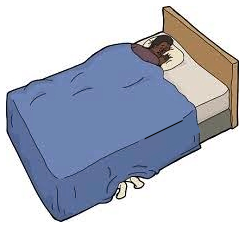
…. having to hide from parents, siblings, other relatives, baby sitters, neighborhood kids…. because they were bullying & beating on you, subjecting you to unfair & unusual punishment, verbal & physical attacks, sexual abuse, teasing, unneeded enemas, sadistic mind-games, not allowing you to have your feelings (“I’ll give you something to cry about!”)…. & no one to protect or help you

• You carried around constant terror all by yourself, waiting for the other shoe to drop. Where could you go for safety? Under the bed, or table, in the closet, the neighbor family, in your room, at the library, at sports? Someone may have known what was happening to you, but they didn’t/ couldn’t intervene, so you were still trapped with the abusers

Consider the Ab. loneliness of….
…having to constantly fend off boundary invasions, mental & physical.  It may have seemed that you weren’t alone (someone was always around – in your face, in your business, in your space…), so how could you be lonely? But they were not really WITH you, at all – rather: at you, using you, controlling you

It was all about their neediness: getting into every nook & cranny of our body & mind, watching you all the time, fussing with your looks, clothes, actions, even your facial expressions (“look ashamed / wipe that look off your face”….).
OR it was all about one-upping’ you, competition between you & a parent, or between siblings – for attention, knowledge, friends, skills….

Consider the Ab. loneliness of….
…. having to play out a Toxic Role  – Hero, Mascot,  Scapegoat, Lost Child – to serve the family sickness:
– only allowed to ‘use’ a small % of yourself & having to hide or cut off the rest
– never having the freedom to find out who you really are as a whole person
– not allowed to develop at your own pace & for your own benefit ….

Consider the Ab. loneliness of….
…. hiding family sdysf. ROLESecrets, present & past.
SPOKEN – “Don’t let anyone see those bruises / Don’t tell anyone daddy’s in jail, that brother Johnny’s in a mental hospital or a drug addict, sister Suzy’s a prostitute, that daddy isn’t really dead….

UNSPOKEN – never ever bring up the drunkenness, fights, neglect, beatings, incest…. that went on behind closed doors. And then there were the secrets you somehow intuited but didn’t have any facts about, but found out about years later – like about a sibling before you who died, that Grandpa killed someone, mom was raped, grandma cheated on her husband….

d. FROM SHAME  
Consider the Ab. loneliness of….
…. having to hide yourself from everyone, especially outside the house – because you were soooo bad that you couldn’t let anyone know the ‘real you’. If they got to know you, you were convinced they’d hate you just as much as your family did – & that would have been too much to bear (see Self-Hate posts)

Consider the Ab. loneliness of….
lonely child….. having to hide your family from the rest of the world, because they were drunk, crazy, dirty, raging, seductive (with everyone) or just not there to make a home you could bring others to. You were ashamed of them & where you lives, so you stayed late at school, in the library, at a friend’s…. or lone, anywhere but there

Consider the Ab. loneliness of….
…. never able to trust the very adults who were supposed to be taking care of you – parents, older siblings, other family members, babysitters, school & religious leaders
• They were unreliable, messed with your mind, were sexually inappropriate, cruel, stupid, crazy, high….
• They’re too busy with their own concerns – having a good time, working, ‘using’, cheating…. to be there for you
• No one was honest about how they felt or what they really thought. No one was direct & clear. You never knew where you stood.

NEXT: L. in Adulthood (Part 1)