EnneaTypes – Language STYLES (Types 6, 7)

fun talking


TO CONNECT WITH OTHERS WELL
it helps to know everyone’s style

PREVIOUS: Talk Types 4-5


TYPE 6s give CAUTIONS, CAVEATS, LIMIT SETTING
Self-talk: ‘But what if …’
Words : But… have you thought of? No. Not possible, Not today – maybe.
are about: tomorrow, real / reality, what about….? worst-case, why?
Public Speaking Manner: ‘Shotgun’ OR Apologetic

Style: 6s have a nervy, quick style of talking which can be witty & giggly, OR pejoScreen Shot 2015-05-19 at 6.20.05 PMrative & grouchy

THEY:
• Are engaging, information-oriented, thoughtful
• Alternate between staccato, hesitant speech -&- bold, confident speech
• Can use emotion-laden language OR talk in short shotgun blasts
• Freely discuss worries, concerns, & “what ifs”
• Start with analytical comments, but ask a lot of questions

Pitfalls: Either doubt their own message, so soundly confused & unclear OR push their cause down everyone’s throat
Can be overly negative: “It’ll be doom & gloom if you don’t change your…..”
They assume hidden motives & danger where there are none. Can use shock techniques because of ambivalence toward authority.

Use language to
: defend, question, second-guess, trouble-shoot, warn
Others can experience 6s as challenging, contrary, doubting, pessimistic

MANIPULATE / create CONFLICT
by: testing other people’s commitment to them by endless complaining or being evasive. Need to set the record straight “just so you don’t misunderstand….”
BLOCK others by: automatically negating a person or their idea

CONFLICT style
: blaming, cross-examining, distrusting, quick, relentless, vacillating, victimizing
6s are triggered by feeling mistrustful or being blamed. They can become terrier-like & questioning when feeling insecure or abandoned.

For BOUNDARIES: need to ‘reject’ put-downs & excuses
To FLOW in conversation, need AWARENESS – of thoughts, choices & emotions in self & others

To RESOLVE conflicts with 6s:
• Admit any ulterior motives you may have
• DON’T ever tell a 6 to calm down!
• Don’t get lost in their circular arguing , & if it feels like a marathon – walk away
• Don’t try to win – it will only escalate the argument. Instead, try to find common ground & allay their fears of abandonment or anger
• Hold your opinion but don’t be stubborn about seeing their point of view
• Stay calm but do not dismiss them, insult their intelligence, flatter or appease them

✥ ✥ ✥ ✥ ✥ ✥ ✥ ✥ ✥

TYPE 7s use ANECDOTES, BRAINSTORMING, STORYTELLING
Self-talk: ‘On a lighter note’.
Words : “I / me, ‘yes’, more, let’s go
are about: deals, fun, ideas, option, opportunities, plans, travel, trapped
Public Speaking Manner: Enthusiastic storyteller
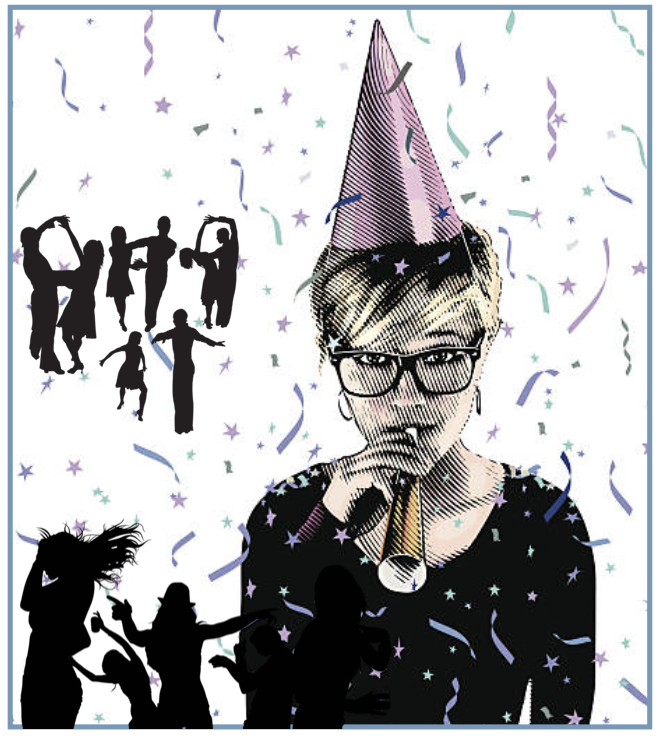
Style: 7s want to enjoy everything, so they’ll use wit, storytelling & a dramatic tone to heighten their pleasure when talking
THEY:
• Avoid negative topics about themself (or others)
• Re-frame negative info so it seems positive
• Shift from topic to topic
• Tell engaging stories & can be very funny
ARE
• analytical & idea-oriented
• charming, exuberant, fast-paced, sociable, spontaneous, upbeat

Pitfalls: Can get too attached to their own stories, like making a saga out of a mundane trip to the post office, & not relevant to the current topic.
Can be idealistic, use too much humor or put too much emphasis on fun, so the listener won’t believe or trust them. They know a little about everything, but little or nothing in depth

Use language to
: change topics, check out, deflect, entertain, imagine, joke, laugh, move on, sample, shift gears, tell stories
Others can experience 7s as indifferent to others’ input, making excuses, quickly changing topics, self-absorbed, undependable

MANIPULATE / create CONFLICT by : distraction & being entertaining to get what they want, insist that others meet their demands. Being a wheeler-dealer, a know-it-all. Making light of serious situations
BLOCK others by: going in too many directions, not focused on the person they’re talking to, use diversions

CONFLICT
style:  act arrogant, condescending, disinterested, disappearing, insensitive,  mocking, with tantrums.
7s are triggered by feeling trapped or limited, so usually try to get away from conflict, or react explosively to escape negativity.

For BOUNDARIES: need to use ‘distractions’ / being broad-minded – to open themselves up to new possibilities
To FLOW in conversation, need JOY: grow into the wonderful possibilities of being alive

To RESOLVE conflicts with 7s:
• Don’t harp too much on what they’re doing wrong or they’ll shut down
• Equally – don’t sugar coat things but re-frame problems so they can take in the your point without feeling too threatened
• Give them space but hold them to a time when the conflict can be resolved. Ask them to set aside time for you to discuss it (5s like this too)
• They’ll flee any difficulty, so let them know how this affects your relationship

NEXT: TALK types (Types 8, 9)

EnneaTypes – Language STYLES (Types 4, 5)

Screen Shot 2015-05-17 at 11.44.27 PM


HOW I TALK IS A REFLECTION
of my brain & my identity

PREVIOUS: Talk Types 2, 3

REVIEW:
Intro explanation (Part 2)


TYPE 4s give LAMENTS & SAD STORIES
Self-talk: ‘I’m feeling …’.
Words : abandoned, alone, connected, elite, high, passionate, special
are Aboutidealism, lost-love, not the same, not ordinary, performance, standards
Public Speaking Manner: Lamenting

Style: When 4s talk they reveal a lot about themselves & their feelings, even with strangers they just started chatting with – anywhere. There’s often a sadness in the voice, but also a tendencytype 4 to pretend being naive – just to amuse friends.

THEY: •  Have a flair for originality
• Ask personal questions of others
• Often use words like I, me, my, mine
• Talk about self & discuss feelings / emotions
• Share very personal &/or painful stories
• Use dramatic language, which can sound calculated

Pitfalls: #4’s language can be exaggerated, so attached to uniqueness that the audience can’t relate, or will get lost in emotion, turning people off. Like 2s, can get too whiny
Use language to: extol, express longing, lament, self-express, yearn, with poetic turn of phrases & regretful sighs
Others can experience 4s as ‘drama queen / king’, & who are never satisfied with encouraging responses from others

MANIPULATE / create CONFLICT by being : ‘hard to get’, temperamental, unnecessarily dramatic, talking in an affected superior manner, & making others ‘walk on eggshells’
BLOCK others by: misuse of imagination – in fantasy, not realistic

CONFLICT style
: cold, condescending, detached or hatefully articulate, emotionally explosive, haughty.
4s are triggered when they feel abandoned, misunderstood or sense anger from the other person.

For BOUNDARIES: need healthy imagination to have a broader perspective
To FLOW in conversation, need ORIGINALITY: being creative, vital, with eccentricities

To RESOLVE conflicts with 4s:
• Don’t let their dramatics or emotional outbursts push you away
• Don’t try to have a completely rational discussion without emotions – they’ll ignore you
• Give them time to calm down but let them know if you’ve been hurt too, & that your feelings are just as important as theirs
• They’re sure they know what others are feeling, & often do, so acknowledge their intuitive insight, but keep to your own personal truth

✥ ✥ ✥ ✥ ✥ ✥ ✥ ✥ ✥

TYPE 5s give LECTURES, THESES, TREATISES
Self-talk: ‘I’m thinking …’
WORDS : detachment, rational, patterns, simplicity, systems
are about: being mindful, clever thinking, logical, using correct tools for the trade

Style: 5s may be ‘distant’ much of the time, but once they get going on a subject they know a lot about, it’s hard to stop them. 5s like to show off their superior knowledge & use a wider vocabulary than most
THEY :
• Express thoughts rather than emotions
• Limit sharing of personal info
• Speak too tersely or in lengthy lectures
ARE:
• Analytical, content-focused, clear
• Highly selective in word choice
• Not big on small-talk but can be wordy
• In groups are mostly quiet, but if talking will use a ‘thin’ voice

Others
can experience 5s as arrogantly aloof, emotionally disconnected, over-analytical & pedantic, a know-it-all
Public Speaking Manner: Dissertation

Pitfalls
: Can quote everybody else but not speak for themself, seem detached , may withhold information OR give too many facts & ‘wander the labyrinths of the mind’
Use language for: definitions, detailed explanations, facts, informative displays of knowledge, precise instructions, logical & rational arguments

MANIPULATE / create CONFLICT by : being emotionally detached & staying preoccupied in their own head, rambling, going on & on – but not noting others are bored or confused
BLOCK others by: cynicism, lacking trust & a core belief

CONFLICT style
: arrogant, blisteringly angry, childlike, cold, cutting, detached, overly logical, passive aggressive, unfeeling
5s are triggered by too many expectations (especially emotional) & emotional displays

For BOUNDARIES: need cynicism/ skepticism to test what is said, to not believe everything they hear

To FLOW in conversation, need EDUCATION – first to listen & learn, then teach

To RESOLVE conflicts with 5s:
• Keep your own emotional stability while arguing. 5s like to focus on the facts & detach when anyone gets too upset – so walk away if you can’t be calm
• Tell them your feelings are hurt, without expecting them to do something about it
• Don’t let them get away with using information or arrogance to deflect or as a weapon
• Remind them you’re a person not a computer.

NEXT: TALK types (Part 2d)

EnneaTypes – Language STYLES (Types 2, 3)

Screen Shot 2015-05-17 at 11.45.34 PM

MY WORDS & EXPRESSIONS
always give me away

PREVIOUS: Talk Type 1

REVIEW: Intro explanation (#2)


TYPE 2s give ADVICE, COMPLIMENTS, PRAISE, SYMPATHY
Self-talk: ‘You need me’.
WORDS : inspire, help, need, strong/weak, we/us
are about: connection, falling in love, potential, service
Public Speaking Manner: Warmth

Style: 2s talk to others attentively, showing interest by eye contact & verbal encouragement. They like to give & get compliments, & love to offer helpful advice. But – when upset, 2s can speak with hysterical fury.
THEY: • Ask questions
• Focus on what others are talking about, with fewer references to self
• Get angry or complain when they dislike what others say about something that matters to them
• Talk in a soft voice unless angry or agitated

Pitfalls: Lose their audience by getting lost in emotional stories or being over-emotional. Feel pride for giving so much, & think the audience should be grateful. ‘Shape-shift’ to be liked, so can seem wishy-washy.
USE language to: befriend, comfort, get personal, meet needs, offer friendly advice, pitch in, support
Others can experience 2s as controlling, complaining, intrusive, over-helpful, nagging, resentful

CONFLICT Style
: blustery anger, dramatic, emotionally explosive, entitled,
OR acting the martyr, sulking, teary.
2s are set off if they think they’re not being kind, helpful, or by any implication that their ‘helping’ efforts aren’t well received.

MANIPULATE
/ create CONFLICT by : forming dependencies – always ready to console, & give helpful tips or ‘teaching’ advice.
Masters at creating a connection, using it to figure out what they think others need / want, & then try to provide it
BLOCK others by: being presumptuous, over-helping, over-advising

For BOUNDARIES: 2s need ‘arrogance’, actually – being assertive – to speak up for themselves
For FLOW in conversation, need COMFORT : for themself – physical, emotional & intellectual

To RESOLVE conflicts with 2s:
• When they feel used or undervalued, assure them their efforts are appreciated & are not in vain
• Acknowledge their emotions, but don’t cater to their histrionics, AND remind them:
— they’re choosing to do whatever they’re doing
— you want them to take care of themself

✥ ✥ ✥ ✥ ✥ ✥ ✥ ✥ ✥

TYPE 3s use PROPAGANDA, SALES, PITCHES, SELF-PROMOTION
Self-talk: ‘Watch me shine’.
WORDS : Awesome, Outstanding, Wonderful……
are about: achievement, doing, goals, efficiency, success, winning
Public Speaking Manner : Convincing

Style: 3s can have a fixed stare when talking to others, which makes them seem fake, like they’re pretending to listen but are much more interested in the impression they are making.
They name-drop & ‘casually’ mention new projects or acquisitions to show how successful they’ve become (humble brag?)

THEY: • Are impatient with lengthy conversations
•  Are direct, enthusiastic, fast-paced, topic-focused
• Avoid topics they don’t know much about or reflect badly on them
• Think & respond quickly, with confidence
• Use clear, efficient, logical, well formulated words, concrete examples

Pitfalls: May not have a real message – being strong on style but low on content or not having an actual point.
Can seem too slick, too polished, so the audience are less likely to trust them. Can cut corners & slide through by pretend to know more than they actually do.
Use language to: advertise, exclaim, motivate, perform, promote
Others can experience 3s as overly efficient, restrictive, & overriding others’ views

MANIPULATE / create CONFLICT by : being charming, & taking on whatever image will ‘work’ to look good & get what they want. Try to impress by always talking about how well they’re doing, how great things are, what-all they’ve done
BLOCK others by : dishonesty – outright lies or by evasions

CONFLICT style
: arrogant, condescending, dismissive, evasive, sly, narcissistic, superior, undermining.
3s are triggered when feeling undervalued or dismissed. They can easily get angry when their drive & successes are misunderstood or sabotaged

For BOUNDARIES: need ‘untruth’, to omit bragging or status- language (avoid truth-paralysis) so they can move forward
To FLOW in conversation, they need APPRECIATION: maximize strengths & minimize weaknesses – by valuing self & others correctly

To RESOLVE conflicts with 3s:
• Set aside time to discuss issues, & don’t let them try to smooth things over with promises or apologies, especially when they don’t understand the problem
• In a close relationship, appreciate their hard work but emphasize importance of connecting
• Help them express emotions instead of just-the-facts, which they use to prevent feeling too much.

NEXT: Ennea style – Type 3

EnneaTypes – Language STYLES (INFO + Type 1)

THE WAY I COMMUNICATE
is consistent with my Type

PREVIOUS
: EnneaLanguage – INTRO #4

SITE
:  Tapes of famous people’s talk style

BOOK: “Full Face to God: Introduction to the Enneagram”, David Mahon

TALK STYLES – The Enneagram opens the doors of communication in many ways, which always begins with us. The better we know ourself, the easier it will be to communicate effectively with others.

INTERNALLY-referenced people provide their own motivation. They decide on the quality of their own work & have trouble accepting other people’s opinions or outside direction. They gather info from others, questioning their input, then choose what to do with it.
Language Pattern: They know or decide for themself, evaluating their own performance. They resist instruction from others, which is only seen as information.

EXTERNALLY-references people need others’ opinions & outside direction, motivated by what others want or decide. If they don’t get feedback, they wonder how they’re doing, so have trouble starting or continuing activities without some mirroring.
Language Pattern: Need to compare their work to a norm or standard. Other people or external sources of info are their guide & judge, taken as a decision or an order.

Each type has :
✔︎ a unique approach to speaking & writing, based on inborn talent, which can easily be seen, especially noticeable when speaking to a group or audience. We actually have the ability to access language styles of other types, but when on auto – our personality runs us instead of seld-regulating – so fall into default ways of communicating with its ➕s and ➖s.
✔︎ its conversation stoppers that block healthy communication, used unconsciously when anxious, & based on their core defensive pattern.
However, sometimes we do need a version of conversation stoppers to help set reasonable limits, & protect ourself from boundary invasions
✔︎ language blockers can be used to manipulate & cause conflict, whether deliberately or not. When used to push away or attack others, at best they lead to poor quality conversations, at worst they’re poisonous

Counters to each Type’s blocking style comes from their natural ARTcreating FLOW in communication, with the need for STOPPERS, as protection.
✥ ✥ ✥ ✥ ✥ ✥ ✥ ✥ ✥ ✥ ✥ ✥ ✥ ✥ ✥ ✥

TYPE 1s give SERMONS, PREACH, TEACH
Self-talk: ‘That’s not right, I am good, I know best, I want perfection”
Their WORDS : bad/good, excellent, must, ought to, should
are about : judging, perfection, policies, responsibility, right/wrong, what’s correct
Public Speaking Manner: Sermonizing

Style: 1s often have a tense voice, as if there’s some upset or anger underneath they’re suppressing.  THEY are:
• Concise, direct, detailed, exacting, precise
• Defensive if criticized
• Quickly respond to others’ ideas, especially if they strongly agree or disagree
• More likely to share about tasks rather than emotions

Pitfalls: 1s can pontificate – because they ‘know’ what’s right! When they get caught up in minutia – they lose their audience, OR end up never giving a speech at all because, it isn’t right – yet.
Can be so rigid they never change their message, for fear it will be wrong.

USE language to
: admonish, correct, find fault, remind others of obligations
Others can experience 1s as closed-minded & unfeeling

CONFLICT Style: condescend, find fault, moralize, nitpick.
A poker face & unemotional, or explosive if pushed too far
MANIPULATE / cause Conflict by: constantly correcting others, pointing out what’s wrong in the environment, insisting that others share their standards & values
BLOCK others by: being critical, disapproving, judgmental

For BOUNDARIES: 1s need realistic & healthy ‘judgment‘, to determine what is & isn’t helpful or safe, right for self & others
To FLOW in conversation, they need GRACE: using Tact & Respect to heal – be compassionate, forgiving self & others

To RESOLVE conflicts with 1s:
• Avoid the words ‘wrong, incorrect, bad’…. to prevent escalation
• Don’t tell them they‘re wrong
• Find a way to validate their opinion, but hold your ground
• Gently help them see how they’re being angry or hurtful, as 1s have a fear of their own anger.

NEXT: TALK types (Types 2, 3)

EnneaTypes – LANGUAGE – INTRO (Part 3)

LANGUAGE CONNECTS
all aspects of human beings

PREVIOUS: Intro – #2

SITE: Unlocking the Secrets of Sacred Geometry : Understanding the Meaning & Benefits of Mystical Symbols

BOOK: “Sacred Number & the Origins of Civilization ~ Richard Heath

QUOTE: ‘Your Enneagram number is not for mere self- categorization, but for your enlightenment, to help you recognize your addictive patterns of seeing & thinking’ ~ Richard Rohr, Christian viewpoint (posts 11/22)


THE WHEEL = States of Consciousness
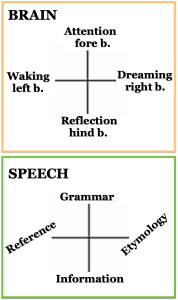
◆ The basic components of the Thinking Mind (in Part 1) can be reduced to 3 space-like realms + 4 time-like functions of language
= the 12 basic areas of the mind-map called ‘The Wheel’ – which is the basic gestalt of our mind, a valid outline of Reality.

◆ The Language Wheel, in some form, can be found in all anthropology studies of the world, which makes it a philosophy of tolerance – clearly showing us the common denominators underlying all social & religious traditions, based on conscious experiences & underlying mathematical criteria.

The Wheel can help make sense of the world (chart below), & clarify the path of growth.
📌 Its information can be used as a tool to find a deeper connection to ourselves so we can follow our life path

📌 It can show the connection between Science & Religion, our left & right brain sides, putting us in tune with history, & helping us think & act globally.
📌  It’s a weapon to open the gate to inspiration for anyone willing to divest themself of the false “I.” Anything not tested by the Wheel has no permanence.
EXP: The weapons of the Wheel will, unnoticed, smash false seriousness with a joke.

NOTE
🔸TIME terms are at points 9,6 3.
🔹 SPACE terms at 1,2,4,5,7,8 – (conjunction, noun, preposition, adjective, pronoun, adverb), which are complements so can be added together at will.

The FOUR (time) FUNCTIONS with Brain Parts
☀︎ FEELING
is right brain = metabolism.
Emotions (fun, joy, love, passion, humor…), moods, drives, imagination, impulses, dreams, force, power, strength
☀︎ SENSING is left brain = 5 senses, sex, excretion. Direct, immediate & waking consciousness, sense-data. Unprocessed information intake
☀︎ THINKING
is hind brain = breathing.
Language – both analytical & analogical. Reasoning, deliberate, to conceive, connect, enumerate, reflect.
☀︎ WILLING
is fore-brain = deep sleep, yes-no, on-off.
Attention, action of all kinds, to carry out, control, determine, order, work.

The THREE (space) REALMS of Ennea-Numbers
• BODY – 
brain stem, cerebellum, reptilian brain.
Mass, particle, physical, solid, space. Conditioned learning

❤️ Assertions (Affirm) = Body Willing
#2 Noun = Body Sensing
#7 Pronoun = Body Feeling
#9 Verbal Forms = Body Thinking

• SOUL – the middle link between Body & Spirit : Bio-plasma, limbic system, mammalian brain. Being, instincts, people, psyche, vital force.
Ego-self, social entity

💙 Verbal commands (Lead) = Soul Willing
#8 Adverb = Soul Sensing
#4 Preposition = Soul Feeling
#6 Person = Soul Thinking

• SPIRIT (mind) – Neo-cortex.
The Animating vital principal, sentient part of a being, space-time continuum, incorporeal
Abstract, intellect, ideas, ideal, gestalt, quality, meaning

💛 Questions (Inspire) = Spirit Willing
#5 Adjective = Spirit Sensing
#1 Conjunction = Spirit Feeling
#3 Verb = Spirit Thinking

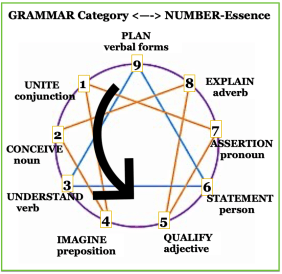
⏬️ Grammar & Consciousness 
This chart is the archetypal symbol that combines language, Functions & Realms, separating software (language, science, religion) from hardware (structure of our mind).

Its basic components are deduced from the Mandelbrot vector 0 -> : Z -> Z + C, with 1 -> 9 as the fractal scaling. (EXP : image at page top ⬆️ )
This simple formula, discovered in 1962, identifies the structure for all complex geometric forms existing in nature.

◀️ The circle connects Universal Wisdom with the 9 points of the Enneagram, wisdom being the ability to live well in a chaotic world, & requires ‘inside information’ about how things really work.

The12 fields of civilization combine with the Language Wheel to naturally follow the forms of language, consciousness & personality.  As the reflection of reality, consciousness “moulds” the forms & dictates the laws of its existence, in the form of speech. Consciousness is always verbally expressed : if there is no language there can be no consciousness. They are two aspects of an integral process.

The combination suggests that human creativity can use language & life experiences to transform the ‘animal-human body from physical into spiritual. We can tune into & integrate the various aspects of our personality to develop our abilities, using Self-ego as a tool “ (More….)
«

«
NEXT
: Language Intro – #4

EnneaTypes – LANGUAGE – INTRO (Part 2)

Screen Shot 2015-05-18 at 12.17.29 AMI CAN TELL YOUR TYPE
by the language you use

PREVIOUS: Language Intro – #1


GRAMMAR has two overlapping meanings:
1. 
It’s everything about how a language works, including syntax as a subset (correct order of words in sentences in order to make complete sense)
2. How words are inflected, conjugated & declined – according to aspect, degree, gender, mood, number, person, tense (11 Rules of Grammar)

Using CHART ⬇️  : for dialogue to go smoothly & with co-operation, speakers need to include listed below :
✔︎ one of the 3 verbs
✔︎ two of the 6 verbal persons (gender, person)
✔︎ three of the 9 verbal forms (time, mode, voice).
” That morning (t) the young man (g, p) drove (v) his new car to work.”

⛔️ If one of these categories is excluded when talking, or we leave out a category as part of the information that’s needed to make sense – then we destroy dialogue & create dispute.

◆ Here we’re given the Parts of Speech as a tool for growth. Included are key words of each grammatical form, which are related to the Thinking (level 2) function of T.E.A..
Each position is a numerical Fractal (having the property of self-similarity), considered the hidden order of Universal Truth. They are seen as similar but not identical concepts, the repetition of a basic subject applied to different areas of knowledge.

Ennea MEANING & USE of Grammar components:
1. Conjunction – a synthesis for unification & healing. Represents both Inclusion (‘and,  so‘) & Exclusion (‘or, but‘)
USE :  to make connections, tying words or ideas together.

2. Noun – basic drive for creativity & production, to achieve physical realization of ideas.
USE : (singular, plural, name, concept) allowing us to make generalizations from the particular “Not all groups are cohesive”

3. Verb – is about understanding, in relation to abstract concepts.
USE : represents awareness of things happening in time, a dynamic process of past, present & future
“She leapt into the pool”

4. Preposition – symbolizes imagination, the need to fantasize & dream.   USE : the mental/internal image of the personal relationship between oneself & other people, things or ideas
“The child ran way from his father”

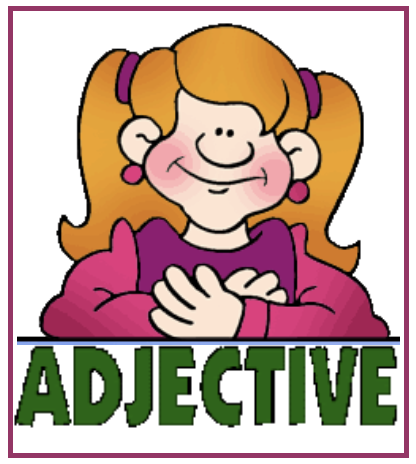
5. Adjective – is about analysis, to distinguish one idea from another.
USE : precisely describes or qualifies the noun. This relates to & allows for refinement of understanding
“His loud laugh was annoying.”

6. Verbal Persons
– stands for the drive to communicate, to explain, to relate to & with other people, to improve Self & others.
USE : (the subject) is the ability to make statements, by personalizing a time event or action  “The meal has been eaten”

7. Pronoun – pertains to initiative, to fight & to start something new.  USE : places nouns in relationship, establishing & modifying them “She was always late”

8. Adverb
 – is about organization, responsibility & duty; to assume responsibility for some social situation or group, problem or opportunity, & to organize or direct it until conclusion.
USE : modifies the verb, explains it through 8 questions that show its circumstances (where, when, how….) “He’s not very tall”

9. Verbal Forms
– regards the impulse to actualize, engineer, invent, orchestrate, based on knowing what’s possible.
USE : place an action in perspective, like a plan (active, indicative, subjunctive) (MORE…. scroll way down)
“We are going home”
(Technical parts of each… scroll down to ‘Quality’)

NOTE: The number positions in this chart ⏫️ are in reverse order, to correctly align with ancient Number systems which reflect the dynamics of the Earth’s counter-clockwise daily rotation on its axis – if North is considered the ‘top’ or vantage point, which it usually is. Screen Shot 2015-05-17 at 11.51.27 PM

However, the Enneagram follows a tradition based on the invention of clocks (which occurred in the Northern hemisphere), copying the sun’s clock-wise shadow on sundials. We see the sun that way in relation to Earth’s anti-clockwise rotation – if we were looking down at the North Pole from space.  (More…. slide #4)

Screen Shot 2015-05-17 at 11.48.56 PM◆ Our personal number system is a description of the creative process – played out in cycles of day, year & precession of the equinoxes.
Looking from above at a galaxy or hurricane’s counter-clockwise swirl, we can superimpose the #6.

The form of the 6 also describes looping backwards on ourselves – the limitations of our mental consciousness, which effects our creativity.
See: Spiral Dynamics, Sept 2009

NEXT: Language Intro – #3

EnneaTypes – LANGUAGE – INTRO (Part 1)

PREVIOUS: Enneagram Humor (Part 6)


BEFORE listing the characteristic language style of each Ennea-type, it may be helpful to consider Language in the larger scheme of physical/spiritual reality. As we know, most people function from a ‘False Self’ imposed on us by parents, friends, job & society. This mask has little to do with innate capacities, & blocks personal energy, making us internally weak.

👀 ‘Waking up’ (personal growth) comes from self-awareness – observing the False Self in action, then developing our compassionate & non-critical Inner Observer, which connects us to our Core.

The goal is to gradually outgrow or minimize our specific defensive pattern – as well as any minor ones – to become a more well-rounded, whole person. Then we can use the energy & qualities of whichever of the 9 types is needed in the moment, while letting our True Self shine thru.

Word Power affects our role in society, so a limited vocabulary can limit potential opportunities. Learning about & using the concepts inherent in grammar, with their connection to Number, makes it easier to make Sense for ourselves (see Part 1). Behind-the-scenes knowledge can help us grow & prosper so we can make better choices in a world full of confusion & risks.

Language : a union of Sacred & Secular
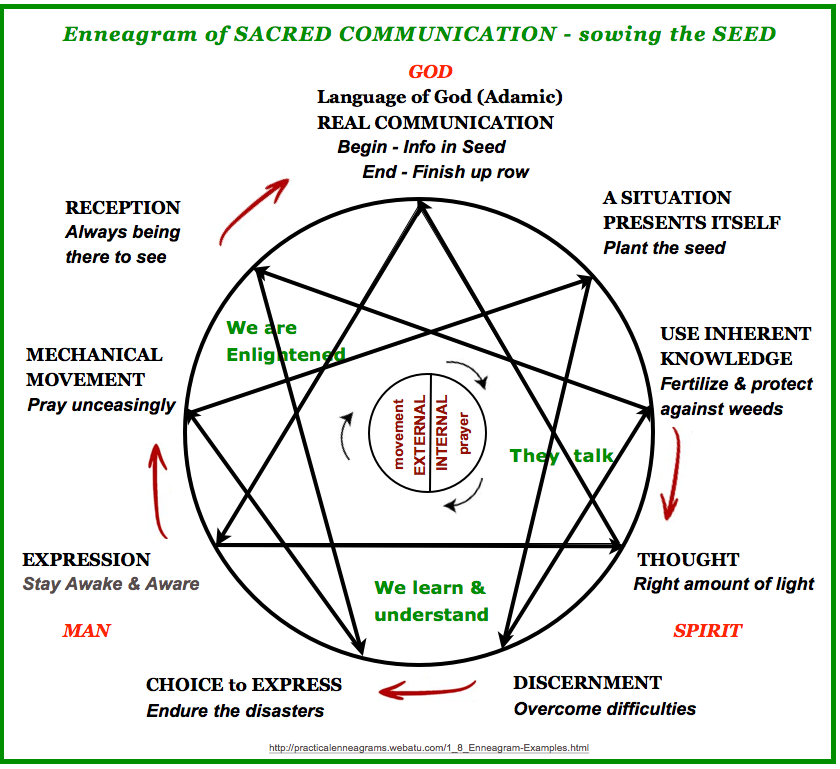
TRUE Communication is based on Eternal Principles with its own set of laws, This is shared among intelligent beings, via the ADAMic ‘original’ language spoken with God in the Garden, a physical mechanism used by our soul’s spirit to express original thought, ie. the Essence of the Eternal.

This chart presents Language as both Divine & mundane attributes of Human Character. It also defines the circulation of light, growth of plants, the development of society & human conduct…. Communication is much more than a mechanical activity via sound waves, or the connection between two or more people, no matter how deep or productive.
«

Communication includes
a.
Speaker and b. Listener AND c. ‘Common thinking / understanding’ of both people / groups, which represents Consciousness, seen at the base of the Enneagram’s 9-3-6 triangle.

√ Without Consciousness, thoughts expressed in language would not be possible
√ With it, we have human understanding & the spiritual benefit of two-way communing with the Divine.

Using the concepts in the above chart allows us to analyze & improve the process of “truly conscious communication”. It reminds us to pay attention to what we think about & say, so we can be better understood – to ourself & by anyone willing to listen.

◆ The structure of all languages is naturally shaped by the basic form of the physical brain – which molds speech.
In turn, speech shapes the basic patterns of our mind, forming the way we make sense of the world.
A unifying feature of language is the child’s process of learning to speak.

Mastery of all languages develops in seven stages, using system & method:
1 – Sensing = Affective gestures
2 – Thinking = Exploring acoustic potential
3 – 
Feeling = Brain lateralization
4 – 
Willing  = Grammar
5 – Body = Word power
6 – Soul = Communication
7 – Spirit = Poetry (Each explained )

 👄 Coherent language (point 4), formed through grammar, represents a higher order of thinking. The “Grammar of Man” – the structural common denominator of language – unites the thousands of spoken languages on our planet, allowing for translation.

◆ The Enneagram’s 9 categories of grammar (in Part 3) are based on Sacred Number. In ancient Greece, Pythagoras discovered that the concept of “Universal Number” leads to structure, & the structure of the mind is also the structure of the world.

In essence, all is Number & therefore the key to wisdom – the ability to live well in a chaotic world – by having internal / intuitive information about how things really work.
(SeeThe CODE” , with Marcus du Sautoy, math prof – re. how significant numbers appear all over the world, governing all life. 2011, Netflix)

◆ The relationship between Number & Grammar (in Part 2) is the bridge between esoteric & exoteric knowledge, which indicates that Quantity & Number = Quality & Meaning, which then can lead us:

✑ from beyond Meaning (external source), when life’s meaning (always subjective) comes from a pre-existing order or plan, imposed from the outside (God)
↘︎  ↘︎
into Sense (internal source) – where we’re able to make sense of our own life. We decide the substance of it, limited only by math & grammar (Objective Truth), & then determine whether it makes sense – to us. (MORE….)

NEXT: Language INTRO Part 2

Fear of Commitment – RECOVERY (Part 2)

PREVIOUS: Recovery #1

HELP: Free Relaxation scripts
NLP “Anchoring to overcome Commitment phobia

QUOTE: “It is character that gets us out of bed, commitment that moves us to action, & discipline that enables us to follow through.” Zig Ziglar, motivational speaker & author


COMMITMENT
to something / someone is one of life’s most empowering (& liberating) experiences. It’s how we achieve, how we grow, how we learn, how we love. Commitment is driven by a passion to a person or thing. If there’s a solid & compelling enough reason for WHY we want something, we CAN find a HOW to achieve that goal.

IRONY: It’s both a freedom & a binding – but only to what we want or need. It’s one of the most worthwhile ways to use personal choice – to ‘tie’ ourself to a person, place or thing (PPT) – for some period of time – that we work towards, have or love. Yes, commitment is love. It’s the freedom to invent our own life, by expressing True Self.

4. CHANGING the RE-ENACTMENT (Point #3, Parts 3a & b)

 ♥️ COUNTERING F of POSITIVES, embracing:
a. Self-careBY gathering & applying the knowledge of how to do it, & the help to stay on track

b. LovedBY learning that love is available – from yourself & from people who are already capable. Also, love is not being taken care of someone else – totally. It can come is small doses, in unsuspected ways, & by a variety of PPT

c. Power – BY understanding  that each of us is given the right at birth to express yourself to the fullest, to benefit Self & so to benefit the world with your specific talents

d. VisibilityBY trying out small ways of being seen – by the right people, taking in compliments & encouragement, then expressing more & more of your True Self

e. ReceivingBY believing that you’re not supposed to be able to do everything yourself. You have a right to get help, & most people like being helpful (except our family)

f. Success – BY accepting that you have a right to accomplish your dreams, especially any related to your personal gifts. It’s very important to also surround yourself with others who are successful in their fields

gPeacefulnessBY learning to feel the difference between the numbness of being emotionally shut down vs. the inner quiet of being anxiety-free & comfortable in your skin. This is not supposed to be all the time, just more often than not.

h. Higher Power – BY separating your understanding of God / Higher Power from the terrible, terrifying experiences with your damaged family – remembering that “God is not an alcoholic parent!”

Success Habits” comes from Life Change 90, a program of daily activities designed to instill Success Habits that help us work toward a more fulfilled life. Once the resistance to doing them diminishes, they can be done quickly & in small steps – so  it doesn’t have to take up a lot of time.
They represent an outline for committing to oneself, the first stage in committing to others in a safe way. To achieve our goals, along with passion, we need to ‘work smart’ by developing a practical plan, & finding appropriate & supportive environments to work in, as we dream  – while taking adult actions.

STAY AWAKE 
: over-viewong every day’s actions
• Be clear what your main goal is, consciously making it a prioritydaily
• Have specific daily goals & plans, with steps to achieve each one
• Develop strategies to solve short-term issues, & long-term ones that won’t go away
• Notice : Over-all mental state + Emotions, with mood shifts
• Keep track of finances & spending habits
• Be Grateful for what you DO have (grace) , & for the bad things you DON’T have (mercy)
• Review events at the end of each day (10th Step), to see how you’ve benefited, what you’ve gained, & what you’ve learned

Healthy commitment is a form of visibility
To ACoAs, being visible means risking abandonment, failure, jealousy & rejection.
BUT when we accept all parts of ourself without harsh judgment, choose well, have good boundaries, know our rights & trust ourselves – we can go for the gold!

NEXT: EnneaTypes – Language #1

Fear of Commitment – RECOVERY (Part 1)

don't sufferONCE I FIGURE OUT MY PASSION
I’ll commit to it whole-heatedly

PREVIOUS: Fear of Comm. – ACoAs #6

SITE: FoC Workbook: How To Overcome Fear Of Commitment

2. RE-ENACTING  FoC (a-j)
3. SELF-SABOTAGING re-enactment 

4. CHANGING the RE-ENACTMENT (See Point #2, Parts 2a-d)
If passion & love fuel a desire to commit to something, why do ACoAs avoid it like the plague? Following Toxic family Rules, the WIC’s terror, & long-term depression numb us to passion.

Of course, many ACoAs are passionately committed to one thing – not getting abandoned! That’s the WIC’s main goal in life, whether by clinging or by isolating. ACoAs are more focused on feeling safe than on getting love. We can’t feel truly saloving parentfe until we consistently care about ourself, but giving up S-H is an uphill battle.

• All our anxiety is a direct outcome of an unsafe childhood. So all of the ‘corrections’ will inevitably have to do with developing a Loving Parent to help the WIC heal, so it can gradually start living in the present (using book-ending & other tools….), instead of stuck in an unhappy past.

OUTGROW FEAR of:
a. AbandonmentBY gradually, patiently allowing yourself to connect with the backlog of original pain, eliminating S-H by ‘getting it’ in every cell of your physical & spiritual body that the pain you grew up in was not caused by you!

b. CompromisesBY understanding & accepting that bending a little when it’s not SO important, allows you to not break (rigid vs flexible tree)
c. Leaving Family
BY forming alliances with a variety of people & groups that are working towards : mental health, spiritual growth, social
progress, sharing a passion & having fun

d. Losing Control BY keeping track of your own emotions & motives, so your Adult is in charge of your actions, not the PigP or WIC. Then others cannot control you!

e. Mistakes BY understanding that all humans make mistakes sometimes, & that mistakes are how we learn

f. ResponsibilityBY knowing what’s your responsibility to self & a few others, & what it’s NOT. Each adult is responsible for themself, if possible & to your best ability. You are not your Higher Power

g. S & IBY developing your UNIT (Loving Parent + Healthy Adult), which the IC can totally depend on, instead of our wounded family

h.TrappedBY using your boundaries & choices to decide who, what or where to stay with, or when it’s time to leave

i. Truth – BY being surrounded by others doing the same FoO work, so you can gradually drop your denial, & mourn your losses

j. Vulnerable BY finding out your needs & using them to form strong boundaries – but not walls

SUGGESTION –  using a tool of NLP
a
. Choose a phrase about commitment with the strongest FEAR attached to it for you. Use our own words.
EXP: Relationships mean too much responsibility.


• See the sentence out in front of you, in the air or on a blackboard – so it’s outside of your brain
• Then, say each word with one breath between them. Then again with 2 breaths, then 3, then 4 then 5. Stop.

b. Reverse: choose an opposite phase you want to grow into – using your own words. EXP: “Relationships bring me peace, joy & love”.
Then say it with the same breath sequence as above, 1-5 between each word.
Rinse, lather & REPEAT each day, for a month. Notice & record any changes & improvements in your thinking &/or emotions

⚪️  Then pick another phrase & do the same. EXP:
✦ “Being Committed to another means being trapped” —-> “Being Committed to myself means I’m free to choose others”
✦ “Trusting any human Higher Power means disappointment or obliteration” (see Part 2) —-> “Trusting THE H.P. means permanent safety & support”

c. Picture the near Future You with the new belief – as you’ll be in a year from now. Give it a name like “Safer Me” / “More Trusting ME” / “More Relaxed ME”……
• Visualize every aspect of that Future You – where you’re living, the friends, great job/career, income…. & challenges you’ve successfully overcome

• See Future You as your mentor & ask what are the best choices to make now to get there
• ARRIVING: When you find yourself living in the new belief, remember to send love & encouragement to the past you. This will bridge time & space, further reinforcing the effectiveness of this exercise.

NEXT: FoC – Recovery, Part 2

ACoAs – Fear of Commitment (Part 6b)

too much loveALL THAT ATTENTION makes my head hurt!

PREVIOUS: FoC #6a

SITE: “How to Cure Commitment Phobia” – NLP ‘secrets’


3. SELF-SABOTAGING re-enactment
(cont)
Some POSITIVE things that interfere with our willingness to Commit :
a. Fear of self-care / b. F of being treated well & loved / c. F of our Power

d. F of Visibility. To the WIC, C. to anything means everyone can see us, in all our imperfections & ‘badness’.
If we combine Fears OF : Abandonment + Compromise + Losing Control + Making mistakes + Responsibility, we end up with a deep terror of being fully visible.
It would mean exposing ourself to the whole world as undeserving frauds, as “Who do you think you are?” echoes in our head. The assumption is that everyone else is also like our family, who will punish us for daring to have an identity different from theirs.

e. F of Receiving To the WIC, C. to others means making oneself vulnerable.
• Receiving
exposes us to good things we never had before, which opens the floodgates of need & longing, which will drown us!
We’re hungry for recognition & nourishment, but are forbidden. Our injunction against Receiving is bone deep, especially for the Hero & Lost Child.
TOXIC Rules include:
“Do everything yourself / I’m not important or valuable / I have no rights / No one actually sees me….”.
To ACoAs, Receiving IS: > breaking family rules, > being weak & needy, > selfish & greedy, especially when others are suffering, > getting something I don’t deserve, > arrogant, presumptuous….

2 broad categories given to
🔸 Receiving something because we actually asked. Being direct about what we need is not only forbidden by the PigP, but the WIC also believes that: 👎🏽 If we have to ask, then getting it doesn’t count!

But asking is appropriate. Even infants who can’t talk let feelings be known, while being totally dependent on adults to know & respond to their needs.
Instead, most of us had narcissistic, unavailable & weak parents who were not attuned.  So we’re still stuck back there, in the emotional infant-toddler stage, waiting, waiting…..
This passivity is not appropriate for adults. It is our responsibility to know what we need & then ask for whatever we can’t supply for ourself.

surprise gift🔸 Receiving something without asking, from someone generously offering time, attention, gifts….. because they want to! Naturally, with our background of abuse & deprivation, the WIC doesn’t believe anyone would give us something ‘just because’. Since we feel unworthy, everyone must have an ulterior motive, & it’s up to us to figure out what they want.

f. F of Success – To the WIC, C. to achieving our deepest goals means the sure loss of a connection to our family. (See Point c. in #3a). This refers to fulfilling our heart’s desire – what we were born to do. But even if we’ve managed to follow the Right Path, we’re more likely to keep from being as successful as we’re capable of – so we “Don’t get too big for your britches”! Full success would mean disobeying a basic Toxic Rule that “You always have to struggle, but never get there” !

g. F of Peacefulness. To the WIC, C. to anything good means being bored to tears. ACoAs are adrenaline junkies, ‘addicted to negative excitement’ (Ennea-type 7), always creating or inviting situations that make life more complicated & stressful.
This can include those of us who are isolated & withdrawn, whose form of excitement is mainly internal – the mental ‘spinning’ of obsessive self-hate & worry. Both types create unnecessary drama, re-enacting how our parents functioned + the chaos they created. Screen Shot 2015-08-22 at 8.55.38 PM

• To be calm, quiet, peaceful makes no sense to ACoAs & make us anxious! 🧐  Without constant ‘agida‘ we feel empty, which we call boredom, but is actually the result of being emotionally numb.

Getting used to inner Serenity takes time, with persistent love & patience. Whether the unconscious compulsion to be a ’drama queen /king’ is blatant or camouflaged, it’s up to us to replace it with a saner way of life.

h. F of Higher Power (God, Spirit, the “Universe”….). To the WIC C. to any form of ‘power grater than ourselves’ is guaranteed obliteration (death of Self). ACoAs are ‘afraid of authority figures” (Laundry List). John Bradshaw pointed out that children transfer their experiences with parents (the original ‘gods’) to their concept of the true Higher Power. If they were dangerous – then obviously so must God be. Not!

NEXT: Recovering from FoC #1