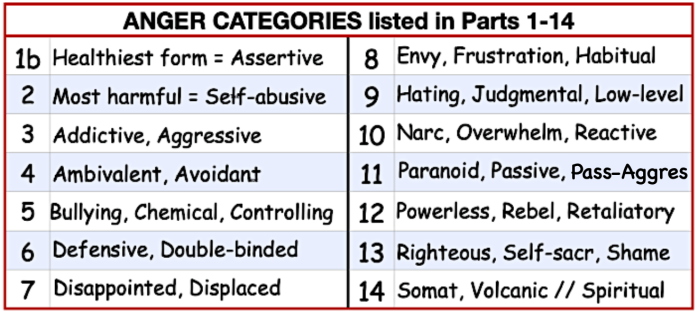
Anger – CATEGORIES : Most abusive (#2)

geen a.b. IT SEEMS SAFER
to turn the anger inward

PREVIOUS: Categories (Part 1)

SITEs: Self-Loathing // Anger turned inward


MOST HARMFUL
▪️SELF-ABUSIVE (S-H) ANGER (80-90% of ACoAs)
This form is anger at ourselves (self-blame) for not getting our needs met – being abandoned in one or more PMES ways in childhood.
All children automatically conclude they caused their pain (especially when it’s continual) because they naturally assume they’re the center of everything, & therefore everything that happens to them is about them.
A child’s logic says that “if I had been ‘good enough’, my parents would have provided enough of what I needed – acknowledgment, comfort, encouragement, safety, information, love, support….”

This anger is most harmful because it not only undermines the self-hater, but poisons everyone & everything around them. While it underscores the thinking of all unhealed damaged people, it’s the least acknowledged, since most suppress the awareness of it in themself

• It is expressed in all 3 T.E.A. forms – hurting ourselves with cruel, self-torturing Thoughts, excruciating self-loathing Feeling, & Doing self-destructive things or letting others harm us. In it’s simplest form, self-hate (S-H) is the —
— child’s belief that “everything which caused me pain in childhood – was my fault.”
— As adults, continuing the self-blame, & the resultant low self-esteem, the person decides it’s more ‘honest’ to be mad at themself than at others.Screen Shot 2016-06-01 at 4.43.25 PM.png
FROM the CHILD
S-H can start in infancy. Babies & young children have all kinds of habits, needs & emotions that parents prohibit &/or punish : being angry, demanding, greedy, jealous, needy, sloppy, ‘thoughtless’ ….

Their unloving reactions teach the child that parts of itself are unacceptable & have to be cut away. This creates a rejection of our True Self. “I’m not good enough, & never will be” becomes a core belief

FROM PARENTS
 Very damaged family members actually tell the child outright that they’re unlovable, too much trouble, worthless…. Parents who are rejecting, neglectful, shaming, over-demanding, Screen Shot 2016-06-01 at 4.43.45 PMoverprotective, overly punitive, overbearing…. insure a child’s S-H.
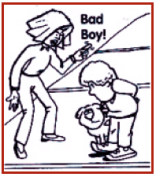
This kind of mis-treatment can result in a child being compliant (‘good girl/boy’) OR rebellious. In either case, it inevitably leads to depression & rage, which mask a deep fear, with a feeling of emptiness, drowning out happier emotions.

The LIE
S-H is a way to not feel powerless & vulnerable, starting at a time when that was our reality in life. The child decided, consciously or not, that “Since I caused the thing or person to hurt me (somehow my fault), then I can/have to change myself & them, so I can feel better.”
Not being able to change the people or situations in our environment compounded the S-H, seeing ourselves as total failures!
REALITY : we did NOT cause our early suffering, & so could not have cured it (the 3 Cs).

✦ Dorothy Block, in the intro to her book “So the Witch Won’t Eat Me”, explains how children turn their rage at their abandoning parents in on themselves, assuming that simply having the emotion of rage will kill the adults, so S-H is used as punishment for being potential parent-murderers!

✦ Dr. Rubin, in “Compassion & Self-Hate” gives a detailed picture of the many ways this anger is used against ourselves, as well as now to be self-compassionate

Self-INJURY
One form of turning anger on ourselves is physically harming our own body (the A of TEA) – such as cutting, overeating or starving, pulling out hair, hitting ourselves or banging our head….. done in order TO:senf-harm
😶 feel something, because having shut down on all the agony of childhood abuse & neglect, we go numb, & that’s as unbearable as the pain we’re trying to avoid (consider how upsetting numb hands or feet are)

♨️ to punish another person for causing / triggering our abandoned pain, to show them how much they’ve hurt us

🦠 to punish ourselves for something we’ve done wrong (getting angry, making a mistake, upsetting someone, not being able to control an outcome….)
BUT what we believe to actually be ‘wrong’ – is being born!

• QUIZES , including: Anger-Junkie Test
• “Why anger feels so d– good: Neuro-chemical way of self-soothing”

NEXT: Anger categories (Part 3)
Anger – CATEGORIES (Part 1b)

I NEED MY ANGER
to stand up for 
myself

PREVIOUS: Anger – Styles #4

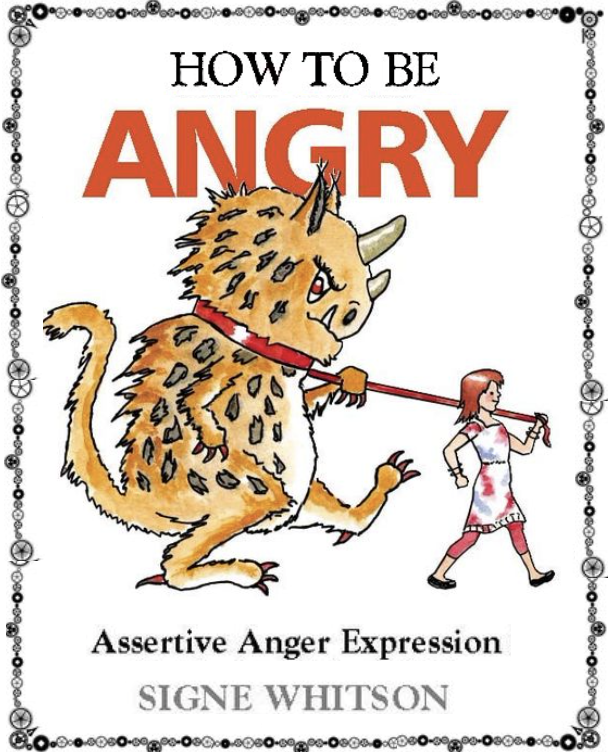
BOOK ⬇️ : “How to Be Angry (for kids & teens) – and ACoAs??


1. HEALTHIEST
: ASSERTIVE anger
Being able to express anger appropriately comes with mental & emotional maturity – an aspect of self-respect, confidence & personal integrity – without family-driven CDs.  This form is realistic because it’s in response to genuine offenses or injuries in the present, rather than a cover-up for old wounds & grievances which are then projected on to other people or situations. We’re able to respond in the moment, whatever way is appropriate to the present situation.

It includes being able to evaluate any upset from the perspective of :
◽️ knowing our rights, thinking before we speak, being patient, not raising our voice unnecessarily
◽️ really trying to understand where others are coming from (think, need & are experiencing), which shows we care about ourself & our relationships.
Ultimately the (ideal) goal is to achieve a WIN-WIN experience for all concerned.
EXP: Being Self-PROTECTIVE

Being in our Adult Ego State allows us be in charge of our behavior (no matter how strong the emotion). Not afraid to admit when something bothers us, we can think of a rational, constructive, respectful approach before saying or doing anything.
Also, this gives us time to listen with an open mind to another’s point of view or explanation, and when possible – we can talk with confidence in a non-threatening way to help deal with a problem

• Constructive anger is assertive – it’s not held on to but rather released safely, allowing us to act in a positive way to remove obstacles from our path. It comes from a persistent desire to push toward solving a given problem rather than running from it. The underlying belief is:
“I have a responsibility to protect myself & my rights. And,
I respect others as fellow human beings, but not always accept how they behave”

• Constructive anger can actually help relationships grow & be more intimate, because it doesn’t get buried & come out in distorted, abusive ways. We can be honest with others about how we feel – direct & self-respecting, making ‘I’ statements, rather than blaming or attacking.

This allows others to know who we are, & when there’s something they can do or change, that will help improve the connection.
EXP: “I feel angry when you______ ”

• Constructive anger is also a key factor in moving people to join political & social groups, marches, crusades….. It’s about being fed up with how badly things are going, & the need to contribute to making positive changes.   (MORE…..)

Anger is PROACTIVE
🔸 When we’re trying to disconnect from an abusive narcissist (N.), anger is absolutely necessary to successfully escape. Anger overrides fear…. so allow yourself to feel angry. Show that anger assertively.
If you’re trying to go ‘No Contact’ with your N, feel your anger and use grey rocking. Sit in it.
It could save your sanity & maybe your life, as well as those of your children, if you have any. It will motivate you to do what’s needed.

• That does not mean being abusive or resort to name-calling, but it does give us the impetus to take action. Anger, unlike depression or despair, is a dynamic, Screen Shot 2016-06-01 at 4.21.04 PMtake-charge emotion that helps us make a stand, fight back, or get away.
IMP: Put your empathy on the back burner:

Eventually we can developed a level of empathy for narcissists because they have an emotional illness, & they do suffer.
But when you’re trying to disconnect, it’s better to hate them, even seeing their behavior as coming from a monster or demon. Save any empathy for later, when you’re stronger & safely away from the abuser(s).
❖ You cannot afford to have empathy for a narcissist WHILE you’re trying to get out of their clutches.
(
Modified from – The Lucky Otter’s Museum of Narcissism)

NEXT: Anger categories (Part 2)

Anger – CATEGORIES (Part 1a)

Screen Shot 2015-06-06 at 4.22.27 PMBEING ANGRY IS LEGITIMATE
but hurting others is not

PREVIOUS: Ways to react #5

POSTS: What about anger?
ACoAs
& Anger anger Pendulum

SITES: Pendulum & chart to identify anger style

Anger-EXPRESSIONS
Most people tends to use some or all of these mis-management styles at some point, depending on the situation & people involved. However, each of us chooses a preferred one (unconsciously & by family training) as our dominant pattern in daily interactions. So, just switching styles is not the answer – except for the HEALTHY form.

In addition to the standard list, now we’ve added:computer anger
COMPUTER: Anger/rage at either software or hardware that’s not working or too complex
INTERNET: Flaming emails, being flooded with spam, abusive texts, & lurking?….
TRANSPORTATION: Cutting someone off, tailgating, overt road-rage, drive-by shootings

NOTE: The following ancient story has to do with the harm we can inflict on others by our angry verbal & physical actions – NOT the harm in the emotion of anger itself.

ZEN STORY: There was once a young man who was as tired of his fits of rage as were those around him. He’d get mad at the most trivial things & then later apologize. The apologies stopped having any meaning because his behavior didn’t change.
He was convinced that his anger was ingrained, out of his control, & wondered why his loved ones couldn’t see that & accept him as he was. Finally one day he pleaded with his guru for help & enlightenment.

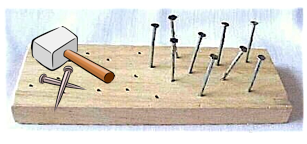
“Take a wooden board. Every time you get angry, drive a nail in it. Come back and let me know whenchinese story the board is full.”
The man followed the advice religiously. Before long, in just a few weeks, not a bit of space was left on the board – it was full of nails. He looked at it & felt ashamed. He went back to his master to report.
“Now, make a conscious attempt to control your outburst, & each time you succeed, take a nail out of the board. Bring back the board here when there are no more nails in it.”

He agreed, but this took much longer – many months in fact – to clear the board. Eventually he experienced a sense of control over his anger & felt relieved on seeing the plank cleared of nails. When he went back to the guru with empty board, he was told:

“Ah! I see you have cleared the board, but how dearly I wish you could restore it to its original state by somehow making these gaping holes disappear. The damage done in anger may be withdrawn – like first nailing & then pulling them out – however, it can never be undone. A mark will remain forever.”

IMP: This does not mean we eliminate the emotion, only change the way we express it!

CHART from Kundanchhabra 

NOTE: Here is the reference list for this blog ⬇️


NEXT: CATEGORIES (Part 1b)

Anger – Ways to REACT (Part 5)

heart brak angerLET’S SEE – WHAT LEVEL
of rage am I at right now?!

PREVIOUS: Ways to react (Part 2)


LEVELS of angerVariations (cont)    6. Emotional INTENSITY //
7.  Anger Matrix  // 8. Anger SPECTRUM

9. Anger Thermometer (Kassinove & Tafrate) 
• All uncomfortable emotions are signals we need to pay attention to, because they indicate that something’s bothering us or that something’s really wrong. And – maybe we need take an action, ASAP.
Knowing the levels of Emotion Signals is a way to be in charge of ourselves, but have to be learned. Awareness = Empowerment

THIS chart shows a gauge of anger levels, so each category can be expressed clearly & directly, using the word most closely identifying the intensity at the moment.

After considering the options, answer this Q, with the Percentage Level:
“When I consider what we’ve been talking about / what’s been happening, I feel__________”.

• Stress creates emotional & physical feeling states, & is part of life. When over-stressed, our ability to handle things goes down & the tendency toward anger goes up.
We over-do, yet over-expect what the payoff ‘should’ be.
OR – we blame ourselves for not being able to cope ‘perfectly’ in all situations, which is totally unrealistic, & is based on one or more CDs (cognitive distortions)

Sadly, our culture rarely gives permission to ‘do less’, nor gives the help needed to handle all that’s expected of us. SO – it’s up to us to realistically minimize stress & find as much support as possible, in order to thrive.

10.Anger Management Techniques” (Dr. DeFoore’s eBook” – Escalation levels : 1 = LEAST, 10 = MOST intense)
Level 1
. Cool, calm & collected. You may or may not actually be happy, but definitely not angry, anxious or irritated
Level 2. Slightly irritated or agitated, but not enough to bother you or affect your behavior. You can see the big picture about problems,
but it’s hard to relax

Level 3. Irritation & frustration are fairly high, just starting to affect your behavior. It is almost impossible to relax & it’s getting harder to put things in perspective or have empathy for others

Level 4. People are really starting to bother you, so you don’t have much patience. You usually don’t say anything, still stuffing the anger. You don’t feel settled at all, but can still focus enough to make realistic decisions

Level 5. Now you’re ready to yell – at that other driver, or text nasty messages to give someone a piece of your mind.
You don’t act on these impulses yet, but are getting short & irritable with others, while still trying to be friendly. Starting to have tunnel vision.

Level 6. Now it’s just not fun anymore. You’re frustrated & angry at yourself & pretty much at everybody else. Others are starting to notice something’s wrong, as you get more short-tempered & jumpy. Your thinking is not as clear as it usually is

Level 7. You’re thinking stuff like “This has to stop / I can’t take this any more / I’m going to show them they can’t do this to me / They’ll get what’s coming to them…..” You’re obsessing & very tense. You need help

Level 8.
Now you’re coming up with a (bad) plan. You can’t take it any more, so you’re going to take action, because it feels like you have no choice. Something has to change. You’re not thinking clearly, & even though you know it might backfire, you’re considering retaliation

Level 9. Now you do take action – yelling, threats & intimidation. getting angierYou’re wondering what more you can do to show how angry they’ve made you, & how wrong they are.
Your emotions are running you, without any logic. You really need some anger management help, but you probably don’t know it

Level 10
. At this point you’re dangerous to yourself &/or others – in fight mode, with the primitive brain in charge. You can only see one course of action (tunnel vision) & all you want is to make the pain stop.
You feel helpless & vulnerable, which is unbearable, but desperate to hide it. How else but with anger & lashing out? 
Immediate help is recommended!

NEXT: Anger Categories (Part 1)

Anger – Ways to REACT (Part 4)

PREVIOUS: Ways to react #3

SITEs: Managing anger-frustration

✦ 10 things to never say to your children

LEVELS of anger – Variations (cont)
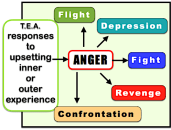
4. Three TYPES of Anger
a. Hidden // b. Habitually IRRITATED // c. EXPLOSIVE

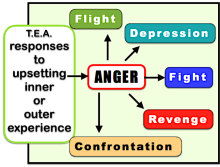
5. Anger EXPRESSIONS (CHART by Don Lehman Jr ▶️)
PART 3 covers the first 4 responses (a-d) Fight, Depression, Flight & Revenge. Here is the last, & the only healthy one:

e. Compassionate Confrontation (last on chart)
The appropriate response in most cases, when angry, but a rarely used ‘language’ in our culture, because it’s the hardest to implement at all, much less on a regular basis.

√ Flight and Depression responses are too passive, only encouraging the expression of Anger from others & cultivating Fear in us
√ Fight or Revenge – under normal circumstances are an over-reaction & too harmful, adding to a negatively charged atmosphere

Compassionate & non-violent expressions of anger avoid the need for the other 4 responses – in most cases. Instead of prolonging the Anger, appropriate ‘confrontation’ (dealing with it) will diffuse intense painful emotions & hostile behavior.

ragerEXCEPTION: When having to deal with mentally ill people & pathological narcissists for any length of time – frustrated anger is inevitable.
Their interactions are so toxic that Flight – in the form of physically removing oneself – is the only safe & wise course, especially when they unleash abusive rage at us or our loved ones.
(Posts : Recovering from Narc Abuse)

Also, we can put up a mental shield to protect our Inner Child from absorbing someone else’s rage-poison. It’s important to explain to our WIC that their intensity is coming from their WIC, and is not because of us.

Compassionate Confrontation may include:
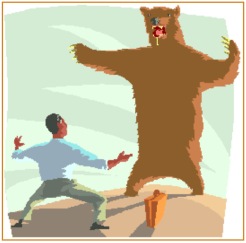
• having the right state of mind (step aside, like a matador facing a raging bull)
• understanding what’s going on with both sides of a dispute/issue
• arranging a meeting, if possible (wait for a ‘good time’)
• explaining your observations & feelings, without ranting or blame
• actively listening to the other’s point of view
• trying to find a win-win solution
📌 This process may have to be repeated more than once to work itself out. OR it may not work at all!

6. Emotional INTENSITY (Adam Blatner, M.D.  7 levels)
(0) – Feel angry subconsciously but not show it
(0.5) – Anger shown through subtle clues
(1) – Displeasure shown without blame
(2) – Takes more irritation to cause a response
(3) – Anger with a scowl or harsh words
(4) – Anger with loud speech & expression
(5) – Losing temper, in a rage, physical aggression

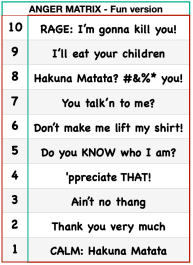
7.  Anger Matrix (CHART ➡️ re. Elvis Dumervil)  is the same levels of intensity, but using fun statements to represent each

8. Anger SPECTRUM (MORE… scroll down)
Anger is experienced on a broad continuum -mild to extreme- with distinct levels that have different effects on us mentally, emotionally & physically (TEA).

The chart illustrates this broad range, the triggers that correspond to anger as it increases, & ways to deal with them. Notice the signs of escalation, such as when someone:
• starts pacing or fidgeting
• clenches fists, or tightens / untightens their jaw
• has sudden changes in body language or tone, used during a conversation
• changes type of eye contact (psychological intimidation)
• forms the “Rooster Stance” – chest protruding, arms more away from body….

When we notice & acknowledge Red Flags (Emotion Signals) in ourselves & in our environment, we can recognize anger as it builds. Paying attention to these signals will give us time toanger spectrum use anger- management skills which can be learned, to keep our reactions from getting out of control, & so interact with others better

EXP of Bad Parenting: Scolding a young child “Don’t be a baby”. This means: ‘don’t have your feelings OR don’t let your feelings control you’. Since adults are rarely in control of their emotion – how can parents expect children to be, especially without any guidance or example? (Bio-chemically & developmentally small children can’t anyway!)

Interesting fact: Children in many non-Western cultures are not expected to control their emotions until after age 6, when they’re trusted to herd animals, tend to younger children, & do other grownup work, including sitting still in school.
Naturally, for those with physical of mental difficulties, it can take longer.
BTW – ‘Being in control’ actually means having a choice, which in this case includes being able to think before reacting.
(Posts : “Anger & the Brain” ) 

NEXT: Ways to react #5

Anger – Ways to REACT (Part 3)

escape

I LOSE MYSELF IN ESCAPE
when I can’t face my ange

PREVIOUS: Ways to react (#2)


LEVELS of anger – Variations
4. Three TYPES
(cont.)
a. Hidden Type (Part 1)
b. Habitually IRRITATED Type  // c. EXPLOSIVE  (Part 2)

5. Anger EXPRESSIONS (CHART by Don Lehman Jr ↘️)
e. Last Compassionate Confrontationin next Post (#4)

a. Flight = (internal) running away from someone who is angry or is triggering our anger. This starts internally – shutting down emotionally, but can also take the form of temporary physical paralysis, leaving the situation as soon as possible, or permanently avoiding angry people / situations (isolation).
Sometimes the Flight response encourages aggression in the other person, if they feel disrespected or abandoned, adding to our Fear/Terror

Flight in adults is:
√ most often an inappropriate response to a current event – which may in fact not be abusive at all but is experienced that way – as a PTSD reaction from long-term childhood trauma
OR
√ appropriate when there’s a very real present-day abuser we need to get away from, which can be emotional & psychological, or a threat of imminent physical danger

b. Depression = (internal), when anger is not dealt with, & gets turned inward on oneself
• Lashing out can cause guilt & alienation, leading to depression OR
• Long-term depression creates isolation, make emotions overwhelming, & increases the likelihood of anger outbursts. Breaking this cycle usually requires therapy & sometimes meds. Al-Anon & Spirituality helps too.

c. Fight = (external) a verbally or physically violent confrontation, either to what’s ‘causing’ the anger or to the angry person. Usually a Fear cover-up reaction, the other half the Fight-Flight response hard-wired in our brain for protection.fight reaction
— Appropriate when we or someone / something we love is threatened
— Not appropriate in most current cases (also part of PTSD)
NOTE:
• Someone can accidentally step on our emotional toes (land-mine) & get blasted
• Unhealthy people who know us well, know our buttons & can always push them to manipulate, punish or get back at us (sibling, boss….)
• Some are perpetrators who use anger to get ‘a rise’ out of others, which many ACoAs will fall for, since we have hidden reservoirs of anger easily tapped into
• Narcissists can easily get us riled up because of their inability to consider us at all, as if we didn’t exist…….

d. Revenge = (external, indirect) can start as a retreat, in order to attack later (Passive-Aggressive), & can be habitual but unconscious.
When it’s deliberate, it includes obsessive planning, made between injury & retaliation.    IMAGE 🔽 : “Cycle of Revenge

Considered consciously, these angry people start by evaluating the possibility of winning or losing. Because of the emotional intensity, they can easily overestimate their personal power – getting into unnecessary losing battles (Fight).

Revenge & Fight responses from an anger-victim are linked:
– Revenge as a desire foo regain control over a situation
– Revenge as retaliation for an injury (real or not). If someone is truly in a powerless position, it may seem the only option to express ‘displeasure’.
Both can lead to increasing external damage, as each pours gasoline on the emotional fire

Abused children:
– may vow to never again let themselves be vulnerable, so become hostile toward others on the theory that “a good offense is the best defense”
– may over-generalize & want to take revenge on an entire group (all men, all authorities….), only some of whom may have actually harmed them
– may be reinforced & rewarded by becoming a bully, finding that it helps raise their ‘street cred’.   (CHART + good info)

• However, if a perpetually angry person’s emotions do not completely overcome their reason so that they figure they’ll lose by using a frontal attack, (Fight) they’ll resorts to the P-A Revenge response.
Punishment is then dealt out just as in Fight, but done later – when the victim least expects it, maybe in small doses & anonymously, or may come in disguised form. (2 Posts : ACoAs wanting Revenge“)

◀️ NOTE: Not Included in Lehman’s Chart, but part of the reactive sequence:
Freeze – Blanking out / dissociated, can’t talk, muscles get physically “scared stiff”.
Freezing is fight-or-flight on hold, preparing to protect yourself even more. It’s also called ‘reactive or attentive immobility’. It involves similar physical changes, but instead you stay completely still & get ready for the next move.

Fawn – a 4th F has been added, which is basically co-dependent people-pleasing .

NEXT: Ways to react (Part 4)

Anger – Ways to REACT (Part 2)

all tied up
I’M ALL TRIED UP
in my own inner red tape!

PREVIOUS: Ways to React (Part 1)

SITE: “Anger – The Hidden Anxiety Emotion


4. Three TYPES of Anger (cont.)
a. Hidden  (Part 1)
b. Habitually IRRITATED Type
Physically : it can be part of untreated clinical depression, a side effect of drugs & alcohol abuse, or of some medications. Genetics & family mental illness can also play a part
Psychologically : the underpinning comes from being shamed / neglected / abused as a child, creating deep-seated fear & sense of powerlessness

Our WIC assumes everyone is dangerous, & defends against them by a brittle layer of anger/ rage. Repeated traumatic events, environmental stress & social / religious constrictions also contribute, preventing the sufferer from learning appropriate coping skills

• Chronically angry/ resentful people (including wounded Type As) have years of experiencing disappointment & frustration, leading them to continually expect more of the same, so it doesn’t take much for them to get angry at even small daily stressors.

Chronic resentment is an ego defense, by keeping track of injuries, dragging them around in a mental bag full of hurt. (From the Latin root : to feel anger over & over)
The more fragile a person’s sense of Self (missing True Self), the more resentment is needed – more important than accurate info, truth & reason, reinforced by greatly distorted thinking (see list of CDs).

• The default position of such people is to always assume & look for emotional potholes, justifying their anger. Stuck in a rut, they’re usually very predictable.  They tend to go through their days looking for a fight, seeing the worst in everyone & every situation. The need to devalue others – to protect themself – easily leads to verbal/ emotional abuse, & eventually to contempt & disgust in their relationships

Their toxic attitude keeps others emotionally & physically far away, which repeats the experience of childhood abandonment in the resenter. This reinforces their shame & so validates their feeling of un-lovability, which leads to even more anger. They report higher levels of family conflict & less social support – because of the effect their anger has on everyone they deal with.CHRONIC angerInternally 
• cranky, curmudgeonly (Jeff Dunham’s WALTER)
• perpetually cynical, bitter, judgmental, controlling
• dissatisfied with of everything, overly critical of themself
• passively resistant, interfering with their own progress
Externally
Aggressive: overly critical, fault-finding, name-calling, sarcasm, cruelty, prejudice, cynical humor & teasing, flashes of temper or explosive rages
Assaults: physical harm, verbal rage, slapping, shoving, using a weapon
Hurtful: malicious gossip, stirring up trouble, stealing, mean pranks
Rebellious:hating authority, indirectly challenging or openly defiant  (Questions to ask oneself re. symptoms)

c. EXPLOSIVE rage/ anger Type
This is a behavior disorder expressed by unplanned explosive outbursts, with verbal &/or physical abuse, such as impulsive screaming. The person’s reactions are triggered by relatively unimportant events, out of proportion to the actual situation

However, some people do notice their internal ‘warning signs’ before an outburst – such as physical tension, mood & energy changes…. but can’t stop themselves from reacting. (Wikipedia)
— Some become anger junkies, who get off on the adrenaline rush of emotional explosions, which get reinforced if the barrage lets them get their way, at least in the short-term

• Exploders ignore their hurt & anger for a long time, like a dormant volcano. When they finally erupt, the rage usually gets projected onto innocent victims (children, animals, the iPhone….) who didn’t cause the original pain – like hot lava, covering everything in sight.  It takes a lot to push them over the edge, but when that line is crossed, the earth shakes & everyone runs for cover.

EXP: “If you leave your jacket on the floor one more time, I’m leaving you!”
• The build-up usually comes from:
– long-term frustration about not getting one’s needs met in current situations (a marriage, a job….)
– long-term abuse /abandonment in intimate relationships (from parents, a spouse, s teacher….)

• Never taught how to deal with a wide range of hurt – from irritation to assaults – these people habitually swallow it until ‘stuffed’, & then let it out – inappropriately. Because humans can’t feel empathy & rage at the same time, the exploder will say & do overly harsh things they later regret.

EXPLOSIVE anger
NEXT: Ways to react (Part 3)

Anger – Ways to REACT (Part 1)

Screen Shot 2015-06-07 at 3.15.09 PMI HAVE LOTS OF OPTION
for expressing my anger!

PREVIOUS: Anger – Negative uses  (#2)

SITEs : The Logic of Emotion      

Emotion Wheel app

List of phrases about anger or conflict (date rape, hot-blooded, road rage, tit-for-tat….)   ✦ See ACRONYM page for abbrev.

NOTE: The following 5 posts give several versions of the basic ways to categorize how people react to their own or other people’s anger/rage (Unsafe <—-> Safe)

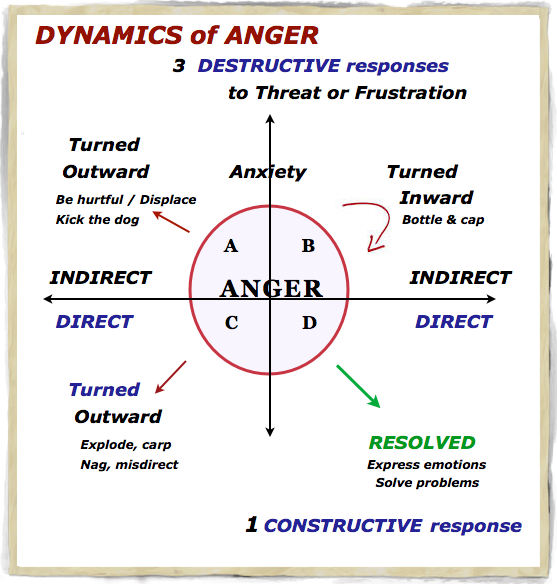
1. DYNAMICS of Anger Chart
A & C – OUTWARD anger at other people, places or things
A Indirect: sneaky or passive – without admitting or dealing with it
C Direct:
• Assaultive – physical, verbal & sexual cruelty
• Aggressive – attack on someone’s identity rather than their actions/ non-actions

MY dynamics of angerB
  
INWARD: suppressed & used against oneself, for FEAR of:
• losing control
• being disliked / rejected
• hurting / offending others
• the emotional intensity
• losing close relationship
• disobeying RULE  “Never get angry”
• too little communication / silent remoteness, depression

D Anger RESOLUTION, finding direct ways to manage, change or leave problem situations, using the Healthy Adult ego state

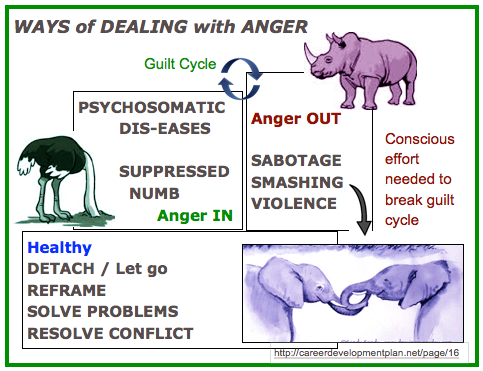
2. ANIMAL Symbolism
⬇️ CHART contrasts 3 ways of dealing with anger :
• Ostrich (Passive) = ignore, deny emotion
• Rhino (Aggressive) = attack, deny responsibility
3 anger ANIMALS• Elephant (Healthy) = be calm, understand, negotiate – expressed by:
a. Knowing ‘anger-signals’, from self or others, & then staying awake for them
b. Using a variety of productive & safe ways to respond (MORE….)

Use the S.M.A.R.T. action plan to deal with issues:
• Face the problem
• Ask questions to gather relevant info
• Re-frame – “What else could this situation mean?”
• Don’t take criticism personally, just learn from it – if possible. Side-step the WIC’s reactions
• Then let go of the whole thing. Forgive yourself, if necessary. (from the ELEPHANT JOURNAL)

3. MOOD MAPS – used to notice anger & in relation to other emotions
MOOD MAPS


CHART  ↘️
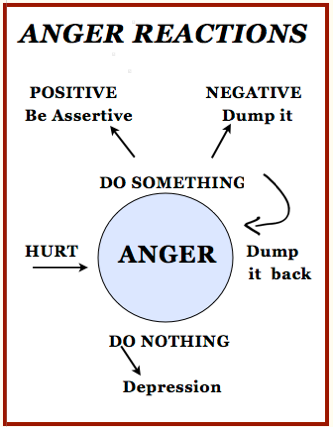
Appropriate expressions of anger are a way to be assertive (not aggressive)
• Unhealthy : dumping it on others or at oneself
• Ignoring : Suppressing it (denial) eventually leads toanger reactions depression4

NOTE: Speaking in a FIRM tone is not automatically an expression of anger. It can simply mean determination, being sure of something, or making a point.  This also applies to teaching, or correcting & providing discipline, which is meant to guide & support

🌀 However, if your WIC hears firmness, corrections or being giving direction as an attack or put-down, when it’s not meant as such, you’ll experience the same fear & weakness as if it were, based on childhood trauma.

4. Three TYPES of Anger

a. Hidden 
“Just because anger is hidden doesn’t mean it’s harmless. Just because it’s under wraps doesn’t mean it’s under control.”
For many of us, the need to deny the strength or even the existence of our anger is so powerful that we develop the ability to deny our anger even exists – unconsciously or by choice

• BUT – “Anger is such a powerful coping mechanism that repression & suppression are not actually successful. The more you try to avoid it, the more time & energy you ahave to spend with it. It’s a paradox.”  Dr. Roland Mairuo, Seattle MD. (+ Bible references)
Burying anger doesn’t diffuse it, it just burrow underground, where it undermines our sense of Self. The force of it will find other, secondary outlets when not allowed out directly & appropriately, usually in damaging ways

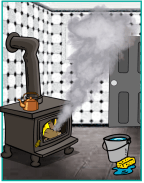
• Freud once likened anger to the smoke in an old-fashioned wood burning stove. The normal avenue for the discharge of smoke is up the flue & out the chimney.
If this is blocked, the smoke will leak out in unintended ways…. around the door, through the grate…. choking everyone in the room. If all avenues of escape are blocked, the fire will go out & the stove is useless.

Humans are the same – if anger is suppressed, it leaks out anyway. If suppressed for too long, we become cold inside & hard outside.
Normal human expression of anger is seen in big physical movements &/or loud vocalization, as in unhappy babies.

HIDDERN anger

NEXT: Ways to React (Part 2)

Anger & CO-DEPENDENCE (Part 4)

PREVIOUS: Anger & Co-dep #3

BOOK: “When Anger Scares You: How to….

QUOTE: “If you’re not pissing someone off, you probably aren’t doing anything important” ~ Oliver Emberton (Excellent serious cartoons)


2. OTHER PEOPLE’s Anger
(cont.)

WHY we’re afraid:
• Other people’s anger reminds us of one or more raging adults we grew up with. Those terrifying experiences effected our developing, sensitive nervous system. (“Trauma & child’s Brain“)
Unless we’ve done a lot of rage-discharge-work, our body is still warehousing all the old terror those adults (& siblings) continually caused us. (“The Body Keeps the Score” synopses)
angry dad
So now, whether someone is angry directly at us OR just being near someone who’s very angry, our fear can get activated so intensely, it feels like every nerve is on fire!
AND –
• we assume we will get hit, or worse – the way we were as kids
• we don’t know what to say – don’t have clever comebacks, or logical responses (See: “Effective Responses” )
• it triggers our own hidden anger that we’re trying to keep down  (posts: Anger & ACoAs)

MORE ACoA dichotomies
• Co-deps are microscopically focused on what others are saying & doing, to figure out what they want from us. We think that if we can & then provide it, it will ensure a continued connection (because of our FoA).
🧊BUT: this is our narcissism, & desire for symbiotic acceptance – not actually trying to understand who someone else actually is

• Because of very real trauma we grew up with, we experience everyone & everything in the world as dangerous.
🧊BUT: because it was so overwhelming, to survive we trained ourselves to avoid seeing danger – anywhere – a turtle with its head pulignore warningsled in.
So we’re oblivious to all kinds of cues from other people in the present – a kind of emotional Asperger.
We miss hints that someone is:
• belittling, insulting or making fun of us
• anxious to leave, but too polite to say
• angry, annoyed, bored, hurting, scared, upset…..

FACIAL SIGNALS
ANGER: Eyes down, narrowed, tense, or staring, furrow between eyes, brow pulled down, lips drawn tight or raised in squarish shape – muscle movements show when we feel aggressive, frustrated or threatened. Researchers think we make this ‘face’ to protect itself in a physical conflict (furrowed eyebrows protect eyes….)

CONTEMPT: when we literally look down our nose at someone with suspicion or in derision – lowered brow or eyes looking to the side. The main feature is that only one side of the face is pulled tight. (If both sides are / were pulling, we’d be swallowing or salivating)

DISGUST: Here the muscles above the upper lip are pull up, raising it the mouth, wrinkling the nose & narrowing the eyes – as if smelling something foul. Often the mouth opens & the tongue comes out, as if needing to throw up.

USEFUL
– know the difference in motivation, between:
BAD anger-expression: used to control others thru intimidation, OR anger at oneself to control other emotions we don’t want to feel,
vs.
HELPFUL anger-expression: to protect ourself from some external danger, OR to indicate that we’re not thinking / acting in our best interest (have somehow abandoned ourselves)

POSITIVE
BUT
we also miss positive responses which could heal us. Being ‘oblivious‘ + S-H prevents us from seeing the available benefits all around us which we could accept from people who :
– are available to encourage, help, play with, support, teach….us
– honor, complement or validate us
– are appropriately sexually or socially interested in us

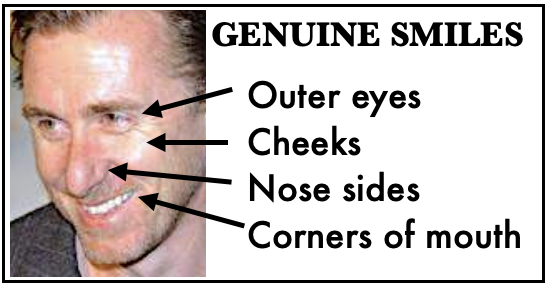
• ⬆️ FACE: Lie to Me” TV series actor Tim Roth – w/ more micro expressions

Interesting:  French neurologist Duchenne de Boulogne figured out how to tell a real smile from a fake one.
REAL: requires both zygomatic major cheek & orbicularis oculi muscles be active (raised cheeks + outer part around the eye socket that pulls down eyebrows & skin below), especially since very few people can voluntary contract those eye muscles.   (More…)

ARTICLEs: Fear of anger //How to stop absorbing other people’s emotions” // Micro-expression Training video // How We Read Emotions from Faces + brain // (QUIZ re. 20 Emotions

NEXT: Anger – ways to react #1

Anger & CO-DEPENDENCE (Part 3)

angry girl
IF I PAY ATTENTION
I’ll be able to know how I feel

PREVIOUS: Anger & Co-D (Part 2)

SITE:3 Phrases That Will Instantly Calm Angry or Emotional People


1. OUR Anger  –
 in Parts 1 & 2 (cont.)
a. MISSING Emotions
b. INAPPROPRIATE anger/rage
(cont.)

🔹As adults, people-pleasing and not getting our own needs met for too long – is draining & enraging.
BTW – your anger at any of the situations in Part 2 “Sudden Flashes” (add you own) may not show for a long time, yet could be burning you up inside – until it boils over.
But even when Co-Dep anger is released, it’s only an escape valve. Without FoO (family of origin) Recovery, it doesn’t solve the underlying issues, so we end up filling the POT again.

• In adversarial relationships, if we act out anger against an abuser, no matter how well deserved, things can escalate, often making things much worse. This can leave us even more frightened, guilty & helpless.
WITHOUT acceptance of reality, we waste a great deal of effort. IF we keep trying to fix a problem by expressing anger over & over (to restore our sense of control) but the bad situation is not fixable, eventually we become depressed or apathetic.

And no matter whatever healthy, kind people tell us to the contrary – the WIC part of us still believes the Toxic Rules — “it’s always been my fault & always will be / nothing good ever comes of trying / I’ll never get it right / I always mess up…. so why bother, if I’m just going to get disappointed or battered anyway?”

Unfortunately, the stronger & deeper these false assumptions are (T), the harder it is to leave unhealthy PPT & find safer environments (A). Without a clear awareness of our needs – & permission to provide them – many of us avoid anger alltogether, staying trapped & hopeless (3 posts re. NEEDS)

2. OTHER PEOPLE’s Anger
Co-dependence comes in many flavors. While people-pleasing is one of it’s hallmarks, it’s not always in the form of over-niceness. It can also be camouflaged by surliness or isolation. Co-deps who tend to crankiness or bursts of rage are just as approval-driven as the more obvious types.

REMINDER: Co-Dep is a defense mechanism which:
♟ supposedly ‘protects’ against feeling overwhelming fear of abandonment
♟ assumes that the power to act is not within us, but only in other people & things
♟ is a way to bury feeling lost & worthless, living in our False Self
♟ prevents us from having our Rights

ANOTHER ACoA dichotomy is that
we confuse assertiveness with attacks.
❤️ Being assertive includes standing up for oneself, with healthy boundaries & valuing Rights, ours & theirs — vs.
💙 Being confrontational, which is fueled by underlying hostility – is the need to push someone around, to get our own way, suppress the other person’s point of view, to punish…..

ALSO :
• Co-deps are secretly angry, raging inside, convinced that any sign of disagreement is an attack, which we fanatically avoid. Not true.
• At the same time, most co-deps can not bear having anyone be angry at or be disappointed in us.
This makes it easy for others – if so inclined – to take advantage. The more approval we need, the less likely we’ll notice the extent our self-sacrifice is in favor of taking care of other people’s needs, want & demands, ignoring our own

Being used, abused & then thrown away – is very painful, creating depression & S-H, in a vicious, downward spiral. Without doing FoO & Inner Child work, we have no way of knowing who we truly are, so we co-dependently look to others to tell us.
It’s an attempt to get the legitimate mirroring our parents should have provided.  (More…. as adults)
Instead, we compulsively go to narcissists & other wounded people to ‘see’ us, who can never reflect back to us who we are. They can only project their False Self, trying to make us like them!

Conflict-Avoidance is about:
US – terrified of our own enormous anger, the loss of control that we think will destroy others, causing loss of acceptance or love  (More
AND
OTHERS – the assumption that everyone becomes unreasonable (out-of-control-crazy-violent) when they’re angry, which we won’t know how to handle. Actually – what we’re used to is rage, which we believe will destroy us!

NEXT: Anger & Co-dep #4