ACoAs & HUMILIATION (Part 1)

humiliationI’VE BEEN DOWN SO LONG
I can’t imagine ever getting up!

PREVIOUS: Anger T & F, #2

SITE:Humiliation” (Wikipedia)

QUOTEs: “No one can make you feel inferior without your consent.” ~ Eleanor Roosevelt


» DEF: Being in a state of disgrace, a loss of prestige &/or self-respect.
A person who is continually subjected to severe humiliation will experience major depression, suicidal thoughts or actions, & severe anxiety states, such as post-traumatic stress disorder (PTSD).

RESEARCH: A study at the U of Michigan revealed that the same areas of the brain which light up when we experience a physical injury – are activated when we experience intense social rejection.
In other words, humiliation & isolation are felt just as strongly as body pain.

NOTE
: Humiliation is not the same as humilityThe opposite of Humiliation is Appreciation

HUMILIATION originally comes from external sources – which then get internalized as part of the PP voice (Introject).
✦ THEN – for ACoAs it comes first & foremost from our family, & then often from school, church, neighborhood…. It’s ‘being shamed’ rather than feeling ashamed

✦ NOW- a less severe event may cause us to “take offense” when something is said or done to us, which comes from what or how we think (cognitive, intellectual).
Whereas –
✦ Humiliation is more demeaning & hurtful – visceral, existential – about who we are fundamentally

In the present, most ‘victims’ disagree with the humiliation laid on them – don’t like it, know they don’t deserve it, see the treatment as unjust….but don’t believe they have any options, & so don’t challenge the source or change their environment

1. EXTERNAL Sources
Humiliation involves an event or ongoing situation that indicates unequal power in a relationship, where we are in a one-down position & unjustly diminished.
Often the painful experience(s) are vividly remembered for a long time after, & can lead to anxiety, especially if the exposure was prolonged. It requires:
victim/perp1. a Perpetrator exercising negative power,  in many different settings

2. a Victim who is truly powerless (child, minority, the poor….)
OR who is re-enacting a long-held victim role from childhood, so is who;; vulnerable to being humiliated
3. one or more Witnesses to or observers of – the event(s), such as family members, neighbors, teachers, the general public, peers, officials…. who usually do not object or help  (bystanders, helpers), sometimes even egging the perpetrator(s) on, as in bullying (Flying Monkeys)

➼ The following list was compiled by Leland R. Beaumont at Emotional Competency” & can be applied to children as well as adults.

a. PHYSICAL / SEXUAL (most visible)
Being
• boundary / privacy invaded, trespassed on
• denied basic needs &/or social amenities
• exploited, suppressed, violated
• forced to do or say something distasteful & self-shaming
• injured, assaulted (hit, spit on…), attacked
• isolated or physically abandoned
• the loser in a dominance contest / cheated on
• molested, incested, raped
• often beaten, slapped, kicked, punched
Having  your:elder abuse
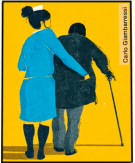
• abilities diminished from being disabled, or movement severely limited
• basic personal freedoms lost (mobility, access, autonomy)
• competence / confidence damaged – from being tricked, trapped, mislead, opposed, sabotaged, let down
• goals & plans constantly thwarted, over a long time
• resources diminished from being defrauded, robbed, cheated, evicted
• safety or security reduced by intimidation or threat
• to see / watch a loved one sexually assaulted
• to watch a love interest flirt with another, causing intense jealousy

b. EMOTIONAL /PSYCHOLOGICAL
Being
• blamed for things that have nothing to do with you
• blatantly rejected, treated unfairly, forced to back down
• betrayed, cheated, lied to, defrauded, suckered, duped
• denied basic personal & emotional needs
• deprived of privileges, rights or human dignitymade fun of

• forced to swallow one’s pride
• laughed at, mocked, teased, ridiculed, given a dirty look
• lowered in ones own or another’s estimation, made to feel powerless
• dependent (not by choice), especially on weaker people
Being
 • made to look stupid or foolish
• manipulated, dominated, controlled, forced to submit
• taken for granted, used to fill a need in others
• denigrated for ones values & beliefs, made fun of
• snubbed, put down, disgraced, shamed (not ashamed)
• treated as an equal by someone of a lower-status
• treated like an object (it) or animal, rather than a person

NEXT: Humiliation (Part 2)
Anger MYTHS – T or F (Part 2)

 PREVIOUS : MYTHS – T or F (#1)

SITE:Ultimate anger release….

QUOTE: “He who angers you, controls you!”

“Anger is never without a reason, but seldom a good one.” ~ Ben Franklin
See ACRONYM page for abbrev.


ANGER

💚 is inherited
TRUE –  but only partly. Our responses to emotions are complex, a combination of inheritance & mimicry. Genome decoding has revealed a connection between the MAO-A gene & aggression in humans. So some people are more easily triggered & may feel anger more intensely.

✦ However, research also tells us that people are not born with setScreen Shot 2016-02-05 at 7.09.42 PM & specific ways of expressing anger (actions/reactions) – which are learned – so we can correct & improve how we behave
✦ We know that children internalize ways of thinking & acting by watching & listening to their family & society. Angry parents often have angry children, but who are also very frightened.

🔐 is a legitimate way to get people to listen, give respect & obey us
False: This is how bullies think.
Anger is indeed used by top sale people, CEOs & narcissists – even when they’re not actually angry – used to manipulate, intimidate & control others, which is aggression (abuse).

Just because someone is cowed by a rager does not indicate respect. Expressing ourself in a hostile way will only make people dislike & distrust us. Others are more willing to listen to our opinions when they’re treated fairly & spoken to with respect. So when we’re truly respected we won’t need or want to bully to get attention.

NOTE: Mosaggressiont ACoAs confuse assertion with aggression
Aggressiveness is used to harm, dominate, intimidate or injure another. The goal is to “win at any cost,” with no concern for others’ well-fare
Assertiveness is expressing our opinions &/or emotions, such as anger, in the ‘I form’ This is taking responsibility for who we are instead of pointing fingers, which is both honest & respectful of others. We don’t have to accuse, blame or threaten, so we minimize the chance of emotional harm.

ANGER
🔐 will destroy a relationship if expressed to someone we love
True: It can do severe harm if —
✦ the way anger/rage is ‘vented’ is abusive, especially if repeated over time
✦ OR the loved one is intensely narcissistic & won’t tolerate any form of ‘disapproval’
✦ OR is so co-dependent, insecure & fearful that they’ll take our anger as a sign of personal rejection rather than a statement of our feelings

False: because Anger – not aggression – is a way to have boundaries in a close relationship, and healthy-or-unhealthy-clip-art-no-textis a sign of genuine intimacy (in-to-me-U-see), rather than hiding parts of ourself out of fear of abandonment.
When we know we’re angry about something our loved one did or didn’t do, & choose to express it in healthy ways, it can actually increase mutual understanding & help enrich the relationship    (MORE….)

🔐  is bad, therefore must be eliminated
False: It is neither good or bad but rather a strong energy with a specific purpose in our psyche. Again, the anger itself is not the problem, only the we express it (verbally/ physically).
Parents who themselves were taught that all anger is bad/evil, & then pass that on without question, teach their children to stuff, repress or totally deny their anger.
EXP: “Don’t take that tone of voice with me, young man!” or “If you’re going to act like that, you can go to your room!”

True: ONLY when acting it out incorrectly, which can lead to domestic violence, property damage, sexual abuse, drug addiction, ulcers, self-mutilation, suicide……

🔐 is healthy when expressed by children (as tantrums & other uncontrolled forms….) – tantrum girlbecause it staves off future neurosis
False: No – because when it’s willy-nilly, it teaches the child they can spew their rage onto others whenever & where ever they want – & sometimes hurt themself. Actually, tantrums lessen when they’re ignored, not reinforced, or when children are expected to talk about & own their emotions

True:
Yes – when the child is guided safely to express their frustration, hurt or fear which generate anger, by using words & physical movement, (anger-work such as pounding pillows), so they learn that they can have strong ‘difficult’ emotions & know how to get them out in the right way.

NEXT: ACoAs & Humiliation #1

Anger MYTHS – T or F (Part 1)

anger moster -3

IT’S GOOD TO GET MY ANGER OUT – as long as it’s in a SAFE way

PREVIOUS: Myths =F (#2)


ANGER

🔐 is “all in your head”
True: that anger is first generated in the brain, but….
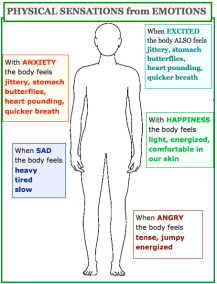
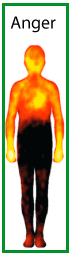
False: …..in that it’s not just a state of mind or made up. All emotions are primarily physical experiences, felt throughout the whole body. It’s instantly experienced in our muscles long before we’re conscious of how we’re feeling – the hairs on the back of the neck, tightening in shoulders, chest or gut, finger-temperature warming up, + RISING: blood pressure, blood sugar levels, heart rate, respiration rate…..

EXP: “I feel like I have a big fist pressing on my chest when I get that angry / I have trouble swallowing that / I have a knot in my stomach….”anger energy
➼ It’s impossible to hide anger from a skilled observer (body stance, tone of voice…), although many people miss the signs in themself
(FIGURE —> Finnish research )

🔐when suppressed, it always causes serious health problems
False: This is not inevitable, particularly if we have some control over whatever situation is causing the anger, but when unresolved it will create problems in most relationships.
INT:  the latest research has disproven the theory that suppressed anger results in stomach ulcers. The most common cause is a bacterial infection or drugs that attack the lining of the stomach. (Post: ‘Somatizing anger)

True/False: Researchers have also discovered there can sometimes be a correlation between anger & depression, but not always, & not automatically. Sometimes there is just anger, & sometimes there’s just depression (such as when it’s physical / hereditary)

ANGER
🔐 is the result of human conflict
False: Damaged parents regularly dump their anger on their young ones, even when the children haven’t done anything to ‘deserve / earn’ it.
And, as adults we can just as easily be angry/ cranky/ mean because of internal unhappiness & S-H – as from what others do or don’t do.
ALSO, a leading expert on anger has found that people can get angry by being exposed to foul odors, aches & pains, hot temperatures — none of which involve (or can be blamed on) the actions of others. (MORE….)

True: Continual conflict can easily escalate from —> irritation & frustration to —> rage to —> homicide or war. On a smaller scale, other people can push our buttons, especially the ones we haven’y dealt with (BUTTONS: being accused wrongly, being disappointed or disrespected, ignored, waiting too long….). 
Wars are fought over being wronged in some way, which generates anger,
OR greed on a large scale – which is not about anger

🔐 can be relieved or released by yelling, hitting, kicking or punching things (not people)….. & always needs to be dumped
False:  Some studies have shown that people who arbitrarily vent their anger in aggressive ways simply get better at being angry.
True
: Releasing anger appropriately is called “catharsis”.  Along with some form of Cognitive-Behavioral therapy (CBT), physical release of stored anger/rage-energy is necessary for full Recovery, especially – but not exclusively – for people who are Kinesthetically oriented.

Privately / safely letting it out in a safe, private place (pounding. yelling or punching) can release tension, but by itself doesn’t heal the underlying problem  (Post: ‘Volcanic anger’)
This can be done in the form of Brain Re-patterning, Trauma Release work, Core Energetics, Psychodrama…. (MORE…… // Anger & exercise)

ANGER
🔐 is relieved or eliminated by talking it out 
False: In her book “Anger:The Misunderstood Emotion”, Carol Tavris states, “Talking out an emotion doesn’t reduce it, it rehearses it. This is true for many who want to stay angry because it prevents them from feeling vulnerable.” This way of dealing with anger is actually resentment – because we’re only thinking about it (T), instead of actually feeling it (E).

True: It’s a way to start the process of becoming aware & owning how much hidden rage we have stored in our unconscious & in the body (muscles, organs, cells….)

NOTE: ACoA FoO therapy will often increase our awareness of the anger we’ve stored from childhood hurt as we come out of denial about how much damage we suffered as kids (thawing frozen emotions). Then crying & body-work is needed for actual release.

NEXT: ACoAs & Humiliation (#1)

Anger MYTHS – False (Part 2)

anger creature -2

IT’S VERY IMPORTANT
to deal with anger as it comes up

PREVIOUS: Anger Myths –
FALSE (#1)

SITE: “Why we shout in anger” – a Hindu teaching


ANGER

⚡️is an uncontrollable natural force, so can’t be reined in
False: Many people believe that once they’re angry they can’t influence it (“I can’t control my anger – it’s just who I am”) & therefore have to let it ‘run its course’. Not so.
While we don’t always have control of an external situation, no one can make us FEEL or BEHAVE in a certain way. Anyone can learn to be in charge of their reaction – via the Healthy Adult. It’s a skill set, like shooting a basketball or learning a new language. Practice, practice, practice!

⚡️is something that happens to us
False: Anger, as well as all other emotions, are our biochemical responses to events, & then may or may not be expressed as actions. Sometimes it feels like a physical impulse that’s out of our control – because it’s erupting from the unconscious, like a lightning strike. However, it is in fact energy that comes from us, rather than happening to us – triggered by our thoughts – inside (about ourselves) or from outside re. PPT (about others)

⚡️is only a problem when expressed (at all)
False: Only about 10% of people act out their anger inappropriately, & they are the visible ones – the squeaky wheels who get everyone’s attention.
Almost everyone else either suppresses it (“I don’t want to talk about it!”) or represses it altogether (“I’m not angry – really!”). Both groups need anger management classes just as much as the ‘ragers’.

ANGER
⚡️always leads to aggression / some form of violence
False: It may seem to be true if we were raised with one or more rage-aholics, & if we then also have chosen to stay with ragers as adults.
BUT healthy people have learned productive ways of processing & channeling their anger, so it never leads to being self-destructive or abusive to others.

Of course, chemicals (alcohol/ drugs/ some medicines, even food allergies…) can generate anger & set off a compulsion to be nasty, either because the cognitive brain isn’t in charge OR if we haven’t learned to recognize the symptoms of rage or how to handle them

⚡️increases as we get older
False: It’s the other way around – as people age, they report fewer difficult/ painful / intense emotions, & greater emotional control. People – like wine & cheese – do tend to improve with age. Research shows that the angriest people are 14 yrs old boys!
EXCEPTION : We’ve all seen or heard of crabby / nasty old men & women, but they’ve always been that way!

⚡️ is not a ‘problem‘ IF we don’t sound / look angry
deny angerFalse: Anyone who does not understand & appreciate the potential value of anger will have a problem with it. There are ways to tell if someone has hidden anger/rage, even when they don’t admit to it – by holding themseld stiffly, always being fearful, being overly nice, being paranoid, jealous, controlling….
(see posts: “Passive-aggressive anger” // Secretly angry ‘nice people’)

ANGER
⚡️is best dealt with by stuffing it 

False: Some of us think that learning to control our anger means having to always hold it in. WRONG. Instead, we need to be able to recognize when we’re angry, & learn how best to express it. Healthy adults don’t stock-pile emotions the way we had to as kids.  (Post: “Low-level anger“)

⚡️ is only a ‘problem’ for certain types
False:
All types of people experience anger – truck drivers, college professors, physicians, housewives, grandmothers, lawyers, geniuses, siblings, policemen, career criminals, poor people, millionaires, children, the elderly, clergy, people of any color / nationality / religion….. Anger is a universal emotion!

⚡️ is all about getting even
False: Getting-even-anger can be about revenge/payback, about wanting fairness, or childish tit-for-tat. But there are many other reasons for our anger, such as letting off steam over accumulated frustrations, asserting authority or independence, to protect against feeling vulnerable or used to cover up fear we may not even admit to. However, the main one is to protect ourselves from abuse. (Post: “Retaliatory anger“)

NEXT: Anger MYTHS T & F (Part 1)

Anger MYTHS – False (Part 1)

anger creature -1I NEED TO RECONSIDER what I thought was true

PREVIOUS: A. Categories #14

SITE: many poems @ ‘Anger

QUOTEs:  “Never give away your self-control to someone who isn’t yourself.”

ANGER
⚡️ is good
TRUE: Anger has a variety of positive uses. It can energize, help us get things done, cope with stress, promote self-esteem, & defend against inner fear & insecurity, and be a protection against abuse.
Like all other emotions, it is God-given/inborn, to warns us of real or perceived threats to ourself OR a loved one – an early warning detection system that tells us we need to change an undesirable / unsafe situation
💠
⚡️ is abnormal
False: Everyone experiences anger. We can see it in tiny babies, especially when frustrated, as they screw up their face & shake their tight little fists. It’s one of a wide range of emotions we need in order to communicate what we like and don’t like

⚡️ is not a “real” emotion
False: Some psychologists say that anger is a “counterfeit emotion.” While anger can be considered ‘secondary’ because it’s often triggered by others such as anxiety, embarrassment, fear, guilt, jealousy, shame….  – yet it is a separate emotion, since it’s possible to experience any of these other emotions without getting angry

⚡️is taken too seriously!cell pnone anger
False: The Venter / Spewer type thinks & often says that other people should understand they didn’t mean what they said in the ‘heat of the moment’.
However – many times they did mean exactly what they said, but needed the fuel of anger to let it out, even if exaggerated. AND – regardless of the rager’s intention – they do cause actual hurt, embarrassment, humiliation & fear.
ANGER
⚡️and love just don’t mix
False: They are 2 sides of the same coin. We usually don’t have strong emotional reactions to PPT we don’t care much or at all about. The more we love or need someone or something the more easily we can be disappointed, annoyed, frustrated, aggravated… by it/them, because we want so much from them. This can trigger anger when they push our buttons

⚡️‘disappears’ in Spiritual &/or Mentally Healthy peopleangry spiritual woman
False: The capacity to feel anger (E = emotion) is built in to the brain, wired to react to danger by flooding us with chemicals that push us to protect ourself & our loved ones.
Smart people pay attention to what sets them off (T = mental evaluation)

Healthy people choose to express anger in constructive ways (A = actions). Jesus, Gandhi, Martin Luther King, Jr…. felt & expressed their anger, but turned it into social reform that made the world a better place.  (Post: “Righteous anger”)

⚡️ is caused by other people
False: While others are responsible for what they do or say to us – our emotional reaction is on us (anger, fear, shock / amusement, pleasure, indifference….).
As adults – no one can make us ‘feel’. Our brain generates emotions & so we can choose how we think about an event, which can influence our emotions & how we act (T.E.A.)
EXP: we might choose to ignore ridicule, not feel hopeless when disappointed, not hurt when disrespected…. We don’t have to get mad!
ANGER
⚡️has to be ‘held in’ in order to control ourself 
False: First of all – what one needs to ‘control’ is behavior & thoughts – not emotions. The purpose of Anger Management training is not to make us sit on our anger, but to provide successful ways of dealing with it – which includes changing our abusive self-talk!

angry manFirst we have to learn to recognize when we’re angry (T), & have permission to feel it (E) without hurting ourselves or others. Then we can change our behavior (A)  (See post: Passive anger“)

⚡️is stronger in men than women
False: Based on surveys, both genders have the same capacity & frequency (about once or twice a week), but men report more intense anger, & are more likely to act on it.
Girls/women tend to hold on to angry feelings longer. So the only real difference is how each expresses this emotion, which is based very much on socially conditioning.

NEXT: Anger Myths – FALSE (Part 2)

Anger – CATEGORIES : Somatic, Volcanic, Spiritual (#14)

PREVIOUS : Anger CATEGORIES (# 13)

SITEs: 5 ways to handle Anger Biblically

Dealing w/ anger 


OTHER Anger-EXPRESSIONS (cont)
▪️SOMATIZED anger (Psycho-somatic)
This is physical afflictions as indirect outlet for suppressed anger/rage, expressed physically (soma = body), also caused by depression, anxiety, great loss, PTSD…. It’s not imagined pain, only displaced into the body.

Denying our anger at long term wounds (hurt, anger, sadness…) from life’s circumstances – can be played out as Martyr, sometimes suffering in silence, sometimes constantly complaining, but always suffering.
Some SYMPTOMS:  migraine headaches, ulcers, colitis, TMJ (tight jaw), big weight gain, immune diseases…..  Back pain is one of the more common, expressing a genuine ‘lack of support’ in one’s life.

INTERESTING: Somatization is one of the oldest known psychological body pain diagnoses.
The first reference we know of appeared about 1900 B.C. in Egyptian documents, & was also commented on by the Greeks.
In its modern form, it was first defined by Dr. Briquet in France in 1859.

√ The term Psycho-Somatic has been bastardized into meaning that the ailment is all in our head. Even when the suffering is connected to suppressed emotions, the ailment in very real.
Sadly, somatizers are more likely to try medical solutions instead of the psychological treatment they really need – also some medicine may be needed. This route is frustratingly unsuccessful, wastes money & time, leading to more anger & depression.

▪️VOLCANIC / exploding anger
One of the more dangerous types, it’s dramatic & unpredictable, a reactive style triggered by even minor stressors specific to that person – set off by frustration, a perceived wrong or a personal button.

“Sudden anger” people zoom in from nowhere, blast everything in sight, & then vanish. This loss of control is a knee-jerk reaction, without taking time to think or to consider consequences, & therefore out of their conscious control (choice) at that moment.  They say & do things they may later regret, may even apologize, but by then it’s too late to take it back.

AND – they swear they’ll never go off the deep end again, but they always do. These rage-outburst give them a surge of pvulcanic rageower, used as an escape. It releases a backlog of pent-up unacceptable emotions, so they feel better – while others are left with the scars.
Whether it’s mostly all bluster, or more abusive, constant use of this unpredictable style can lead to emotional damage in others which can take a long time to repair – if ever.

EXP: Attacking PPT indiscriminately, dishing out unfair punishment, irrational arguments, lashing out or inflicting harm for the sake of it, over-indulging in alcohol, drugs or other addictions….
Note: Anger management tools have proven to be particularly effective with volatile anger.

▪️’SPIRITUAL‘ anger (Biblical)
1. DIVINE
– God’s indignation is a component of Divine justice – His attitude toward humans who disrespect Him & disobeying His laws. “The wrath of God is revealed from heaven against all ungodliness & unrighteousness of men who suppress the truth.” Rom 1: 18
Characteristics :
a. Not human = never unpredictable, petty or disproportionate. It IS the just & measured response of His purity, against deliberate rebellion, whether from angels or humans
b. Provoked = God’s nature is LOVE and Holiness. Anger is not his nature, so must be elicited by the acting out of evil poisoning His perfect universe

c. Slow to be expressed = The day of God’s wrath will come, but He’s not in a hurry to bring it on, because then the door of Grace (unmerited favor) will then be closed.
IMP: God execution of wrath is always preceded by many opportunities for humans to repent (change). When there’s a ‘course correction’ by the offenders, God’s punishment is always withheld!

d. Revealed now = When humans suppress the truth about Him, worshiping created things rather than the Creator, God gives them up to the natural consequences of their vice & decadence

e. Stored up = There will be a final time of wrath, when God wipes out all evil. Then there will be a new heaven & a new earth, the home of eternal righteousness. (More….)   God’s anger in Old & New Testaments)

2. RIGHTEOUS HUMAN anger – our reaction against actual sin – ie. how people offend God. It focuses on God’s concerns, plans & rights
🔅 It requires it’s self-control. & is not about our personal inconvenience, or violation of preference. (See post :  Righteous Anger’)

3. SINFUL HUMAN anger – a reaction to our thwarted desires, being deceived or cheated.
Also, assuming God is unjust : ‘People ruin their lives by their own foolishness & then are angry at the Lord.” Prov. 19:3 (MORE…. )

NEXT: Anger Myths  #1

Anger – CATEGORIES : Righteous, Self-sacr, Shame (#13)

PREVIOUS: Anger Categories (#12)

SITE: Anger Disorder
22• “Our Righteous Anger Addiction

NOTE : Click “Acronyms”on Homepage for abbrev.


OTHER Anger-EXPRESSIONS
(cont)

▪️“RIGHTEOUS”/ Moral anger
a. ARROGANT – Those of us who believe we’re always correct – both for ourselves & for everyone else. This leads us to think we have the absolute ‘right’ to insist that others follow a set of rules – that are in our head.
When specific people or groups/ institutions break those rules, we get very angry. What we object to may in fact be unhealthy, but not always. Such ‘offenders’ are considered bad, evil, wicked, sinful – who need to be scolded, punished, & then taught the correct way to think & superioract. We rant at them or about them – with friends, on social media, even sometimes with physical violence

• It gives us a sense of superiority because we’re convinced our anger is for a good cause – like unhealthy Enneagram #1s – we’re trying to ‘clean up the world’. We don’t see that our world-view is rigid & narrow, assuming everyone is or should be just like us (narcissism), & that others have their own values & moral codes, not like ours.

When our behavior is questioned or objected to – we don’t feel guilty, but arrogantly justify it.  When someone points out our unfair harshness, we get very angry. Even if the objector apologizes & backs down right away, (although they were correct), Righteous types enjoy humiliating them for their ‘moral ignorance or laxity’ & continue attacking the worlds’ wrong-doers.

b. LEGITIMATE – In religious terms, Righteous anger means responding in accordance with Divine / Spiritual or moral law. This can prompt an understandable attitude & action from an outraged sense of justice or morality, free from guilt or a sin-label.
fight evil▫️ More generally, ‘Righteous Indignation’ focuses on the ‘Higher or Greater good’ rather than based on self-centered motives. It comes from a sincerely desire to make the world a better place for everyone – not just ourself.

We see the injustice & evil around us & are inspired to fight for something beyond our own experiences. Whether it’s for a loved one or a strangers in dire circumstance being unfairly treated or abused, it’s natural to feel angry, & healthy anger can fuel effective action

▫️ This anger is a reaction to actual abuse of power (something that’s unjust, mean or unworthy), not to something that’s personally inconvenient, a violation of social tradition, our paranoia or hobby-horse (favorite annoyance we keep going on about)
▫️ It is part of a group of healthy qualities – such as self-control, unwillingness to do harm, good boundaries, genuine care for the welfare of others, altruism….. (minus arrogance, self-pity, hopelessness….)

▪️SELF-SACRIFICE anger
When we sacrifice our time, money, dignity, needs, dreams…. for another, AND there is no acknowledgment or appreciation, & maybe with no end in sight – anger is inevitable. self sactificeWhether our sacrifice:
• is by choice, as in being a parent or elder care-taker, OR
• from co-dependence, as in trying to always please others & only getting ‘crumbs’, OR
• because of social / political / religious reasons, out of our control —-> anger is inevitable….
How we ‘understand’ & process that anger is what makes the difference as to how we stifle or proceed with our life.
STOP the Self-Sacrifice” // “Anger & maternal sacrifice

▪️SHAME-BASED anger
This is typical of people who need a lot of attention but never get enough. THEY:
• compulsively try to cover-up their imperfections with perfectionism, & inevitably fail to live up to their impossible standard
• are afraid to admit & express ‘weak’ emotions (loneliness, sorrow, shame angerfear….)
• are overly sensitive to criticism, even when it’s in the form of helpful suggestions
• project their S-H on to everyone else (‘No one likes me’….)
• are unable to live up to their responsibilities (family man out of work, sickly mother….)

Shame-anger comes from the WIC thinking that whenever others hurt us we’ll feel better if we lash back with ridicule, blame, criticism…. Naturally this will always backfire, our outbursts & loss of control pushing even loved ones away, making us feel even more inadequate & ashamed.
(“What is SHAME” post // The Shame-Rage connection)

NEXT: Categories #14

Anger – CATEGORIES : Powerless, Rebel, Retaliatory (#12)

small red a.b.

I’LL GET YOU – if it’s the last thing I do!

PREVIOUS: Anger categories #11

SITE: “Violent Communication & child abuse…..


OTHER Anger-EXPRESSIONS (cont)

▪️PASSIVE anger
When we avoid dealing with any situation that severely upsets us, we’re likely suppressing both the awareness & the expressions of anger.
The underlying belief is that “I must never make anyone else uncomfortable, disappointed or displeased…. but it’s perfectly acceptable if I am”
This shows up as being emotionally self-dishonest, anxious, helpless, invisible, manipulated :
💭 Passives (Victims) – we let others choose for us, are inhibited, self-denying, always on the losing end of win-lose, only accidentally or indirectly getting what we want

🔻The Passive’s assumption is that their self-denial will produce the result they deeply desire – by being totally inoffensive – everyone will approve of & want to be with them.
Sad IRONY
▫️ Their rights are continually violated, while everyone else achieves their goals – at the victim’s expense
▫️ Other people will eventually become frustrated with the Passive’s wishy-washy-ness, costing them respect & credibility, AND make others angry
▫️ They’re never fully trusted because no one can tell where they stand. Some people may feel guilt or superiority – for taking advantage of that weakness
SO
Passives’ constant disappointment generates a lot of anger, which has to stay hidden. However it can also show up, indirectly as being resentful, holding a grudge, spreading nasty rumors, turning a cold-shoulder……

▪️REBELLIOUS anger
Rebellion in teens is a ‘normal’ stage of development, not automatically an indictment of their parents’ personalities or way of life. The need is to separate & individuate (S & I) from the adults, in order to develop their own Identity. It does not have to be severe or destructive.

In relatively healthy families it most often shows up as contrariness – constant disagreements with parental mores & points of view. Anger at family restrictions is a way to form necessary boundaries.
If allowed to run it’s course, young people will eventually settle into a way of life that suits themself & may actually end up agreeing with the family in some basic respects.

rebellion• However, in dysfunctional/ abusive families, any disagreement is seen as a threat to the whole fabric of the system (see Family Mobile)
While one or more children will become the ‘good boy or girl”, at least one other may become the rebellious, angry ‘difficult’ one, taking on the Scapegoat Toxic Role. Such children may be continually punished, accused of disloyalty, &/or thrown out.  It makes sense this child will conclude that since “No one cares about me, everyone thinks I’m bad – I might as well be bad” !!

As adults
– Rebellious anger is most often directed at any form of authority – being sullen & withdrawn or openly defiant, joining up with other unhappy peers, & show up in all kinds of anti-social behavior. It’s rage that’s projected onto others which we deny feeling about our family’s neglect incompetence, & many forms of abuse.

▪️RETALIATORY / revenge anger
This is another very dangerous type of anger – a primitive, destructive, violent response to a personal insult, injury or humiliation from others. It can surface as a direct response to someone else lashing out at us, but our intuitive ‘logic’ about wanting revenge is often twisted, conflicted & small-minded.

Sometimes the trigger is a real-world situation, other times it’s only a perceived wrong. Either way the intensity of our reaction will dependent on how much a current event reminds us of childhood hurts & disappointments.
Revenge-actions include being over-harsh, refusing to forgive & forget, bringing up hurtful memories from the past….

Anger + Violence = REVENGE
👹 Using ‘Violent Communication‘ toward bullies / intimidators can easily make them switch to the Revenge cycle, so the punishment doled out to the ‘Enemy’ (you) continues to grow.

Anger in the form of Revenge only encourages the problem, perpetuating the cycle of violence. No matter how much we want justice or pay-back, the cycle always ends in one person being a Victim. It never leads to a resolution. (SITE:R – will it make you feel better?“).

INTERESTING: Complete outline of Hamlet’s Revenges

NEXT: Anger categories #13

Anger – CATEGORIES : Passive, Paranoid, Pass-Agg (#11)

sad baby a.b.NO MATTER HOW UPSETTING, I can’t seem to make anything better

PREVIOUS: Anger Categories (Part 10)

SITE: Righteous Indignation


OTHER Anger-EXPRESSIONS
(cont)
▪️PARANOID anger
Paranoia can be identified on a continuum, FROM mild & occasional (“I bet she’s talking abut me”) TO severe & continual (“I know they’re watching me thru the tv”).
In the present, it’s the Paranoid’s irrational assumption that they’re somehow always in danger, but can’t quite put their finger on it, or prove it.
They are absolutely sure that others are out to get them, take what’s theirs, want to humiliate them socially, or attack them in some other way.

Paranoia comes from the experience of being in very real & continual danger growing up. As children they were double-binded, manipulated & controlled to the point of never being able to trust their own thoughts & emotions, much less anyone else’s.

As a result they’re always on guard, never relaxed. Their ability to process & evaluate situations correctly is flawed or non-existent, confusing their own motives & emotions with those of others. The fear/terror comes from a deep sense of insecurity & powerlessness, which generates a lot of anger.

Instead of admitting the rage, they project it out onto the world, believing everyone else is angry, so they can be too – without guilt. Their fury is disguised as self-protection.
They see their own anger reflected in the eyes & words of their friends, mates & co-workers, without realizing it’s a mirror. This leaves everyone confused.

▪️PASSIVE-AGGRESSIVE anger
The “P-A ACoAs” posts give a full description. This category is also called:
Leaking – stockpiling resentments toward someone, & then talking about them behind their back with others who agree with us, gossiping, muttering under our breath, doing things we know upset the one we’re mad at…

Sneaky
– never letting others know we’re angry, much less to what degree, but it shows up Screen Shot 2016-06-02 at 8.19.57 PManyway, usually by withholding – in our actions, communication, emotions….. and then acting innocent & hurt, asking with a puzzled look, “Why are you getting mad at me?”
Underhanded
– indirectly trying to get revenge for injustices to our ego by sabotaging the specific ‘enemy’ we’re angry at, rather than randomly abusing whoever is near by.
In this case we use little acts of ‘mild’ aggression, in what we think are socially acceptable ways – being late, making belittling side-comments, complaining to others about them, teasing, always discouraging someone’s ideas, plans, dreams….

▪️POWERLESS anger
There are very real situations in life which some of us have to deal with, where we are truly powerless.
EXP:  care-taking an elderly sick & forgetful parent, raising a disabled child, coping with a drug/alcohol addicted mate or older child, having a chronic illness……
It’s exhausting, wearing down our patience, so it’s easy to get frustrated, irritated & then angry. This is normal, & needs to be addressed – by getting regular support & relief time.

• However, some of us no longer live in hurtful / dangerous circumstances, yet act as if we’re still victims – as we once were in childhood. We get angry whenever we can’t get what we want or expect.
We react to everyday frustrations as if they’re meant specifically for us – when they’re actually not. We assume childhood powerlessness is a permanent state, not deserving anything else (learned helplessness). So as adults we don’t have internal permission to get our needs met legitimately. (MORE….)
powerless
⚡️ This causes us to only focus on others outside ourselves to provide everything we need or want, & then get angry when that doesn’t happen. We don’t know or refuse to admit we are responsible for our own self-care

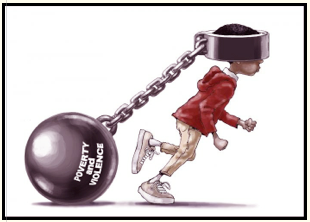
😪 On the other hand many people are still genuinely trapped in situations they can’t get out of for various reasons – children in abusive homes, sex slaves, battered wives, prisoners, war refugees, living in poverty. (Image ↗️).
A total sense of powerlessness always generates impotent anger, even fury. But without any options, eventually depression & then hopelessness often takes over.

NEXT: Anger categories (Part 12)

Anger – CATEGORIES : Narc, Overwhelmed, Reactive (#10)

I LOVE MY ANGER –
it’s all about ME!

PREVIOUSAnger Categories (#9)

BOOK: “Recovery from Anger Addiction”  ~~ Verryl V Fosnight


OTHER Anger-EXPRESSIONS
(cont)
▪️NARCISSISTIC (N) anger
The main N. trait is assuming everything is about them. They’ve created a complex protective facade needed to hide inner woundedness, even from themselves. The most severe Ns desperately need to protect this False Self, & can not tolerate anyone who does or says anything to weaken or expose their facade. Everyone must contribute to bolstering the cocoon they’re wrapped in – & woe unto anyone who doesn’t.

selfish_manWhile Ns act like they’re confident & always know what they want, the defensive False Persona is in fact very vulnerable – covering deep anxiety from an unsafe childhood. Any threat to their image will bring up their rage, IRONY :  they’re also resentful & shamed of being dependent on others for the ‘food & fuel’ to maintain that False Self.

They’re caught between the frustration of an all-consuming reliance on others for adulation, AND any perceived lack of subservience from their ‘subjects’, which makes them prone to outbursts. When they don’t get what they want they’ll either attack or cut the ‘robel’  out of their life – with no explanation. (MORE….)

This kind of rage can be seen in many ways:
☁︎ As Cruelty – putting others down to protect themself, achieving a goal at another’s expense, taking credit for other people’s ideas or work, demanding their own rights while violating those of others

😎 As Grandiosity – showing off, being mistrustful, not delegating, being a sore loser, always wanting center stage, talking over people’s heads….
👤 As Selfishness – only considering their own wants & needs, not responding to requests for help, not listening, **when ‘giving’ it’s only what they want or like to give, never considering what the other person actually needs (**See all posts re. Narcissism -2021)

▪️OVERWHELMED anger
It surfaces when life’s demands are too much for us, so all emotional responses are more Screen Shot 2016-06-02 at 8.12.25 PMeasily triggered. We can’t take any more – our plate is overflowing & we have no more reserves of patience or coping energy. This anger is an unsuccessful response to the alternative of giving up, as in ‘learned helplessness’

It’s used to relieve stress, often by shouting & fighting. It can be caused either by:
▫️ a finite situation, like having a tight deadline, while having lots of other time-sensitive, important things to do as well, OR
▫️ life in general, like trying to find a job while many bills are due + caring for a sick loved one + struggling to raise children alone….

▪️REACTIVE anger
We are born with our own specific set of personality traits, such as : level of activity, distractibility, persistence, mood consistency, flexibility to change, intensity of reaction to + & – stimuli & nervousness level.
The last 3 – in their negation form – relate to how reactive we are to our experiences. (See Posts: re how to respond : “What Just Happened?“)

If we’ve inherited brain-wired traits of rigidity, nervousness &/or over-sensitivity PLUS a difficult childhood, we end up more easily triggered by stress-events. Then to protect ourselves, we develop the need to control our environment – not seeing that the reaction comes from inside ourselves

• Reactors are more likely to feel insulted or treated unfairly. When something happens that brings up their anger, they’d rather push back rigover-reactinght away rather than soothe away their hurt or deal with the issue in a reasonable way.
The automatic assumption is always that —> other people’s behavior causes their anger, so they want to get control back as soon as possible, to get relief.
AND – this pattern can become so ingrained & automatic, that it will even show up in neutral situations!

So there can be a lot of yelling, throwing things, slamming of doors, insults….which gets reinforced because in the short-term it usually lets this angry type get their way.
But what’s gained in immediate gratification is lost in long-term respect – being seen as volatile, harsh, & undesirable.

NEXT: Anger Categories #10