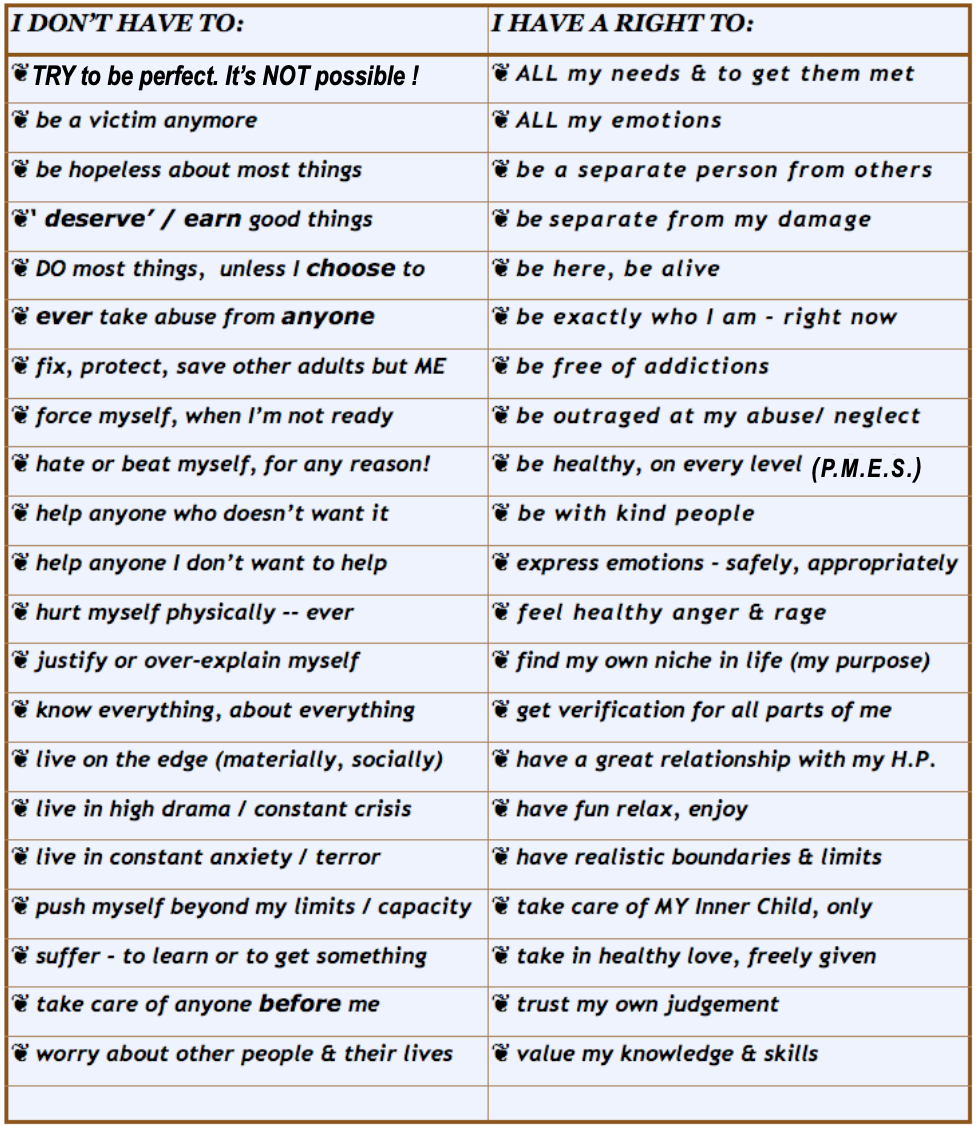
ACoAs: Deserving vs. Rights (Part 1)

Screen Shot 2015-07-10 at 5.43.38 AM

PREVIOUS: My Rights Qs, 25-48

Posts: “Self-Hate & ACoAs
•“People should treat me better, but….”

SITE: Restructuring life in recovery


DEF. of ‘Deserving’
⚙︎ Receiving something – good or bad – which you’ve earned, based on your actions.  It always carries a sense of balance or justice.
🌹This is why we can not deserve love, because we can not earn it. It is either given freely or not.

REPEAT : “I cannot earn love!” – a hard concept for ACoAs to believe, based on our childhood – since ‘being loved / accepted / approved of’ was conditional. BAD PARENT : “Do what I want, or else.”

1. The PROBLEM of NOT deserving
a. Family
In dysfunctional families ‘deserving’ ONLY refers to earning their acceptance. The adults who raised us did not feel worthy which was rigidly held in place by their low self-esteem (S-H), depression & deprivation mentality — so could not model deserving for us
b. Spiritual
Many religions teach us to feel ashamed, guilty & unworthy. Rigid non-Biblical teachings instill guilt, & control by fear. Anyone from a fundamentalist faith was taught that because we were born in sin “we are not worthy” of God’s love, period.  We are bad, bad, bad! This dogma is used to control & discipline children, & keep the ‘faithful’ in line.

✶ What’s left out of these teaching is the KEY to the message: God has given the world many gifts, first & foremost salvation from eternal separation from Him in the afterlife, in spite of our imperfections  ( John 3:16 & commentary)

NOTE : AA Steps 2 & 3  ” Came to believe that a Power greater than ourselves could restore us to sanity. ” “Made a decision to turn our will and our lives over to the care of God as we understood Him”

The definition of ‘grace’ is unmerited favor – being given what we don’t deserve & cannot earn! (“A Bridge to Life & Bible verses)
We did not & cannot EARN grace or any of life’s benefits & beauty – they’re simply here for us to enjoy & partake of! Enjoy the lyrics to “Amazing Grace”,  a hymn universally beloved even by the non-religious.

🙆‍♀️ Too many people no longer consciously agree with the concept of original sin, BUT whatever our personal belief is now – as long as we live in deprivation – we’re agreeing with the introjected bad voice that keeps us trapped in a culture that has perverted the accurate meaning of spiritual teaching.

🙎🏽‍♀️ Some of us were not raised in any specific faith, so our sense of unworthiness would have more directly developed from unhappy & cruel interactions with parents & community.

2. ACoA DAMAGE
IMP: Parents are either capable or not capable of providing acceptance, love, compassion & validation – which has nothing to do with the personality, behavior, or gender of the child.
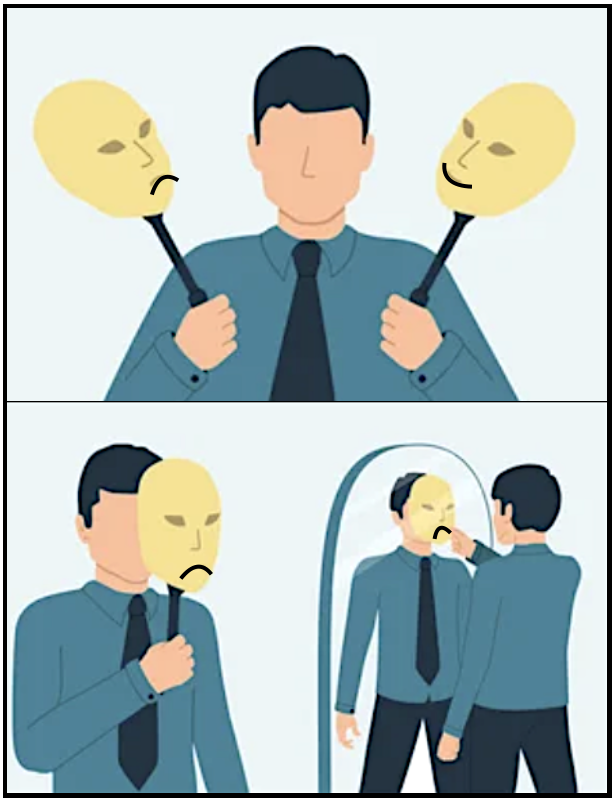
AGAIN: Love cannot be earned – it’s either given freely or not. And our family either did not at all – or only conditionally! We were taught by family & religion to feel UNdeserving of all kinds of good things.
Instead, we still believe that :
• asking for what we want & need is ‘selfish, sinful, arrogant, childish’…..
• other people (sometimes siblings) are definitely allowed to have good things – but not us, especially if we were scapegoated in our family
• we don’t even deserve to be alive, which we concluded —
— indirectly by being constantly ignored, put down & criticized, or
— directly from the messages about how they felt:  “You’ll be the death of me yet , Why did I have to have a kid like you , I never wanted kids anyway , You’re killing your mother/ father, You ruined my life”….

• ALSO – we’re afraid to improve ourself & our circumstances – beyond what our parents are or have accomplished, as if it would somehow diminish them (show them up).
» That would be breaking our symbiotic bond with them & no longer taking responsibility for their life-choices.
✒︎ Actually, healthy parents (& many immigrants) want the opposite – for their kids to do better than themselves & be the very best they’re capable of!

ACoAs DON’T DESERVE
 the BASICS – TO: CONTROL-ABOUT ME
• be ourself, have clear & strong opinions
• be talented, funny, creative, imaginative, intuitive
• be competent, functional, clever
• be appropriately visible, take our own center stage
• feel safe, respected as a person & for our ideas
• have all of our emotions, without judgement
• have & maintain our boundaries, & say ‘no!’ if needed
• shine, get attention, admiration, recognition, complements

NEXT: ‘Deserving’ vs. Having Rights (Part 2)

MY RIGHTS – Questionnaire (25-48)

I’M CELEBRATING MY RIGHTS!
I feel so much better

PREVIOUS: My RIGHTS Qs – (1-24)


DO some inventory writing using these forms in Part  1 & 2

HAVING RIGHTS
When we thoroughly accept that we have ‘inalienable right’, we can work on listing & fulfilling our needs – not perfectly or easily – but as much as reasonably possible.
SELF-CARE allows us to:
1. eliminate deprivation.  ACoAs either harmfully over-indulge or live in self-denial starvation in all PMES ways. Knowing we have value makes is easier to find appropriate, balanced nourishment in every area of life
2. feel good about ourself / be empowered / enjoy our life – all natural results & rewards for being in charge of our needs

3. have boundaries. Once we know what we need or don’t need, want or don’t want – we can tell other people what is or isn’t acceptable, in case they can or want to be available or helpful
It’s not their job to guess or mind-read what our boundaries are. It’s up to us to let people know, so they can be respectful of them
TO
4. prevent abuse.  We won’t accept or tolerate any form of mistreatment, being clear about our rights, especially the right to be safe
5. not be manipulated.  When we know what’s legitimate, normal & healthy, we can tell when someone is trying to control us, & not fall for it
6. minimize anger & resentment.  The more we take care of ourself, the less we co-dependently expect others to provide what’s not reasonable, which minimizes our “disappointment quotient”.
«

«
NEXT : Deserving vs. Rights, #1


MY RIGHTS – Questionnaire (1-24)

self-esteem RIGHTS?  RIGHTS?
Who me?  Really?

PREVIOUS: Healthy RULES – #3

SITE: (UN) What are Human Rights?


HUMAN RIGHTS
•  No matter how long ACoAs are in Recovery, it’s always good to be reminded what we have a right to be and have, as human beings – since we were originally brainwashed by family to not even know what our needs are, much less have a right to fulfill them.

We must provide for our needs as much as possible, both from ourself and with the help of appropriate others, as a prerequisite to:
• having boundaries                            • being empowered
• eliminating deprivation                  • not being manipulated
• preventing abuse                              • feeling good about ourselves
• minimizing anger & resentment   • enjoying our life

ACTIVITY
• Fill out these 2 questionnaires, the best you can (Part 2 next post).
If you get stuck, ask someone who knows you well, AND who is kind as well as honest, which of these right they think you express in your daily life. See what you think – but it’s OK to disagree or not be sure
• Go through the statements again once a year (maybe on your B/day or at the New Year), to clock your Recovery progress

• Take the “nos” as goal to work toward, but NOT as things to beat yourself up about! Remember “We are damaged not defective.”
• Pick a different one each week or month to focus on.

You can start with the “SOME” column, since that may be easier.  At the end of each week / month, evaluate if & how you applied it, or at least increased your awareness about the Right you were focusing on
• Eventually many of these rights will become second nature & you will feel safer & stronger.
«

«
NEXT : Rights Qs, #2

SAFE vs UNSAFE PEOPLE

sharing slaceI WANT TO BE COMFORTABLE
so I have to pay attention to who people are!

PREVIOUS:Healthy RULES & Lesson,- #3


HELPFUL INFO

❀ This outline is not earth shattering or even news, but it’s nice to have it all in one place. You may want to add to the list, based on your personal experiences – or maybe some variations.

• It comes from the book “SAFE PEOPLE” by Dr. Henry Cloud & Dr. John Townsend. The orientation of the book is Christian & has references to Biblical truths, which apply to all spiritual persuasions, so please don’t let it keep you from benefiting from the available info in it. “Take what you like & leave the rest”!

• The book also has excellent chapters on many of the same topics covered in this blog, under such heading as: “How we lost our safety”, “Do I have a Safety Deficit?”, “Learning how to be safe” ……

• ACoAs are so used to being around unhealthy people that we may not realize how we’re being damaged by them.
Even when we think something might be wrong – in how someone’s treating us – we don’t trust our gut or our head, so we get confused & think we’re crazy or over-reacting to what are actually toxic environments & relationships.

Once we have the right info, we can make informed choices, by either moving away, or setting boundaries with the unhealthy people we love!
«

«
NEXT :  My RIGHTS –  Qs, #1

ACoAs: Healthy RULES & Lessons (Part 3)

  new life“AND NOW, PRESENTING…. –
a new life, a better life !!”

PREVIOUS: Heathy Rules, #2

SITE: Healthy Family Rules


MORE GOOD Rules
As mentioned in the last post, these statements are to help the Healthy Adult & Loving Parent parts of our psyche to learn better ways to take care of our Inner Children. Each statement can be used as an inventory:
a. Resistance:
• why do I NOT want to include them in my life?
• what do I think will happen if I follow these ideas?
• what do I need to give up in order to incorporate them?
b. Willingness:many Qs
• what do I need to have / do, before I can use these positive rules ?
• how can I implement these concepts into my life?
• who can I ask for help with them?
• who do I know who already lives them?
c. Results:
• what happens when I do act on these statements?
• how is it different from what I assumed or projected?
• what do I need to do, to increase these principle in my life?
OF COURSE – If you can add questions to this list – please do.
«    «
NEXT
: Safe & Unsafe People

ACoAs: Healthy RULES (Part 2)

Snever give up
YEAH. I WANT TO FEEL SAFE! — Will you take care of me, Good Parent?

PREVIOUS: HEALTHY RIGHTS (#1)

SITE: How To Never Give Up On… (CHART)


HEALTHY RULES
Part 2 & 3 list statement that have been accumulated from years of Recovery experience. They’re geared to the Healthy Adult / Loving Parent parts of our higher self – so we can know how to take care of our wounded and healthy Inner Children, in the best possible ways.

❀ YES, we have a broken heart!  What’s more painful to a child than not feeling loved by their parents?   BUT NOW – to be happy, we need to:
• accept who our family really was & is
• believe in every fiber that we did not cause our abuse & neglect
• accept that now we’re individually responsible for our life
• know that we have the ability to outgrow much of the damage, but not all completely
• consistently apply mental health truths to our life

❀ We all live by rules, whether we like to admit it or not.
• Some ACoAs were so neglected they think they weren’t taught any rules.  No, not good ones, but we did pick up all the Toxic Rules!
• Others of us were so constricted by rules & regulations, we nearly choked to death on them.
In either case we tend to shy away from rules, or have a raging hatred for them. And yet we are run by the bad ones, as long as they stay hidden and we don’t challenge them.

❀ So here are a few Healthy Rules to try out & apply to our every-day living.
Think about each one, carefully.
Pick one & try it out for a month. See what happens. Then try another….
«

«
NEXT : Healthy Rules & Lessons, #3

ACoAs: Healthy RULES / RIGHTS (Part 1)

JUST THINK, I COULD’A HAD A ….
no, not a V-8! …a lot of Love!

PREVIOUS: Toxic Family  Rules


Q:
What is the one & only source of self-esteem?
A:  Unconditional LOVE (acceptance, regard, respect, mirroring…)

EARLY: Heard a million times or not, it’s not trivial or a platitude
• The child’s brain develops its pathways using repeated experiences. If those experiences are disparaging, punitive, painful, limiting – then that becomes the norm for us when an adult
• Children look to their parents to tell them who they are and how they should act (guidance & mirroring). If the messages are negative, then the child’s self-image will be negative

Healthy Parental Love… (acoa website SiteMap, pgs 4, 18, 33, 62)
… does not mean giving the child everything it wants. Boundaries are imperative!
… doesn’t mean sacrificing everything for the child.  Kids need to see parents having a well-functioning life of their own which they can emulate
…. is provided by a ‘good enough’ parent, not a perfect one. Kids need to know they too don’t have to be perfect. Unconditional love is unconditional, not idealistic

NOW: Since ACoAs can’t change how we were raised –
• It’s not easy to change the old messages because we have to form new brain pathways, & the old ones are very deeply etched. That’s why repetition is so important
• We need to find all the possible ways to develop self-esteem
BOOK:Compassion & Self-Hate” ∼   Dr.T.Rubin

• The most successful way for us to change is to learn how to communicate with & comfort the WIC, becoming the Loving Parent & Healthy Adult most of us never had (the “UNIT)
BOOK: Recovery of Your Inner Child” ∼ Lucia Capacchione

 2-way conversations with the IC needs to be daily! It doesn’t have to be complicated or clever. Do you only talk to people you live with (have lived with) once every few months?
• At first you may find yourself very resistant, making excuses, think you can’t…. Yes – it’s a new language, & like learning any new language, it takes time, practice & more practice.  Don’t let the Negative Introject stop you from creating a better life

EFFECTIVE:
• The statements listed are sometimes called affirmations or mantra. ACoAs who are comfortable with the familiar ones – can use them if they resonate, since they ARE true. Whatever works to heal is valuablecomfort the kid
• However, many of us have heard platitudes from family, relative, school, religious communities, school… which didn’t mean much then because they weren’t backed up by ‘right-action’. They were substitutes for genuine communication & genuine emotional connections

• That’s why some ACoAs are frustrated with pre-packaged affirmations, since they don’t address our specific experiences & personality. We were SO unseen & unheard that now we have a desperate need for all communication to be accurate – down to the smallest word! – called “exquisite empathy”
We may prefer to create our own sayings, in exact response to the negative voice & which represent genuine caring for the WIC

• Keep in mind our IC is very smart, & won’t tolerate b.s. Don’t say: “I’ll always take care of you… be there for you… every thing’s going to be alright…” and then forget to talk to the kid for the next weeks or months, let the Bad Parent take over, not take proper care of yourself, let others walk all over you or keep on people-pleasing…. !
You must become trustworthy for the IC to listen & believe you!

EXERCISE:  Write out one of your Toxic Beliefs
• Then create as many counter statements as fit.
Put it aside, sleep on it, & go back the next day (or when you can), & see if you agree with your ideas, or have come up with others.
• If you’re completely stuck, ask someone safe for options. Sometimes watching how good parents on TV talk to their kids – can be good models.
BUT – try it out on yourself first.

EXP: Neg from WIC  – “ I can’t do anything right!”
Pos from Good Parent – “You / we can do some things very well, somethings so-so & some not at all.  If you want to know how to do X we can try to learn it. OK, Little One?”
Ask yourself & the IC:  “What would you have liked to hear back then – & now?”
«

«
NEXT:  Healthy Rules (Part 2)

ACoA : TOXIC Family RULES

Screen Shot 2015-07-09 at 12.10.53 PMTHEY DESIGNED MY STRAIGHT JACKET –
I’m gonna need some help getting it off!

PREVIOUS: Healthy Helping (Part 2)

SITE: Dysfunctional Family (Wikipedia)


RULES: No matter what our family environment looked like, all ACoAs have gathered a litany of TOXIC RULES, which we follow ‘religiously’, even well into Recovery – but hopefully less so with growth!

We absorbed these Toxic Rules from family, school, our community, religion…. They are the underlying beliefs the WIC is absolutely convinced are the absolute ‘truth’ which we are obligated to obey – on pain of death (abandonment)- even if we disagree or hate them. Notice the contradiction & conflict. No wonder we say we’re confused!

The BE and DON’T lists are the short forms, & just mirror opposites. Below are the expanded ones.  This is by no means complete. Each of us can have variations or additions.

INVENTORY: How do we know what our rules are?
a. Overview
As you read thru these lists – notice the ones that hit you the strongest. If you’re new-ish to recovery you may not recognize that you have more of them than you first think. Still confused?
✶ Ask yourself, & then siblings, mate, friends, therapist … for suggestions

✶ Do a Life Inventory, in 3-5 yr increments, listing all the major events you can remember – things that were important, relationships, when you started & stopped things, schools, moves, births, deaths …. choices made, opportunities we didn’t take…..
12065669231219144528Anonymous_work_in_progress.svg.med— Don’t go into detail. Just list things in one sentence each
— Notice the recurring themes, patterns, avoidances… What good things are missing?
— Ask : which toxic rules might your patterns represent?

b. Details
• Pick any one of the phrases that rings a bell & write what comes up.
— Where did you learn this? Who in your family exemplified it?
— How do you act it out in your life?
— How do your friends, lovers, bosses… express it?

• Take it very slow. Spread this exercise out over months & years, if needed. Maybe just write a little & go back to it when you have more info about yourself & your history
GOAL:

• See the toxic family rules you’ve been following – so clearly – that you won’t be fooled any longer into thinking they’re legitimate!
• Slowly disobey them by changing your behavior, an action at a time, a day at a time.

In the beginning – when you do some inventorying – you’re likely to feel fear & guilt. Those emotions prove you’re doing the right thing for your healing. Don’t give up!
• To orient yourself toward healthier goals –  pick out some Healthy Rules that fit your situation, & mindfully, deliberately, use one or more as often as you can (every day, a little?)

✶✶ Breaking family rules can create a lot of anxiety, as the Negative Introject will try to guilt you into returning to the fold – like good sheep.
So the work must be a slow & gentle but with steady process – with lots of support (Al-Anon as one of many resources)

If you read many other posts on this blog, you’ll see references to “Toxic Rules” over & over, so this post will give you a context for thinking about all the other topics & as you work with them. (Post: “Why Are You Stuck?“) .

«
NEXT : Healthy
Rules, #1

What is Self-Control ? (Part 6)

self-controllingI’VE ALWAYS HAD to CONTROL –
everything – to feel safe

PREVIOUS: What is S-elfControl, #5

POSTs : Healthy UNIT – Adult & Parent

QUOTE: “Wealth is not about having a lot of money. It’s about having a lot of options”.  ~ Chris Rock

To IMPROVE Self-control (S-C), especially in difficult situations, it’s relevant & important & to have as much info about the PPT involved.

So when trying to understand or decide what to or not to do/say –
First : step back & do a quick mental OVER-VIEW
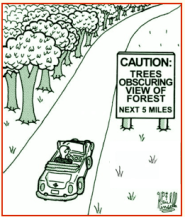
Screen Shot 2016-01-15 at 6.44.01 PMa. Pay more attention to the forest instead of focusing on individual trees, ie. consider the ultimate goal or big picture of the situation you’re in

b. Look at how your actions fit into the overall framework, as being part of a larger plan or purpose in your life, NOT just a specific instance or action. Don’t just stare at a detail in front of you (“But he said…., they ignored me…..), getting lost in something that bothers you or that may be out-of-place.

UNDERSTAND :
One instance of an issue or topic does not give enough info about its purpose or definition, so using it to ‘carve it in stone’ is faulty thinking (a CD),
➼ AND only focusing on a specific example or instance prevents us from being able to apply the concept to a wide variety of life situations. This limits our ability to understand what causes our actions, & so to be in charge of them.

EXP: When a person is asked what they think something means such as “What is the purpose of Guilt?” // “What is Self-Hate” ….
— the inevitably answer is given as an example of it:
f037577c507f4276e7a115a8ac21f596“Feeling bad about something” // “Being hard on oneself”….
rather than its basic definition, its meaning, or what it’s used for.
Solution:
Think of a Definition or Purpose of a topic as the large category ANIMAL (the Kingdom) Then you can list as many different examples as apply – cat, horse, bird, elephant, crock….(the Species)

HEALTHY S-C is NOT ABOUT:
• asking for permission to be who you already are. But it is respectful to ask – if you’re ‘impinging’ on someone’s rights, or if you need to give them a choice about something
• being any healthier than you are, in order to have good things in life
• knowing everything or solving every issue (not be perfect)
• arguing your point – unless it’s really important, especially when it’s clear someone is not open. You don’t have to be right, & don’t have to prove it when you are
If we push & push to be understood by unavailable people, we just make a fool of ourself (Article re. being in control, w/ Biblical references)

STRENGTHEN S-C by engaging your ADULT
INSIDE:
• every morning look in the mirror while washing & teeth-brushing, & think of 5 things you value about yourself – no matter how imperfect!
• be honest, & be true to yourself. Realize you’re important, & never believe or accept anyone saying or implying that you aren’t
AND
Screen Shot 2016-01-15 at 7.40.31 AM• focus on what’s important to you, putting your all into those things – rather than into any that aren’t relevant or worthwhile
• be happy with yourself, focus on what you can change, and ignore what you can’t (either not right now – or ever)
• make the best of the life you have, changing the things that are harmful & eliminating things that are a waste of time/energy
OUTSIDE:
• always remember your best qualities & skills, what makes you valuable & unique, so you can be your best Self in the moment
• organize the important things you need to do each day, & keep a positive (“can-do”) attitude in your work place
AND
• try doing things the way you want to, instead of letting others influence you to do it their way, or distract you from your goals
• when someone is mean to you (by action/ words), stick up for yourself, with assertive “I” statements, coming from your Healthy Adult
• remember to be polite, & look at things as possibilities (WikiHow) which
YOU CAN be in control / in charge of your life.

NEXT: Toxic Family Rules

What is Self-Control ? (Part 5)

Screen Shot 2016-01-15 at 7.44.34 AMIT’S MUCH BETTER FOR ME – to be in control, than to be controlling

PREVIOUS: What is Self-Control ? (Part 4)

SEE post: ACoAs Acting controlling’

QUOTE: “To enjoy freedom we have to control ourselves” ~ Virginia Woolf

SELF-CONTROL  and PRESSURE
1. Neutral: No Pressure – a free environment with no competition, where you can do whatever you want. Self-control is based on however you feel at the moment. With no one else to compare to, people will be more -or- less motivated, depending on the urgency of whatever they’re doing, or their ability to self-motivate

ACoAs – re.‘ Neutral’, children left too much on their own, without guidance or boundaries, can end up floundering, lacking self-motivation. Notice : now with open chunks of time we say “I don’t know what to do”,  OR “I have so many things I could do / should be doing – I don’t know which one to pick”.
So we end up wasting the opportunity by doing nothing or just puttering around. Then we feel frustrated & upset with ourself.

2. Negative: Bad Pressure – In a judgmental & prejudicial environment with no competition, people can get depressed, unmotivated & lose self-control.ocer-control
REVIEW: Emotional Power over others and
Emotional over-Control of oneself are similar because they :
• both try to unfairly influence inner feelings, beliefs, attitudes, values
• are inappropriate internal strategies for dealing with issues, conflicts or mistakes
• are less obvious than physical methods, being manipulative, sneaky, dishonest
• produce subtle results (harder to catch), BUT ↓
• can be identified by resulting signs — depression, discouragement, emotional suppression, insecurity, low self-esteem, negativity & pessimism

3. Positive: Good Pressure – Being in a competitive but non-judgmental, non-prejudicial environment which helps people become motivated, inspired & gain self-control, making them want to be like others around them

STUDY from Humboldt University, Germany:
Broad styles of emotional control can be identified early in life.  This study followed children for 19 years, starting at age 4, then divided them into young people who were –
a. Under-controlled:  disagreeable & lacked self-control. “When feeling frustrated they acted aggressively towards others, n spite of the negative consequences.”
who's in chargeb. Over-controlled: emotionally brittle, introverted, tense, quiet, self-conscious & uncomfortable around strangers. Who “… control their emotions too much, so are less ‘natural’ & spontaneous. Being slow to warm up, they are seen by others as shy.”

c. Resilient (balanced): self-confident, emotionally stable, with a positive orientation toward others. These were “good at modulating their emotions, interacting with others & bouncing back from adversity”

✳️ One observation from the study was that – “compared to the resilient children, the other 2 types took longer to move into adult roles, such as leaving home, starting a romantic relationship or finding a career. Accomplishing these milestones requires social adeptness that the over- & under-controllers take longer to develop….”

COMMENTS : Types a & b are likely the result of unsafe childhood experiences combined with each child’s native style of emotional reactivity. This affects brain chemistry, & therefore how we react to life as adults. Regardless of which underlying personality type we’re born as , pre-Recovery ACoAs are rarely Resilient, but more likely over- or under-controlled, from childhood trauma.

⚡︎ ⚡︎ SO : coming from a turbulent, dysfunctional home, the Impulsive child can easily turn out to be the trouble-maker or drama-queen, AND the Shy one ends up isolated, depressed & marginalized (Scapegoat or Lost Child)

Resilience : b
y comparison, coming from a safe family, Extroverts can grow up to be dynamic go-getters AND Introvert become the quieter ones who successfully use their influence & skills in-the-background.

STUDY – by Jerome Kagan, from Harvard U,  His team used MRI scans to show that the brains of young adults – who were identified as being shy when toddlers – worked differently than the more Extroverted ones when they were small.  Of course, there are many other factors, including class, that make a difference in how children mature.

Ultimately, healthy Self-control is a combination of:
• being in charge of your WIC – by forming a relationship with him/her, so your UNIT is the stronger voice – reasonable, trustworthy & KIND
• AND stopping the PP from bullying the Inner Child into staying hooked by the family disease, who will either rebel or fold in reaction.

NEXT: What is S-C ?  (Part 6)