SITE MAP of the ACoA website


“HEAL & GROW for ACoAs”
80+ pages of great info!  

Go to http://www.acoarecovery.com,
& click on SITE MAP to navigate


ABOUT ME
Pg. 81-83 • Info, Background & Testimonials

ACoA SYMPTOMS
3  • Laundry list, 12 Steps for ACoAs
4  • Unhealthy Parenting
5, 6   •  Expanded characteristics
7  •  NARCISSISTS – characteristics
8  • Cognitive Distortions, w/ examples

ARTICLE
69, 70 • “Healthy Opposites- Change Behavior to Change Your Life”

BARGAINs WITH FATE
12,13 •  Intro & 5 Bargains  (from Shakespeare’s plays)

BLOG
87 • as of 7/15/10 — 16 entries

BOOKS
84,85 • Recovery Titles

BOUNDARIES (Bs)
39  •  Definition, Purpose
40, 41  •  Unhealthy Bs
42-44  •  Healthy Bs  (emotional, mental, physical)

CO-DEPENDENCE
45, 46 • Definitions; Unhealthy & Healthy

COURSE
55-58 • “Knowledge is Power: What Makes an ACoA” outlines

DECISIONS
72 •  Good  & Bad Approaches
73-74 • Extensive List of Personal Values
75-76  • Types of Decision Makers
77-79  • Decision Making Criteria (1-5)

DEFINITIONS
52-54 • Brief explanations of Confusing Terms

4 FAMILY ROLES
20 • Toxic Roles: Hero, Scapegoat, Lost Child, Mascot

EFFECTIVE RESPONSES
51 • Short & longer THINGS to SAY back to abuse or stupidity !

EMOTIONS
47 • Extensive list of emotions words
48-50 • Unhealthy & Healthy expressions/ uses of ANGER

FRIENDS
80 • Extensive list of characteristics

HEAD GAMES
9, 10 • 4 common games
11 •  4 more games, Expanded

INNER CHILD
14 – 17 • ‘Parent, Adult & Child’: Voices, Purpose, Characteristicssca0219
18, 19  • Developmental Stages, Memo from Child

LINKS
86 • @ Narcissists, etc.

NEW RULES
65, 66 • Healthy rules to take care of the Inner Child

RECOVERY
59, 60 • What it’s NOT & what it IS
61- 63  • Mental Health & Healthy Families
64  •  Benefits of Group Therapy

RELATIONSHIPS
23,24 • Issues & Beliefs
25-27 • Intimacy – Unhealthy & Healthy
28 • Love addiction; Power Plays
32 • LOVE – 5 languages, 5 Types
33 • TRUST – Who can, why not, How To
34 • Gay & Lesbian ACoAs
35 • M vs F ways of Responding
36 • 16 Men – by Myers-Briggs Typing
37 • Givers vs Takers

SAYINGS
67, 68 • Affirmations, Promises, Serenity Prayer

SEX & LOVE ADDICTION
29, 30 • Self-Diagnostic Qs

SEXUAL ABUSE
31, 32 • Survivors’ Symptoms;  Recovery

TOXIC RULES
21, 22 • Long & Short versions of dysfunctional childhood rules

WORK ISSUES
71 • ACoAs at Work; Healthy ways to work

NEXT: What id GUILT?

Loneliness in RECOVERY (Part 2)

separation I’M NOT  LONELY AS OFTEN
now that I have myself!

PREVIOUS: Recovery Loneliness (#1)

SITE: Stop being Lonely in Recovery

The middle A : ACCEPTANCE  (PART 3)
Recovery (Rec) Loneliness is part of the process, so it’s normal & to be expected
(cont.):

4. Accept temporary Rec. loneliness of……
….. re-evaluating all our relationships. At first we just become aware of the problem, slowly we consider leaving the most blatantly inappropriate / abusive people, then eventually catch the more subtle ways people are harmful, unavailable or just plain unsuitable for us, no matter how good they look ‘on paper’leaving

….. realizing that actual ‘leaving’ comes in stages too. Some people just drift away, some we have to have a talk with, some will not accept the loss & pursue us.
And then there are the relationships we’ll keep falling back into – even when we know they’re not healthy for us, because the WIC is not ready to let go of them, so we’re conflicted. When the kid is sick & tired of being sick & tired (being on the same page as the UNIT) – we move on, with little or no regret!

5. Accept temporary Rec. loneliness of……
….. an increasing Awareness (the first A):
• of anyone one who is not ‘all there‘, We may live them & they may not be a bad person BUT they’re shut down, distracted, narcissistic, not available – fir us. We are truly alone with such people & we don’t like that anymore! (YEAH!)
• that we get confused when someone tries to ‘help’ us, yet we still feel angry, alone, lonely, misunderstood.
Screen Shot 2015-07-12 at 7.57.56 PM— Sometimes this is because the WIC is still not allowed to be helped by anyone, BUT more often
– we’re legitimately picking up that the solicitousness to help is tainted, because they’re controlling, narcissistic, people-pleasing or a rescuer.
We come to realize that it’s being offered for their benefit not ours. That leaves us alone – again!

• that in early Recovery we tend to idealize NEW support people or groups who are genuinely helpful, kind & gentle. This is the WIC experiencing them as the Good Parent, rather than just healthier peers. As long as we idealize anyone – we will be let down & disappointed when they don’t / can’t live up to our fantasies.

✶✶ However, for those of us with parents still alive – a very important & powerful Recovery experience is when we finally ‘get it’ that being with our unhealed family IS being mentally & emotionally alone – no matter how well behaved they may be with us in the present.
It’s not just our imagination or some flaw in us. It’s that they haven’t done the ‘work’ & are still shut down, still ‘active’, still self-centered…. so our connection is superficial. We want more, but they’re simply not available.dumping everone

a. Too fast – re letting go
When we first truly see of how unhealthy / harmful many of our long-term relationships are, some of us will want to get rid of everyone right away, & may start dumping our whole phone book.

If the phone list is very recent, that may be appropriate. But it doesn’t make sense to compulsively throw the baby out with the bath water.  Ending all old relationships at once – if at all – will be too jarring, leaving us bereft of any connections before we can replace them with more loving ones.

b. Too slowly : At the other extreme are those of us who procrastinate, taking too long to separate, especially those long-term relationships that were once important to us. We’re afraid of —
— being disloyal (even tho they are not worthy of it)
— hurting their feelings (even tho they rarely considered ours)
— losing some fun, good things about them
— the loss of our illusions about how badly they treat us, even tho we’ve always really known there was something wrong, but couldn’t admit it. It’s scary to realize how off our thinking has been.

NEXT: Recovery Loneliness – Part 3

Loneliness in RECOVERY (Part 1)

lonely with cat I CAN STAND THE DISCOMFORT
of loneliness because it’s not forever

PREVIOUS: Adult Loneliness  (#3

SITE: Will I go crazy?”  re. loneliness

TWO STEPS FORWARD….
While all Recovery progress is positive, it’s never in a straight line & doesn’t always feel good – as much as we’d all like it to.  Instead, we move forward at a slow pace, often falling back into old ways & sometimes feeling discouraged, like we’re never going to ‘get it’.

John Bradshaw’s statement that a therapist’s job is to take a client “from their misery into their pain” (from Self-Hate into Abandonment pain) also applies to us individually on our journey thru Recovery.  We need to feel old wounds – a little at a time, & that includes Loneliness.
Is takes courage & perseverance. Recovery (Rec.) creates ‘opportunities’ for feeling lonely, which is a sign of growth as we leave old ways behind!

The middle A : ACCEPTANCE  (PART 2)
The following sources of Rec. Loneliness are part of the process, so they’re normal & to be expected:

1. Accept temporary Rec. loneliness of……
….. separating from childhood damage (our ‘story’). Any form of ‘letting go’ leaves a temporary feeling of depression & emptiness – as it taps into our childhood sorrow & rage, intense fear & emptiness.
It means:S & I
separation & Individuation (S & I) from the PP voice & our resulting S-H, the Toxic Rules & Toxic Roles. These interlopers clogging our Inner Space have to be replaced with the UNIT (Loving Parent + Healthy Adult).

• gradually letting go of a variety of addictions. When we stop numbing the “hole in the soul”, the emptiness (lack of True Self) lets us feel how alone we’ve been

• outgrowing the compulsion to be symbiotically attached to someone, anyone, which then lets us feel how lonely it is to be with people who are wrong for us. It’s accepting that we all have to live in our own skin (‘existential aloneness’), which is healthy & normal. We do need others & especially out H.P., but not in a desperate, needy-child way.

2. Accept temporary Rec. Loneliness of…..
….. getting to know our IC (especially the Healthy one) – & building the UNIT. We gradually become aware that we do notinner child have a monster inside, but a deeply, desperately HURT CHILD (WIC).

The WIC may always want to be taken care of by someone else, so there’s a loneliness in letting go of other people as potential parents.
Guides, mentors,  teachers, friends…. are appropriate & needed, BUT not in a caretaker role. That’s for us to do, to become compassionate & dependable (trustworthy).
• Any form of dialogue with our younger self will gradually fill the emptiness. Book-ending with the WIC helps shift its focus from past to present-day reality.

3. Accept temporary Rec. loneliness of..
….. doing fewer & fewer self-defeating things. This can be very scary for a while, so we need patience & faith in the process because:
• it’s disorienting to function in a new pattern, until we get used to it
disobeying the Toxic Rules can bring with it varying degrees of internal backlash, & sometimes very real disapproval or punishment from disobey rulesothers – mainly the narcissists

• it leaves us wondering who we are. We won’t completely prevent the PP voice from whispering in our ear, but at first, as we stop obeying it, we can feel confused & alone. We think: “Who am I without ‘them’?” if we’re not that Role or Persona we developed in childhood.
The WIC is afraid we’ll have no identity without the old familiar ‘self’, which is mainly made up of defenses.
In reality we were born with a personality all our own & need to strip away the False Identity to find that out.

NEXT: Recovery Loneliness (Part 2)

“FEAR is the ABSENCE of LOVE”

Sscared fish 

LOVE vs FEAR
I don’t know what love is, so how can I tell?

PREVIOUS: How ACoAs Abandon Others #3b

REVIEW: ACRONYM page for abbrev.


WHAT DOES this quote MEAN?
• Like so many popular ‘spiritual’ saying there’s some truth in it, but not the whole story, so we can easily get confused & also misuse it. Love & Fear are both Emotions, see. T.E.A.
Generally, it means that if we did have enough love in our life, we won’t be afraid = loved by a Higher Power, by family, by pets, by friends…  Yes, these are to be desired & cultivated.
BUT the reality for ACoAs is that we are fear-based, no matter how much recovery we may have. There are 2 separate issues re. this quote:

1. Fear is created in CHILDHOOD by genuinely being in danger!
• As kids, ACoAs lived in an atmosphere of constant trauma, subjected to fear-inducing experiences (mental, physical & emotional) practically every day of our childhood.
AND there was very little comfort or validation of our reality. On the contrary, if we told anyone or complained, they said we were over-reacting, making it up, being disloyal, AND it was our fault “What did you do?” Even if anyone believed us, they didn’t / couldn’t help, so we had to suck it up.

EXP:  A lot of our childhood was like being:
— a 5 yrs old, dropped off in the middle of a huge traffic intersection at rush hour, left there in our underwear, told to not whine & ‘JUST COPE’ !!  How cruel !

All that pain & terror got pushed down, so where did it go?  Yes, in large part, psychologically, it went into the unconscious. But physically – the chemicals generated by terror & other painful emotions got stored in our body – in our organs, our muscles, choking our aura, meridians & chakras.

2. Fear is created NOW by outer events & inner thoughts
a. Present-day reality. There are many real-world stressful events we’re faced with in life requiring a clear mind, much human help & Spiritual support. .
It’s normal to be fearful when WE:
• are overwhelmed by too many things needing our attention
• find out we’re very sick, & sometimes – don’t know the cause…
• hear / read about traumatic world events ….
• have a lot of emotional turmoil (visiting family, getting married or divorced…)
• loose something very important to us (apartment burns down…. )
• see someone we love is in danger (a child, a pet …)

BUT for ACoAs, such events can easily trigger the pain of past trauma, pushing us over the limit of our scarce reserves. So our emotional reaction will be much bigger than that of less wounded people.

b. Toxic Thinking. Fear will always be generated by harmful thoughts – our inner world of beliefs babad voicesed on negative family rules (CDs) – the harsh, scary things we tell ourselves, creating more terror on top of what we’re already carrying from our past.

Terror & S-H are behind ALL rage and ALL obsessions. WE:
• are convinced someone’s angry at us or can’t stand us, when they didn’t say hello or give us a compliment …..
• are so used to things not working out, & having anxiety as our constant companion, that we create mental drama when it’s not called for…
• believe we’re “dying of cancer” when we’re not seriously sick (especially when not feeling well but don’t know what’s wrong)
• assume others will react to us the same way we think about ourselves – badly !
• project only painful outcomes on to situations & relationships
• worry about future catastrophes & abandonments, which may never happen & which we will have no control over

Daily childhood abuse & neglect (unprocessed) accumulate in deep reservoirs of hidden pain, which most people call anxiety, because on the surface it doesn’t seem to be connected to anything obvious. HA !
As long as this backlog remains frozen, the pain:
a. drives much of our behavior, our thinking & interactions
b. causes physical & psychological ailments ….

… but in Recovery, much release work can be done, which definitely helps!  We can get to a place where we live more in a state of calm rather than upset. There will always be some residual ‘old’ fear that shows up thru the years when we’re under stress – never being completely rid of all original abandonment terror. This should not be a surprise, since there was so much of it.  We need to be extra kind to ourselves.: “Feel the fear & keep going”, but softly, softly.Screen Shot 2016-06-17 at 10.34.08 PM

“Fear is the absence of Love” is about :
— not having loving safe parents, originally
— the scary thoughts which torture us
— not searching out people who can be good to us, &
— not believing there’s any safety in the world – for us !

HOWEVER when we practice nurturing our Inner Child, connecting with the peace of a loving H.P. & with healthier people, our overall fear level diminishes, especially the unnecessary suffering we’ve been add to the ‘pile’.
➼  We can’t always control or eliminate old fear, but we can be in better charge of that we THINK & what we DO about it.

NEXT: Not Enough Love? – #1

ACoAs – ABANDONING OTHERS (Part 3a)


YOU’RE THE BEST!
Even if I have to make you up

PREVIOUS: ACoAs abandoning OTHERS (3b)


See ACRONYM page for abbrev.


6. IDEALIZING
DEF:
• Another dysfunctional way to cope with the painful fact that our parents were not safe (nurturing, emotionally honest, mentally clear…)
• A way to survive back then. Some part of our child-mind had to make them perfect, without flaws – to deny how angry & scared we were at them, & still are
• A form of splitting off the good parts of ourselves & the bad parts of them – an overt or covert toxic agreement in childhood, with the family, that we were the bad ones & they the good ones.

All small children idealize their parents, which helps them feel safe. If they grow up in a healthy family this safety allows them to cope with reality, gradually able see the adults more realistically, with both weakness & strengths.

But for us – from the very beginning our parents disappointed us when we most needed them to be our ‘gods’ so we’d feel protected. Not only did they not help us deal with the outside world, but were the ‘enemy within’.  (➡️ IMAGE from “See Mom for who she is, not who you want her to be

To compensate now, some ACoAs idealize others, even strangers, as a way to shut out the WIC’s earliest terror still lurking in the bushes of our unconscious, BY:
a. Putting anyone – who we feel is important – on a pedestal (parent, teacher, lover, friend, boss…), not able or willing to acknowledge their real personality, including human limitations & damage (character defects) – UNTIL that person does something that pushes a big button in us, & then we feel rage at them. The illusion we created is shattered & we can’t tolerate it. So we punish them &/or cut them off.

EXP: Carol started a new class & was immediately in awe of the professor.  She began staying after class, asking all sorts of questions, unconsciously flirting a little. The teacher became less & less responsive or available.  Carol kept trying to hold his attention, but finally felt the rejection, became very angry & stormed off, telling everyone else what a jerk he was.

b. VARIATION: Making a new lover the “Answer to all my prayers!” Screen Shot 2016-06-11 at 6.51.05 PMBelieving ‘This is the one!” OR immediately making a new friend into a BFF, without taking the time to find out :
• are they actually who they seem to be?
• who this person really is (character & type)

• how you’ll feel about them, in a year or less
• what personal problems they may have
• how their ‘issues’ are going to affect you
• how will your issues impact them?
• AND, if we’re fundamentally compatible!

➼ To know that, we need to have a clear sense of ourselves, good boundaries, reasonable self-esteem, not too much anxiety about abandonment, tolerate imperfections & have the ability to ‘go slow’. PHEUW!
BTW, we may find someone willing to play out the fantasy with us (some for a while, some much longer), because they too need to be symbiotic, feel needed, overly-important…anything to not focus on themselves & their issues. This does not diminish our responsibility for playing our emotional games.

CAUSE:
• This kind of ‘jumping into’… comes from an intense need of the WIC to symbiotically attach, to fill the emptiness left by inadequate mothering in early life.
The human person we now choose to idealize will:Screen Shot 2016-06-11 at 6.51.46 PM
— EITHER be someone who is similar in damage to our own family – the hope being that this time we can fix them & so get their love & approval, even if we can’t get it from our family.
We only end up (unconsciously) playing out our abandonment / victim role – since we can’t fix others or con them into loving us

— OR someone who is or seems to be completely the opposite of family – stable, competent, smart, nice….so we can finally be taken care of!  Even if they do, for a while, we pay too high a price – being controlled & staying immature.
But usually such people are too healthy to rescue us at all, so we get disappointed again, but not as much.

• Either way we’re trying to get from others today what we couldn’t get originally, but no one can’t make up for our losses! We need to heal from the inside.

NEXT: ACoAs abandoning others (3b)

ACoAs – ABANDONING OTHERS (Part 1a)

 mean teacher

I DON’T KNOW WHY YOU THINK THAT
(since I never would!)

PREVIOUS: Abandonment Pain Now #3


See ACRONYM page for abbrev.

ABANDONMENT STYLES covered:
1. Symbiosing, 2. Controlling, 3. Ignoring, 4. Copying, 5. Repressing other’s Emotions, 6. Idealizing, 7. Undervaluing

ACoAs are usually focused on how much we got abandoned, without realizing we’re just as prone to do that to others.
Not surprising, since everyone copies what they learned in childhood. We treat ourselves & others the way we were treated & the way we saw adults treat each other.
➼ Each style derives from a combination of :
• The original role models (parent, siblings & other relatives, teachers…..
• Our own native personality, forming the type of defenses we choose.
BTW – even tho’ we can’t technically abandon another adult, the term is being used here to express ‘not being there’ for someone else

1. SYMBIOSING
CAUSE : Many ACoAs raised by controlling narcissists were trapped in the state of ‘one-ness’ with one or both parents. We may have felt safe & loved at first, but slowly were engulfed by the needs & demands of unhealthy adults.
As we grew & began developing our own personality, we were slapped down, cut off or rejected outright.
The only option we had was to stay enmeshed, without the chance of developing ourselves fully.

RESULT: As adults we look for anyone we can mesh with, to prevent a terrifying sense of aloneness & abandonment carried over from childhood. Trying to connect with others this way is actually a form of abandoning them, because we’re not connecting with them for who THEY are, only for what our needy WIC wants them to be – for us. (“Symbiosis“)

2. CONTROLLING
• Putting severe limits on what someone can & cannot do when they’re with us (what they wear, where they sit, how they talk, what emotions are OK…)
• Constantly telling someone how they should live their life or how they should be doing something (whether they asked or not)

NOTE: This is not the same as asserting appropriate boundaries regarding what works for you or what you don’t want to be around
CAUSE
• ALL controlling behavior represents our disowned fear accumulated from childhood on into the present
hiding the mess• Trying to micro-manage everything & everyone around us so we don’t have to feel vulnerable, as in our unsafe & chaotic family, & later in bad jobs or bad relationships

• A defense mechanism designed to make us feel powerful & the world be more predictable, by hiding our inner mess, trying to make everything exactly the way we want – SAFE.
As long as we refuse to or can’t deal with the underlying cause of this compulsion (& being controlling IS compulsive, fueled by intense anxiety) we won’t be able to stop

EFFECT
Regardless of the underlying reasons, this pattern is:
arrogant. We’re convinced we know better than everyone else, about everything,  AND have the right to make others do / be what we want
disrespectful to others!  We’re implying, consciously or not, that we don’t care about the effect our controlling has on the other person – we trample on their needs &/or wishes, because only our needs matter!
If we did care, we’d think twice about continuing.
insulting. We believe they are too incompetent, weak & stupid to make their own choices or figure things out for themselves

✶ Of course, trying to be in control of others instead of ourselves – never works. Not only does it not alleviate our underlying terror, but makes others withdraw or be resentful & angry at us – so us feel even more unsafe & alone

HEALTHY Separation & IndividuationScreen Shot 2016-06-11 at 6.34.14 PM 
• Acknowledge that each person has their own way of doing things & the right to make their own mistakes. We are NOT their Higher Power!

• ASK, ASK, ASK: what someone wants, what they need, how they feel, what works for them, what their taste is….
We do not have to supply any of it IF we can’t, don’t want to or it’s not appropriate. Just keep in mind that others are separate from us, & that’s not bad – their differences do not negate who we are!
• Be willing to deal with our own damage, our accumulated pain & toxic patterns

NEXT: ACoAs Abandoning others (#1b)

ABANDONMENT Pain, Now (Part 2)

under-awareDON’T BOTHER ME –
I’m busy ignoring reality!

PREVIOUS: Abandonment Pain Now  (Part 1)

SITE: Understanding the Pain of Abandonment

See ACRONYM page for abbrev.


DEFINITION
(cont.)

Screen Shot 2016-06-12 at 5.26.43 AM

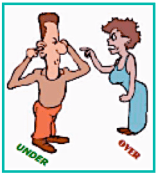
REVERSING – ACoAs also tend to get our extremes backwards:
▪︎ being emotionally under-sensitive to ourselves &/or others in situations which a healthy person would definitely be upset about or at least register as ‘off’
EXP: ACoAs running into traffic as the light turns red, taking home a stranger we just met who talks a good game, not catching an insult….

▪︎ being emotionally over-sensitive – internally as S-H & externally as fear & rage at others – to all sorts of situations that others don’t even notice or are not bothered by, because they’re not ‘real’ or not about us
EXP: a passing glance from someone we interpret as dislike, not being included in some event, someone forgetting to bring us a promised book….

Screen Shot 2016-06-12 at 5.27.17 AMJUMBLING – we don’t seem to be able to make a distinction between important & unimportant issues in life, so that…..


….. being ignored, someone not being available, not getting the information we need, death of a loved one, other people’s damage, a missed phone call, not being able to find something in our home, being late, being dumped, losing a job…..
ALL seem to have equal importance or value – we’er either being numb to it or overly upset! (See Part 1) 

Adult SYMPTOMS of having been Ab. as a child
• Emotional:
anxiety, being frozen (deer in headlights), depression, hopelessness, loneliness, paranoia, rage, resentment, sadness, terror…

• Psychological: avoiding responsibility, blaming, co-dependence, CDs (cognitive distortions), denial, fear of intimacy, idealizing or under-valuing others, lying, manipulating, procrastination, poor communication, withholding…..

• Behaviors: clinging, choosing alcoholics /addicts, fighting, isolation, lateness, raging, self-sabotage, self-harm, suicide attempts, under-earning withdrawal…..

STYLES of reacting to old abandonment
1. UNDER-aware – Mentally
At one extreme ACoA experience being mostly insensitive TO:
a. how we feel about all sorts of things, whether trivial or intense, what our very real needs & wants are, what we’re good at… We continually abandon ourselves, just like they did

b. the many ways some people are unkind, unfair & insensitive toward us. We ignore being ‘dissed’ as a result of :
• being so used to abandonment (Ab) in childhood that we don’t even feel it
• not knowing about the concept of (Ab), so can’t verbalize it, even if we do notice a twinge in our gut

OR WE:
• may notice it (as a thought), BUT blame ourselves, assume we deserve it, don’t have a right to ask for more… (our Self-hate)
• may notice it but pretend it’s not happening (denial), because it would be too painful AND we’d have to stand up to them or leave

• make excuses for the other person’s bad behavior, the way we had to excuse our family enabling). No one at home took responsibility for their abuse & neglect, so now we don’t hold anyone else accountable either
• don’t want to say anything because we don’t know the difference between confrontation & assertion, & we don’t want to hurt their feelings or start a fight

Many ACoAs have a disconnect between their head & their gut, between thinking & Screen Shot 2016-06-14 at 10.17.08 PMfeeling.  Whether an under- or over- sensitive type, we all DO register the hurt of being discounted, disrespected, neglected or attacked.
However, emotionally disconnected ACoAs are:
• either – totally unconscious that someone has ‘stepped on our toes’, OR
• it’s as if we’re wearing a defensive invisible collar – LIKE the big plastic medical kind, used on animals so they can’t scratch their ears. We can see over the top, but NOTHING below the collar.

EXP: Someone can stick a verbal knife in your gut, BUT a with a smile or as a ‘joke’. You can only see the ‘nice’ face, but not the dangerous hand (the mean words). You notice the pain BUT because you can’t see anything below the plastic collar, you think there’s something wrong with you. After all, everyone else is ok & you’re the crazy ones, right?
NO!!

NEXT: Abandonment pain now (Part 3)

ABANDONMENT Pain, Now (Part 1)

abandonment -1
I HATE YOU – DON’T LEAVE ME!
I know you don’t love me,
but I’m desperate


REVIEW
: ‘Self-Hate’ posts


DEFINITION
• Abandonment (Ab) is: “Not getting enough of our legitimate childhood NEEDS met, & some needs not at all”. This is child-abuse & applies to all 4 categories of PMES – Physical, Mental, Emotional, Spiritual. (Ab) is not only about someone physically leaving, just like being “abused” is not necessarily about being hit or injured.

• As a child – being continually abandoned in PMES ways generates enormous amounts of terror, rage, hopelessness, loneliness, humiliation, sorrow…  MAINLY terror. And we carry that mountain of fear with us into adulthood. If not brought to the surface & safely re-experienced (OH JOY), it poisons our life – in ALL areas, no matter how functional a person may look on the outside.

• The original (Ab) did not have to be overt or deliberate. AND our parents may have been oblivious to the damage they were doing, BUT the results are the same  (see: They did the best they could”)
• Children always turn the original (Ab) into Self-Hate, in a desperate attempt to be in control of a bad situation (“I caused it so I can change it”)

➼ At the heart of Self-Hate is a FALSE** BELIEF: “It is MY fault that I’m in pain AND if it’s my fault, then I can & MUST fix it by changing the person or situation, to make everything better”
**Q: Why is it FALSE?
A: Because the severe pain we experienced as kids came FROM the unhealthy & abusive adults, & is their responsibility.  Our pain is NOT just our ‘perception”! It really happened

Screen Shot 2016-06-12 at 5.28.37 AM• Without an outlet for the intense, daily, unrelenting fear we lived thru during childhood, the accumulated pain gets buried & crusted over with defense mechanisms
• Technically, you can not abandon another adult – only a child (there are some exceptions). So now when we FEEL abandoned, it’s left-over pain from the past.
(PS. There are of course situations which will hurt any healthy adult, but not to the degree that ACoAs experience)

NO MIDDLE GROUND
Mental Health is about many things, one of which is BALANCE. Living in a healthy middle ground (most of the time) is not only a foreign concept to ACoAs, but IF experienced, even briefly, is considered BORING & undesirable!
Each of us blends our own personality with our childhood experiences, creating the ‘sensitivities’ (buttons / triggers) which identify our damage.

EXTREMES – Unhealed ACoAs (& some in Recovery) have only 2 speeds about most things: Too Much or Too Little, very high or very low. ‘Gray’ is NOT even thought of, or is seen as a cop-out!  

Using T.E.A, this refers both to:
how we think (T), in the form of the Cognitive Distortion: ‘Black & White Thinking’.  (“I’m all bad & they’re all good /  I’ll only try if I can do it perfectly / No-one loves me / All men are dangerous”….)
• We were not taught to think correctly nor broadly, with nuances & from many different perspectives. So even very intelligent, educated ACoAs can not always come up with alternative ways of considering a problem, about ourselves or in relationships
AND
how we feel emotionally (E). We torture ourselves with panic, depression, rage, shame, hopelessness, guilt, & self-hate,
OR swing to unrealistic, sometimes delusional hope & excitement – both based on incorrect thinking.

• We were not given permission to actually have emotions – not taught to identify them, how to express them correctly, how to self-sooth, or to put them in perspective re. a given situation.
EXP : As a child: Getting very upset when I’m injured or someone terrifies me – is appropriate.
NOW: Getting hysterical because I can’t get or do something I want – is not!
ALSO, we were not taught to consider other people’s feelings – since no one considered ours!

• All ACoAs are capable of responding to life from either extreme – sometimes over-responding, based on specific ways we were repeatedly wounded, sometimes underresponding, to current people or situations. This is based on the kind of abuses we were trained to ignore, but each of us unconsciously lives more often at one end than the other.
NOTE: this is not a description of Manic-Depression, which is chemical rather than emotional.

NEXT: Abandonment pain now – #2

SELF-HATE & ACoAs (Part 3)

addictionsI CAN’T GIVE UP
the only ‘truth’ I know

PREVIOUS: ACoAs & S-H #2

QUOTEs:
🔻 “I won’t sleep if that’s what it takes to not wake up as myself”
Casey Renee Kiser, Hold Me Under: Poems to Drown to

😰”To keep my mind occupied when I can’t sleep – some people count sheep. I self-loathe.” ∼ Rainbow Rowell, Attachments

🥶 “Hostility, malice & sadism are the result of helplessness & self-loathing – all produced by adaptation to a hypercritical social reality, & are not attributable to innate aggression.” ∼ Arno Gruen, Swiss-German psychologist

FoO = Family of origin

1. DEFINITION
2. SOURCES of Self-Hate (S-H)

3. PURPOSE of S-H is TO:
• keep from risking any change via S & I (fear that letting go = being forever alone)
• keep us attached to the family (stave off deep loneliness)
• prevent us from dealing with ‘ugly emotions’ like our rage, envy, longing, hopelessness….
• protect our fantasy of having good, loving, safe parents
• protect us from feeling the reservoir of old abandonment pain
• protect us from Growing up, taking care of ourselves (we want to be taken care of! no matter the cost to ourself or others)

WHY is it SO HARD to GIVE UP S-H?
The above reasons are all part of the answer, but the MAIN one is that:
It gives us a FALSE SENSE of POWER! How?
Since every child is self-centered, which is human-normal, they think everything is about them – that whatever happens in or around them has to do with them.
The child’s logic says: “I’m in pain, & somehow I caused it. Therefore I CAN / must stop them from hurting me, if I can just figure out how!”

• Then we spend the rest of our childhood (& well into adulthood, until Recovery) trying different ways to FIX whatever the problem was & may still be – re :
US – by re-inventing ourselves (must be the origin of this USA craze), trying on different ‘personae‘ (be the perfect kid, the trouble maker, the helper, get good grades, be invisible, don’t have any needs, be funny…)
AND re :
THEM – by trying to make our parents see reason, get sober, get help, leave the marriage, get taken care of by us, cover up for them, fix their ‘craziness’, cater to their every whim….

Unfortunately NONE of our EFFORTS WORKED! In most cases ‘they’ didn’t change, didn’t listen, wouldn’t stop – drinking, raging, being unsuccessful, molesting, beating us, leaving, cheating, berating, controlling….!
But we kept trying, always asking: What’s wrong with ME?

Even if some of our parents did stop drinking,
— it was NOT because of our efforts. We assumed their ‘sobriety’ was, because we were extra good, prayed really hard or badgered them into it
— very few were willing to do the deeper work to become healthier human beings, so mostly they were just “Dry Drunks”. So their unhealed narcissism kept on hurting us.
RESULT -in us- was an intense feeling of failure!

• This is why so many ACoAs believe we’re FRAUDS – that people will eventually, inevitably FIND OUT.
Q: Find out what?
A: “Since I couldn’t make my parents/ family get well, be happy & be there for me – I’m not capable of and NEVER will be able ably to -succeed at anything else!” (WIC logic)

It’s an assumption ACoAs are not usually aware of, but glued to us by anxiety, and believed both by the less accomplished AND the most outwardly successful ACoAs, pre-FoO Recovery. Unfortunately, what we don’t realize is that the fundamental premise is false :
No child
— ever caused the adults’ messes
— was ever responsible for making them better! AND
— can fix anyone else

NEXT: ACoAs & S-H #4

Welcome to ALL

ACoAs know a lot, but often feel confused.

We have a ”committee of voices” with  conflicting points of view, often making it hard to function.   Who should we listen to:  the Inner Child, the Harsh Parent, the Healthy Adult,  our religion, our intuition ???

Here, in these blogs,  I try to make complex issues easier to think about & understand.Tell me if you agree, disagree, or if I’ve left something out!

CLARITY is a hallmark of mental health.     Keep repeating: “I KNOW WHAT I KNOW” !!