Ego States – CHILD (Part 1)

Inner children
I CAN FEEL ALL MY EMOTIONS
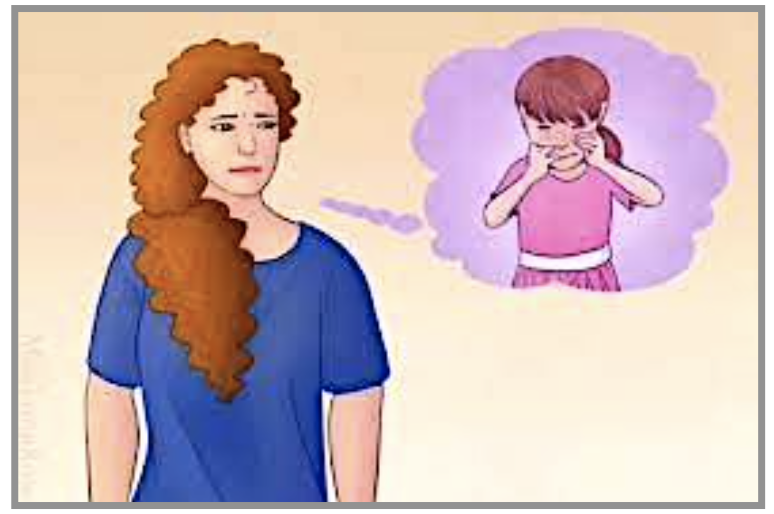
when I connect with my Child part

PREVIOUS: ADULT E.S. (Part 3)

CES = child ego state
AES = adult   ”     ”
PES  = parent  ”    ”
NC = natural child / AC = Adapted C.

GENERAL
Everyone has a CHILD Ego State (CES) – the earliest stage of our development, forming our personality in the first 5-7 yrs of life. Similar in many ways to the Freudian concept of id, it operates on the pleasure principle, automatically & persistently aimed at gratifying & fulfilling needs – but available on a conscious level.

We continue in child mode well into our late teens & early 20s, through 7 developmental stages.(“Cycles of Power” by Pamela Levin). For the rest of life the CES is both an influence (what we think & feel inside) & a state (looking & acting like the little person we once were).

CHILD e.s.🌺 It’s called “archaeo-psyche” because it’s a collection of taped & stored info – behaviors, thoughts & feelings held over from childhood.
In T. A. terms, it’s made up of the Natural /Free Child (NC) – our fundamental identity – overlaid by the Adapted Child (AC), healthy or unhealthy, developed in response to our environment which are ‘understood’ as filtered through our natural tendencies (Part 2,3)

Its goal is to feel pleasure & avoid pain – no matter how or at what cost. It’s focused on Self needs only, even when relating to others or trying to being helpful : “I want, Don’t leave me, I refuse, You can’t make me, I don’t wanna, I want you to….”

This does not mean it’s a bad aspect, to be gotten rid of. We need it, since it holds the seeds of our native qualities, as well as the wounds that influence later behavior. It’s just that as adults it’s not healthy to be ruled by the Child. (See ‘Contamination’)

✦ This E.S. is mainly the domain of the ‘felt’ – the Right brain. Before we were able to talk (Left), our whole world was about feelings & sensations!
So most, but not all, of our emotions (Es) – including all the old stored up ones – reside in the C. part of us
brain sidesFor ACoAs, it is our NC that has mainly been suppressed, ignored, almost crushed. Early on it had to go into hiding to preserve itself from overwhelming harm.
However, it shows up anyway, perhaps sideways – when we use our natural talents – in business, in the arts, in science…. BUT without Recovery we don’t believe they have value, assuming we’re frauds. ◎ Healing works to help us own & happily appreciate them.

▶ In CHILDHOOD
Before we have the grown-up components of the Adult & Parent, we develop rudimentary aspects of them – the Child’s versions of them (+FC), along with the basic tendencies we’re born with – the C’s C. Eventually these 3 parts become the essence of the Inner Child E.S. no matter how old we are. (see Second Order E.S. Map).

C. e.s.C’s Parent – sometimes called mother’s ‘Little Helper‘.  Kids, even very small ones, will help a drunk parent up the stairs, rock their dolly to sleep, care for a pet… OR be bossy, lecture other kids, copy their parents’ way of treating their younger siblings…
Electrode (zaps you with a toxic command, causing a knee-jerk reaction), Witch Mother or Fairy Godmother

C’s Adult – trying to do ‘grownup’ things, even before they’re ready, going to the store or school – alone, ‘being in charge’, showing off their cleverness & knowledge… trying to figure out how things work…. BUT without enough info or mature ego states to process everything correctly
The Little Professor

C’s Child – our most basic self, the core of our identity, the most vulnerable part, aspect of ourself which, as adults, has often been suppressed to the point of being invisible.  This part is composed of our physical self, instincts, biological urges, genetic recordings, and how we learn, our level of sensitivity, social preferences, the full range of emotions – from great joy to great pain, down to how we like our eggs cooked! 
Magical Child or Little Fascist

NEXT: CHILD E.S. (Part 2)
PROCESS – Recovery (Part 2a)

 YOU MEAN PROCESS WORKS?
Yes. And it’s not a dirty word!

PREVIOUS: Process – ACoA version

BOOK:  PASSAGES, ∼ Gail Sheehy

  1. ACoA PROBLEM (part 1)

2. HEALTHY PROCESS – using Al-Anon’s 3 As
a. AWARENESS (Aw) – mainly ‘head’
i. What: Process is usually about information, based in reality
• something about ourselves, our past, the people we do/did interact with – those ‘AHA‘ moments that makes sense of something confusing or distressing
• it can be the end result of years of study & self-examination or by making an intuitive leap
• can also be about buried emotions which surface, sometimes unexpectedly, as a shock or as a result of conscious Recovery work
• a moment of ‘Spiritual Awakening’ – which lights up our inner worldawareness

ii. How: Aw. can come from:
• books, TV, movies, songs, websites, blogs
• therapy, 12-step programs, ministers, other healers
• talking to family, friends – even strangers
• meditation, journaling, drawing, Inner Child Writing or visualizations…

iii. Who – is comes mainly from the Healthy ADULT ego state, which observes & learns from everything in the present, accumulating & putting pieces of info together – in our own unique way
• It does not include information coming from fear, self-hate, shame, guilt… So, NOT from the bad parent or the wounded child ego states

vi. About
• accepting that self-esteem is not arrogance, selfishness or ‘ego’
• active addicts made poor parents, friends, mates, bosses
• following the toxic family rules is soul murder
• knowing that perfectionism is an expression of self-hate
& THAT:
• it takes a certain amount of Recovery to realize just how damaged self-confidencewe really are! – as denial diminishes, & we can handle the truth about our family
• no matter how hard we try to improve ourselves, some people will never like us or be comfortable around us
THAT:
• some people won’t see us or agree with some strong belief we hold — IF agreeing would cost them their sense of personal equilibrium (unhealthy)
• our identity cannot, must not, depend on having everyone like or approve of us
• some people will not appreciate the changes & improvements that come from our growth
• we won’t convince others of our point of view or beliefs — IF it contradicts their Inner Truth (healthy), AND we shouldn’t try!

b. ACCEPTANCE (Acc) – mainly about Feelings & Process
☆ covered extensively in posts : ’Acceptance & ACoAs
i. What:
• it takes time to thaw out (lessen rigid defenses) enough to allow old accumulated emotions to surface.  Still hidden in the unconscious, all that pain powers the engine of our S-H & lack of clear identity
• the opposite of our WIC’s alcoholic grandiosity, which makes us think we have impossible powers, over everything, all the time
• taking responsibility for our own lives, while thoroughly acknowledging what happened to us as kids
• the essence of the Serenity Prayer
• Al-Anon’s 3 Cs “I didn’t Cause it, I can’t Control it, I can’t Cure it’ good group

ii. How – by:
• a conscious effort to deal with reality, as much as we can
• being willing to consistently be there for our IC
• having a loving, safe & smart support system
• persevering, no matter how long it takes
• understanding what to acc. & what not to put up with
• connecting with an H.P. of our understanding, to heal us

iii. Who – mainly acc. the Wounded Inner Child (WIC)
• psychically, we have a huge ‘trans-atlantic’ multi-stranded steel cable, with one end attached to our solar plexus & the other to our family (dead or alive), AND
• that in Recovery we have to snip away at each strand that feeds us their damage, while keeping any that are safe, healthy & useful. This takes time, effort & repetition

vi. About self-love
• all emotions give us legitimate information about our experiences & what’s bad or right or us
• we are damaged, NOT defective. Damage can be healed
• S-H is a defense against feeling the original abandonment pain
everything self-hate tells us is always a LIE
❗️transferring personal power from the WIC to our developing UNIT
normal = human = imperfect = OK / acceptable

NEXT : Healthy Process – “Actions” (Part 2)

Negative INTROJECT (Part 2)

those voices
YOU’RE DRIVING ME CRAZY!
Is it the Pig Parent or the damaged kid?

PREVIOUS: Negative Introject  (Part 1)

Pig Parent (PigP) comes from”Games People Play

💠WHY is it so IMPORTANT to identify the PigP?  (Part 1)


💠HOW CAN WE TELL when the ‘PigP’ Introject is talking?
a. Using the ‘YOU’ form – when talking to ourselves in a negative, harsh way.
“You should have know better, You know everyone thinks you’re stupid, You could have done more” ….

In this form, our original caretakers can keep us terrified, dependent, dis-empowered – so they won’t lose their grip & fade away. The they wouldn’t get their needs met (thru us), not wanting to do that for themselves. That’s what they need us for!

denialOR we may only hear:
b. The ‘I’ form – the Wounded Inner Child (WIC) expressing its S-H in response to & fully believing the PP, who’s off stage – but definitely not absent – spewing it’s poison from the wings.
We can only hear it indirectly, as puppet master, when we self-talk in the same judgmental, impatient way they talked to us.
Only now it’s in the first person, the WIC mimicking : “I’m such a looser , I never do anything right , I don’t know how to do things , No one could ever love me”…..

‘b’ is much sneakier 
THEM: By being way in the background it can’t be held accountable – staying off the hot seat, harder to catch as the source of the abuse, which it’ll never admit to anyway, even when we try to confront it!

US: We collude (unconsciously) with it to keep it hidden from ourselves, because we can’t bear to admit how dangerous our ‘loved ones’ were. But now that they’re ‘inside’, we don’t know how to get rid of them.

💠 UNHEALTHY tries at shutting up the PigP :
• heavy drinking & drug use, & all other addictions (sex, food, spending, exercise, internet….)
• overworking, endless schooling, career we hate….
• suicide attempts or suicidal behavior (dangerous people & activities)

BTW – Some ACoAs refer to our PigP by a name & image that suits its character & our imagination: THE ‘Bat’ we hit ourselves with / ‘Bats’ – parent’s who only call at night when they’re drunk /  Vampire / Gorn – from Star Trek / Monster /  Mom or Dad / the Shadow….  What’s yours?

💠PURPOSE of the PigP
a. The WIC hangs on to it with a fanatic devotion because it’s the only version of a ‘parent’ it’s ever known. It’s afraid to let go because  – as one ACoA screamed in therapy “What will I do without them?”
Slowly replacing it using the UNIT to consistently, lovingly parent ourself, the WIC will let go, but not quickly or easily!

b. The PigP uses it’s convoluted, sadistic power to pour gas on the flame of life’s stresses TO:
• validate its beliefs (T) & actions (A), so it never has to face change
• mask its own FoA by keeping us symbiotically attached.
⚠️If we stay convinced their abuse was our fault, we’ll never expel it

💠POWER of the PigPintrojecting
a. Technically – it’s wired into our brain from birth into deep pathways, by repetition & emotional bonds (the limbic system & frontal cortex).  Each groove forms the easiest way electrical energy travels (strongest chemical trace), so it becomes our default setting

AA-ers say “Alcoholics dig their own ruts, then decorate them – making them so comfortable they never want to move out!”

b. Psychologically – From the WIC
• all children are completely loyal to their parents & their zeitgeist, but ACoAs can’t afford to admit how toxic they were. We love & need them, even when we hate them. So we keep protecting them – at our own peril!

• Those original adults taught us to be afraid of the world AND that we are unlovable. Our connection to them is painful, but the world feels even worse, so we won’t ‘leave home’. Convinced no one else will want uego statess &/or they’ll trample us, we stay attached to the PigP rather than risk the ‘horror’ of the unknown. (Acceptance, #1)

From the PigP – Internalized voices have a life of their own (ego states), made up of our family’s:
• dis-owned emotions (S-H, fear, rage, shame, guilt, loneliness, hopelessness…..) AND
• destructive thoughts, rigid beliefs, irrational opinions (‘stinking thinking’), & occasionally something useful, positive, interesting…..

NEXT: Negative Introject (Part 3)

ACoAs: RISK-AVERSE (Part 2)

attacks
ATTACKS COME FROM EVERYWHERE!
I have to protect myself at all costs

PREVIOUS: RISK  – Intro

See ACRONYM page for abbrev.

T.E.A for ACoAs (cont)
EXP : re. Portfolio management
RISK Aversion –
a preference for safety & certainty over uncertainty, & the potential for loss or pain
vs. LOSS Aversion : 
a complex need for both risk aversion & risk seeking behavior. It’s not just the desire to reduce risk but an utter contempt for any amount of loss. These people feel the sting of loss twice as much as the joy from an equal size gain – & make financial investment decisions accordingly

Neuro-economic studies have found that when people are facing a loss, the amygdala – our brain’s fear center – begins to fire. It is the same area that reacts to being in mortal danger. No wonder many investors are influenced by loss-aversion.

So too, some ACoAs are :
a. MORE risk-averse – hardly ever taking risks of any kind, living mainly as victims, who stay in menial or unfulfilling jobs most of their work life, stay closer to home, don’t try new things, don’t reach out… And SOME are:
b. LESS averse : more adventuresome in ‘action’ ways, but afraid to risk in other important areas, most often not experiencing their emotions, & avoiding relationship intimacy

😩We learned to ignore potential options, because WE WERE:
• told anything we did was wrong, stupid or not good enough
• constantly interrupted by someone else’s needs or crises, so we couldn’t stay focused on what we needed to do for ourselves avoid risk

• punished equally for big or small infractions of ‘rules’, many of which made no sense or were unspoken! This made us put off or avoid taking normal activities, much less branching out to try things that are deeply important to us, or something more unusual to expand our world

IN the PRESENT – our reaction to childhood trauma is to avoid as much confrontation & newness as possible (co-dependence / risk-aversion).
We’re convinced that all forms of ‘taking a chance’ are bad & will guarantee a bad outcome.
We’ve been trained to assume that that’s the way life is, forever – at least for us! This is so ingrained that we don’t even know that’s what we believe. But we live it every day.
Because WE :
• copy a parent’s life-long fear of risk
obey our specific toxic rules
• rebel against family demands for success
• can’t take center stage in our own life
• don’t want to lose proof of their abuse
• not allowed to be visible, or out-shine them

also FEAR – of:
• abandonment, reprisals, punishment
• authority, not being perfect, not picking right
• being a ‘laughing stock’
• being shown as incompetent (not knowing)
• dealing with competition
• having to deal with others’ jealousy
• not getting our deepest desires, no matter how hard we try
AND / OR have to: 
• face our childhood damage AND CHANGE!
• S & I (outgrow & out do unsuccessful family)
• leave someone unsafe or incompatible (parent, friends, mate, children, job, addictions, locations….) if they prevent our growth
• deal with the discomfort of getting good things now, & being successful, which the WIC says it doesn’t know how to be
• then take riskier steps after that… maybe even scarier (like: write something, then publish, then promote, then…)

RECOVERY
In terms of positive T.E.A., while risk is primarily about Actions, there are many which fit into Emotion & Thinking, in spite of the WIC’s fear of personal growth.
WE CAN: leave home
T. – disagree with & disobey the Negative Introject, outgrowing the addiction & attachment to our family (giving up denial)

E. – tolerate the painful emotions what surface in the process of letting go, both from re-experiencing pent-up old pain, as well as facing being hurt by current family judgment & abuse for ‘leaving them’ ie. upsetting the family mobile by changing the dysfunctional dynamics.

A. …. & risk healthy actions : clearly objecting to abuse, disobeying Toxic Rules by doing positive things for our life, & sometimes having to distance ourselves from actual family members & dealing with the possible fallout.

NEXT:  Risk Addicted

ACoAs & RISK – Intro

risk 

TO RISK OR NOT TO RISK –
That is the question

PREVIOUS: Unrealistic Expect.-UNDER

See ACRONYM page for abbrev.

REVIEW posts on (not) TRUSTING


Basic MEANING of RISK

a. taking a chance on something, most often referring to the possibility of harm, misfortune or loss
b.
can also be about a positive outcome, resulting in pleasure, accomplishment & success
c.
OR a neutral / acceptable result – with no danger but no gain

STYLE “a” ⬆️ characteristics
PHYSICAL
• dealing with something or someone known as a source of danger
• a venture chosen without regard to possible loss or injury
• being exposed to the chance of damage or injury, not by choice

EMOTIONAL / PSYCHOLOGICAL
• a situation which causes suffering — being accused wrongly, manipulated & used, humiliated, misunderstood or shamed
• an element or course of action involving uncertain, unpredictable discomfort or distress
• the possibility that something unpleasant or unwelcome might happen beyond ones control

FOR ACoAsmany outcomes
Although the definitions indicate more than one possible outcome, only the a. meaning is considered an option for us – because of  Toxic family rules  such as: “Life is endless suffering’,  ‘You must always struggle but can never get ‘there’,  ‘Don’t expect anything good, ever”…..

In a ‘sane’ world, Risk is minimized or no longer a factor IF the outcome of a situation in known ahead of time based on experience, or is predictable based on dependable information
Then a person can take an action OR avoid a situation – with confidence. This is not wishful thinking, projecting or unrealistic expectations. It comes from realistic knowledge, using present-day Adult ego-state evaluation

• But that’s not how ACoAs operate. We persistently ignore info we do have from years of experience, only using the WIC’s distorted ‘glasses’.
We compulsively pursue unsafe actions, when we  —
✎ choose to return to dangerous situations, stay connected to harmful people…..
✎ & avoid beneficial opportunities, often refusing to take relatively safe actions.
Because of our very deep denial system we keep getting burned – then wonder why we don’t trust!

ANXIETY – ACoA issues around risk-taking are always about internal anxiety. One scared kidscharacteristics on the Laundry List is:
“We have become addicted to (negative) excitement after years of living in the midst of a traumatic & often dangerous family ‘soap opera’.”

ACoAs get things backwards. We keep trying to do the impossible & have trouble doing what is possible!
We’re not sufficiently afraid of some very dangerous ‘people, places & things’ while being overly scared of things that are not actually harmful (like having emotions)!

ALL ACoAs are fear-based**, the Inner Child’s terror of feeling out of control that we bring with us into adulthood, underscoring every aspect of our life. Anxiety is what drives all our character defects, our acting out, our addictions . It’s why the Serenity Prayer is so important for ACoAs!

** Fortunately, long-term recovery – if we’ve been doing emotion-release work – diminishes the intensity of our fear, so it’s not on the surface all the time.  But since our terror-base is very deep, it never dissipates completely.
So we should not be surprised when it occasionally grabs us in the gut – if or when some current event sets it off again. “If it’s hysterical, it’s historical”.

The difference is, or should be – that we’ve built a Loving Parent voice, with years of acting in healthier ways & using our tools, so we can soothe & comfort the WIC whenever we’re triggered (Use Book-ending)

CONTROLcontrolling
The counter-action defense against anxiety is to be controlling (as opposed to Having Self-Control).
It avoids any type of risk-taking that inherently implies unpredictability.
The greater the inner fear, the greater the need to control – in a futile attempt to keep anything or anyone from abandoning us – yet again.

This is why ACoAs try so hard to be mind-readers. If we can figure out what someone feels, thinks or needs – before they say anything – we assume we’ll be ‘prepared’ – for the worst, of course – to prevent being hurt, & stay connected by twisting ourselves into what we hope others will find acceptable.

NEXT: ACoAs & RISK – #2

ACoAs & TIME (Part 2)

slow timeWHY DOES EVERYTHING
take so much longer than I think??!!

PREVIOUS: ACoAs & Time (Part 1)

SITEs :  Kids, ADHD & Time
✦ Time Management Tips

Take back control of your time

QUOTEs : “Your time is limited, so don’t waste it living someone else’s life.” ~ Steve Jobs
❥ “Until you value yourself, you won’t value your time. Until you value your time, you will not do anything with it.” ~ M Scott Peck
⌛️  ⏰   🕔
1. Lost Time and 2. Wasted Time  (Part 1)

3. REQUIRED TIME
a. Much more time than something should normally take
Our damage makes any action an insurmountable project. ACoAs will put off taking actions because WE :
• are convinced it’ll take forever. Whether a task is it’s a big or small, we:
a– don’t divide it into manageable chunks, –b– don’t have an realistic time sense & –c– hate the slowness of process
WE
• have to obey the rule “No play ‘till all your work is done” which of course will never happen, so we go on strike instead, & do nothing!
• have to obey the rule “You have to struggle but never get there” so why start?stuck in time
• (think we) don’t know how, & can’t ask for help, so why bother?
AND
• we’re afraid of making the wrong choice, & the get punished or be terribly disappointed – again
• we can’t decide what to do first – everything is equally big, important, scary… because as a kid the same amount of emphasis was put on large or small events, mistakes, tasks… so we never learned to prioritize

▪️ re. ACTIONS – While these reasons are ‘hangovers’ from childhood, the root of the procrastination is our inner conflict now, between:
• what we want & what the Introject (PP) wants or won’t allow (or with others in the present)
• our damaged part (WIC) & the emerging Healthy Adult voice

These internal arguments have to be resolved by the ‘UNIT in order to proceed. The exciting thing is that when the WIC is on the same page with the Healthy Self, we find that many actions take very little time, are not a big deal AND we actually did know how. No conflict = No delay!

T.E.A. suggestions
Thoughts: write out the opposing points of view (sometimes 3 & 4 different ones) of the argument you’re having with yourself about a situation you’re stuck on
Emotions: list the emotions related to each ‘voice’- they can be different

Actions: identify the actions you want or need to take, & what you think the results will be, depending on the voice you decide to follow
✍️ Actually try out which ever side you choose (As) & then later write down the results. Evaluate (T) the outcome & see how it feels (Es).
This is “Bookending” & is very effective
✍️ You can also use the 2 forms on the post “Why Are You Stuck?

b. Much less time than is realistic
In this care we consistently underestimate how much time is needed to get something done. This can come from unreliable people we have to depend on, who give up inaccurate time-estimates,  but mostly from our own unrealistic expectations.
This relates to the ACoAs who:
♦︎ always over-book, plan things too close together, don’t allow enough time to get places or time for possible delays – and don’t allow for process…
Like: underestimate how long it takes for – a renovation, a doctor visit, to taking a trip, developing a friendship, waiting for a delivery, a check, an email or the return of a text! (it pushes our Abandonment button)
OR
♦︎ those of us who try to do several things at one time. This is not about multi-tasking, but rather expecting, magically, to be able to be in more than one place at a time
Like: attending 2 conflicting events, such as making plans to go shopping alone and having lunch with a friend – at about the same time!
—> not doing things consecutively, OR picking one & letting the other go.
It’s one of the reasons some ACoAs are habitually late (cont. in Part 3)

NEXT: ACoAs & Time (Part 3)

ACoAs & TIME (Part 1)

slow time
TIME IS SUCH A DRAG!
Everything takes forever

PREVIOUS: Over-Feelers (#2)


REVIEW: Pre-FoO work, ACoAs are run mainly by 2 internal ego states – the WIC, who is listening to the PP. One of the signs of this is the unrealistic way many of us deal with time, and timing.
The Inner Child:
 IS still confused by not having been taught process, nor given age-appropriate limits by neglectful parents, which resulted in not knowing how long things take.
Now, depending on the size of a project, there may be many steps between setting a goal & achieving it, yet we don’t allow for the realistic stages of the process.
OR it:
IS reacting to too many constraints imposed by controlling parents who interfered with our natural internal rhythms & time sense.
Now, we either follow the training & become rigidly time conscious, OR rebel by taking our own sweet time, OR do nothing as often as possible

1. LOST TIME
a. To our damage – years spent in S-H, with the wrong lovers, friends, jobs, apartments, the wrong neighborhood or city for us, still involved with abusive &/or uncaring family members….
In Recovery, we need to mourn the loss of time stolen by living in our False Selflosing time

b. Dissociating 
from anxiety. ACoAs are fear-based, which is backlogged from childhood. When faced with any situation that pushes a button or bumps an old wound, we may temporarily ‘go blank‘ & lose track of time, for a few minutes, or much longer.

EXP: Janie desperately wanted to study fine art, but couldn’t afford it. She had to work in an office, which didn’t suit her temperament & where she was not liked. At some point she was reprimanded for always being late. Trying to change that, the next day she got up 30 minutes earlier & started her ‘automatic’ morning routine BUT found herself standing in the middle of her room – completely blank – not knowing what to do next. Eventually she snapped out of it & finished getting ready, but by then knew she’d be late – again!  Her unconscious had sandbagged her – she clearly didn’t want to be going to that job.

lost time from ADD, dyslexia. Many ACoAs have learning disabilities. This does NOT indicate intellectual deficiency – on the contrary, it usually correlates with high intelligence, but creates varying degrees of difficulty in learning, communicating, & dealing with time accurately

• Keep in mind that many ACoA characteristics mimic ADD symptoms in adults. They’re both caused by stress & affect the brain, but ADD is genetic, so treatment is different for the 2 problems. The healthier we get emotionally, the more we can tell the difference. In recovery, the ACoA symptoms will diminish or disappear, while the ADD ones will not, which need the right medication & some behavior-mod training

2. WASTED TIME
Many ACoAs don’t know what to do with chunks of free time:wastw time
• too much anxiety – from perfectionism, toxic rules, fear of commitment & decision-making, avoiding disappointment, fear of risk…
• not self-motivated (Autonomy & Attachment, Part 2)
• wanting to do too many things at once, so don’t choose anything, puttering around, not accomplishing much
• too tired from all the daily stress we put ourselves under so need to veg out but then feel gypped, frustrated, angry at ourselves…

▪️ REQUIREMENTs for growth : a willingness to break some Toxic Rules, like the ones listed in “Part 1, 2a
• Plan ahead, write on a monthly or weekly calendar things you can schedule ahead.
Stick to your plans, whenever possible, & notice how it feels afterwards. When things don’t work out, try something different
• Make a list of activities you’d like to do or might like to try – during ‘free time’, & when the time comes (weekends?) look at it when you can’t think of anything to do OR you have too many options
• Fun time is NOT about priorities. You don’t have to know what to do FIRST! Just pick something you know you like & focus on enjoying it.

NEXT: ACoAs & TIME (Part 2)
Unrealistic Expectations – UNDER

 YOU MEAN I’M ALLOWED?
I can really ask for what I need AND get it?

PREVIOUS: Unrealistic Expectations – OVER #2

See ACRONYM page for abbrev.

IRONY (also in “Over”, Part 1)
There are many things ACoAs do not expect THAT WE SHOULD!  In reality…
… we all need images (dreams, goals) of that is possible for us, which are supposed to be formed in childhood, by watching our family accomplish their goals, & thru school, friends, books, TV…
… without those images (possibilities) – we don’t have something ‘concrete’ to work towards, using process.  Goals have to start with a mental picture of what we want to accomplish or receive, in order for us to pursue them.

⚠️Some of us don’t think we have any dreams
We’re so beaten down by childhood trauma that we don’t even dare picture what we might try for. We can’t go after anything that would be important to us, much less outstrip our family – we just drift & do whatever we fall into. We can’t imagine having any dreams come true for us.

🚫 Others have dreams, but we’re not allowed

We may know what we’d like to do, when we “grow up” – but are just too scared to go for it.  What IF : I’m not good enough, I fall flat on my face, I don’t have the talent, I can’t follow thru, or mess it up some other way… AND the PP is saying “Who do you think you are, anyway?

➼ ACoAs UNDER-EXPECT basic human rights, many if which were denied us as kids.
NOW we can / must look for appropriate treatment from everyone. We know that not everyone is capable, so it’s important to “Stick with the winners”!
We need to keep away from, or severely limit, our contact with people who are too damaged to treat us with at least a minimum of courtesy. Not everyone will like or love us. That’s normal. But we can gravitate towards those who will!
So, we have a RIGHT to EXPECTbe safe
1. FROM LIFE
a. The right to BE here
• to heal from childhood damage
• to get the help we need in any situation
• to have as full a life as possible
• to get to know ourselves, thoroughly & like who we are
• to be safe in the world & to be comfortable in our skin
• to have our own dreams, to follow them & be successful

b. The right to be WHO we are
• to be happy, feel pleasure, be drama-freehave fun
• to express our creativity, in whatever form
• to be part of a community of our peers
• to have a safe, loving Higher Power
• to have a full support system, for healing & for fun
• to be acknowledged for our innate abilities, our learned skills & our actual achievements

We have a RIGHT to EXPECT
comforting2. FROM OTHER PEOPLE, that they:
a. treat us with respect  (not use us!)
• able to listen to us, be present, be thoughtful
• are ok with all our emotions (crying, anger, joy…)
• take us seriously – not make fun of us, dismiss us in any way
• tell the truth (not lie), be forthcoming
• talk to us as adults, at the very least with civility

b. have (some) mental health
• sobriety : chemical, mental & emotional (but not perfect)
• not be physically, menchurch-familytally or emotionally abusive
• have their own money, living space, career/ work they like…
• capable of intimacy, honesty, enjoyment, peacefulness
• have a spiritual belief (if it’s important to us)
• know how to act in public, be sociable (not withdrawn)
• have decent boundaries, know how to communicate

c. have the capacity to love (already)be accepted
• be supportive, encouraging, helpful
see the real us, value who we are
• able to commit to us, & not be symbiotic
• be loyal, sexually faithful
• admire us without being jealous
• want the best for us, even if they don’t agree or understand everything

These are only SOME of the things we SHOULD EXPECT!

REMINDER: In order to believe this & go for it, ACoAs need to imperfectly have:  • greatly reduced self-hate  • developed a rapport with our wounded AND healthy child aspects  •  decent boundaries • a good support system • major detachment from the bad parent voice in our head!

NEXT: ACoAs & RISK – Intro #1

SYMBIOSIS & ACoAs (Part 1)

mother/infantAM I ME, AM I YOU & ARE YOU ME?
I hate myself, but I also want you to be exactly like me!

PREVIOUS: Autonomy & Attachment (#3b)

REVIEW: Ego States – CHILD


SYMBIOSIS

• As infants, all humans are born with a built-in biological & psychological set of tendencies, which interact with & responds to their specific environment in their own unique way – but without a formed personality

The child’s first connection is to the mother (usually), not aware of a difference between itself & its caretaker. This one-ness is normal & appropriate. It allows the child to feel safe & protected while gradually becoming acquainted with itself & the big world it has come in to

• Regardless of the type of family, nature & nurture (how we’re treated) combine to form what we think of as our SELF.  If born into a reasonably healthy one, the child is allowed & encouraged to develop the pre-set template they came into the world with

This creates a sense of external & then internal safety. Having permission to be oneself gradually makes it possible to function in the world as an individual who is comfortable in their skin & with other people

IN CHILDHOODmother rejecting
a. BROKEN Symbiosis – BUT, if the mother is not available or unable to connect with the infant to nurture it from a deep place of love, the symbiotic bond is never formed or is too soon broken, before the child can tolerate it

This can be:
— because of’ illness or death, spousal abuse, external trauma such as an accident, natural disasters, war…..
OR most commonly
— personality defects like narcissism, anxiety, depression, rage at having to be a caretaker, not wanting to be tied down…..

This creates intense & long-lasting terror in the baby, with the message that there’s something fundamentally wrong with it. Such children spend the rest of their life trying to forge that missing link with someone – anyone – to stop that terrible, relentless anxiety, SO-
• they end up alone, never forming any intimate bond – OR
• find another wounded soul they can attach to & live together in isolation  – OR
• keep being attracted to emotionally unavailable people, reproducing the very abandonment they so fear (trying to symbiose with the ‘distant’ mother)

b. UNBROKEN Symbiosis : at the other extreme – the mother who didn’t get that bond in her own infancy, will try to get it now from her child – creating a captive who can never leave them! heli-mom
This mother will make every effort to negate the child’s individuality in favor of her own needs & wants, to make that little person her clone, & will punish any disagreement or separation.

If there’s no one else available or strong enough to interfere with this suffocating attachment (father, sibling or other…) the child never has the freedom to develop it’s own identity, but stays dependent on the mother (& family or substitutes) for it’s very existence throughout life.

This child grows up TO (some or all):
• never leave home     • not have any rights
• be depressed, isolated, suicidal
octopus mom• have weak boundaries
• be unable to have healthy, autonomous relationships
• be terrified of abandonment in any form
• be unable to support themself
• not trust their own judgment
• not have their own opinions about things
• have symbiotic relationships with domineering people….
OR
If the child does get away, then as an A-CoA, they’ll be terrified of any close involvement with others. The fear of being engulfed again is so unbearable that it’s expressed as fear of commitment.
Even when they are in some form of relationship, it will be with extreme emotional detachment, a need for total control, endless sexual conquests, come here – go away interactions, irresponsibility…. or just walking away & never looking back!

➼ Both the strayers & the leavers are ripe for addictions, to fill that big emotional hole inside – but it never works
INFO: Symbiosis can be understood through the ego state model. In a symbiotic relationship, both people use only some of their ego states to relate to each other, which they combine, functioning as if they only had one identity between them. They get stuck in rigid roles, resulting in less flexibility.

NEXT: Symbiosis (#2)

ACoAs: Getting to our EMOTIONS – Over (Part 1)

too many Es HELP, I’M overwhelmed –
I can’t cope with all these feeling!

PREVIOUS: ‘Under-Feeling’ (review)

SITE: “Handling emotional overwhelm


1. IN THE PRESENT
– emotional intensity comes from the Wounded Inner Child (WIC), who had to stuff & store all the hurt no one helped us process in childhood, day after day, year after year! “If it’s hysterical it’s historical”,

• Our self-hate, guilt & shame add to the mountain of misery we already carry, as well as staying with emotionally unavailable &/or outright abusive people.
Yet we stubbornly resist doing emotion-release work because we say we don’t want to feel the WIC’s pain – while we’re creating more pain with our damage!  Over-Feelers (O-Fs ) are already suffering! Why not clean it out & be done?

• Being swamped with old pain (and new) blocks our ability to have pleasure! We know we’re not happy but are so used to misery, we believe we’ll never be free. “Does a fish know it’s wet?” Unexpressed grief & rage keeps us stuck obeying our Toxic Rules.

• ACoAs need permission and courage to express distressing Es. Also, learn how to handle them appropriately whenever they surface, expressing them in the right places & in safe ways.

• One reason O-Fs are afraid of letting out intense rage & terror is because we honestly don’t want to hurt others. But sometimes, when our huge abandonment button gets pushed, our Inner Sadist (I.S.) raises it’s head, & we can’t stop ourself from saying & doing cruel things.  Afterward we feel guilty, ashamed & remorseful.  So O-Fs try to push big Es down too – just not as successfully as U-Fs.Screen Shot 2015-07-11 at 4.14.10 AM

IMP: If you’re over-sensitive (O-F) AND see it as a character defect – brainwashed to believe that by dysfunctional parents because everything seems to upset you, consider this:
• You were born with an very active limbic system (brain-seat of Es)
• It’s like having hyper-sensitive pale skin. If you’re out in the sun too long – without protection – you’ll get burned

• So too, an emotional ‘sensitive’ will have intense reactions to being burned by years of emotional abuse & neglect as a child – without the internal protection of an adult brain, & externally without safe adults to protect our little body & heart!   NOTE: It’s not the sensitivity but an abusive childhood that’s at fault!

2. OVER-FEELING (O-F)
a. Damage
O-Fs have a hard time holding in Es when hurt, so growing up we were scolded, punished, made fun of & misunderstood – everywhere.
We cried too much, were depressed, felt suicidal, threw tantrums, were clingy or rude, withdrawn or flamboyant…. The more we expressed our pain, the more we were abused, so the more pain we had to endure. AND – the more we showed distress at being abused – the more we were punished for it! Vicious cycle.

EXP: Jinny was a bright, intuitive & hyper-sensitive teenager. Not only had she been emotionally & mentally stressed since birth, but then hormones kicked in. Her ACoA parents had no clue how to deal with her – the narcissistic mother wanted her to ‘shape up’ & the depressed father identified with her but was powerless himself. One evening, in the kitchen, yet another insensitive comment from her mother set Jinny off & she began sobbing.

— Her father came in & told her to stop, which made she cry harder – so he slapped her.  His reason: “You were hysterical & I was trying to snap you out of it”.  It’s something he had once read, so thought he was being ‘helpful’! UGH!
Jinny was devastated by his betrayal – as he was ‘the kind one’.  She knew she was not hysterical & could think quite clearly!  Not everyone can “walk & talk & chew bubble gum” but she could, yet her father never bothered to find out who she really was!

• As a result of our experiences, O-Fs often hate having emotions but can’t suppress them, so we despise them as ‘weakness’!
Growing up we were rarely if ever comforted, left desperately alone with our pain – profoundly terrifying for any child.  Combining no empathy with being penalized for expressing legitimate suffering = taught us to loath being Sensitive.

• This enormous backlog makes un-healed ACoAs very touchy & easy to flare up. One O-F woman in early Recovery expressed it as : I’m an emotional hemophiliac – touch me & I bleed”!

NEXT:  Over-Feelers – #2