MULTIPLE Intelligences – Intro (Part 1a)

AM I REALLY SMART IF I can’t do  math, remember names…..?

PREVIOUS: Comfort & Dis-comfort, 3e

DEF: Intelligence is a combination of the ability to:  (from several authors)
1. Learn – which includes all kinds of informal & formal learning, via any combination of experience, education & training
2. Pose problems – which includes recognizing problem situations, & transforming them into more clearly defined issues
3. Solve problems – which includes outlining solutions, accomplishing tasks, creating products, & doing complex projects


Human Intelligence is the singular, collective ability to act & react in an ever-changing world. Our brain is an ‘equal-opportunity’ organ. The more opportunities it has to develop & apply its many but distinct functions, the better we learn, which can make us complete individuals & better citizens. The brain can go from the practical to the most remarkably creative, from the concrete to the abstract, from detached reason and logic to emotion and attachment – all of which we can draw on as we negotiate our way through life.

BRAIN HEMISPHERES
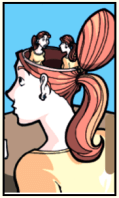
When talking about Intelligence it makes sense to start by looking at the 2 halves of the brain – the Right giving us our Creativity & the Left our Analytical abilities. This chart suggests the 2 sides contribute to the various types of Intelligences (I.) listed in the next few posts.

However, scientific consensus is that intelligence depends not only on the efficiency or power of various brain regions, but also on the strength of the connections that link them.
Researchers Haler & Jung (New Mexico) attribute our I. to a circuit that links the Frontal Lobes, involved in organization, planning & other highly developed abilities, with the Parietal region farther back in the brain, which integrates information from the eyes, ears & other senses.

They believe this Parieto-frontal Integration Theory (P-FIT) best accounts for the evidence that I. depends on several brain regions tightly linked by axon tracks that form super-highways of info. (Brain basis for Multiple.I.? – gives YES/NO points)

Learning Styles: “Characteristic cognitive, effective & psycho-social behaviors that serve as relatively stable indicators of how learners perceive, interact with, & respond to the learning environment.”
«

« CHART  ▲
Applying this info to eLearning – some dimensions are :
– being cooperative vs competitive
– learning independently vs from an instructor
– more or less introverted vs extroverted
– learn verbally vs visually vs aurally
– perceive or processes concretely vs abstractly, actively or reflectively
– make decisions or judgements by deliberation vs intuition
– learn sequentially or bottom-up vs global or top-down

2 TYPES – from Psychologist Raymond Cattell (1963)
FLUID (Gf) Intelligence
The ability to recognize & identify unfamiliar complex relationships / patterns, make inferences about them & use logic to solve new problems

CRYSTALLIZED (Gc) Intelligence
The ability to use learned knowledge & experience. Consists of: Comprehension, Cultural influence, Experience, Judgement, Learning  (MORE….scroll to 1/18/14)

3 TYPES
IQ – HEAD smarts
Ian Lawton showed that people with high IQs aren’t automatically good at everything, by using a ‘simple’ math problem = Bat & Ball problem :
“A bat & a ball cost $1 and 10 cents. The bat costs a dollar more than the ball. How much does the ball cost?”
— Did you say the ball cost 10 cents? That is incorrect, but that’s OK, since more than 50% of Harvard, Princeton and MIT students also got it wrong.
SOLUTION — Consider that the bat is a dollar more than the ball, which costs .05 cents. Since the difference between the two has to be $1 ($1 -.10 = $.90) then the bat is $1.05. ($1.05-$.05=$1)

3 intelligencesEQ – EMOTIONAL / HEART smarts
Understand feelings & instincts behind the facts. It’s used by 90% of top performers for success in business, & 58% of job performance is based on it.
People with a hi EQ make almost $29K more a year.  We BUY ‘stuff’ using EQ, but most will deny it, insisting their choices were totally logical

SQ – SPIRITUAL / INTUITIVE smarts
Combines IQ and EQ. It’s where moral intelligence comes from, giving us a sense of purpose & wisdom. It has its own way of ‘knowing’, gathered from all our years of experience, combining the best of our emotions, skills & knowledge needed for each occasion   (True Leadership)

ADULTS learn differently from younger students (MORE…)
Malcolm Knowles, Adult Educator identified 6 assumptions about adult requirements. LEARNERS :
Need to know Why – what’s the value of  this info, how will it be a direct benefit
Self-Concept – believing they’re responsible for their own lives, adults need to be seen & treated as capable & self-directed, be independent, but not isolated
adult EdExperience – individuals come with many differences in background, goals, interests, learning style, motivation, needs

Readiness – they’re ready to learn because they need or want to know how to effectively cope with real-life situations
Orientation – being mainly task-oriented & problem-centered, adults look for practical info which can be applied to everyday issues. They learn best through problem-based approaches & actual experience
Motivation – they respond to some external motivators (better job, higher salaries….), but the strongest motivators are internal (desire for increased job satisfaction, self-esteem….)

NEXT: Multiple Intelligences (Part 2)

ACoAs: DIS-comfort & Comfort (Part 3d)

happy w/ myselfI‘VE WORKED A LONG TIME
to have peace of mind

PREVIOUS: Dis-comfort & Comfort #3b

SITEs: ☀︎ Cultivating Self-compassion
☀︎
 Start being comfortable in your own skin
☀︎ Exercises & Meditations for Self-compassion

QUOTE: “A man (or woman) cannot be comfortable without his own approval” ~ Mark Twain
“When there is no enemy within, the enemies outside can do you no harm.” – old African proverb

2. NEGATIVE DIS-comfort (cont.) ➖➖

3. POSITIVE DIS-COMFORT (cont.) ➕➖

ACoA PROMISES

Being willing & able to tolerate the dis-comfort of the Recovery process will lead to achieving at least a fair measure of the Promises. These goals & outcomes are the result of sticking to the hard work of growth through all the frustration & disappointments.  They may seem beyond our reach at the moment, but the 12 Steps offer : “If we are painstaking about this phase of our development, we will be amazed before we are half way through: (from the ACoA site, based on the AA Promises)

☆ We will discover our real identities by loving & accepting ourself
☆ Our ability to share intimacy will grow inside us
☆ As we face our abandonment issues, we will be attracted by strengths, & become more tolerant of weaknesses
☆ We will enjoy feeling stable, peaceful & financially secure.
☆ We will learn how to play & have fun in our lives
☆ Our self-esteem will increase as we give ourself approval on a daily basis
☆ We will choose to love people who can love & be responsible for themselves
☆ Healthy boundaries & limits will become easier for us to set.
☆ Fears of failure & success will leave us, as we intuitively make healthier choices
☆ With help from our ACA support group, we will slowly release our dysfunctional behaviors.
☆ Gradually, with our Higher Power’s help, we will learn to expect the best, & get it

ACA World Service Org . FREE Literature

4. POSITIVE Comfort ➕➕
Dictionary DEF:  • Producing or sustaining physical comfort, support, or ease
  • In a state of physical or mental ease; contented, undisturbed
BE-ing bear

a. ACTIONS: “Do what’s comfortable” does not mean being complacent, being stuck, lazy, backsliding into old ways, giving up hope, settling, or not continuing to grow & expand your horizons.

b. BE-ING : Ultimately, true Comfort is an inside job. It comes from developing a deep sense of self-worth (not arrogance) & faith in a Higher Power. It allows us to enjoy the good things about ourselves & the world. And when difficulties, stressors or pain come our way, we can allow ourself to have a variety of intense emotions (Es), but our thinking (T) stays realistic & sound.

INNER COMFORT is the result of self-compassion, expressed very day, in large & small ways.
< It is not self-pity, self-indulgence or superiority – the latter often based on being special, standing out from the crowd, social position, visible accomplishments & income
> It IS being kind to yourself whether you you’re doing well or not, by accepting your humanness, no matter how messy or complicated.pos-pos

Expressions of Inner Comfort develop from knowing & owning who you are, by identifying your specific needs, likes & dislikes & then providing them for yourself.
** Functioning mainly from our Authentic Self, using the UNIT (healthy adult/loving parent) for self-care, we can say”:
• “I know what I know” & I don’t have to know everything to be safe!
• most of the time I have no S-H (self-hate)
• like where I live, inside & out
• have the job/career that suits me
• can stand up for my rights without being pushy of starting fights
• mainly have relationships w/ people who at the very least respect me, & who are kind – most of the time. And at the most those people who love me, enjoy my company & suit my personality
• find ways to have fun & enjoy myself
• have a sense of humor about almost everything
• have little or no desire to fix, rescue or take care of other people, without guilt, since my anxiety level has gone down to a whisper
**Knowing what I have & don’t have control over.
Say YES to any good thing that comes my way!
See the Serenity Prayer  //// “50 Things You Can Control Right Now”
«

«
NEXT: Comfort /Discomfort #5b

ACoAs: DIS-comfort & Comfort (Part 3c)

I ONLY HAVE CONTROL
over my own life

PREVIOUS: Dis-comfort & Comfort #3b

SITE: “If You Ever Cry During Movies, It Reveals A Stunning Secret About Your Inner Self”


2. NEGATIVE DIS-comfort (cont.) ➖➖

3. POSITIVE DIS-COMFORT (cont.) ➕➖
🔹
BENEFITS of Healthy Dis-comfort
(cont)
— Healthy things that can make us UN-Comfortable (cont.)

Letting Go of CONTROL     
One of the big dis-comforts in Recovery is letting go of trying to control external PPT, & shift to being in control of oneself. The more familiar 3 Cs of Al-anon are about ‘letting go’: I didn’t cause it / I can’t control it / I can’t change it.
The  intensity of our need to be controlling is in direct proportion to how much anxiety we carry, which is caused by sitting on our backlog of pain. instead of getting it out safely.

The Q is “Where is your Locus of Control?” ACoAs have been trained to only focus externally on others. So as adults who are still run by the WIC, we don’t want to be our own motivator – because that would mean giving up the illusion that our family – or someone – will eventually take care of us.  (CHART )
BUT – the only way to Heal & Grow is to gradually change from an External (Reactive) to an Internal (Proactive) source of Being.  (MORE….)

These concepts mainly apply to our dealings with others – their addictions, their damage, their distress.  This implies that we mind our own business (“Keep the focus on yourself”) and work on self-care. Following thru on these ideas can be a daily challenge for co-dependents who are used to taking on the responsibility for other people’s needs, self-destructiveness & suffering.

But they can also apply to some things for ourselves:
✱ I did NOT cause my damage (damaged NOT defective). Yes – we have lived out the toxic training, which is inescapable without recovery. We are responsible for changing but not for the source – without blaming ourselves for our imperfections & pain.

✱ I can’t control the process of recovery. Healing our heart & mind is a slow & difficult process, requiring patience & perseverance. Also, we can’t control how others react to changes in us as we heal.

✱ I can’t change the time & opportunities lost to the disease, (If only I had known this before, if only I’d left home sooner, if only… if only….). Recriminations are a waste of time & energy. Mourn the loss & focus on self-esteeming acts today.

Going forward, another 3 Cs can be even more of a challenge:
I can Change / I can Cope / I can Celebrate!letting go

 ➤”I can change” seems daunting if not impossible to many ACoAs because the WIC is going by a whole life-time of actual experiences, both as children & as adults – acting out our damage. Also, if we are convinced that how we’ve always been is our real personality (see part 1) then there is nothing to change.
BUT, what many recovering ACoAs have found is that when we finally find Program, doctors, therapists, ministers, mentors …. who recognize our suffering & offer genuinely helpful solutions, we actually can get relief & have a chance for a better life. They become our “Positive Introject“!

➤ “I can Cope” feels impossible – to the WIC. But this is not a problem for our Healthy Adult. As children we were put in daily impossible situation & expected to handle everything as if we were already grown up, and demanded that we ‘fix’ the things that were wrong with the adults – which was truly impossible. BUT with Recovery today we can indeed cope with many things “that used to baffle us” (#11).

➤ “I can Celebrate” – for most of us this is a big no-no. We’re very uncomfortable if we get any attention – even tho’ the Child in all of us longs for at least some. YES – we need to celebrate our very existence, as well as our gifts & accomplishments. Until we get used to the idea, we can celebrate privately, in our thoughts, in our journal…. but eventually it’s very important to share it with others who can be happy for us, with us.  People who care for & love us want to acknowledge their admiration & pleasure in knowing us!

NEXT
: Comfort/Discomfort #3d

ACoAs: DIS-comfort & Comfort (Part 3b)

shel shockedI WANT TO BELIEVE
my efforts will pay off

PREVIOUS: Dis-comfort & Comfort #3a

SITE : 10 Uncomfortable feelings that indicate you are taking the right path


1. Negative Comfort ➖➕
2. Negative Dis-comfort

3. POSITIVE DIS-COMFORT (cont.) ➕➖
It’s understandable that trying out new thoughts & actions will create some anxiety. That represents breaking internal family rules, breaking away from old familiar PPT, & moving into unknown territory.

PROCESS  (cont. )
☛ Be around like-minded people.
This is crucial for ACoAs. We’re used to choosing & staying with people who are so wounded themselves they can’t actually be present for us & may even be overtly harmful (mean, selfish, using….). Of course, in order to be with our ‘peeps’ & ‘stick with the winners’ – we have to know who we are, & believe we have the right to connect with other people we’re compatible with. This is not looking for symbiotic clones, but for those who have a good sense of their own identity & also can ‘see & hear’ us without judgement.

Push past your comfort zone. ACoAs can only do this to any degree if & when we feel safe enough to risk making a change. This safety comes from having a measure of self-esteem, better boundaries, knowing our rights, a proper support system…. You don’t have to know everything about it ahead of time and there’s no such thing as perfect – so you might as well give it a go!
«

«
improvementRecognize your improvements – no matter how small! As we learn to trust our intuition, emotions & intelligence AND with the right kind of validation & feedback from a support system – we can enjoy our hard-won achievements.

ACoAs have a hard time acknowledging our growth because we:
— don’t have permission to succeed  (Toxic Rule: “You always have to struggle but never get there”)
— assume that if it’s not the whole package it doesn’t count
— are waiting for it to be taken away from us
— don’t trust that it will last, that ‘it’s an accident or illusion
— are so torn between the old messages & new changes that we can’t be sure it’s real
— are convinced it’s selfish, arrogant, presumptuous….

Embrace the ‘sucks’ (“this sucks, suck it up”). Things don’t always work out. Sometimes we make mistakes, we’re disappointed in the outcome, other people let us down….. That’s realty. That doesn’t mean the”universe is against me”, or that we’ve done something wrong.

Just like we have to embrace our Inner Sadist – without acting on it, we can embrace the parts of growth & change we hate – without falling apart & without giving up. Sharing our frustrations & aggravations with others can ease the loneliness & pain. Others have had similar experiences, gotten thru them & sometimes even benefited. NOTE: Acceptance has nothing to do with liking something – it is simply acknowledging what is real.

“Rinse. Repeat”🙂  The old Russian saying ‘povtorenie mat ucheniya’ means ‘repetition is the mother of learning”. The more we perform the same healthy activity, the more confident we become. Confidence is a tangible thing — from practice & repetition. Outline from an article by Chris Dessi

🔹BENEFITS of Healthy Dis-comfort (➕➖)
— Healthy things that can make us UN-Comfortable:
pos-discINTERNAL Changes
• all forms of intimacy (PMES)
• feel all your emotions as they come up
• following through on a project or task
• get what you asked for
• go for your passion

• leave bad relations (family / mate/ ….
• receive help, encouragement
• take a compliment / being praised
• tell the truth // say what you mean
• things working in your favor

• stand up for yourself – via the Adult
• set limits, say”no”when called for
• stop taking care of others
• Stop mind-reading. ASK QS!  // Stop having to always  ‘be right’

EXTERNAL Changes
• appropriate risking / public speaking / writing for work
• changing jobs / career / get a promotion, commendation
• learning / doing something difficult – that you always wanted to try
• going back to school / graduation / B/day party
• new job/ new home / marriage / baby
• trying out new things / learning a new skill
• winning or inheriting money / receiving gifts ….

More Info:
“5 ways Discomfort can explode your growth” (Explanations), &  a similar version:
“5 Reasons to make Discomfort your friend” (Explanations)

NEXT : DIS-comfort &amp; Comfort (Part 3c)

ACoAs: DIS-comfort & Comfort (Part 3a)

uncomfortable brainI HATE HAVING TO
wait for results!

PREVIOUS:
Dis-comfort & Comfort #2b

<—- CHART 

SITEsHow to Practice Being Comfortable in Uncomfortable Situations
— 3 Rules for uncomfortable conversations  (excellent) 

QUOTE: “Growth & comfort do not exist” ˜Ginny Rometty, CEO of IBM (Article)

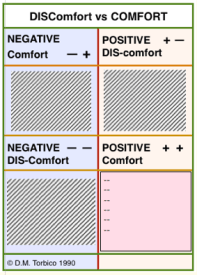
1. Negative Comfort ➖➕
2. Negative Dis-comfort pos-disc

3. POSITIVE DIS-COMFORT ➕➖
Trying out new healthy thinking & actions make us feel anywhere from uncomfortable to highly anxious. It means disobeying each toxic rule, going against our training, dropping off of the family mobile, & bottom line : forcing the brain to find new pathways of functioning.

Too much prolonged stress causes physical ailments & psychological paralysis. That’s why we need to go slowly. Work on whatever issues you can tackle at the moment – ones that are the least scary. As you grow you’ll gain the emotional strength & mental clarity to tackle deeper one – like really ‘getting’ how much damage you have – without S-H or overwhelm, letting go of unsafe family, friends. jobs, locations……

For ACoAs, Growth means leaving behind our unhappy childhood to take our rightful place in the world – living in our True Self.
This is very uncomfortable because our family discouraged & punish any effort to exert ourselves – for ourself. And since personal growth is a slow process. we often live in uncertainty & confusion – between what we’ve always thought & felt, & what we aspire to become. In-between states are always uncomfortable & sometimes scary, but as we keep going we do see positive changes that encourage us. “Easy does it, but do it” (MORE...)

PROCESS  (See post)
☛ Get started. This is often our biggest difficulty putting things off that we actually want to do! as well as those we dread or find too tedious to bear, for all the reasons listed in previous posts (procrastination).  What’s ironic & sad (for ourself) is that most of the time when we finally take the action it’s not such a big deal, doesn’t take as long as we thought, & we usually like the result – or at least are relieved. (see posts re. Action)leaving-home

☛ Don’t Quit. Some of us are over-responsible, over-doers…. & others of us just obsess about doing, but rarely pull the trigger. Then there are the in-betweeners – those of us who start things but never seem to get around to continuing (keep going to the gym, stick to a food regimen, attend meetings….) or finishing  projects. (See postsManipulating – 2b & 2c”). The WIC & the PP get in the way of going for the gold, so we let ourselves get distracted.
The 3 As are useful here:
1. Become Aware of what’s really stopping you from pursuing a positive goal. It will always be something from our earliest training & experiences.

2. Be in Acceptance – allow yourself any emotions the awareness brings up. Don’t try to fix or change deep-seated patterns by brute force (control, S-H, forcing solutions). Continue using all the tools of Recovery programs & remember that re-forming your brain takes time & persistence.

3. Take Actions. Give yourself credit for the actions you are already taking. Don’t fret about what you can’t DO yet If you’re confused about what to do, make a list of the things you used to be interested in &/or still are. Look up what’s available in classes, groups… that can get you started. Some (useful) action is better than none.
If you’re stuck for ideas, talk it over with safe people who know you & can give you suggestion.
Then follow thru. You don’t have to know what the end goal is & you don’t have to like the choice you’ve made – it’s won’t be a life changing mistake – only more info about who you are.

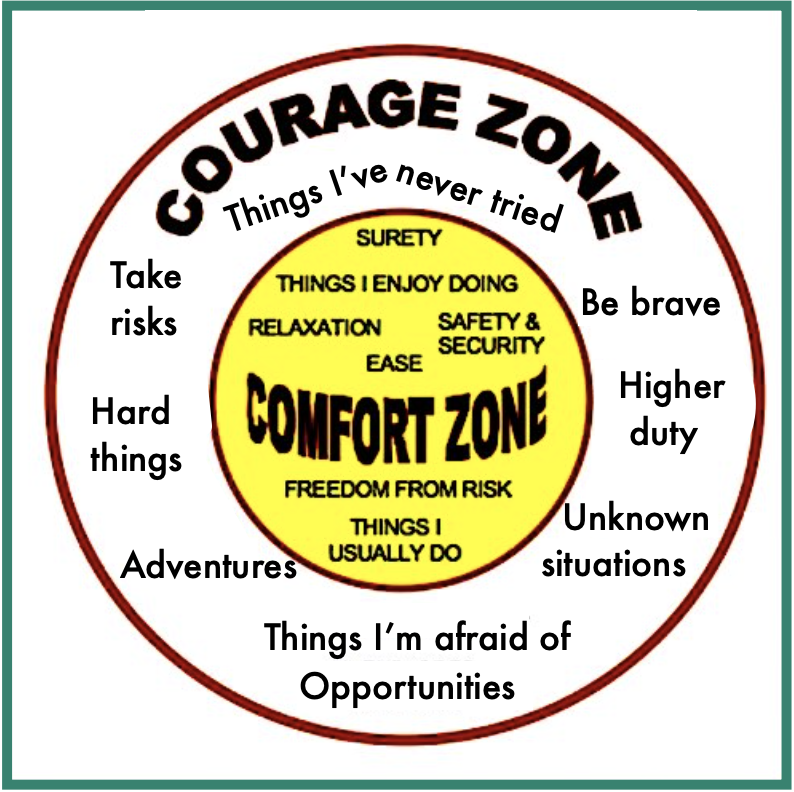
There’s no doubt that all forms of growth (personal, professional…) take courage – which means taking actions in the face of our fear. Courage is not needed if we’re not afraid, but we can’t wait until we’re not afraid to try new things. (⬅️ CHART)

 NEXT: Dis-comfort & Comfort #3b

ACoAs: DIS-comfort & Comfort (Part 2a)

hiding under bedI CAN’T HANDLE
any more stress!

PREVIOUS: Dis-comfort & Comfort #1

SITE17 Habits of a Self-destructive person


1. NEGATIVE Comfort ➖➕

• all forms of addictions, inching ‘addicted’ to religious / ‘spiritual’ pursuits “They’re so heavenly minded they’re no earthly good”
• always complain but never change //refuse to be self-reflective
• always have to ‘be the ‘good’ one
• be controlling (trying to force PPT to be what we want)
• busy minding someone else’s business, rescuing, over-helpingneg-comf

• don’t risk trying new & better ways to live
• isolate / distance everyone // be invisible
• make excuses / blame all difficulties on others, never seeing our part
• look for others to rescue, validate & take care of us
• never rock the boat //  stay in denial // act dumb
• never use direct communication (leave out things, beat  around the bush, don’t stand up for our rights….) // justify, exaggerate, lie

• people-please / don’t say NO when appropriate
• stay connected to unhealthy family & other dysfunctional or dangerous people
• stay constantly busy, over-work / try to be perfect
• stay the victim / be in self-pity / ‘practice’ unnecessary self-sacrifice
• try to avoid everything hard or painful // regularly zone out, over-sleep, over-use internet, games, TV….
• try to “know everything”, be perfect
• use self-injury to ‘cope’ with too much pain

▶︎Think of all the ways you use to escape, & fill in the blue square ⬆️

Keeping these patterns alive, especially once we know better, insures that we stay stuck. It’s the WIC who is in charge of this resistance, & it takes a great deal of determination, correct info,  kind support & unconditional love —->to pry it loose from the toxic family system.

2. NEGATIVE DIS-comfort ➖➖
neg-negIn this category we can look at the Nigglies that are discomforting, & Biggies – that are more obvious. But first let’s review ACoA reactions to experiencing pain over long periods – Under & Over – regarding how we interact with people, events & situations (PPT).

UNDER ‘feel’
As kids we had to clamp down on our emotions because we were punished or ignored for having them, no way of processing them, & had very little or no comforting when in pain.  That taught us to ignore feelings.
BUT they’ve never gone away – they just go underground & pile up until we’ve become one big sore – but blaming ourselves for hurting. The enormity of our accumulated pain is overwhelming, & not knowing that we can process them out, we have to shut down, so the pain turns into depression, or we use them to attack others, & for many of us – we do both.

Being in denial about the abuse we have suffered leads many ACoAs to emotionally & mentally under-react to most stressors. It’s not unusual to observe ACoAs smiling, even laughing, when talking about traumatic events, especially things that happened in childhood.
EXP: Recently Sara stopped in at a fast food joint down town. While eating her sandwich 5 local teens came in & sat at the next table. The were laughing as they compared beatings they used to get at home, one out-doing the others in their descriptions!

Sara wanted so much to tell them that being beaten is not funny, but rather painful, unjust, horrible, truly abusive….., but knew they would not have believed her nor welcomed her interference.
Clearly, they needed to protect the ‘value’ of the family at their own expense. Sara also knows that – at least 4 out of the 5, if not all wounded people – this pattern will be passed on when these teens have their own children, & likely with their mates as well – either as abusers or as victims!

who me?Having to sit on all that disowned pain takes up a lot of psychic energy, making it very hard to pay attention to real difficulties when they occur in the present. So naturally, daily annoyances are more likely to be dismissed or overlooked as unimportant (T)! This makes sense, since we don’t have the inner quiet (serenity) to deal with them. We’re just trying to keep our head above water!

NEXT
: Dis-comfort/Comfort #3a

ACoAs: DIS-comfort & Comfort (Part 1)

minor discomfortI’M DEFINITELY DETERMINED
to ignore my discomfort!

PREVIOUS: DIS-comfort & Comfort (Part 1)

SITE:  Fill-In Qs – Identify your stressors


OVERVIEW
Do What’s Comfortable” is one of the many helpful & profound phrases in Al-Anon. This is a useful suggestion, especially as ACoAs tend to live in perpetual dis-comfort (in the “wreckage of the future or in the misery of the past), subjecting ourselves to almost constant physical anxiety & the endless rumination of self-defeating ‘mantras’ (S-H), sometimes called ‘spinning’.

HOWEVER, we are so used to being uncomfortable that we barely notice, thinking it’s ‘normal’, AND believe we have no other option. So this phrase is incomplete, since ACoAs stick to what we know – no matter how bad – & avoid better/healthier/safer things – as we cling to our abusive family (refuse to S & I), & don’t have to risk being disappointed – yet again!

SOME stress in life is not only inevitable, but also needed in order to gently push us to take actions & grow. As the bell curve shows, there’s the calm state, which is good, & the ‘beneficial’ Eustress, to keep up us alert, motivated & on our toes.
But ACoAs typically live in the far right – in various intensities of distress.

Too much stress tends to paralyze. While there are plenty of external situations in life which can be aggravating, & many things we are truly powerless over, this topic focuses mainly on how we experience & categorize Comfort & Discomfort, negative & positive .

Originally, our harmful life patterns were learned grown up, which we had little or no control over. Now we keep using them :
— because they’re deeply ingrained , & obey family rules
— to avoid deeper painful realizations, anxiety & accumulated terror
— from the belief that we don’t know any better or can’t possibly change.
Still hanging on to them actually comes from the mistaken belief that the way we’ve always thought, felt & acted (T.E.A.) is our actual personality, & therefore no changes can be expected or even attempted. This belief persists even in ‘recovery’ !!

IN REALITY – all ongoing negative behaviors (character defects) are expressions of our False Self, developed in childhood in response to the abuse & neglect of our family & other harmful environments (baby sitters, neighborhood, school, ‘church’….). Therefore, the main goal of Recovery is to shed as much of this made-up persona as possible, in order to uncover, own & live in the REAL Self we were born into before the damage.

To understand why.  read or review posts “Negative benefits of.…”), info about how the brain learns, and “CDs — Info & the brain.
What we experienced from birth on is what makes the most sense to our ‘computer’,  which will fight tooth & nail to keep from having to change – as if we’re asking it to destroy itself!
Remember HAL 9000, in the “2001 – A Space Odyssey” movie?

Changing our programming will create great anxiety – at first. So for some time in our efforts to heal & grow it will genuinely feel more comfortable (a great relief) to go back to doing things the old way – no matter how ‘sick’. Unfortunately. But with persistent repetitions of new thinking & actions, that terror will lessen a great deal.

IRONY: Identifying these dysfunctions as ‘comfortable’, just because they feel ‘natural’, doesn’t mean they promote happiness & calm. While some ACoAs are in such deep denial that these patterns may seem like minor disturbances – from being numb to their long-term consequences – they in fact create endless stress, anxiety, shame, self-hate, frustration, physical & mental illness…. in all of us, whether acknowledged or not.social anxiety

Also, it may seem counter-intuitive that these damaging patterns would be considered comfortable, but it’s because the brain considers them valid, having learned them in childhood & then constantly reinforced in unhealthy environments.

NOTE: in Part 2 – Many of the items on the “Negative Comfort” list also fall into the more severe category of Negative Discomfort (like self-injury, bad relationships, lack of self-care….)

NEXT: Negative Discomfort – #2

ACoAs – Set GOALS to MEET NEEDS (Part 3)

positive peoplePREVIOUS: Meeting our NEEDS #2

SITE: “Asking to have your needs met

POST: #3 = “Damage Needs

1. GOALS
2. IMPLEMENTATION

3. PEOPLE
The third component to reaching our goals has to do with who we surround ourselves with.
Everyone on the planet needs a support system to function well, from family, friends, teachers… to mates, colleagues & partners, psychological helpers & spiritual leaders. And everyone needs help to implement goals – from time to time – whether it’s a store clerk or house wife, the boss who hires us or the mate we live with……

Yet ACoAs find it shameful, terrifying & enraging to have to ask for help & let anyone get too close. For us, closeness is automatically associated with physical / emotional abuse or outright abandonment. Better to do everything ourself, or simply do without.
Even so, we still do need connection, cooperation, information, intimacy, guidance, validation….. So when we try to get Help or Love, the WIC (wounded part of us) automatically go to unhealed people who are the least likely to provide it, but who can ‘feel right’ at the time, because they’re familiar – like family. We keep going to the desert to quench our thirst!self-centered

These are people who are —
— either too narcissistic to actually care about us, so we spend a lot of our time trying to get their approval, pleasing them, hanging on for fear of losing them……needy man
— or are blatantly needy, so they don’t have much to contribute, & we end up spending a lot of time, money & energy taking care of them, worrying about their feelings, trying to ‘heal’ them….

Sadly, we know how to play the game with them using all our old defenses, but never being our True Self. Their lack of emotional/spiritual health guarantees that we continue to starve in PMES ways, continuing to not S & I – staying loyal to our family’s dysfunction.

REVIEW
We grow up, we have lives, jobs, our own families, friends, interests…. but are not supposed to want anything for ourself.
So any time we actually try to, we have to ensure that we fail – to continue obeying the Toxic Family Rules. We can’t afford to know how toxic they are, so we think we’re free of our past. We insist that we’re nothing like ‘them’, it was all a long time ago, it didn’t really effect us all that much anyway……YET the WIC is still totally dependent on the PP, attached & loyal to our early training & trauma.WIC & PP

With this dependence on dysfunctional beliefs & patterns, everything we try is done with one hand tied behind our back & dragging a dead weight on our back. So any time we actually think about pursuing someone or something that can make us genuinely safe, appreciated, happy, respected…. we either put it off endlessly, or we give it a shot, but in a distorted way & with inappropriate people.
And then wonder why we never get anywhere. Most if us blame others God, the world, our spouse & children…. as well as beating ourselves up for not knowing how to do things others seem be to able to, effortlessly.

REALITY: The only way to change this ugly, self-defeating pattern is to stop obeying the PP in the way we live our lives & treat the WIC, & instead get the help we need to develop compassion for ourselves.

STAGES of GROWTH
DEPENDENCE
Stage 1 WISDOM is about tradition, belonging, power and survival

Less healthy adults set up relationships with the main objective to get another person meet all their needs. It’s trying to use others as a substitute Mother, instead of becoming their own Loving Parent.

INDEPENDENCE
Stage 2 WISDOM is about the journey of the self, and the power of personal experience & rational thinking.

We escape from the heartbreak of childhood by becoming independent. This allows us some self-sufficiency & autonomy, with more freedom & success in the short-term, but avoids admitting the pain of our original Dependence. By burying early feelings of anger & fear, we end up damaging current relationships, & rob ourself of long-term happiness.

This stage includes outgrowing:
√  the demand to be perfect, & how others should do things our way – so we can reach our goalsgrowth stages
BY letting go of having to be seen in a specific way, & by taking responsibility for the outcome of our actions

√  being controlling, which creates arguments & power struggles because of the demands we put on others
BY healing deep-seated anxiety which minimizing the need for it – with trust in ourself, in others & in the H.P. of our understanding

√ self-focused emotional disconnection (dissociation), leading to emotional & mental boredom in relationships

BY reconnecting Physically, Mentally, Emotionally & Spiritually (PMES) to ourself

INTER-DEPENDENCE
Stage 3 WISDOM is about the interconnection of everything and the mysteries of existence.

With PMES maturity , we form a stable inner core we can rely on, no matter what. This allows us to have relationships with other self-caring adults we can rely on, learn from  & enjoy. We work together to benefit our personal relationships, as well as for the good of others & the world.
We can then:
1. Reveal our True Self, full of creativity, confidence & wisdom. We have faith in a positive future, rather than living in the past
2. Respond appropriately to the emotional needs of those around us with love & compassion AND avoid self-attacks
3. Have a true sense of ‘belonging’ in the world, linked with everyone / everything else by love, experiencing the calm of Spiritual Dependence (MORE…..)

Inter-dependence makes getting our needs met & reaching our goals more likely, more often & easier – a natural part of living well.  (CHART )


NEXT: Discomfort & Comfort, #1

ACoAs – Set GOALS to MEET NEEDS (Part 2a)

implemeting goalsPREVIOUS: Meeting our NEEDS (Part 1c)

SITE: Develop Self-Efficacy Beliefs

QUOTEs: “Most men lead lives of quiet desperation” ~ David Thoreau


1. GOALS

2. IMPLEMENTATION
DEF: “Carrying a plan forward and making it work”
Once we’ve picked a goal & written it down, we can start figuring out how to accomplish it. Breaking it down into small chunks is vital, & will tell us if the goal is actually do-able, if we already can do it, or if we need to learn something first. The next steps include finding the right kind of help, being flexible in our thinking for making adjustments, & having contingency plans for the unexpected.

• How do we ACoAs try to ‘provide’ for our own needs? Not very well. Most of the ways are in the form of being controlling, isolating, lying, manipulating, over-work, people-pleasing, self-sacrifice, using others…. and most of us find it very hard to do actual PMES self-care.
We’re afraid to fully commit to being happy & fulfilled, because we:
— can’t afford to risk going all out for our core ‘love’ or talent, in case we fail. Then we’d have nothing – the loss would be crushing.
— and, the PP’s message is that we’re too stupid, unlovable, unworthy to get anything right, which the WIC agrees with,  so why try. Implementing goals? “Who do you think you are – anyway? / So you think you’re better than us???”

• Therefore, some of us :
— don’t know what we want, what to pursue, what to try out, drifting without any goals, just taking whoever or whatever comes our waypassive
— don’t even try to get our needs met, eeking out a survival based in scarcity mentality – barely enough money, companionship, sex, attention, accomplishment, minimum shelter /clothing / food…. even tho’ we actually have the ability to find & provide some or all of these things
— don’t take risks, sticking to the ‘safest’ route possible, living lives of boredom or ‘quiet desperation’, like working in a post office for 35 yrs, marrying someone we don’t like but will provide for us, being an active addict….

Others of us who are ambition / driven:
— are high achievers, either based on what our family pushed us into – which we hate, or from some natural gift we were born with, but which we continue to feel insecure about
— will succeed early in life (get a lead on Broadway, work on Wall Street, write a great first novel…. & then do something to ruin it so it slowly disintegrates – over the next 20-30 yrsambitious
— will make the effort in some arena, & may even succeed to some degree – BUT either can’t get beyond a certain level OR
— have to keep messing it up / failing / causing drama & problems / losing everything….
— work our butt off trying to be ‘the best’ so we can finally get the approval we’ve always longed for, but not ever to validate ourselves

WHY don’t we live in the power of our True Self?
➼ Because of the Double Bind: we’re not allowed to actually have our needs met BUT we can’t NOT have them. (ACoA Double Messages)
So, many of us try & fail, try & fail – over & over….. ending up hopeless, depressed & wanting to give up. Because of our childhood training, the brain becomes wired to only see ourselves & the world thru the eyes of dysfunction. We sabotage any goal which doesn’t conform to that training, which Freud called the “repetition compulsion”.

Our WIC thoroughly believes our only option is to stay attached to the family because they say they love us – of course – & the WIC is desperate to believe it, even tho’ we have years & years of proof to the contrary. To deny what we know, we keep obeying the PP voice & it’s toxic rules, (“If you don’t like it you have to stay”), since we assume that:
— the world isn’t safe AND we are sure that we are basically bad!
— if only we could be ‘perfect’ they’d finally, truly approve & love us

self-argumentSO – what are our deepest, most pervasive beliefs (Part 1)? What drives our goals & our actions?
Most of the time it’s the WIC’s cognitive distortions. Even if ACoAs can identify appropriate goals, we either sabotage our progress or can’t implement them at all. This is because it would mean disobeying the PP in our head & being disloyal to still-living family members. So instead, we’ve been using all sorts of dysfunctional PPT as a reason to act – on anything except our own need, dreams, desires & feelings! (motivators)

NEXT: Goals to meet needs #3

ACoAs – Set GOALS to MEET NEEDS (Part 1b)

lots of ideasPREVIOUS: Getting needs met (1a)

SITE:Understanding Self-Sabotage

POST : Category #2 = “Personality Needs

☀︎ ACoAs Manipulating Self & Others – #1

1. GOALS (cont.)
ACoAs : Needs 
In order to get our needs met we must first identify what those are, have internal permission to pursue them, & then search out & use as many resources as are available to us to  provide them. We can not wait for or depend on others to meet all our needs – others are only meant to be a support & company on our life’s journey – not substitute parents!

While we may not always know what we want to do “when we grow up”, taking any positive action can get our engine started – especially if the activities are things we have been interested in since childhood we stopped or never pursued. Taking a class or joining a ‘topics’ group (such as in MeetUp) may lead us to new ideas, possibilities & friends or mentors.
Setting goals is a fundamental part of getting our needs met, first the cognitive component (idea), managing our anxiety (emotions), & then taking the necessary actions. (T.E.A.)

Most ACoAs either :no needs for WIC
⇒ have a lot of trouble making decisions – we aren’t allowed to know or admit what we really need & want
⇒ can’t afford to risk making a mistake lest we get punished, & we want to avoid being disappointed yet again
⇒ OR make decisions impulsively, without considering results – the possible consequences to ourselves or others – ☂︎ all based on childhood brain-washing.

• So many of our childhood needs were not met – correctly – which left us with the clear message that we’re not supposed to want or need anything for ourself! Even if we did get some Physical ones (roof, food, clothes, schooling….) – which was a plus & allowed us to survive – the good things were undermined by all the neglect & abuse in the other PMES categories, especially Emotional. And for many of us even the P category was contaminated by beatings, incest, lack of basic provisions….

• This damaging background has created a great dilemma for us, a double bind that keeps many of us stuck WE:
a. are not allowed to have needs, especially emotional ones, BUT
b. still have them ALL – we can not get rid of needs – no matter how hard we try to ignore & suppress them!
EXP: As mentioned before, a newcomer to Al-Anon figured out in a 4th-Step meeting that her belief was: “My biggest character defect is my need for love!” WHY? because she grew up feeling unloved, yet still desperately longed for it. Wasn’t it foolish to want something she was sure she had no right to & would never get?  (See “Unrealistic Expectations”)

what goals?• Our childhood experience was of endless ‘sameness’ – the same drinking, the same unfairness, the same neglect, the same loneliness, the same terror…..
NOW we still live as if we have no options.
So to form deliberate, conscious goals is not easy for many ACoAs – even for those of us who’ve achieved some success in career, yet also subtly recreate early family patterns in both work & personal life.
Ironically, most ACoAs are best at what we like to do the least! There is less threat of it being taken away.

As Adults we’re still trapped in the hopelessness of ever being able to reach our TRUE goals, whatever they may be. For many of us, the idea of possibilities was not part of the mental vocabulary in our family , WE:
— didn’t have the option of using our imagination for ourself, except maybe as a way to escape the pain we were constantly in, AND
— used our creativity to figure out ways to keep our parents, siblings, mates, children… from total self-destruction

This makes it imperative to remember “I know what I know”, since we have our own native wisdom! The Healthy Child has always known a great many things which never got acknowledged or have been too painful to remember. Now in Recovery the Good Parent we are developing can listen to our still small voice, available to redirect the decision process to help us get the best outcomes. (See RIGHTS & Self-esteem posts)

Robert Sharma’s 5 Steps for Goal Setting
1. Celebrate: write down – in detail – things you’ve done in the past year you can appreciate yourself for. What are your big AND small achievements?

2. Education // 3. Clarification  // 4. Graduation // 5. Visualization

NEXT: Goals to meet needs  (1c)