ACoAs – EDUCATION Inventory (Part 1)

school, schmoolSCHOOL, SCHMOOL!
What was it all for??

PREVIOUS: Time-Line Inventory

REVIEW post : “Family Inventory – Overview


TRAUMATIC EXPERIENCE in SCHOOL?
Whether because of moving, bullying, learning disabilities….  it can be cathartic to do this writing, maybe surprised at how much pain is still hiding under your mental carpet. It’s one way to start cleaning out more of the sludge clogging our mental & emotional arteries – that keeps us stuck.

EXP : Moving often meant new schools, which meant being the ‘new’ kid each time. In most cases this was a cause for peer-abuse. The more schools – the more pain! 

EXPERIENCE
a. Some ACoAs only went to 2-3 schools throughout our educational life
b. Others of us moved a great deal & so changed schools often. Part of school trauma may have come from being bullied, or from a language barrier if the moves were to different countries

c. Some have had little formal education, but have learned a great deal on our own, by life experience, reading, unofficial classes….
d. Others went thru school sleep-walking, barely managing, but never really learning much – distracted, depressed, in a fantasy-fog…..
e. Some had a great deal of trouble learning thru’ the standard school curriculum, because of ADHA, Autism…. of other disabilities

SITUATIONS
✒︎ Some of us did very well in school & gained a measure of self-esteem & positive feedback away from home,
BUT were abused / ostracized by other students for being smarter, favored by a teacher, getting awards, the child of someone ‘Special’, of a different religion….

✒︎ for some it was a relief to away from the chaos & neglect of the home, but for
others it was more of the same – being teased, ignored, deliberately abused….the scream

✒︎ for some, we didn’t do so well, not because we were stupid (mentally limited) but because:
✐ it was too hard to concentrate, worrying about the bad things that did happen or could happen at home while we were away
✐ of having to hide physical &/or sexual abuse from everyone
✐ of ADD, illness or other personal difficulties
✐ bullied, made fun of… for being different in some way
✐ we didn’t fit in to the social setting of the school
✐ missed school because of illness – ours or family member
✐ moved often & got out of synch with level of class work….

QUESTIONS — Use this as a FACTUAL inventory, at first, so you don’t get too overwhelmed. You can add emotions later, or on a separate sheet

SCHOOLS  LIST :
• every school you went to (Kindergarten thru college)
• dates, location, names — if possible, or approximately
• how were they paid for? tuition & other costs?

To be more specific: use a separate page for each of your school years & at the top include the year, your age, the grade & school location.  It’s ok if you don’t know or remember – you may eventually, someone else may give you some info or you’ll leave it blank.  Fill in as much of the following as you can for each year.
last-minuteFAMILY:
• what was each parent’s attitude toward school & education?
• what messages did they give you about it?
• how did your home life affect your homework?
• did your parents help with or hinder your schoolwork?
• did you get the clothes, books & other equipment you needed? If not, what happened?
• were they proud of your progress & achievements? Indifferent? Disappointed? How did that feel, emotionally ?

YOU:
For the grammar school years, do the best you can & ask others for info :
• which subjects did you take?
• did you like or dislike these classes? Why? The subjects you remember most easily tell you how you felt about them
school bag• were there special assignments you did better in? worse? What were the teachers’ reactions?

• were you in any clubs, special groups, cliques?
• were you a loner, disliked, ignored, teased, tortured OR liked, popular, a leader… ?
• were you alert, falling asleep, sick, out a lot? visible or invisible in class?
• did you play sports (group or individual)?  In a musical or debate group? Was it a positive or negative experience?

NEXT: School Inventory (Part 2)

ACoAs: Our TIME-LINE Inventory

inventory


IT’S INTERESTING TO SEE
my life all laid out so clearly

PREVIOUS: Family Inventory – General

See ACRONYM Page for abbrev.


CHOICES:

Family Inventory charts are next. If you want to start with a Personal Inventory (or have already done one, try c.), here are a few options:

Al-anon “ 12 STEP Workbook ” (as an adult) and12 Steps of Adult Children” (about you & family in childhood)

These 2 books can be done together – one Step at a time – of course! & share each one with a sponsor or therapist. You may need some suggestions on how to answer the various ones, since it’s hard to see oneself. Do not rush, but do it.

If you just want to do a character Self-Evaluation, you can do:
a. the 4th Step of the 12 Step Program: “Made a fearless moral inventory of ourselves”. Most newcomers just write everything they think is wrong with them (personality defects) & all the wrong things they’ve done (bad actions). Actually it’s supposed to include our strengths, skills & gifts, but ACoAs rarely think to do that.
• This can be done with an outline such as the AA version at “Step12.com
• or done ‘freehand’, as things come to you. Then later you can categorize them for clarity.

b. AL-ANON‘sThe Blueprint for Progress” booklet & online

c.  The TIME LINE Inventory (DMT 1986)
This chart may seem sketchy, but can be quite powerful. Because it’s so visual & simple it’s hard to miss the obvious – trauma & repetitions of trauma. You may:
•  find yourself reluctant to start , OR you may fill in some & then drop it. This is most likely because it’s painful & you’re shying away from facing the pain – doing it alone can be hard
•  If you do continue, be sure you have a good support system in place ahead of time when you need encouragement if the emotions that surface come up too strongly. Don’t give up!
WHAT TO DO
•   Tape together as many sheets of paper as needed (20-30…)
•   OR use a roll of sturdy white paper
•   OR a loose leaf notebook with unlined paper
❇️ Doing this online is not as effective, since you can’t see it all at one time. Plus – the physical act of writing is good for stimulating the brain

Draw a horizontal line about 2/3 of the way down, all the way across. At far left put the year of your birth & then mark off every 2 or 3 years with the date and your age, all the way to the present. Leave more space between later 2/3-yr. periods than early ones

Above the horizontal line add slanted lines as they fit your life experiences & briefly write on each one a major event: illness, moves, school, graduations, special events, travel, hospitalizations, awards, relationships, work, physical abuse…. It’s OK if you don’t know the exact date or yr, especially from your early life. Put in everything you can think of, even if dates are approximate. ASK the Inner Child for memories (or reliable relatives)
(USE PENCIL to make changes or corrections)

Below the line write in any event that happened to another person close to you which had an impact on your life: birth of siblings, divorces, illness, deaths, their loss of jobs….

Start anywhere in your lifetime, filling in the things you remember most easily, & then go back & fill in earlier events as you think of them. Ask siblings, aunts, neighbors, teachers….  anyone who knew you then, who can give you some history you forgot or difind the patterndn’t know. Do the best you can.

👀 When you’ve filled in as much as you can (you can add things at any time) you’re going to be looking for :
•   the recurring pattern of your early experiences
•   how you’ve copied them as an adult
•   what’s had the most impact on you
•   what did you just realize for the first time now
•   what are you clearer about, that you sort of knew, but hadn’t solidified

IMP: Take your time. Allow yourself to feel all your emotions – sadness, anger, frustration, loss…. AND excitement, pleasure, joy….  which this inventory brings up.  Bookend this exercise at ant  time along the way with someone your trust, & review it with a therapist, sponsor or sibling, if possible.

NEXT: OUR Education Inventory – #1

Inventories – In the Beginning (Part 4)

 PREVIOUS: Fam. Inventory – Purpose (#3)

See ACRONYM Page for abbrev.


2. NURTURE  (cont)
🔸Early impressions (cont)
a. Not enough stimulus – (Part 3) Dysfunctional homes force on us too little or too much

b. Too much stimulus, without emotional & physical relief (down time). An overload of stress & tension – day in & day out, for years – is typical for children in alcoholic & narcissistic families, generating fear, fear, fear! from:
☀︎ too much noise, rage, fights, yelling, bickering, cruelty, teasing
☀︎ constant DO-ing, moving, losing, high expectation….
☀︎ mental & physical illness, drunkenness, suicides, hospitalizations, crippling poverty…..
This left us with a lifetime of anxiety & low resilience, making it hard to bounce back from the normal difficulties of daily adult existence

Being in hi-stress environments has become the life-pattern for many ACoAs, & eventually several things can happen to us:Plate-Spinning
➤ the frontal cortex chemicals responsible for good feelings get burned out, leaving only the neural pathways related to pain & unhappiness, which shows up as numbness/ dissociation, depression, difficulty learning & thinking clearly….

➤ we become ‘addicted to excitement – “adrenalin junkies, drama queens” – keeping the pot stirred, causing problems unnecessarily, always looking for the next high (not always chemical), most often in choosing bad relationships

➤ we slowly shut down on our emotions (pleasant and painful ones), which can eventually manifest as nervous breakdowns, recurring suicide fantasies, immune deficiency diseases, insomnia, panic attacks, & the ever-present depression

EXP: If we started out talkative, lively, smart, friendly, doing well in school…. but by age 13, & often much earlier, we became withdrawn, sullen, difficult, hiding, staring into space…. (not counting injury, illness of birth defects) —> this ‘unexplained’ shift is a blatant sign that something was very wrong with our home life – rather that with us!

PRESENT PARALYSIS in RECOVERY
Whenever we’re triggered so that we can barely function – get so emotionally overwhelmed, hysterical or panic-stricken, AND stuck in a CD loop – it means we’re completely in WIC mode – & the UNIT (Healthy Adult / Good Parent) has been silenced!
overwhelmedSomething in the present has freaked us out & we’ve slipped back into a mental & emotional state we genuinely did live in as kids. It may FEEL real to the WIC, but usually is not about current reality – because we’re no longer a child & do have choices we didn’t have back then.

The sooner we can catch this regression & see it for what it is, the sooner we can do something to pull ourselves out of it – journal, call someone, pray, do a gratitude inventory, go to your 12-Step meeting …. and comfort the WIC.  It’s imperative to bring your Good Parent back online

• When we get into a regressed state – if we’ve done extensive Family Inventory work – we can pretty quickly figure out what old painful button just got pushed, & what Toxic Rule is operating.
This can short-circuit the downward spiral into S-H & depression.

Even if we’re currently living in difficult circumstances that we can’t get out of it easily or quickly, we can work on developing the UNIT every day. Eventually we’ll begin to see new options & then try them out, leading to improvements in self-esteem & sometimes even to a better environment

SO: How can everything we seem to have ‘messed up’ in our life be our fault (S-H), when we were pre-programmed to be dysfunctional? Without deep FoO work we’re just following our training. We are not stupid, f–ups, idiots or crazy!

tree of lifeYou decide: Either you’re born permanently defective – OR you were wounded & can Heal & Grow. One or the other – it can’t be both. It’s up to you to decide what’s true!
🖤 IF you’re convinced you’re hopelessly defective, there’s absolutely no point in therapy, Program, books, spiritual disciplines…. It’s a waste of time

💖 BUT if your background twisted, suppressed & wounded your True Self, then you can use that knowledge to very carefully crawl back from the far edge of the self-destructive limb you’re about to fall OFF of, back to the fork in your Tree of Life, & this time consciously choose a stronger life-giving branch to climb UP.

To Recover we have to stay on the path, no matter how long painful & frustrating. LOVE HEALS!

NEXT : Inventory overview

Inventories – In the Beginning (Part 3)

  birth treeI NEVER REALIZED
how much my infancy shaped me!

PREVIOUS: Inventories – In the Beginning-#2

See ACRONYM Page for abbrev.


2. NURTURE  (cont)

a. Wounded mother
All children are vulnerable to the feelings & expressions of their first caretakers, and will be severely affected by a Wounded Mother. Even if she tries to hide it, every day the infant absorbs her fears, worries, anger, overwhelm – as well as the attitudes, joys, interests, & reactions she may feel.
For many ACoAs, she was one or more of the following:
PRESENTED as : –– demanding, ruthless, controlling
— self-hating, overwhelmed, with severe abandonment issues
— drunk, self-absorbed & narcissistic
— generally anxious, especially of parenting responsibility, often having to do it alone
OR:
bad moms— distant, emotionally cold, perfectionistic
— passive, flaky, irresponsible
rageful, verbally, physical & emotionally abusive
— un-nurturing, unsympathetic, judgmental, cruel
Unhealthy Expectations, she:
uses child to make up for her own lack of love
— demands child be perfect, self-sufficient & NOT need much

b. Developing Child : At birth, the nerve cells in a child’s brain are not fully developed, growing & expanding continually until about age 25.
The brain grows in complexity & therefore ‘intelligence’ – according to how much stimulation it receives. This includes a colorful & interesting environment, being talked, read & sung to, and any kind of beneficial movement – touched, held, massaged, played with….

• Because babies imprint (like ducklings) onto caretakers via emotions & the 5 senses, all helpful and hurtful events stay with us forever, some even after much ‘work’, but in modified form.
For ACoAs, the wounding experiences need to be inventoried & slowly detached from as much as possible, but it’s not fair or realistic to expect them to all disappear, if only we “did it right”!brain2

PS: We know now that we never have to stop learning & growing – that brain plasticity is possible even into old age, if a person practices new & difficult tasks. In childhood it’s called Developmental Plasticity, which depends more on the effect of the environment.

🔸Early impressions – Infants don’t have verbal language, only emotional & physical signals for communication. They’re highly impressionable – hungrily absorbing all the sights, sounds & touch they’re exposed to.
Each child also has its own maximum threshold for how much activity it needs or can tolerate. Dysfunctional homes force on us too little or too much

🔹Not enough stimulus (of the right kind), so that some areas of the brain don’t form certain necessary pathways, leaving it deficient in whatever type of reasoning or understanding that were affected. This can cause the child to be sluggish in body & mind, always anxious, &/or lacking** fundamental info that will be needed later on to live a ‘normal’ life as an adult.
(**Some antidepressants, as well as Recovery activities such as “Bookending”, can build missing areas of the brain which were deprived in childhood)neglect

• Being neglected is as deadly as being over-controlled – such as being left alone too much, not nurtured, attended to, guided & included, OR allowed to do whatever the child want. We never get to learn boundaries, options & discipline.

It’s not unusual for ACoAs to have chunks of basic life know-how actually missing (lack of software), to the point of not having a clue about things other people take for granted – common sense, quick responses to crazy situations, the right things to say when confronted, making small talk….

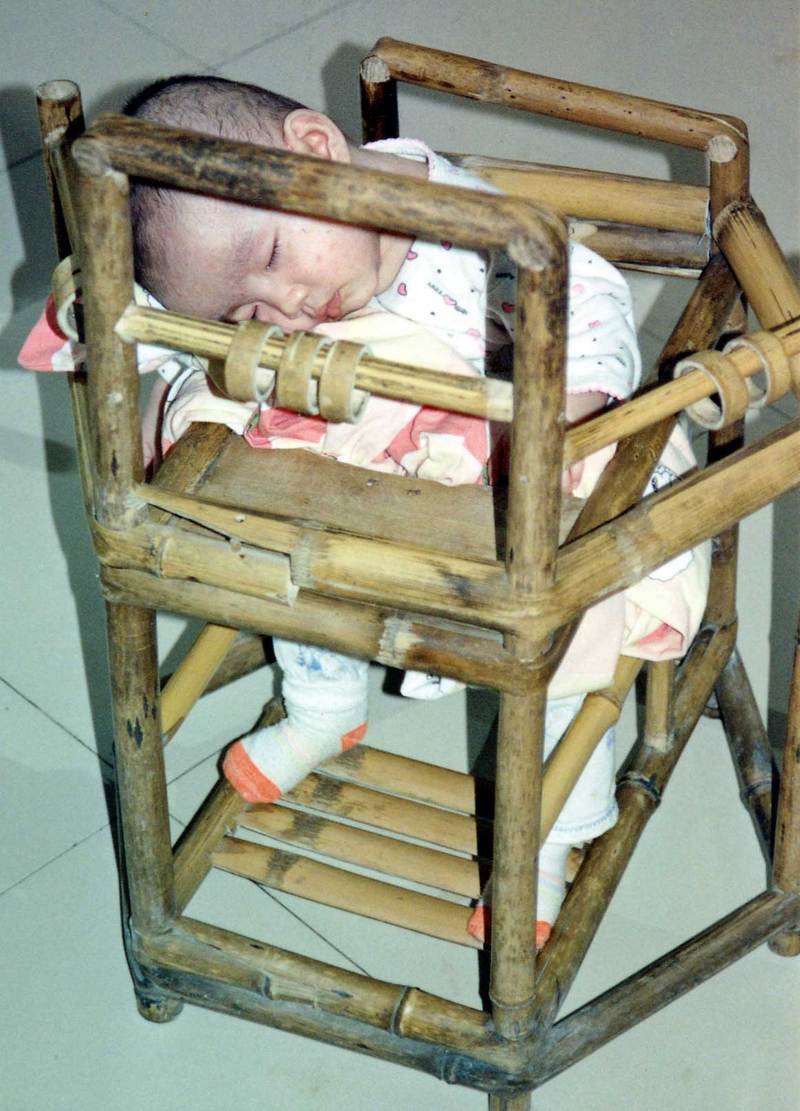
🔶 This is different from info we do have but are not allowed to acknowledge and use. And neither of these states implies being stupid (faulty hardware), but only suppressed & can be reclaimed, or missing & can be filled in. REMINDER : child in orphanage
NO under-functioning ACoA is lazy or stupid, just TERRIFIED.

Some things creating this debilitating fear :
• isolated, neglected & abused
• not being nurtured, taken care of & validated
• not provided with healthy role models to copy
• being given incorrect & insufficient information about how to function well in the world
PICTURE: “This child was left unattended for a whole day at a Chinese state orphanage. The makeshift play chair was more like a prison.” ~  Paul Myhill

NEXT: Inventory  – Beginning #4

Inventories – In the Beginning (Part 2)

Screen Shot 2015-08-08 at 8.54.15 PMTHE BAD THEY SAID ABOUT ME
– was NOT at all true!

PREVIOUS: Inventories – In the beginning (#1)


NATURE
At birth we bring with us our inherited genetic makeup. This includes :
• PHYSICAL
♟️ mental & physical health (a strong immune system, longevity, autism, depression ….),
♟️brain & intelligence type (Intro or Extro-vert, visual or auditory learner….)
• PERSONALITY : national characteristics, tastes & interests, talents, emotional temperament….

Because inherited components are multi-generational, even if our parents didn’t drink or use drugs but other relatives or grand & great-grandparents did, we will be subject to a variety of potential problems. Health issues, neglect (ignoring illness or injuries…) and direct forms of abuse (beatings)  – lead to deep fear,  loneliness, isolation & sometimes hospitalizations.health issues

— — It’s common for children from alcoholic families to have severe health problems = from our lineage, improper physical care, with mental & emotional stress.
There can be dental deficiencies, auto-immune sensitivity & deficits, predisposition for chemical dependency, asthma, anxiety & depression, overweight…. malformed or misaligned parts (cleft palate, club foot, scoliosis)….

++ We also inherited strengths which often showed up very early in our life – artistic or athletic abilities, a joyful nature, determination, intuitive insights, a desire to help, love of animals, of reading, of talking, of learning….
For some of us these natural desires never went away but we devalued them even when we followed thru’, while others of us had to deny or suppress them in order to survive.
Inventories can help claim or reclaim those wonderful parts that were invalidated, made fun of or ignored.

NURTURE
• We use the term loosely ! but generally, studies have shown that the brain develops its patterns from the combination of all childhood experiences. Isn’t that obvious?
In terms of life-long survival, the purpose of good-enough nurturing is so we wouldn’t have to think about how to do every-day tasks, or how to respond to emergencies.

When programming is healthy, it frees people to participate smoothly in society, be creative & help others. They respond to their environment from equal parts instinct & upbringing.  (‘CDs: Info & the Brain’)

kid-alcoholic• For ACoAs, the irony & terrible unfairness is that the very mechanism humans have been given to make life easier has been severely contaminated. So, our responses are mainly based on trauma & chaos, with not enough input from our natural instincts & inborn intelligence.

Our family, & sometimes whole communities, dumped all their mental / emotional garbage into us, leaving us with the harrowing task of sorting out & cleaning up their mess – for the rest of our life.❗️No child should have to carry the wounds our elders refused to deal with – yet that’s what we have to face & fix!

• This generated nuclear radiation-level emotions in us – mountains of fear, rage & deep hopelessness – which we had to deny, take out on ourself & then on others. It’s made us feel internally unsafe with just about everyone, & externally unsafe for others to be around us.

Given our damage, it makes sense that now, when we’re under stress, we automatically revert to learned beliefs & Es, sometimes even with years of therapy & Program. In spite of all our ‘information’ about how neglected & abused we were, most ACoAs are stubbornly convinced we ‘choose’ to be bad, sick, angry, crazy & out of control…..

•  And why not? Beside our own narcissism (“Everything’s about me”), accused wronglywe heard these distortions & lies often enough. When we can’t get our life going or function like ‘other people’, we believe we’re lazy, incompetent, will never amount to much & will always fail!

• Some ACoAs start out with harder, rockier psychological soil than others (intense resistance to admitting being wounded) – making it tough but not impossible for Recovery to take root. But aside from severe physical / mental disabilities, NO under-functioning ACoA is lazy or stupid, just TERRIFIED. But this only remains true as long as the WIC is allowed to stay in charge of our thinking – in place of the healthy Adult & Parent – which adds to our original fear.

However, as we develop the UNIT, we can put temporary regressions into perspective, knowing that “If it’s hysterical, it’s historical” & therefore we don’t have to fall into that deep pit of S-H & despair we’re all so familiar with.

NEXT: Inventories – In the Beginning (Part 3)

Inventories – In the Beginning (Part 1)

family portrait IT’S IMPORTANT TO KNOW –
where I come from, the pluses & the minuses!


REGARDING Family Inventories: We need to start at the beginning of our life – what was happening inside & outside that effected us.

Our CHILDHOOD
Doing inventories (charts in near-future posts) helps to become familiar with the patterns of thought & action burned into us as kids, so we can start to see why we think & act as we do in the present. Until this is clear we stay confused & full of self-hate, always asking “What’s wrong with me? Why can’t I get anything right?”

We are damaged, not defective, so we can heal
Our early experiences do not have to condemn us to a permanent state of ‘dis-ease’. Under all the defensive layers every person has their own fundamental personality, housed in the Natural Child, who in ACoAs has mostly been ignored.

• Accurate inventories take into account that we’re the product of combined forces:
Nature: our genetics, & who we are natively, with a specific set of characteristics – mostly suppressed, but never destroyed
Nurture: how we were raised – the specific culture, language, religion & parenting style of our home & community (in Part 2)

EARLY EXPERIENCES
• Most people don’t remember their first few years of life, although a few do. In any case, all our early experiences, even those we lived through before we could talk, are still in our unconscious & in our physical body

If those circumstances were stressful or harmful (as well as later-life- trauma) we need to clean them out by accessing them in order to heal.
All the fear, anger, loneliness & desperation of our infant & toddler self may seem ‘forgotten’, which makes it hard for most people to acknowledge that such emotions ever existed. But they do remain locked in our nervous system, & affect us in subtle ways our whole life.

• All our pre-verbal energy impressions (Es) are harder to access – but not impossible. The way to get at them needs to be visual & experiential, which includes dreams, drawings, visualizations & experiential therapies such as Gestalt, Primal & Core work, Brain Gym….. Using these techniques helps us re-experience those sounds & physical sensations, even without having a complete ‘explanation’ for them.

EXP: When one client was asked to picture her conception, at first she was resistant – how could she possibly know what happened? But with some deep breathing & quiet, she gradually formed an image of her parents lying side by side on a bed, as a small spark of light floated towards them – her life-force arriving!

Pre-Birth: All humanpregnancy stresss are affected, long-term, by positive or distressing events a mother experiences while pregnant. For ACoAs, our mother may have suffered one or more of these while carrying us:
• a major illness, accident or crime
• alcohol &/or drug abuse, food allergies, medications
• death of a loved-one, lengthy separations, divorce
• long-term fighting, or physical & emotional battering
• living thru’ a big move, natural disaster, war….

Birth: this is traumatic at best, but some of us also had:
• an especially difficult birth, causing us injury in some form, almost dying (breach, cord around the neck, not enough oxygen….)
• and/or our mother was given birthing drugs, which got passed on to the us directly, made us sluggish, prone to illness, chemically depressed, immune deficient …..

A possible result: If a temporarily drugged infant is at first unable to respond to the mother in its first few hours or days of life, an unhealthy parent will take it personally & reject her child at the crucial time they should be bonding. She will consciously or unconsciously blame the baby for the lack of connection & love she wants, which will create a life-long wound between them & often results in ongoing child abuse.

NEXT: Inventories – Beginning #2

Family INVENTORIES – Purpose (Part 3)

PREVIOUS: Family INVENTORIES – Purpose (#2)


3. PURPOSE (cont)

REVIEW re. Narcissism (N.) – the key to their M.O. is that Ns are totally and only focused internally on themself. Everything in the whole world is about them & no one else. No matter how much they seem to be talking to you, doing for you, even saying they love you….
….. they ONLY do what they want, and ignore anything about you that does not fit with their view of themself & the way they believe the world works.

✅ If they do something for you it’s because it suit them, not because it’s good for you! You do not exist as a separate individual. You are only to be used, ignored or punished for not being what they want. DON’T be fooled!narcissist

The degree of N. will vary, & all wounded people have some N. patterns, but only a portion are severe enough to be NPDs (Narcissistic Personality Disorder), which for us  often applies to one or both our parents, as well as other relatives or caretakers. Ns can be charming & ‘up’ as long as they get what they want. They can be angry & dangerous when they don’t.

✅ Alcoholic & other N. parents often tend to treat outside adults (& sometimes other people’s children) more ‘kindly’ than their own spouse & kids. It’s important to these unhealthy/harmful people to keep their psychological sickness under wraps. They’re often much better behaved in the community & with strangers than with their own family – so they can feel important & look like the ‘good one’.

This is crazy-making for a child, so it’s hard for us, even now, to really get how truly bad it was, and why outsiders think we’re making it all up or exaggerating – if we do complain.❓
However, the benefit of observing this dichotomy is that it clearly tells us those particular parents DID know what they were doing, while being convinced they were always right & justified – so we can not afford to keep believing the lie that they didpublic / private the best they could’!

• DOING a written outline of each family member (& any other relevant adults who strongly effected us) is essential
— to know our inherited biological traits
— to acknowledge the negative patterns we have been compulsively repeating.
It’s one way to get a handle on why our life has not turned out as well as we think it ‘should’ have, or originally imagined.

✅ This is NOT a form of blame or a let’s-punish-them club, but rather a tool for our clarity. We’re not carelessly criticizing them or demanding they be perfect or ideal. We know everyone has at the very least limitation, if not flaws. But their intense damage caused us damage.

❇️ And looking at them objectively in no way eliminates our responsibility now to clean up the mess they created in us. Yes- NOT FAIR ! Instead, it’s a way for many of us to wake up, see ourself clearly by breaking thru denial, so we can permanently improve our lives.hurt heart
The more we know about our background the more we’ll know what to value in us, & what needs to be revised or be eliminated

• Self-awareness also gives us a realistic way to understand other people, those who are safe & good to stick around vs those who are not
— in general, because they’re just too damaged
— specifically, because they simply don’t fit with our True Self.
After all, we can’t move away from unsafe ones until we can objectively see that they ARE! to choose who to get involved with, who to leave or keep at arm’s length.

• Many ACoAs believe that consciously making these kinds of choices is cruel, selfish & abandoning of others, BUT it is not. It is only our co-dependence that tells us this lie.
choosingHEALTHY people make choices every day, because it represents :
– having realistic & appropriate boundaries
– knowing what their needs & tastes are
– having a strong set of values they live by
– believing in their human rights, & allowed to act accordingly

Healthy people know they’re not compatible with everyone, & they know it’s OK to not like some people, just as not everyone will like us.  Choosing to distance ourself or stay away is not a judgement on the other, but rather an acknowledgement of REALITY, & a loving way to take care of ourself by setting appropriate boundaries.

TO REVIEW: Being clear about what happened to us as kids and how many of those events wounded us – is the basic key to eliminating Self-Hate, a fundamental requirement for Mental & Emotional Health!

NEXT: Inventories – In the Beginning (Part 1)

Family INVENTORIES – Purpose (Part 2)

fam inventory LOOKING AT OUR DAMAGE –
ignorance is NOT bliss

PREVIOUS: Family Inventory (Part 1)

See ACRONYM page for abbrev.


2. LEGITIMATE EXCEPTIONS (Part 1)

3. PURPOSE
• Being trapped with unhealthy emotional/mental people (listed in 2b.) keeps us choosing or being chosen by people who are abusive or unavailable, and then staying with them because we compulsively blame ourself for any pain they cause by their damage.

This happens because we keep using Self-Hate (S-H) to explain away someone else’s bad behavior (“It’s my fault / I should have / If only I had”… ), no matter how obvious it may be to others that we’re allowing ourselves to be victimized. (It’s one of theToxic Rules)

It’s useful to remember that all S-H is a defense mechanism. Its purpose is to ‘protect’ us from being fully aware of our childhood traumas & other abandoning experiences, but all it really does is add more pain to the original pile, by believing we caused our suffering

Of course it’s very important to do our own personal inventories (next post), but without a clear picture of our early life, much of what we end up writing is steeped in S-H & hopelessness. Therefore it’s imperative to first have an accurate understanding of all the relevant people we s-h alonegrew up with, because we absorbed their words, actions & emotions into ourself. This absorption became our Introject.

Every person has one, but not everyone’s Introject is a PP (pig parent / accusatory voice) – only those of us who come from damaging families. Without enough healing (deep FoO work), this Harsh Voice is the only one the WIC takes as absolute gospel, the cruel guide we use to identify who we are, even tho’ it’s not our original voice AND is a complete liar!

• Proverbs 22:6 says: “Train up a child in the way he should go, & even when he is old he will not depart from it”.
Unfortunately, those of us from unhealthy backgrounds have absorbed a distorted, self-defeating programming – most obvious in our CDs, which include S-H.

This brain-wiring is so strong that it takes much effort & repetition to change – mainly because it’s kept locked in place by a great deal of emotional pain, which needs to be cleared out. Most people don’t have the guts & patience to revisit & process old beliefs & emotions, even if that refusal causes havoc to themself & others.

❣️ But for those of us with the willingness & proper support – we greatly benefit from carefully identifying what originally happened to us & around us. It allows us to understand – & accept – that our childhood suffering was caused by the damage already present in our caretakers, and therefore could not have possibly been our responsibility, nor our fault!

It bears repeating the 3 C’s : “I didn’t cause it, I can’t control it, I can’t cure it” (re. problems in OTHERS) . This awareness will gradually lessen our need for S-H, as we stop denying the width & breadth of our own original loss in all 4 layers of PMES. This becomes a great victory over our dis-ease!

• All of our struggles to heal & flourish are contingent on outgrowing the toxic family training (via S & I), but before we can do it thoroughly we have to SEE what that training entails. We have to know which city we’re traveling from -and to- before we can book a ticket, yet ACoAs have a built-in denial system that makes it hard to know what state we’re in much less what city! We need a map & some guide books to our destination. Inventories help.

• Psychologists, Sociologists & Spiritual teachers tell us how important it to know ‘where we come from’, what our cultural & spiritual history is & how all of humanity is ONE.
Yet ACoAs have a painful sense of not belonging anywhere – no matter what environment we’re in. This is because our parents’ narcissism made it very hard to feel wanted & loved, only getting judgement & impossible demands from them. And the Child figures that if they didn’t take care of us properly nor want us – exactly the way we were – then why would we or anyone else?

NEXT: INVENTOTY #3

Family INVENTORIES – Purpose (Part 1)

LOOKING AT HOW IT ALL STARTED is not always easy!

PREVIOUS: Healthy Individuation (#2)

See ACRONYM page for abbrev.

QUOTE re. the need for S & I
“It is not possible to live too long amid infantile surroundings, or in the bosom of the family = without endangering one’s psychic health. Life calls us forth to independence, & anyone who does not heed this call because of childish laziness or timidity is threatened with neurosis.” Carl Jung
🎯
DEF: INVENTORY – To evaluate & make an itemized report of abilities, assets, or resources. To take stock of one’s life and accomplishments.

1. IN 12-Step TERMS
a. Doing our 4th Step – to write out as many of our qualities as we can – both positive (gifts) & negative (defects), as well as a list of all actions throughout life (to identify our Being and our Doing)

b. Taking someone else’s inventorya big no-no, & for good reason, when understood correctly, but used as an unhealthy defense mechanism. This can mean judging someone in our thoughts, or recounting someone’s faults to all who will listen, or using a sharp tongue to tell someone off who we’re angry at.

NOT doing this is a valid rule for everyone in general , & specifically for addicts & co-dependents, because:
• ACA copy our parents’ habit of always finding fault with everyone & everything else, instead of owning our own thoughts & emotions, likes & dislikes….
• of the compulsion to blame others for all our woes, instead of taking responsibility for what ever part we had in any situation (but not in the form of S-H)
AND TO Stop:
•  our character defect of using any upset as an excuse to gossip
•  our fearful avoidance of dealing clearly & honestly with anyone we’re currently having a problem with (instead of using the Adult ego state)
• the fear-driven habit of avoiding very hard decisions, making small or major changes, standing up for ourselves, leaving toxic people …..

2. LEGITIMATE EXCEPTIONS to this rule :
a. Re. Safe People: To identify the healthy characteristics we find in positive role models, which we can then look for in everyone we associate with, so we can ‘Go where it’s warm’ – toward people who are reasonable (T), kind (E) & functional (A)
ignoringb. Re. Unsafe People: to break thru our denial.
Unhealed ACAs deal with abusers – either :
• by having thick blinders on, denying their character defects & emotional damage, while only seeing our own flaws – even where they don’t exist. OR
• by being terribly judgmental & critical of everyone – including ourself (S-H), while not trusting anyone with genuinely good qualities, & who treat us well.
BOTH types tend to shy away from healthy people!

That way we can get angry at anyone who doesn’t automatically / magically provide our needs & wants, just the ways our parents didn’t.  But we stay with the ‘unavailables’ so we don’t have to notice the many ways they continue to abandon us,  & don’t have to face doing something about it (leave?).
That way we can stay loyal to the original dysfunction, continuing to long for but never receive the love & acceptance we believe we’re not allowed.

✳️ As we know, people tell us something about themselves all the time – their pluses & minuses – which we miss all together & could see if we paid attention, knew what to look for, & be willing to respond appropriately
OR we do notice but ignore or excuse. Then it bites us in the butt later!

Sadly, as kids ACAs were brainwashed to deny much or all of our painful experiences, as well as our intuition & perceptions, so it is especially necessary to do this type of inventory for all of us who :
• are genuinely ignorant of, or in deep denial about, the harmful effects that addicts & other damaging people we spend time with (family, lovers, bosses, friends…) have / have had on us

• are surrounded by unhealthy communities (family, religious, social, work….) where everyone is continually bombarding us with a distorted reality about us, themselves & the ‘right way’ to do things

• are by nature so idealistic that we only want to see the good in others, as a defense against the dangers of life, to our great detriment
• know there’s something wrong with certain people & situations in our life, but are not allowed to believe our intuition & knowledge.

NEXT:  Family Inventory – Purpose, #2

S & I needs a Heathy EGO (Part 2)

strong identity THE STRONGER MY EGO –
the healthier I am

Previous: S & I – EGO (Part 1)

SITE:  “Defense of the Ego


From EGO PSYCHOLOGY
✶ The healthy ego
exists for a legitimate purpose, an integral part of spirituality & totality of Being. Removing the ego is like removing your right hand & only keeping the left one.
Throughout childhood, Ego develops in sequence, from a combination of :
• our innate & inherited qualities
• having our basic needs met
• identifying with others (copy admired adults)
• inter-personal relationships
• mastering development tasks
• effectively solving problems
• studying & learning
• successfully coping with life’s challenges

BASIC COMPONENTS of the Healthy Ego
For ACoAs & all other wounded people, the following qualities are what we can strive for as we heal. The stronger these are, the better our self-esteem. ‘Ego functions’ are the means by which people successfully adapt to the world:

🍂 Affect Regulation – The ability to maintain or increase a wide range of pleasant, comfortable, joyful emotions & a sense of well-being, while minimizing or regulating stress feelings & defensive states.  Able to manage all types & intensity of Es, without being overwhelmed by them.  It’s the result of the growth, development & links to our emotional brain (limbic system), based on early experiences with parents

🍂 Defensive Functioning  – Automatic psychological processes that make us aware of internal or external dangers & stressors.  It appropriate use of our defense mechanisms, those developed in childhood & more mature ones (projection, intellectualization, rationalization…), which guard against powerful identity-threatening feelings (panic, hate, rage…) that get stirred up

🍂 Impulse control – (opposite of impulsive or compulsive acting out)
The ability to choose when & how to act – for short or long-term gains when moving toward a specific goal – allowing us to wait to get something we want.  Helps prevent immediately acting on aggressive &/or inappropriate sexual wishes, but not developing physical symptoms from constantly repressing those desires (actual ailments, obsessions, hypochondria….)

🍂 Good Judgment –  (NOT being judgmental). Forming best opinions & decisions in the circumstance, by objectively considering, comparing & evaluating known info —> while resisting peer pressure & our own fearful emotions. Allows us to act responsibly, which includes identifying our options, anticipating & evaluating likely consequences, & choosing appropriate actions in each situation

🍂 Object Relations  – how the The Self relates to other people (from Subject
to <——> Objects
) in the unconscious, based on internalized images of our actual parents (or parts – like mother’s breast), as well as images we create about others (ogre, angel…).
When emotionally healthy, we have the capacity for mutually satisfying relationship – seeing ourself & others as whole three-dimensional ‘objects’. We can form emotional bonds with others, instead of only focusing on ourself

🍂 Reality Testing The ability to distinguish between what’s going on in our own inner world of thoughts, feelings, fantasy & distortions from objective facts AND the external world. It allows us to act in ways that show an awareness of accepted social norms & customs. By imaging, labeling & organizing our observations, we can make sense of them & put them into mental files so we can make decisions about their “value,” as potential threats or benefits….
We can notice & use ‘reality-indicators’ that help us come to grips with practical, in-the-present facts. A way for the mind can determine whether an experience is happening now, or is remembering a previous one

synthesis🍂 Synthesis – (opposite of Splitting), the most basic ego function : stringing together succeeding moments of experience into a single preserved ‘event’, allowing all ego functions to be used in combination. It means to be internally congruent – without different parts of ourself being in conflict (‘UNIT’ = PP vs HA, LP vs WIC…)

This organization & unification allows us to think, feel & act in a consistent way. Meshing (not enmeshment) a healthy ego identity with personal & group identity gives us a framework for successfully operating in the world

🍂 Thought Processes – 2 states of the thinking mind (vs. emotional):
a. Primary – the ‘primitive’, imaginative style, during altered states of consciousness, not in the Ego’s control, from wishing, day-dreaming, night-dreaming, fugue states —> all the way to psychosis, & may include some loss of motor function

b. Secondary – normal waking consciousness of adult humans – the stable Ego’s work to minimize free-floating mental energy / anxiety. It’s been called ‘inhibited’ or ‘bound’ because it’s guided by the ‘Reality Principle’ (delayed gratification). This gives the ability to develop & hold logical, coherent, abstract thought. Also, to make appropriate decisions, use cause-&-effect thinking & be goal-directed.  (MORE...)

NEXT: Negative Benefits – #1