
TO BE or NOT TO BE
willing to forgive myself –
that is the question!
PREVIOUS : Outgrowing P-P #6a
SITEs: 12 Ways to Accept Yourself
• “I Forgive Myself for……“from ‘Journey of Be’, scroll to 9/2015
RECOVERY from “Too Nice Syndrome” (cont.)
TOOL 6a. Healing our CHILDHOOD T.E.A. (cont.)
As we outgrow P-P we can clean out the underlying issue that permeates every part of our life : our Self-Hate, which is blaming ourselves for not getting our needs met. It’s anger/rage at our family turned in on ourself
Reminder : Healthy, compassionate families, teachers & other leaders guide children with clarity, kindness, patience & humor. They set good examples, teach boundaries & realistic limits, explain the way people & things work, & help each child develop their Natural Self. (Healthy Parenting)
That was not our experience. All our childhood emotions, words & actions which were called “too sensitive, disobedient, difficult, selfish, lazy, stupid …..” do not need to be forgiven. Instead, we can look back with sorrow & compassion for what we endured!
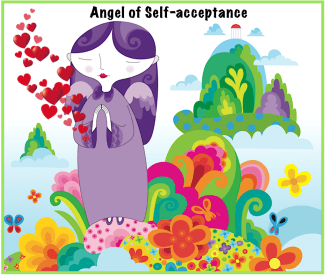
SO: The more S-H we clear out, the more we drop P-P, automatically. Rather than struggling with the idea of having to forgive our youthful acting-out & normal child-reactions, we can benefit the most from ACCEPTANCE.
++ ACCEPT that every child is programmed to follow their upbringing. If it was alcoholic, dangerous, neglectful…. we drowned in too many rigid, harmful laws – or were completely left to our own devices. Now we can slowly form a new set of rules, loving & flexible – which will eliminate much of the need for fake niceness, so we’re free to be genuinely kind (“ACoAs – Healthy Rules”
+ + ACCEPT reality: We can let go of the – usually unconscious – twisted belief we may still have, that we’re hopelessly bone-deep failures because we originally:
• failed to be the kind of child who was good enough to have elicited love & approval from our parents
• failed to soothe & heal our parents’ many wounds
• failed to stop them from hurting us, each other & our siblings
 ++ ACCEPT that the mirroring we got as kids came from cracked mirrors – forcing us to see ourself thru controlling, cruel, drunk, insensitive, neglectful, raging eyes! What we came to think of as our Self was mainly their sickness projected on to us – which became our Negative Introject. This psychological process – helpful or harmful – happens to every child & is not ‘forgiveness material’. (Parental Mirroring provides child….)
++ ACCEPT our child’s narcissism as normal, which made us think we had the power to do any of those things. Not! We can understand why we had those misguided ideas, & correct our thinking now (the CDs), to stop blaming & attacking ourself for what we believe are inadequacies & deficiencies
++ ACCEPT that following the Toxic family Rules does not & never did keep us safe! No matter how ‘good’, helpful & self-denying we were as kids, we still got the full brunt of our family’s damage!
“I have to obey them” is a lie we tell ourselves so we don’t have to be our True Self & take care of our own needs
++ ACCEPT that as physical adults (not yet ‘grown-up’) we do not ne-e-e-d them to be our parents. That’s our job now. We do need a lot of help to heal, but trying to appease & please the original abusers is self-destructive
 ++ ACCEPT & stop judging ourselves absolutely, totally – for:
• not being perfect // not knowing everything // making mistakes
• being so scared inside // being controlling // nit-picking
• having depression & the need for medication
• procrastinating or never finishing anything… basically opposite everything on the RIGHTS list
++ ACCEPT that at first we’re going to feel guilt churning in our gut whenever we disobey any Toxic Family Rule, but we will slowly outgrow it. This is ‘good guilt’ – for the short-term – because it signals doing something healthy for ourselves, which goes against all our original crazy training
The Tibetans have no word for ‘guilty.’ The closest is “Intelligent regret that decides to do things differently.”
NEXT: Self-forgiveness as ADULTS


 HEAL & GROW for ACoAs