Our Wounded INNER CHILD (Part 1)

all alone I’M ALL ALONE
I’m desperate, but no one is safe!

POSTS: “Are you an ACoA?
•“Variation on Laundry List


See ACRONYM page for abbrev.

FIRST: The Inner Child (IC) is the repository of all our childhood experiences, from birth until we left that environment – our memories, emotions & immature thinking. It includes our True Self, which did show up in some ways, but was mostly suppressed or distorted. Our IC now holds all our own wounds PLUS the wounds of our parents.

The ACoA DIS-EASE
Our childhood damage is housed in the Adapted Child ⬇️, who is intensely loyal to family & culture. In order to know how to heal ourselves, we must first get to know our wounded part as thoroughly as possible**.
➼ Remember, we are DAMAGED, NOT Defective. Damage can be healed – ‘defect’ can not.

** Learning about & connecting with our Inner Child is not a waste of time & effort, or wallowing in the past, as some people believe. It IS a means of breaking thru our denial about how traumatic our childhood was. If there is any doubt, we simply have to look at the areas in our present life that don’t work – to tell us how our family (& other sources) damaged us.

• To heal we need to know specifically what our negative thoughts are telling us, because it is the basis of all self-defeating behavior patterns. These toxic beliefs are our version of our family & community, called the Negative Introject.
So no matter how much we may ‘know’ about our past, we need to do deep emotion release work as well as correct our beliefs.

Otherwise the old pain we’ve stored up from the past will keep driving us toward harmful ‘people, places & things’, & make us strongly react to events whenever our buttons get pushed (wounds get activated).

HOW DID WE GET LIKE THIS?
While growing up, kids are never supposed to be fully in charge of themselves or other family members. This only happens in dysfunctional families, sometimes out of necessity, but mostly because the parent(s) are not mature themselves.

• ACoAs were both criminally neglected AND forced to be hyper-functional – with is also abuse: not be allowed to just be a kid. It left us terrified & confused. There was too much we were never taught, left to figure out on our own, the best we could.  We managed to survive, but now we always feel incompetent & fraudulent – no matter how well we do!

We had to ‘raise ourselves’ because:
• being the eldest (the Hero) meant being the parent substitute –  for younger kids & sometimes for a drunk / non-functioning parent
• one parent was absent & we had to take over some or many of their ‘adult’ responsibilities
• one parent or sibling had a serious mental &/or physical disability, so our needs were neglected, & used as servants / slaves… (‘do’ for them)
• mother had 1 or more boyfriends /mates, a family member or best friend(s) who were always more important than the kids (symbiotically attached)

• parents were only interested in each other (addicted / worried) so we were mostly ignored
• parents were too overwhelmed by their own difficulties to notice us
• their focus was on drinking, fighting, chaos, rage ….
• there was only one parent & she (usually) was working, depressed….
• there was constant physical upheaval – moving, loss of jobs, trouble with the law, school, neighbors….
• we were expected to grow up very fast – ‘little adults’- so they didn’t have to deal with us.

NEXT: Our Wounded INNER CHILD (Part 2)

Healthy HELPING (Part 2)

HELPING WORKS –when we both benefit

PREVIOUS: Healthy Helping (HH) (#1)

REMINDER: See Acronym Page for abbrev.

Just because we were trained to be rescuers by our family does not mean we can’t be of service.

HEALTHY HELPING (cont.)
3. WHEN – I can help IF :
• it’s not to boost my self-esteem or sense of identity
• it’s short term, because they’re growing, learning, changing
• I can do it without being resentful or hurt myself in some way
• I don’t have to keep my antennae up all the time – to check for what’s wrong, walk on egg shells, worry about being accused wrongly….
• I only have to do ‘so much’ & then back off & let them handle things
IF
• I’m NOT trying to do the impossible (force-fix someone’s damage
cup overflows• I don’t take an action when being guilted or shamed by someone
• I don’t secretly n-e-e-d a return for my efforts
However, it is appropriate to get paid, get thanked, have some reciprocity
• my cup is full enough so that I’m not draining myself dry
• they genuinely can’t do something for themself, but it’s temporary

4. HOW I can Help (T.E.A.)
T: Give helpful, INFO about a request
E: Listen, & validate, with compassion & empathy
A: DO something useful AND realistic
EXPs:
ASK Qs re. their problem: What do you need from me? What have you already done?  What are you planning to do?…
• be clear about what I can & cannot do, OR will & will not do

• I don’t jump in, don’t assume I know what’s needed
• give emotional support, instead of solutions (head, actions)
• help someone think a problem thru – THEIR way
• set limits with self & others
• tell the emotional or intellectual truth.  Some won’t want to NEIGHBORS-TALKINGhear it & will go away, but others will value it & grow
• wait to see if they CAN do something on their own,
OR if there’s someone else who can / will help them better

ALSO, it’s:
• OK to do someone a favor, sometimes  – even if they can do it themself, if it’s on my way, not a burden, something I like to do
• OK to help someone get thru emotionally hard times – death of a loved one, work trauma, health problems….
….AS LONG AS the HELP-EE (you are the help-er) is respectful of my time & efforts, appropriately appreciative (but not overly),  & they are not an emotionally bottomless pit

5. RESULTS of Healthy Helping
a. In ME –  I :
• don’t get depleted, or resentful
• don’t have to ‘hide’ from needy ‘pests’ (they learn you won’t rescue them)
• feel satisfied, pleased, ‘full’, comfortable, relaxed
• feel more connected to others, & the world
• feel good about myself, but don’t need it for my identity
b. In Them – They :
• become less dependent on me
• don’t resent or blame me for their issues
• are appreciative but not fawning
SO:
• become more independent, & inter-dependent
• begin to trust their own experiences & ideas
• gain self-esteem & feel empowered
• absorb & use my help to grow & improve, no matter how slowly

6. STOP helping
Sometimes, DOing NOTHING is the best or only option:
• it’s not the right time
• it’s not a legitimate request or action
• there are NO actions possible in some situations

DON’T DO anything to help, IF:
a. THEY
– Act the VICTIM who need too much from me, more than you can give or more than is appropriate to ask. No matter how much you do, it will never be right or enough!
– Act the PERPETRATOR who cause you to feel unsafe, because they’re a taker, user, abuser, bully….
b. YOU
• are in some kind of need at the moment, OR overextended
• just do not want to (not now, or never)
• it’s something truly, deeply not right for you to do
• don’t help, in order to legitimately break a Toxic family Rule

HOWEVER, you can be ‘doing all the right things’ but if they’re still too damaged, they may be resentful :
They’ll attack you, accuse you of not caring, bad-mouth you to others, accuse you of abandoning them & of being SELFISH….
….specifically because you’re NOT willing to rescuing them!

🔹 Do not JUSTIFY your ‘NO’ – it’s a complete sentence!
Otherwise, you’ll just be complying out of guilt or from a forced sense of obligation.
✒︎ TAKE CARE of YOURSELF FIRST, & always pay attention to what your GUT is telling you – about a person or situation!

NEXT: Wounded Child #1

SELF-HATE & ACoAs (Part 4)

Se;f=Hate


I CAN’T STAND FEELING LIKE THIS –
there has to be a better way!

PREVIOUS: ACoAs & S-H (#3)

QUOTE: “Too many people overvalue what they are not, & undervalue what they are.”∼ Malcolm S. Forbes

2. SOURCES of Self-Hate
3. PURPOSE
of S-H

4. How S-H is MAINTAINED
By following our family’s dysfunctional training, ACoAs pile on more self-hate because of our self-defeating / self-destructive actions, thoughts & feeling –  towards ourselves (T.E.A.), along with how we let others treat us, AND how we treat them BY:

Our THOUGHTS / EMOTIONS
• denying our anger at others, swallowing it & getting depressed
• C.D. = black & white thinking, all or nothing, awfulizing…
(when one of these extremes doesn’t work out, we hate ourselves even more)
• talking to ourselves in ‘shoulds’ (I should go back to school right away, although I‘m not really up to it now…..)
• trying to be perfect, & hating ourselves for not being able to be
• ‘yelling’ at ourselves – calling ourself stupid, crazy, weak…

ACTIONS
• active addictions & all other forms of self-denying, self-defeating, self-destructive behaviors (the big ways take big bites out of our soul, & the little ways sneakily gnaw away at us ! because it’s hard to catch the harm they do)

• being obnoxious, continual boasting, telling people off, arrogance, acting superior… (it keep us disconnected from others)
• cheat, lie, manipulate, control
• not following thru… with plans, promises, goals OR self-care
• regularly getting into verbal (&/or physical) fights, to punish & isolate
• sabotaging opportunities & preventing ourselves from going after what we want in life
• trying to do the impossible (change others, instead of ourselves)

SOCIAL
• choosing & then staying with people who continually hurt us, don’t understand or can’t listen, can’t mirror us, who use us, manipulate….
• humiliating ourselves by: telling all our faults, over-disclosing, trying desperately to convince someone (who doesn’t care) that we’re not as bad/wrong stupid as they think
• let others use us, take advantage, continually cross our boundaries
• mistrust everyone OR trust everyone, indiscriminately (copy our sick parents or play out the Scapegoat role)
• not standing up for ourselves – our rights, tastes, needs….
• trying to ‘one up’ others – to cover feeling ‘less than’

5. RESULTS of Self-Hate
a. Keeps us :
• a victim – believing we deserve whatever abuse or neglect we receive, any time, any place
• ‘anorexic’: under-earning, little or no affection, sex, love, attention, connections….
• afraid to know our ‘true self’ – which we’re sure is awful, maybe even evil
• depressed,  paranoid, hopeless, suicidal
• in an impotent rage (overt or hidden)
images-2because we still want things we think we can’t have or get
Keeps us :
• perfectionistic – expecting too much of ourself: we’re bad if we don’t have the American dream, higher education, lots of money, the right job / car / house / spouse ….
• taking everything personally!!! The wrong look, being ignored, a selfish remark… from others – can send us into a tailspin
• trapped in a constant state of FoA (fear of abandonment) – neediness, vulnerability, fear of being hurt or left alone

b. Reinforces:
• the belief that we have no rights, while thinking we can / must control everything & everyone (opposite of the Serenity Prayer)!
• the compulsion to stay symbiotically attached – to family & everyone else – because we don’t know we have a “True Self” to rely on
• letting others abuse us (we may even invite it) without stopping them or holding them accountable….
• the ‘need’ for addictions & any other forms of self-destructiveness
• staying in a rage because no one’s willing to take care of us, fix, us, magically make it all better

NEXT: S-H, #5

SELF-HATE & ACoAs (Part 3)

addictionsI CAN’T GIVE UP
the only ‘truth’ I know

PREVIOUS: ACoAs & S-H #2

QUOTEs:
🔻 “I won’t sleep if that’s what it takes to not wake up as myself”
Casey Renee Kiser, Hold Me Under: Poems to Drown to

😰”To keep my mind occupied when I can’t sleep – some people count sheep. I self-loathe.” ∼ Rainbow Rowell, Attachments

🥶 “Hostility, malice & sadism are the result of helplessness & self-loathing – all produced by adaptation to a hypercritical social reality, & are not attributable to innate aggression.” ∼ Arno Gruen, Swiss-German psychologist

FoO = Family of origin

1. DEFINITION
2. SOURCES of Self-Hate (S-H)

3. PURPOSE of S-H is TO:
• keep from risking any change via S & I (fear that letting go = being forever alone)
• keep us attached to the family (stave off deep loneliness)
• prevent us from dealing with ‘ugly emotions’ like our rage, envy, longing, hopelessness….
• protect our fantasy of having good, loving, safe parents
• protect us from feeling the reservoir of old abandonment pain
• protect us from Growing up, taking care of ourselves (we want to be taken care of! no matter the cost to ourself or others)

WHY is it SO HARD to GIVE UP S-H?
The above reasons are all part of the answer, but the MAIN one is that:
It gives us a FALSE SENSE of POWER! How?
Since every child is self-centered, which is human-normal, they think everything is about them – that whatever happens in or around them has to do with them.
The child’s logic says: “I’m in pain, & somehow I caused it. Therefore I CAN / must stop them from hurting me, if I can just figure out how!”

• Then we spend the rest of our childhood (& well into adulthood, until Recovery) trying different ways to FIX whatever the problem was & may still be – re :
US – by re-inventing ourselves (must be the origin of this USA craze), trying on different ‘personae‘ (be the perfect kid, the trouble maker, the helper, get good grades, be invisible, don’t have any needs, be funny…)
AND re :
THEM – by trying to make our parents see reason, get sober, get help, leave the marriage, get taken care of by us, cover up for them, fix their ‘craziness’, cater to their every whim….

Unfortunately NONE of our EFFORTS WORKED! In most cases ‘they’ didn’t change, didn’t listen, wouldn’t stop – drinking, raging, being unsuccessful, molesting, beating us, leaving, cheating, berating, controlling….!
But we kept trying, always asking: What’s wrong with ME?

Even if some of our parents did stop drinking,
— it was NOT because of our efforts. We assumed their ‘sobriety’ was, because we were extra good, prayed really hard or badgered them into it
— very few were willing to do the deeper work to become healthier human beings, so mostly they were just “Dry Drunks”. So their unhealed narcissism kept on hurting us.
RESULT -in us- was an intense feeling of failure!

• This is why so many ACoAs believe we’re FRAUDS – that people will eventually, inevitably FIND OUT.
Q: Find out what?
A: “Since I couldn’t make my parents/ family get well, be happy & be there for me – I’m not capable of and NEVER will be able ably to -succeed at anything else!” (WIC logic)

It’s an assumption ACoAs are not usually aware of, but glued to us by anxiety, and believed both by the less accomplished AND the most outwardly successful ACoAs, pre-FoO Recovery. Unfortunately, what we don’t realize is that the fundamental premise is false :
No child
— ever caused the adults’ messes
— was ever responsible for making them better! AND
— can fix anyone else

NEXT: ACoAs & S-H #4

SELF-HATE & ACoAs (Part 1)

self-hateI’M NO GOOD, & EVERYONE KNOWS IT – so I have to be perfect to make up for it

T.E.A. = Thoughts, Emotions, Actions

REMINDER: See ACRONYM page for abbrev.

FoA = fear of abandonment

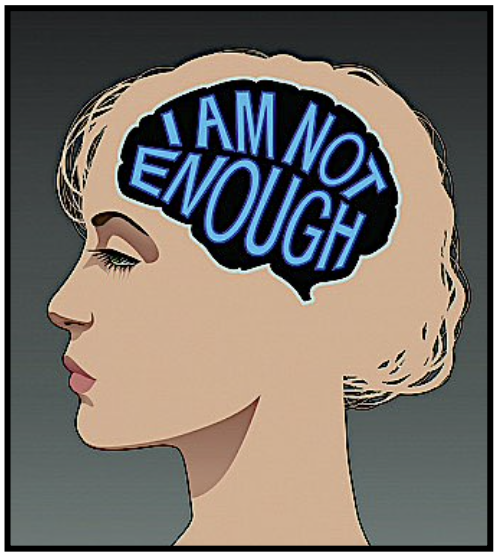
SELF-HATE (S-H) is the #1 deterrent to growth for all ACoAs.
It undermines our ability to function well, to have self-esteem & to be happy. Some people call it being ‘hard on yourself”, but it’s much more than that.  It’s so pervasive in the inner world of many ACoAs, that we don’t even know we have it & if confronted, vehemently deny it.
BUT the symptoms are all there, starting with a persistent nagging anxiety.

1. DEFINITION
✶ In Childhood : being thoroughly convinced that everything bad that happen to us as kids was our fault, that we caused our own pain!
✶ In Adulthood : continuing from the past, we believe in our very cells that anytime we feel hurt, suffer a loss, get ignored, can’t get something we want, have something taken away, have to wait for something … that it’s because we are bad, don’t deserve, did something wrong , failed to do something, don’t have a right to it – anyway

REALITY
ALL self-hate is a LIE
✶  it’s a defense mechanism to deny the original abandonment – by our family & culture. This a crucial point:
✦ S-H tries to cover-up all our abandonment pain
• It’s actually a form of narcissism (ours) – making everything about US, when it rarely is.  We make other people’s bad behavior our fault & our responsibility
• It’s an attempt at feeling in control, to cover our intense sense of powerlessness & vulnerability

• S-H can be expressed in all 3 T.E.A. categories:
Ts: “I caused their accident, since I asked them to come visit me”
Es: “I feel bad & really scared they won’t like me since I said ‘No’”
As: Staying with abusive people, not taking care of ourselves, not pursuing our dreams, not speaking up….

ESSENCE
One of the characteristics on the ACoA Laundry List is being Over-Responsible, a symptom of FoA & S-H.
What make S-H different from taking healthy, balanced Responsibility?
HEALTHY R. acknowledges the reality of having our T.E.A.s – or not. It straightforwardly owns up what IS, which can sound like:
“Yes, I did that” (A), or ‘No, I can’t handle this” (A), or “No, I don’t agree with that”(T) , or “Yes, I love this” (E)….

S-H, on the other hand says : “I_______, & therefore I’m BAD”
• Ironically, it prevents us from admitting to any normal, human imperfections, from shame & for fear of abandonment, OR
•  it can make us ‘confess’ to wrongdoing, even when we are in fact blameless.

In either case, what’s underneath is an unspoken Toxic Lie tacked on to legitimate responsibility, categorically stating that:
✒︎ “I did / didn’t do_______, which proves I’m unlovable & worthless”, no matter what the topic or truth is.

This add-on is implied, but at the core of our self-image. ACoAs will take any opportunity to beat themselves up, even about good things!
🖤 All S-H comes from our wounded child (WIC) staying loyal to our wounded parents.
EXPs of S-H:
“Yes, I did forget to sent the letter out today, so therefore I’m irresponsible”
“No, I don’t how how to do that, therefore I’m incompetent”
“Yes, I went to the show without inviting you, so therefore I’m selfish”
“No, I haven’t ‘grown’ perfectly or as fast as I should, so therefore I’m unfixable”
“Yes, I talked a lot at the meeting, so I’m a limelight hog”
“No, I don’t agree with that, therefore I’m stupid” …..

This is NOT what ‘taking responsibility’ means.
Posts: ACoAs’ Fear of R // Healthy R

So – WHAT IS IT? 
Basically, adult Responsibility (R) is:
★ honestly admitting to ourselves what we feel, think & have done -or- not. (T.E.A.), without judgment, shame or guilt.
MOST of ALL – without mental torture.

✒︎ Healthy R. includes regularly acknowledging both our limitations AND our gifts, our ignorance AND our knowledge. (POST: “The 10th Step“)

This def. applies to us now, as adults.
We are not / were NOT responsible for who our parents are or what they did!
SITE: “Great Responsibility Quotes for Kids” & the WIC

NEXT: SELF-HATE & ACoAs (#2)

Variation of ACoA Laundry List

reading blogI HATE READING THIS INFO!
Even so, it’s a relief to know

SITE: Adult Survivors of Child Abuse: Removing the Splinter

BOOK: Laundry List  Tony A & Dan F

NOTE: See Acronym page for abbrev.

• All the PMES forms of Abandonment by parents forces children to hide the parts of themself that are considered NOT OK by the family, in order to not get rejected: “DON’T make mistakes, don’t have needs, don’t contradict, or successful, or show your emotions …”
Exp: We were told that what we felt was not true or legitimate: “You don’t have anything to cry about, so stop being such a baby,  Stop crying or I’ll really give you something to cry about , That really didn’t hurt  ,  You have no right to be angry, Don’t feel that way” ….S-H

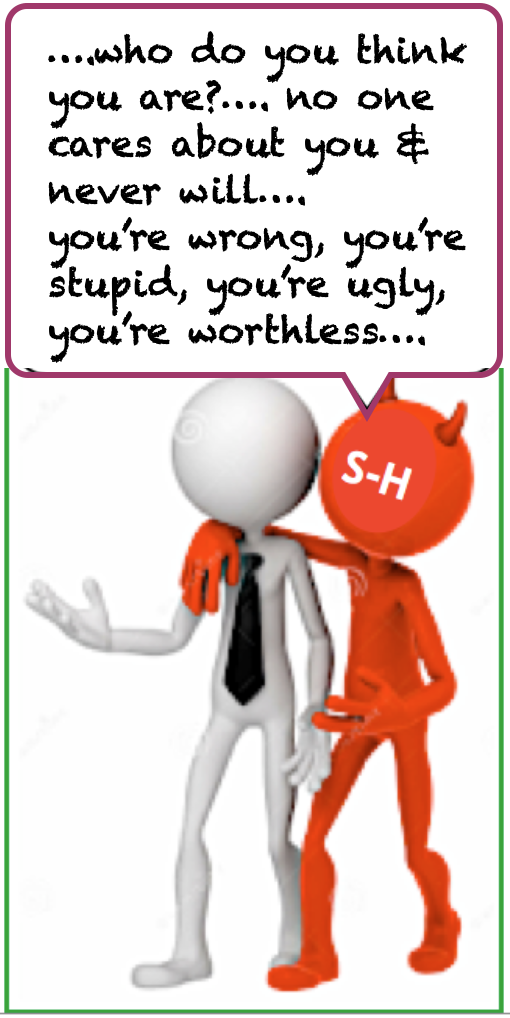
Self-Hate – As a result of being mistreated as kids, the most visible issue for ACoAs now is our intense S-H: “I’m no good, no one will ever love me, I can’t do anything, my need don’t count…..”, the defense mechanism all children develop to protect themselves from experiencing the original pain suffered throughout childhood (abandonment), and from acknowledging to themselves how hurtful their parents were.
S-H says: ‘Everything bad that happened to me  – past or present – was / is my fault.’ SO – any time I’m in pain I did something wrong, & I’m bad

• This belief gives the WIC a false sense of power – “If I caused it, I can fix it!” However, the reality is that we did not create the damage that was done to us – that is the responsibility of the adults who raised us. We were the victim of their wounds – then. NOW, we’re responsible for healing ourselves so that we can become our True Self!

Because of childhood Abuse, Neglect & Abandonment, in the present –  WE:perfectionism

YOU:
• are perfectionistic, driven, rarely satisfied – especially with ourself
• are intimidated by &/or feel enraged at controlling people
• expect others to hurt, judge or take advantage of you
• experience temporary dissociation (pg__), disconnecting from self
• feel chronically empty or numb inside, easily bored, restless
• feel like you’re always under scrutiny – even when alone
• find it hard to relax, laugh or be spontaneous
• keep yourself isolated from shame and so ‘no one can hurt or leave’ us
• frantically try to avoid real or imagined abandonment – by clinging, people-pleasing, being invisible….
• lose yourself in relationships by automatically & continually putting others’ needs before your own
• over-value & then under-value people you get too close to

You HAVE:
• a confused or distorted self-image: “Who am I really? , What do I really look like?” (feel ugly, fat, too thin, too short….)
• chronic obsessive thoughts, spinning  ‘round & ‘round without solutions
• compulsive self-damaging behaviors in 2 or more areas of life = eating disorder, addictions, fights, under-achieving….

• a harsh “inner critic” that torture you, especially after any disappointment or loss
• impulsivity – can’t control your choices & reactions
• inappropriate & intense anger, trouble controlling temper
• mood swings not caused by bipolar disease

• paranoid thinking – as a regular way of experiencing others
• recurring suicidal thoughts or actions
• trouble asserting yourself & not feeling proud of your accomplishments
• trouble finding a spiritual belief, or one that feels right

ACoAs are very intelligent and determined. With the right kind of help we can heal from these wounds and prosper.  Al-Anon, therapy, a spiritual practice, reading, & staying connected with other ACoAs in Recovery make all the difference. Don’t forget: ‘Progress, not Perfection’

ACoA WEBSITE (80+ pages) : www.acoarecovery.com

NEXT: Original LL

ARE YOU AN ACoA?

WHY AM I THE WAY I AM?
From being raised by alcoholics,
ACoAs & other narcissist!


50 Qs: A Self-evaluating List for Adult-Children of alcoholics, abusers, abandoners….
Answer: Y = yes, N = no, S = some, D = don’t know

DO YOU…?….
___find that you seek out tension or crisis, & then complain about it
___become anxious around angry people or authority figures
___defend or excuse people when they abuse you, implying you deserve it
___get locked into a course of action without seeing alternatives or outcomes
___react to people & situations, instead of choosing your responses
___worry that your emotions may overpower or hurt you, or others
___tend to lie or exaggerate, when it would be just as easy to tell the truth
___find the needs & wants of others more important than your own
___prevent yourself from experiencing the joy of your successes
___frequently anticipate that situations or life won’t work out for you
___isolate yourself when problems arise, or when you ‘feel bad’hiding
___find yourself in one or more survival ‘roles’ (hero, lost child…)
___mistrust your feelings, thought, perceptions
___tend to see issues in life as B & W, right or wrong
___have a fear of abandonment, especially when criticized
___strongly criticize yourself when not being perfect
___defend or excuse people when they abuse you, implying you deserve it
___get locked into a course of action without seeing alternatives or outcomes
___react to people & situations, instead of choosing your responses
___have trouble relaxing, playing, having fun
___had trouble with close, intimate relationships
___feel responsible for the feelings & actions of others, & try to fix them
___stay in relationships even tho’ you’re being constantly hurt, neglected, lied to, manipulated, hit… not getting any of your needs met
DID YOU…?….
___fight with your family members over a parent’s drinking
___your parents make promises to you & then not keep them
___lose sleep at night due to a parent’s drinking
___take on some of the jobs or responsibilities belonging to your parents
___ever get sick, or worry a lot because of their drinking
___ever do anything to prevent your parent’s drinking
___always believe that no one knew your parents were drunks, when you were growing up
ARE YOU…?…
___able to recognize situation that you have no control over
___super responsible or super irresponsible
___unable to work thru crisis & conflict, or do you aggravate it
___seeing a pattern in your relationships similar to your family of origin
___unable to enjoy your successes & accomplishments
___afraid others may ‘find out’ you’re not good, or that you’re a fraud
___afraid of your emotions, & afraid to express them   get help
___unable to complement yourself
___ashamed of or feel guilty for being who you are
___afraid of going crazy, or becoming a bag lady or bum
___uncomfortable with your life when it’s going smoothly
___unable to ask for help, or do so apologetically
___constantly seeking approval from others
___uncomfortable with being liked, admired, approved of
___always mentally looking over your shoulder to see if you’ll be punished
___out of control with: food, chemicals, work, sex, spending, exercising…
HAVE YOU…?…
___been blaming everyone else for your life’s problems
___staunchly defended your parents’ ‘innocence’ in hurting you as a kid
___had trouble following thru on projects, or never finishing
___tried to hide the fact that your parents drank a lot, beat you or others in the family, incested you or your siblings
___concerned about your mate, children, friends’…use of chemicals
___developed fantasy beliefs about how loved ones may treat you some day
___considered what ‘normal’ is, & believe you’re not
___found yourself sabotaging your success & then feeling ‘more alive’
___been loyal to others (parents, siblings, lovers, children, friends, employers) – even tho’ your loyalty was undeserved, unjustified, un-returned
___been fired more than once & never really understood why
___* learned to have dialogues with your ‘inner child’, & consistently take care of yourself in loving ways ?
♥                            ♥                            ♥
IF you’re even taking this test, it’s likely you come from a damaged, angry, abusive, traumatic, neglected, unhappy backgroundanswers
TOTALS:   ____Yes   ____ No   ____ Some  ____ Don’t Know
IF you answered YES to:
✶ 10-20, you’re either not an ACoA, in denial or in long-term recovery
✶ 20-30, you’re a co-dependent, even if there was no alcoholism in the family
✶ 30 or more, you’re definitely an ACoA (adult-child of alcoholics and other narcissists), which includes mentally ill &/or narcissistic family members

• If you said NO to Qs in the ‘DID YOU…’ section, but still scored high, there may be alcoholism/ drug addiction in some other part of your family, even if you didn’t experience it directly
• You may also be an active addict, yourself – alcohol/ drugs, food, money, sex, relationships…

Look thru this blog (2010 – 2016) and go to Heal & Grow SITE MAP – for info covering issues in this questionnaire at: http://www.acoarecovery.com

• If you are not yet in Recovery from your childhood trauma & present day difficulties, you can seek out 12-step Programs. THEY’RE BASICALLY FREE, & are available on the internet & by phone, for anyone not able to get to these meeting in person.  See pg 55 or some of the 12-step groups.

• Also, there are many recovery books, site, blogs & of course therapy, with someone very familiar with ACoA / addiction issues.
✶  If you are in Recovery, keep up the good fight. It pays off! I know because I’ve been at it for 35 yrs, & it works.

NEXT: Variations of the L.L.