ACoAs: OVER-Controlling Ourselves (Part 6)

frustration I WORK SO HARD TO BE GOOD – why isn’t my life any better?

PREVIOUS: Over-controlling Ourselves #5

SITE: The Truth about Power


CONSEQUENCES of OVER-CONTROL (cont)
1. Unsupported
2. Illusions

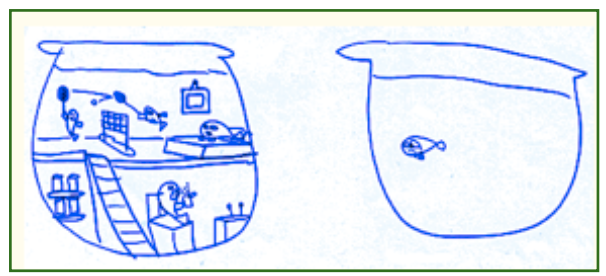
3. Always the Outsider – it’s ironic that even when attending 12-step meeting of ‘like-minded’ people, we still feel like we don’t belong!  When we’re emotionally over-controlled (O-C) :
• it keeps a wall up between us & others, even against those who already have a genuine capacity to ‘see’ & accept us

• we gravitate toward ‘people, places & things’ (PPT) which simply don’t suit our needs, goals, or personality. We stay even when we’re angry & unhappy there – insuring that we don’t fit in or feel a part of things

• we don’t stay long enough or go deep enough with others so they can get to know us & show us the good things they’re able to provide
• we do & say inappropriate or obnoxious things that are likely to put people off & make them withdraw, especially if things are going too well with them, for too long (even a week or month!)
4. Envy & Jealousy – emotions considered ‘negative’ that have to be O-C :
Envy is about 2 people : “I envy you for having such great hair, an advanced degree….”, ie. wanting something we don’t have
Jealousy involves 3 or more : “I’m jealous that he has so many friends”, ie. wanting a relationship someone else has
OR “She pays more attention to her friends than to me”, ie. trying to hang on to someone or something we don’t want to lose.

BOTH emotions come from believing we are powerless to get what we want & need in life, not necessarily the thing others have, exactly – just that they have the right to get their need met, & we don’t

• We may deny being O-C, yet often covet what others are or have. What gives it away is the rage we feel at certain kinds of people or situations! We say ‘those people’ are ‘entitled’, with a sneer in our voice because:
— we think they’re unfairly lucky – having a family, a decent relationship, a good job, lots of friends… & hate them for what we don’t have permission to get for ourself

— OR we call them brats, selfish, arrogant …. because they don’t hold back the way we do. Perhaps they are, and/or we just wish we had some of that confidence to do & say what we’ve always wanted to, but aren’t allowed!

ACoA deprivation is always about the BIG A – abandonment. Family taught us we couldn’t have our needs, so we won’t let ourselves either. The WIC says it’s so-o unfair, but we keep on ‘following the rules” & depriving ourself!
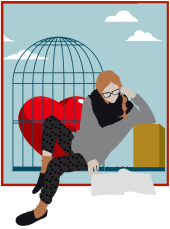
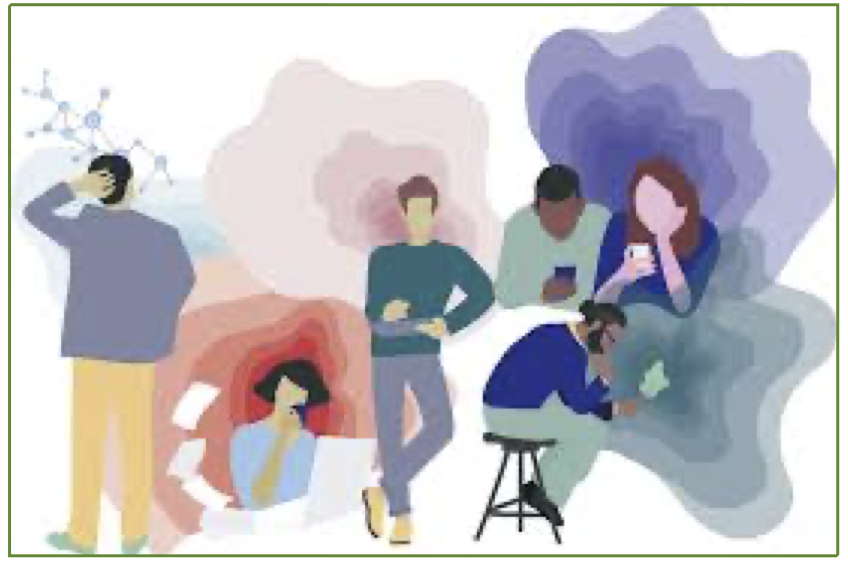
5. Isolation – Without Boundaries our WIC uses isolation to protect itself. Being O-C can cut us off :
— from various emotions (anger, sorrow, sexuality, competitiveness… )
— from many of our good qualities or potential talents (artistic abilities, generosity, patience….)
AND
— prevents others from benefiting from these valuable parts of ourself, because WE :
• don’t want anyone to find out how weak, damaged, vulnerable, dumb, needy … we really are (everything S-H tells us)
• are afraid of getting stepped on, manipulated, used, boundary invaded, left…. if we were open & available
• are afraid of getting sucked into taking care of others
• are afraid of not being able to get away from someone we don’t like because of our co-dependence or passivity, so we’d rather not engage at all
AND
• are sure we’re doing the world a service by withdrawing, to protect them from our rage! We may not admit to that feeling, but isolation is a sure sign we’re worried about it at some deep level & are trying to keep the lid on.

BOOK:  “BARGAINS with FATE”, taken from Shakespeare’s plays. Dr. Bernard I. Paris describes the Detached / Resigned character, whose only goal is safety via total ‘freedom’.
BARGIN: “If I ask nothing of others, try for nothing, expect nothing …. then no one will bother me & I won’t fail or get disappointed” – their Reward. What’s suppressed is their aggressive side.   (SEE all 5 on the ACoA website)

NEXT:  Over-controlling ourself – #7

ACoAs: OVER-Controlling Ourselves (Part 5)

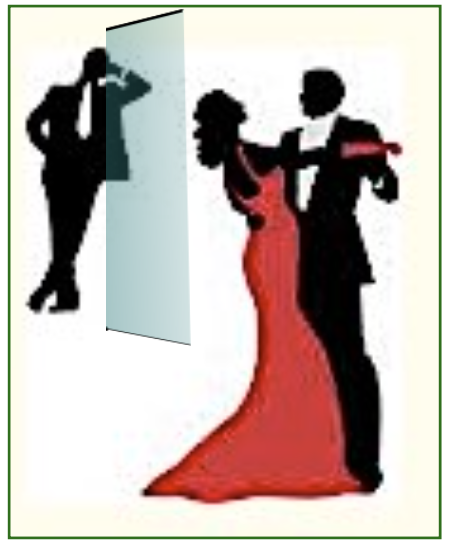
Sbridesmaid “ALWAYS THE BRIDES MAID –
never the bride!”

PREVIOUS: Over-Controlling Ourselves -#4

SITE: So What Is “Self Care”?


HOW we Over-Control (O-C) ourselves (cont)
a. DEFENSES (Part 4)

b. SELF-HATE – a defense mechanism – also controls us TO:
• keep ourself in line (harsh discipline), instead of taking charge of our thoughts & actions (healthy control) via a mature ego state. EXPs:

Young man: “I’m not supposed to look at or covet other women because I’m married – but I do anyway – which means I’m bad.
I figure that if I’m strict about beating myself up, I’ll stop being bad”.  It many work temporarily but doesn’t last, creating a vicious cycle

stave off (assumed) inevitable abandonment
Young woman: “I just met a potential partner / boss / friend… & I’m already thinking – I know I’m going to fuck it up”. So she won’t let anyone get too close, depriving herself of new experiences & possible benefits

symbiosis• stay symbiotically attached to the Introjects (no S & I)
Teen: “I don’t care about keeping my room neat, even though I’d like it, because Mom is horrified that I’m not compulsively clean like her.
She calls me a pig, saying: ‘You could lay down next to dirt and sleep!’- which to her is the greatest possible insult. So if I’m a pig, I might as well act like one!”

IRONY: As much as the teen (or Adult-Child) is rebellious or hates the family, we stubbornly hang on, because to let go would mean facing the world unprepared!

CONSEQUENCES of OVER-CONTROL
1. Unsupported
By O-C ourself, we’re always suspicious of anyone wanting to be kind, encouraging & helpful, so WE:
• isolate from the mainstream of society, which keeps us from finding out what kind of support systems are available, OR refuse to make use of them when we do know

• unconsciously prevent ourself from attracting people who have the capacity to be nurturing &/or nourishing. Instead we choose or let ourself be chosen by narcissists & abusers, wolves that are sometimes disguised in sheep’s clothing
iso;ationOR
• reject legitimate offers of nurturing or help, finding it painful when complemented or lauded. This is predictable as long as the WIC is allowed to make our relationship choices – which will inevitably duplicate our family

2. Illusions

We were greatly disappointment in our parents when we were too young to handle it. Being in constant emotional pain, as kids we created an inner world of fantasy – having an ideal life, with a loving family & never any frustrations!

• As adults this fantasy life can turn INTO various illusions, such as:
— looking for the ideal partner, friend, teacher, boss…. so we’ll finally feel safe & get our needs met. Anything less than that is unthinkable. When we are inevitably let down, we get very angry that they don’t live up to our expectations – which leaves us feeling hopeless!
ALSO 
— being convinced that everyone else is having the happy life we’re not, even strangers on the street, especially if we see them with a partner, children, clothes, cars…. that we wish we had – but are not ‘allowed’.

We know how bad we feel inside, & assume everyone can actually see how worthless we are – & that’s why they ‘stay away from us’.
We look at the glossy surface & think that’s the whole story, O-C (repressing) our ability to see ourself & others as having several dimensions.  BUT everyone has problems, no matter how their outsides look!

• ACoAs are encouraged to maintain illusions because:
— media & culture pushes surface images as reality, when they’re not
— emotionally we’re in child-mode, & little kids are very literal, concrete (what you see is what you get)
— our family taught us to deny & ignore what’s inside – the deeper truths of intuition, whether emotional, mental or Spiritual.

In many dysfunctional homes what mattered was how good everything looked on the outside.
👺So we created a facade too, a False Self, the only option we had at the time – BY rejecting or over-controlling our basic human needs!

NEXT: Over-controlling Ourselves (Part 6)

ACoAs: OVER-Controlling Ourselves (Part 4)

sileced

I LET THE PP BEAT ME UP – to keep me in line

PREVIOUS: Emotional Over-Control #2

SITEs:  Self-Control (Wikipedia)
▪︎ Over-Controlled Primary Aggressor

See ACRONYM page for abbrev.

AS ADULTS (cont)
• ACoAs
were not raised on the handbook “How to be a Healthy, Happy Human Being”, which left our Inner Child-part impulsive, anxiety-ridden, only able see itself & the world thru distorted alcoholic / narcissistic lenses. So, one way to deal with our trauma is to do what they seemed to want – for us to be dead! Some ACoAs try literal suicide, but most do it by PMES forms of self-destruction & emotional starvation.

Being Over-Controlled is NOT related to being Introvert or Extrovert, which are inborn, but rather about ignoring qualities we all share to varying degrees (intuition, intelligence, being perceptive, artistic…) – which were unacceptable in our family.
At the time, it would have made our lives even more miserable if we hadn’t suppressed those characteristics – although some of us couldn’t hide them well enough to escape being attacked or ignored.

Unhealthy BELIEFS of Over-Controllers 
• Everyone is out to rape me mentally & emotionally
• Don’t trust anyone with your feelings, thoughts or dream
• Never let others know how their behavior or actions effect you
• Never show your anger so you won’t get abandoned
• There’s only one way to survive a crazy world – climb into your shell, & stay there!
SO
• I have to keep control of my feelings so I don’t go crazy
• If I lose control, there will be no sanity in my home (or on the job)
• Losing my cool is unsafe, so I avoid conflict at all costs
• No matter what happens to me, I’ll never cry or need anything again
• No one’s ever going to get under my skin or hurt me again
► Do you hear the voice of the Toxic ROLES?)

HOW we Over-Control ourself
a. DEFENSES – Rigidly held defense mechanisms are used to hide from emotions we’re afraid to experience, but the ‘protection’ ends up running our lives:
Addictions – used as a way to numb the cruel PP voice & to ignore our WIC the same way our parents did, but which actually adds to our suffering

Counter-Phobia – being attracted to things that are scary while not fully aware of the accumulated terror underneath. Dangerous relationships & activities are seen as fun, which keeps the adrenalin pumping. We’ve stuffed the anxiety into the unconscious, but it needs an outlet, so we rush towards unhealthy ‘excitement’. If we stopped running we’d have to feel all that fear

Fear of Engulfment, feeling suffocated & over-controlled by someone else’s need & demands. Not allowed originally to develop our own inner boundaries, we end up erecting a very thick wall against emotional closeness so that we won’t get swallowed up again. It keeps everyone at a distance, while longing for connection. The wall gets activated whenever anyone wants genuine intimacy with us, even if it’s what we say we want

Guilt (post What is guilt?’) – an emotion that controls us TO:
— ensure we never disobey our family’s Toxic Rules
— keep us from learning healthy rules that could improve our life
— prevent us from developing our True Self via S & I, which would unhook us from the family dysfunction

Over-activity, such as workaholism, controls how much & what kinds of emotions we allow ourself to experience = staying so busy that we don’t have to feel anything ’real’, & using it to cover up S-H & a sense of powerlessness

Paralysis, mostly our voice – stopping ourself from saying & doing things that would be good for us, because of fear of punishment, fear of abandonment and fear of visibility…..  which prevent speaking up to stop others from hurting us, enhance our self-esteem & move us toward our dreams

Vagueness / dissociating – staying in ‘la la land’ to not face any reality we’re too terrified to deal with, starting with how badly we’ve been treated by family / school / religion / mates / work…. AND that we’re responsible now for having to care for ourself.
So – we don’t notice how much we spend / eat / drink… how others treat us, how we feel, what we need, how we treat others….

NEXT: O-C Ourselves – Part 4

ACoAs : OVER-Controlling Ourselves (Part 2)

addiction  IF I DON’T KEEP A TIGHT LID ON
I’ll do all kinds of bad things!

PREVIOUS: Over-controlling ourselves (Part 2)


DEF: Over-controlling (O-C) ourselves is not so much about our actions – although it also affects them as a consequence – but mainly means :
✒︎ rejecting our emotions, needs & observations to such an extent that we go thru life in a state of constant ‘under-nourishment’ (deprivation) & bewilderment. Those discarded parts, which we’re terrified to face & own, then become our shadow side

• Instead, we are run by a False Self (FS), that protective identity formed so early we actually think it’s the real us. It’s made up of various aspects of the WIC (scared, angry, apathetic, suicidal…) & the PP disguised as a ‘guardian’ in the form of a know-it-all cattle-prod. The FS is comfort-seeking & therefore short-sighted, making unwise, unhealthy decisions – a kindergartener trying to do college level work

Peter K. Gerlach, MSW, writes that unhealthy will-power occurs when a person is controlled by a fierce Guardian hardened into sub-selves such as Addict, Fanatic,  Martyr, Perfectionist, Preacher, Survivor, Zealot….
Its determination to protect the WIC at all costs can cause rigid self-discipline which is toxic to the host person & also other people.
EXP: the talented Magician sub-self (as Delusional Mystic) can distort reality to justify or excuse self-destructive attitudes & behaviorsabused

☛ Of course some ACoAs will react to the controlling inner voice by
— doing very little with our life, from confusion & terror
— OR nothing positive – from misdirected rage.
Over all, these limiting sub-personae produce distorted beliefs (CDs) & intense Es such as shame, guilt, fears, trust imbalances = which make it hard to bond to others

EXP: A perceptive & bright daughter was a threat to her incestuous father because she would not have been easy to silence if he had molested her. So instead he turned her into the family scapegoat, verbally & physically beating her. This succeeded in convinced her that she was stupid & unable to trust her observations & intuition. Even though she resented him, she still gave him the benefit of the doubt & spent much of her life hopelessly trying to win his approval! SIGH, UGH!

AS ADULTS
ACoA Damage – Any form of prolonged & intense control is painful & debilitating, especially for children, who are powerless to escape it. Being over-coerced &/or under-attended (in Part 1) are both abusive parenting styles.

Deliberately or not, our family gave us the message:
“Search & Destroy any signs of personal identity. Be ‘good‘ (don’t think, don’t feel) or you’re not part of this family. If you try we’ll destroy you! ”
And we know that every kid reacts to the Family party line – whether by giving in or by rebelling.

• In reaction to the restrictions & neglect, this harmful message forced us to gradually over-control ourself, a basic component of S-H, & a familiar way ACoAs relate to self & others.
These early experiences became our Toxic rules which now act like a virus in our psychological operating system – invisible as it corrupts – and needs to be de-bugged!

Before FoO Recovery (family of origin)
✏︎ much of the time we act as badly as our family did, OR
✏︎ put ourselves in positions to get punished for trying to be ourself.
We’ve been so brainwashed that we’re desperately afraid to let go of familiar patterns, which the WIC believes would cause us to fall into a black hole we’d never get out of
EXP:
‣ Faced with a scary new experience, the WIC comes up with the usual reasons why it won’t work out
‣ If we even consider going after something we really want, the PP says: “Who do you think you are, anyway?”!

NOTE: Some ACoAs raised without more obvious physical abuse & chaos – but just as mentally, emotionally & Spiritually (PMES) unhealthy –
will act out all the hidden family damage by being the one sibling in trouble, socially or legally, using addictions, promiscuity & dangerous ‘excitement’.
▶︎ These ACoAs are the living “Portrait of Dorian Gray”, which shock & appall the perfect-looking family!
— EXCEPT that WE don’t have to die, we can Heal & Grow!

NEXT: O-C Ourselves – Part 3

ACoAs : OVER-Controlling Ourselves (Part 1)

bad voiceTHE BAD PARENT VOICE –
doesn’t want me to outgrow it

PREVIOUS: Self-Care around Controllers #3

SEE:  Toxic Family Roles

❖ S-C = self-control


AS CHILDREN

Normal / Healthy: since children are not born with boundaries it’s a parent’s job to help them learn self-control (S-C), which is about setting limits for oneself & with others, but forming them is a long process. S-C is closely linked to:
• how children feels about themselves, If they delay self-esteem, that can only come from proper guidance, stability & unconditional love
• being taught how to deal with everyday frustrations & practicing those skills by helping them make their own age-appropriate choices & decisions

 2 MENTAL Abilities for healthy S-C : Be ABLE TO
a. estimate time correctly, in order to make reasonable decisions, based on immediate as well as future outcomes.
❖ Young children cannot do this because they live completely ‘in the present’, so it’s not rational to expect them to have the same S-C as older kids & adults (post: ACoAs & TIME)

b. direct one’s attention away from a current event. This is needed in order to have the time to evaluate situations, make better choices & weigh possible consequences.
Since young children’s attention can be easily distracted, they aren’t able to stop-to-consider alternatives or potential outcomes, so it’s inappropriate to demand it of them

• Children do best when guidance & boundary setting are given with consistent, age-appropriate expectations & realistic consequences, AND without constant punishment or power-conflicts with parents.
Children do need the security of knowing the rules & limits of behavior – otherwise they feel uncared for & at a loss. The healthy goal for parents is to guide & nurture them so they feel supported & valued, rather than judged or rejected

Alcoholic PARENTING extremes
In most cases, ACoAs had to be totally obedient to survive & later to fit in – first with parents, then in school, a religious community & then work. (Posts: Parenting styles & Results)

OVER: Many of us were given too many rules, assumed to be ‘little adults’, demanded that we be competent & self-sufficient way beyond our years.
We were bullied & manipulated into being compliant on pain of suffering & death. There was no fairness, or any leeway for our individuality. We submitted – or else.

This created great anxiety, knowing we couldn’t fulfill their spoken & implied expectations, while desperately trying to please.
✏︎ For some of us the rules kept changing, arbitrarily.
✏︎ For others they were rigid & unrealistic.
✏︎ For all of us, no matter what we did, it was never good enough!
Eventually we either rebelled or caved.

UNDER: Others of us received little or no guidance – left too much on our own, so that we basically raised ourselves, which also created great anxiety. It left us:
• without knowing how to pay attention to other people
• with no respect for, willingness or need to obey legitimate authority
• with no sense of boundaries, limits, discipline or self-trust
✦ not knowing what is expected of us or how to function in the world.

This may seem heavenly – to a teen, but a child without rules or expectations not only is being severely neglected – but will likely suffer from lack of motivation & direction for years to come!neglect

EITHER WAY – we were deprived of the opportunity to learn healthy self-control – which requires a SELF to implement!
Since having a True Self was not allowed much mess encouraged, the only thing we could do was to over-control ourself. We had to hide our true emotions, needs, as well as our intelligence, competence & talents – except as those gifts were needed to take care of sick, abusive, drunk, depressed & crazy parents &/or siblings – but never for ourself!

▶︎ Since over-controlled adults are generally responsible & reserved, they don’t get much attention, suffering loneliness & chronic depression in silence, which may include anorexia, or being obsessive-compulsive.
An evidence-based therapy Radically Open Dialectical Behavior Therapy (RO DBT), was developed to help “over-controllers” activate the brain’s neurological systems which help regulate smoother ways of interacting with others. SKILLS include:
social spontaneity, taking it easy, making true friendships, correcting rigid thinking & minimizing perfectionism. (MORE….)

NEXT: O-C Ourselves – Part 2

SELF-CARE around Controllers (Part 2)

stand my ground
I CAN STAND MY GROUND –

& still be at peace

PREVIOUS: Self-care, Internal #1


If you HAVE to deal with a Controller (cont)

1. INTERNALLY : for YOU (cont)
Wait before responding to a text, call or email.
Write out what you want to say & then leave it alone for a little bit, to think thru the consequences. If you still want to send it / say it – condense it into simple sentences – short, declarative & to the point, using ‘I’ statement, from your Adult voice

• Set your own time schedule for discussions with a C. or to deal with a need or upset of theirs. Your time is yours to control – NOT them (most of the time 🙃)

• Spend time away from the C. Taking regular breaks is important for mental health.  Do things you enjoy even if the C. isn’t supportive.

Eliminate Controllers from your life whenever possible. They are energy & self-esteem vampires to be ‘put in the light’ & let go of!

2. EXTERNALLY – dealing With THEM
Ask questions – objectively & without anger. Try to find out what they’re frustrated about, what they really want & why, to minimize misunderstandings.  This shows them the same respect that you want

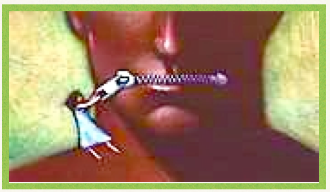
Avoid arguing. It’s best to just let the C. carry on until they’ve run out of steam. As hard as it is to “zip the lip”, if you just listen without responding, eventually most people will feel ashamed & contrite for carrying on so, especially when their outburst actually had nothing to do with you. This puts you back in charge.

• Be a careful listener (unless you’ve heard the same thing over & over!). It’s easy to tune out when you’re with someone annoying or aggravating. Repeat back to them what they’ve said, as a check to see if it’s correct. This reassures them you understand their point or what they need from you –  especially at work. BUT it doesn’t mean you have to agree or do it!
Be clear & mean what you say, so they’ll know you’re serious
Be very firm that you’re NOT going to be pushed around. Say NO & stick to it even if you feel scared.
Most of the time it turns out ok, but some people can’t tolerate hearing ‘no’, so you have to get away from them as soon as you realize they’re not safe
Don’t let them talk down to you. It’s insulting & belittling
Emphasize positive things about yourself & let them know all the good decisions you make on a regular basis

Pick your battles. Unless a topic directly affects you, don’t comment. You can appear to agree & still keep to your own ideas – quietly
Point out when their way is unacceptable for you – in practical language. It’s NOT wise to use emotions-ladened phrases like “It makes me uncomfortable”, because they’re likely to use it against you

• If a C. ‘keeps you around’ – whether it’s personal or professional – it means they need you for something! That can give you the upper hand, even if neither of you really like each other.
Don’t be afraid to remind the C. that you have value & want to treated with respect

• If the situation warrants it, & it doesn’t hurt you, explain that you want to be a part of the solution, & willing to work with the C. once you understand fully what’s needed

• In a disagreement or argument, stick to your point and the current topic – don’t let them sidetrack you. Write or tape confrontations, to get clear AND to have proof

• Try getting them to switch roles with you for a few minutes. You play the controller & they play you. Then discuss the results.
Switch the focus away from what’s wrong with you, & get them talking about themselves or on the issue in question. They’ll like that!
Remember – you’re not responsible for their perspective, but it might give you some insight into their motivation, so you’ll be better able to sidestep or deflect their controlling-ness next time

NEXT: Self-Care around Controllers – #3

SELF-CARE around Controllers (Part 1)

many options I HAVE LOTS OF OPTIONS – I just need to practice

PREVIOUS: Responses to Controllers-#2

SITE: How to Cope w/ a Controlling Person

See Acronym PAGE for abbrev.

If you HAVE to deal with a Controller:
1. INTERNALLY : for YOU
• Be true to your own personality – quiet, an Introvert- or Extrovert-talkative, fun-loving, smart, strong, funny….
✅  Trying to out-control control freaks generally doesn’t work. They’ve had a lot more practice
• Continue to work on building strong boundaries so you don’t take on the Cs problems

Stay as calm as possible when in conflict with a C., especially since they’re likely to lose their cool if you challenge their desperately needed sense of power
• Do something physical – run, swim, dance, exercise….it clears the mind & burns off the anger, numbness, fear, frustration…. which deplete us

• Take full responsibility for all your own thoughts, words, emotions & actions – & whatever long-standing buttons the C. may be pushing

• Let yourself feel all emotional reactions to the C. rather than pushing them away – but not with the C. – do it in meetings, therapy, journaling… Always be clear that the pain is coming from the WIC.
Take a mental step back from your Es, putting them ‘outside‘ of yourself, rather than drowning in them or sweeping them under the carpet. This defuses the intensity.
The best way to protect yourself is to be fully awake to the effects a C. has on you. That’s what Es are for.

• Focus on how to meet your own needs, rather than on what the C. is doing or not doing. Don’t over-compensate for someone else’s limitations or failures. It doesn’t help anyone, & only drains you
• Know you have the right & power to say how you want to be treated.  This comes from knowing your worth as a person – just because you exist

• Identify what really matters or what your real goal is in each situation & then ask: “How important it this?,  Do I need to be right, validated, applauded, justified…, or can I let go in order to be at peace? //  How will reacting to this person make my life better (or worse)?”.
If it’s not literally a life & death situation, you can redirect your energy by quietly talking to the Inner Child, & focus on using Recovery tools

• Look for the lesson in any difficult situation – but not at the expense of the Es. So – NO self-blame or judgment. Getting something out of each encounter with a C. can help you be stronger, healthier, more awake, more self-protective…. for the future
Ask : •“What are they telling me about themself?
• Have I been ignoring the signals about this person’s patterns?
• Have I stayed too long? , Did I somehow set them off?
• How are they like my family? Are they just a bad fit with me?”….

• To stop the drain on your energy, conventional wisdom says: “Stop endlessly talking to everyone about a negative event or conflict”. This is valid if all you’re doing is whining, complaining, obsessing, dumping…. rather than carefully evaluating what’s really going on, & ✒︎ taking it to the right place to process (Program, Therapy, Minister….),

Write out all your frustrations, hurt & anger about how the C treats you – & the mental arguments to prove your side of the story, without censorship. Picture all that pain draining into the paper & then burn it – safely!

support groupNOTE: For ACoAs, as long as a situation is pushing old buttons, our Es can be overpowering, getting in the way of functioning.
We need to keep sharing what’s upsetting our WIC – in the right environment – and for as long as it takes to bleed off the accumulated hurt & rage that keeps our obsessions alive.

We may also need outside validation that we’re not crazy – that someone really is being abusive, that our feelings are normal in that circumstance…..

NEXT: Self-Care Around Controllers (#2)

RESPONDING to Controllers (Part 3)

 Screen Shot 2015-07-06 at 7.55.09 AM
PREVIOUS : Responding to Controllers (#2)

SITE: “21 Common Mistakes to Avoid When Responding to Conflict


WHY ‘Control’ Responses to Controllers (Cs)?
Because it’s Empowering, to not be or stay a victim.
THE GOAL is to heal enough so we can speak up from the Adult ego state right away, but only if it’s safe & appropriate to insure not hurting ourself. That way our frustration, hurt & anger won’t build up – providing short & long-term benefits.
✳️ This ability comes with lowered WIC anxiety (Es) & practicing things to say (Ts)

Being KIND to ourselves
When we react impulsively or fight back we may temporarily feel powerful, but it doesn’t help self-esteem & personal growth. Even so, sometimes it’s the only way to get thru to a C. & stop them from seeing us as weak & vulnerable. Many Cs only understand ‘tit-for-tabe coolt’! even tough it doesn’t usually resolve conflict or protect us from further attacks

• It’s best when we can mentally take a step back (T), to breathe, process how we feel (Es) & check which of our buttons got pushed. If we can address the problem in a positive way in the moment, great. If not, consider what’s best for yourself & maybe deal with the offender later. In any case, the less we RE-act the more self-empowering & peaceful we’ll feel

Freedom of Speech
Other people seem to think it’s OK to say whatever they want, but we are afraid to do the same. We need to give ourself permission to know & express our point of view as well. But over-reacting to volatile or oppositional opinions has to do with our childhood wounds, & not just to what’s being said in the present. Be truthful, but don’t get into a pissing match. Al-Anon : “Say what you mean but don’t say it mean.”

Minimize Negativity
Nurturing all-consuming anger at someone for their comments or actions only hurts us, carrying painful energy into other parts of our life.  Malachy McCourt (actor, writer & participant in Occupy Wall Street, 10/2011) once quipped: “Holding a grudge against someone is like drinking poison and expecting the other person to die.

purpose For ACoAs, obsessions come from our damaged past. We can privately do rage-work, & process our wounds in Program & therapy, so we don’t keep reacting in ways that make us feel bad about ourself afterward.

What’s our Purpose?
To get the most our of life we have to be clear about our goal in each situation & act accordingly.  What our Adult self wants to accomplish & what the WIC wants are often 2 very different things. Any time we get riled up about something, remember it’s the WIC or PP, but how we respond will depend on whether the ‘Unit’ is in charge or not.

EXP: One week-day evening Ally was in a church auditorium waiting to hear a concert. In the back vestibule a maintenance man was polishing the floor with the door open to the lower level, & the machine was very noisy!
Ally went all the way down to the man, asking him to close the door adjoining the sanctuary, but he refused, so she went back & sat down. Immediately a man waiting in the audience also went down to the worker, & lo-&-behold — the door was closed! Ally smiled.
She knew that many years ago she would have taken offense & been very angry that the worker ignored her (a woman) yet ‘listened’ to a man. BUT now she was not upset at all – her only GOAL was to shut out some of the irritating noise – rather than being respected or validated, which was not the workers job !

Where’s the Focus?
The hardest thing for ACoAs is to not take things personally. Whether someone is mean or just tactless – they’re telling us about themselves – NOT US!
It’s most useful to mirror back to them what we’ve heard: ‘Why did you say that?”, or ‘What did you mean by that?”…. Where attention goes, energy flows. We can only focus fully on one things at a time. The sooner we clear up an obsession, the faster we get our life back. Often speaking up for ourself will rebalance our energy.


NEXT: Self-Care around Controllers – #1

RESPONDING to Controllers (Part 1)

3resist controlNO ONE CAN CONTROL ME –
unless I let them

PREVIOUS: Being controlled – #5

POSTS Relationship FORMS 1 & 2’

See Acronym PAGE for abbrev.


RESPONDING TO CONTROLLERS  (Cs)
• As adults, even when we’re with a Controlling person, we always have at least some control of our own over what happens to us, whether we use that option or not.  As Glenda the Good Witch says in The Wizard of Oz “You always had the power!” If we must stay with a C., we have to protect ourself, otherwise all we can do is capitulate

EXP
: As soon as Jody met sexy Sam at a party, she could tell he was a C – just like her mom. Even so, they started dating & eventually he moved in.  His charm compensated, but Jody still needed to deal with his habit of assuming she was exactly like him (narcissistic control).
She went along when it didn’t matter, but stood her ground when it did. For a while in the beginning – to shift the focus from any specific topic of contention – to the bigger picture – she started saying ‘ Sure, Martha’ whenever he acted like her mom! It took him a while to catch on, but eventually he got the point & backed off (but most C. won’t!)

Re. THEM – Cs are also wounded people who don’t have a right to their needs, but choose to manipulate others into providing for them, & to feel cared for. Pay attention & evaluate which type you’re dealing with:

• Some are not consciously aware of being a C, & will be confused or surprised if it’s pointed out. They have no idea what they are doing ‘wrong’, but also don’t want to know, so they won’t change easily

• Others are aware of trying to deceive or control, but will vigorously deny it because they don’t want to be caught (& it’s socially shameful), OR they just don’t want to be responsible for their actions or old pain.
So they’re less likely to change at all, because they’d have to deal with the underlying damage

• A few are willing to consider the issue when ‘confronted’ & will work to change it
• And some of us are already in the processes of letting go of being controlling!

Re. YOU

DECIDE: When responding to a C, consider what outcome you want:
❈ for revenge, to punish, retaliate, humiliate….OR
❈ to inform, vent, set a boundary, for self-protection, fairness….
"I" statement✶ If you want to be as psychologically clean as humanly possible (NO perfectionism!) then practice making neutral or I’ statements:

“I don’t respond well to being bossed around , That’s not helpful! ,  It sounds like you’re trying to get me to_________ Is that right? , I’d rather__________ , When you ___________ I feel _________  , That doesn’t work for me / not how I feel about it / not what I need…”

EXPECT: resistance in the form of excuses, protests, denials, blaming …. especially from the hard cases.  You can let them know you understand their feelings & wishes, but that you hold the right to have yours, even if that upsets them, makes them angry, attack you or leave in a huff!
• No matter what their reaction, you decide what you’re going to agree to – or not, based on your needs, not theirs!

REMEMBER: When someone insists on accusing you wrongly (a big button for ACoAs) or just refuses to ‘get it’ – only state your truth as clearly as you can. You may have to repeat your position, but DO NOT:
try to make them understand where you’re coming from
—  keep explaining why your point is valid, and
— NEVER justify yourself – ever!  To stay & argue with someone like that makes a fool of yourself!

• The more relentless someone’s controlling behavior, the more narcissistic the person is. In that case you cannot win, because they can’t & won’t see you as being separate from them, with your own identity & personality.
If you have the option, you either limit contact (Read : 60 Healthy responses to narcs“) , OR walk away, no matter how much it hurts, even if it means letting them think they won.
😰 To do anything else is to humiliate yourself!

NEXT: Responding to Controllers (Part 2)

ACoAs Being Controlled (Part 5)

drowningI CAN’T SEEM TO SURFACE
& it’s all your fault!

PREVIOUS: Getting controlled (Part 4)

SITE: 9 Ways We Set Ourselves Up To Be Controlled in Relationships

BOOK: Confessions of an Abandoned Child ~ Curtrina Pharr

See ACRONYM page for abbrev.


Negative STATES causing loss of Control
a. In Bondage / ways to lose independence
Accepting unwanted situations,  addicted & enslaved, be obsessed, be controlled, submitting to another, financially or psychologically tied down against our will
hopelessb. Focus on the Material / only aware of the physical
Caught up in appearances, getting & spending, over-indulging the senses, ignoring or forgetting the Spiritual

c. Ignorance / be unaware & stay
Taken in by appearances, choose to stay in the dark (denial), fear the unknown, live in deprivation, operate within a narrow range of options & emotions
d. Feel Hopeless / lack faith
Believe the worst, despair, doubt, see the world as ‘cold ’, predict a bleak future, think negatively  (More…..)

🎯 WHO / WHAT we LET Control us (cont. from Part 4)
You’re being controlled (or Over-C) WHEN you STAY:
Sphone fatigueon the phone, long texts…. or with someone you want to get away from
• in any location or event you’d rather not be at (or hate)
• in any relationship, job, home…. way too long
• with someone else – when you’d rather be alone, need to rest, or be doing something else, and/or ….
WHEN YOU:
• buy or eat things the other person wants you to, but you don’t like
• endlessly listen to someone’s dumping – who’s in too much pain, demanding, needy, abusive, just using you….
feel sorry for others instead of for yourself
• go out with someone because they want you to, or from loneliness
OR
• keep believing a proven liar, keep depending on someone who is consistently unreliable
bad date• keep seeing friends who are totally focused only on themself, never on you, including dates & mates
• let other invade your boundaries or say mean things — without objecting
• spend a lot of time worrying about someone else that you’re ‘powerless’ over
OR
• pay for things only to please another (not from love but from FoA)
• take care of very damaged people who need much more help than you can give them, because it makes you feel ‘important’, needed, less worthless….
• try to be something you’re not, or do things others want – out of guilt

You’re with a Controller (C.) anywhere :
BEHAVIORAL – if you
are given the ‘silent-treatment’ as punishment
• firmly state a boundary about something, & the C. ignores it completely
• feel like you’re losing it, because the C has systematically isolated you, to make you only be, do & think the way they want
• friends or family see a change in you when you’re with the C.
• have lost friends because the C. complained about or refused to let you see them AMD/OR have badmouth you to them

EMOTIONAL – if you
• feel depressed & physically drained much of the time
• feel suffocated by the C being needy, over-protective or intrusive
• feel ‘less than’, ignorant, belittled or hopeless when you’re with the C.
• end up feeling guilty all the time but don’t know why
IF you:
• eventually ‘shut down’ and ‘give in’ rather than trying to be heard, sticking to your point of view, being taken seriously
depressed• hide or run away from problems with the C. because you feel too weak to confront & stand up to them
✶ are being told by the C. that what you’re feeling – anger, fear, frustration – are from your ‘issues’, that you’re causing it, you’re over-reacting…. (while denying what they ARE doing! to hurt you)

MENTAL – if you
• always second-guess yourself, from actually being criticized, undermined or corrected by the C
• are accused of being boring now because : “You used to be so much fun, more interesting & outgoing…. you just copy me”
• tend to ‘go along with things’ to avoid conflicts with the C
• worry about the C’s reaction before you make a decision

✶ Are often told the C. is not ‘doing anything to you’, but rather that you’re choosing to do or be what the C. wants! (Cs take NO responsibility for their manipulations!)

SPIRITUAL – if you
• are constantly judged & accused of being bad, using a spiritual or religious dogma as ‘proof’
• feel you’ve lost your vision & are willing to compromise your values to try to please them
• punished for not being perfect, not following their rules

NEXT: Responding to Controllers, #1